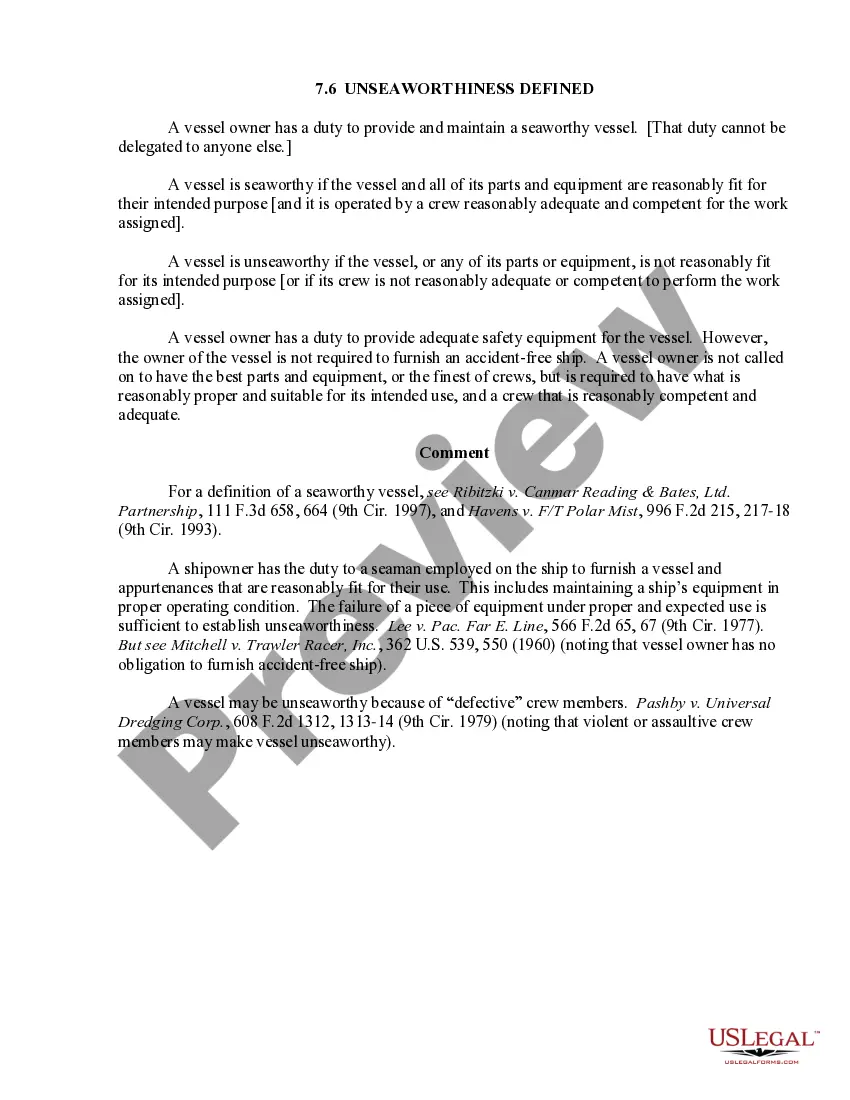
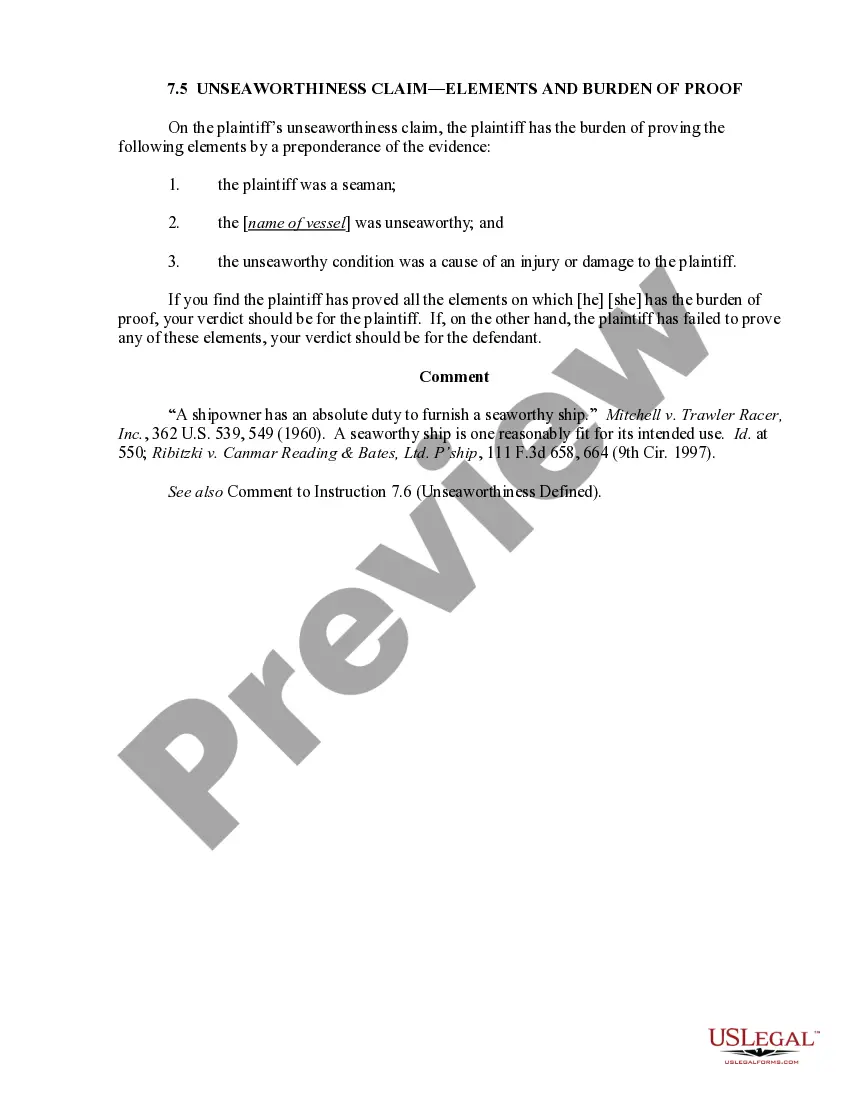
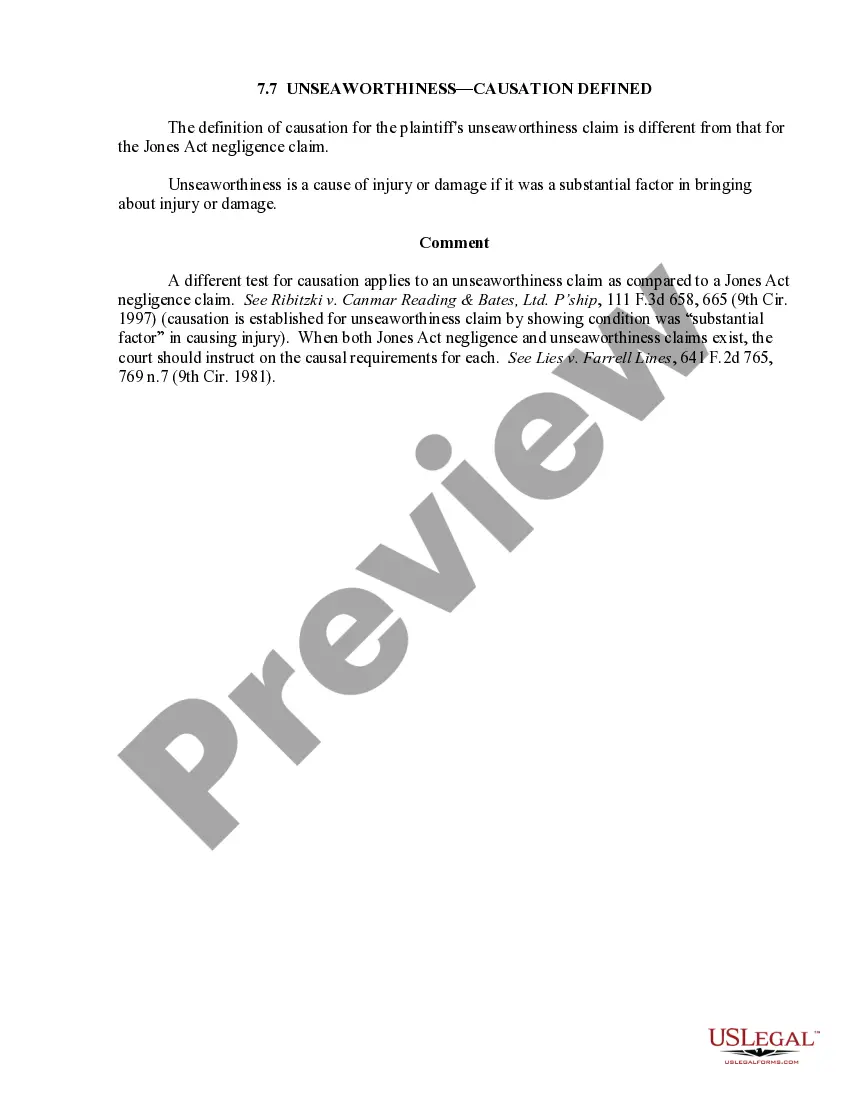
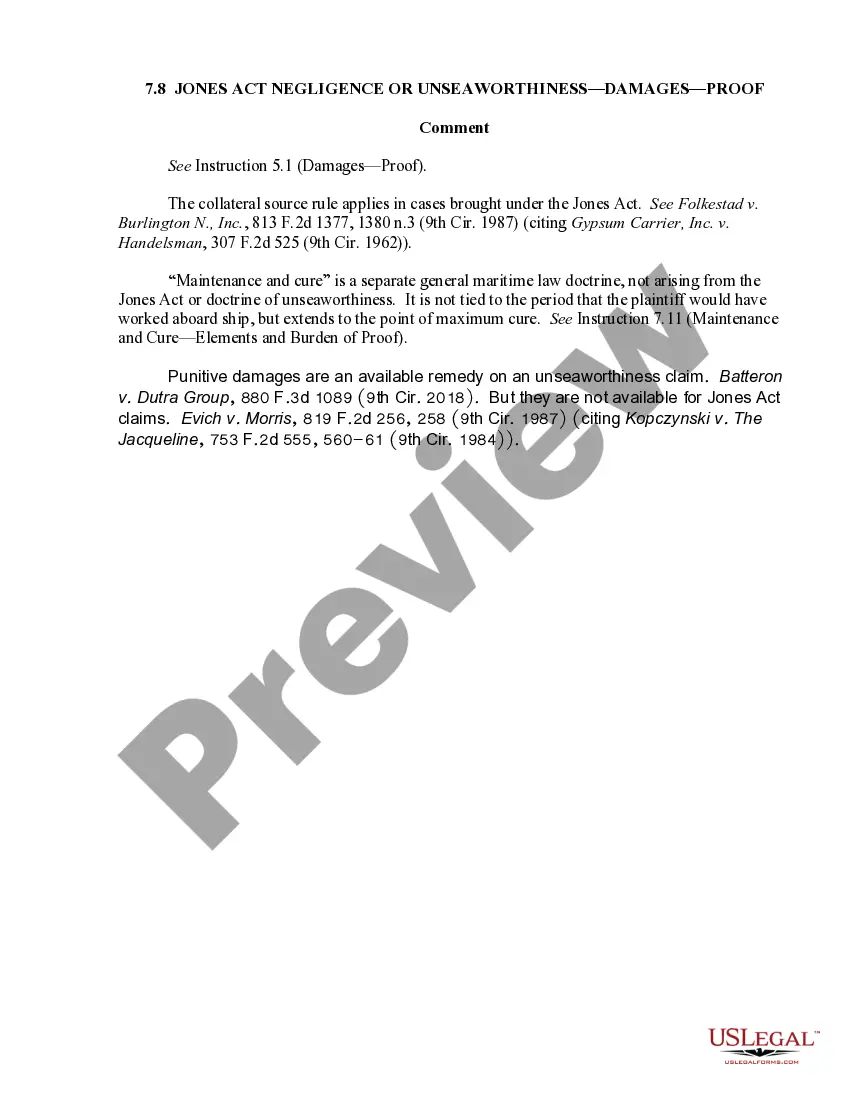
7.6 Unseaworthiness Defined
Does this form need to be notarized?
This form usually doesn’t need to be notarized. However, local laws or specific transactions may require it. Our online notarization service, powered by Notarize, lets you complete it remotely through a secure video session, available 24/7.
Get your form ready online
Our built-in tools help you complete, sign, share, and store your documents in one place.
Make edits, fill in missing information, and update formatting in US Legal Forms—just like you would in MS Word.
Download a copy, print it, send it by email, or mail it via USPS—whatever works best for your next step.
Sign and collect signatures with our SignNow integration. Send to multiple recipients, set reminders, and more. Go Premium to unlock E-Sign.
If this form requires notarization, complete it online through a secure video call—no need to meet a notary in person or wait for an appointment.
We protect your documents and personal data by following strict security and privacy standards.

Make edits, fill in missing information, and update formatting in US Legal Forms—just like you would in MS Word.

Download a copy, print it, send it by email, or mail it via USPS—whatever works best for your next step.

Sign and collect signatures with our SignNow integration. Send to multiple recipients, set reminders, and more. Go Premium to unlock E-Sign.

If this form requires notarization, complete it online through a secure video call—no need to meet a notary in person or wait for an appointment.

We protect your documents and personal data by following strict security and privacy standards.
Looking for another form?


Form popularity
FAQ
In most cases, seamen or their families file unseaworthiness claims against the vessel's owner, who may also be their employer. A chartered vessel is not liable under the seaworthiness doctrine, but its owner may be held liable for negligence based on the vessel's unseaworthiness.
Unseaworthiness is a term found in case law that refers to any unsafe condition occurring on a ?vessel? that causes an injury.
An ?unseaworthy? vessel is one that does not provide seamen with a safe and suitable environment to perform his/her work. A vessel is seaworthy if its ?hull, equipment, and crew are reasonably adequate? in terms of vessel design and maintenance. An unseaworthy vessel may still be able to sail and navigate.
There are three principle causes of action available to seaman who are injured or fall ill in service of the vessel: maintenance and cure, the Jones Act, and the unseaworthiness doctrine.
: not fit for a sea voyage : not seaworthy. an unseaworthy vessel.
Types of damages available on an unseaworthiness claim include loss of income, medical expenses, pain and suffering, compensation for disability, and other damages available under maritime law.
Examples of Unseaworthiness Some common examples include: Old, broken, or otherwise malfunctioning equipment or maintenance tools. Failure to inspect the boat and its equipment on a routine basis. Unsafe or missing ladders, handrails, steps, pathways or access points, or access equipment without adequate grip.