Indiana Letter Informing Debt Collector of False or Misleading Misrepresentations in Collection Activities - Communicating or Threatening to Communicate to any Person False Credit Information, Including the Failure to Communicate that a Debt is Disputed

State:
Multi-State
Control #:
US-DCPA-19.14BG
Format:
Word; 
Rich Text
Instant download

Description

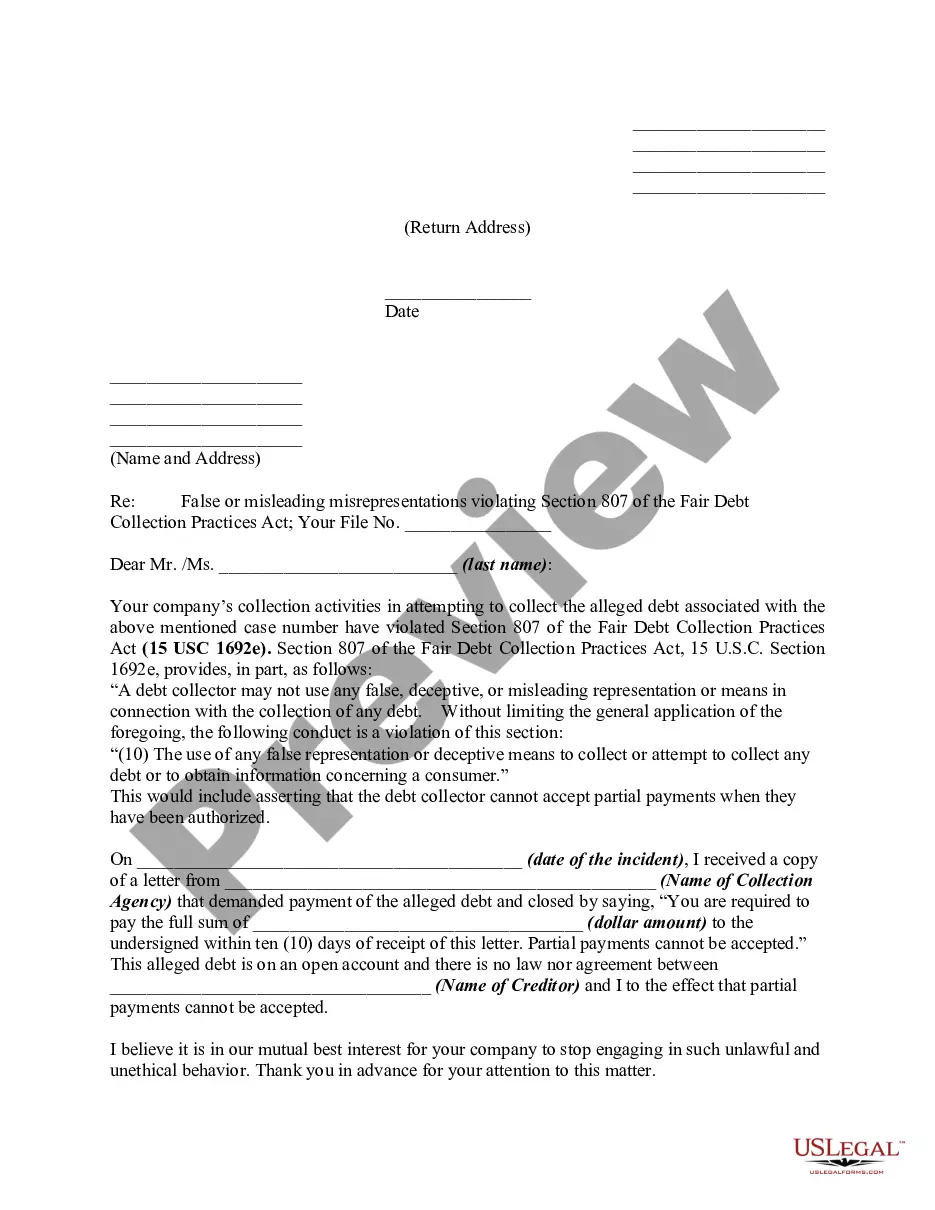
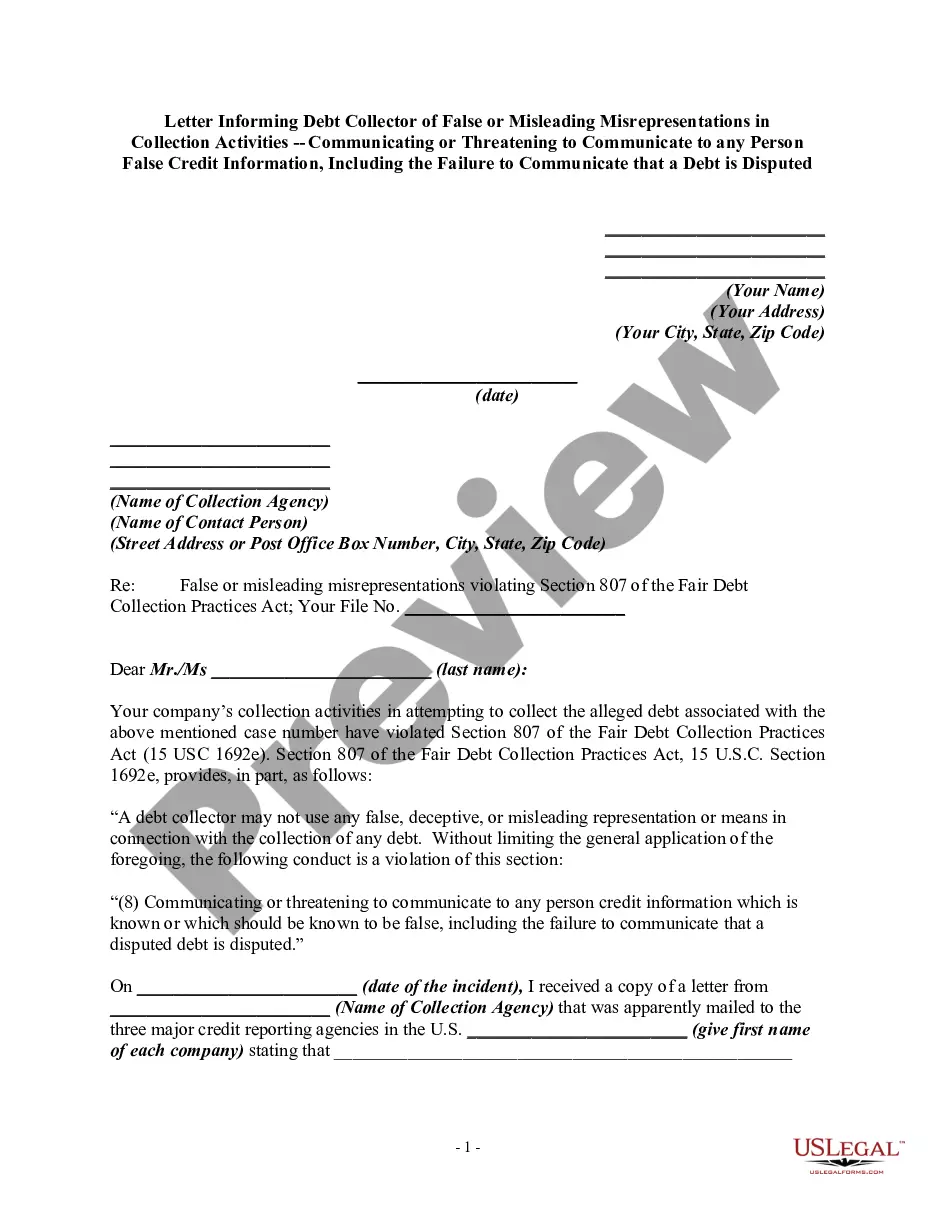
Section 807 of the Fair Debt Collection Practices Act, 15 U.S.C. Section 1692e, provides, in part, as follows: "A debt collector may not use any false, deceptive, or misleading representation or means in connection with the collection of any debt. Without limiting the general application of the foregoing, the following conduct is a violation of this section:


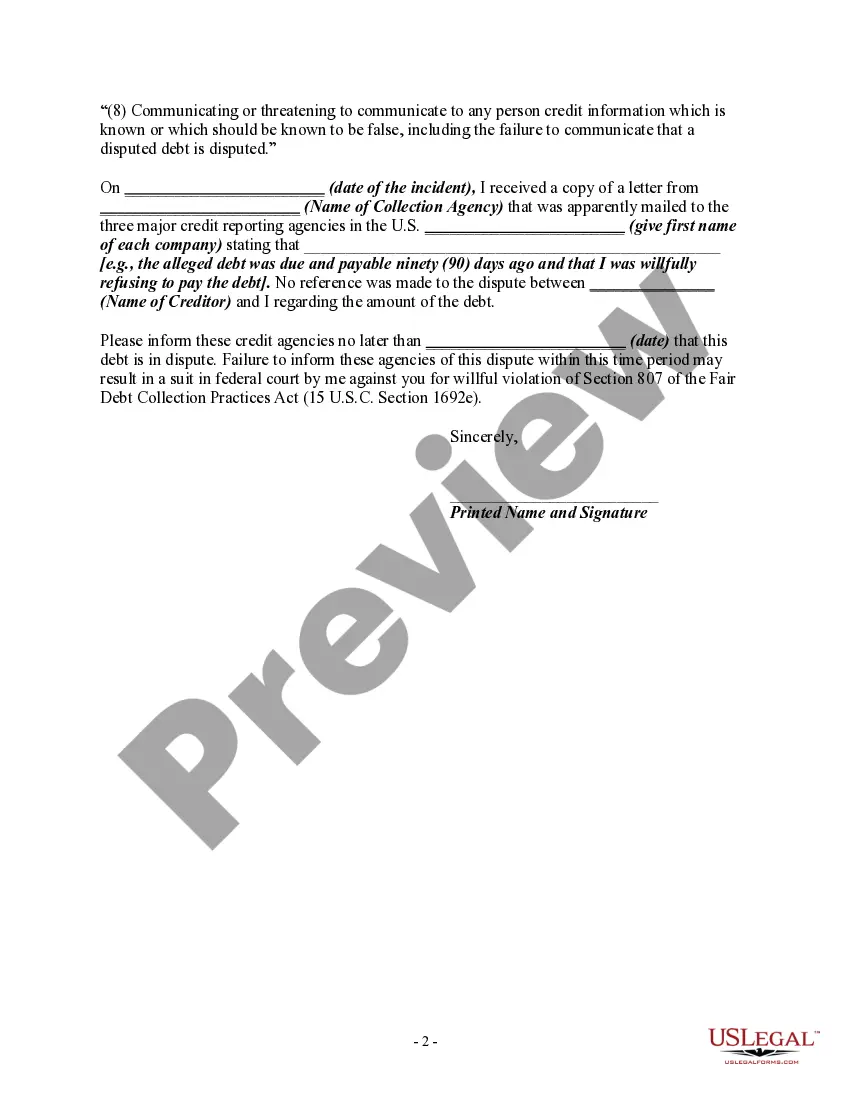
"(8) Communicating or threatening to communicate to any person credit information which is known or which should be known to be false, including the failure to communicate that a disputed debt is disputed."
Free preview
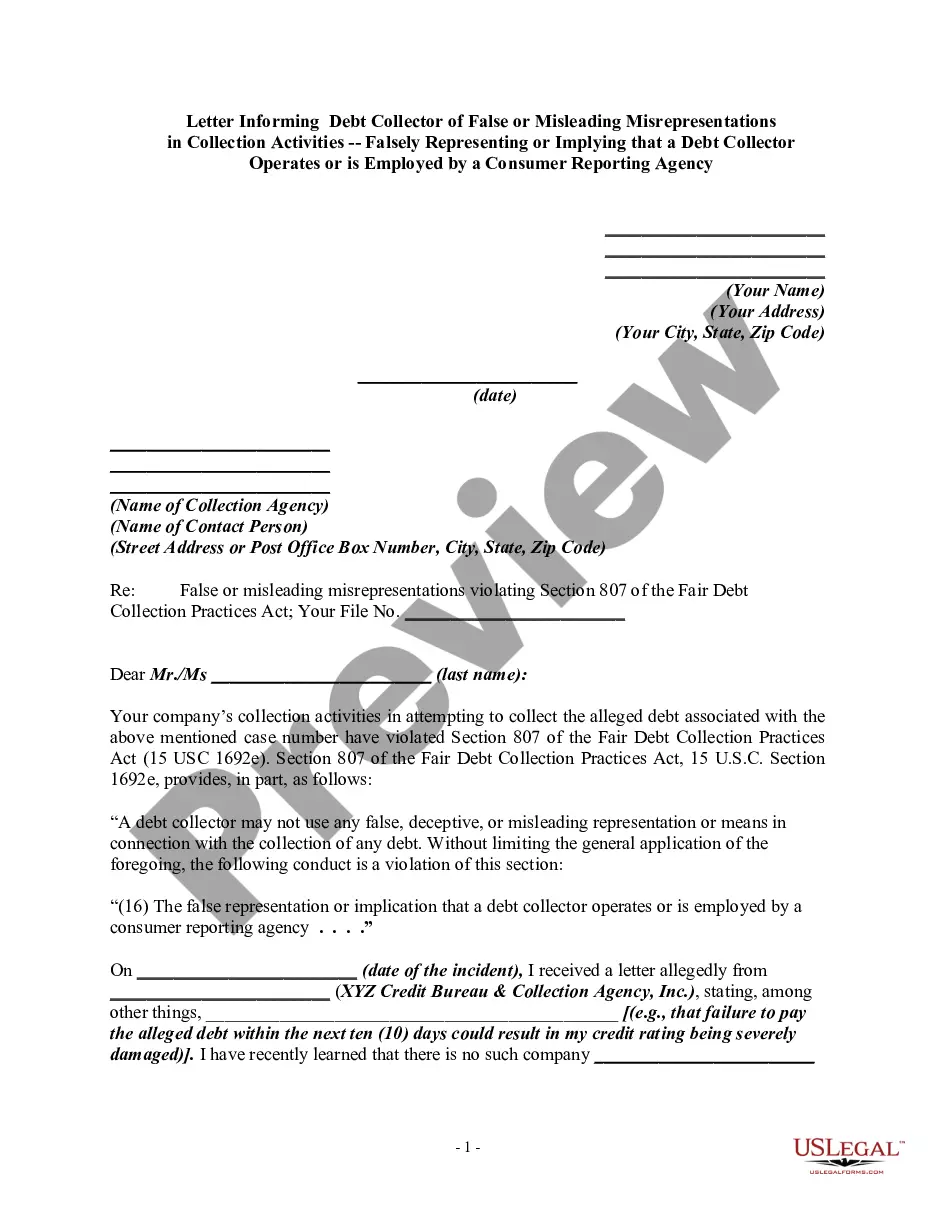
  • Preview Letter Informing Debt Collector of False or Misleading Misrepresentations in Collection Activities - Communicating or Threatening to Communicate to any Person False Credit Information, Including the Failure to Communicate that a Debt is Disputed
  • Preview Letter Informing Debt Collector of False or Misleading Misrepresentations in Collection Activities - Communicating or Threatening to Communicate to any Person False Credit Information, Including the Failure to Communicate that a Debt is Disputed

Related forms

form-preview
Indiana Letter Informing Debt Collector of False or Misleading Misrepresentations in Collection Activities

Indiana Letter Informing Debt Collector of False or Misleading Misrepresentations in Collection Activities

View this form
form-preview
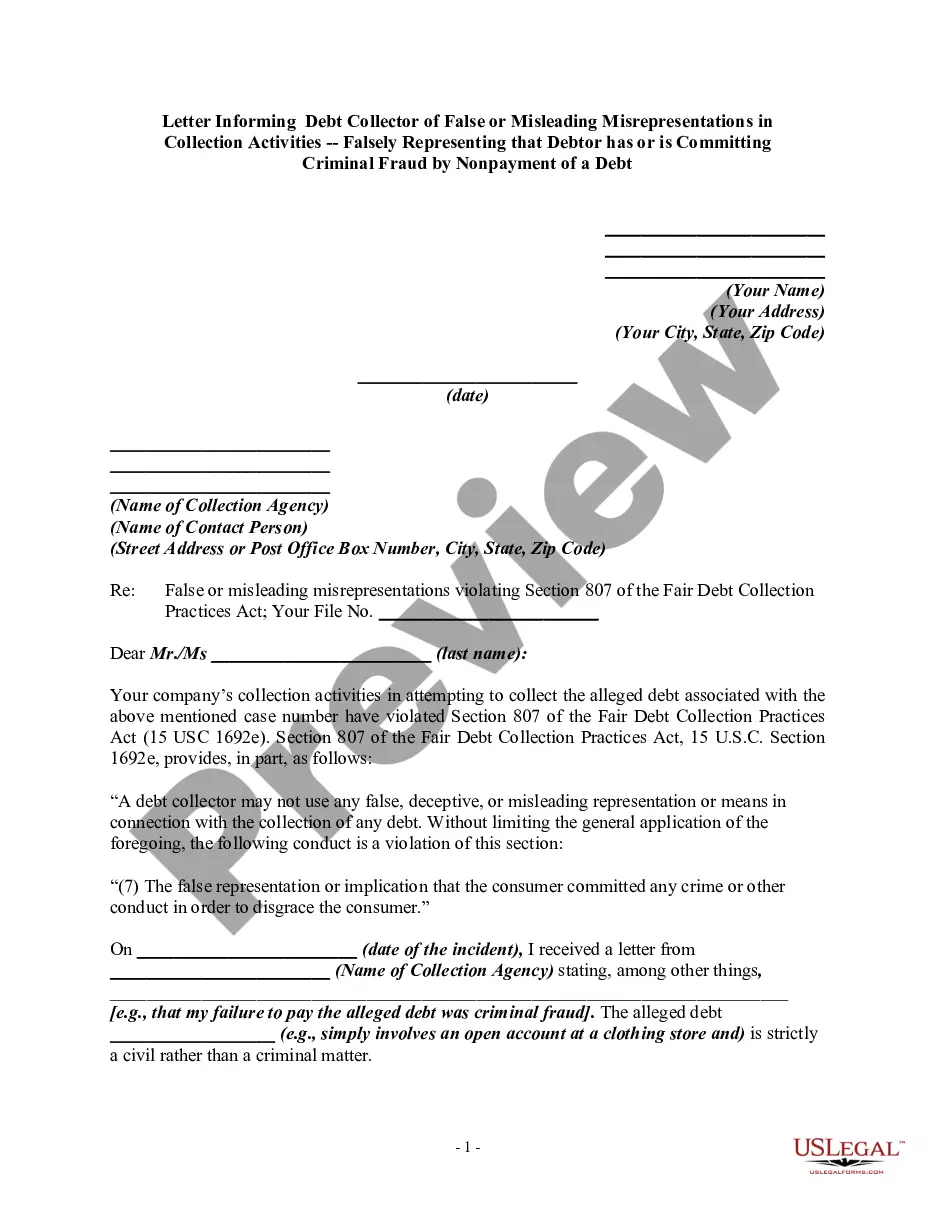
Indiana Letter Informing Debt Collector of False or Misleading Misrepresentations in Collection Activities - Falsely Representing that Debtor has or is Committing Criminal Fraud by Nonpayment of a Debt

Indiana Letter Informing Debt Collector of False or Misleading Misrepresentations in Collection Activities - Falsely Representing that Debtor has or is Committing Criminal Fraud by Nonpayment of a Debt

View this form
form-preview
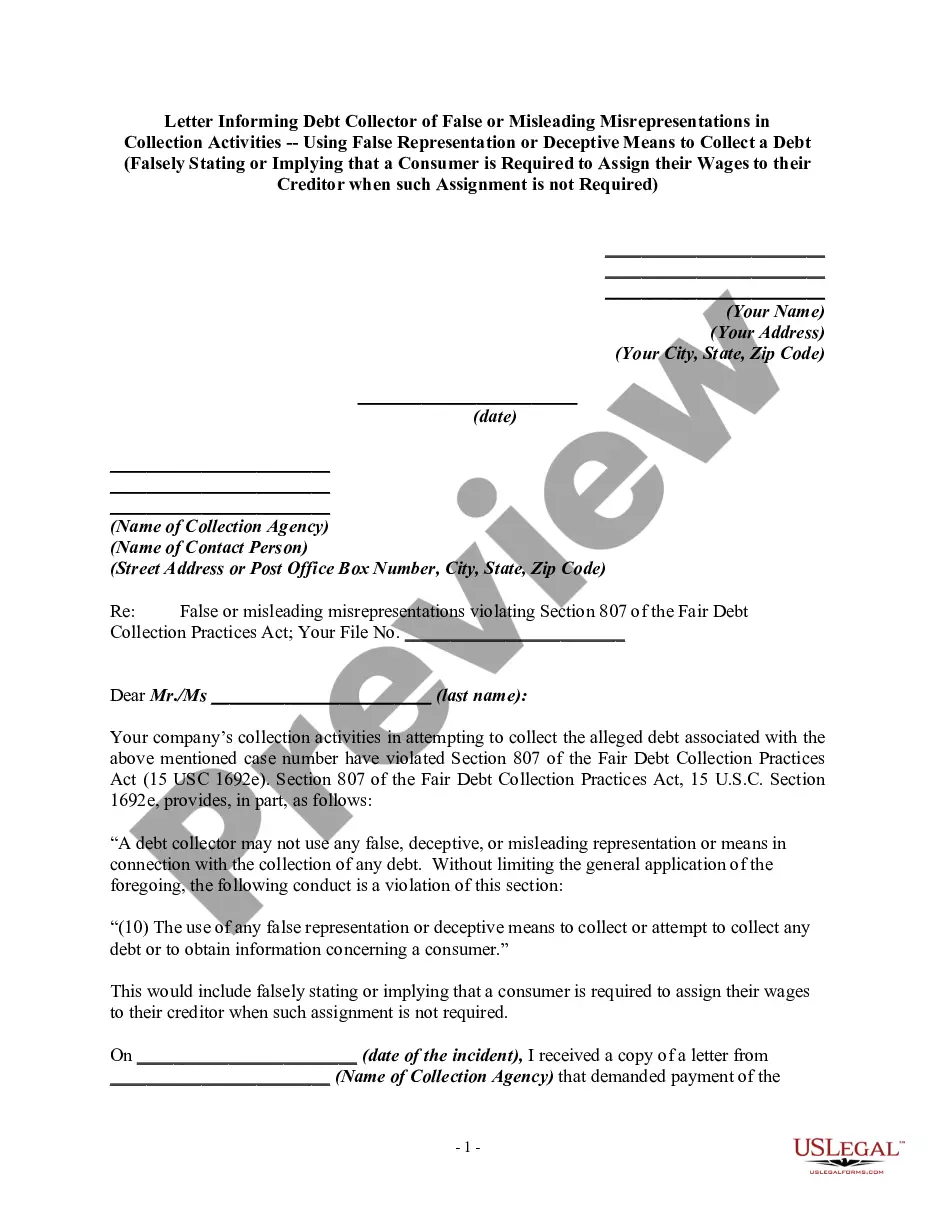
Indiana Letter Informing Debt Collector of False or Misleading Misrepresentations in Collection Activities - Using False Representation or Deceptive Means to Collect a Debt

Indiana Letter Informing Debt Collector of False or Misleading Misrepresentations in Collection Activities - Using False Representation or Deceptive Means to Collect a Debt

View this form
form-preview
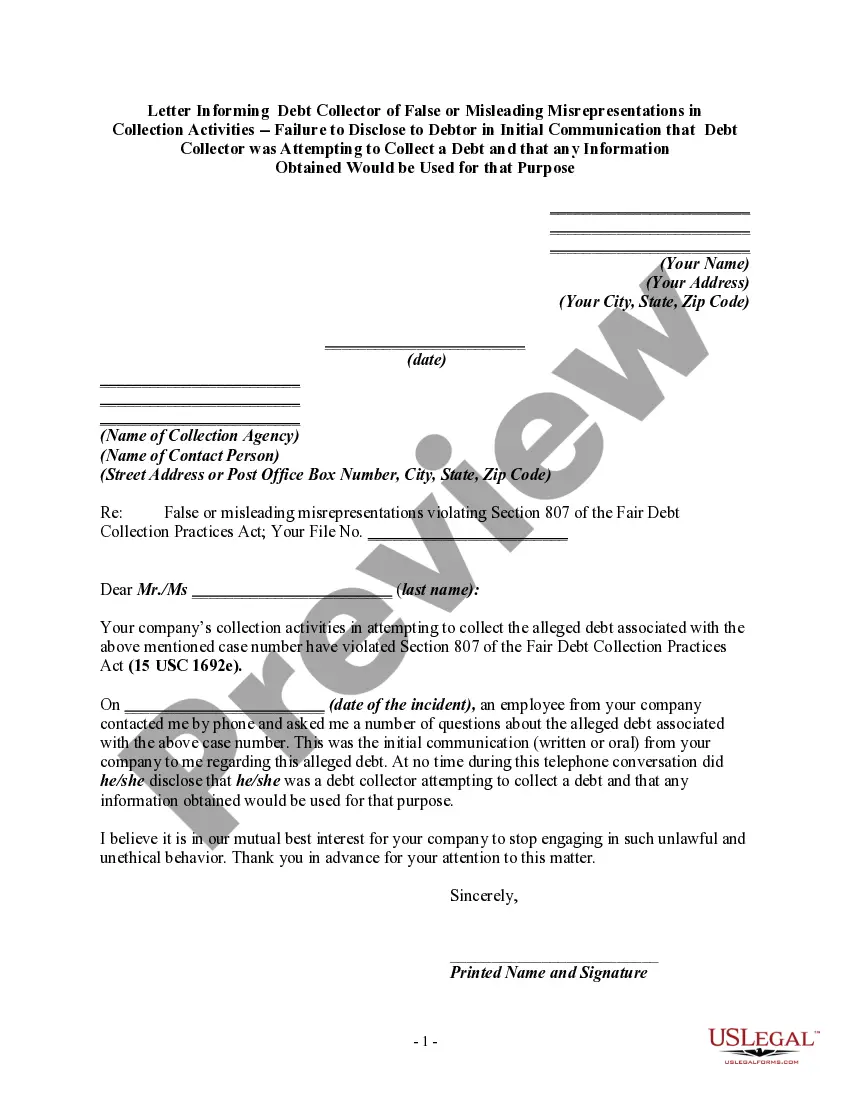
Indiana Letter Informing Debt Collector of False or Misleading Misrepresentations in Collection Activities - Failure to Disclose to Debtor in Initial Communication that Debt Collector was Attempting to Collect a Debt

Indiana Letter Informing Debt Collector of False or Misleading Misrepresentations in Collection Activities - Failure to Disclose to Debtor in Initial Communication that Debt Collector was Attempting to Collect a Debt

View this form
form-preview
Indiana Letter Informing Debt Collector of False or Misleading Misrepresentations in Collection Activities - Falsely Representing or Implying that a Debt Collector Operates or is Employed by a Consumer Reporting Agency

Indiana Letter Informing Debt Collector of False or Misleading Misrepresentations in Collection Activities - Falsely Representing or Implying that a Debt Collector Operates or is Employed by a Consumer Reporting Agency

View this form

How to fill out Letter Informing Debt Collector Of False Or Misleading Misrepresentations In Collection Activities - Communicating Or Threatening To Communicate To Any Person False Credit Information, Including The Failure To Communicate That A Debt Is Disputed?

Finding the correct legal document template can be a challenge.

Naturally, there are numerous formats accessible online, but how do you acquire the legitimate form you require.

Utilize the US Legal Forms website.

If you are a first-time user of US Legal Forms, here are simple instructions you should follow: First, ensure you have chosen the correct form for your city/state. You can review the form using the Review option and examine the form details to confirm it's the right one for you.

  1. The service offers thousands of templates, including the Indiana Letter Informing Debt Collector of False or Misleading Misrepresentations in Collection Activities - Communicating or Threatening to Communicate to any Person False Credit Information, Along with the Failure to Communicate that a Debt is Disputed.
  2. These templates can be utilized for both business and personal needs.
  3. All documents are reviewed by experts and comply with state and federal regulations.
  4. If you are already registered, Log In to your account and click the Obtain option to access the Indiana Letter Informing Debt Collector of False or Misleading Misrepresentations in Collection Activities.
  5. Leverage your account to search through the legal documents you have previously purchased.
  6. Visit the My documents tab in your account to download another copy of the document you need.

Form popularity

FAQ

You can file your dispute through the credit bureaus' website, over the phone or by mail. The easiest and fastest way is to do it online. Whichever route you go, you will have to provide personal information, a description of the information that needs to be corrected, and documentation to back your claim.

To remove the collection account from your credit report early, you can ask a company for a goodwill deletion, but there's no guarantee you'll receive forgiveness. If you have a collection account on your report that's inaccurate or incomplete, dispute it with each credit bureau that lists it on your credit report.

Yes, you may be able to sue a debt collector or a debt collection agency if it engages in abusive, deceptive, or unfair behavior. A debt collector is generally someone who buys a debt from a creditor who, for whatever reason, has been unable to collect from a consumer.

You can file your dispute through the credit bureaus' website, over the phone or by mail. The easiest and fastest way is to do it online. Whichever route you go, you will have to provide personal information, a description of the information that needs to be corrected, and documentation to back your claim.

(1) The false representation or implication that the debt collector is vouched for, bonded by, or affiliated with the United States or any State, including the use of any badge, uniform, or facsimile thereof.

Format the letter thusly: Your full name and address. The collections agency's name and address. A request for the amount of the debt claimed to be owed. A request for the name of the original creditor. A request for the judgment information (if applicable) A request for proof of the company's license.

If you identify an error on your credit report, you should start by disputing that information with the credit reporting company (Experian, Equifax, and/or Transunion). You should explain in writing what you think is wrong, why, and include copies of documents that support your dispute.

If you have inaccurate or incomplete collection accounts on your credit report, the Fair Credit Reporting Act gives you the power to dispute this information directly with the credit bureaus or creditor. You can send a dispute using the dispute form on each credit bureau's website.

If you doubt that you owe a debt, or that the amount owed is not accurate, your best recourse is to send a debt dispute letter to the collection agency asking that the debt be validated.

List all the erroneous collection accounts on your credit reports and write down as much information as possible about each item. Write a dispute letter and send it to each credit bureau. Include information about each of the disputed itemsaccount numbers, listed amounts and creditor names.

Trusted and secure by over 3 million people of the world’s leading companies

Indiana Letter Informing Debt Collector of False or Misleading Misrepresentations in Collection Activities - Communicating or Threatening to Communicate to any Person False Credit Information, Including the Failure to Communicate that a Debt is Disputed