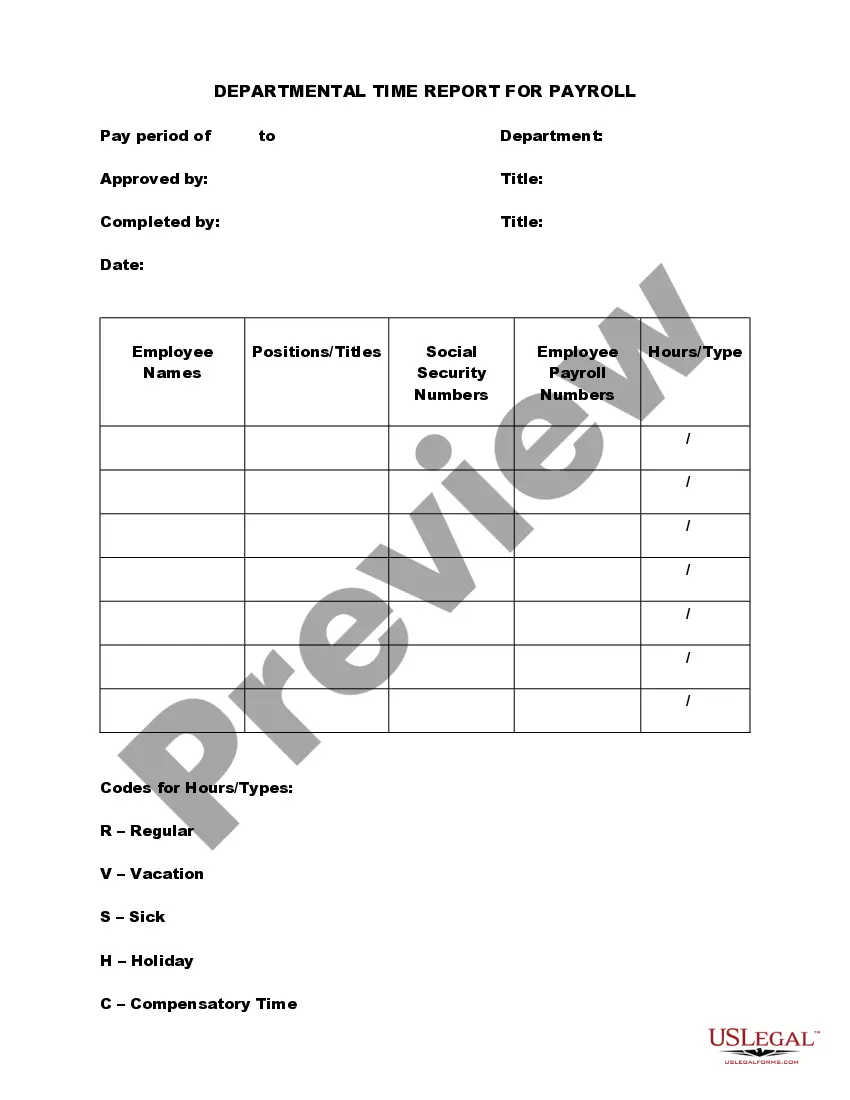
Indiana Department Time Report for Payroll
Description
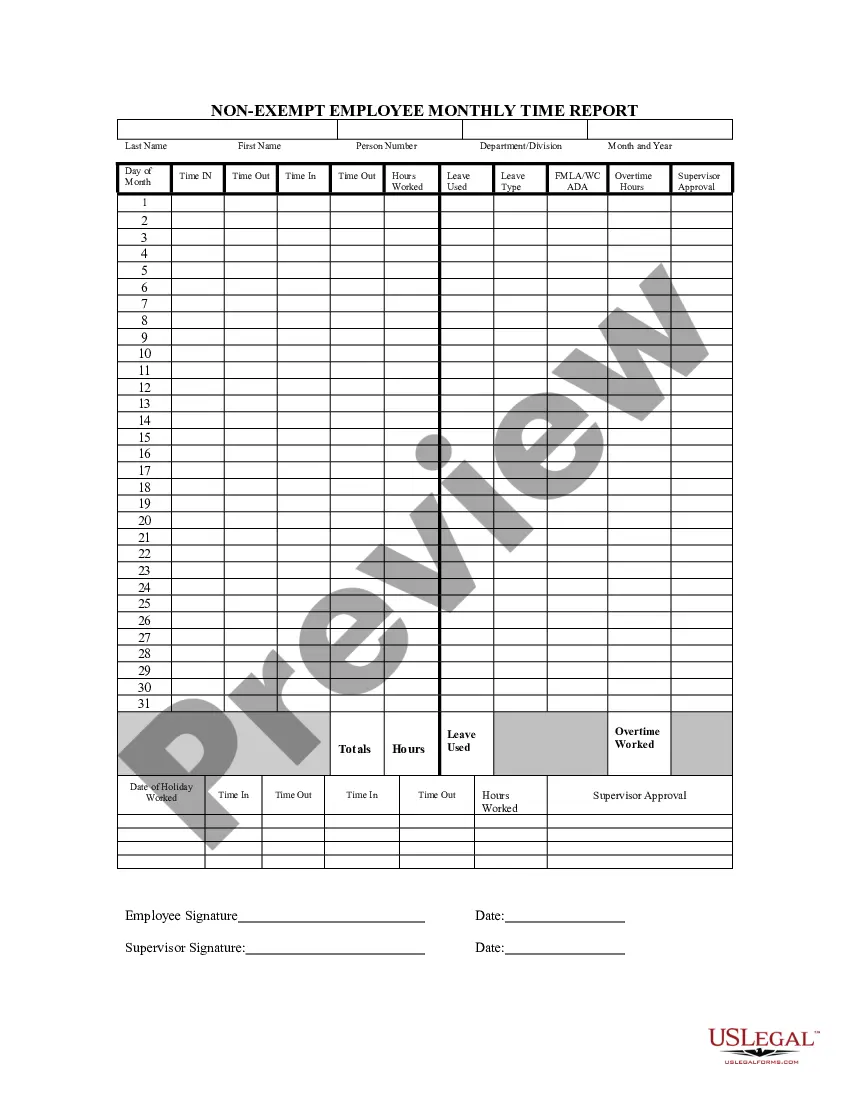
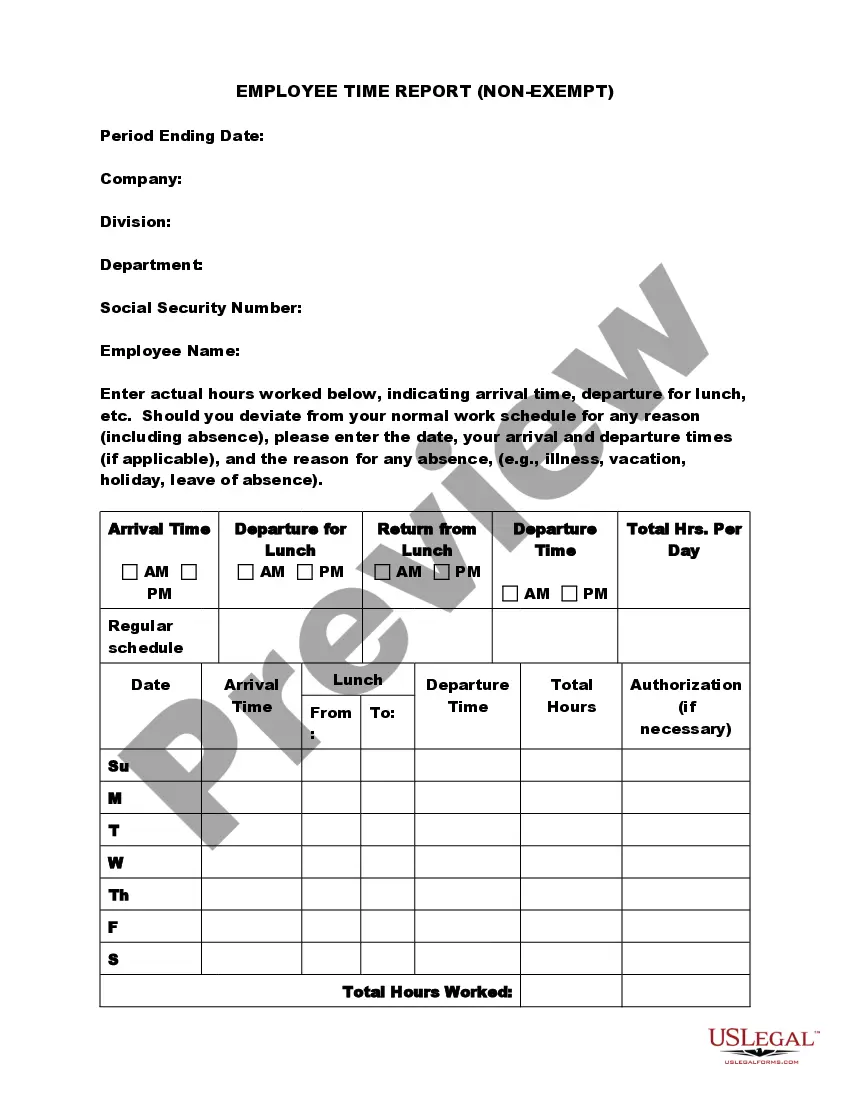
Get your form ready online
Our built-in tools help you complete, sign, share, and store your documents in one place.
Make edits, fill in missing information, and update formatting in US Legal Forms—just like you would in MS Word.
Download a copy, print it, send it by email, or mail it via USPS—whatever works best for your next step.
Sign and collect signatures with our SignNow integration. Send to multiple recipients, set reminders, and more. Go Premium to unlock E-Sign.
If this form requires notarization, complete it online through a secure video call—no need to meet a notary in person or wait for an appointment.
We protect your documents and personal data by following strict security and privacy standards.

Make edits, fill in missing information, and update formatting in US Legal Forms—just like you would in MS Word.

Download a copy, print it, send it by email, or mail it via USPS—whatever works best for your next step.

Sign and collect signatures with our SignNow integration. Send to multiple recipients, set reminders, and more. Go Premium to unlock E-Sign.

If this form requires notarization, complete it online through a secure video call—no need to meet a notary in person or wait for an appointment.

We protect your documents and personal data by following strict security and privacy standards.
Looking for another form?






How to fill out Department Time Report For Payroll?
Finding the appropriate legal document format can be a challenge.
Clearly, there are numerous templates available online, but how do you find the legal form you require.
Utilize the US Legal Forms website. The service offers thousands of templates, including the Indiana Department Time Report for Payroll, which can be utilized for business and personal needs.
First, ensure you have chosen the correct form for your city/county. You can check the form using the Review option and read the form description to confirm it is the right one for you.
- All the forms are reviewed by experts and comply with federal and state regulations.
- If you are currently registered, Log In to your account and click the Download option to access the Indiana Department Time Report for Payroll.
- Use your account to view the legal forms you have previously obtained.
- Navigate to the My documents section of your account and download another copy of the document you need.
- If you are a new user of US Legal Forms, here are simple instructions for you to follow.
Form popularity
FAQ
Submitting your timesheet late can lead to delayed processing of your payroll, affecting when you receive your paycheck. Employers may have to adjust future payments to accommodate the late submission. It's important to communicate with your payroll department if you anticipate delays. Using the Indiana Department Time Report for Payroll ensures timely submissions and reduces the risks associated with late timesheet submission.
For employees who have quit their jobs, they must wait until the next scheduled payday to receive their last paycheck. If the employee does not give the employer a forwarding address, then the employer should pay within 10 days since the employee demands the wages or until the employee provides a new address.
Per several California Labor Code sections and the state's labor laws, an employer is subject to penalties if the employer fails to pay an employee on time. For example, as to regular pay, employers are subject to a $100 penalty if they fail to pay an employee on his/her regular payday.
Employers are required to pay wages at least semimonthly or biweekly, if requested, and no later than 10 business days (not including Saturdays, Sundays, and legal holidays) following the close of the pay period. More frequent payments are always allowed (IN Code Sec. 22-2-5-1).
The office can sue on your behalf, or refer you to a private attorney. What if the Indiana Division of Labor cannot help me? You can sue your employer for your wages plus attorney fees and damages (up to 2 times the amount of unpaid wages). You can file a suit on your own in Small Claims Court.
Each month that your account is charged for benefits, DWD will send a Charge Statement Notification alerting you to a new Statement of Benefit Charges (Form 535) in your correspondence history on ESS.
Indiana law requires employers to pay all wages due within 10 business days after the end of the pay period.
Under the Indiana wage payment statute, employers who do not pay employees their full wages within ten business days of a request for the wages may ultimately be made to pay the employee twice the amount that was unpaid plus the costs of forcing the payment.
A: Indiana state law does not require employers to provide rest breaks or meal breaks.
Rules for Final PaychecksIf you quit your job and give your employer less than 72 hours' notice, your employer must pay you within 72 hours. If you give your employer at least 72 hours' notice, you must be paid immediately on your last day of work.