Indiana Personal Guaranty - Guarantee of Lease to Corporation
Description
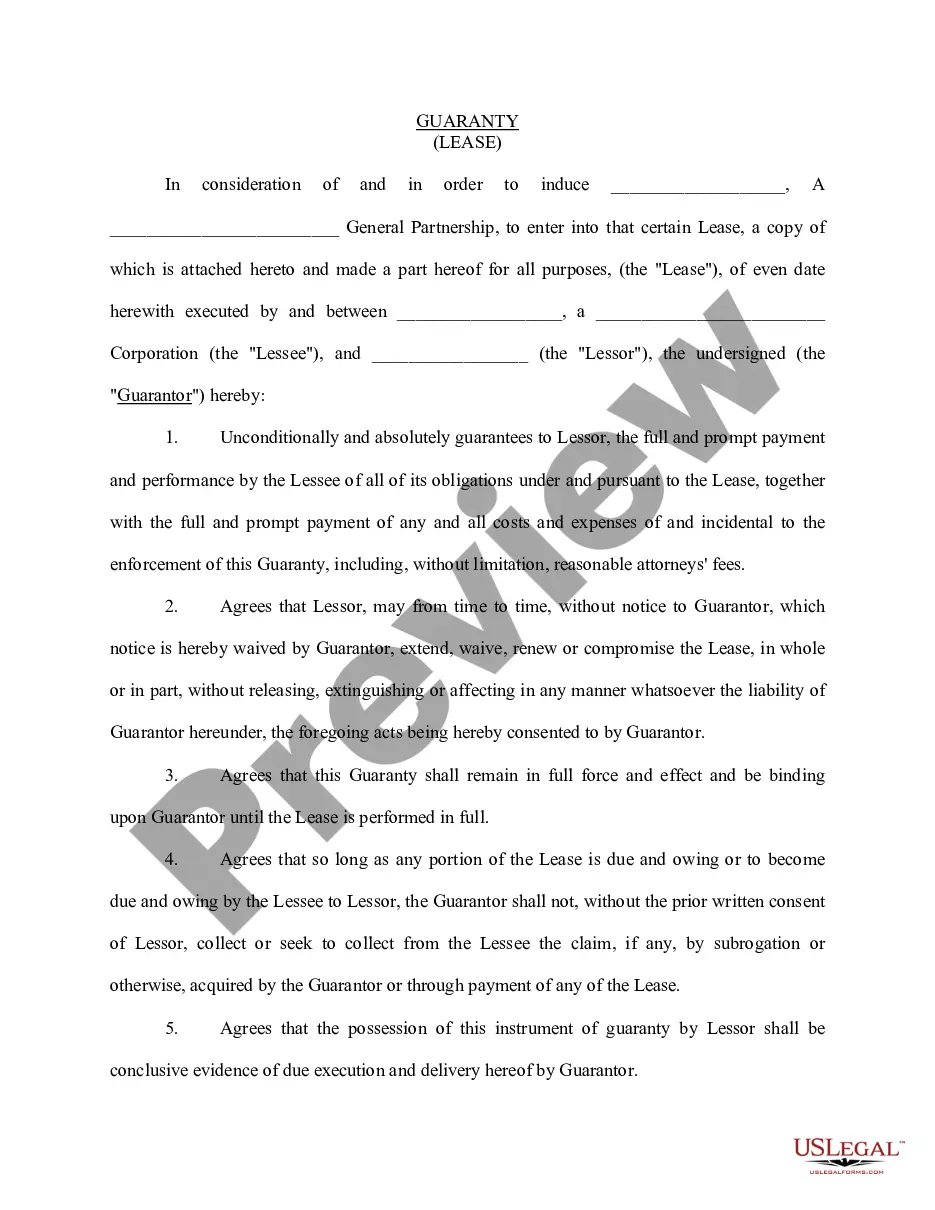
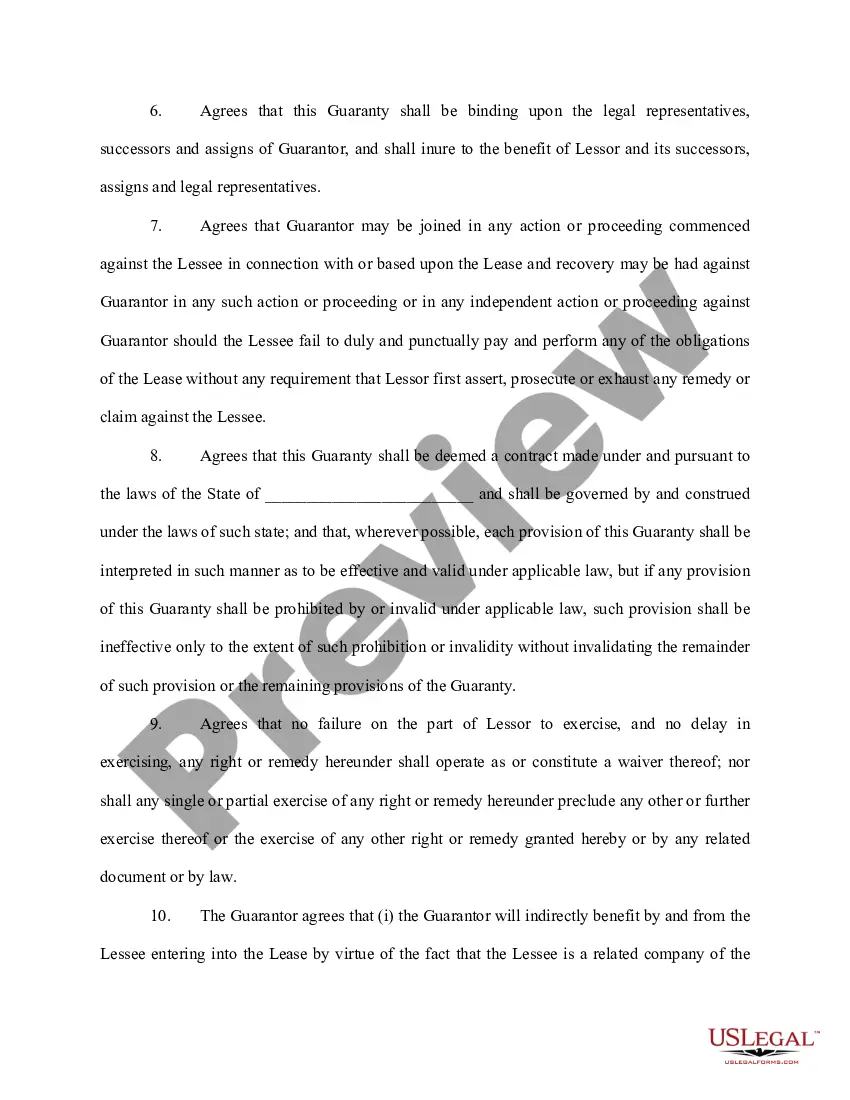
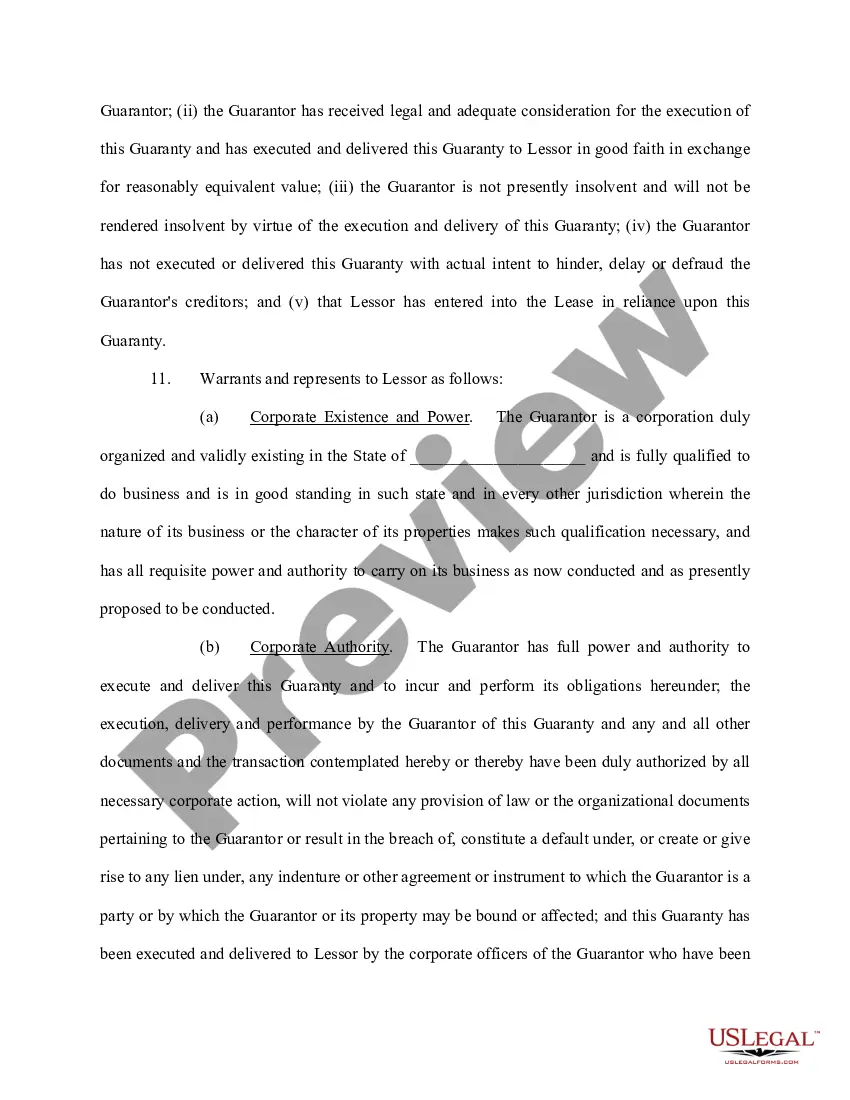
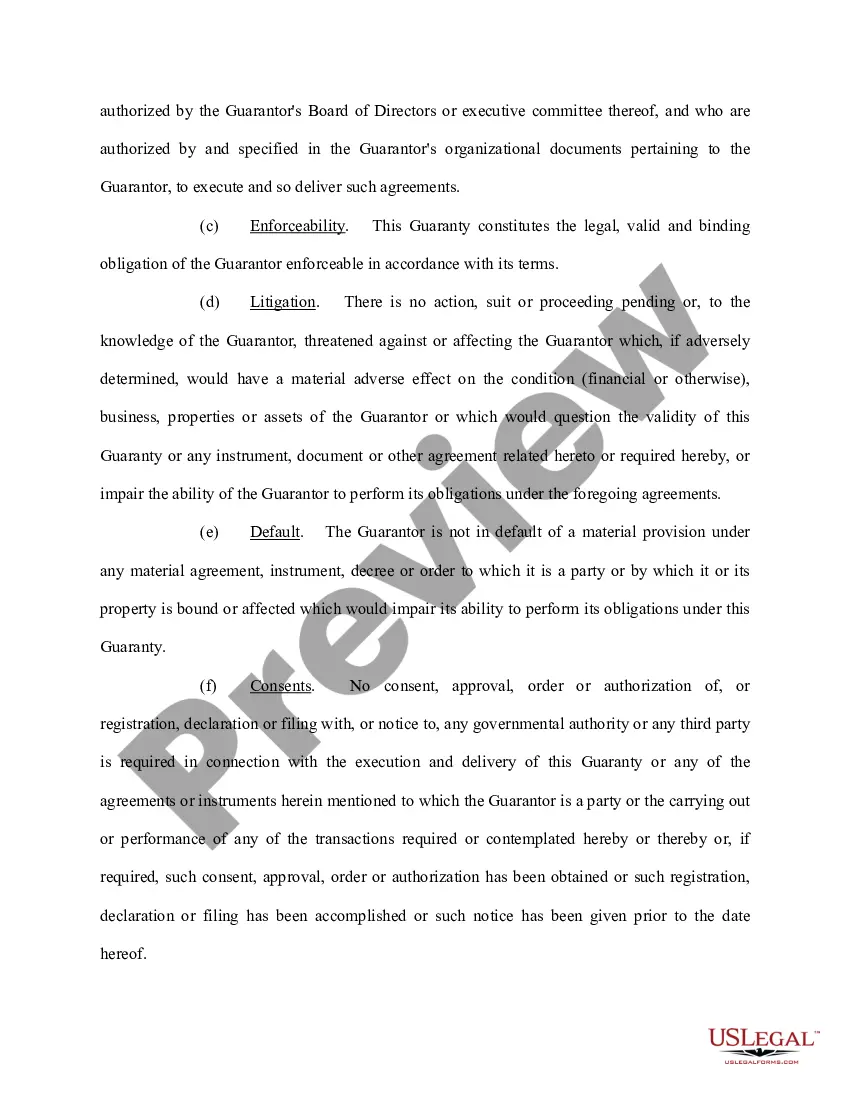
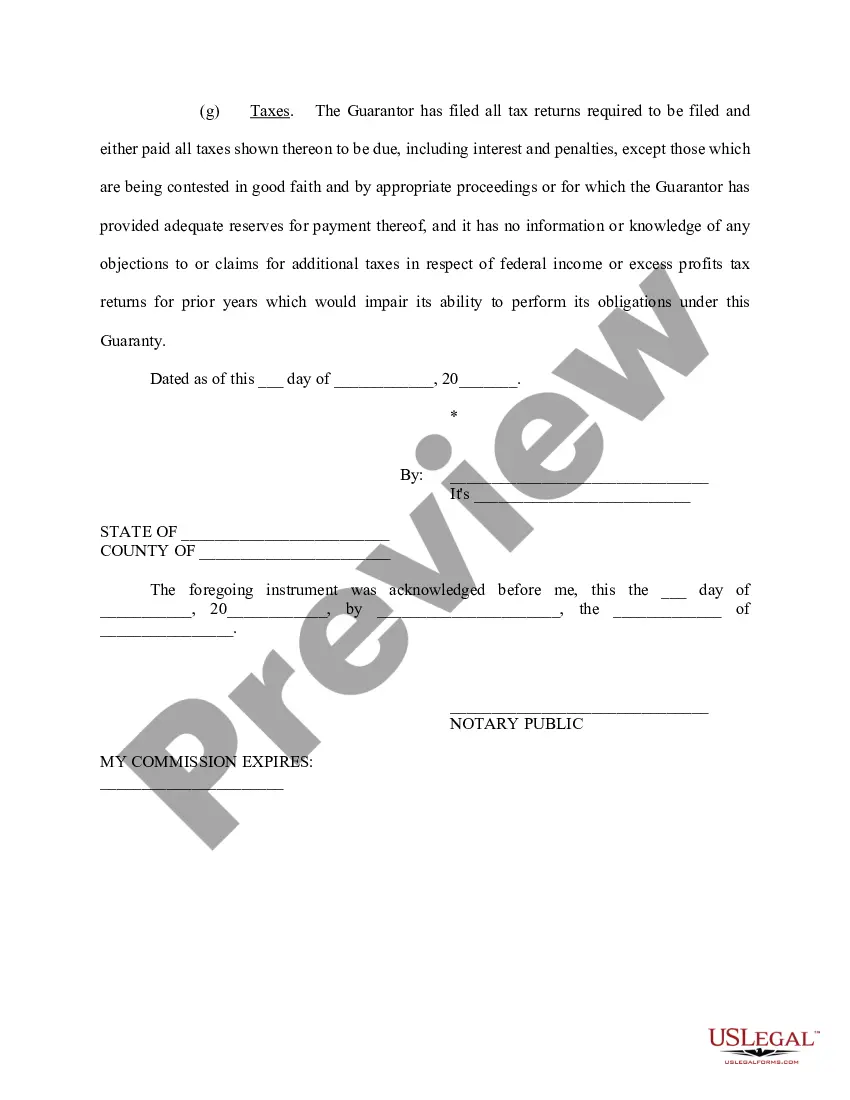
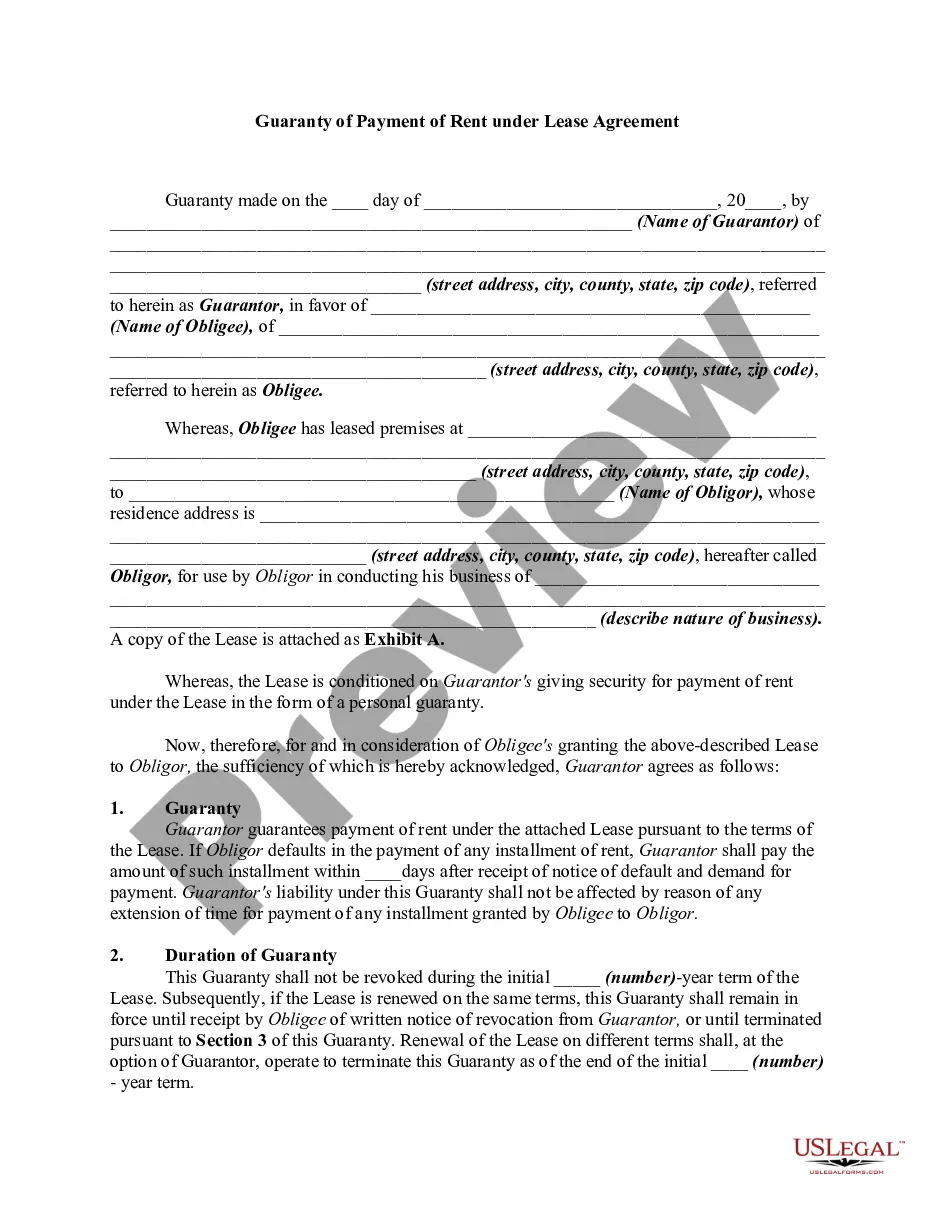
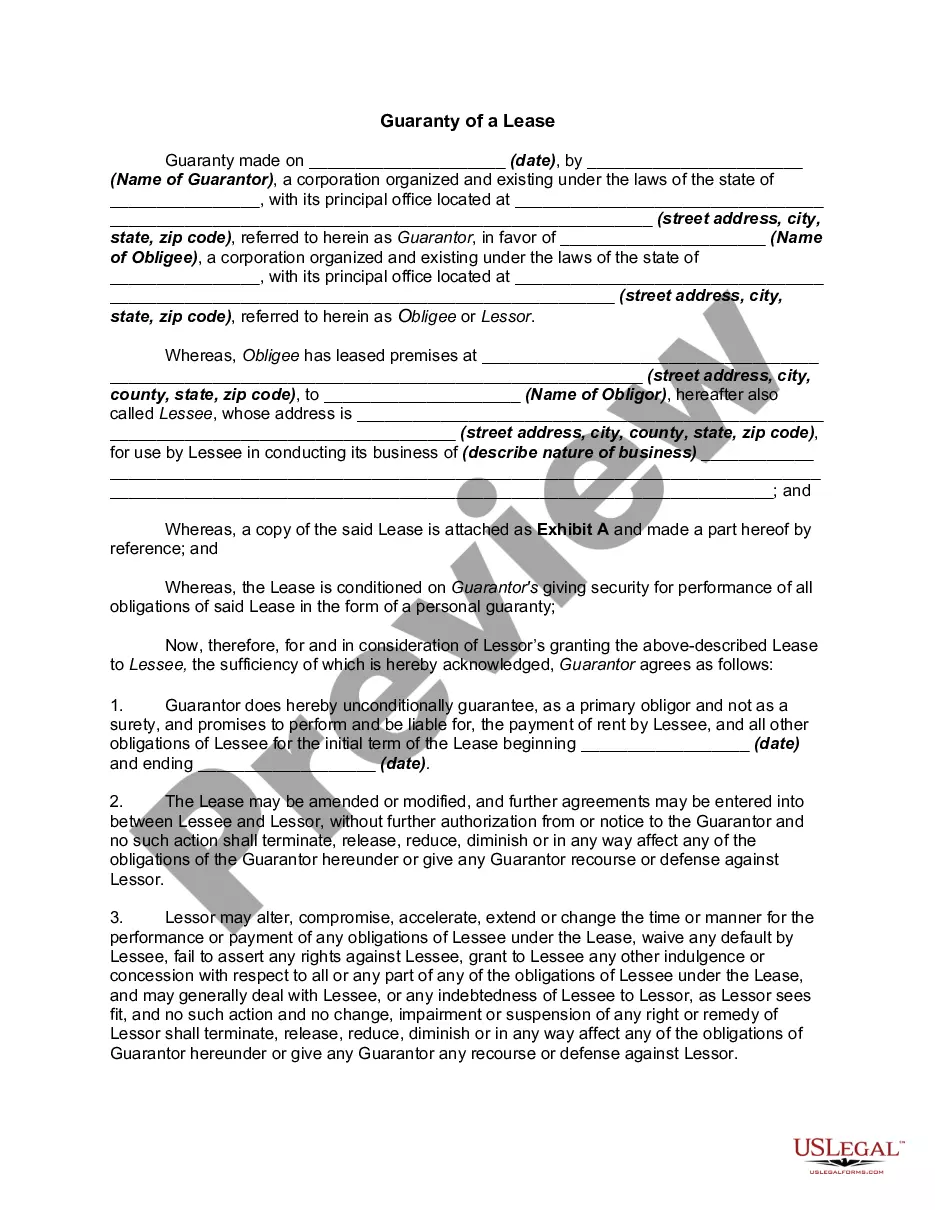
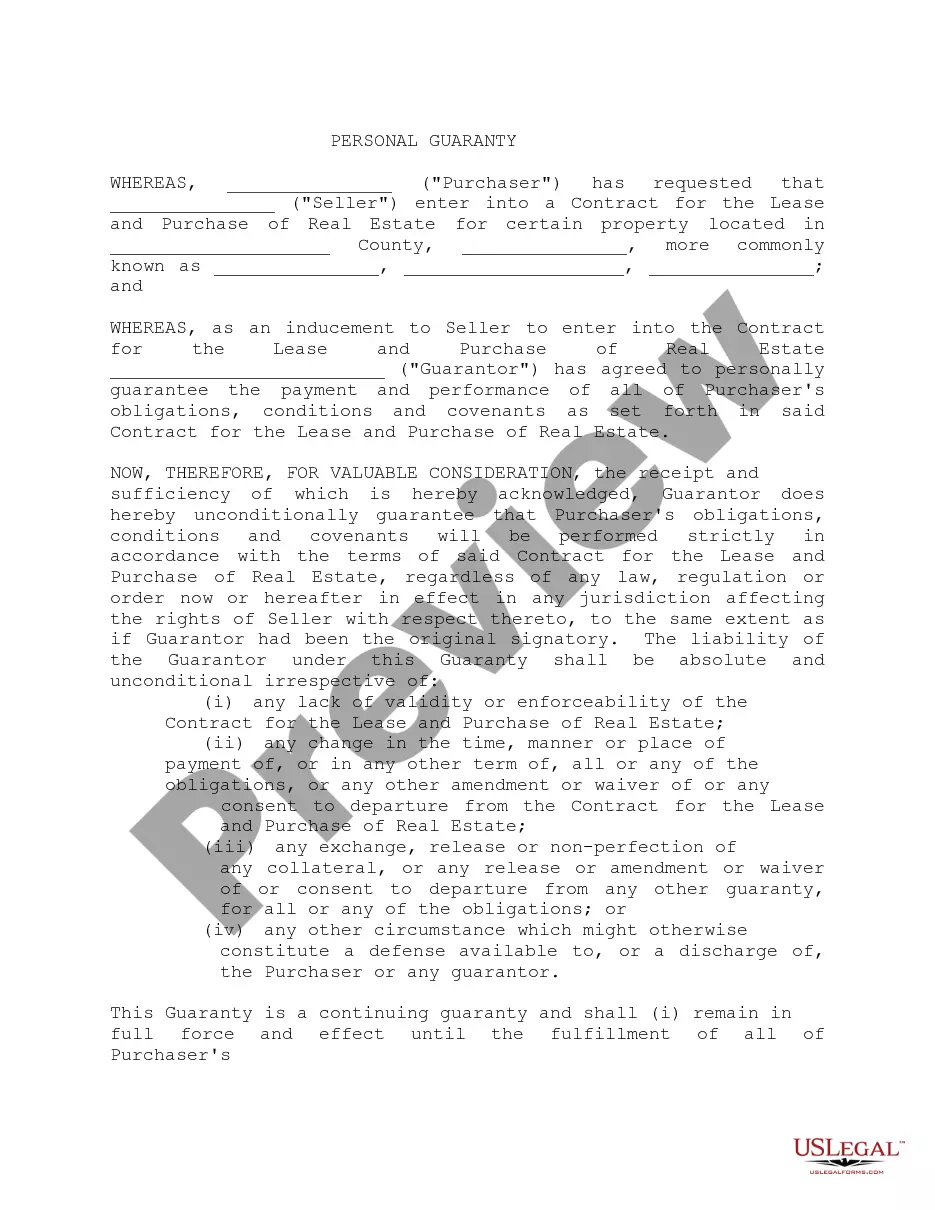
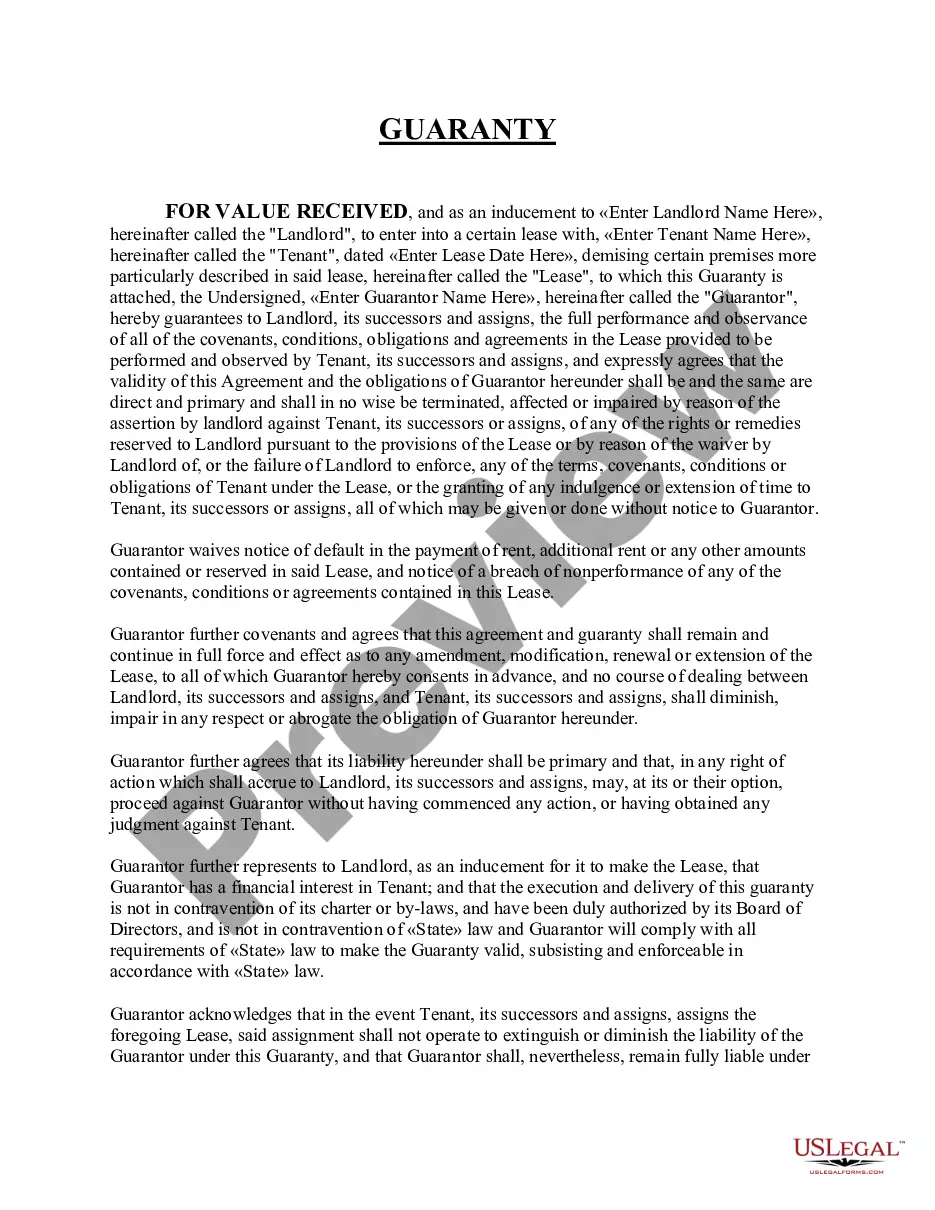
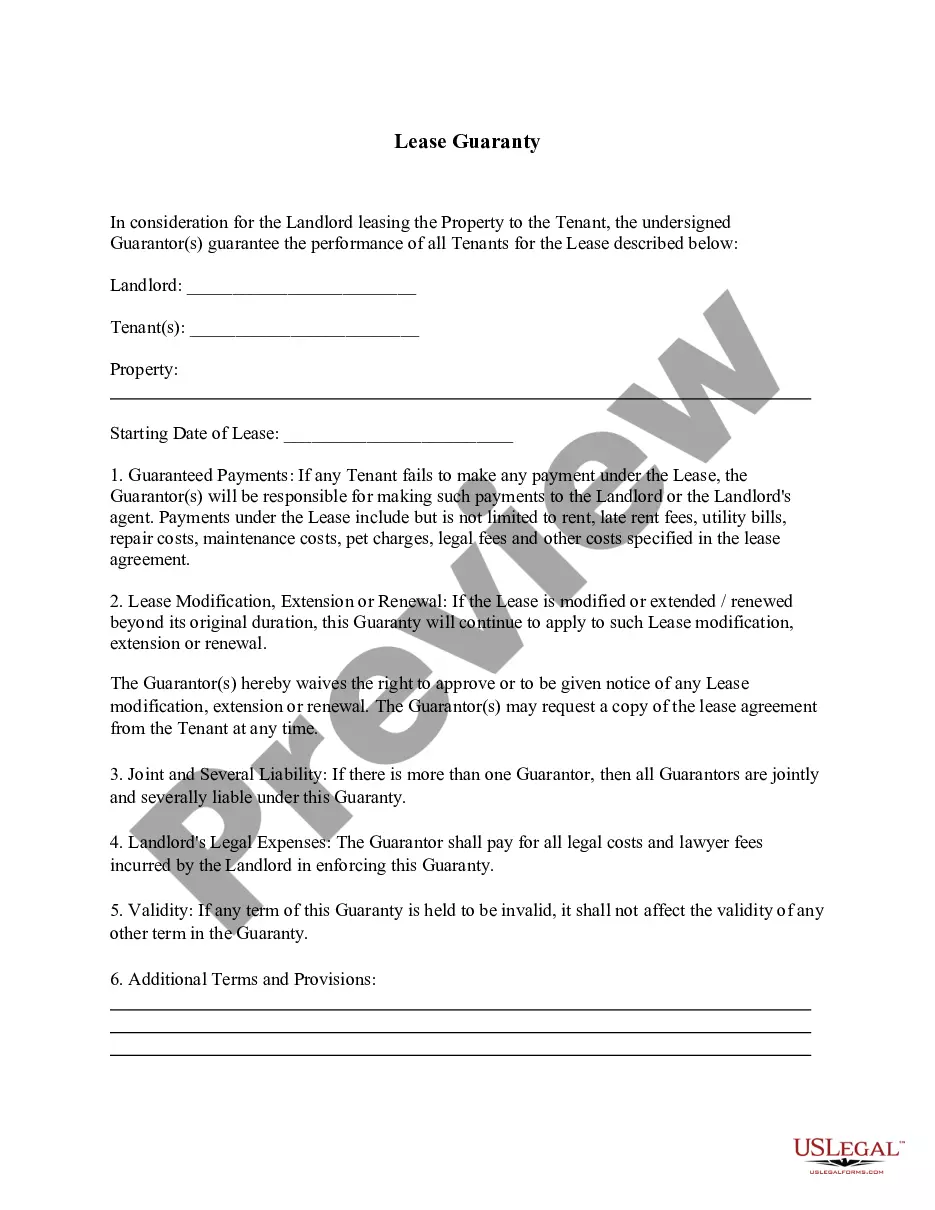

How to fill out Personal Guaranty - Guarantee Of Lease To Corporation?
You have the opportunity to devote time online in search of the legal document template that meets the federal and state requirements you need.
US Legal Forms offers a variety of legal forms that can be examined by experts.
You can conveniently download or print the Indiana Personal Guaranty - Guarantee of Lease to Corporation from the service.
If available, utilize the Preview button to view the document template as well.
- If you possess a US Legal Forms account, you can Log In and then click the Download button.
- Subsequently, you can complete, edit, print, or sign the Indiana Personal Guaranty - Guarantee of Lease to Corporation.
- Every legal document template you acquire is yours permanently.
- To obtain another copy of a purchased form, visit the My documents tab and click the associated button.
- If this is your first time using the US Legal Forms website, follow the simple steps below.
- First, ensure you have selected the correct document template for the region/city of your choice.
- Review the form description to confirm you have chosen the appropriate form.
Form popularity
FAQ
7 Ways to Avoid a Personal GuaranteeBuy insurance.Raise the interest rate.Increase Reporting.Increased the Frequency of Payments.Add a Fidelity Certificate.Limit the Guarantee Time Period.Use Other Collateral.
A personal guarantee can be enforced the same way as any debt. If the business owner does not pay, the creditor can bring a lawsuit to receive a judgment and levy the owner's personal assets to cover the debt. The exact terms of a personal guarantee specify a creditor's options under the guarantee.
A guarantor can be any party, including an individual or another organization, with a credit history. A common purpose of a personal guarantee is to allow a loan to be extended to an organization or person with either no credit history or one with a credit rating that is too poor to qualify for a loan.
A corporate guarantee is an agreement in which one party, called the guarantor, takes on the payments or responsibilities of a debt if the debtor defaults on the loan.
A personal guarantee is a guarantee given by an individual rather than a company. The liability to honour the guarantee is personal to you. There's no protection from a company. This means that all of your personal assets are on the line.
Is a personal guarantee legally binding? Yes as soon as a personal guarantee is in writing and signed by the guarantor, then it becomes an enforceable contract. In the event of a company's insolvency, the individual will be given a timeframe to pay the outstanding payment.
The difference between corporate and personal guarantors is quite simple: a personal guarantor is an individual who agrees to take on the obligations of a debt for a debtor, whereas a corporate guarantor is a corporation that takes on payment responsibilities.
Your personal guarantee may be unenforceable due to circumstances outside of your contract. This may include being misled by the creditor, if a key fact was omitted from the contract, co-guarantor issues, suspicions of fraud, or if the facility provided by the bank changed significantly since you signed the guarantee.
Unless a business is a sole proprietorship, personal guarantees can only be discharged by filing an individual bankruptcy. A business bankruptcy will not eliminate a personal guarantee. Likewise, the Chapter 13 co-debtor stay only applies to consumer debts and personal guarantees are usually considered business debts.
A corporate guaranty is one usually signed by a parent or more developed affiliated company. It is a comfort to a landlord to have an extra set of assets to go after should its tenant default.