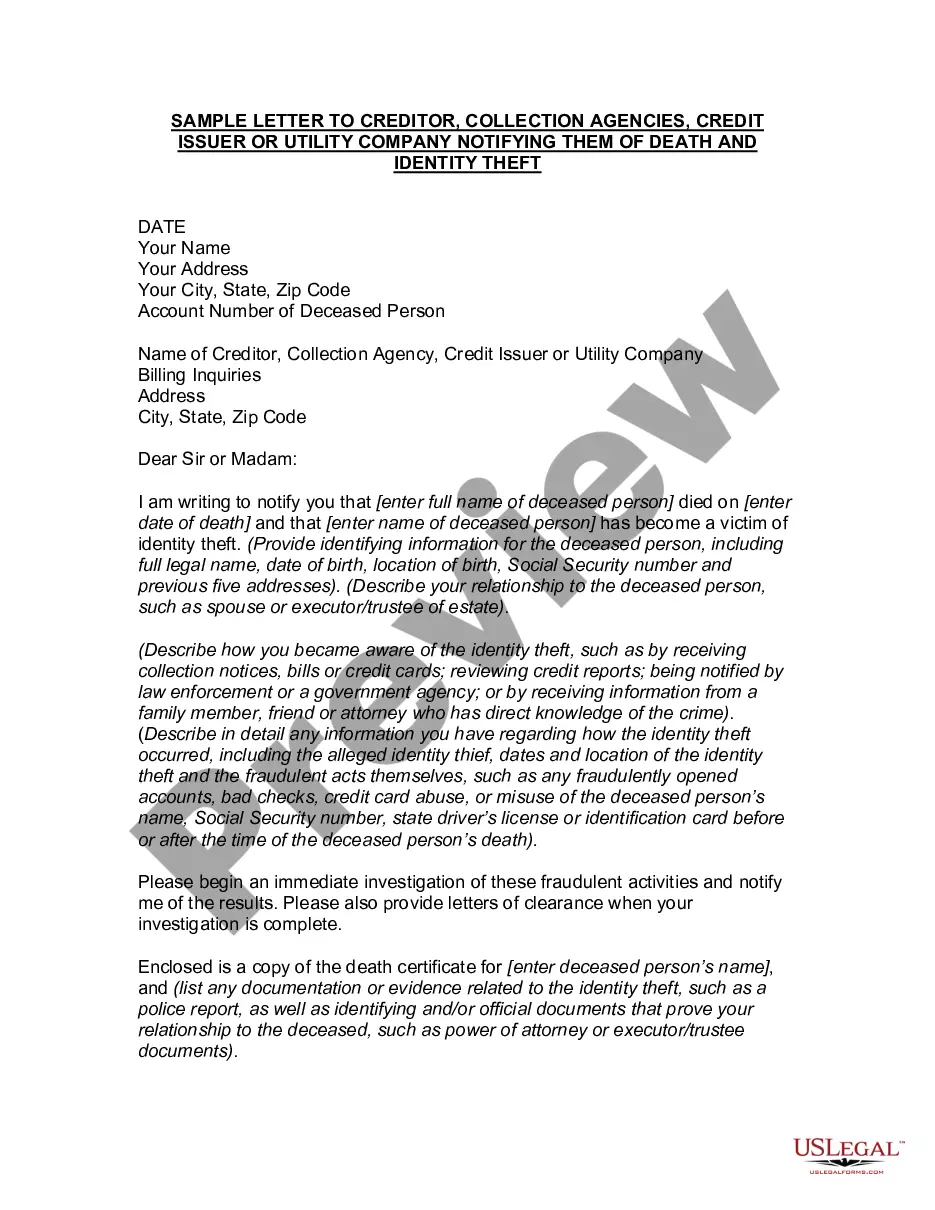
Indiana Film Music Agreement with Composer
Description
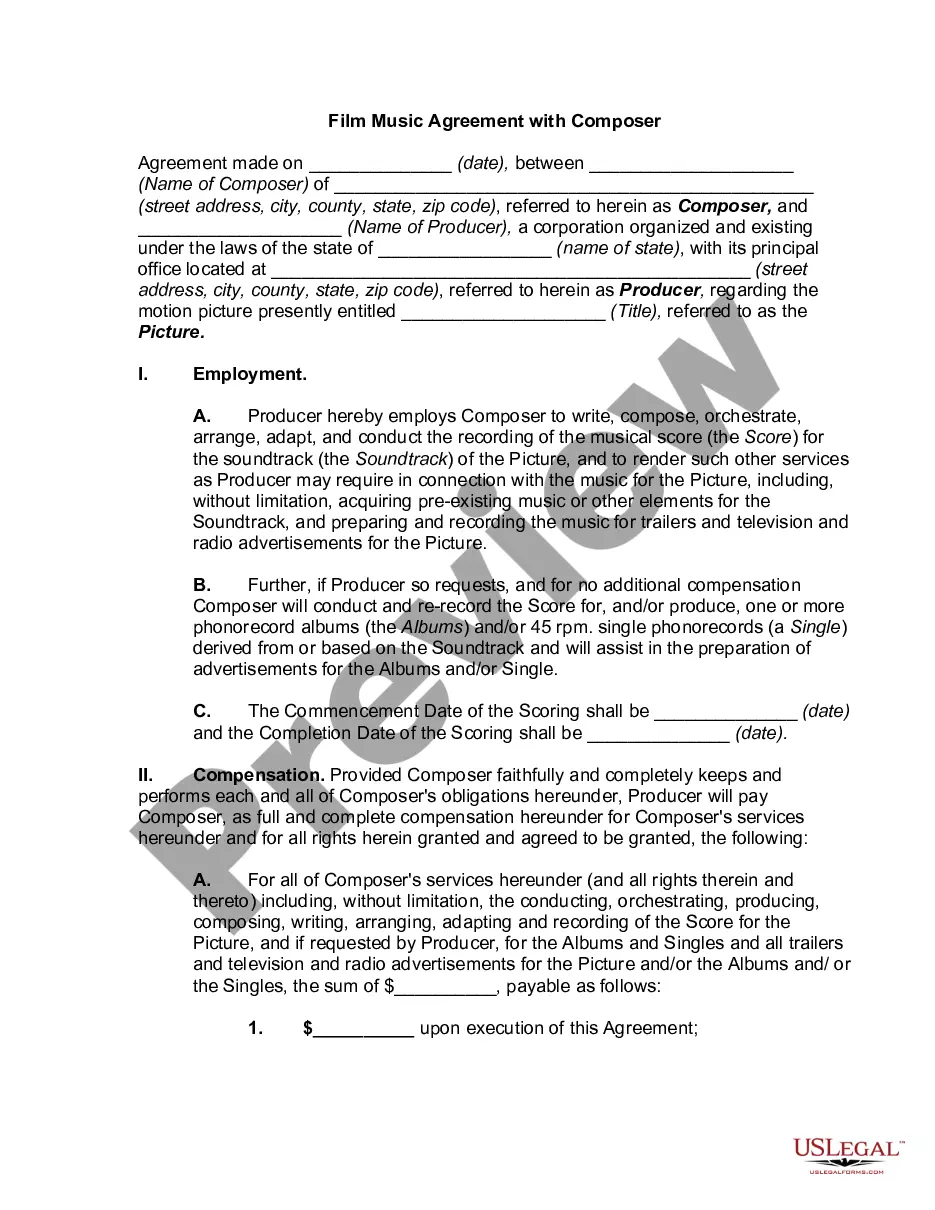
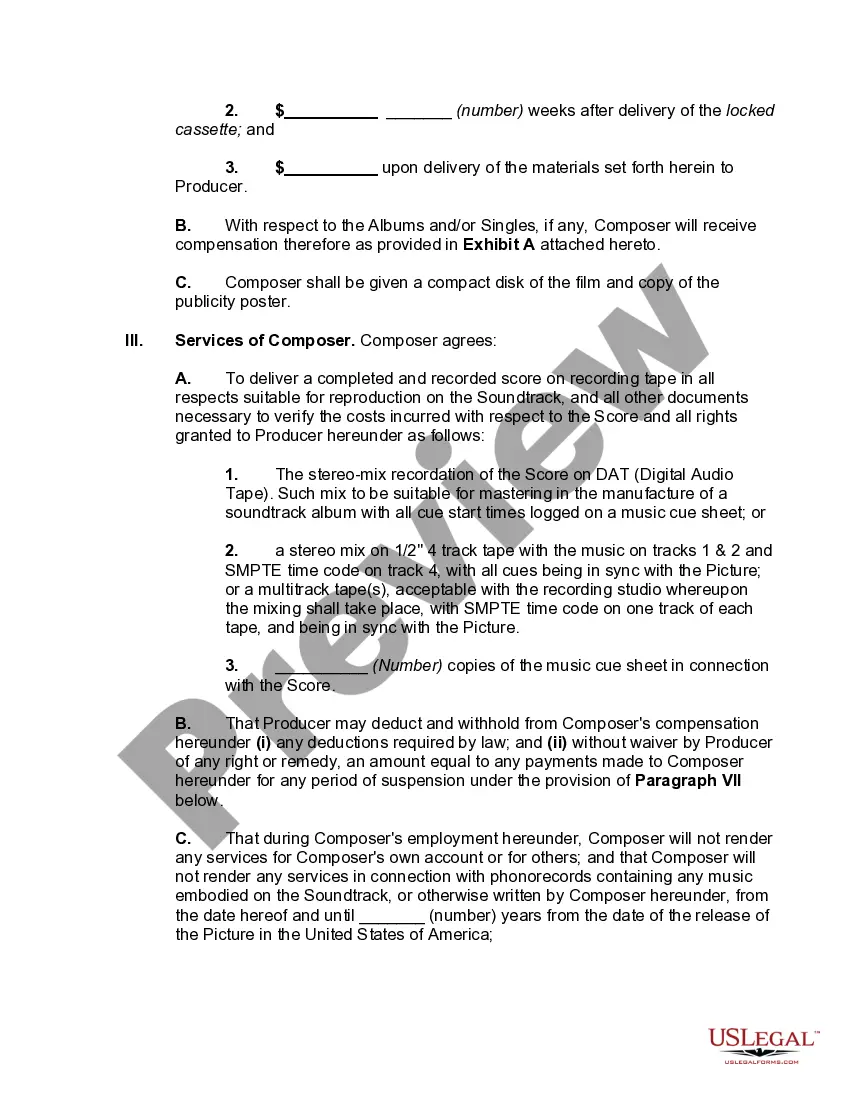
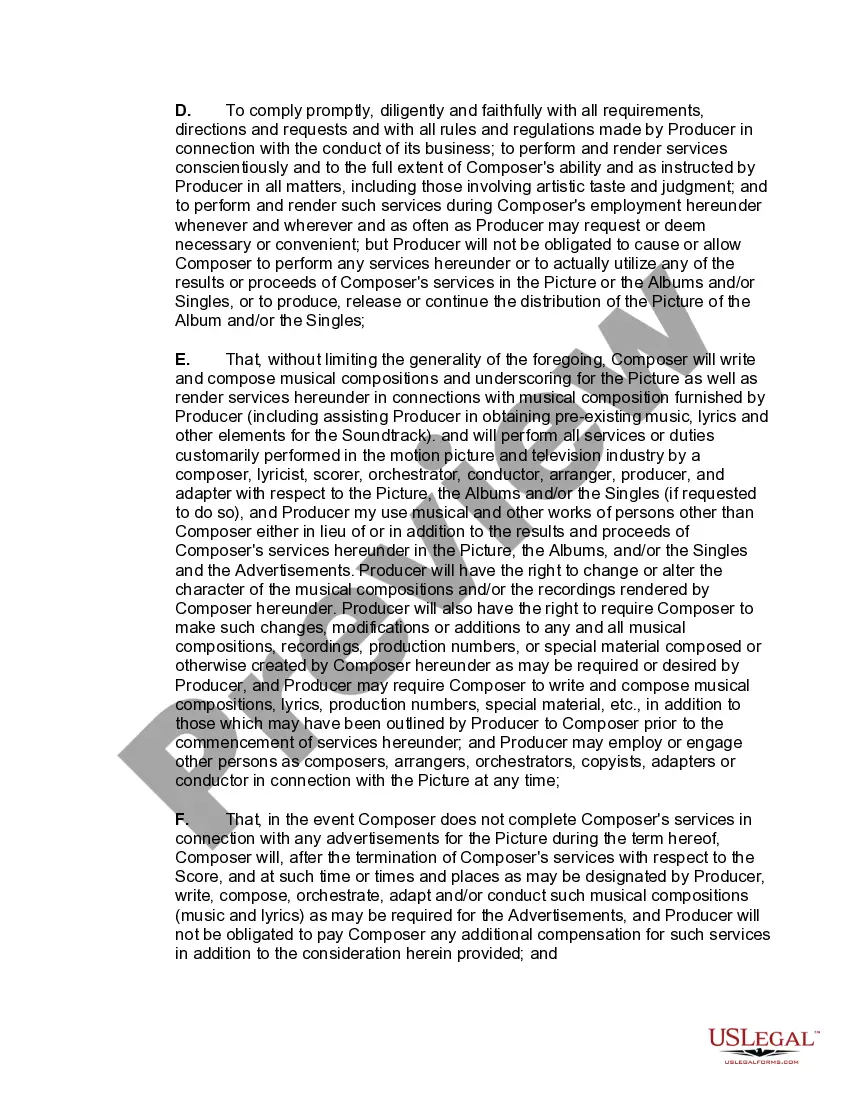
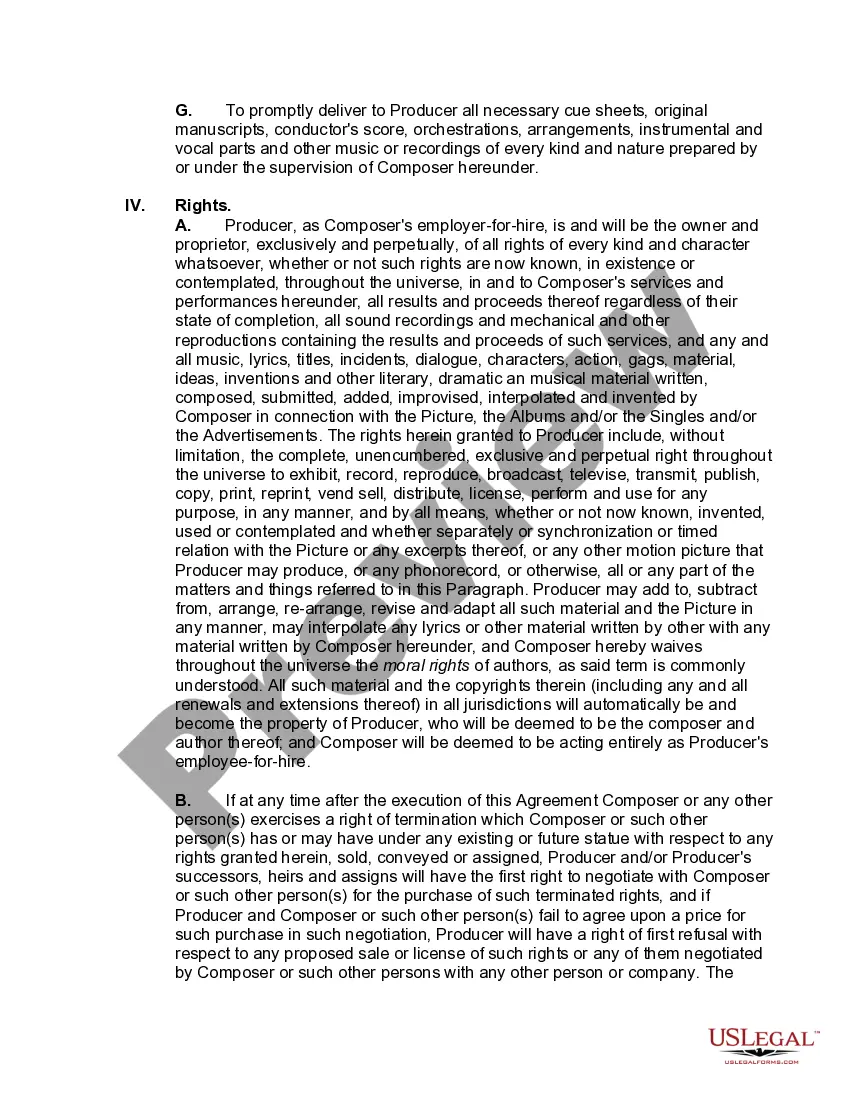
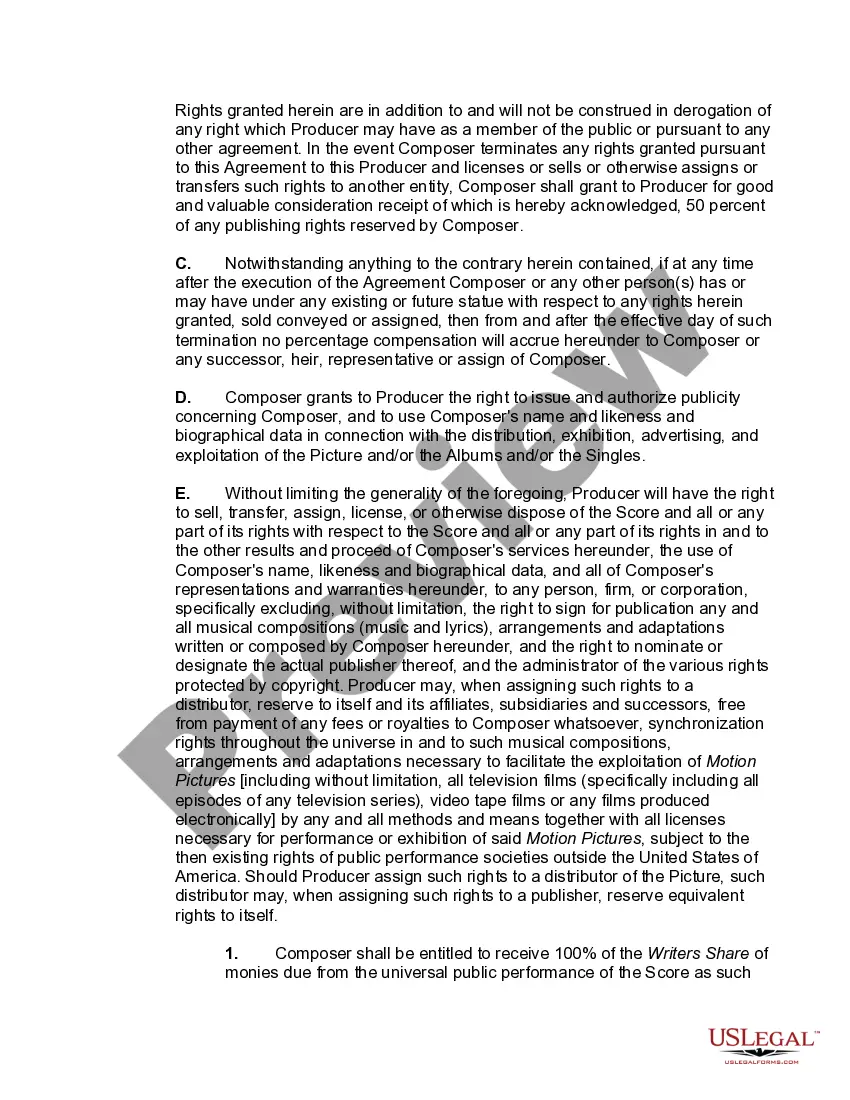
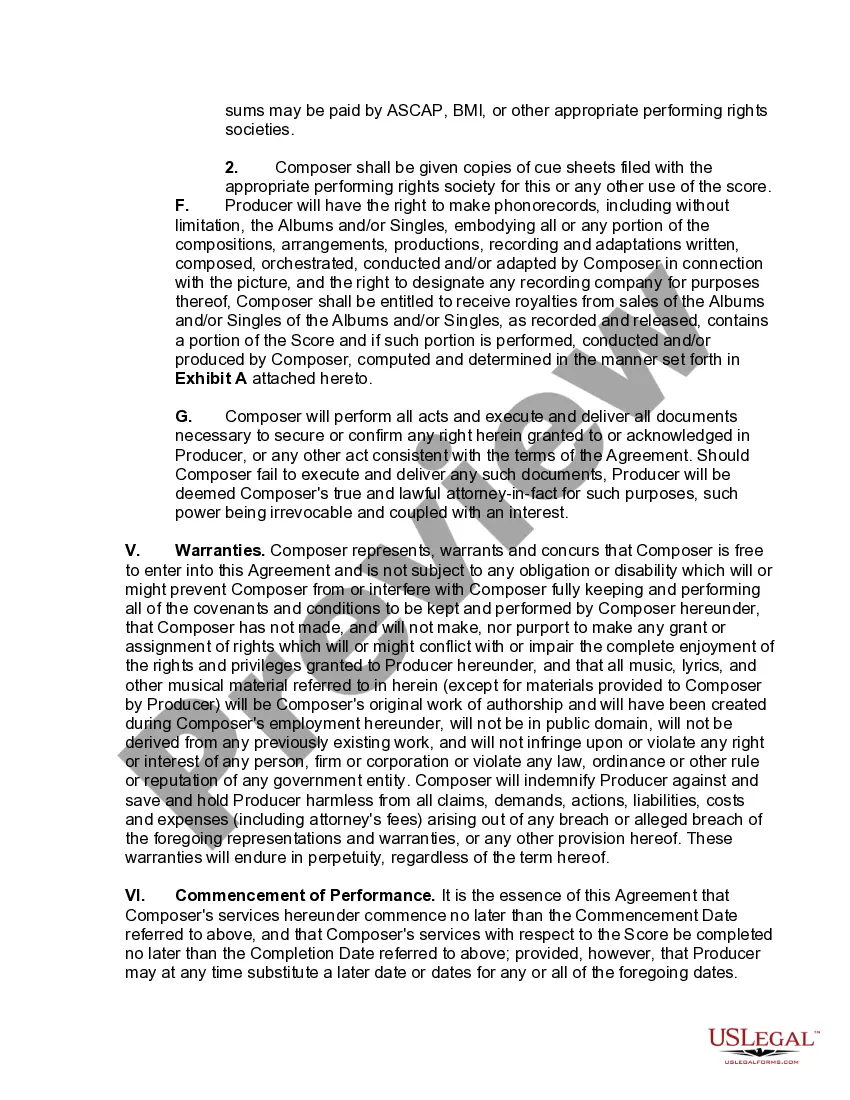
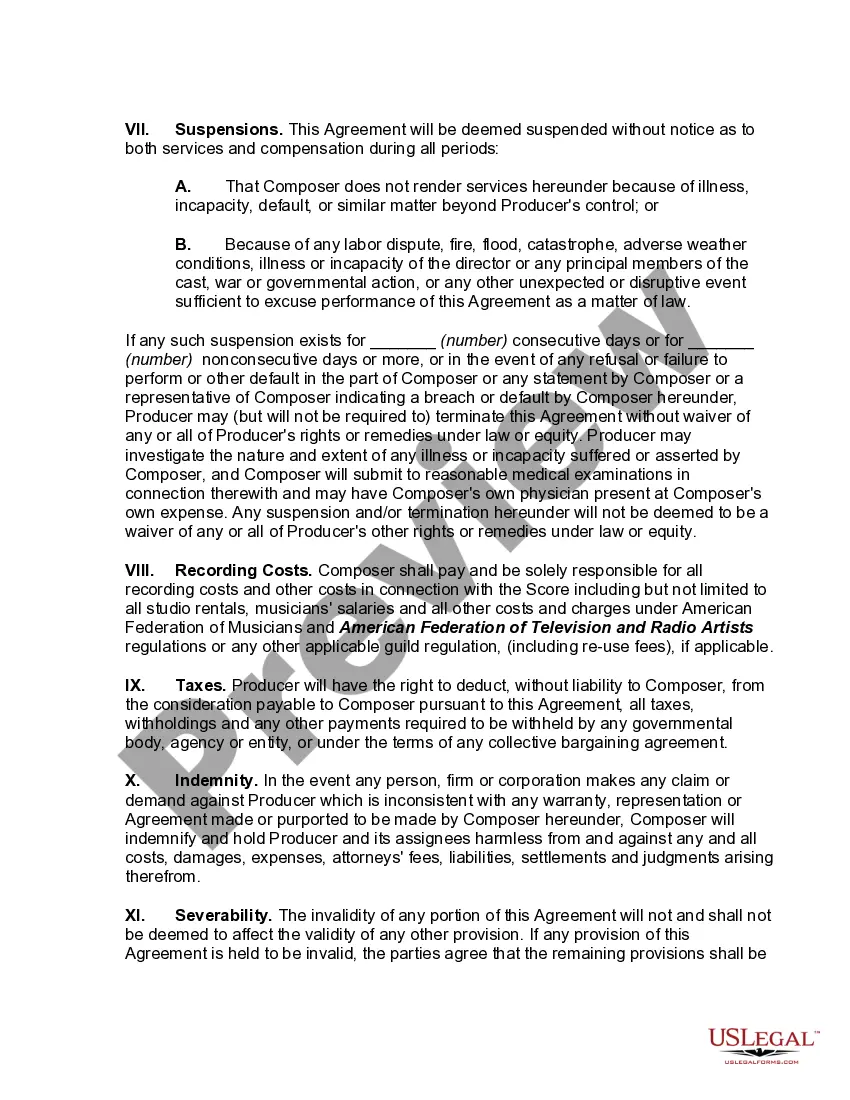
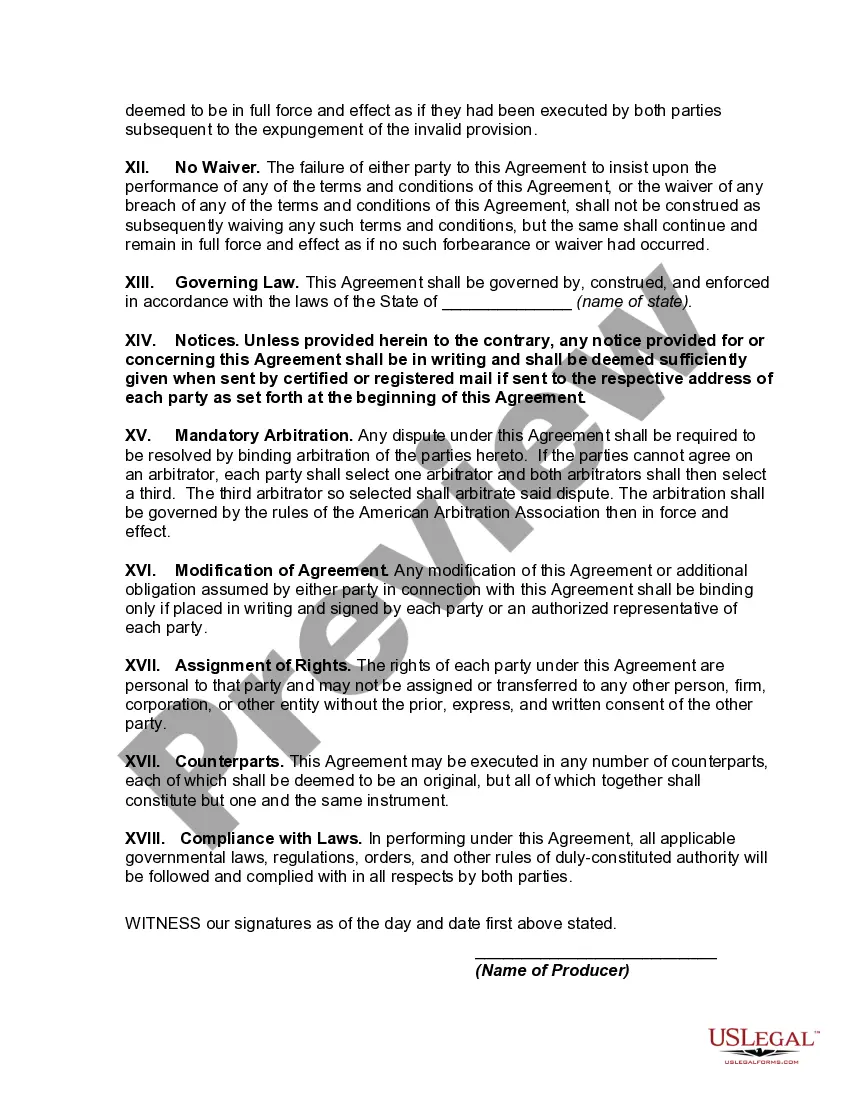
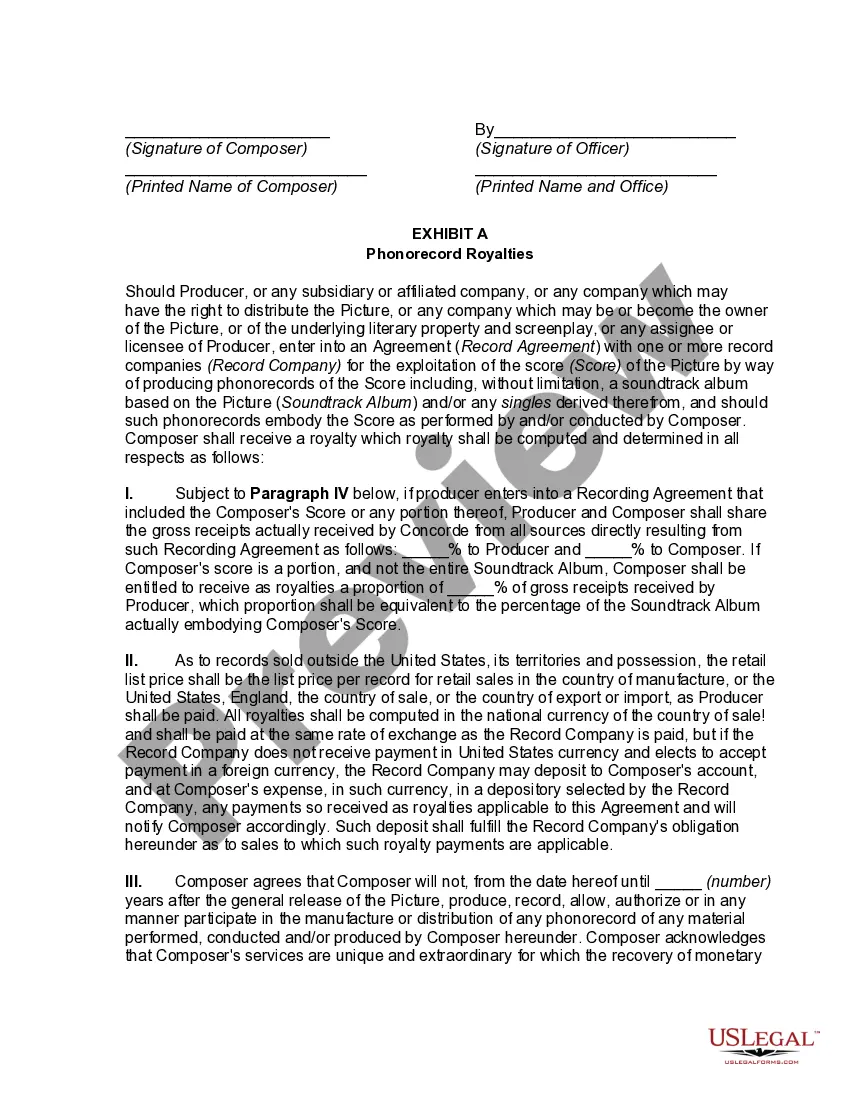
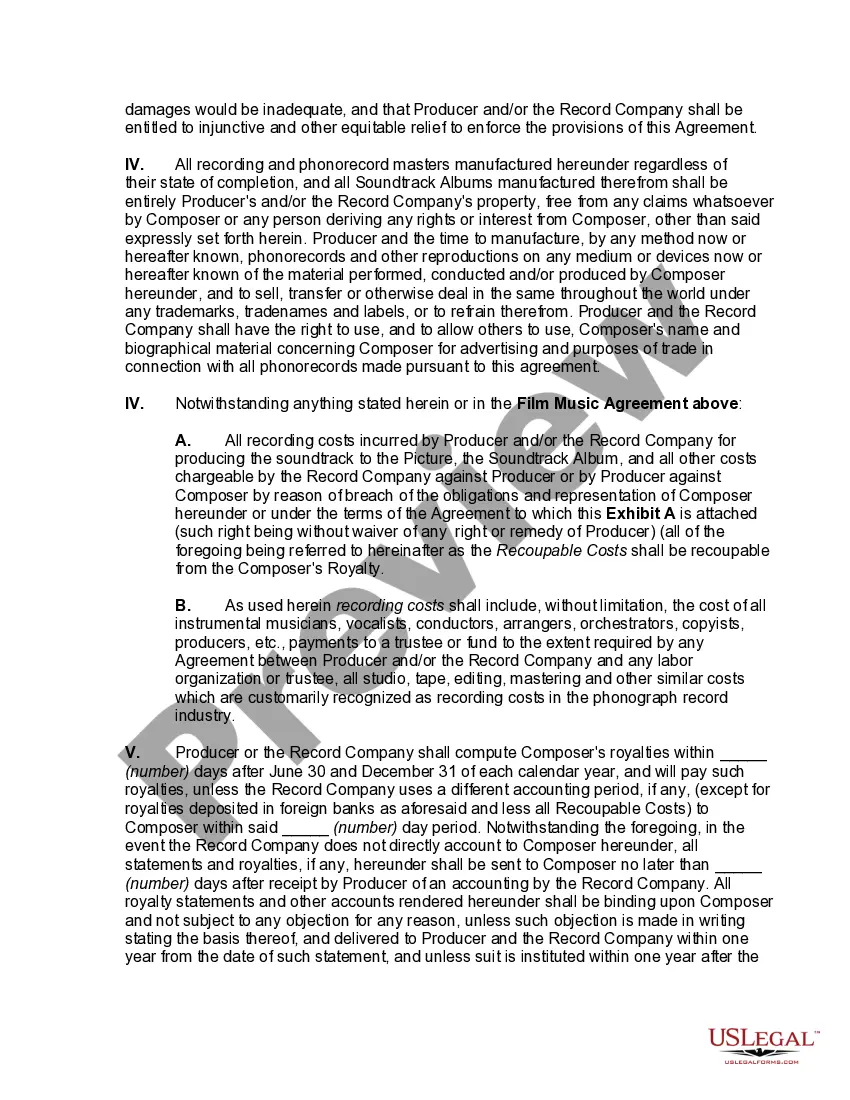

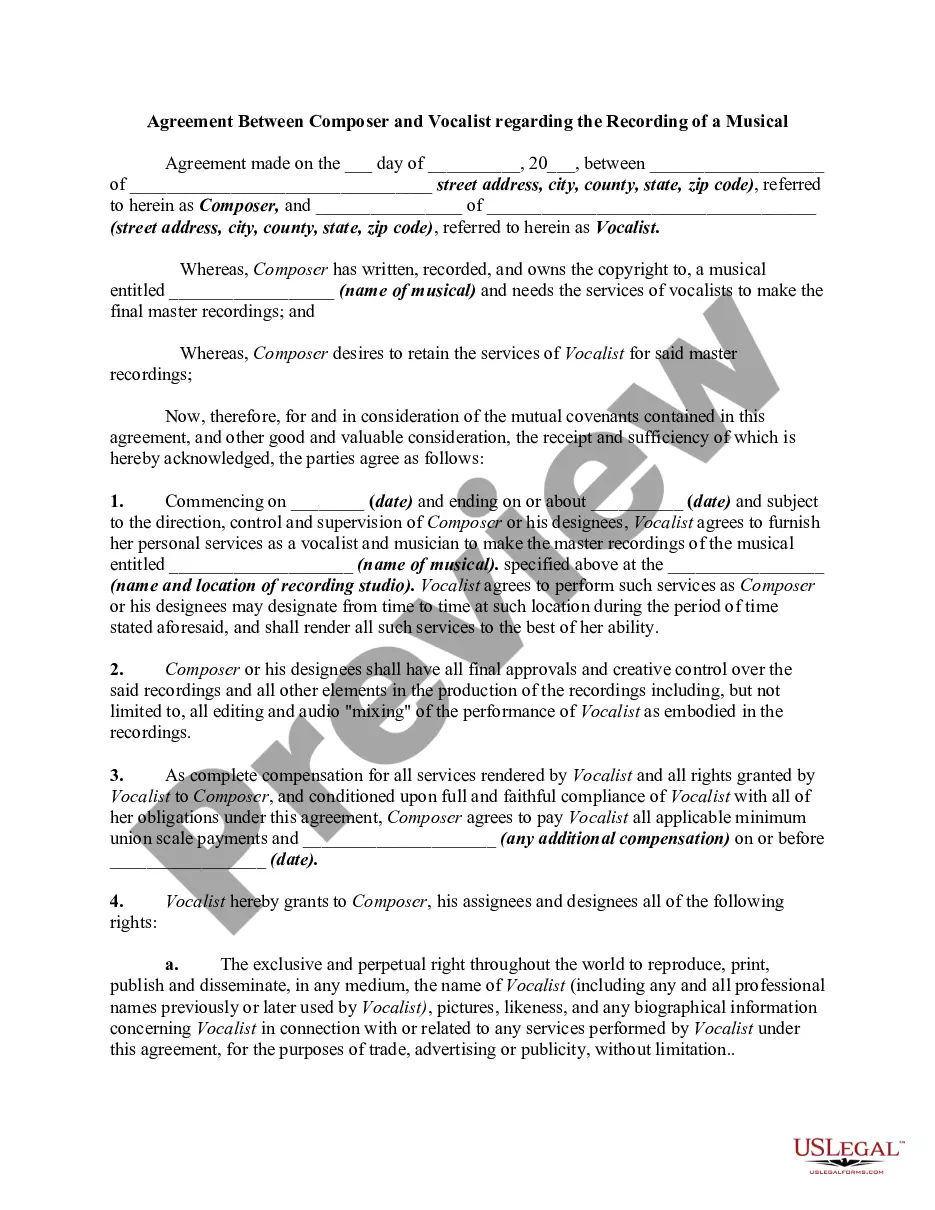
How to fill out Film Music Agreement With Composer?
If you need to complete, retrieve, or create legal document templates, utilize US Legal Forms, the largest assortment of legal forms accessible online.
Utilize the site’s straightforward and convenient search function to find the documents you require.
A selection of templates for business and personal purposes is organized by categories and states, or keywords.
Step 4. Once you’ve found the form you need, click on the Purchase now button. Select the pricing plan you prefer and enter your credentials to register for an account.
Step 5. Process the transaction. You can use your Visa or Mastercard or PayPal account to complete the transaction.
- Use US Legal Forms to locate the Indiana Film Music Agreement with Composer in just a few clicks.
- If you are already a US Legal Forms user, Log In to your account and select the Download option to obtain the Indiana Film Music Agreement with Composer.
- You can also access forms you have previously acquired in the My documents tab of your account.
- If you are using US Legal Forms for the first time, follow the instructions below.
- Step 1. Ensure you have chosen the form for the correct city/state.
- Step 2. Use the Preview option to review the form’s details. Don’t forget to read the description.
- Step 3. If you are not satisfied with the form, use the Search field at the top of the page to find other variations of the legal form template.
Form popularity
FAQ
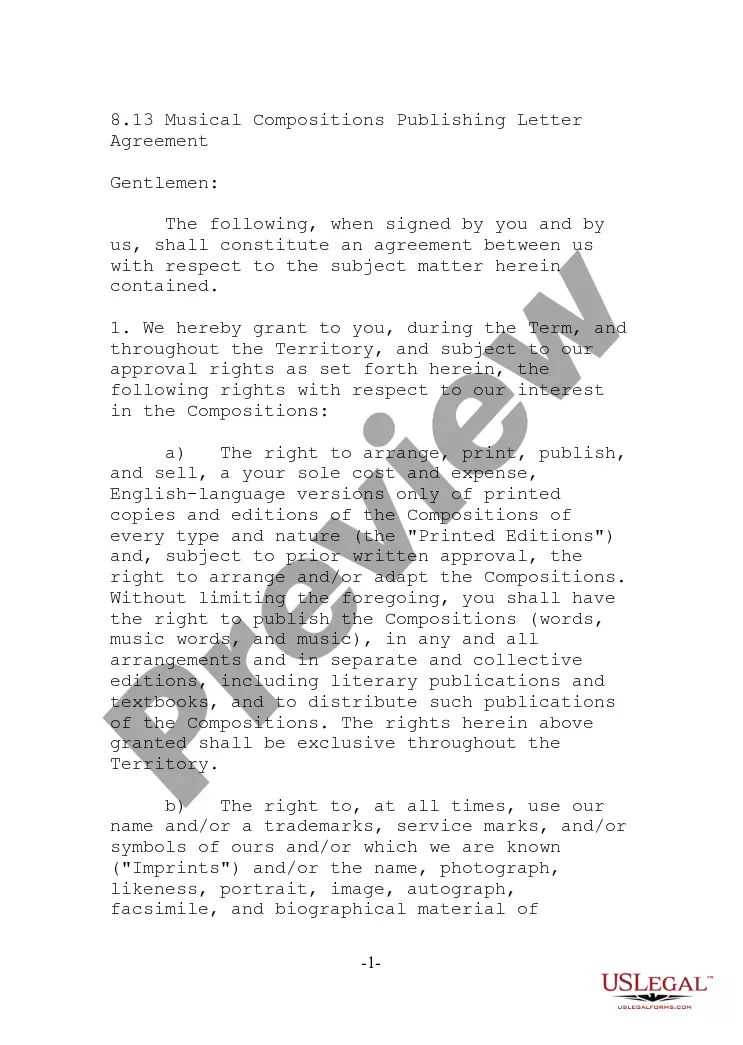
Yes, film composers can receive royalties based on the music they create for films. The Indiana Film Music Agreement with Composer often includes provisions for royalties, which are payments based on the usage of the music in the film. These royalties can provide ongoing financial benefits to composers long after the film's release. This makes a well-structured agreement crucial for preserving composers' rights and income.
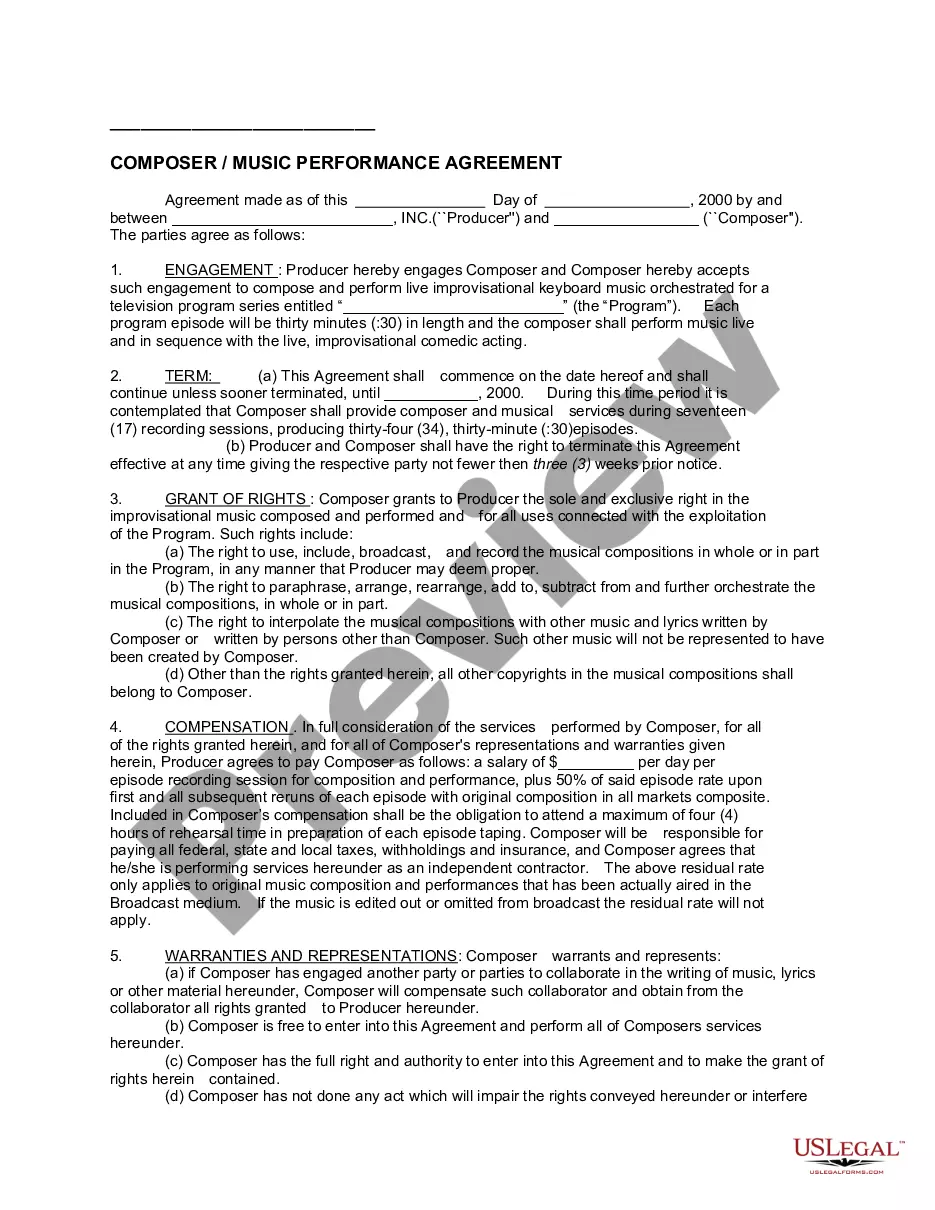
The standard composer agreement outlines the terms between the composer and the film producer. This Indiana Film Music Agreement with Composer specifies rights, responsibilities, and compensation for the music provided. It serves to protect both parties by ensuring clarity in their collaboration. By utilizing this agreement, you can avoid potential misunderstandings during the filmmaking process.
Music typically receives about 3% to 5% of the overall film budget. However, this percentage can increase depending on the project's needs and the prominence of the score. By using the Indiana Film Music Agreement with Composer, you can ensure that musicians and composers receive fair compensation for their contributions, which ultimately enhances the film's quality and emotional depth.
To begin composing film music, immerse yourself in various film scores for inspiration. Understand the story and emotions behind each scene; this insight will guide your composition. Additionally, utilizing the Indiana Film Music Agreement with Composer can help you establish professional relationships with filmmakers, thus enabling you to showcase your talent effectively in the industry.
Typically, around 2% to 5% of a film's budget is allocated to the writer. This can vary based on the project's scale and the writer's experience. When you engage with the Indiana Film Music Agreement with Composer, you can outline the writer's compensation clearly, ensuring that all parties are satisfied with the terms of the collaboration. This clarity helps in avoiding misunderstandings later on.
Typically, a film’s music budget can range from 5% to 10% of the total budget, although this varies by project size and scope. For independent films, this percentage might be lower, while larger productions could allocate more. An Indiana Film Music Agreement with Composer is beneficial, as it can specify the composer’s payment structure based on the overall film budget. This clarity can help in managing expectations between the composer and the production team.
A composer agreement is a legal document outlining the terms between a music composer and the producer of a film. This agreement details the composer’s rights, payment, and expectations for the score or soundtrack. By having an Indiana Film Music Agreement with Composer, both parties can have clear guidelines that protect their interests and ensure smooth collaboration. Such agreements help prevent misunderstandings during the creative process.
To credit a music composer in a movie, ensure their name appears in the film’s opening titles or the credits. You should specify their role clearly, either as 'Composer' or 'Music by' followed by their name. This recognition is vital, as it showcases the composer’s contribution to the film's emotional impact. If you want more clarity on this process, an Indiana Film Music Agreement with Composer can outline specific credit terms.
Composing music for film involves understanding the emotional undertones of the scenes. You start by analyzing the script and visuals to capture the essence of the narrative. Collaborating closely with the director helps ensure that the music aligns with the film's vision. Utilizing an Indiana Film Music Agreement with Composer can solidify the professional relationship, clarifying terms and protecting both parties' rights throughout the creative process.