Indiana Mutual Confidential Disclosure Agreement
Description
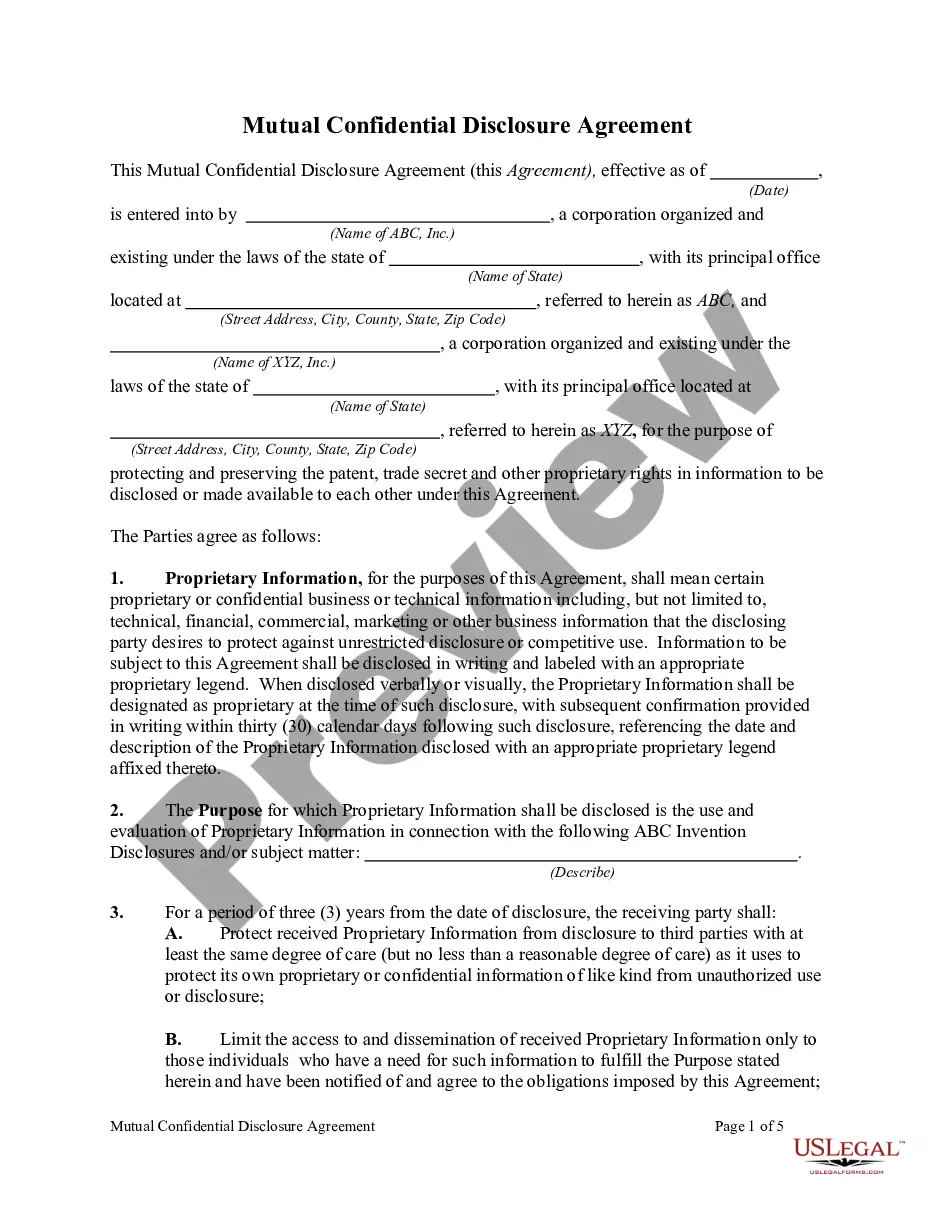
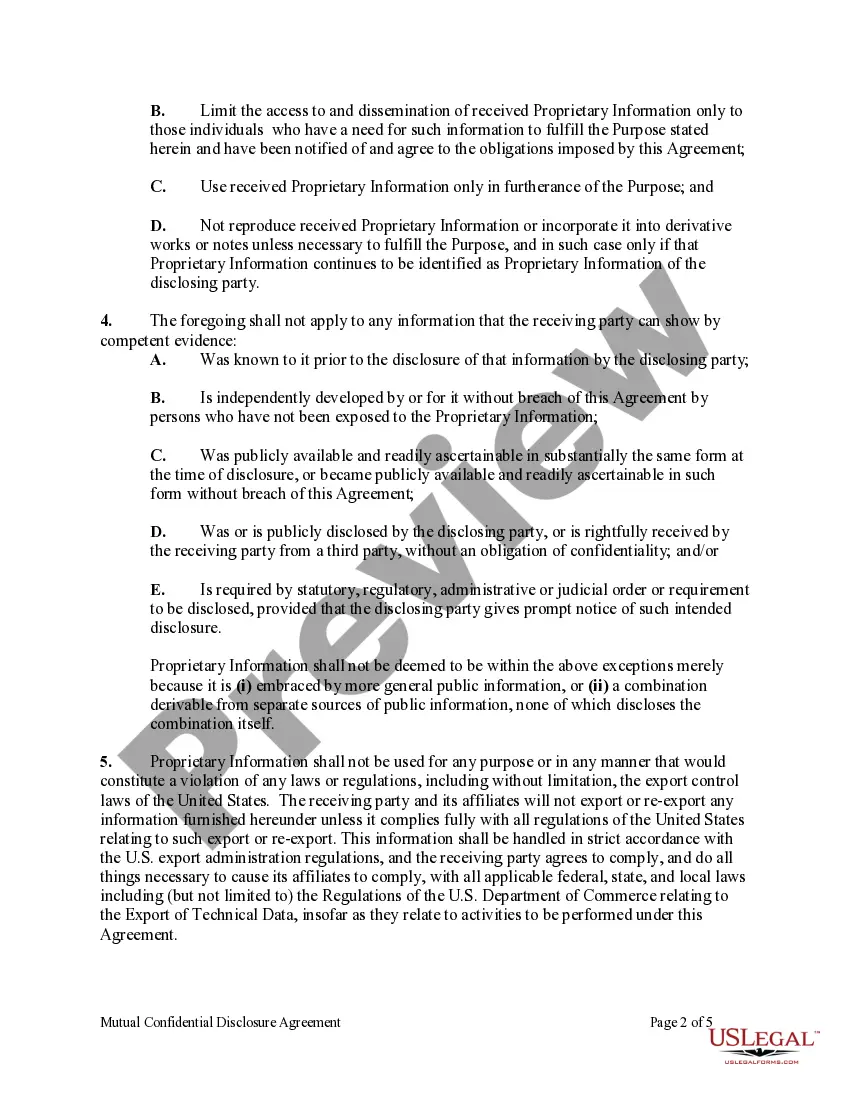
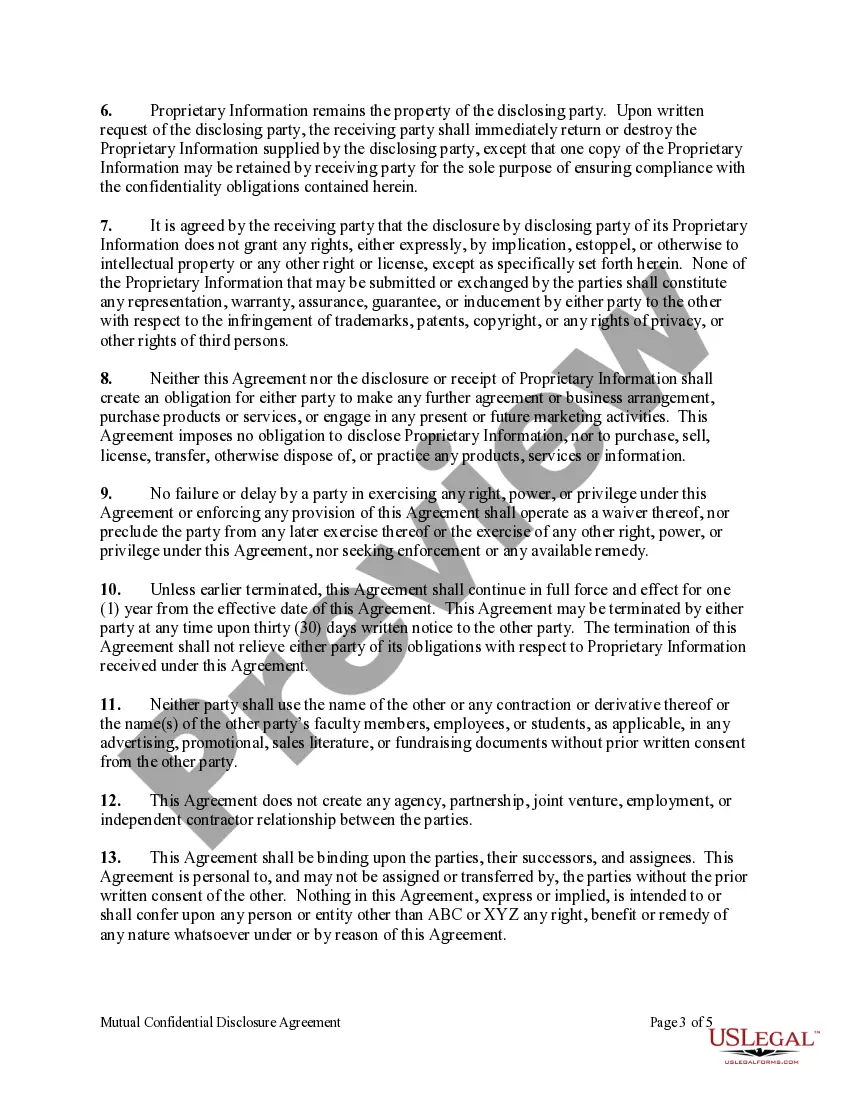
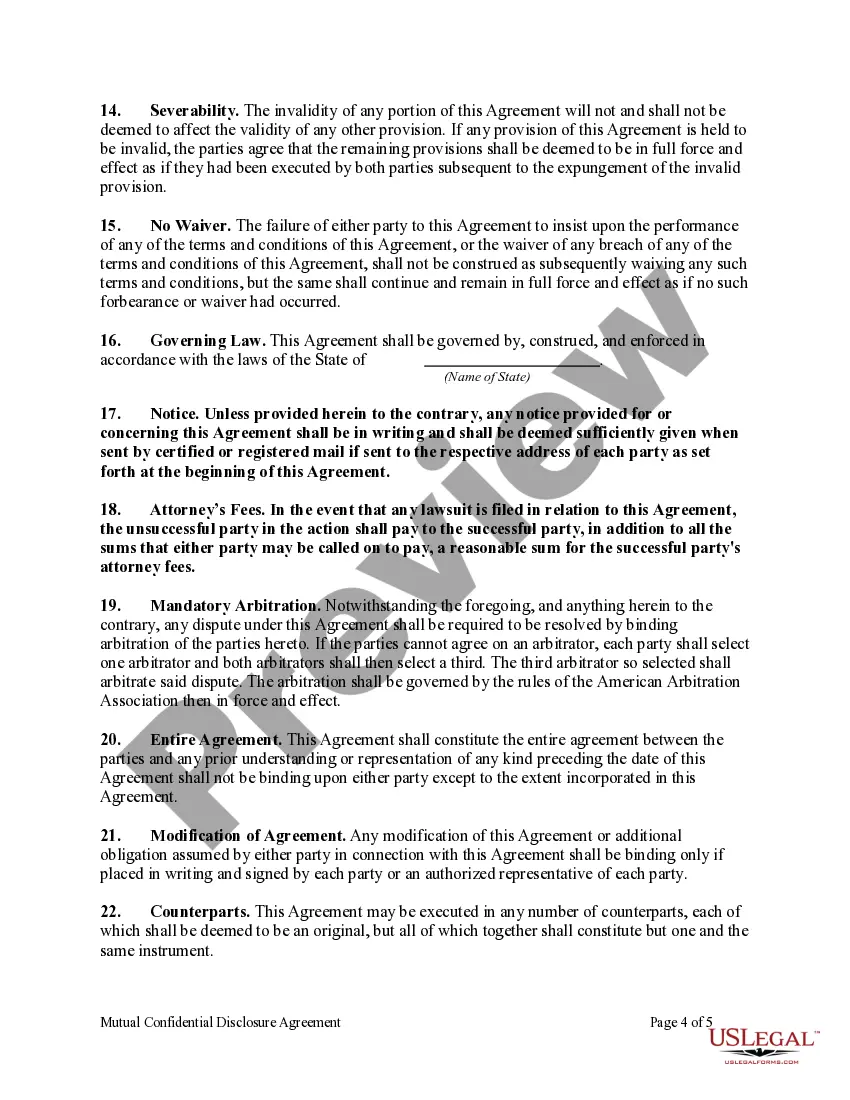
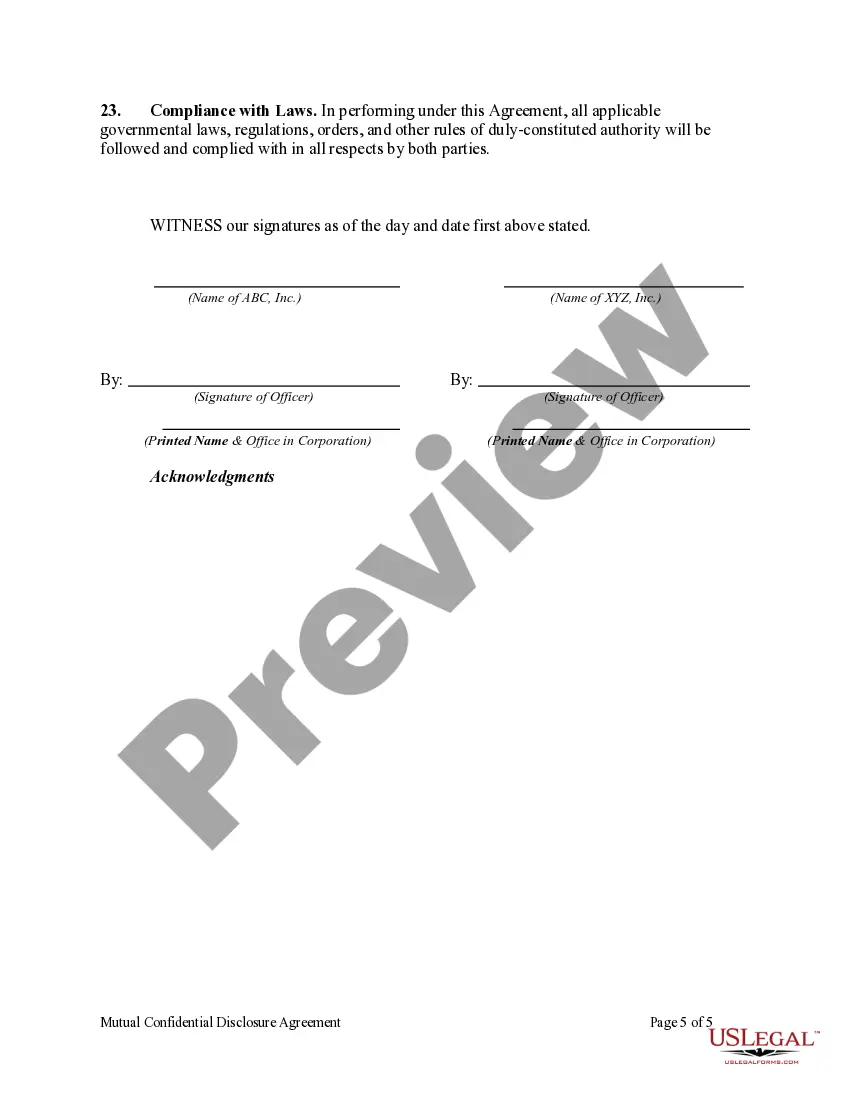
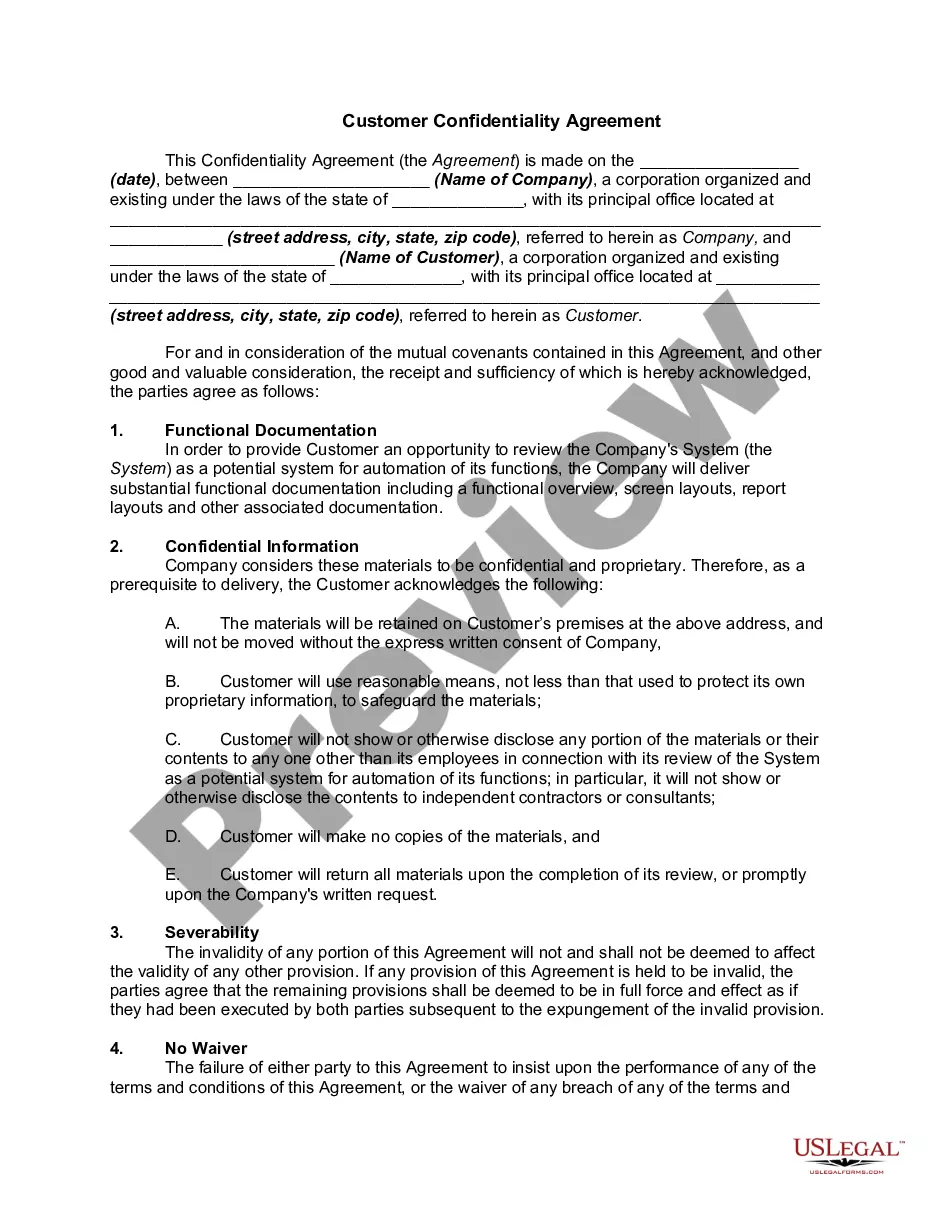
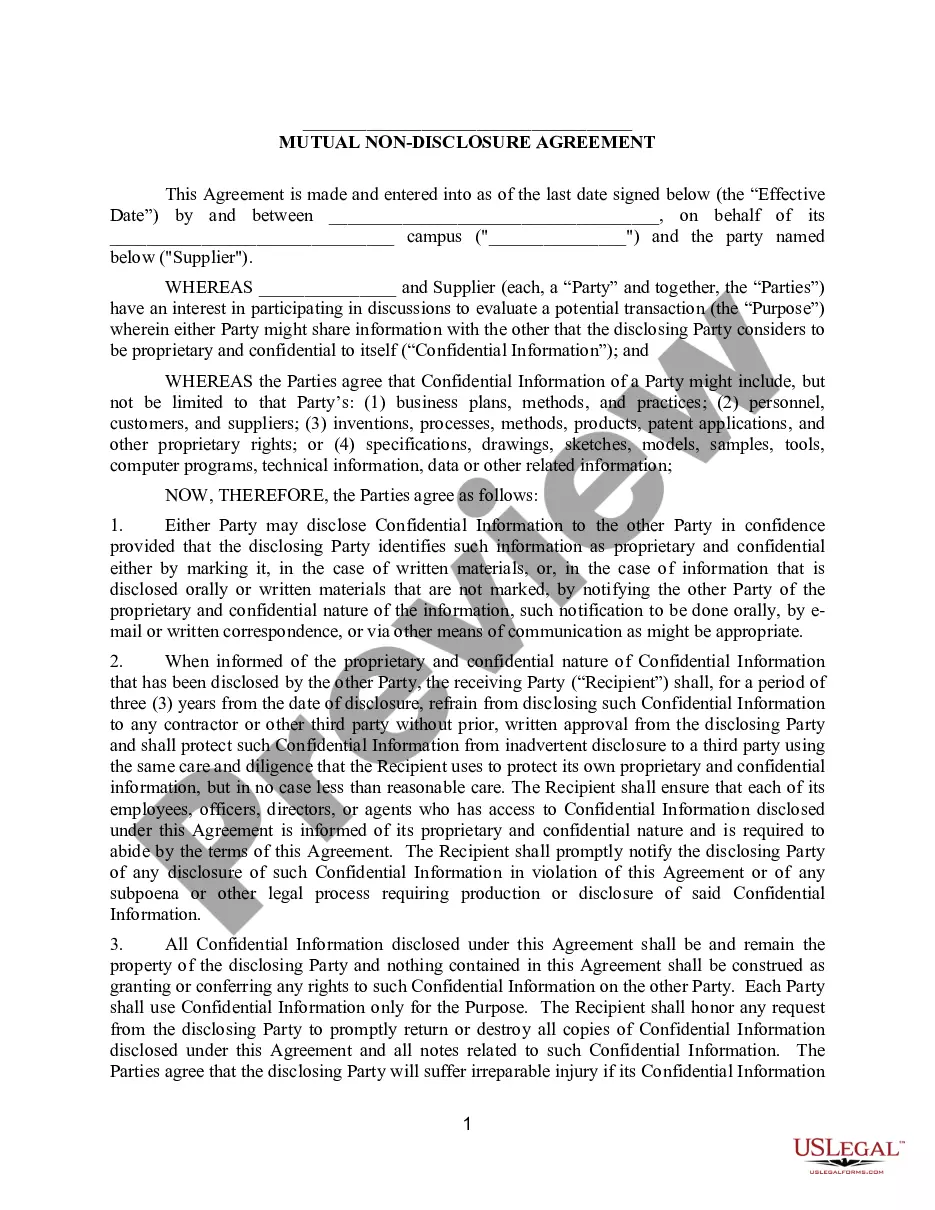
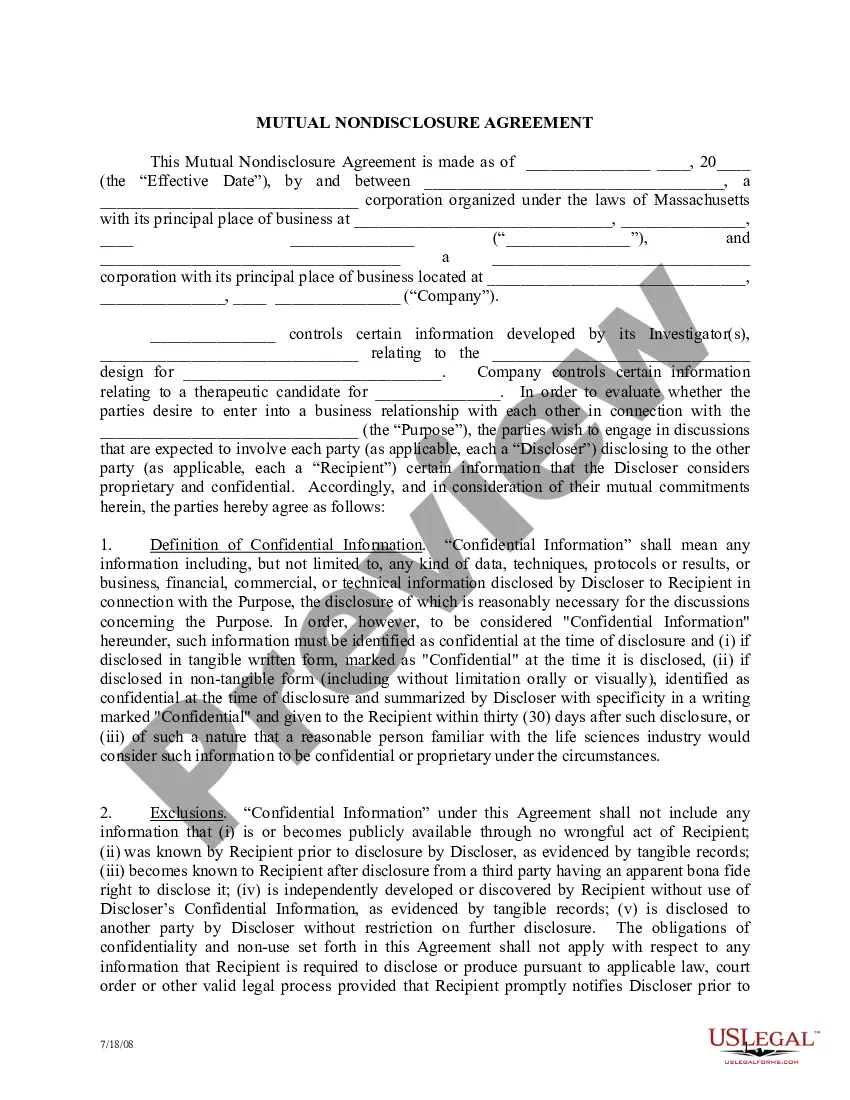
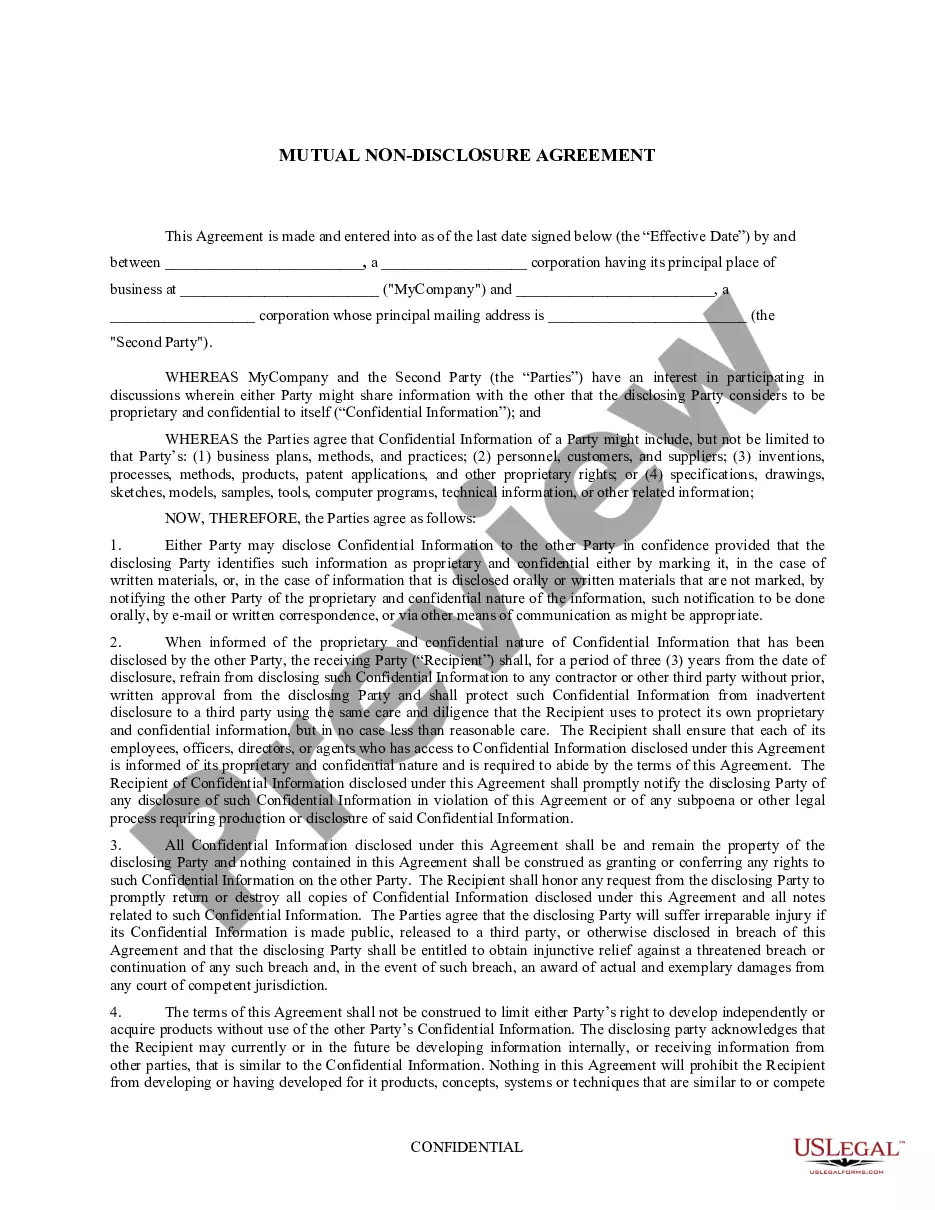
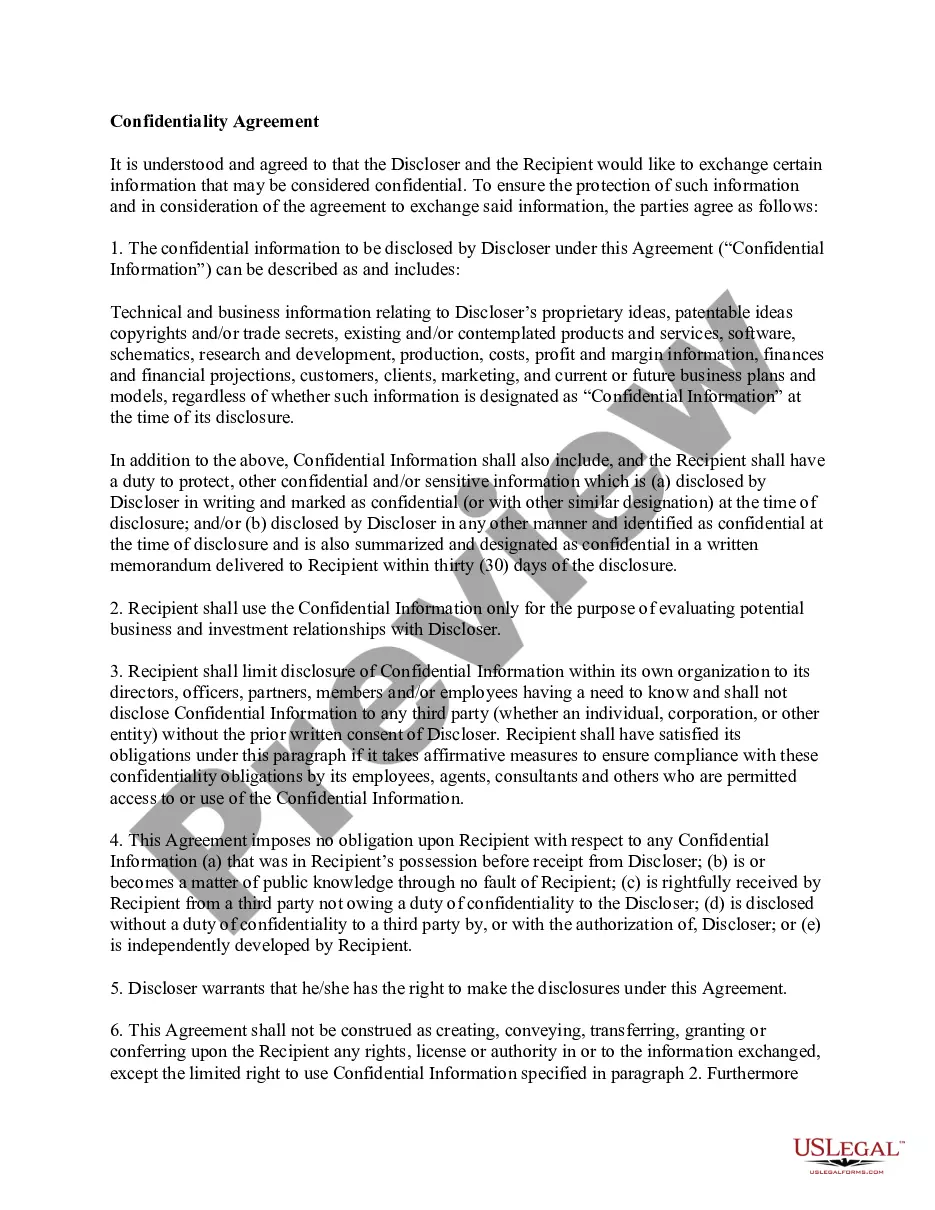

How to fill out Mutual Confidential Disclosure Agreement?
Selecting the appropriate legal document template can be a challenge. Certainly, there are numerous templates accessible online, but how do you find the legal form you require? Utilize the US Legal Forms website. The service offers thousands of templates, including the Indiana Mutual Confidential Disclosure Agreement, that you can use for business and personal purposes.
All of the forms are reviewed by professionals and comply with federal and state regulations.
If you are already registered, Log In to your account and click the Download button to access the Indiana Mutual Confidential Disclosure Agreement. Use your account to browse the legal forms you have previously ordered. Navigate to the My documents tab in your account and obtain another copy of the document you need.
Complete, modify, print, and sign the received Indiana Mutual Confidential Disclosure Agreement. US Legal Forms is considered the largest repository of legal forms where you can access various document templates. Utilize the service to obtain well-crafted documents that meet state regulations.
- If you are a new user of US Legal Forms, here are simple steps to follow.
- First, ensure you have selected the correct form for your city/region. You may review the form by using the Review button and read the form description to confirm it suits your needs.
- If the form does not meet your requirements, use the Search field to find the appropriate form.
- Once you are confident that the form is correct, click the Purchase now button to obtain the form.
- Choose the payment plan you prefer and enter the required information. Create your account and pay for your order using your PayPal account or credit card.
- Select the document format and download the legal document template to your device.
Form popularity
FAQ
Yes, you can create your own NDA tailored to your needs. However, it is advisable to use a reliable template, such as the Indiana Mutual Confidential Disclosure Agreement, to ensure all essential elements are addressed. Make sure to include the scope of confidentiality, parties involved, and duration. Reviewing key elements with a legal professional can further secure your agreement.
Filling out a mutual non-disclosure agreement requires both parties to agree on the sensitive information to be protected. Using the Indiana Mutual Confidential Disclosure Agreement ensures clarity for both sides. Include sections that outline the definition of confidential information, duration, and exceptions. After completing the details, both parties must sign to execute the agreement.
Setting up a Non-Disclosure Agreement (NDA) involves defining the parties who will share information. Consider using a template for the Indiana Mutual Confidential Disclosure Agreement to simplify the process. Clearly state what information is confidential and how it should be handled. Once you have drafted the agreement, both parties should review, sign, and date it for it to be legally binding.
To complete a confidential agreement, start by identifying the parties involved. Next, outline the purpose of the Indiana Mutual Confidential Disclosure Agreement and specify the confidential information to be protected. Make sure to include the term of the agreement, any exclusions, and the obligations of each party. Finally, both parties should sign and date the document to ensure its effectiveness.
An example of a NDA statement is: 'The undersigned agrees to maintain the confidentiality of all proprietary information shared between the parties.' This statement clearly expresses the intent to protect shared information from unauthorized disclosure. Including specific examples of confidential information, such as trade secrets or business plans, enhances clarity. If you seek a well-crafted example, consider the Indiana Mutual Confidential Disclosure Agreement from US Legal Forms to meet your needs.
Filling out an NDA agreement involves several key steps. First, clearly state the names of the parties entering the agreement. Then, ensure you define what information is deemed confidential and specify how it should be handled. Moreover, it's helpful to include any terms under which the agreement can be terminated. The Indiana Mutual Confidential Disclosure Agreement available at US Legal Forms provides a straightforward structure to guide you through this process.
Yes, an NDA can absolutely be mutual. A mutual NDA, also referred to as a mutual confidentiality agreement, protects both parties by ensuring that sensitive information shared by either can remain confidential. This is especially useful in partnerships where both sides need to disclose proprietary or confidential information. Consider using the Indiana Mutual Confidential Disclosure Agreement to ensure both parties’ interests are safeguarded effectively.
To fill out a confidentiality agreement, start by clearly identifying the parties involved, including their legal names and contact information. Next, outline the specific confidential information that will be protected under the agreement, ensuring to use clear language. It is essential to include the duration of confidentiality and any exceptions. Utilizing a reliable template, such as the Indiana Mutual Confidential Disclosure Agreement from US Legal Forms, can simplify the process significantly.
Yes, NDAs are enforceable in Indiana as long as they meet legal requirements. The agreements must clearly define the confidential information and have reasonable terms for duration and scope. An Indiana Mutual Confidential Disclosure Agreement provides a solid framework for protecting sensitive information, ensuring that your business interests remain protected under Indiana law.
A mutual confidentiality agreement is similar to a mutual NDA, providing protection for both parties’ confidential information. It establishes clear terms about what information is considered confidential and the obligations to protect that information. An Indiana Mutual Confidential Disclosure Agreement helps streamline business interactions by building trust and safeguarding proprietary data.