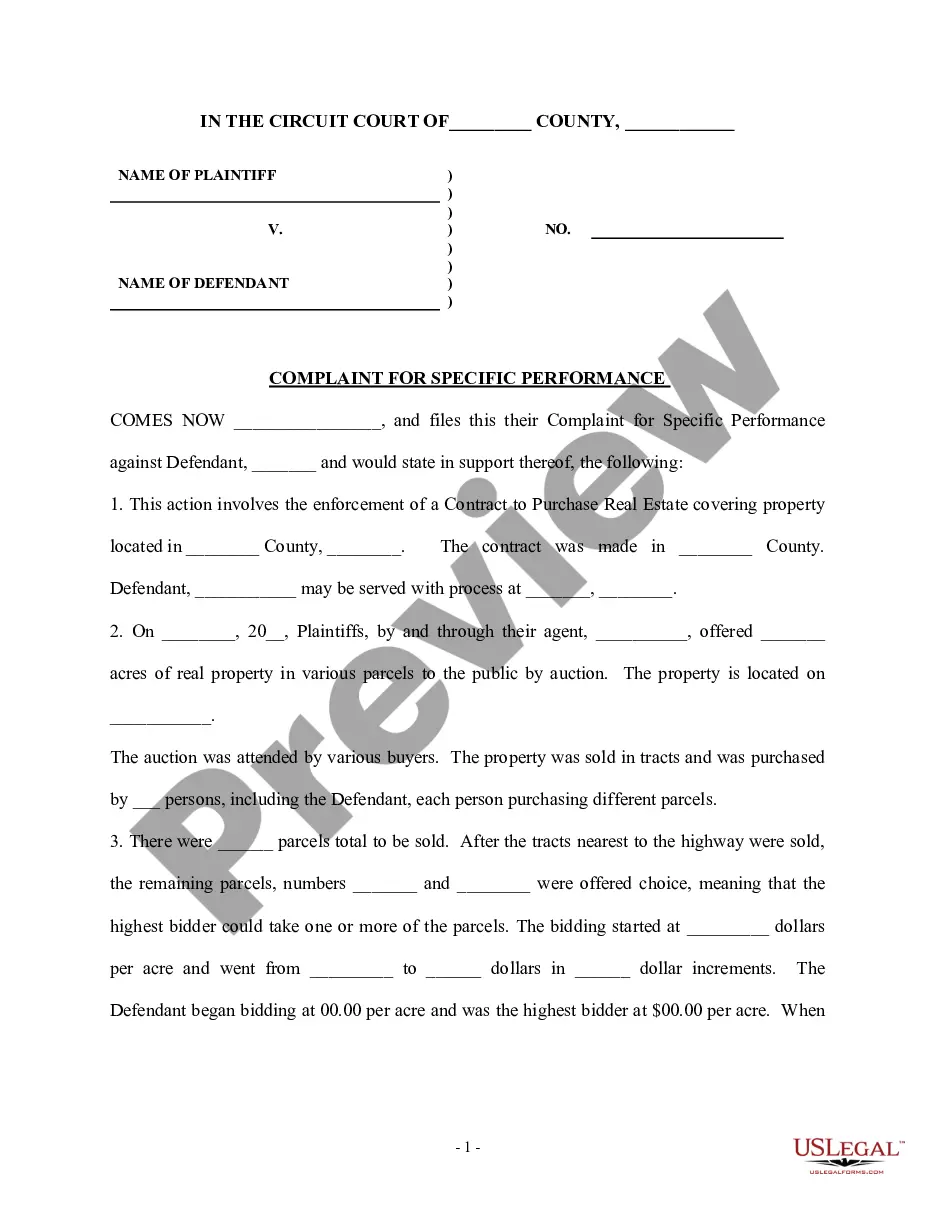
Keeping possession of real property without a right, such as after a lease has expired or after the real property has be sold by the possessor, may entitle the owner to file a lawsuit for "unlawful detainer," asking for possession by court order, unpaid rent and damages. This form is for illustrative purposes only. Local laws should be consulted to determine any specific requirements for such a notice in a particular jurisdiction.
Indiana Complaint or Petition by Purchaser Against Possessor of Real Property After a Foreclosure Sale Pursuant to a Deed of Trust
Category:
State:
Multi-State
Control #:
US-01014BG
Format:
Word;
Rich Text
Instant download
Description
Free preview
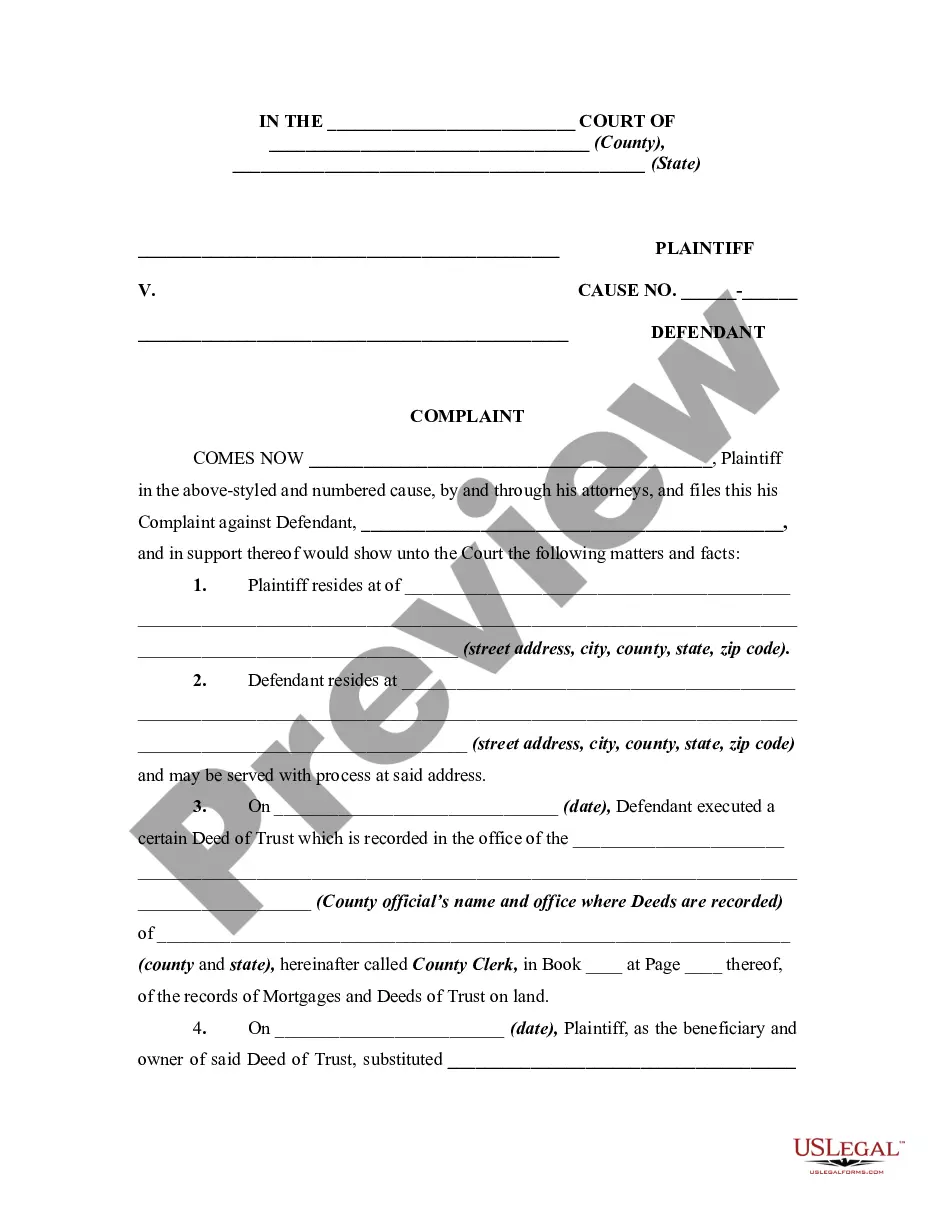
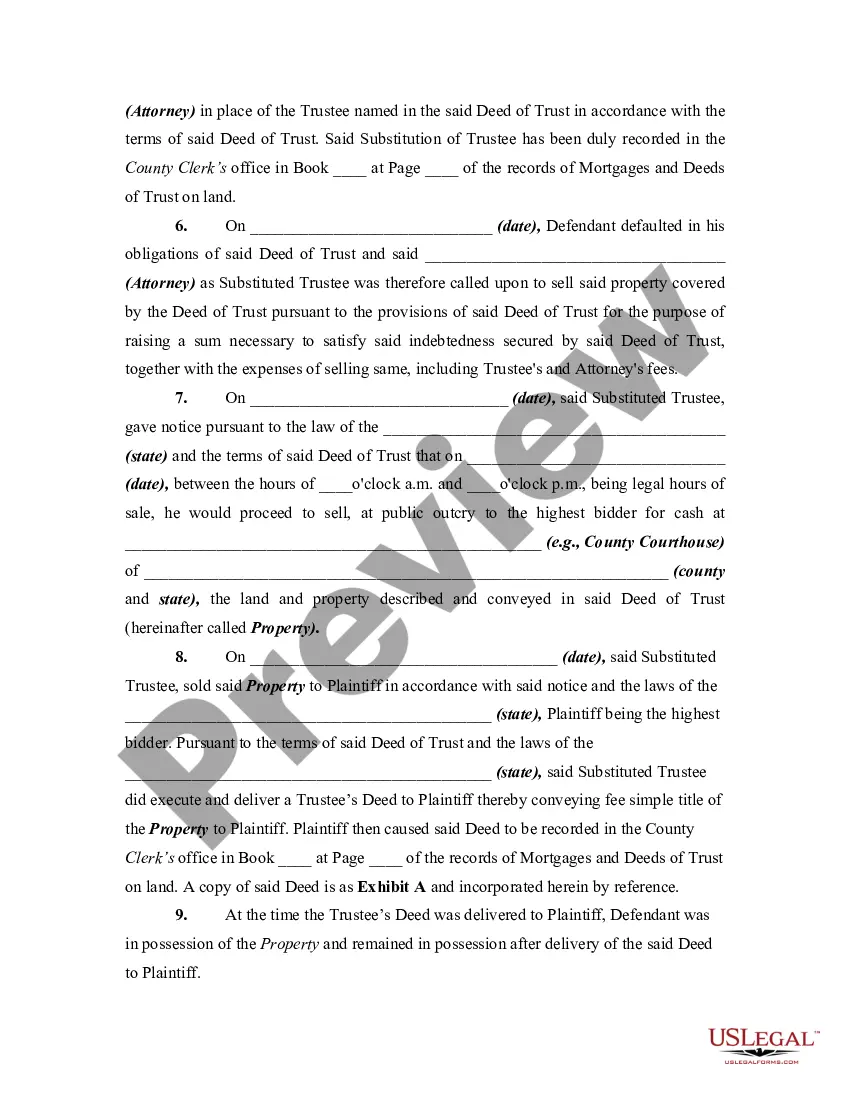
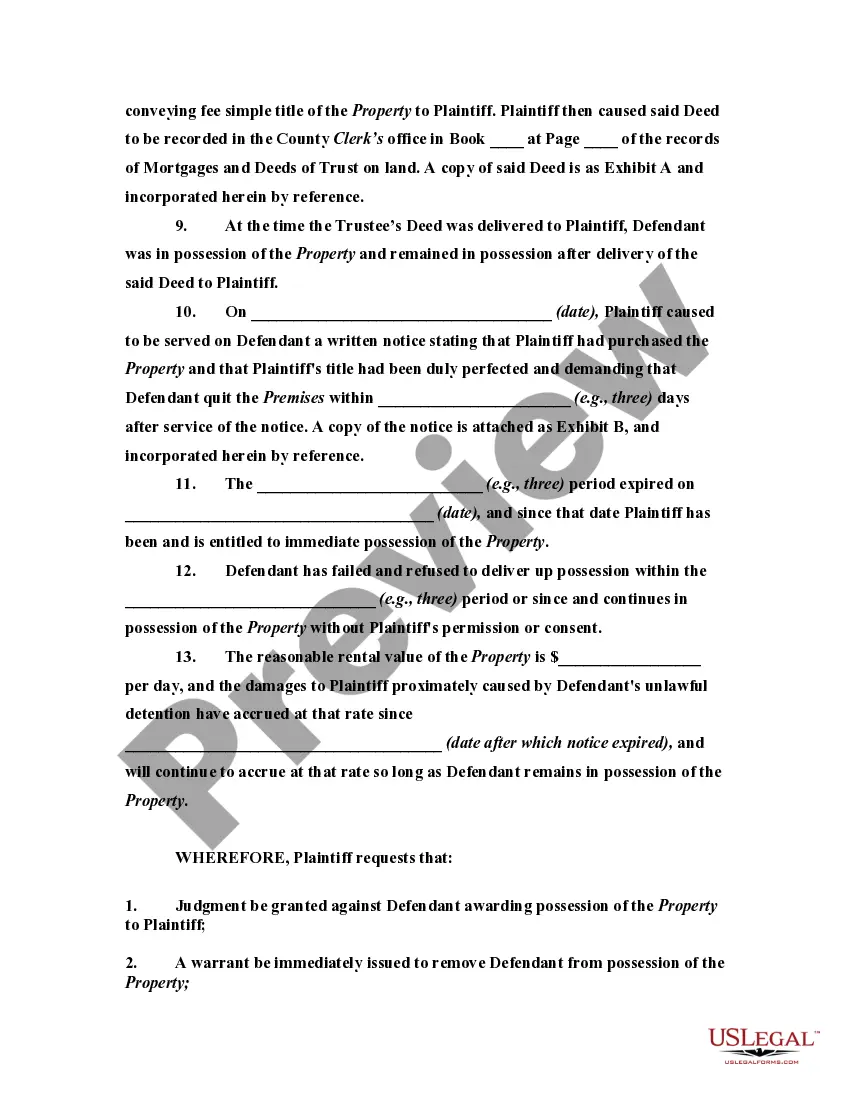
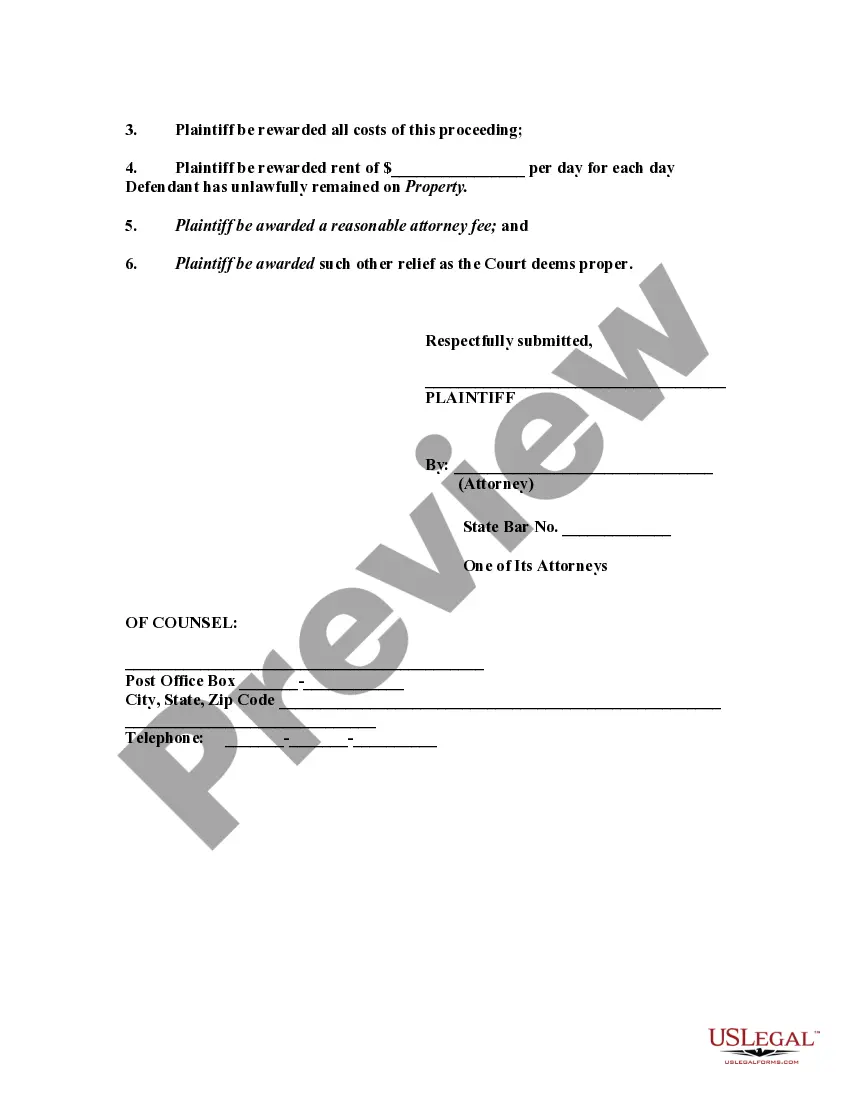
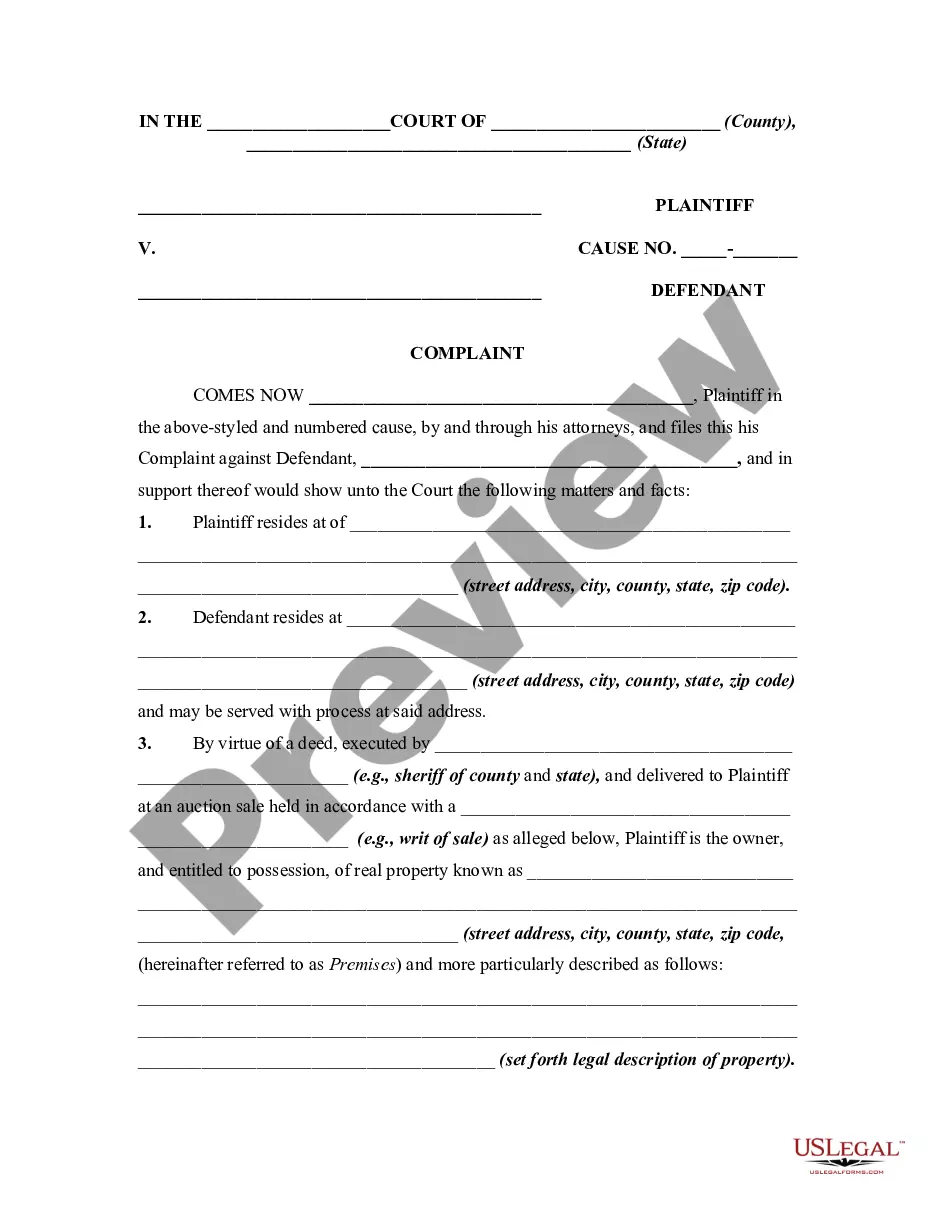
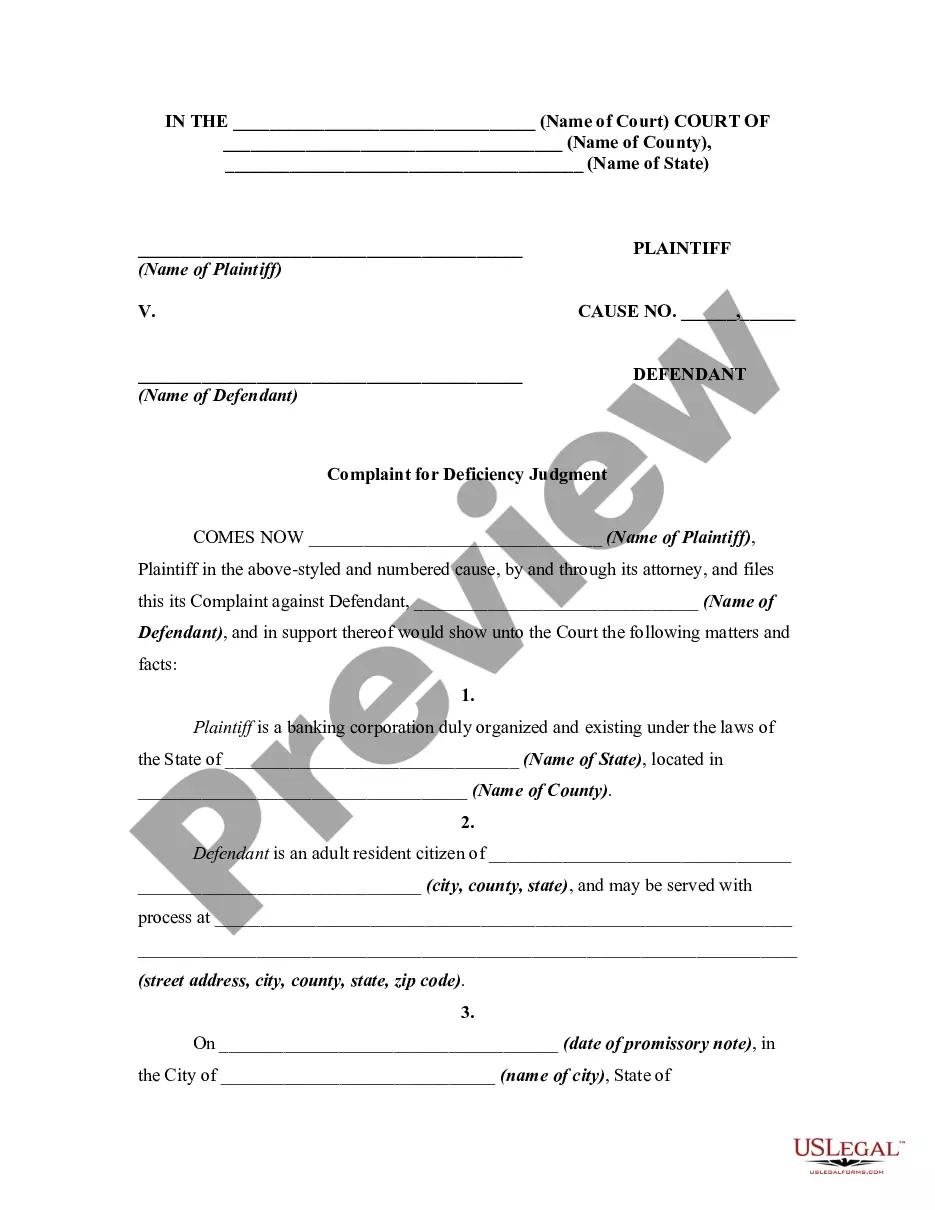
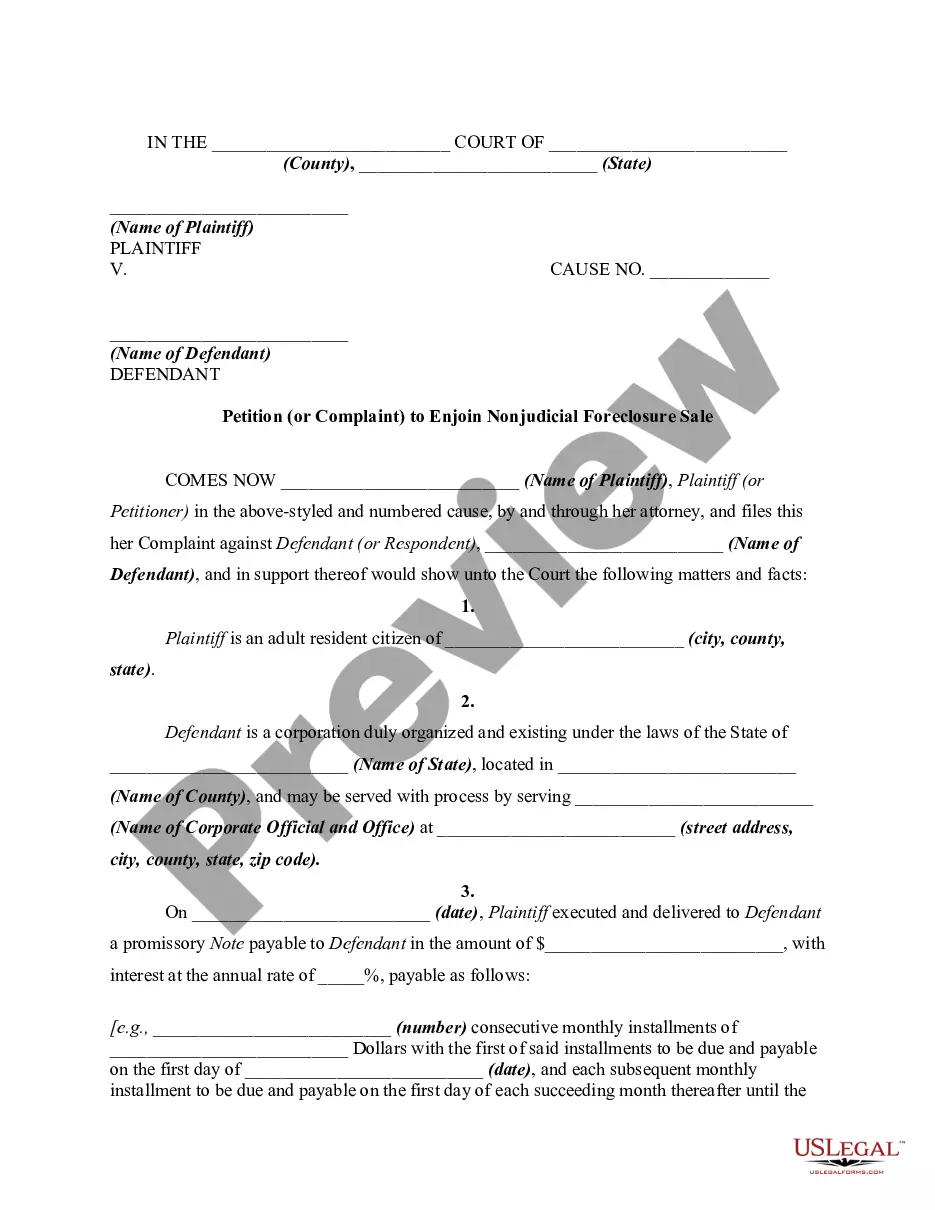
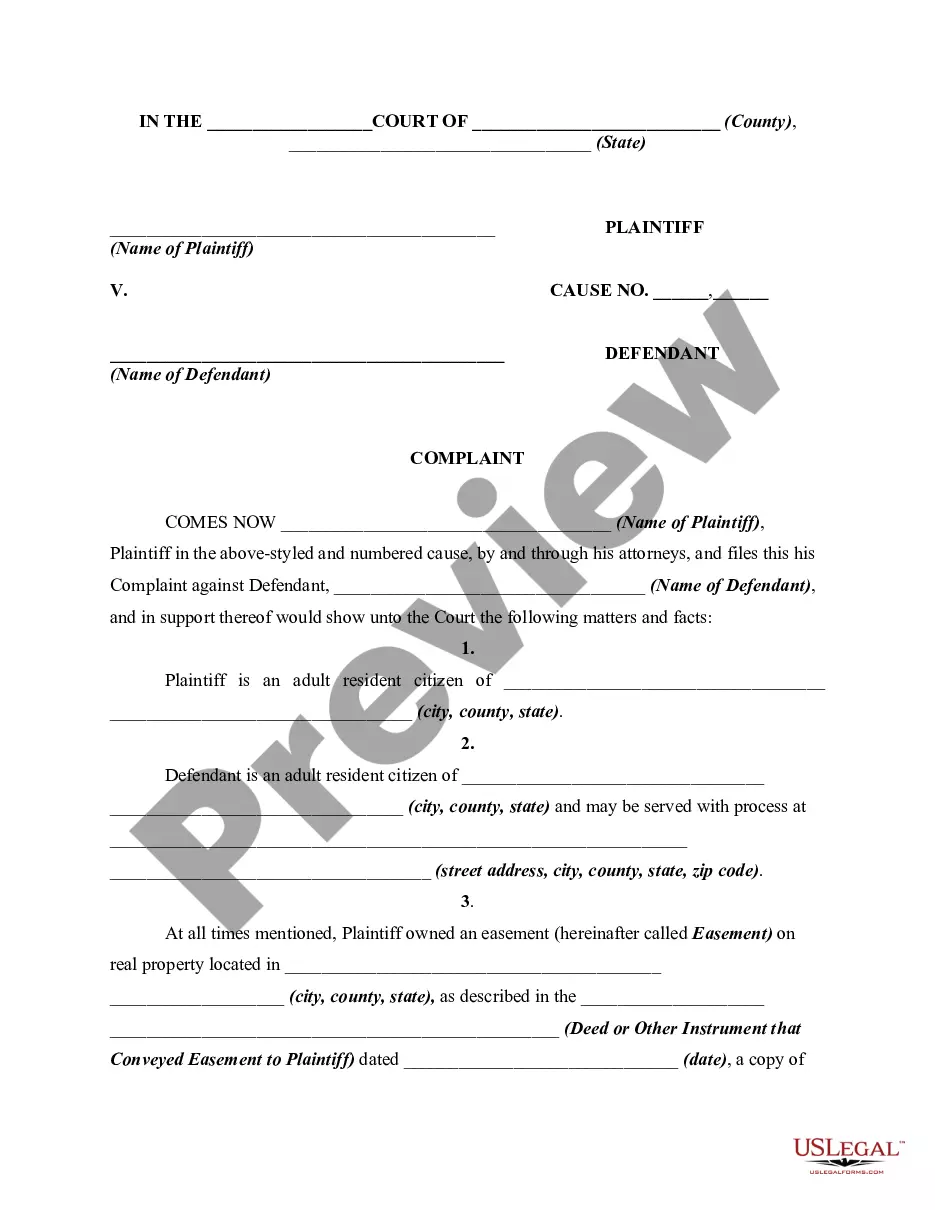
Get your form ready online
Our built-in tools help you complete, sign, share, and store your documents in one place.
Built-in online Word editor
Make edits, fill in missing information, and update formatting in US Legal Forms—just like you would in MS Word.
Export easily
Download a copy, print it, send it by email, or mail it via USPS—whatever works best for your next step.
E-sign your document
Sign and collect signatures with our SignNow integration. Send to multiple recipients, set reminders, and more. Go Premium to unlock E-Sign.
Notarize online 24/7
If this form requires notarization, complete it online through a secure video call—no need to meet a notary in person or wait for an appointment.
Store your document securely
We protect your documents and personal data by following strict security and privacy standards.

Make edits, fill in missing information, and update formatting in US Legal Forms—just like you would in MS Word.

Download a copy, print it, send it by email, or mail it via USPS—whatever works best for your next step.

Sign and collect signatures with our SignNow integration. Send to multiple recipients, set reminders, and more. Go Premium to unlock E-Sign.

If this form requires notarization, complete it online through a secure video call—no need to meet a notary in person or wait for an appointment.

We protect your documents and personal data by following strict security and privacy standards.
Looking for another form?


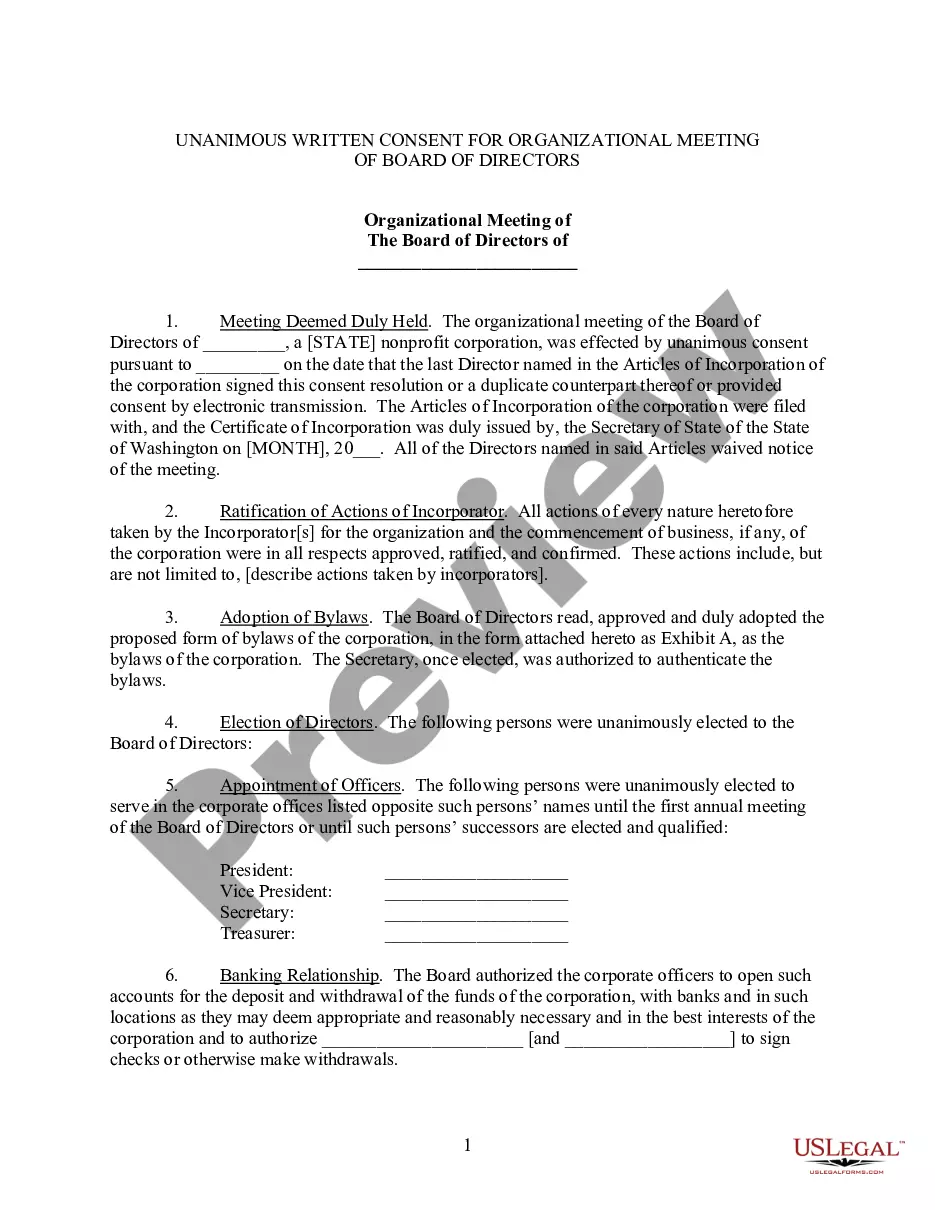

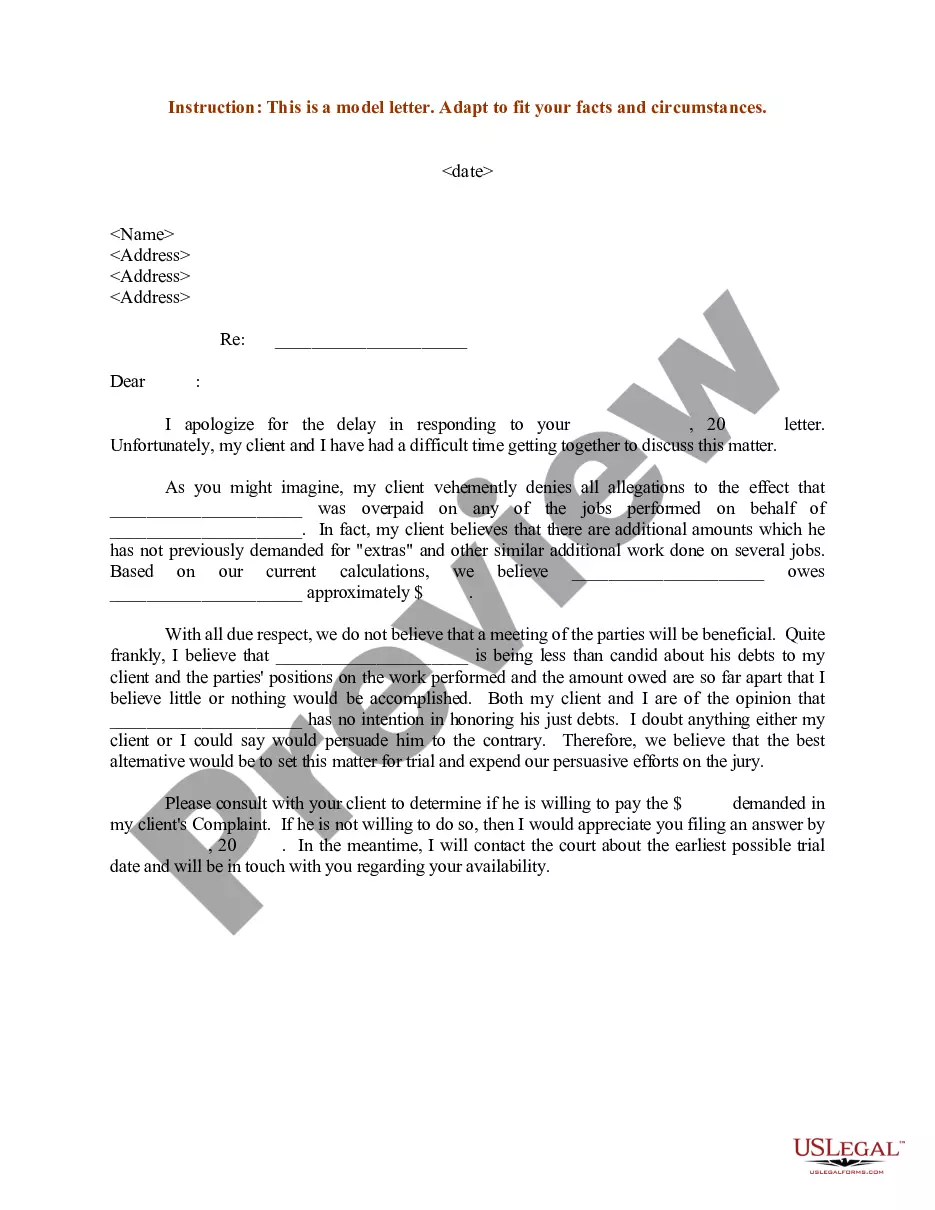





How to fill out Complaint Or Petition By Purchaser Against Possessor Of Real Property After A Foreclosure Sale Pursuant To A Deed Of Trust?
You might spend numerous hours online trying to locate the legal document template that meets the state and federal criteria you require.
US Legal Forms provides a vast array of legal forms that can be examined by professionals.
You can easily download or print the Indiana Complaint or Petition by Purchaser Against Possessor of Real Property After a Foreclosure Sale Pursuant to a Deed of Trust from their service.
If available, use the Review button to examine the document template simultaneously. To find another version of the form, utilize the Search field to discover the template that fulfills your needs and specifications. Once you have located the template you desire, click on Buy now to proceed. Select the pricing plan you wish, enter your details, and register for your account on US Legal Forms. Complete the transaction. You can use your credit card or PayPal account to pay for the legal form. Choose the format of your document and download it to your device. Make adjustments to your document if necessary. You can complete, modify, sign, and print the Indiana Complaint or Petition by Purchaser Against Possessor of Real Property After a Foreclosure Sale Pursuant to a Deed of Trust. Acquire and print a wide range of document templates using the US Legal Forms website, which offers the most extensive collection of legal forms. Utilize professional and state-specific templates to address your business or personal needs.
- If you already have a US Legal Forms account, you can Log In and click the Acquire button.
- Then, you can complete, modify, print, or sign the Indiana Complaint or Petition by Purchaser Against Possessor of Real Property After a Foreclosure Sale Pursuant to a Deed of Trust.
- Every legal document template you purchase is yours permanently.
- To obtain another copy of the purchased form, visit the My documents section and click the relevant button.
- If you are using the US Legal Forms website for the first time, follow the simple instructions outlined below.
- First, ensure you have selected the correct document template for the region/area of your choice.
- Review the form information to ensure you have chosen the appropriate form.
Form popularity
FAQ
76. Rule 76 - Change of venue (A) In civil actions where the venue may be changed from the county, such change of venue from the county may be had only upon the filing of a verified motion specifically stating the grounds therefor by the party requesting the change.
76. Rule 76 - Change of venue (A) In civil actions where the venue may be changed from the county, such change of venue from the county may be had only upon the filing of a verified motion specifically stating the grounds therefor by the party requesting the change.
Any case may be venued, commenced and decided in any court in any county, except, that upon the filing of a pleading or a motion to dismiss allowed by Rule 12(B)(3), the court, from allegations of the complaint or after hearing evidence thereon or considering affidavits or documentary evidence filed with the motion or ...
If evidence is objected to at the trial on the ground that it is not within the issues made by the pleadings, the court may allow the pleadings to be amended and shall do so freely when the presentation of the merits of the action will be subserved thereby and the objecting party fails to satisfy the court that the ...
The court may issue a preliminary injunction or a temporary restraining order only if the movant gives security in an amount that the court considers proper to pay the costs and damages sustained by any party found to have been wrongfully enjoined or restrained.
Rule 76 - Change of venue (A) In civil actions where the venue may be changed from the county, such change of venue from the county may be had only upon the filing of a verified motion specifically stating the grounds therefor by the party requesting the change.
Rule 59 - Motion to correct error (A) Motion to correct error - When mandatory. A Motion to Correct Error is not a prerequisite for appeal, except when a party seeks to address: (1) Newly discovered material evidence, including alleged jury misconduct, capable of production within thirty (30) days of final judgment.
The rule sets out the following grounds for relief: (1) mistake, surprise, or excusable neglect; (2) any ground for a motion to correct error, includingwithout limitation newly. discovered evidence, which by due diligence could not have been discovered in.
A joint or mutual restraining order shall not be issued. If both parties allege injury, they shall do so by separate petitions. The trial court shall review each petition separately and grant or deny each petition on its individual merits.
Trial Rule 77(A) - Required records. The clerk of the circuit court shall maintain any record required by an act of the general assembly or a duly promulgated rule of any state agency, including the following: Lis pendens record - Ind. C ode 32-30-11-1; ? Record of transcripts and foreign judgments ?I.C. 33-32-3-2.