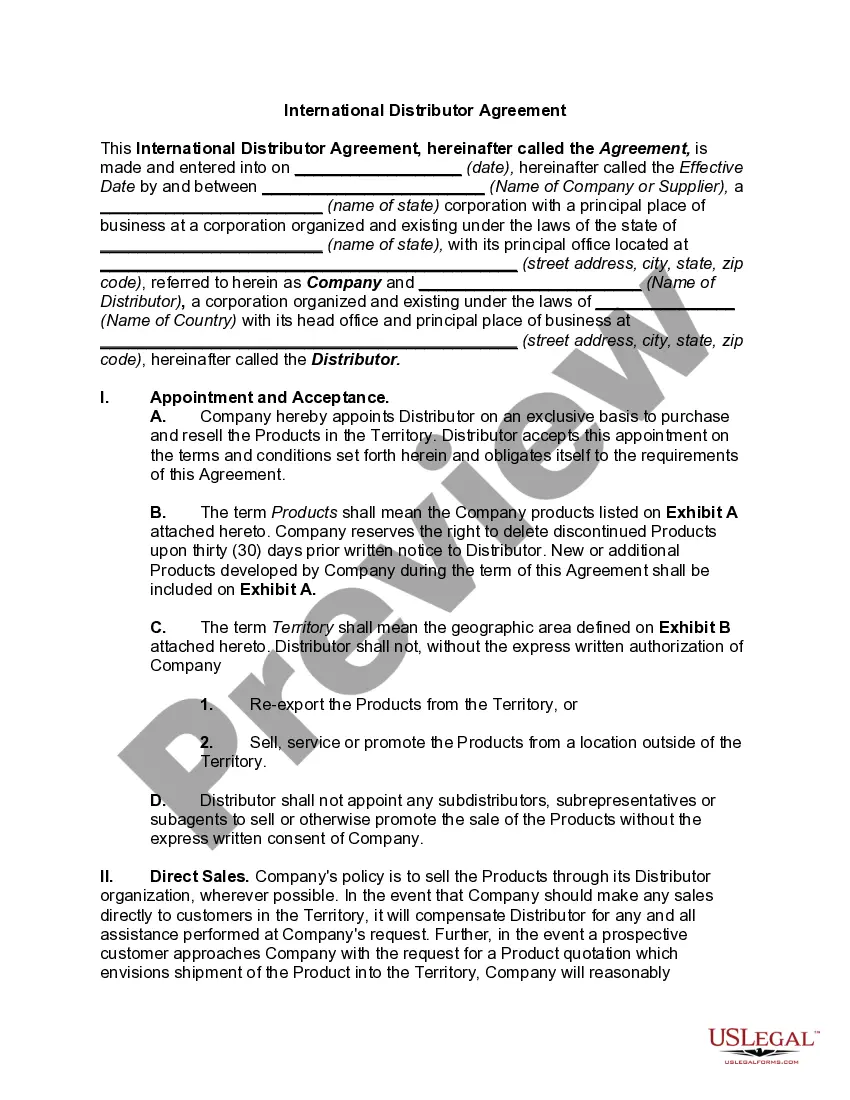
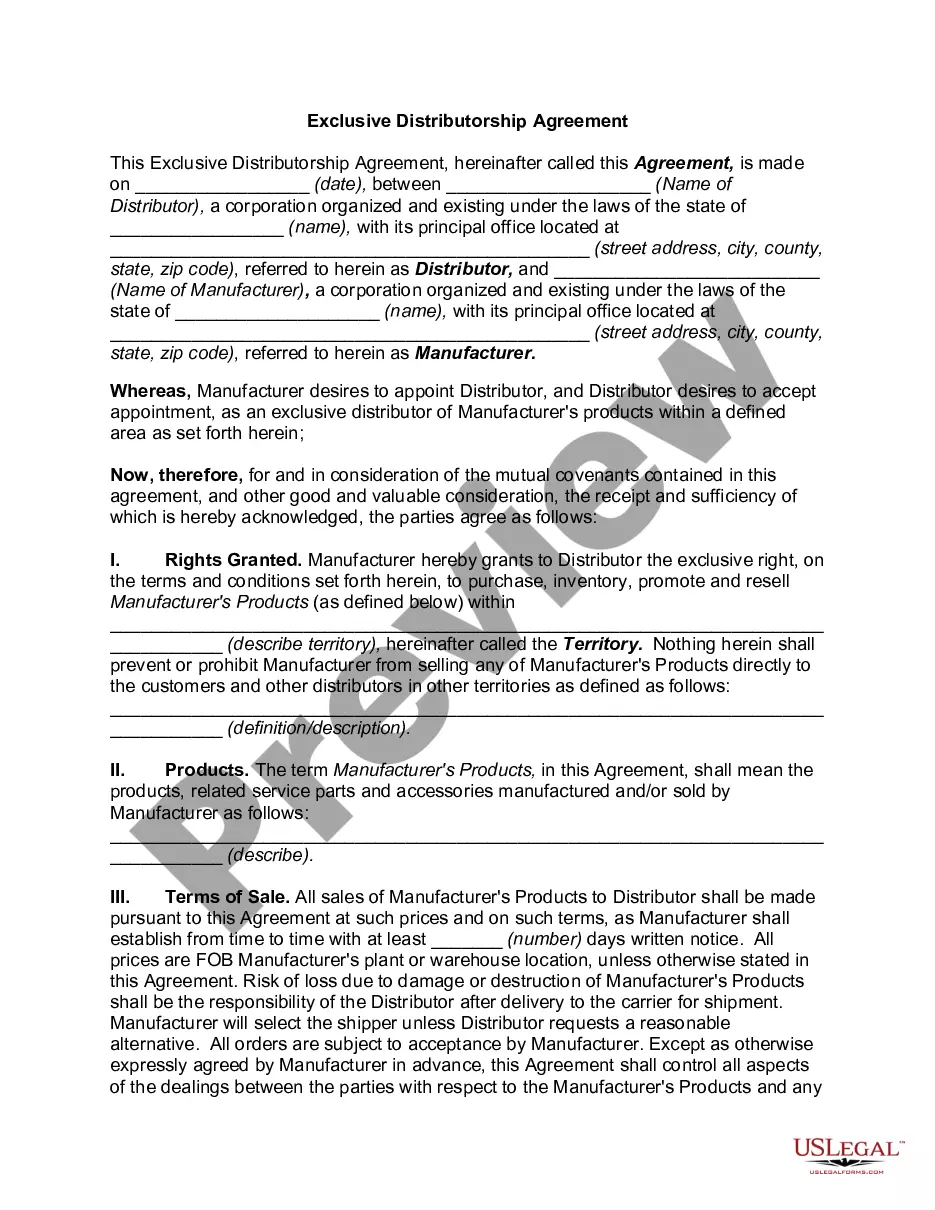
Indiana Distributorship Agreement
Description
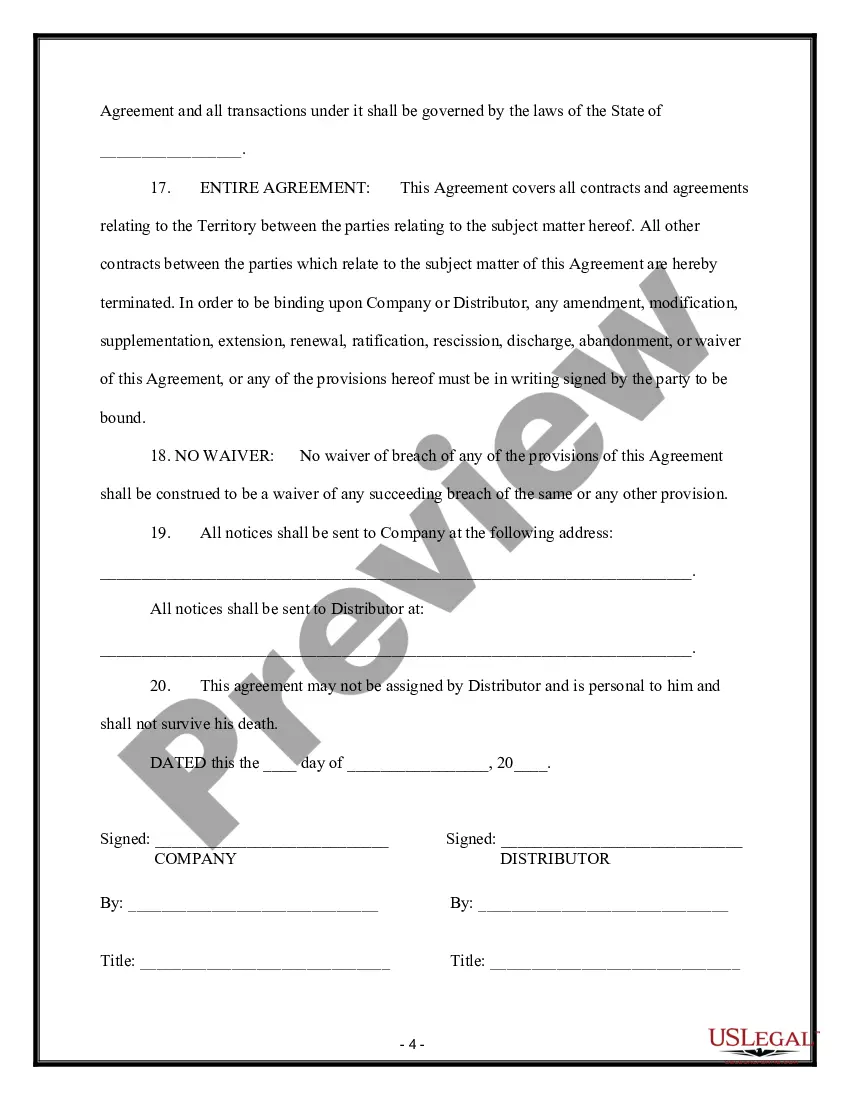

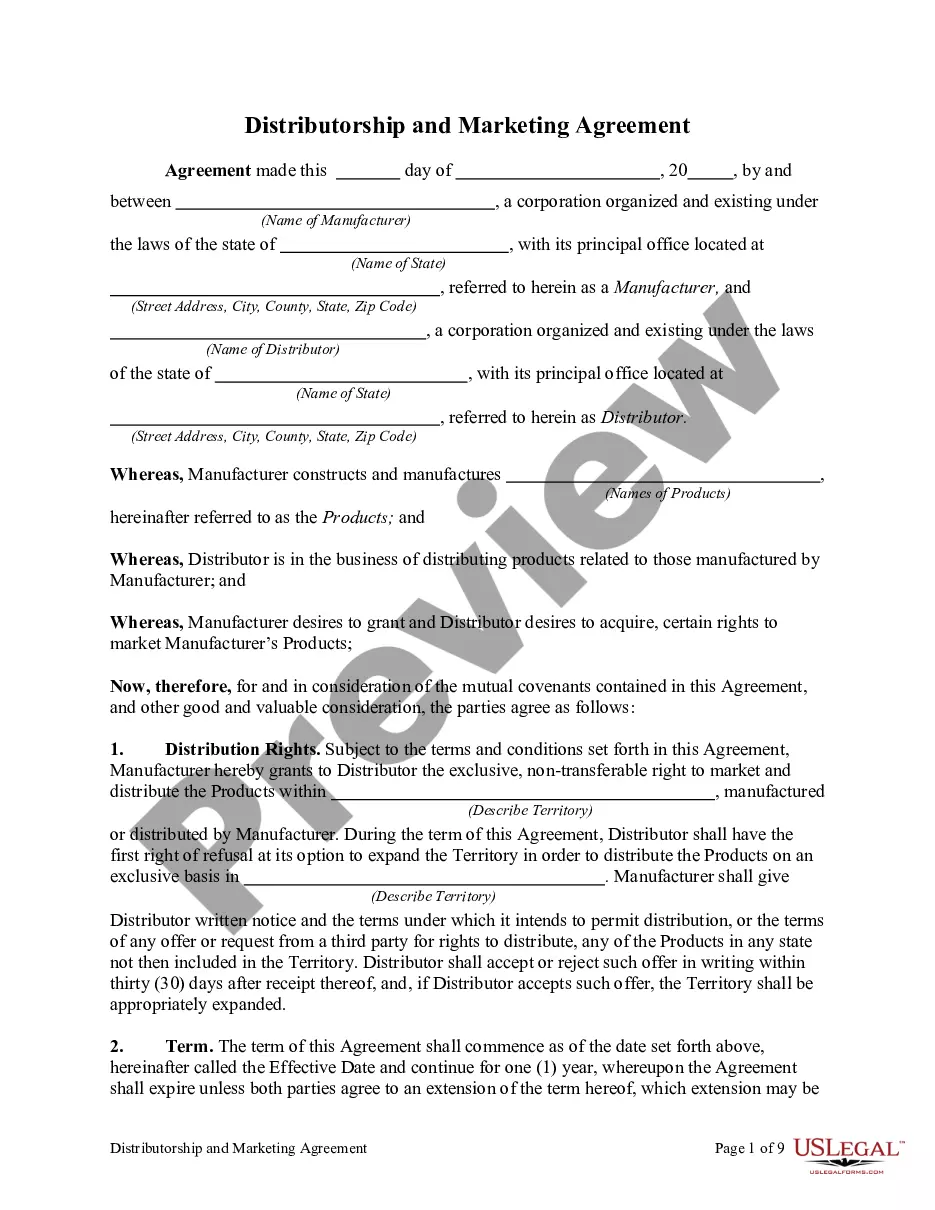
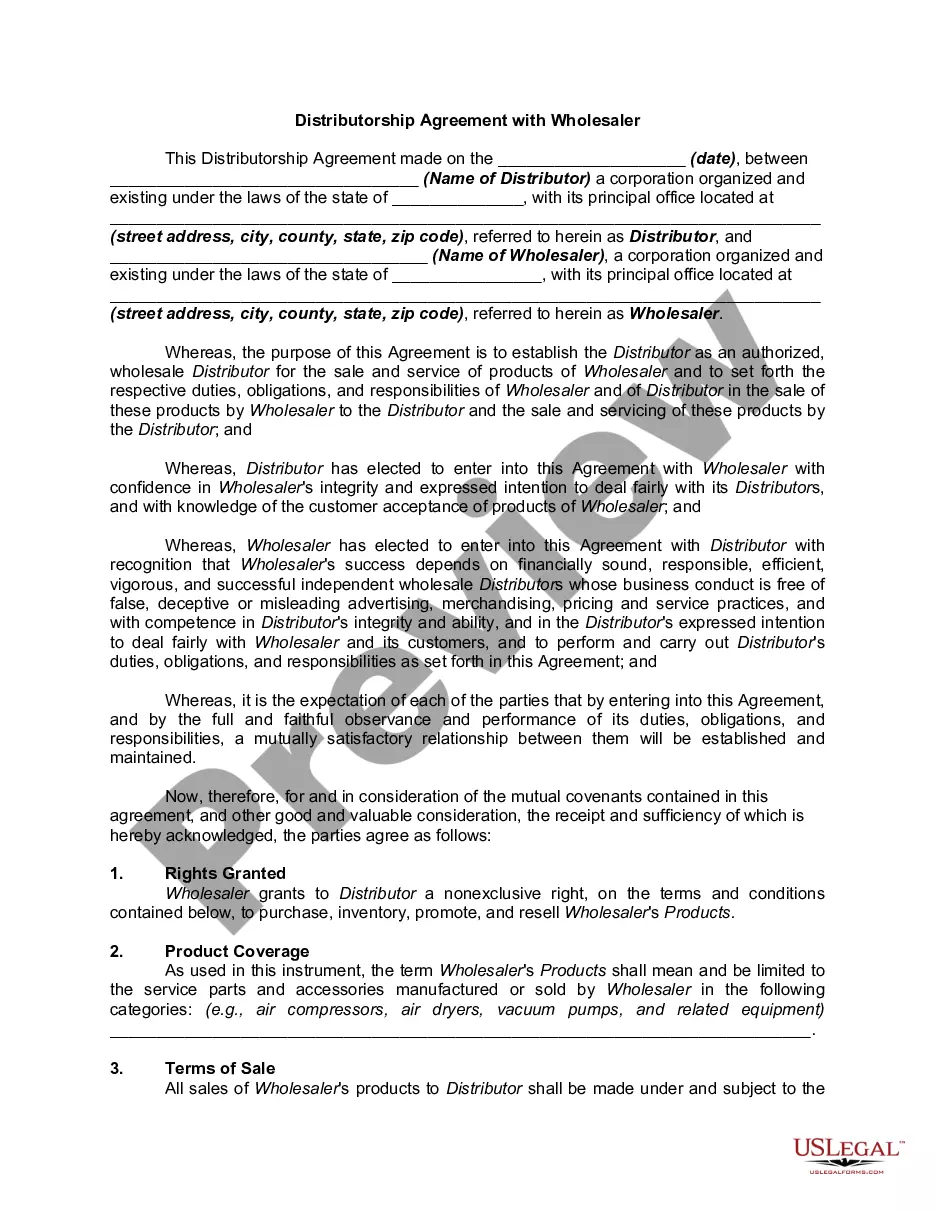
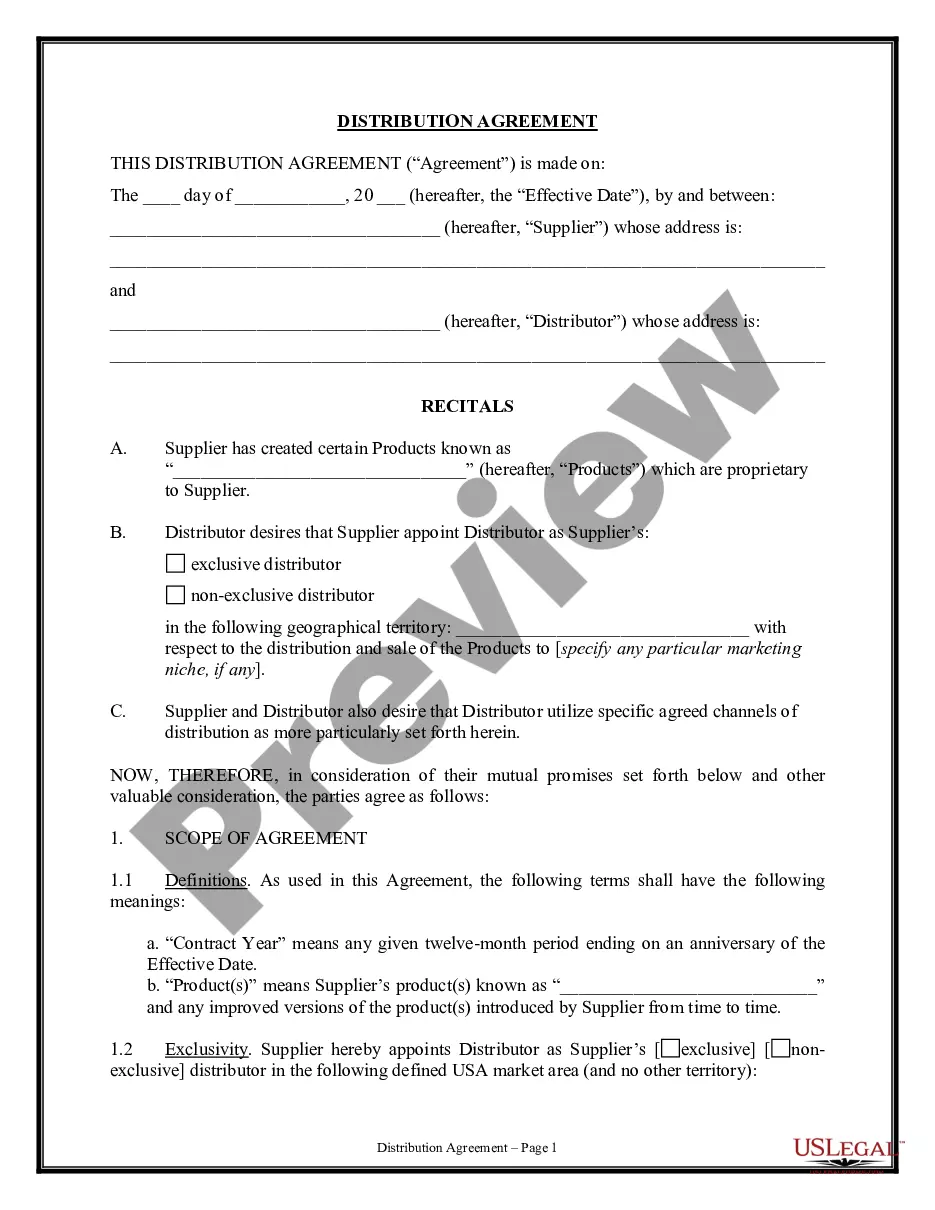
Get your form ready online
Our built-in tools help you complete, sign, share, and store your documents in one place.
Make edits, fill in missing information, and update formatting in US Legal Forms—just like you would in MS Word.
Download a copy, print it, send it by email, or mail it via USPS—whatever works best for your next step.
Sign and collect signatures with our SignNow integration. Send to multiple recipients, set reminders, and more. Go Premium to unlock E-Sign.
If this form requires notarization, complete it online through a secure video call—no need to meet a notary in person or wait for an appointment.
We protect your documents and personal data by following strict security and privacy standards.

Make edits, fill in missing information, and update formatting in US Legal Forms—just like you would in MS Word.

Download a copy, print it, send it by email, or mail it via USPS—whatever works best for your next step.

Sign and collect signatures with our SignNow integration. Send to multiple recipients, set reminders, and more. Go Premium to unlock E-Sign.

If this form requires notarization, complete it online through a secure video call—no need to meet a notary in person or wait for an appointment.

We protect your documents and personal data by following strict security and privacy standards.
Looking for another form?






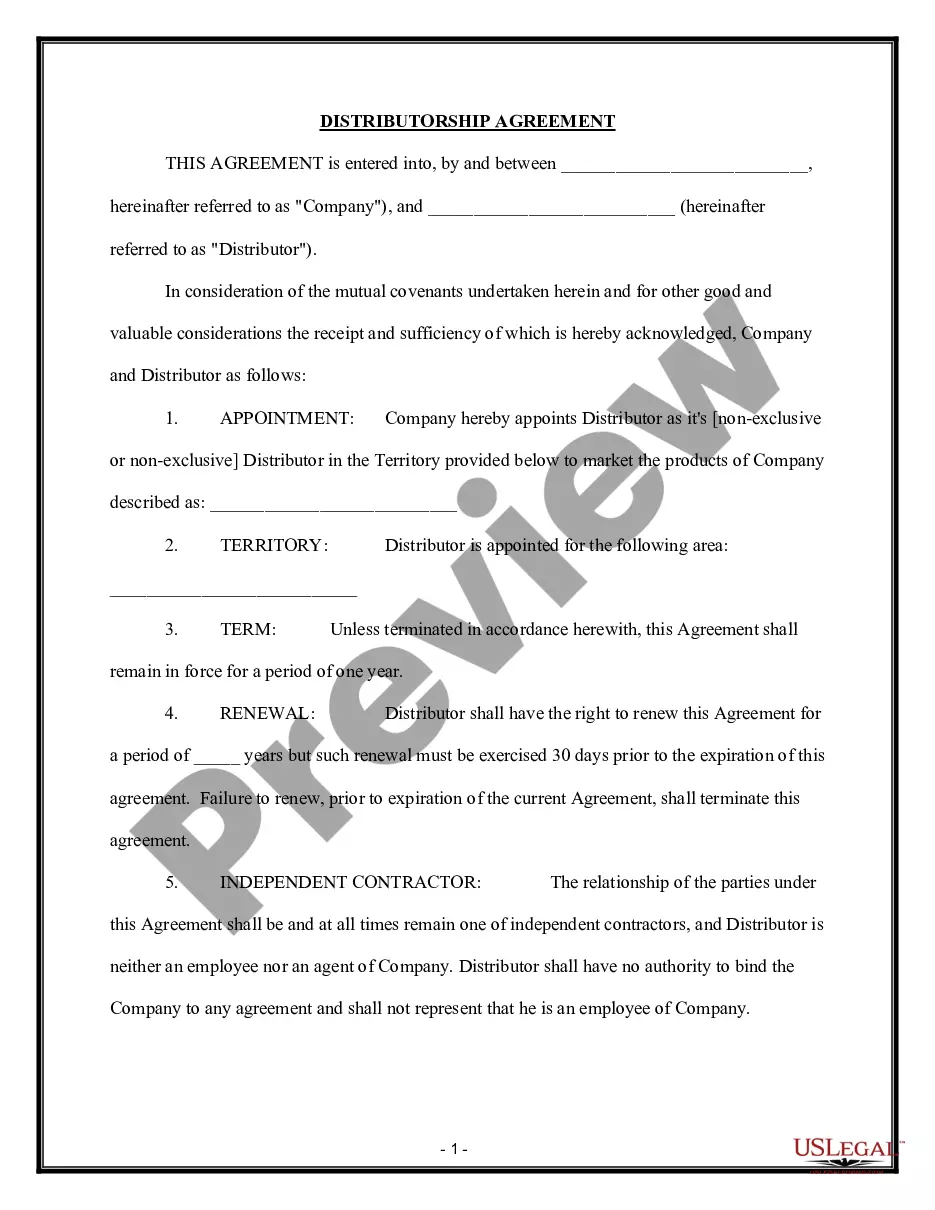
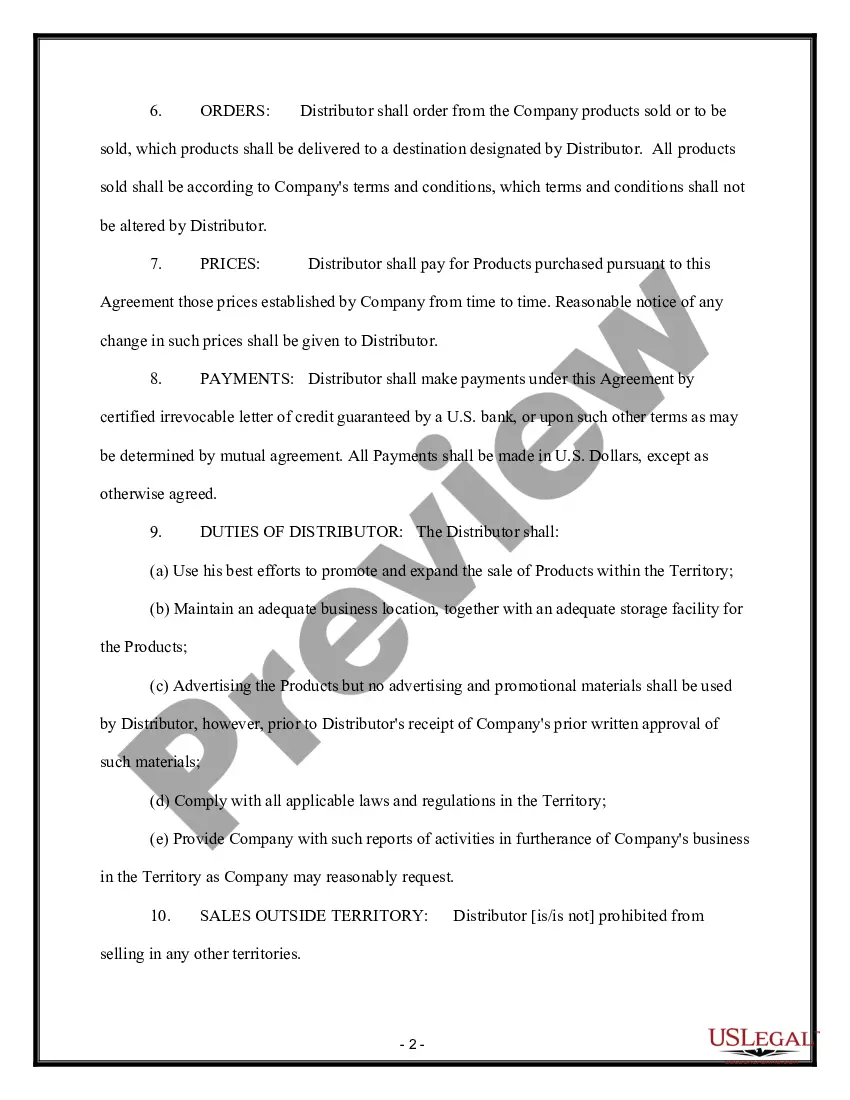
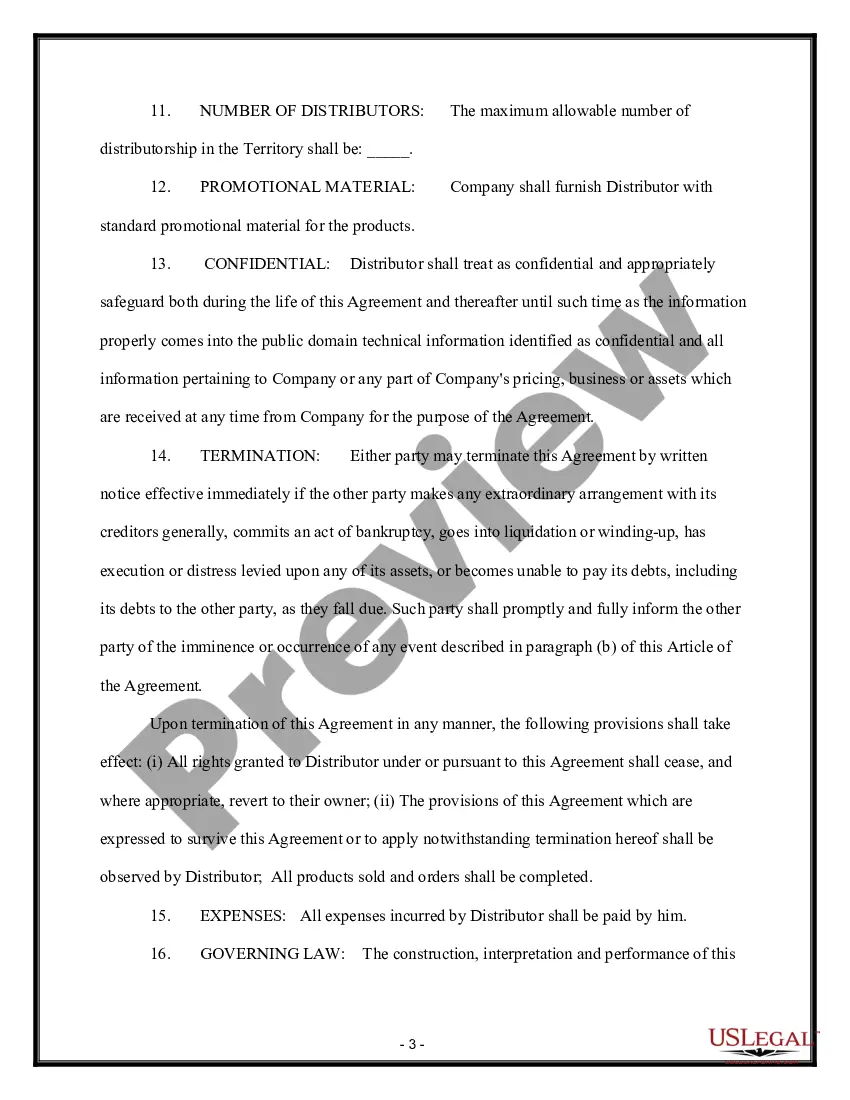
How to fill out Distributorship Agreement?
Selecting the ideal legal document template can be a challenge.
It goes without saying that there are numerous templates accessible online, but how can you find the legal document you require.
Utilize the US Legal Forms website.
If you are a new user of US Legal Forms, here are simple steps for you to follow: First, make sure you have chosen the correct form for your jurisdiction. You can review the form using the Review option and examine the form description to ensure it is the appropriate one for your needs.
- The platform offers a wide array of templates, including the Indiana Distributorship Agreement, suitable for both business and personal purposes.
- All of the forms are reviewed by professionals and comply with federal and state guidelines.
- If you are already registered, Log In to your account and click on the Download button to obtain the Indiana Distributorship Agreement.
- Use your account to review the legal documents you have acquired previously.
- Navigate to the My documents section of your account and download another copy of the document you need.
Form popularity
FAQ
Distributors and dealers play unique roles in the supply chain. A distributor typically buys large quantities of products and sells them to different retailers, while a dealer directly sells products to the end consumer. The Indiana Distributorship Agreement often covers various obligations for the distributor, but dealers focus more on sales to individual customers. Knowing these roles can help businesses optimize their distribution strategy.
A distribution service agreement is a contract that outlines the terms under which a distributor offers services related to the distribution of goods. This type of agreement can include elements such as logistics, warehousing, and inventory management. If you are considering an Indiana Distributorship Agreement, this contract type might also be relevant, as it ensures clarity in service expectations between the parties involved.
Distribution contracts can vary widely, but the most common types include exclusive distribution agreements, non-exclusive distribution agreements, and selective distribution agreements. An Indiana Distributorship Agreement often takes the form of one of these types, depending on the level of market control a supplier wishes to establish. Understanding these differences can help you choose the right contract for your business.
The four main types of contracts are express contracts, implied contracts, unilateral contracts, and bilateral contracts. Express contracts are clearly stated, while implied contracts are formed by actions. When entering an Indiana Distributorship Agreement, you are typically engaging in a bilateral contract, where both parties agree to specific terms and conditions.
Another name for an Indiana Distributorship Agreement is a distribution contract. Some may also refer to it as a supplier agreement or reseller agreement. Regardless of the name, the document serves to define the terms between the manufacturer and the distributor.
An Indiana Distributorship Agreement typically allows a distributor to sell products directly to retailers or end clients, whereas a dealer agreement may involve reselling products under a different brand or name. Distributors often take on more responsibilities, such as inventory management, compared to dealers. Recognizing these differences can help you align your business strategy with the appropriate agreement.
While both agreements involve the distribution of goods, an Indiana Distributorship Agreement focuses on the sale of products, whereas a franchise agreement also includes the right to use a business model and brand. Distribution agreements primarily concern supply chain relationships, whereas franchise agreements involve a comprehensive business method. Understanding these distinctions helps you choose the right approach for your business.
Key provisions of an Indiana Distributorship Agreement often include definitions of terms, compensation structure, performance metrics, and duration of the agreement. Furthermore, terms related to exclusivity, termination rights, and dispute resolution processes are crucial. Clearly defining these terms protects both parties and enhances cooperation.
Creating an Indiana Distributorship Agreement involves several steps. First, define the scope of the distribution arrangement, including territories and product lines. Next, outline the responsibilities of both the distributor and the manufacturer, and finally, consider using a service like uslegalforms to ensure that your agreement complies with local laws and covers all necessary details.
An Indiana Distributorship Agreement provides several benefits for both parties involved. It helps establish clear terms for distribution, ensuring that both the manufacturer and distributor understand their roles. Additionally, such agreements can enhance market reach and improve sales efficiency by streamlining distribution processes.