Indiana Child Care Services Package
What this form package covers
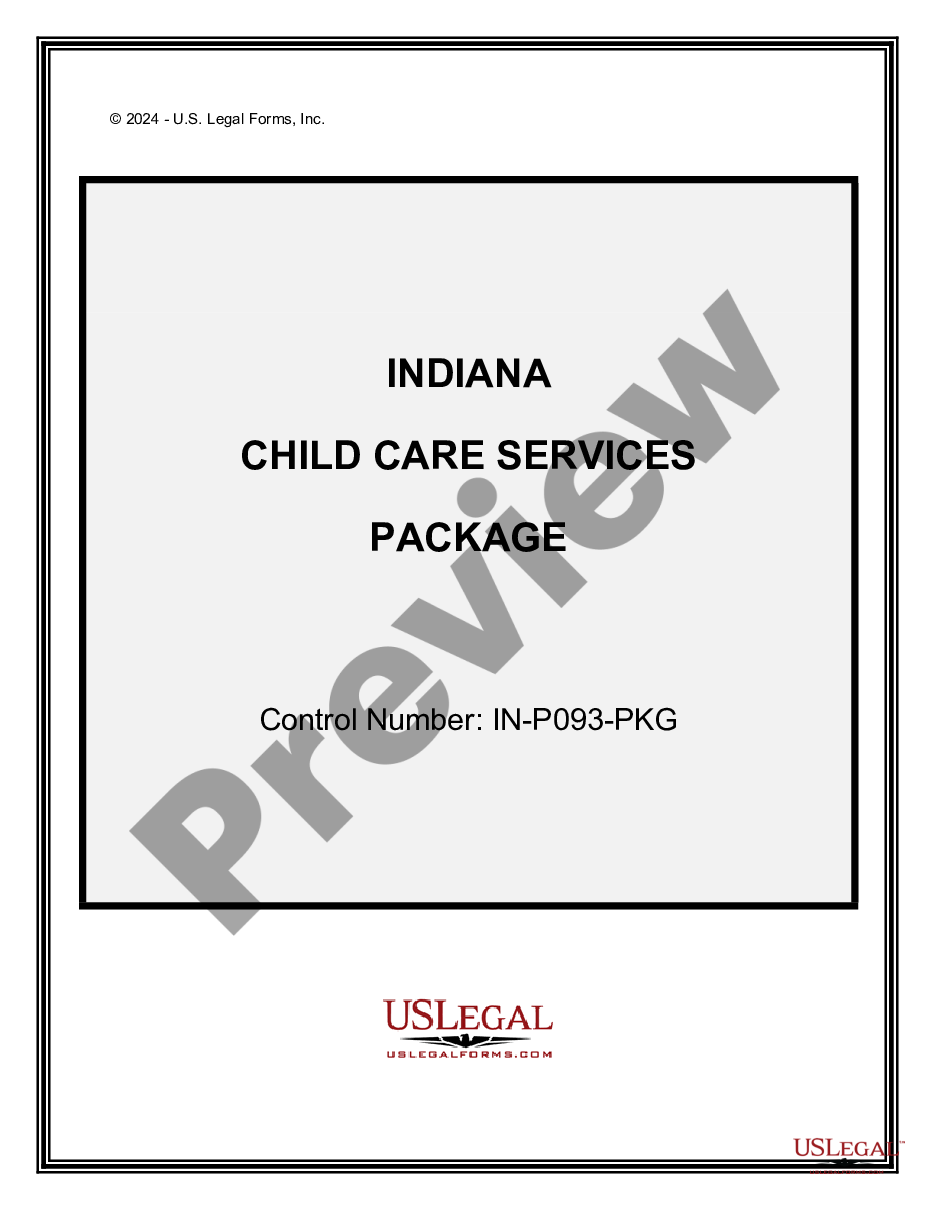
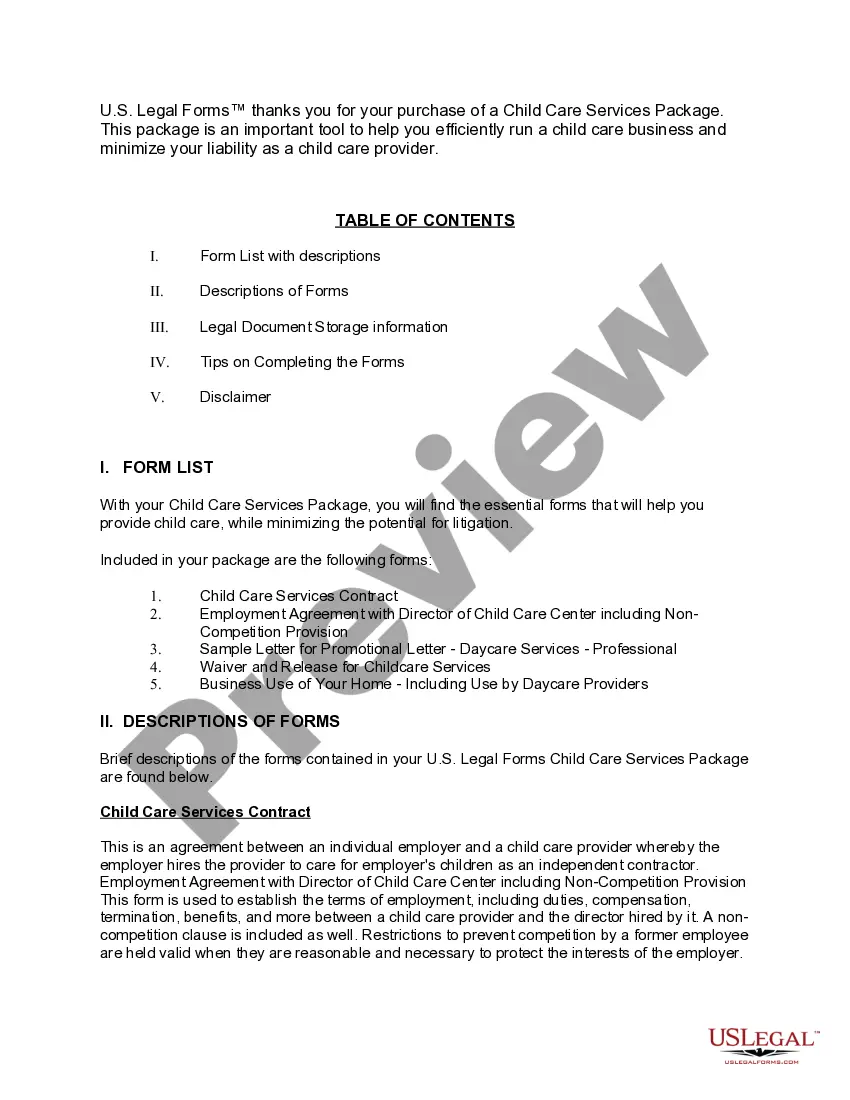
The Indiana Child Care Services Package is a comprehensive set of legal forms designed specifically for child care providers in Indiana. This package includes essential agreements and waivers that help promote and operate a child care service while protecting the provider from potential liabilities and litigation. By using this package, you can save over 50% compared to purchasing each form individually, ensuring you have the necessary documentation for effective business management and compliance.
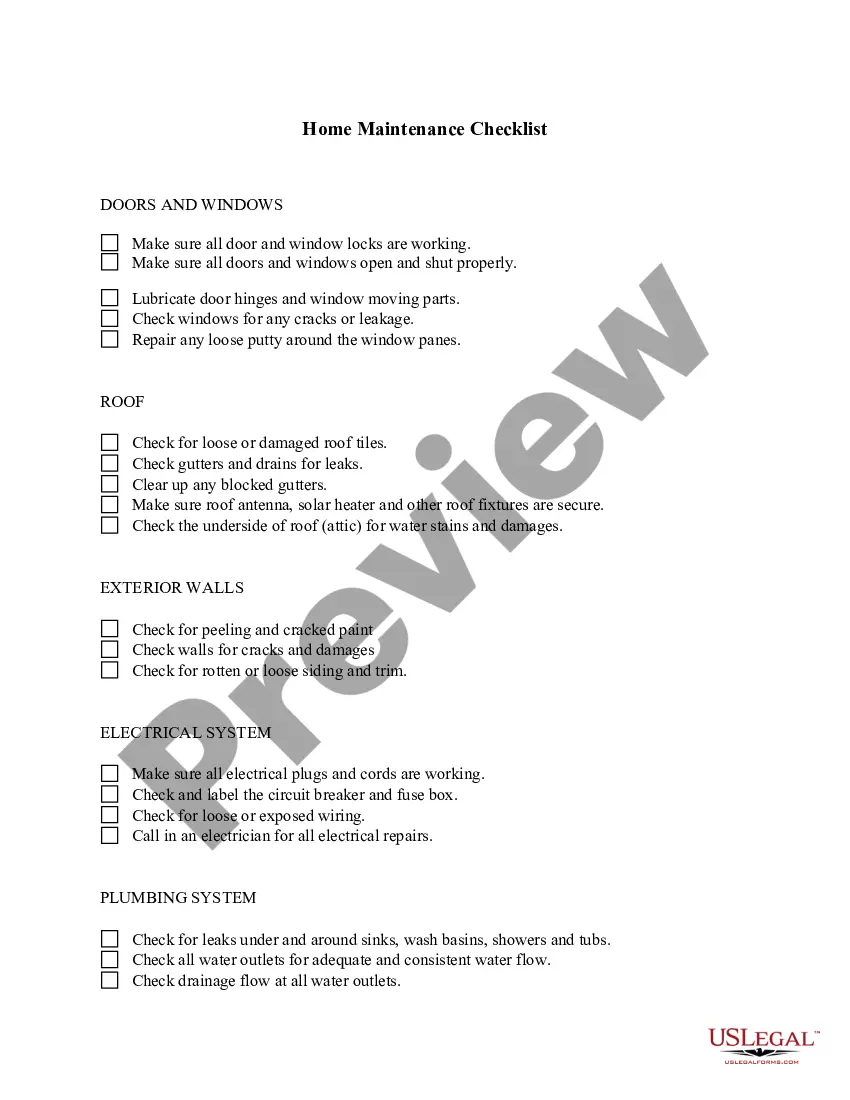
Forms included in this package
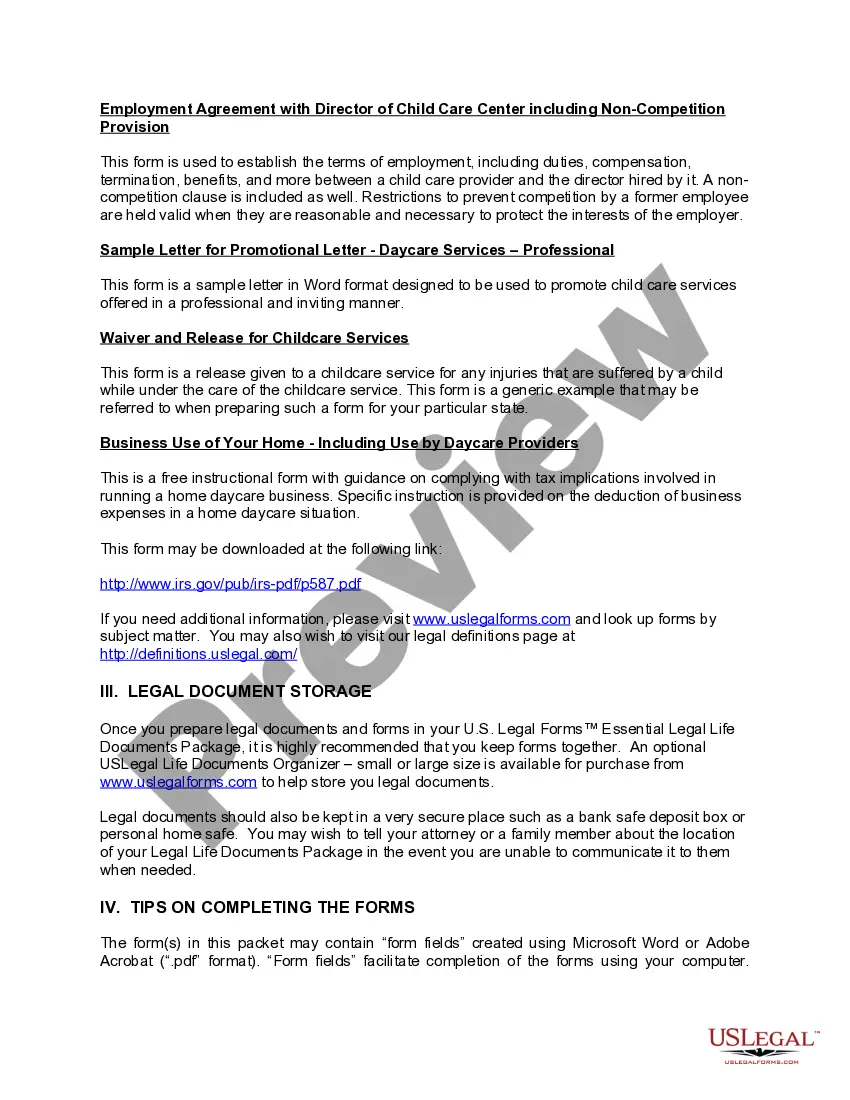



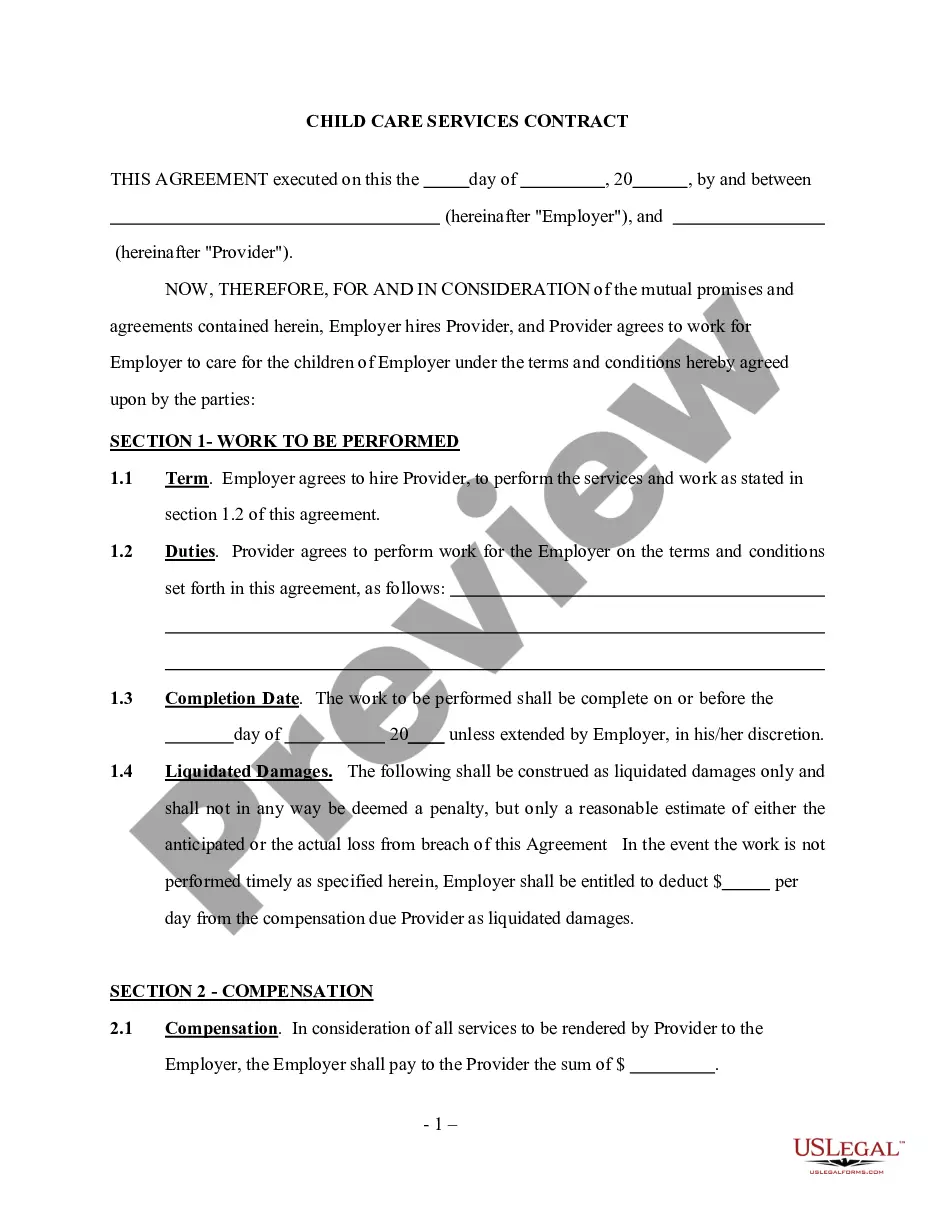

When to use this form package
This form package is useful in several scenarios, including:
- Starting a new child care business and needing structured agreements.
- Hiring a director or staff for your child care center.
- Promoting your child care services to potential clients.
- Establishing liability protections for injuries that may occur during care.
- Understanding the tax implications of operating a home daycare.
Who should use this form package
- Child care providers looking to formalize their services.
- Directors of child care centers needing employment agreements.
- Individuals starting a home daycare to ensure compliance with state regulations.
- Parents hiring independent contractors for child care services.
- Anyone involved in the promotion and operation of child care services in Indiana.
How to prepare this document
- Review all included forms to understand their purpose and requirements.
- Identify the parties involved in each agreement, including providers and parents.
- Fill in necessary details such as names, addresses, and dates where indicated.
- Ensure that all parties sign where required, and review for completeness.
- Store completed forms in a secure location for future reference.
Notarization details for included forms
Notarization is generally not required for forms in this package. However, specific circumstances or local laws may require it. You can complete notarization remotely through US Legal Forms, powered by Notarize, with 24/7 availability.
Get your form ready online
Our built-in tools help you complete, sign, share, and store your documents in one place.
Make edits, fill in missing information, and update formatting in US Legal Forms—just like you would in MS Word.
Download a copy, print it, send it by email, or mail it via USPS—whatever works best for your next step.
Sign and collect signatures with our SignNow integration. Send to multiple recipients, set reminders, and more. Go Premium to unlock E-Sign.
If this form requires notarization, complete it online through a secure video call—no need to meet a notary in person or wait for an appointment.
We protect your documents and personal data by following strict security and privacy standards.

Make edits, fill in missing information, and update formatting in US Legal Forms—just like you would in MS Word.

Download a copy, print it, send it by email, or mail it via USPS—whatever works best for your next step.

Sign and collect signatures with our SignNow integration. Send to multiple recipients, set reminders, and more. Go Premium to unlock E-Sign.

If this form requires notarization, complete it online through a secure video call—no need to meet a notary in person or wait for an appointment.

We protect your documents and personal data by following strict security and privacy standards.
Avoid these common issues
- Failing to sign or date forms before submitting them.
- Not keeping copies of completed agreements for records.
- Overlooking specific state regulations that may apply.
- Using outdated forms or templates not suitable for current legal standards.
Why use this package online
- Instant access to downloadable forms that you can complete at your convenience.
- Easily editable documents allow you to customize forms according to your specific needs.
- Reliability backed by licensed attorneys who draft and verify the legal accuracy of each form.
- Cost-effective solution to acquire multiple forms in one bundle.
Looking for another form?






Form popularity
FAQ
Step 1: Contact the Child Care Resource and Referral Center for your county. Step 2: Decide if you can start small and be an exempt provider (see the details below for Exempt Family Child Care) Step 3: Begin the setup process for your daycare. Step 4: Open your small daycare.
A: Well, if you love babies and all the itty-bitty cuddles and hugs, then yes, it's definitely worth it. However, keep in mind that when you run a home daycare, you not only give 100% of your time to your own children, but you're also expected to give 100% of your time to the other children as well.
CCDF's main goal is to assist low income families with child care costs in the form of subsidies.CCDF covers costs for children birth to 13 years of age, along with providing technical support for parents and child care providers.
You can apply for a subsidy if: You or your spouse/partner, or the child receiving care are Canadian citizens or permanent residents of Canada and live in Alberta. You or your spouse/partner are an Alberta resident. Your children are 12 years of age or younger and are not yet attending Grade 7.
Requesting a Government/Institutional Grant. Asking for a bank loan. Securing a Small Business Association (SBA) Loan.
Visit EarlyEdConnect.FSSA.IN.gov. Find the intake agent for the county in which you live.
Step 1: Contact the Child Care Resource and Referral Center for your county. Step 2: Decide if you can start small and be an exempt provider (see the details below for Exempt Family Child Care) Step 3: Begin the setup process for your daycare. Step 4: Open your small daycare.
To qualify for CCDF, your family's gross monthly income (before taxes and any other deductions) cannot be more than 127% of the federal poverty level. Your family can stay in the program until your income is more than 85% of the Indiana median income guidelines by family size.
For families earning less than $65,000 per year, the new subsidy will cover up to 85 per cent of their costs. For families earning between $65,000 and $170,000 the rate will gradually taper to 50 per cent of costs.