Indiana Marital Legal Separation and Property Settlement Agreement Minor Children Parties May have Joint Property or Debts effective Immediately
What is this form?
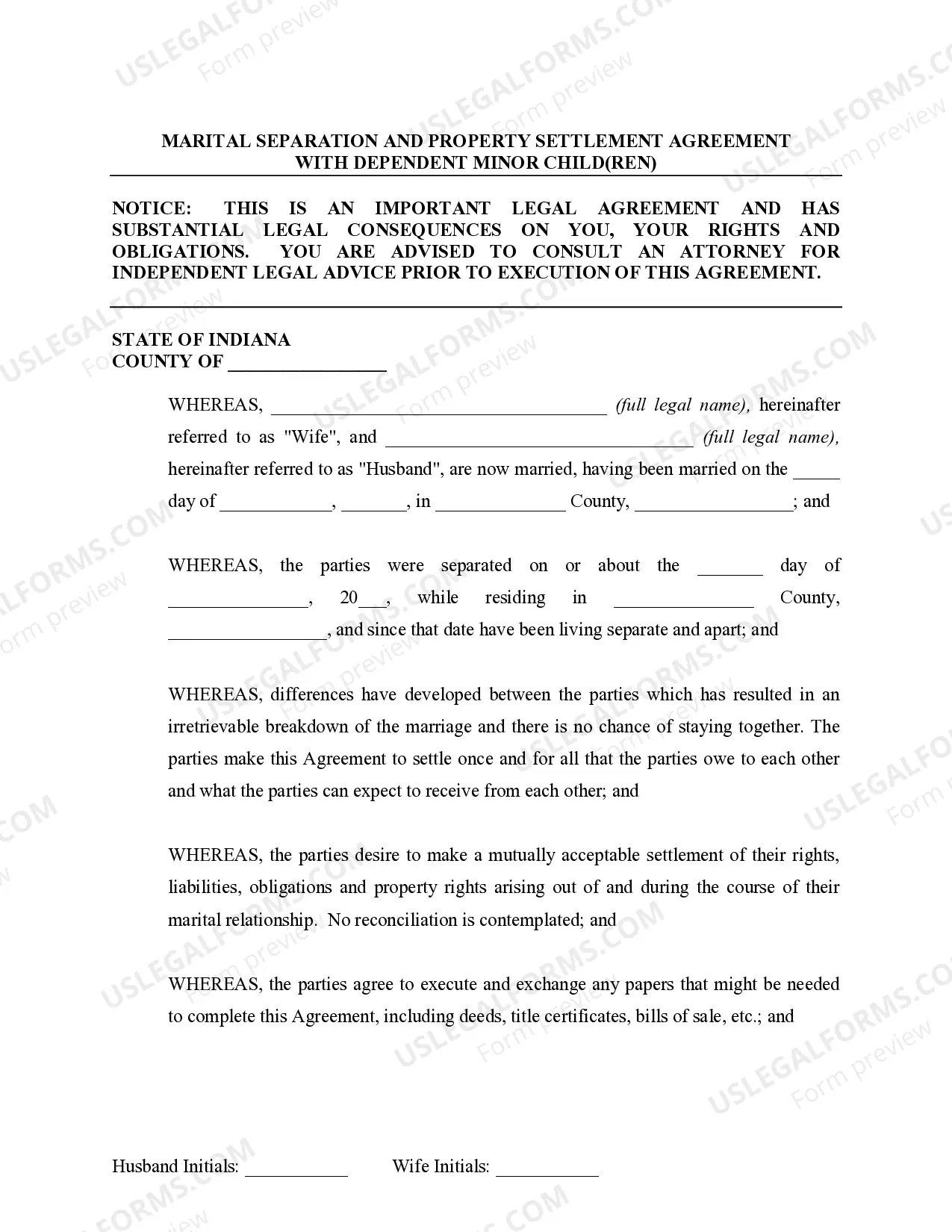
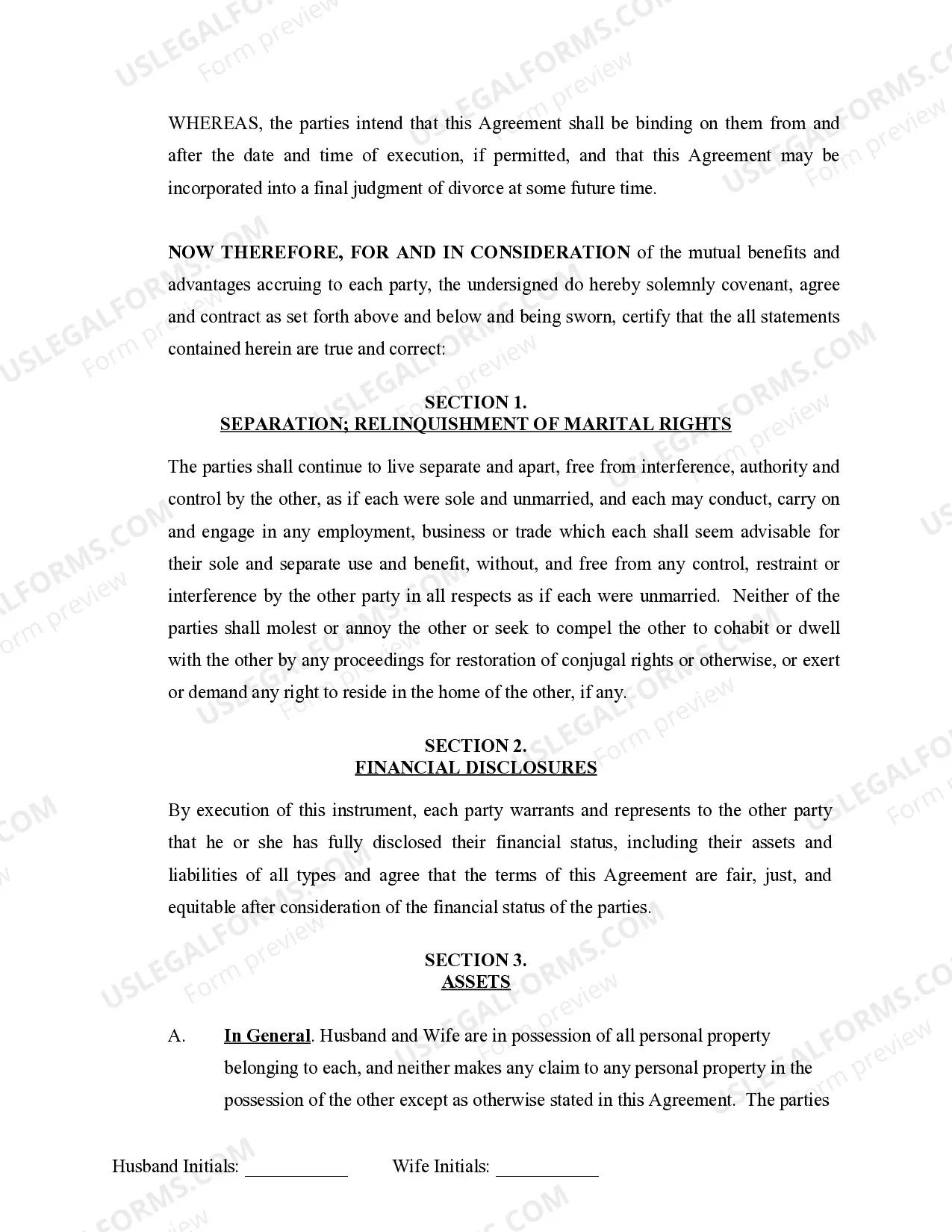
The Marital Legal Separation and Property Settlement Agreement with Minor Children is a legal document designed for married couples with children who wish to separate immediately. This agreement outlines the terms of property division, debt responsibility, child custody, visitation, and child support. It is distinct from a divorce as it allows parties to formalize their separation while retaining the option to reconcile or ultimately proceed to divorce.
Key parts of this document
- Overview of separation and property settlement terms.
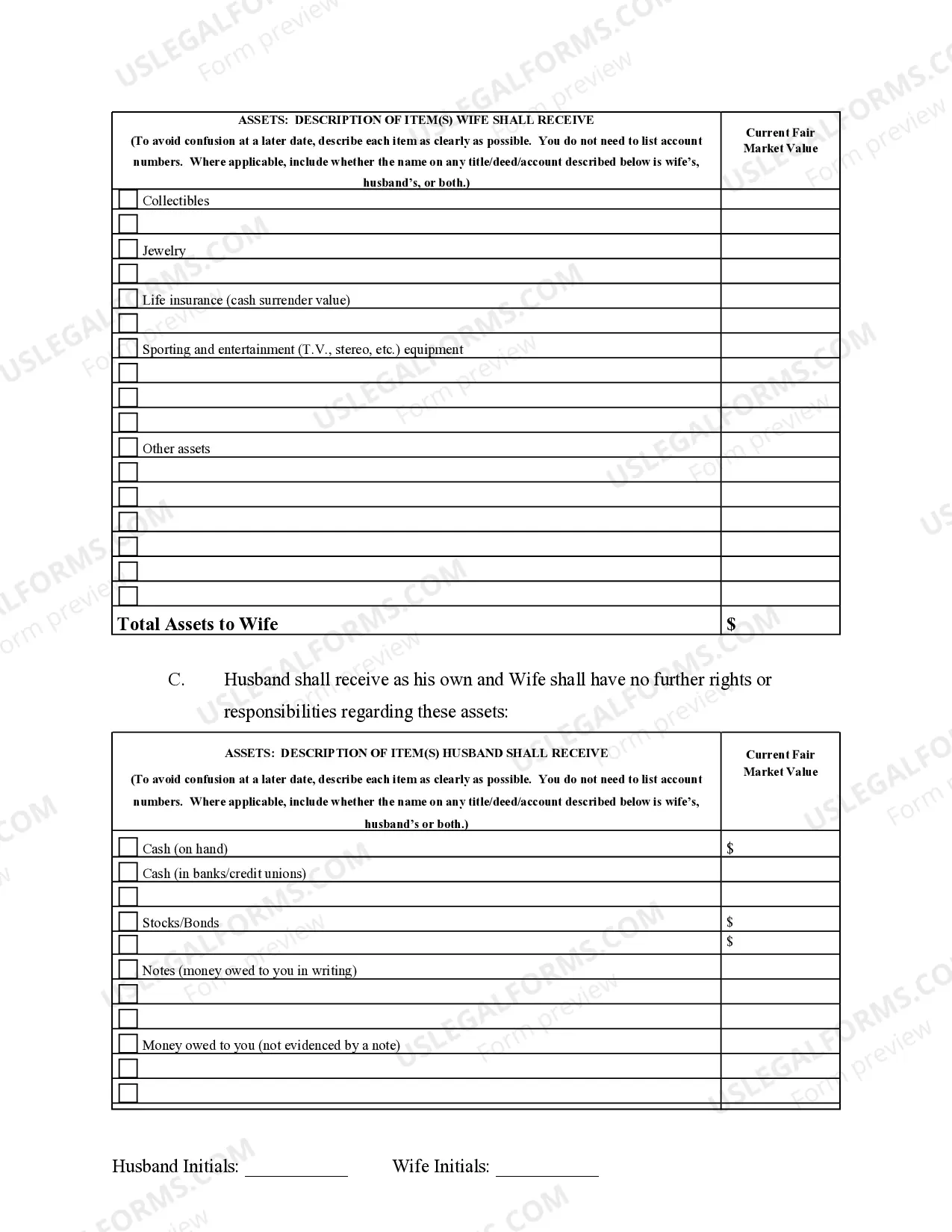
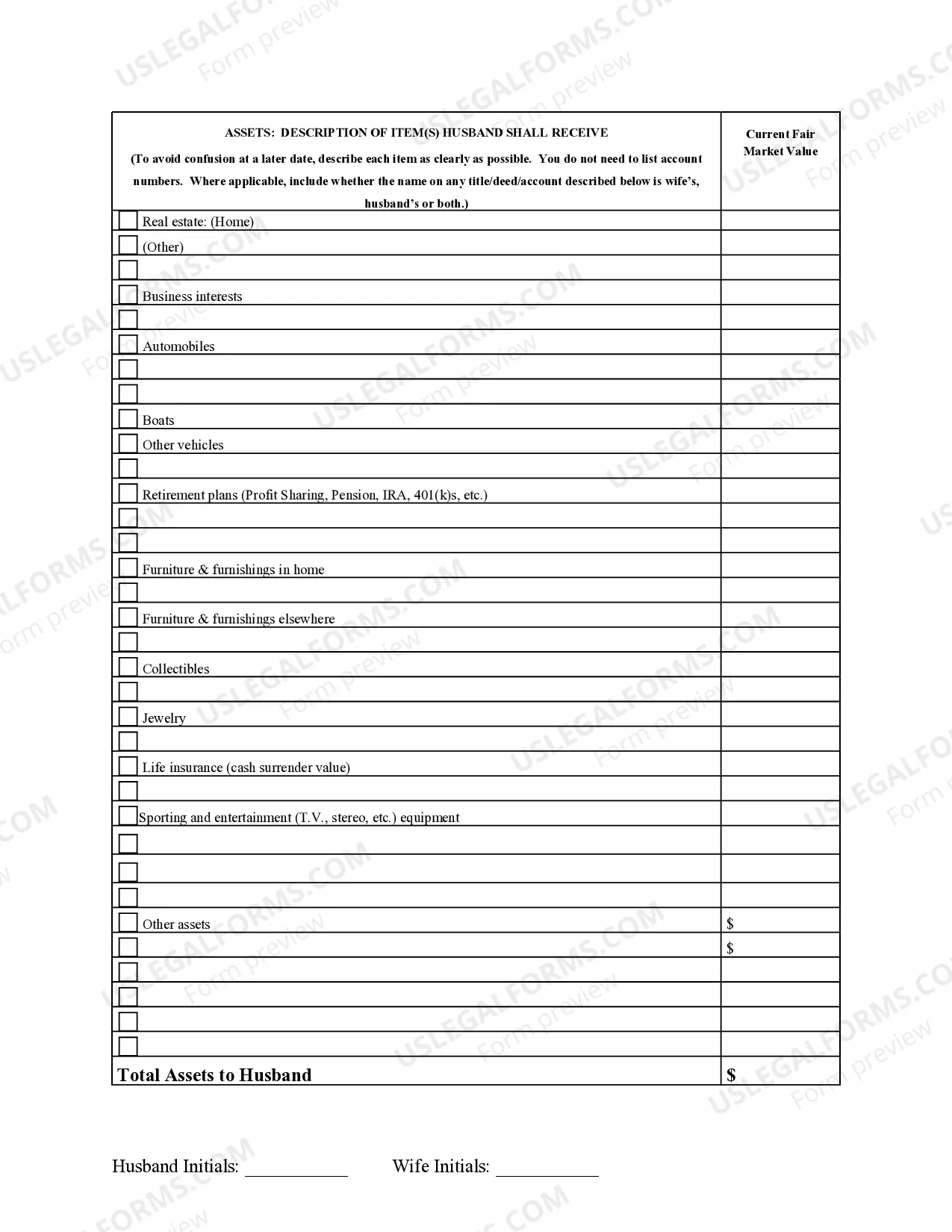
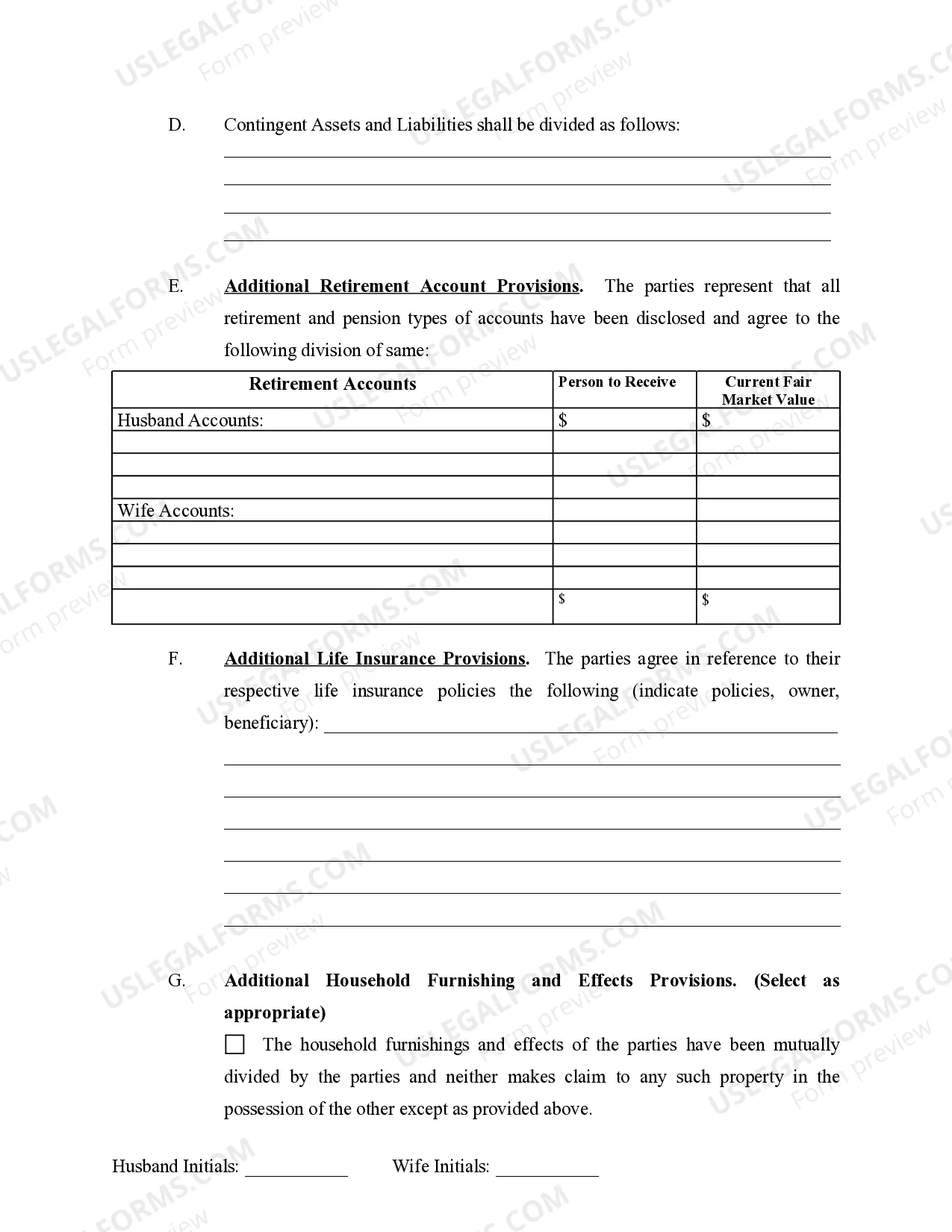
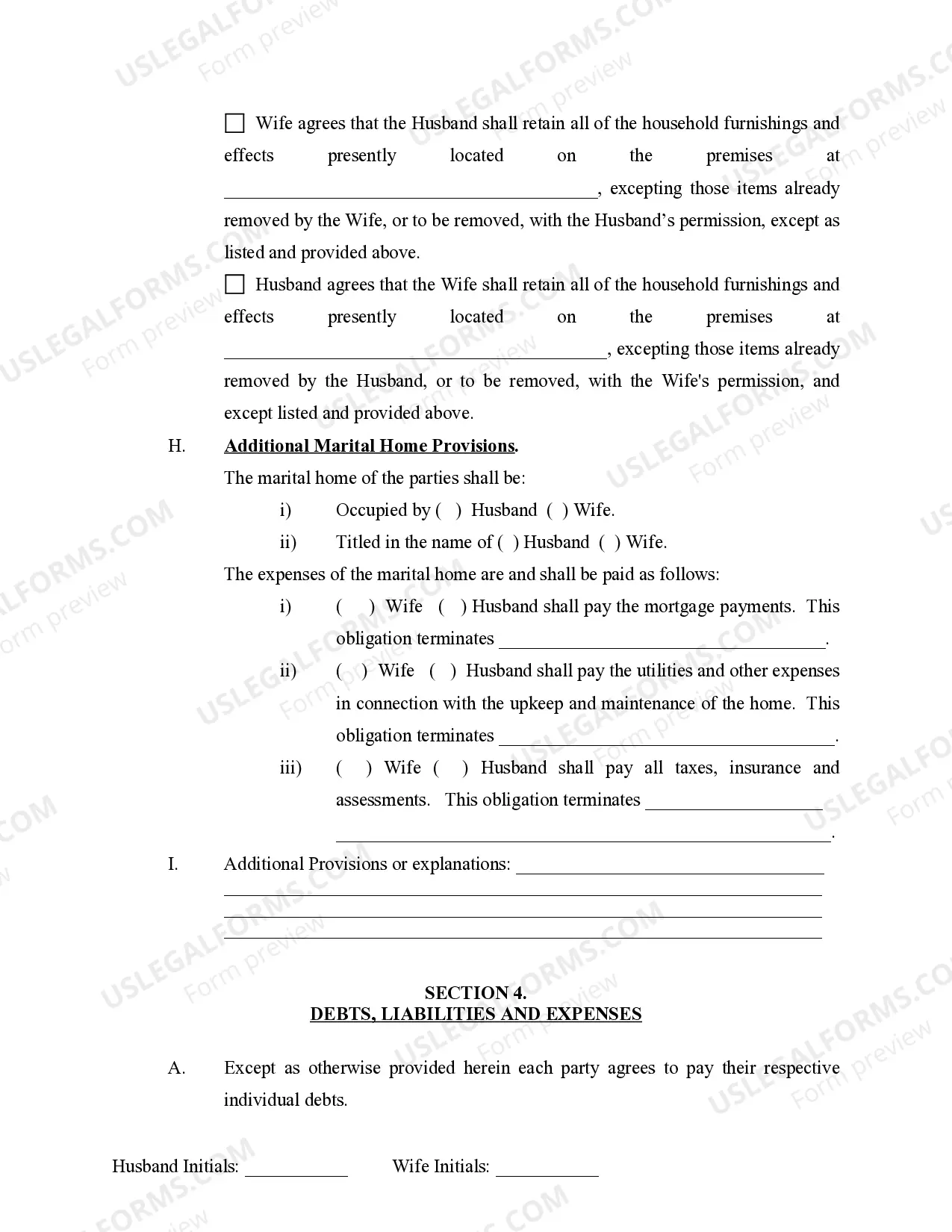
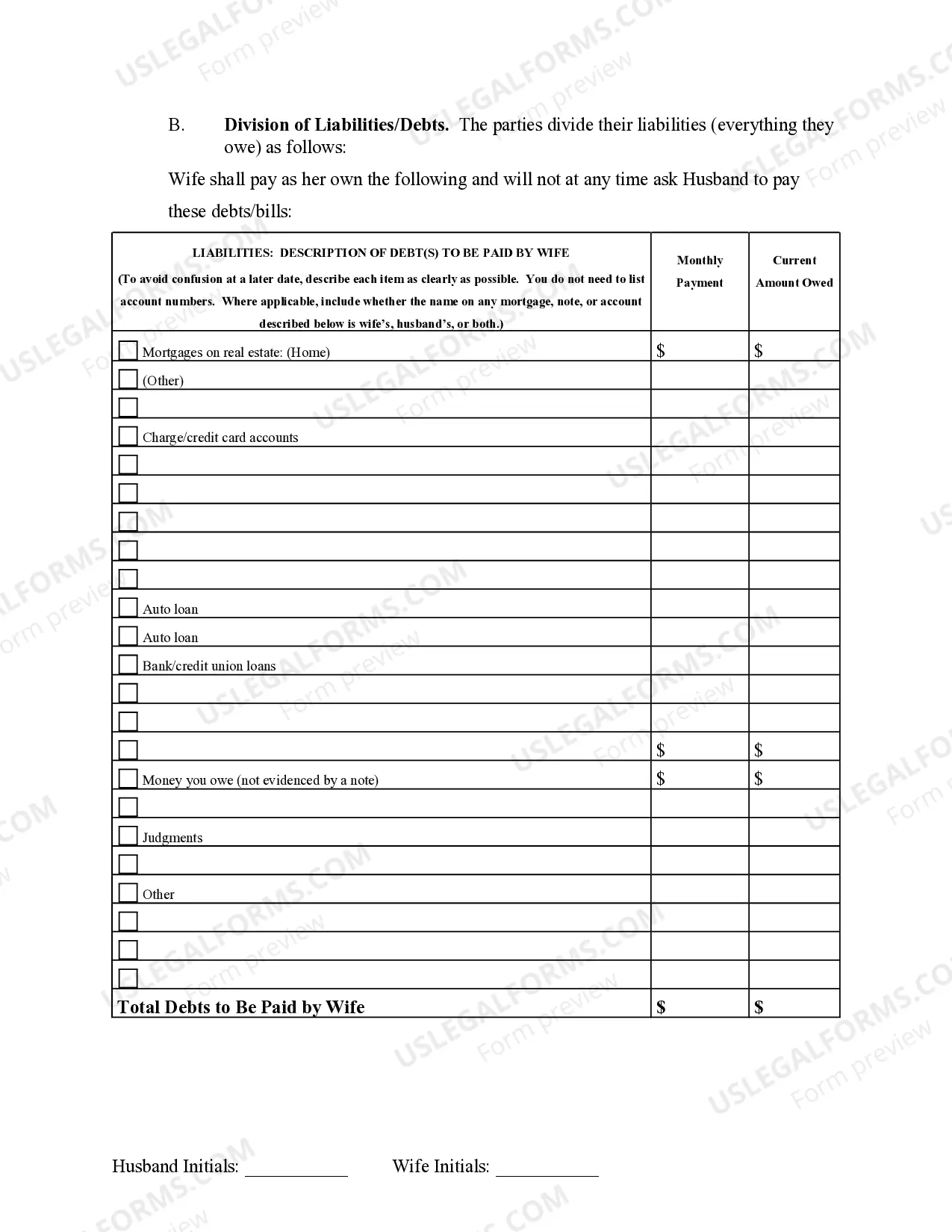
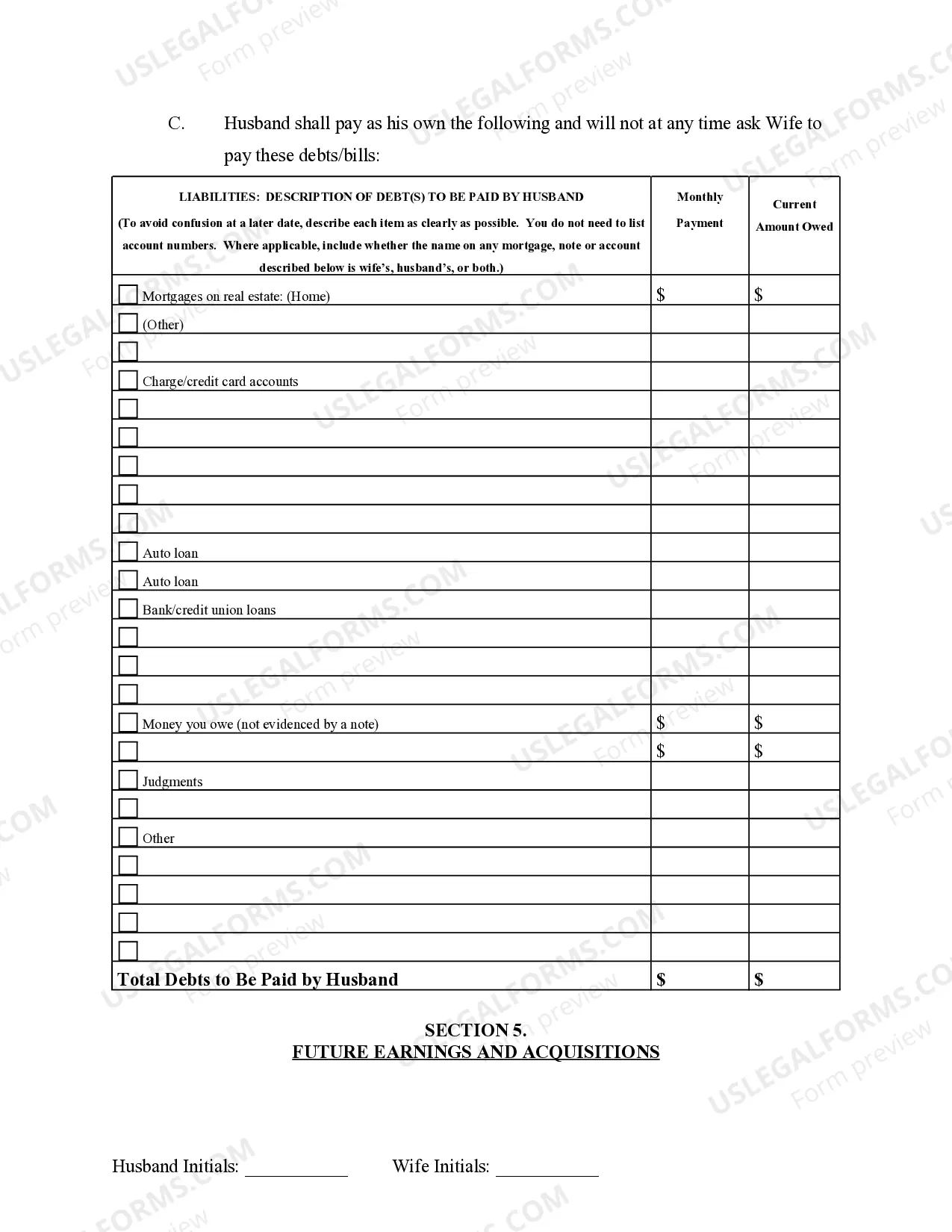
- Details on the division of assets and liabilities between parties.
- Provisions for child custody, visitation rights, and child support obligations.
- Agreement on spousal support (alimony) terms, if applicable.
- Legal enforceability and binding nature of the agreement.


When to use this form
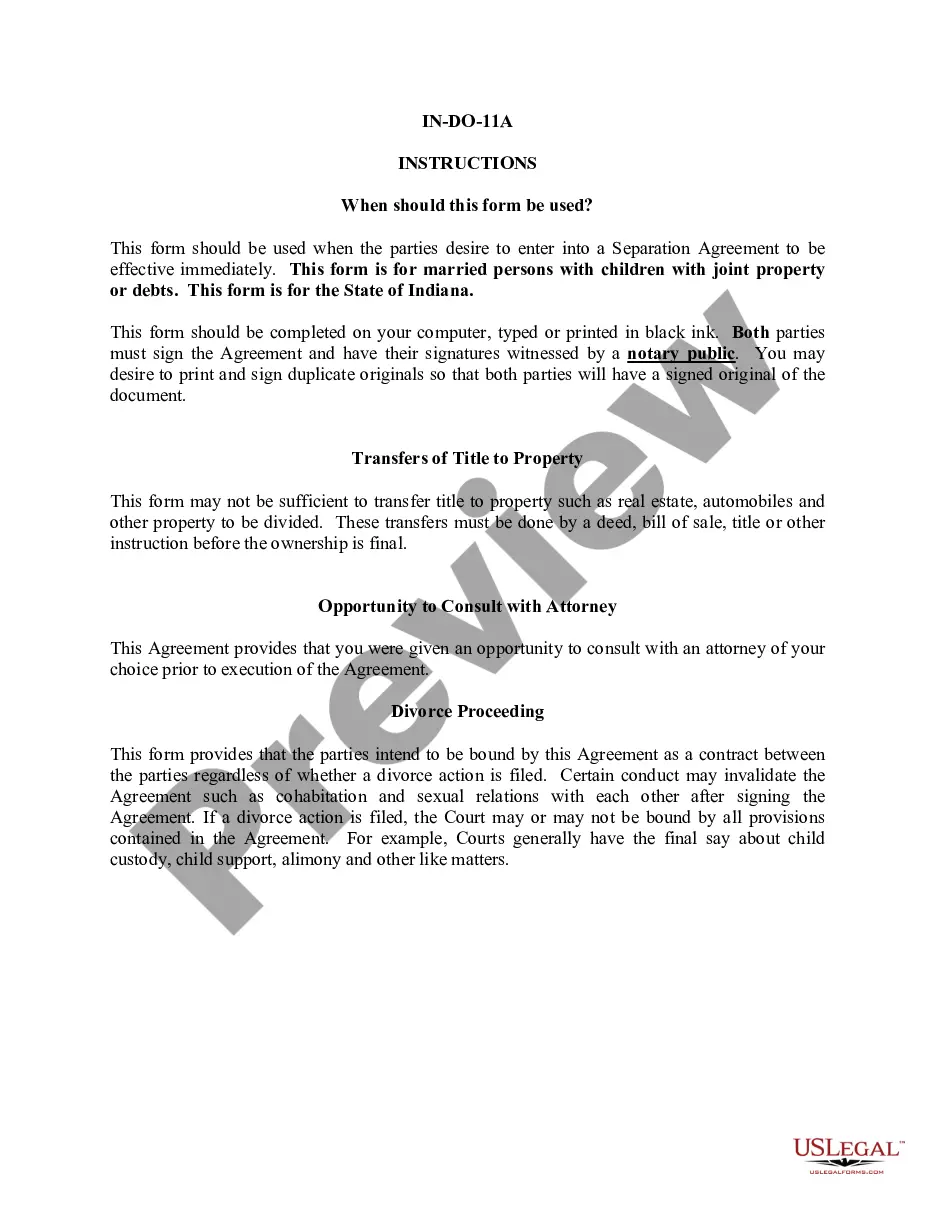
This form should be used when a married couple with minor children decides to live separately but seeks to establish clear terms regarding property, debts, and parenting arrangements. It is essential when both parties hold joint property or claims against each other and will provide clarity for future legal proceedings, especially in case of a divorce.
Who can use this document
Intended Audience
- Married couples residing in Indiana with minor children.
- Couples who have joint property or debts and need to establish a separation agreement.
- Individuals considering divorce but seeking to first implement a separation.
- Those seeking legal clarity and structure in their separation process.
Steps to complete this form
Steps to Complete the Form
- Identify the parties involved by entering their full legal names and marital details.
- Detail the separation date and summarize the irretrievable breakdown of the marriage.
- List and assign ownership of all joint and individual assets, specifying current values.
- Outline the responsible party for any joint debts, detailing the amounts and types of debts.
- Specify child custody arrangements and visitation schedules, as well as child support amounts.
- Sign the agreement in the presence of a notary public, ensuring both parties have witness signatures.
Notarization guidance
Yes, this form must be notarized to be legally valid. You may use US Legal Formsâ integrated online notarization service for secure video calls with licensed notaries, available 24/7, ensuring your agreement is properly validated without the need for travel.
Get your form ready online
Our built-in tools help you complete, sign, share, and store your documents in one place.
Make edits, fill in missing information, and update formatting in US Legal Forms—just like you would in MS Word.
Download a copy, print it, send it by email, or mail it via USPS—whatever works best for your next step.
Sign and collect signatures with our SignNow integration. Send to multiple recipients, set reminders, and more. Go Premium to unlock E-Sign.
If this form requires notarization, complete it online through a secure video call—no need to meet a notary in person or wait for an appointment.
We protect your documents and personal data by following strict security and privacy standards.

Make edits, fill in missing information, and update formatting in US Legal Forms—just like you would in MS Word.

Download a copy, print it, send it by email, or mail it via USPS—whatever works best for your next step.

Sign and collect signatures with our SignNow integration. Send to multiple recipients, set reminders, and more. Go Premium to unlock E-Sign.

If this form requires notarization, complete it online through a secure video call—no need to meet a notary in person or wait for an appointment.

We protect your documents and personal data by following strict security and privacy standards.
Common mistakes to avoid
Common Mistakes
- Failing to fully disclose financial information, which can lead to disputes later.
- Not specifying all joint debts, which can result in unresolved financial obligations.
- Omitting details about child custody and visitation schedules, causing conflicts.
- Neglecting to have the document notarized, impacting its enforceability.
- Not reviewing the agreement with an attorney before signing.
Advantages of online completion
Benefits of Using This Form Online
- Convenience of downloading and completing the form at your own pace.
- Editability allows for adjustments specific to your situation.
- Preparation by attorneys ensures the document meets legal standards.
- Securely stored for future reference and legal use.
Legal use & context
- This agreement has significant legal implications and governs how assets and responsibilities will be shared or relinquished.
- In a divorce proceeding, the courts may refer to this agreement to understand the intentions of both parties regarding asset division and child custody.
- Regardless of a divorce filing, this agreement remains binding unless modified by mutual consent in a court of law.
- Each party should understand the importance of having independent legal advice before signing this agreement.
What to keep in mind
Key Takeaways
- This agreement formalizes a separation while outlining responsibilities related to children, assets, and debts.
- It is essential for couples with minor children to have clear instructions on custody and child support.
- Notarization is necessary for legal validity in the state of Indiana.
- Consulting with an attorney before execution is highly recommended to avoid common pitfalls.
Looking for another form?
Form popularity
FAQ
Indiana is a one-pot property division state, so the court will begin with a presumption that all property is marital property and that it should be divided equally. But this can be overcome and will not necessarily mean that the final division will be equal.
You typically have 30 days to respond to divorce papers. A judge can issue what is known as a default judgment if you fail to do so. A default judgment means that the terms proposed by your spouse will be accepted. You'll lose the opportunity to fight for terms that are more favorable to you.
You must wait 12 months from the date of separation before you can apply for a divorce. You can formalise your property settlement without applying for a divorce.
You can get a divorce even if your spouse does not want it. Once the court issues a Decree of Divorce, you are considered divorced. Your spouse's consent is not necessary.
The fact is that California is a no fault state and you do not need your spouse's signature in order to get a divorce.If your spouse fails to file and serve you with a response, you can file a request for default against your spouse after 30 days. You can also file a proposed judgment for the court to approve.
Unlike other states, Indiana treats separate property as marital property and will include it in the division. Since Indiana is an equitable distribution state, the judge presiding over your divorce must divide your marital property in a just and reasonable manner.
Even though Indiana law doesn't recognize community property, it does require courts to determine an "equitable property division." More specifically, property is divided in a "just and reasonable" manner. In most cases, this means that each spouse gets about half of everything they own.
The truth is that if one person wants a divorce, it can happen.The court needs to agree to grant the divorce, not the other person in the marriage. As long as the necessary financial and legal issues get resolved, the divorce can be completed with one person never agreeing to it.
Make an informal agreement. make a financial agreement. (link is external) get a consent order from the court.