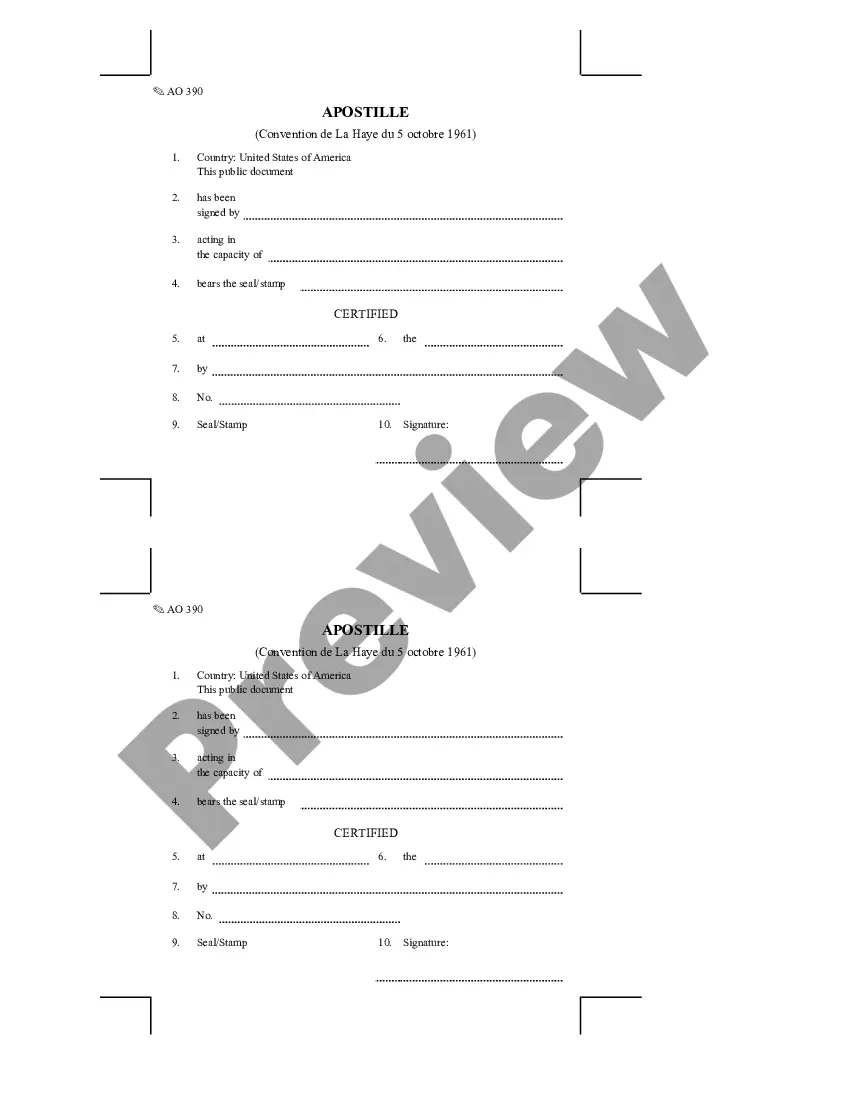
Indiana Apostle (Convention de La Have, 5 October 1961) is an international treaty that provides for the simplified certification of documents for use in countries that are part of The Hague Convention. An Indiana Apostle verifies the authenticity of a document's signature, seal, and stamp and is issued by the Indiana Secretary of State. This Apostle is used to certify documents for international use, such as educational degrees, marriage certificates, and court orders. There are two types of Indiana Apostle (Convention de La Have, 5 October 1961): Apostle Certificates of Authentication and Apostle Certificates of Authority. The Apostle Certificate of Authentication is used to certify documents for use in countries that are part of The Hague Convention, while the Apostle Certificate of Authority is used to certify documents for use in countries that are not part of The Hague Convention.
Indiana Apostille (Convention de La Haye, 5 Octobre 1961)
Description
Get your form ready online
Our built-in tools help you complete, sign, share, and store your documents in one place.
Make edits, fill in missing information, and update formatting in US Legal Forms—just like you would in MS Word.
Download a copy, print it, send it by email, or mail it via USPS—whatever works best for your next step.
Sign and collect signatures with our SignNow integration. Send to multiple recipients, set reminders, and more. Go Premium to unlock E-Sign.
If this form requires notarization, complete it online through a secure video call—no need to meet a notary in person or wait for an appointment.
We protect your documents and personal data by following strict security and privacy standards.

Make edits, fill in missing information, and update formatting in US Legal Forms—just like you would in MS Word.

Download a copy, print it, send it by email, or mail it via USPS—whatever works best for your next step.

Sign and collect signatures with our SignNow integration. Send to multiple recipients, set reminders, and more. Go Premium to unlock E-Sign.

If this form requires notarization, complete it online through a secure video call—no need to meet a notary in person or wait for an appointment.

We protect your documents and personal data by following strict security and privacy standards.
Looking for another form?

How to fill out Indiana Apostille (Convention De La Haye, 5 Octobre 1961)?
How much time and resources do you usually allocate for drafting official documents.
There’s a more efficient way to obtain such forms than employing legal professionals or spending hours searching online for an appropriate template.
Create an account and pay for your subscription. You can complete a transaction using your credit card or through PayPal - our service is fully secure for that.
Download your Indiana Apostille (Convention de La Haye, 5 Octobre 1961) to your device and complete it either on a printed hard copy or electronically.
- US Legal Forms is the top online repository that offers expertly crafted and verified state-specific legal documents for any purpose, such as the Indiana Apostille (Convention de La Haye, 5 Octobre 1961).
- To acquire and prepare a suitable Indiana Apostille (Convention de La Haye, 5 Octobre 1961) template, follow these straightforward instructions.
- Review the form content to confirm it aligns with your state's regulations. For this, check the form description or utilize the Preview option.
- If your legal template doesn’t satisfy your needs, find another one using the search bar at the top of the page.
- If you are already registered with our service, Log In and download the Indiana Apostille (Convention de La Haye, 5 Octobre 1961). Otherwise, proceed to the subsequent steps.
- Click Buy now once you discover the correct document. Choose the subscription plan that best fits your needs to access our library’s full capabilities.
Form popularity
FAQ
The Convention de la Haye of October 5, 1961 refers to the Apostille Convention, which simplifies the process of document verification across countries. By standardizing the apostille process, it allows for seamless recognition of legal documents internationally. If you plan to use documents abroad, understanding this convention is essential.
The Hague Convention on testamentary dispositions, established on October 5, 1961, deals with the laws governing wills and inheritances across borders. It ensures that a will created in one member country is respected and valid in another. This aspect of international law helps protect individuals' rights when dealing with cross-border inheritance matters.
The La Haye Convention of October 5, 1961, commonly referred to as the Apostille Convention, aims to simplify the process of authentication for public documents. This agreement, adopted by multiple countries, facilitates international document acceptance without the need for further verification. Understanding this convention can streamline your document preparation for international use.
12: Convention of 5 October 1961 Abolishing the Requirement of Legalisation for Foreign Public Documents. The present Convention shall apply to public documents which have been executed in the territory of one Contracting State and which have to be produced in the territory of another Contracting State.
The Apostille on State Issued Apostille Requirements (U.S. State Issued Birth Certificate etc.) Officials (usually in the office of the state's Secretary of State) must have been designated as a competent authority to issue Apostilles under the Convention.
Since October 15, 1981, the United States has been part of the 1961 Hague Convention abolishing the Requirement of Legalization for Foreign Public Documents (Only).
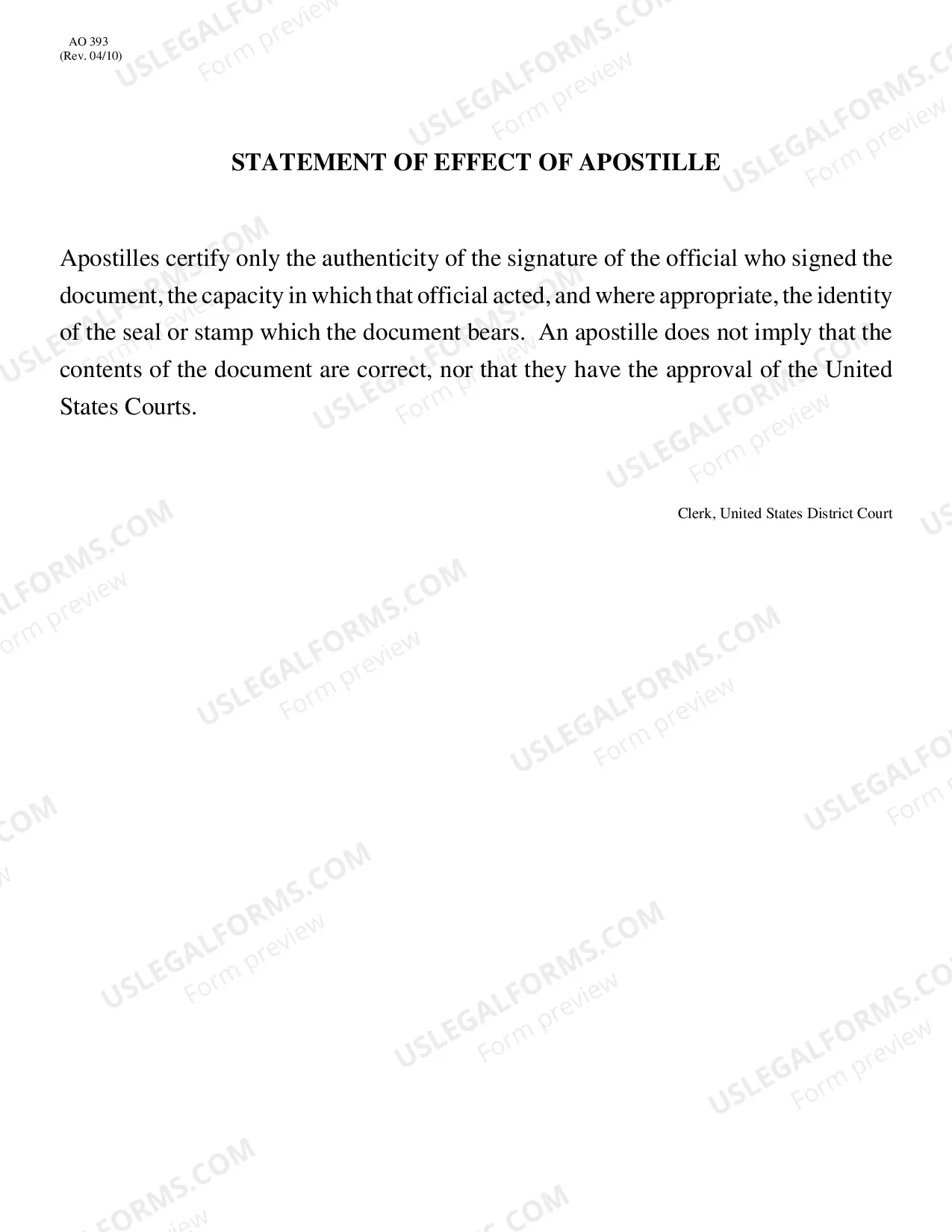
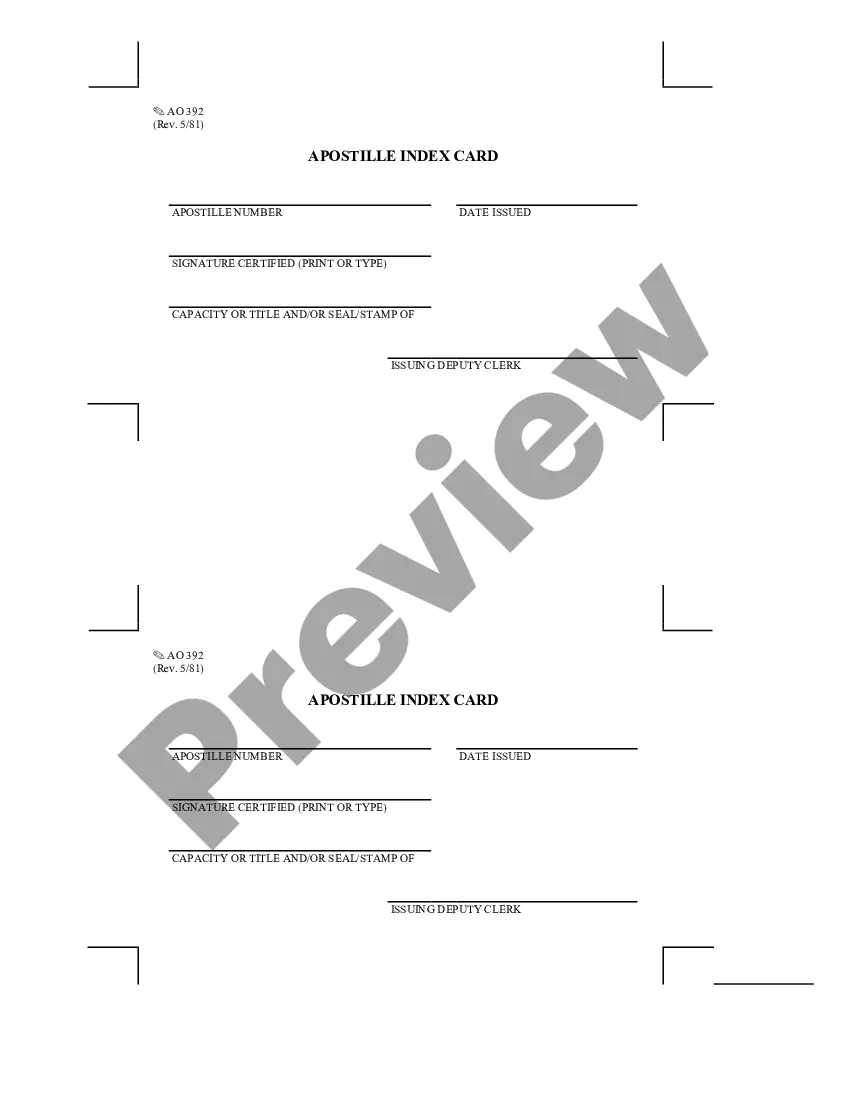
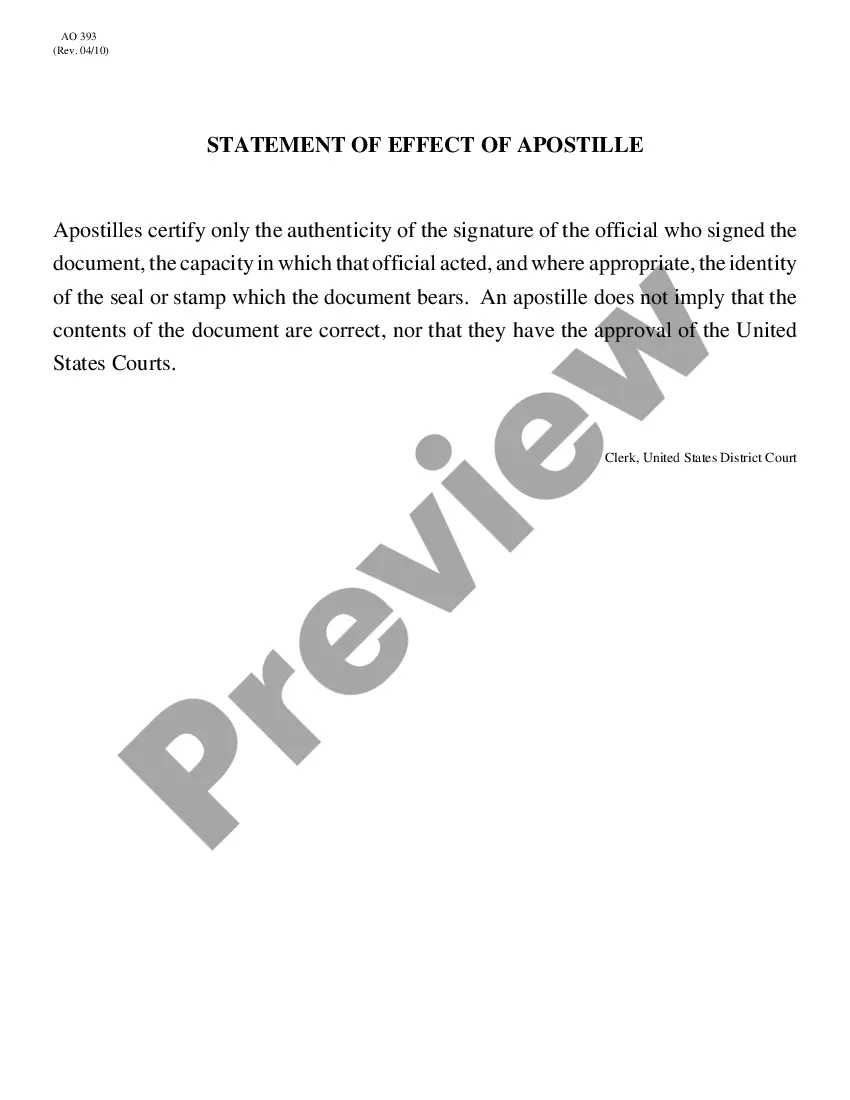
An Apostille certifies: the authenticity of the signature of the public official who signed the document, the capacity in which that public official acted, and. when appropriate, the identity of the seal or stamp which the document bears, e.g. a notary public seal.
Legalization validates a foreign public document by verifying the authenticity of the signature and the legitimacy of the signing authority.
Dfa Apostille Download and complete the DFA Apostille Submission Checklist and Declaration Form. Original document/s to be Apostilled by DFA. Notarized SPA.Copy of passport or valid ID of the applicant with 3 specimen signature on the side (passport or ID should have photo and signature).Prepare the applicable fees.
The Hague Apostille Convention, 1961, abolishes the requirement of legalization of foreign documents for use in any member country, once an Apostille certificate (including e-Apostille) has been issued by a competent authority of the country where the document originates.