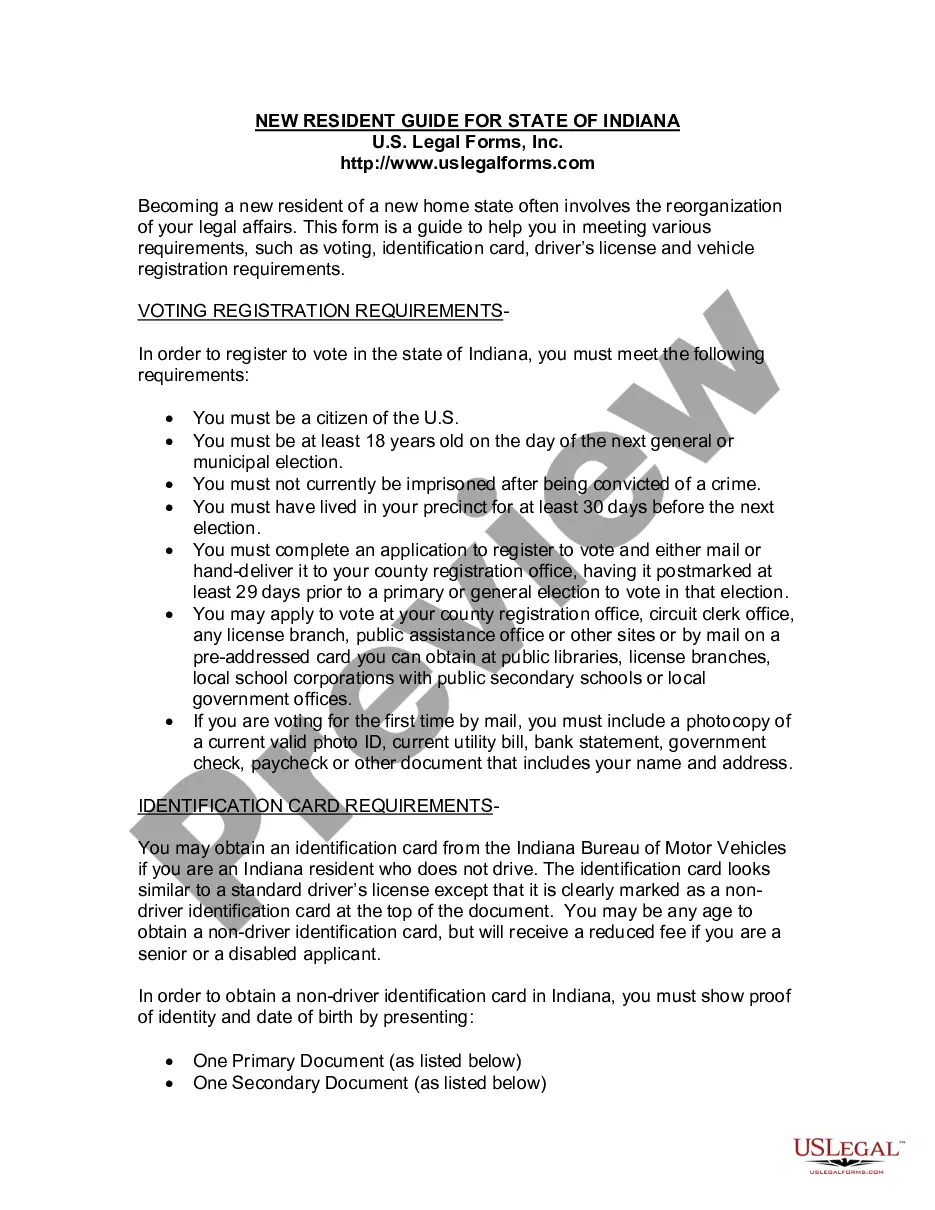
Indiana Pre-Purchase Recommendations - Horse Equine Forms
About this form
The Pre-Purchase Recommendations form is a crucial document designed to guide buyers in the horse purchasing process. This form outlines key recommendations from the seller to the buyer to ensure informed decisions when acquiring a horse. It emphasizes the importance of a pre-purchase examination, encourages buyers to understand their limitations, and highlights the unique risks involved in equine activities, setting it apart from other legal agreements involved in horse sales.
What’s included in this form
- Introduction specifying the seller and proposed purchase of the horse.
- Recommendation for a pre-purchase veterinary examination of the horse.
- Advice to recognize personal limitations in horse riding and training.
- Encouragement to ask questions relevant to the purchase.
- Clarification that horses are sold "as is," and the importance of understanding each transaction's uniqueness.
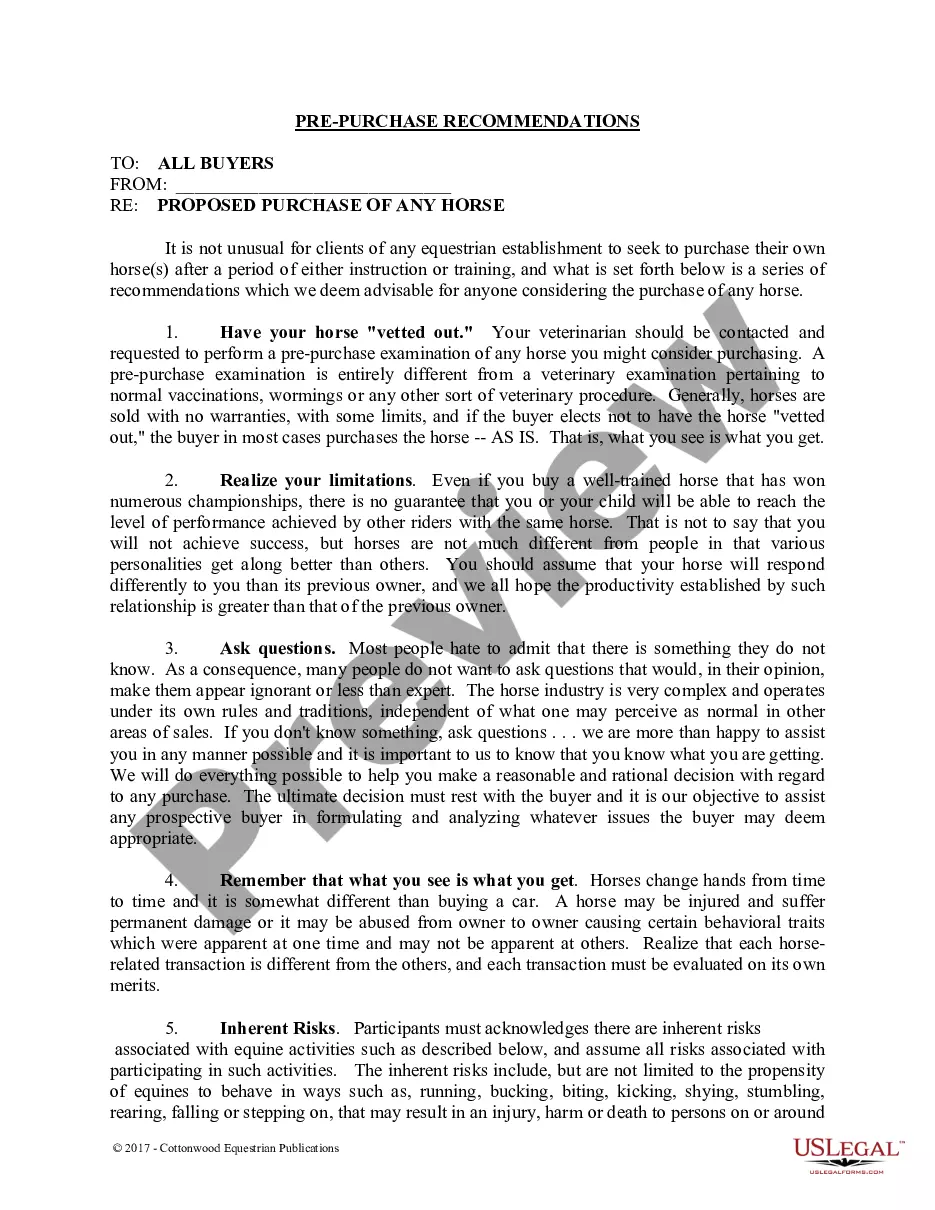
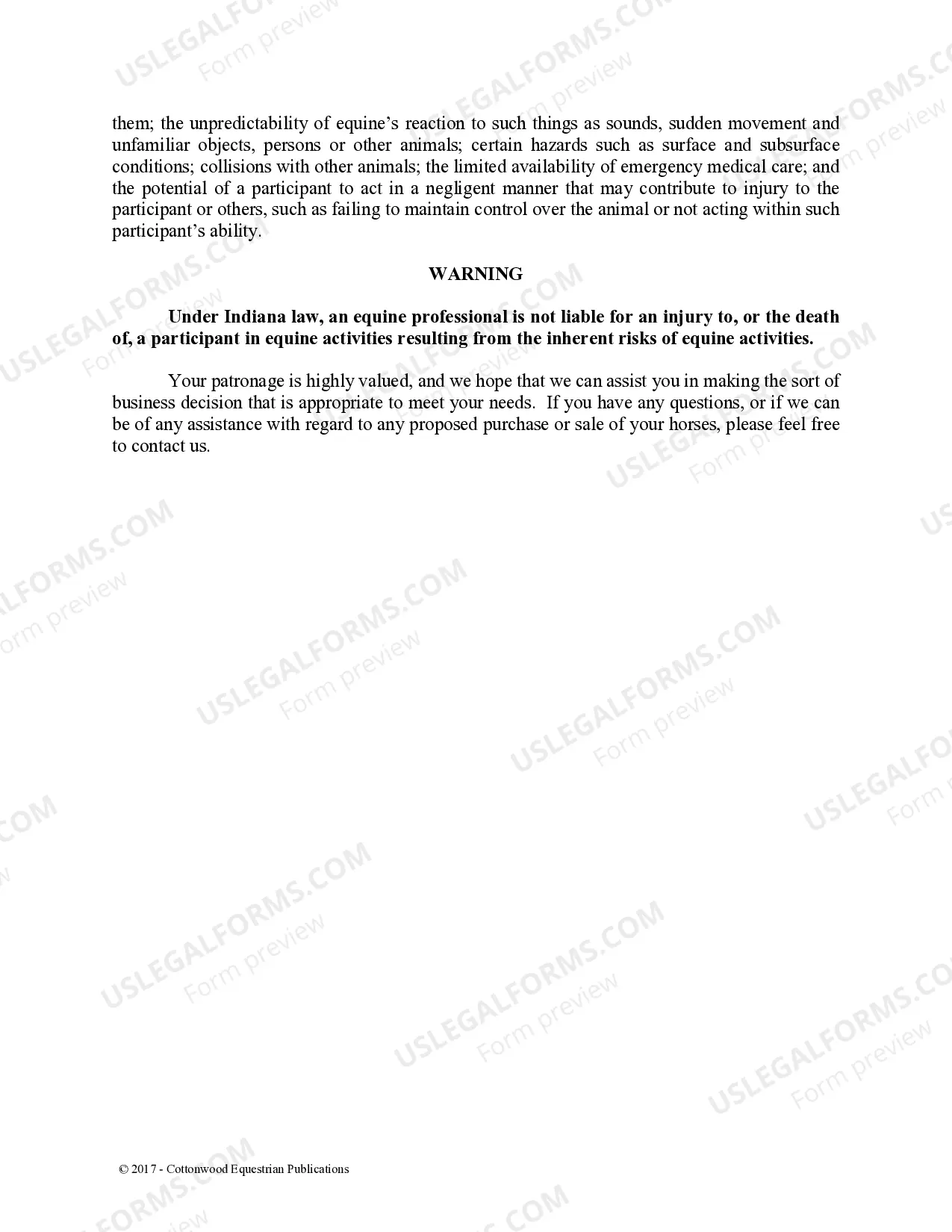
- Notice of inherent risks associated with equine activities.
When to use this form
This form should be used when a buyer intends to purchase a horse, especially if the buyer is a novice or seeking guidance in the buying process. It is helpful for those wanting to understand their rights and responsibilities and the standard practices within equine transactions. This form is essential when considering the health, behavior, and training of the horse, ensuring the buyer makes an informed decision.
Who should use this form
This form is intended for:
- Individuals looking to purchase a horse for personal or competitive use.
- Novice buyers who may need additional guidance in understanding horse purchases.
- Trainers and instructors assisting clients in the horse acquisition process.
- Equine professionals advising potential buyers on considerations prior to purchase.
Steps to complete this form
- Identify the seller and the proposed horse to be purchased.
- Confirm with a veterinarian to schedule a pre-purchase examination.
- Review the recommendations thoroughly and understand the inherent risks.
- Ask any questions or concerns regarding the horse or purchasing process.
- Complete the form to formalize the seller's recommendations for the buyer's reference.
Does this form need to be notarized?
In most cases, this form does not require notarization. However, some jurisdictions or signing circumstances might. US Legal Forms offers online notarization powered by Notarize, accessible 24/7 for a quick, remote process.
Get your form ready online
Our built-in tools help you complete, sign, share, and store your documents in one place.
Make edits, fill in missing information, and update formatting in US Legal Forms—just like you would in MS Word.
Download a copy, print it, send it by email, or mail it via USPS—whatever works best for your next step.
Sign and collect signatures with our SignNow integration. Send to multiple recipients, set reminders, and more. Go Premium to unlock E-Sign.
If this form requires notarization, complete it online through a secure video call—no need to meet a notary in person or wait for an appointment.
We protect your documents and personal data by following strict security and privacy standards.

Make edits, fill in missing information, and update formatting in US Legal Forms—just like you would in MS Word.

Download a copy, print it, send it by email, or mail it via USPS—whatever works best for your next step.

Sign and collect signatures with our SignNow integration. Send to multiple recipients, set reminders, and more. Go Premium to unlock E-Sign.

If this form requires notarization, complete it online through a secure video call—no need to meet a notary in person or wait for an appointment.

We protect your documents and personal data by following strict security and privacy standards.
Avoid these common issues
- Skipping the veterinary examination of the horse.
- Failing to ask important questions that could impact the purchase.
- Not fully understanding the "as is" condition of the horse.
- Overlooking the importance of personal limitations in handling the horse.
Why use this form online
- Convenient access to downloadable formats (Word or Rich Text).
- Editable content to tailor recommendations specific to the horse being purchased.
- Quick and easy retrieval for immediate use in horse purchasing scenarios.
- Reliability of having a professionally drafted form prepared by licensed attorneys.
Legal use & context
- This form serves as an advisory document, emphasizing the importance of vetting horses prior to purchase.
- The recommendations protect the seller by documenting the advice given to the buyer.
- Understanding risks associated with horse ownership is vital to mitigate liability for both parties involved.
What to keep in mind
- Always conduct a thorough veterinary examination before purchasing a horse.
- Recognize personal limitations and ensure the horse's training aligns with your skills.
- Don't hesitate to ask questions to gain a better understanding of the purchase.
- Be aware of and prepared to accept the inherent risks when engaging in equine activities.
Looking for another form?

Form popularity
FAQ
If you are attempting to figure the carrying capacity of land for a horse, then a good rule of thumb is 1-1/2 to 2 acres of open intensely managed land per horse. Two acres, if managed properly, should provide adequate forage in the form of pasture and/or hay ground.
Date of the Sale. Seller's Name & Address. Buyer's Name & Address. Description of Livestock. Number. Color. Kind. Brand. Weight. Health. Vaccinations. Condition. Any other relevant information.
A bill of sale is the most basic of documents.A bill of sale may also be necessary to prove title to the horse in order to obtain a passport for competition. An agreement of purchase and sale with a form of warranty is found in Appendix (C).
Step 1 Date and Parties. Enter the date in which the document is being created. Step 2 Horse Description. Horse's Name (if named) Step 3 Purchase Price Information. Step 4 Security Deposit. Step 5 Signatures. Step 6 Acknowledgement of Notary Public.
Generally, with excellent management, one horse can be kept on as little as 0.4 hectares (one acre). Life will be a lot easier at one horse on 0.8 hectares (two acres). If running horses together, an owner would be doing exceptionally well to maintain a ratio of one horse per 0.4 hectares (one acre).
Typically the person who is going to be buying the horse pays for the pre-purchase exam. This means that all discoveries and medical findings discovered during this exam belong to that client.
The Price Tag The price of a basic pre-purchase exam will vary from one veterinary practice to another, but in general you can expect to pay from $250 to $500. It's a good idea to ask the veterinarian the base cost up front.
Name and address of the seller. Name and address of the buyer. Date& time of the purchase. The agreed price for the furniture. The location where the purchase is taking place. Form of payment (is it cash, check, credit card or debit card)
The date of the sale. A description of the car, including its: Year, make and model. The selling price of the car. If the car is a gift or partial gift, you should still create a bill of sale. Warranty information. The full names, addresses and signatures of the buyer and seller.