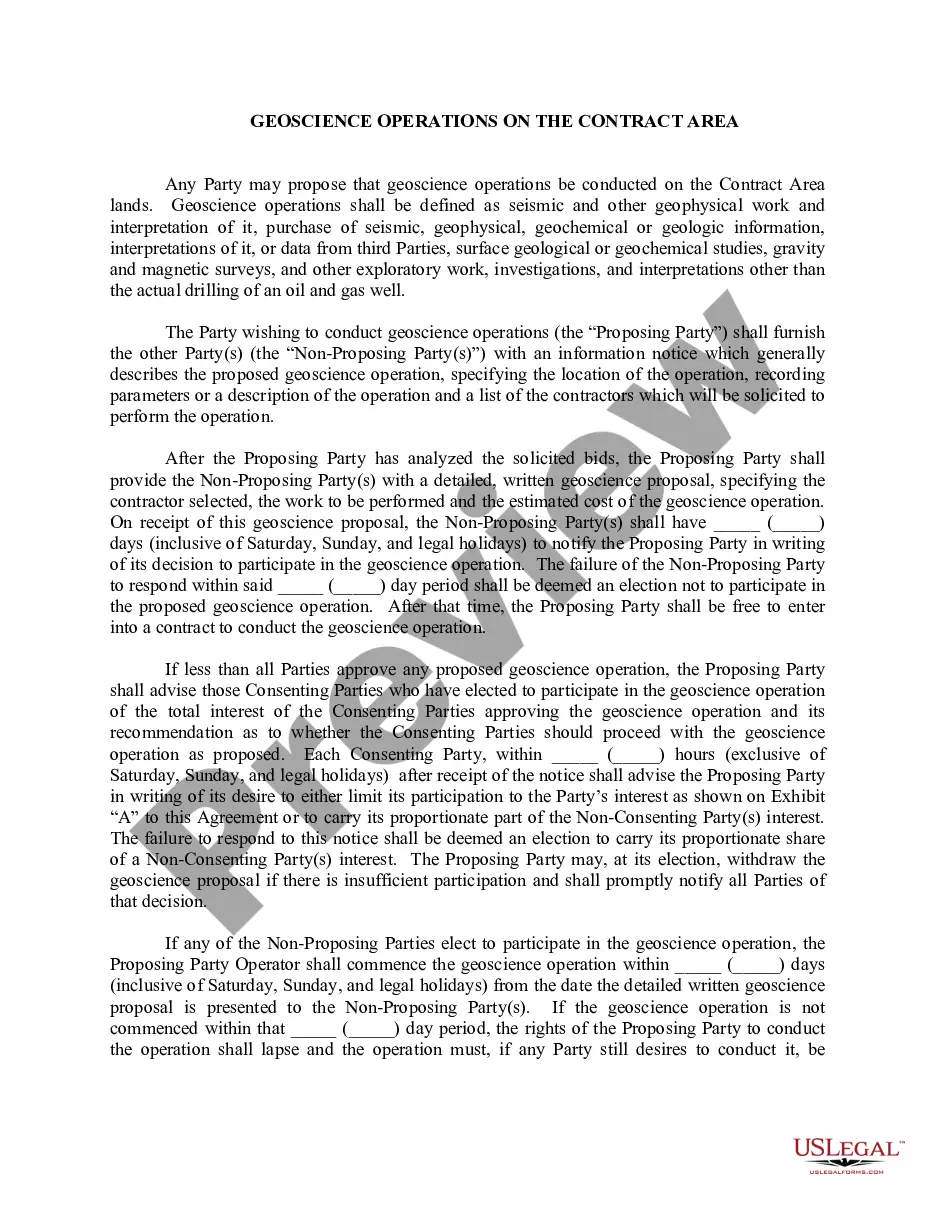
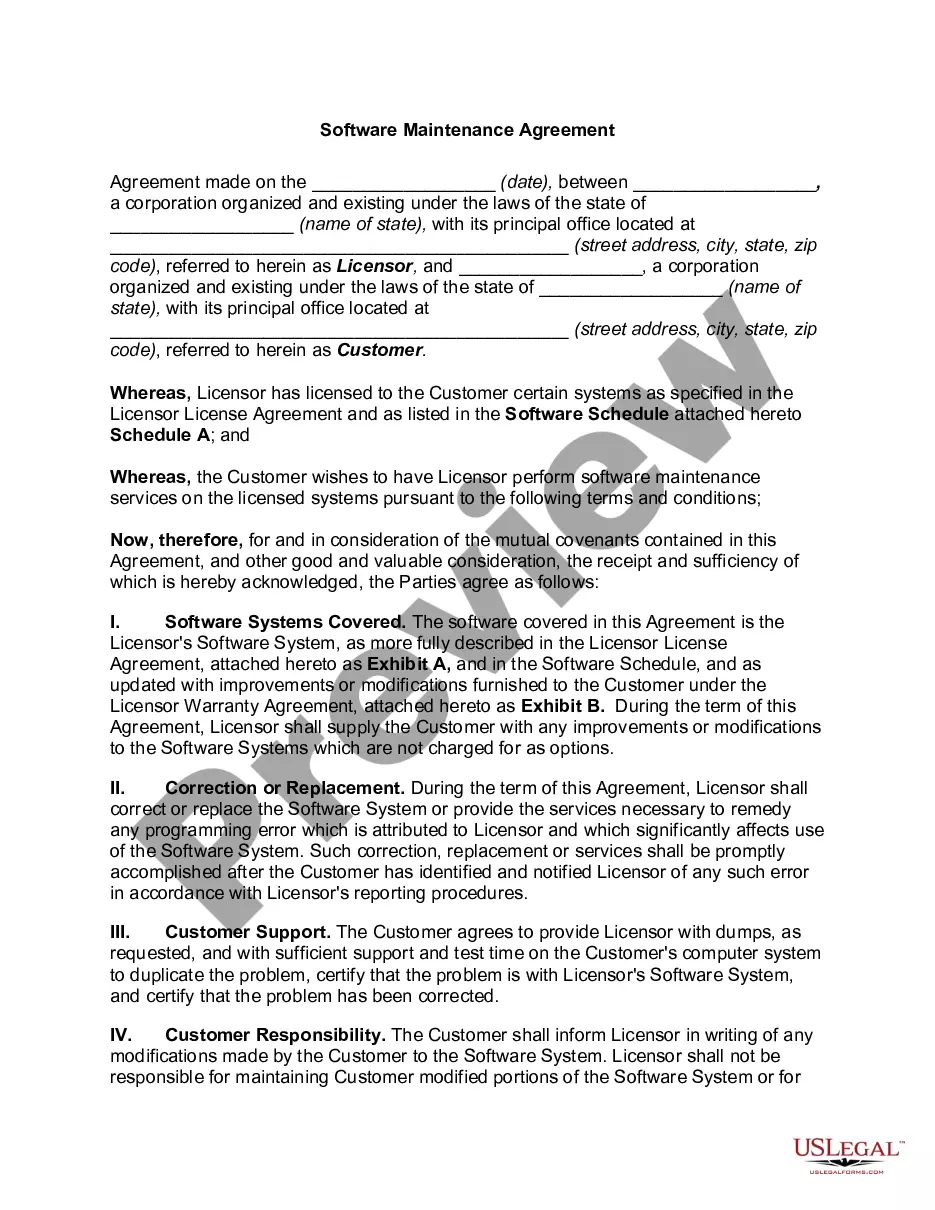
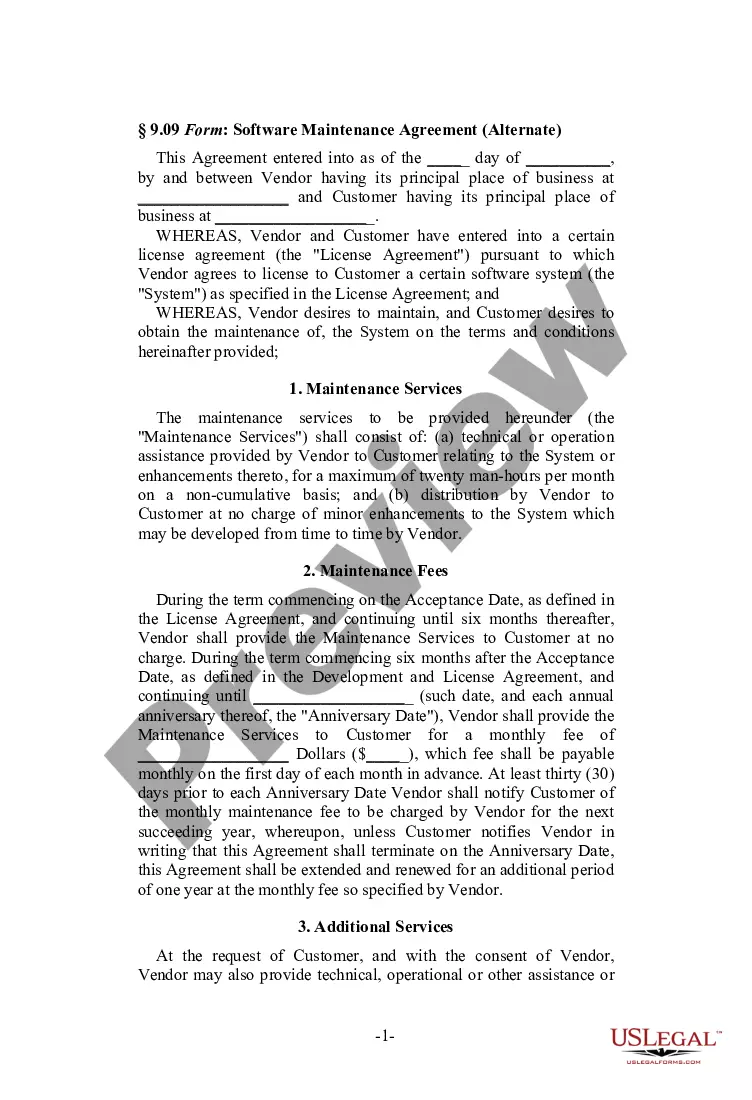
Illinois Software Maintenance Agreement
Description
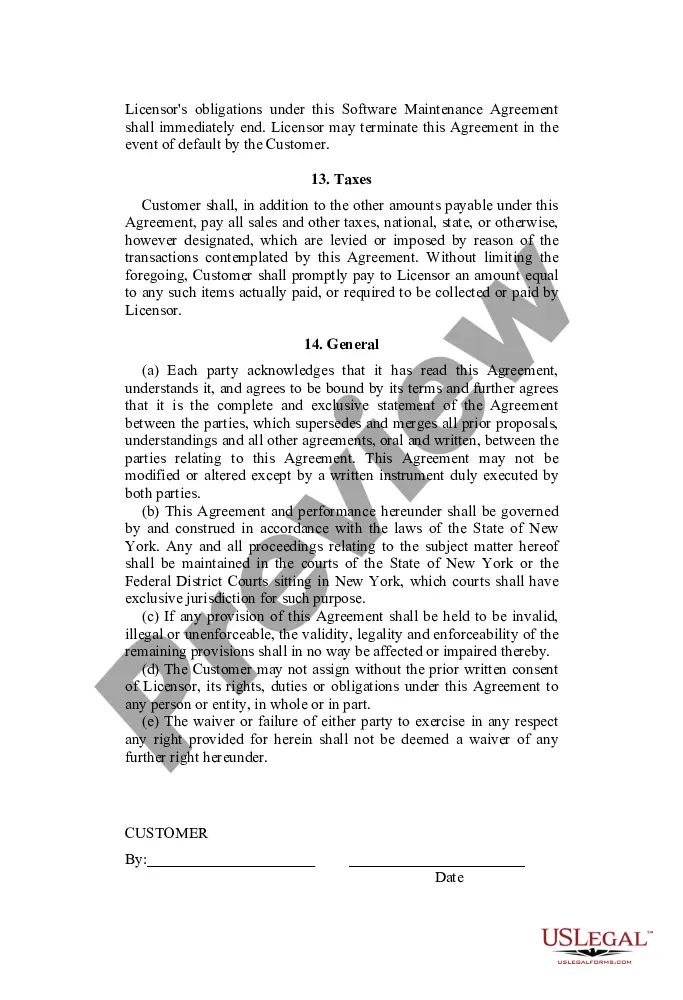
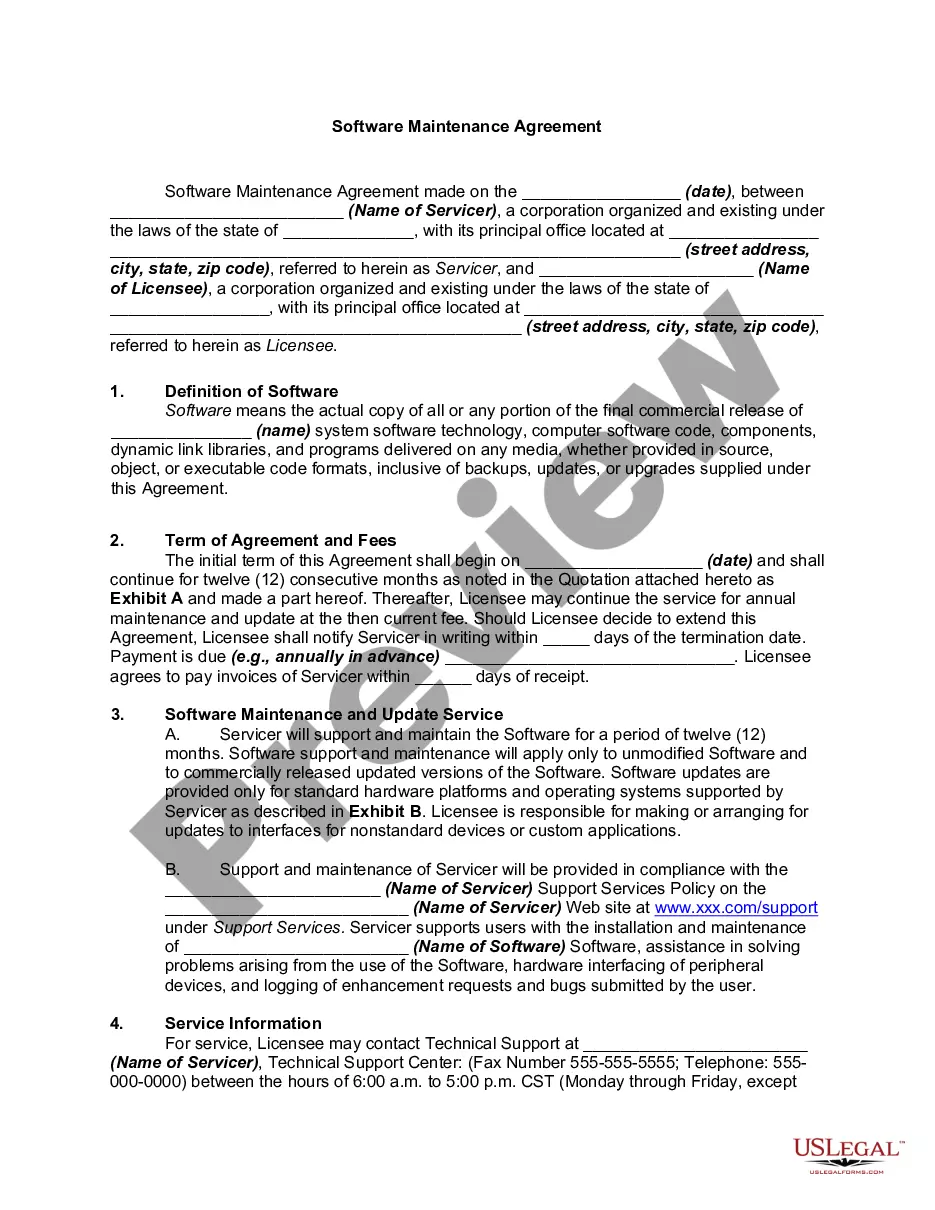
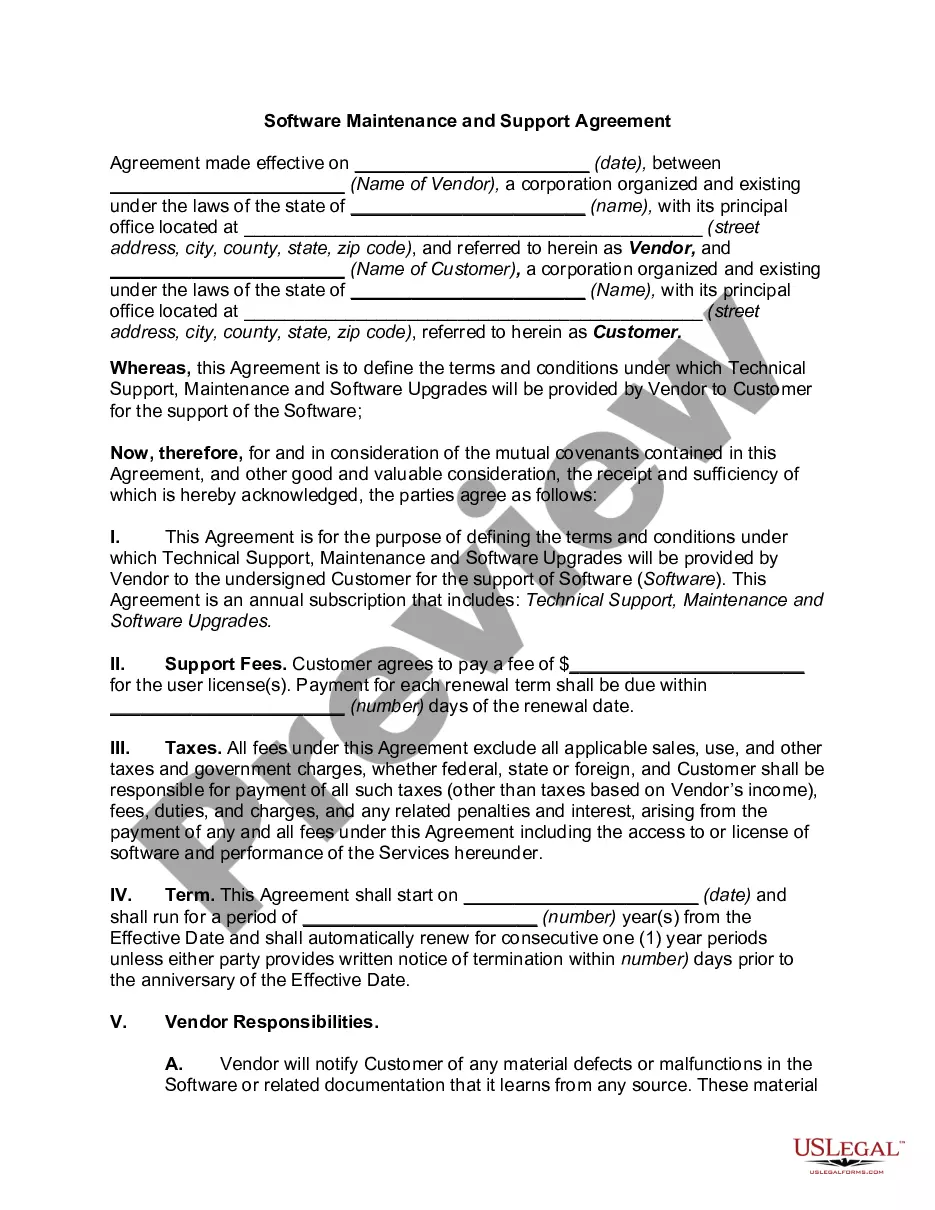
Get your form ready online
Our built-in tools help you complete, sign, share, and store your documents in one place.
Make edits, fill in missing information, and update formatting in US Legal Forms—just like you would in MS Word.
Download a copy, print it, send it by email, or mail it via USPS—whatever works best for your next step.
Sign and collect signatures with our SignNow integration. Send to multiple recipients, set reminders, and more. Go Premium to unlock E-Sign.
If this form requires notarization, complete it online through a secure video call—no need to meet a notary in person or wait for an appointment.
We protect your documents and personal data by following strict security and privacy standards.

Make edits, fill in missing information, and update formatting in US Legal Forms—just like you would in MS Word.

Download a copy, print it, send it by email, or mail it via USPS—whatever works best for your next step.

Sign and collect signatures with our SignNow integration. Send to multiple recipients, set reminders, and more. Go Premium to unlock E-Sign.

If this form requires notarization, complete it online through a secure video call—no need to meet a notary in person or wait for an appointment.

We protect your documents and personal data by following strict security and privacy standards.
Looking for another form?



How to fill out Software Maintenance Agreement?
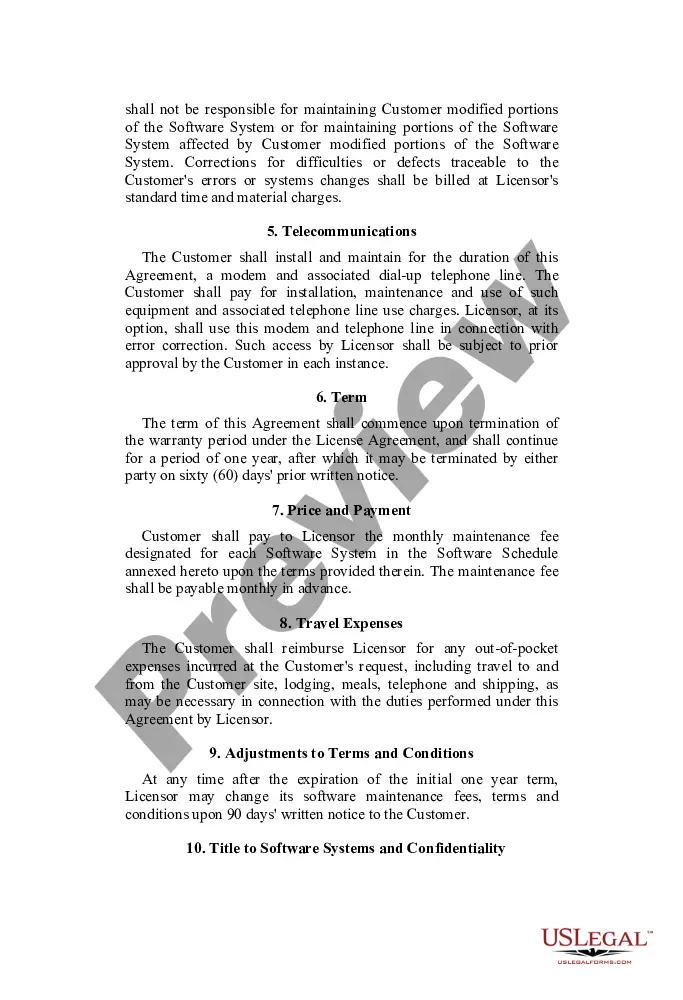
Choosing the best legal document format might be a have a problem. Of course, there are a lot of themes accessible on the Internet, but how can you get the legal form you will need? Make use of the US Legal Forms internet site. The assistance provides thousands of themes, such as the Illinois Software Maintenance Agreement, that you can use for organization and private demands. All the varieties are inspected by specialists and fulfill federal and state specifications.
If you are currently signed up, log in in your accounts and click on the Acquire option to obtain the Illinois Software Maintenance Agreement. Make use of your accounts to appear throughout the legal varieties you might have bought formerly. Check out the My Forms tab of your respective accounts and acquire yet another backup in the document you will need.
If you are a new end user of US Legal Forms, allow me to share easy guidelines for you to adhere to:
- Initially, make certain you have chosen the proper form for your town/region. You may examine the shape using the Review option and look at the shape description to guarantee this is basically the right one for you.
- In case the form does not fulfill your needs, take advantage of the Seach industry to obtain the appropriate form.
- Once you are positive that the shape is acceptable, select the Buy now option to obtain the form.
- Select the rates program you desire and type in the necessary information and facts. Create your accounts and buy the transaction with your PayPal accounts or Visa or Mastercard.
- Opt for the file structure and acquire the legal document format in your product.
- Comprehensive, modify and print out and sign the acquired Illinois Software Maintenance Agreement.
US Legal Forms may be the biggest local library of legal varieties that you can find a variety of document themes. Make use of the service to acquire appropriately-created files that adhere to express specifications.
Form popularity
FAQ
Answer Answer. ?Tangible personal property? exists physically (i.e., you can touch it) and can be used or consumed.
Lease tax also applies to applications available to customers through access to a provider's computer and software (e.g., cloud computing, cloud services, hosted environment, SaaS, platform as a service (PaaS), and infrastructure as a service (IaaS)).
Illinois. Chicago is one home rule city that taxes SaaS while its state, Illinois, does not. While Illinois does tax various kinds of software, SaaS delivered via a cloud-based system is exempt from sales tax, as long as tangible personal property is not transferred as part of the transaction.
The IDOR notes that software maintenance agreements are not taxable if the agreements for the maintenance of tangible personal property are sold separately from the tangible personal property.
Generally, sales of ?canned? computer software are taxable retail sales in Illinois. Canned computer software is considered to be tangible personal property regardless of the form in which it is transferred or transmitted, including tape, disc, card, electronic means, or other media.
While software is not physical or tangible in the traditional sense, accounting rules allow businesses to capitalize software as if it were a tangible asset. Software that is purchased by a firm that meets certain criteria can be treated as if it were property, plant, & equipment (PP&E).
Retail sales of canned software (pre-written software) which is intended for general or repeated use, regardless of the form in which it is transmitted, including electronic means (i.e., downloaded), is subject to tax.
Generally, canned software is taxed in all delivery methods or only when delivered via tangible medium. States consider the software itself to be tangible personal property, taxed explicitly, or the inseparable tangible property obtained by its tangible delivery medium makes the software taxable by inference.