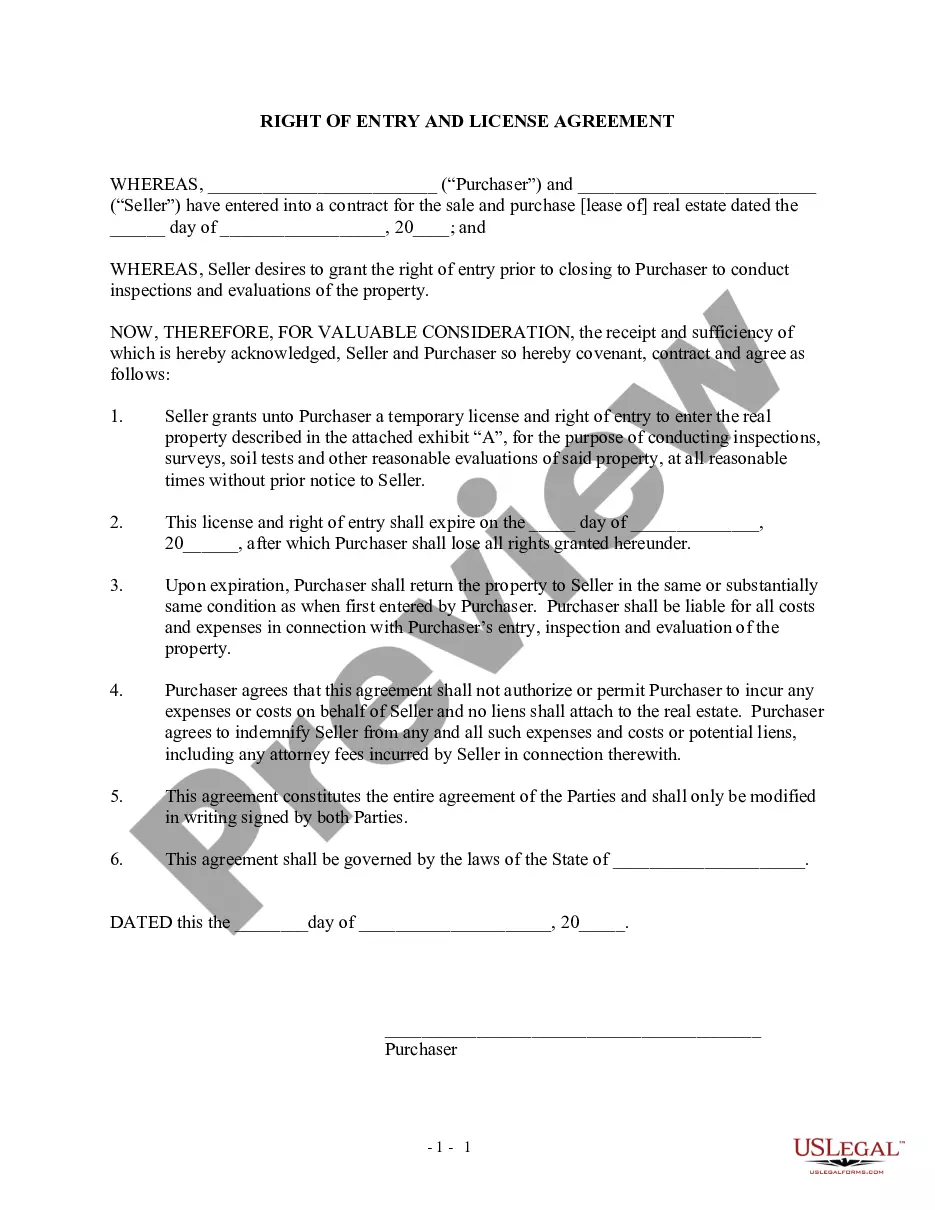
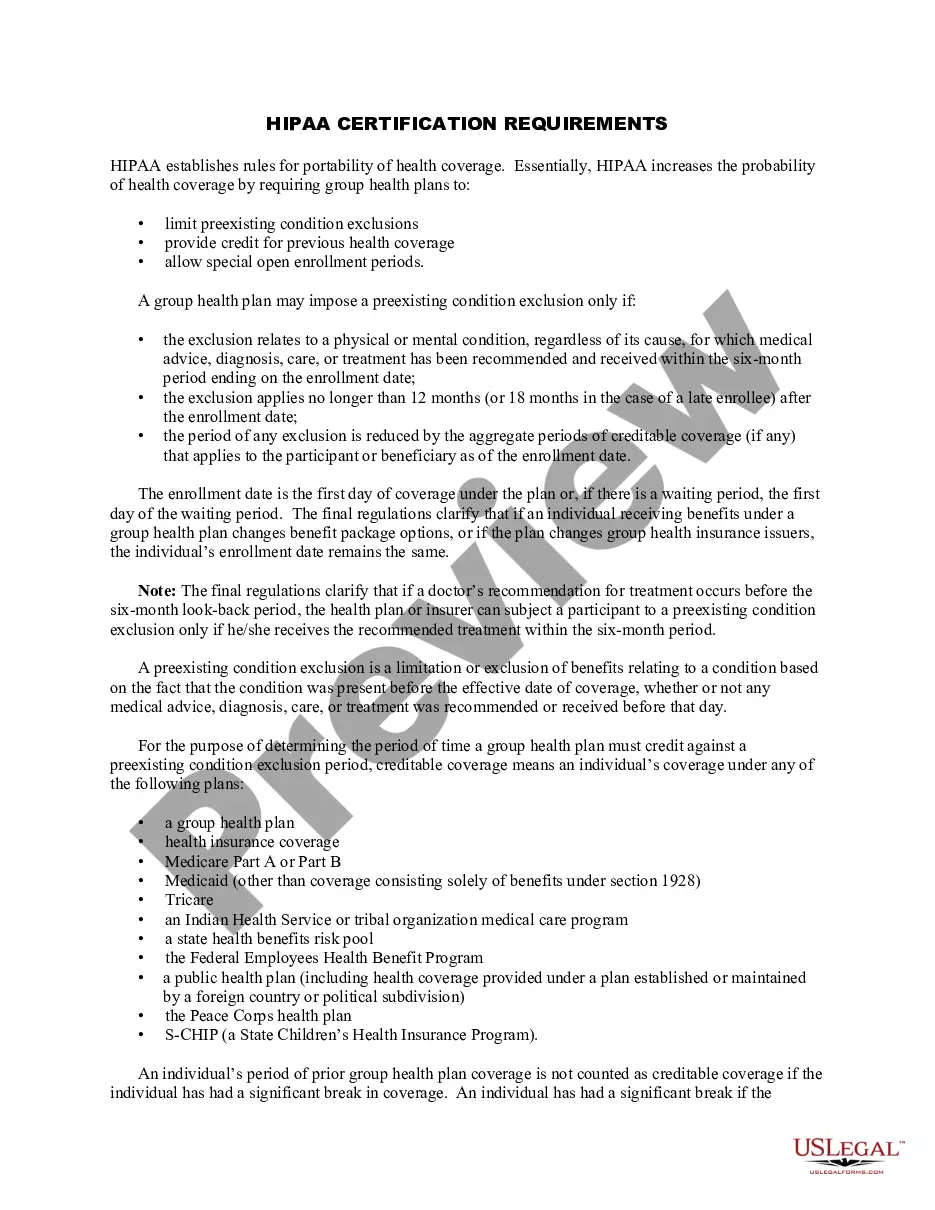
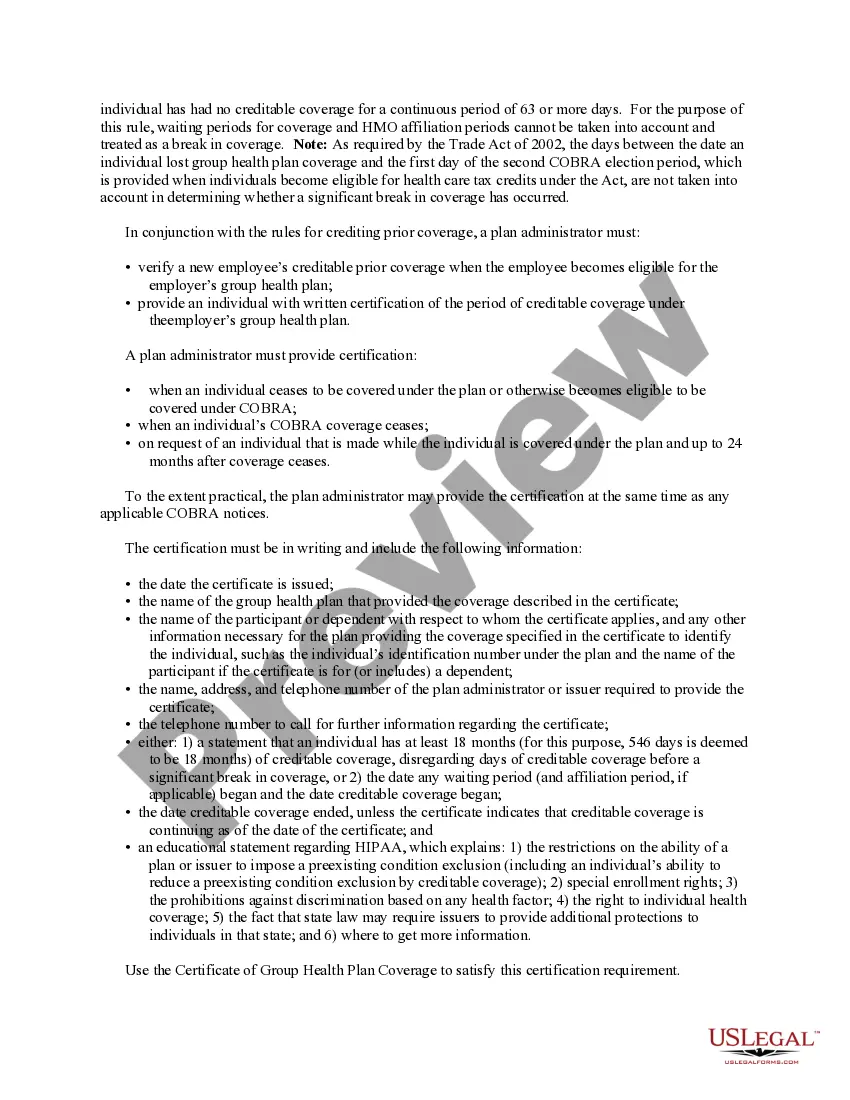
Illinois HIPAA Certification Requirements
Description
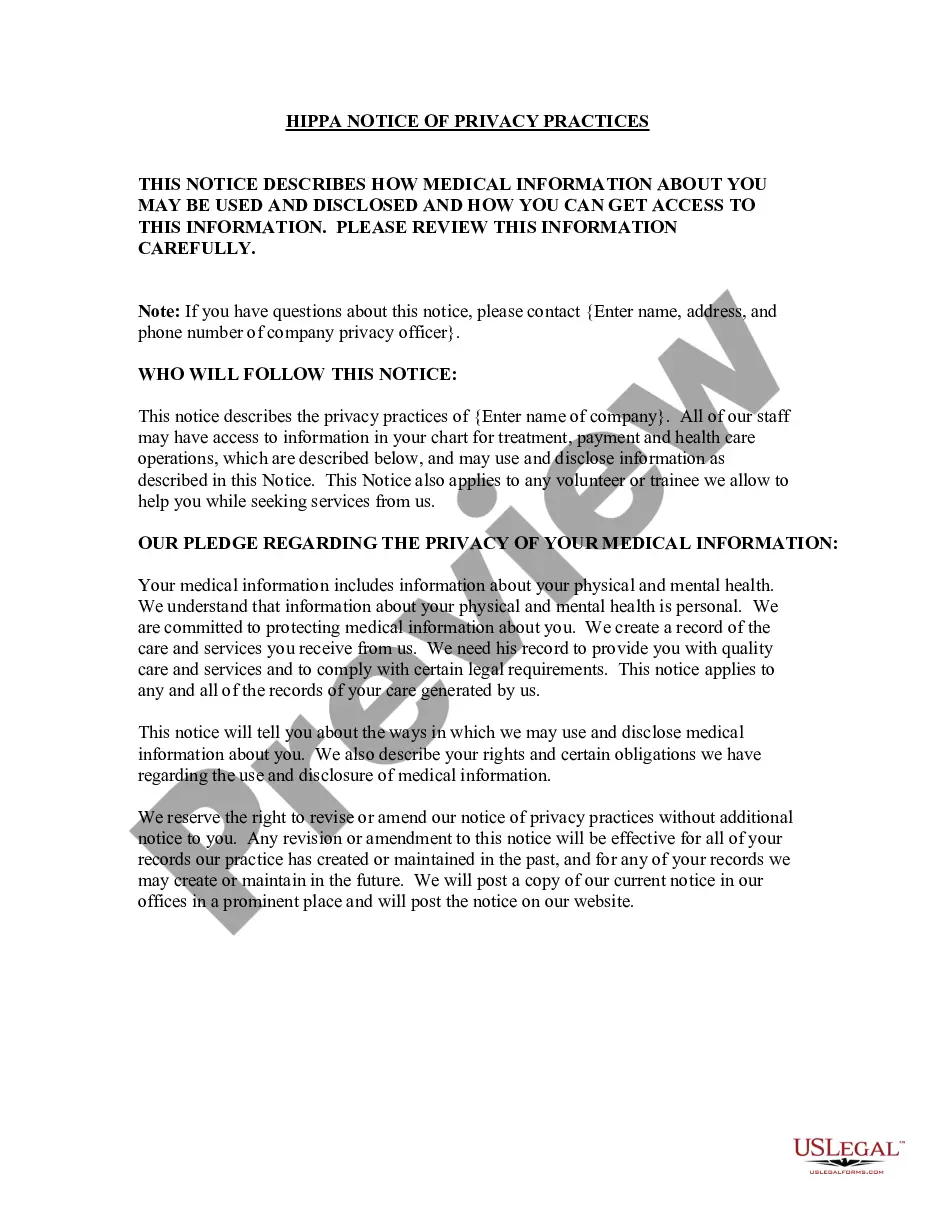
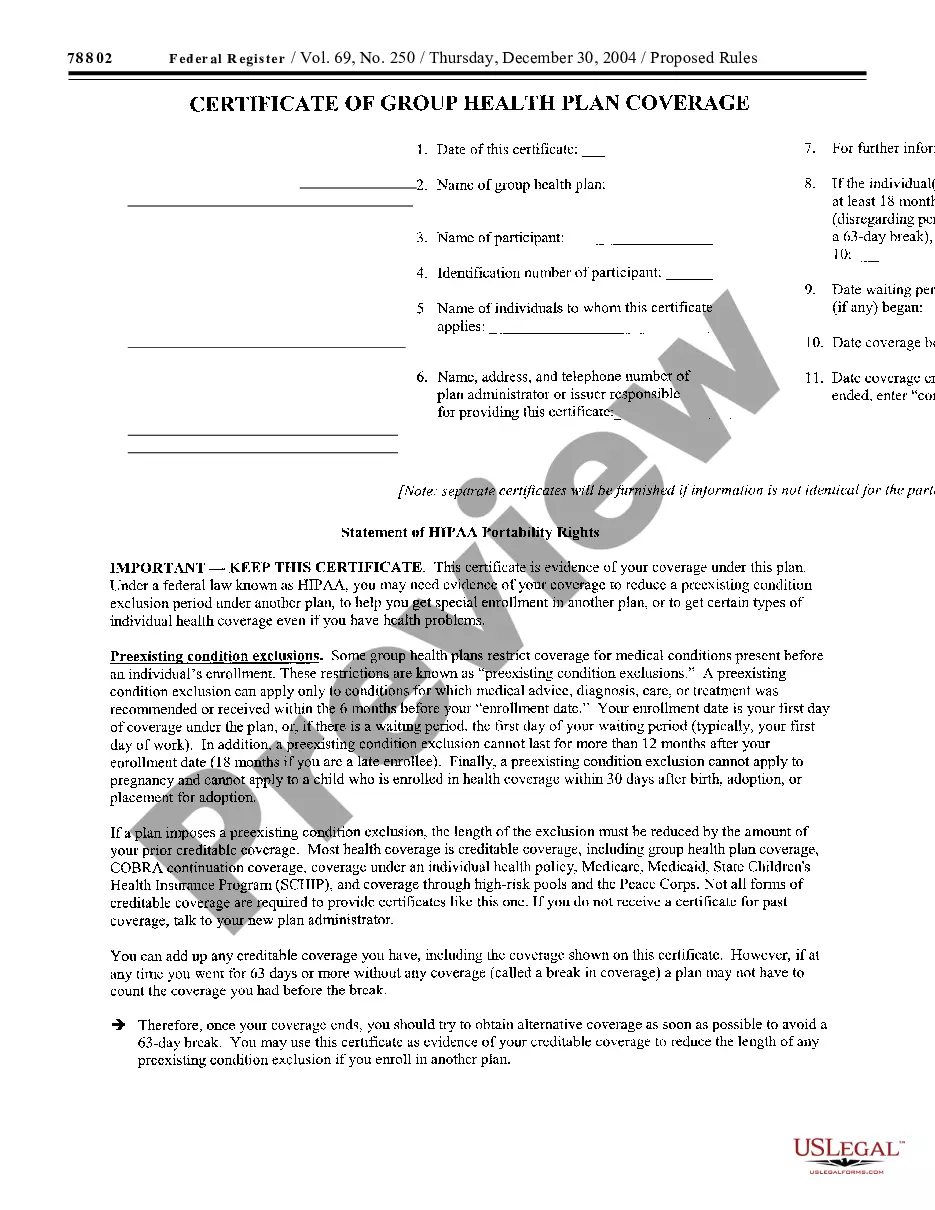
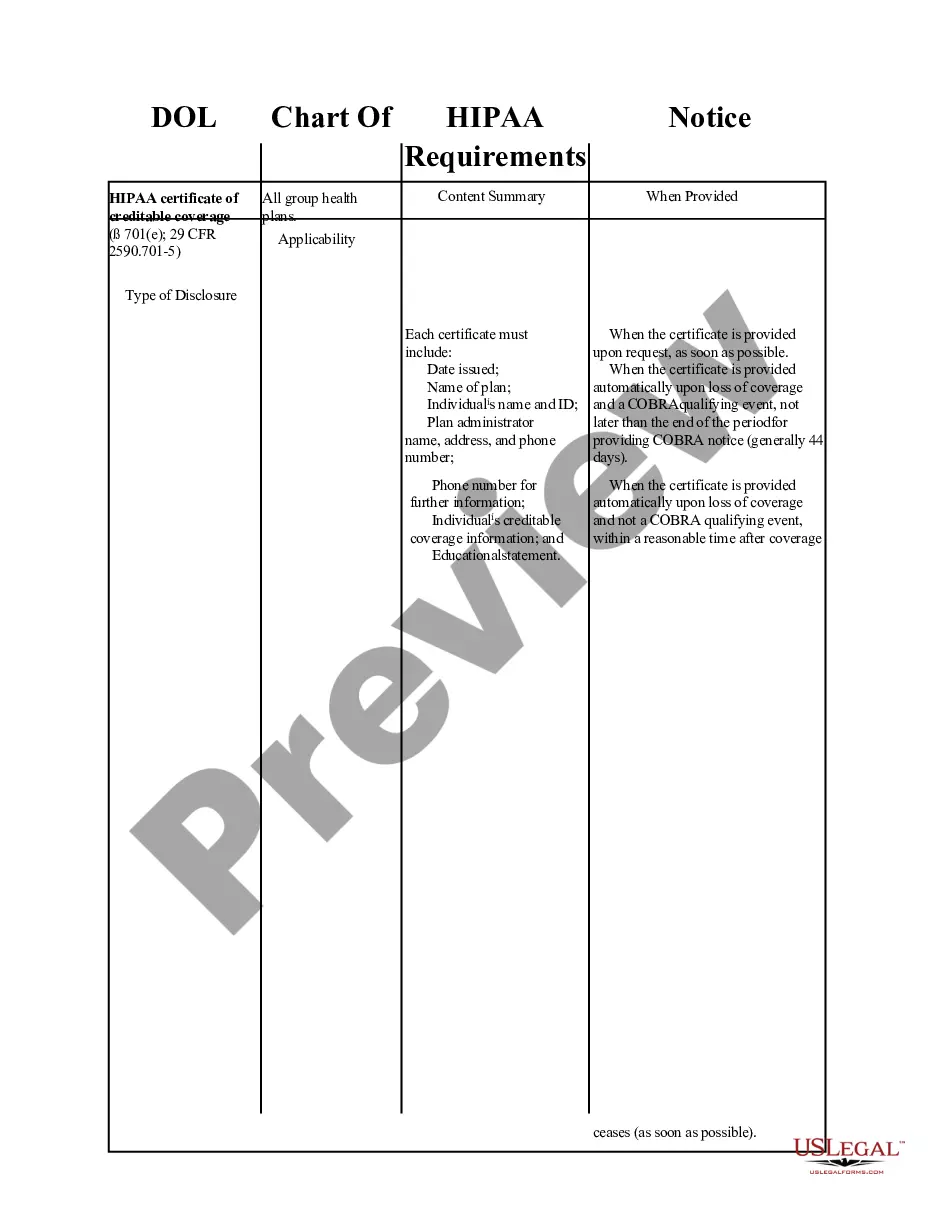
Get your form ready online
Our built-in tools help you complete, sign, share, and store your documents in one place.
Make edits, fill in missing information, and update formatting in US Legal Forms—just like you would in MS Word.
Download a copy, print it, send it by email, or mail it via USPS—whatever works best for your next step.
Sign and collect signatures with our SignNow integration. Send to multiple recipients, set reminders, and more. Go Premium to unlock E-Sign.
If this form requires notarization, complete it online through a secure video call—no need to meet a notary in person or wait for an appointment.
We protect your documents and personal data by following strict security and privacy standards.

Make edits, fill in missing information, and update formatting in US Legal Forms—just like you would in MS Word.

Download a copy, print it, send it by email, or mail it via USPS—whatever works best for your next step.

Sign and collect signatures with our SignNow integration. Send to multiple recipients, set reminders, and more. Go Premium to unlock E-Sign.

If this form requires notarization, complete it online through a secure video call—no need to meet a notary in person or wait for an appointment.

We protect your documents and personal data by following strict security and privacy standards.
Looking for another form?





How to fill out HIPAA Certification Requirements?
It is feasible to spend numerous hours online searching for the proper legal document template that complies with the state and federal requirements you need.
US Legal Forms offers thousands of legal documents that have been reviewed by professionals.
You can effortlessly download or print the Illinois HIPAA Certification Requirements from the service.
If available, utilize the Preview button to review the document template as well.
- If you possess a US Legal Forms account, you may Log In and hit the Acquire button.
- Next, you can fill out, amend, print, or sign the Illinois HIPAA Certification Requirements.
- Each legal document template you acquire belongs to you indefinitely.
- To obtain another copy of a purchased document, navigate to the My documents tab and click the corresponding button.
- If you are using the US Legal Forms website for the first time, follow the straightforward instructions listed below.
- First, ensure that you have selected the correct document template for the state/city of your choice.
- Review the form details to confirm you have selected the right document.
Form popularity
FAQ
Organizations that do not have to follow the government's privacy rule known as the Health Insurance Portability and Accountability Act (HIPAA) include the following, according to the US Department of Health and Human Services: Life insurers. Employers. Workers' compensation carriers.
1) Does OSHA/HIPAA training need to be conducted annually? Yes, annual OSHA training for all employees is mandatory, and training for new-hire employees must be completed within ten days of hire. HIPAA requires organizations to provide training for all employees, new workforce members, and periodic refresher training.
Hospitals, doctors, clinics, psychologists, dentists, chiropractors, nursing homes, and pharmacies are considered Healthcare Providers and need to be HIPAA compliant. Examples of Health Plans include health insurance companies, HMOs, company health plans, Medicare, and Medicaid.
5 Steps for Implementing a Successful HIPAA Compliance PlanStep 1 Choose a Privacy and Security Officer.Step 2 Risk Assessment.Step 3 Privacy and Security Policies and Procedures.Step 4 Business Associate Agreements.Step 5 Training Employees.
$80 for an updated Notice of Privacy Practices. $763 for breach notification requirement updates. $84 for business associate agreement updates. $113 for security rule compliance.
Covered entities (anyone providing treatment, payment, and operations in healthcare) and business associates (anyone who has access to patient information and provides support in treatment, payment, or operations) must meet HIPAA Compliance.
With a full-time staff member devoted to HIPAA, it should take a typical office less than 6 months to become compliant. If a full-time employee isn't realistic, or if you can only afford a few hours per week, HIPAA compliance will take longer.
Illinois law works in tandem with federal regulations regarding medical records, under the federal law known as the Health Insurance Portability and Accountability Act (HIPAA). HIPAA requires doctors and their staff to keep your medical records strictly confidential.
How to Become HIPAA Compliant in 7 StepsCreate Privacy and Security Policies for the Organization.Name a HIPAA Privacy Officer and Security Officer.Implement Security Safeguards.Regularly Conduct Risk Assessments and Self-Audits.Maintain Business Associate Agreements.Establish a Breach Notification Protocol.More items...?
The simple answer is, if you work in healthcare in any capacity, you need to be HIPAA compliant. The misconception that only covered entities (CEs) need to be HIPAA compliant has led to many organizations being audited and fined. If you are handling protected health information (PHI) you need to be HIPAA compliant.