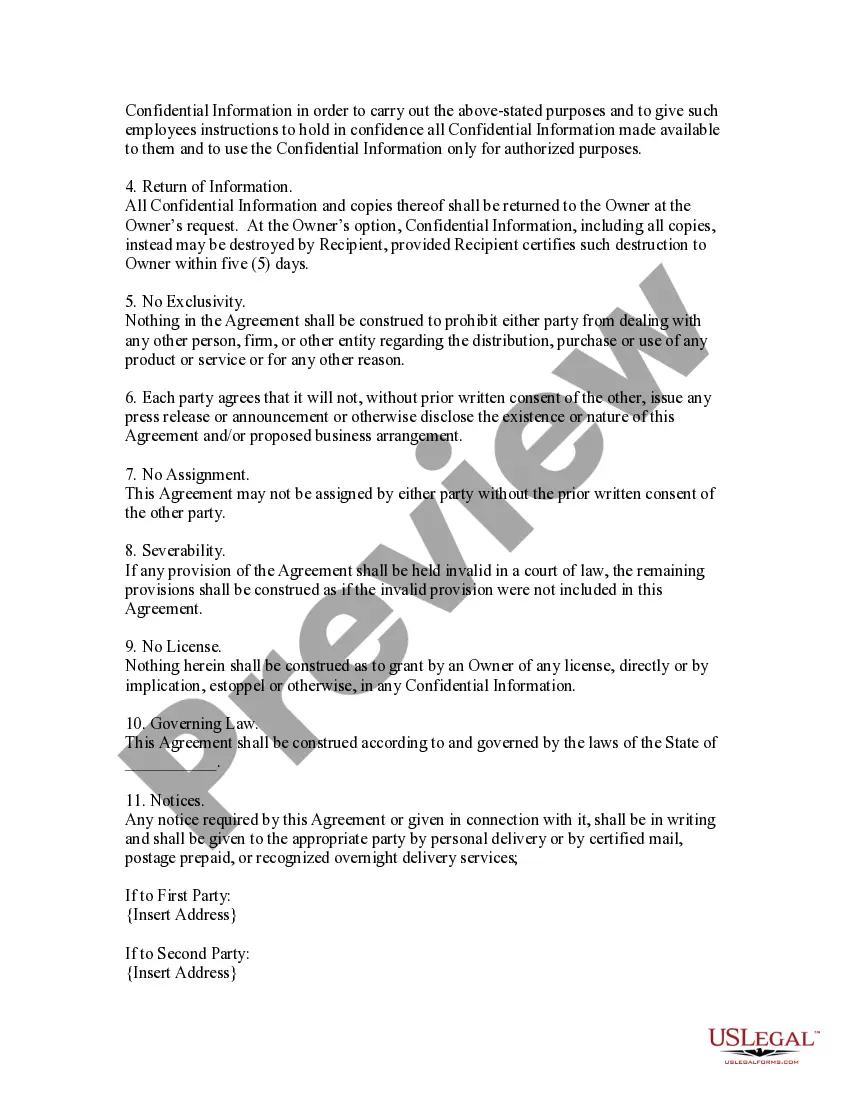
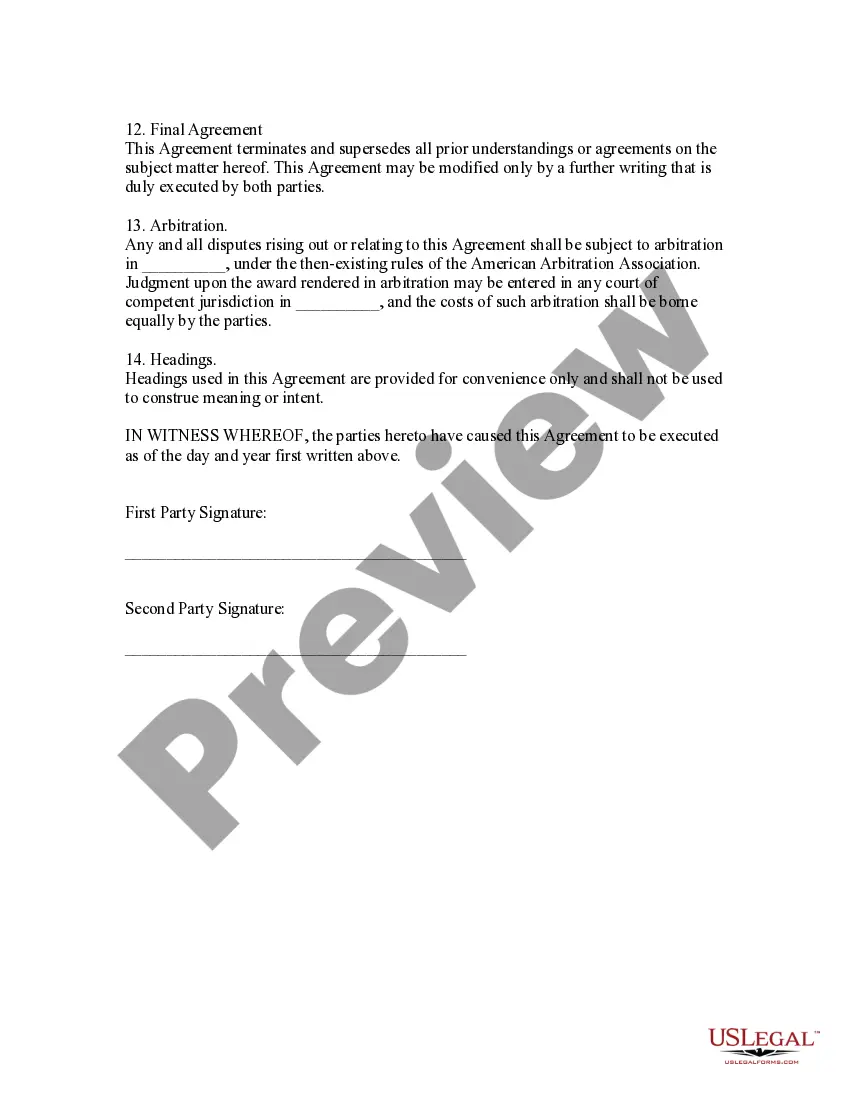
Illinois Reciprocal Nondisclosure Agreement
Description
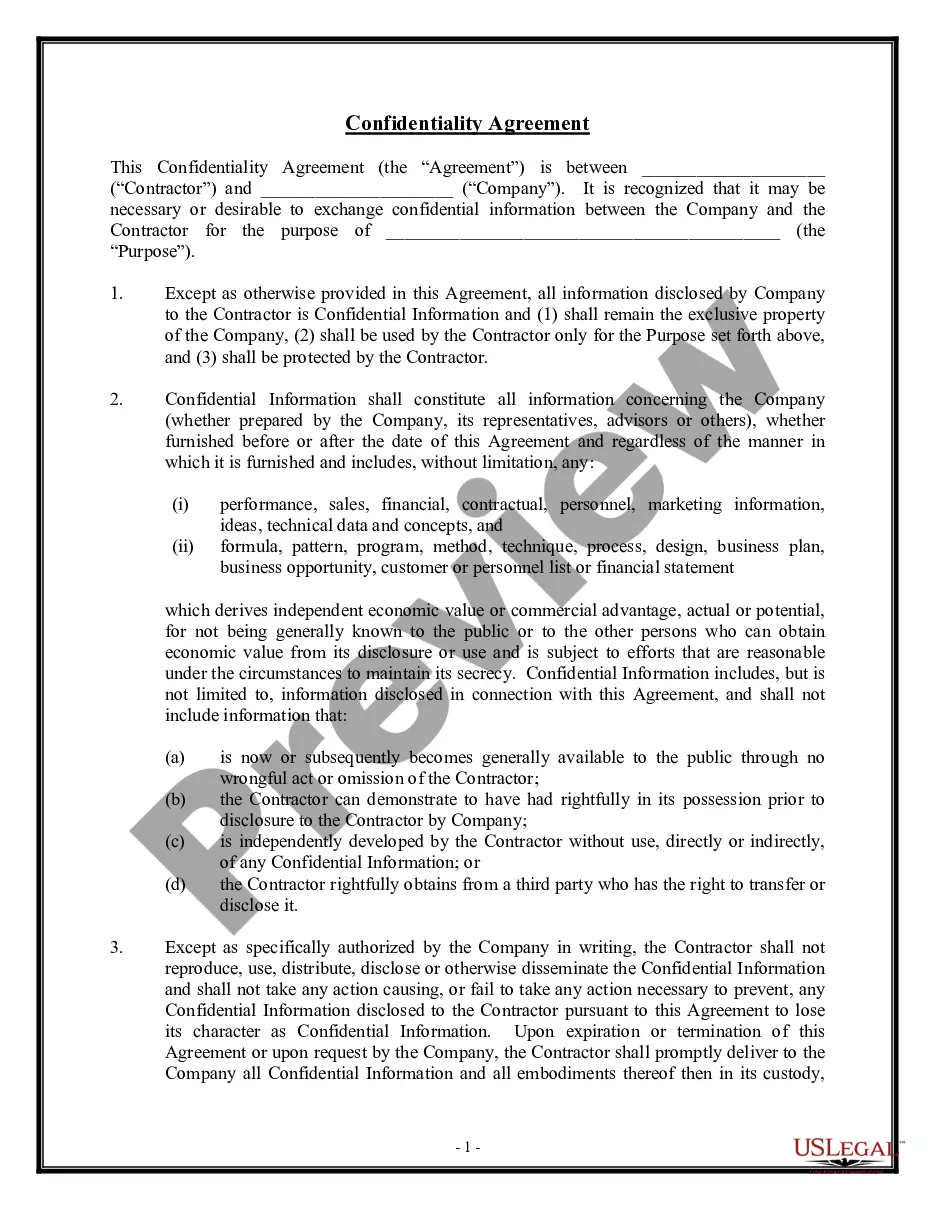
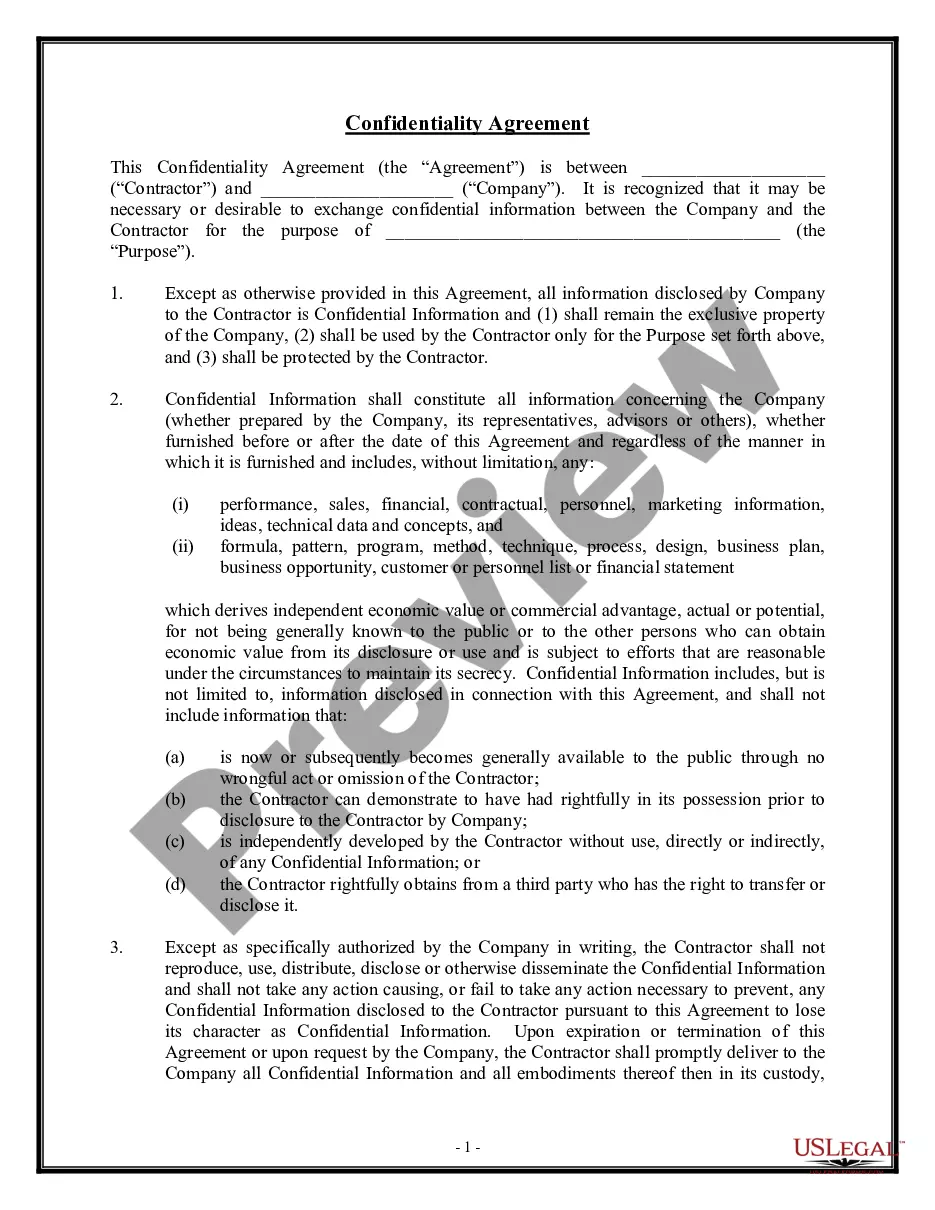
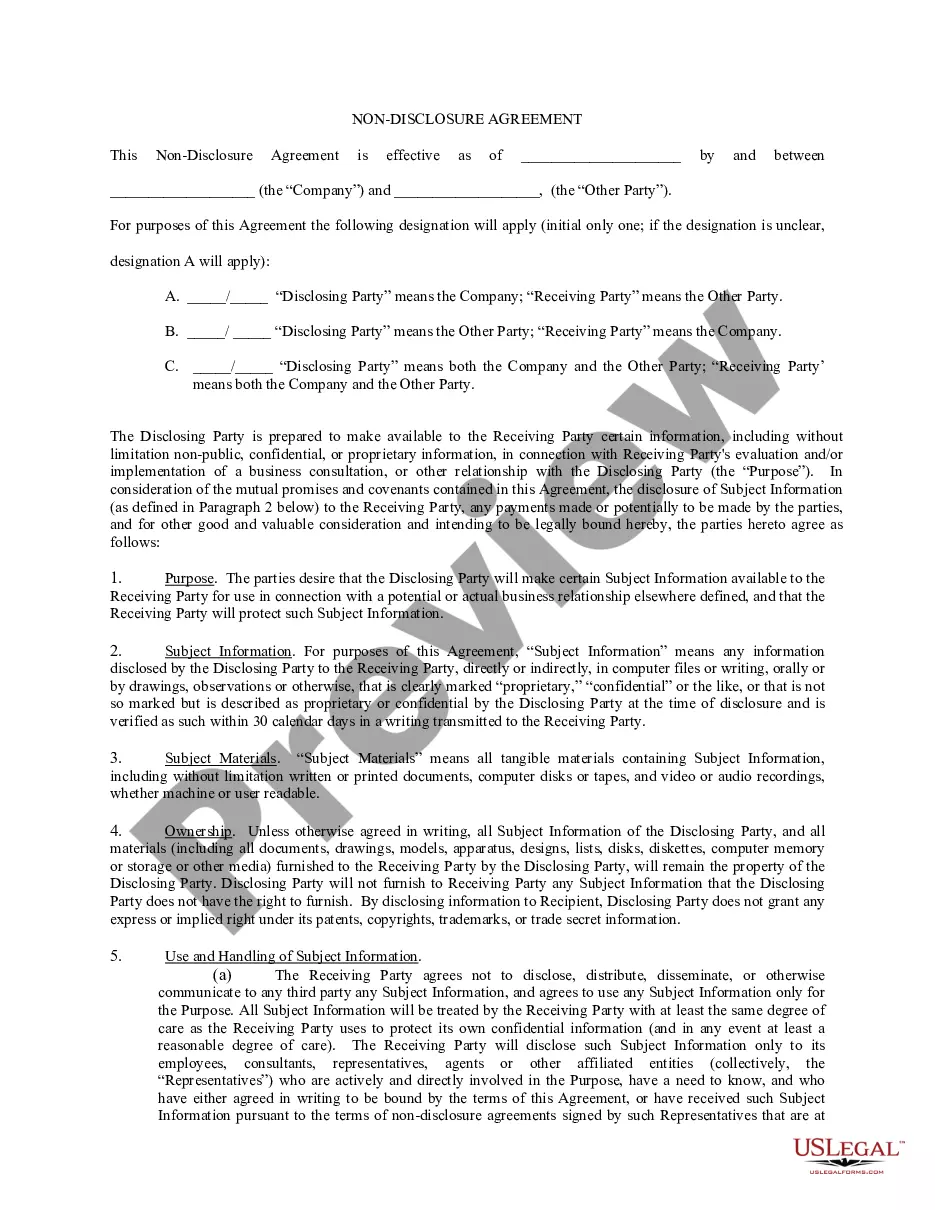
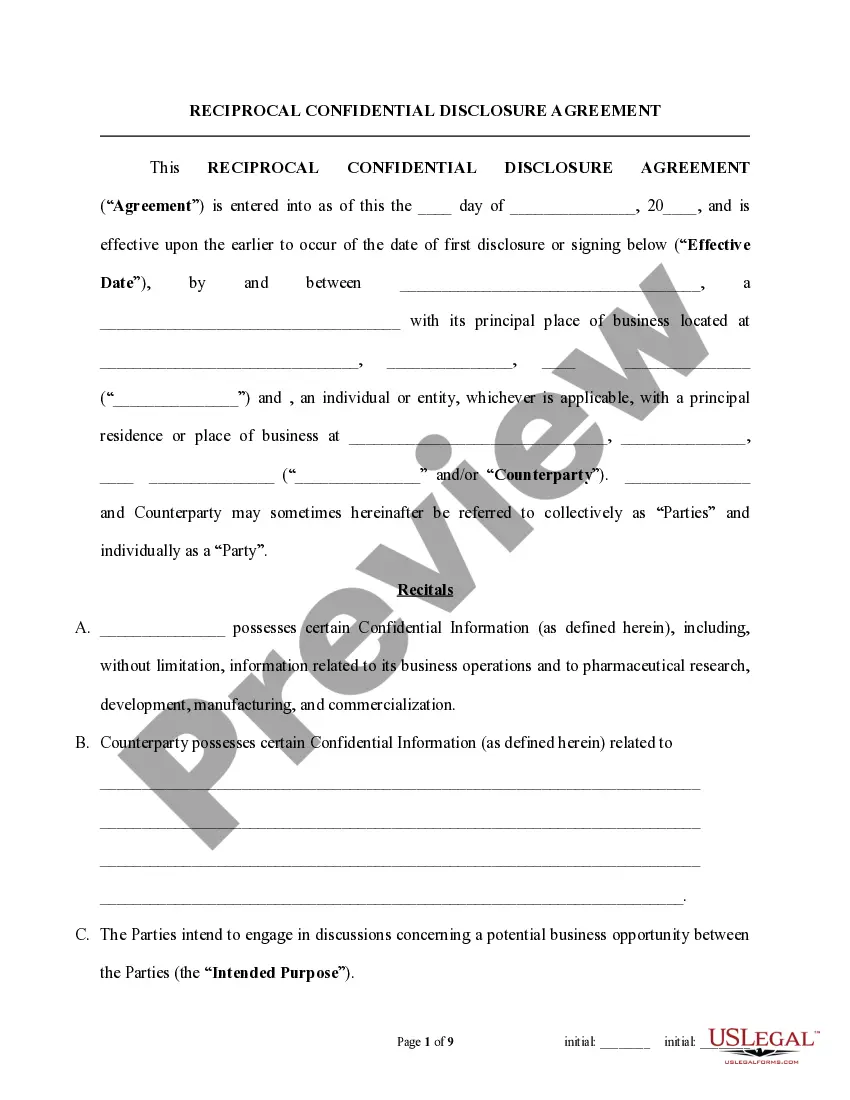
Get your form ready online
Our built-in tools help you complete, sign, share, and store your documents in one place.
Make edits, fill in missing information, and update formatting in US Legal Forms—just like you would in MS Word.
Download a copy, print it, send it by email, or mail it via USPS—whatever works best for your next step.
Sign and collect signatures with our SignNow integration. Send to multiple recipients, set reminders, and more. Go Premium to unlock E-Sign.
If this form requires notarization, complete it online through a secure video call—no need to meet a notary in person or wait for an appointment.
We protect your documents and personal data by following strict security and privacy standards.

Make edits, fill in missing information, and update formatting in US Legal Forms—just like you would in MS Word.

Download a copy, print it, send it by email, or mail it via USPS—whatever works best for your next step.

Sign and collect signatures with our SignNow integration. Send to multiple recipients, set reminders, and more. Go Premium to unlock E-Sign.

If this form requires notarization, complete it online through a secure video call—no need to meet a notary in person or wait for an appointment.

We protect your documents and personal data by following strict security and privacy standards.
Looking for another form?




How to fill out Reciprocal Nondisclosure Agreement?
You can invest time online searching for the legal document template that meets the state and federal requirements you desire.
US Legal Forms offers a vast array of legal forms that are evaluated by experts.
You can easily acquire or print the Illinois Reciprocal Nondisclosure Agreement from your resources.
If available, utilize the Preview option to review the document template as well.
- If you already have a US Legal Forms account, you can Log In and select the Download button.
- After that, you can complete, modify, print, or sign the Illinois Reciprocal Nondisclosure Agreement.
- Every legal document template you buy is yours indefinitely.
- To obtain another copy of any purchased form, go to the My documents section and click the appropriate option.
- If you’re using the US Legal Forms website for the first time, follow the simple instructions provided below.
- First, ensure you have selected the correct document template for your state or city.
- Review the form description to confirm that you have chosen the right one.
Form popularity
FAQ
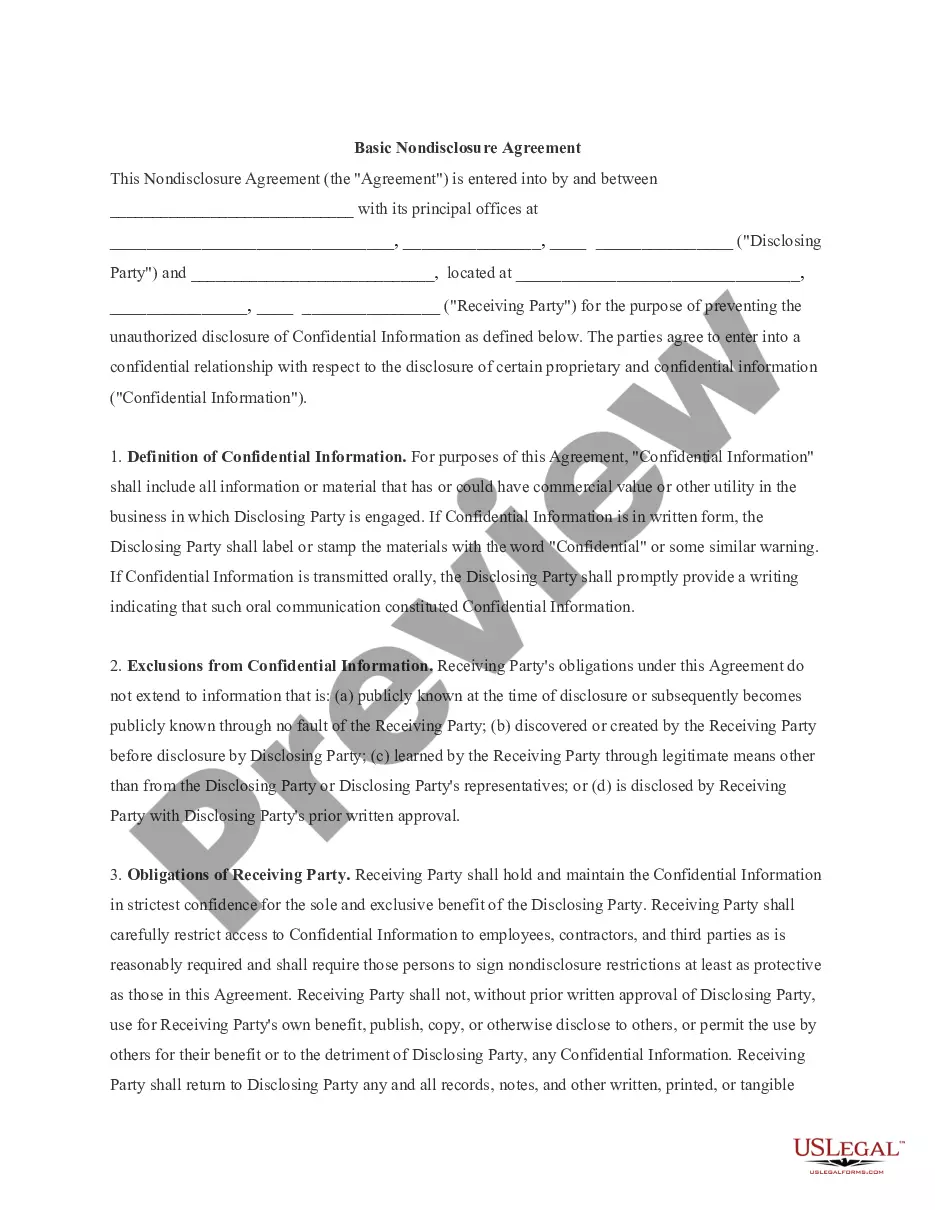
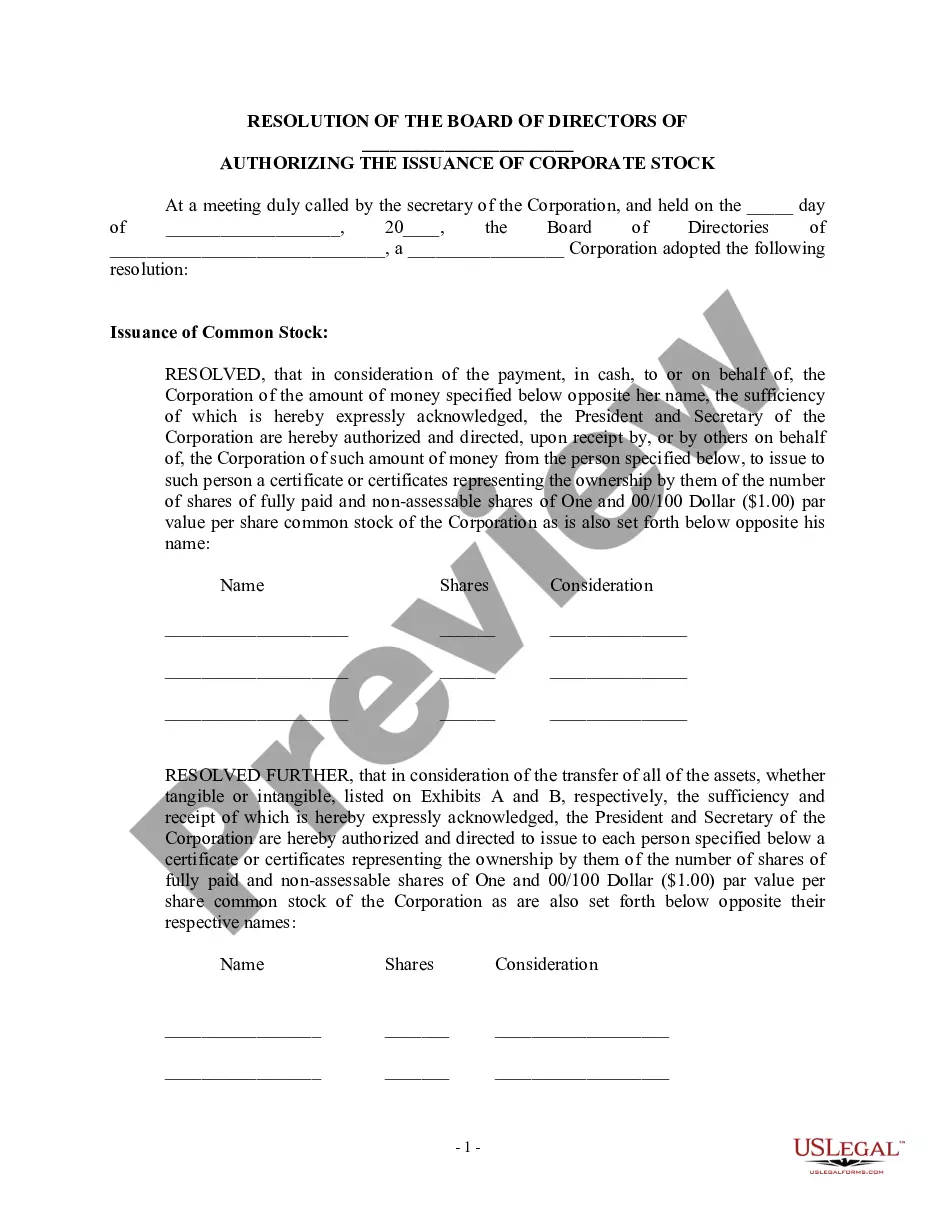
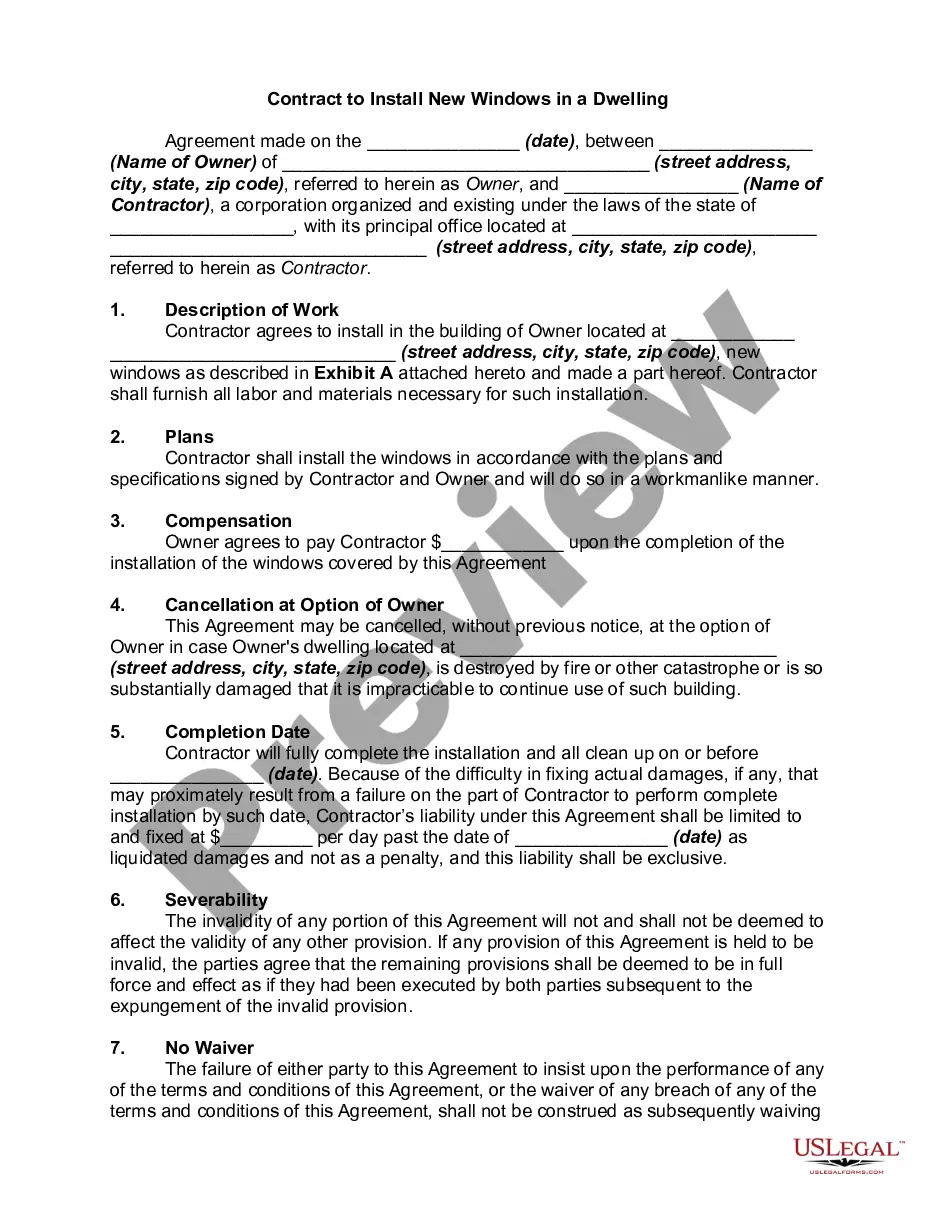
A reciprocal, or mutual, nondisclosure agreement protects both parties who are entering into a business relationship through which confidential information will be exchanged.
Violating an NDA leaves you open to lawsuits from your employer, and you could be required to pay financial damages and possibly associated legal costs. It's illegal to reveal trade secrets or sensitive company information to a competitor.
Depending on your needs, you can choose from three types of NDAs: unilateral, bilateral, and unilateral. Unilateral NDAs only require one party to disclose confidential information, while bilateral NDAs require two parties to disclose private information.
Summary A Reciprocal Confidentiality Agreement, otherwise known as a Non-Disclosure Agreement or NDA, can help to protect private, sensitive or confidential information disclosed between two people. This NDA provides for a reciprocal duty of confidentiality.
The employer cannot enforce the agreement until the seven-day revocation period has elapsed, unless the individual has voluntarily waived the right to revoke. If an employer fails to meet all of these requirements, the NDA may be deemed void as against public policy.
In a unilateral NDA, one party agrees to non-disclosure of confidential information belonging to the other party. In a mutual NDA, both parties agree not to reveal the other's confidential information.
Terms within the NDA should be reasonable. If the NDA terms are too broad, courts may refuse to enforce all of them.
NDAs are common across numerous industries. However, such agreements can be used to silence whistleblowers in order to keep illegal activity under wraps. Additionally, NDAs may prohibit the employee from informing the government about the existence of the NDA and the restrictions placed upon them.
NDAs, or non-disclosure agreements, are legally enforceable contracts that create a confidential relationship between a person who has sensitive information and a person who will gain access to that information. A confidential relationship means one or both parties has a duty not to share that information.
The NDA is unreasonably onerous, or too anti-competition. Your actions do not amount to breach of contract, so your former employer has no legal standing. The NDA is not enforceable because it does not comply with Illinois law.