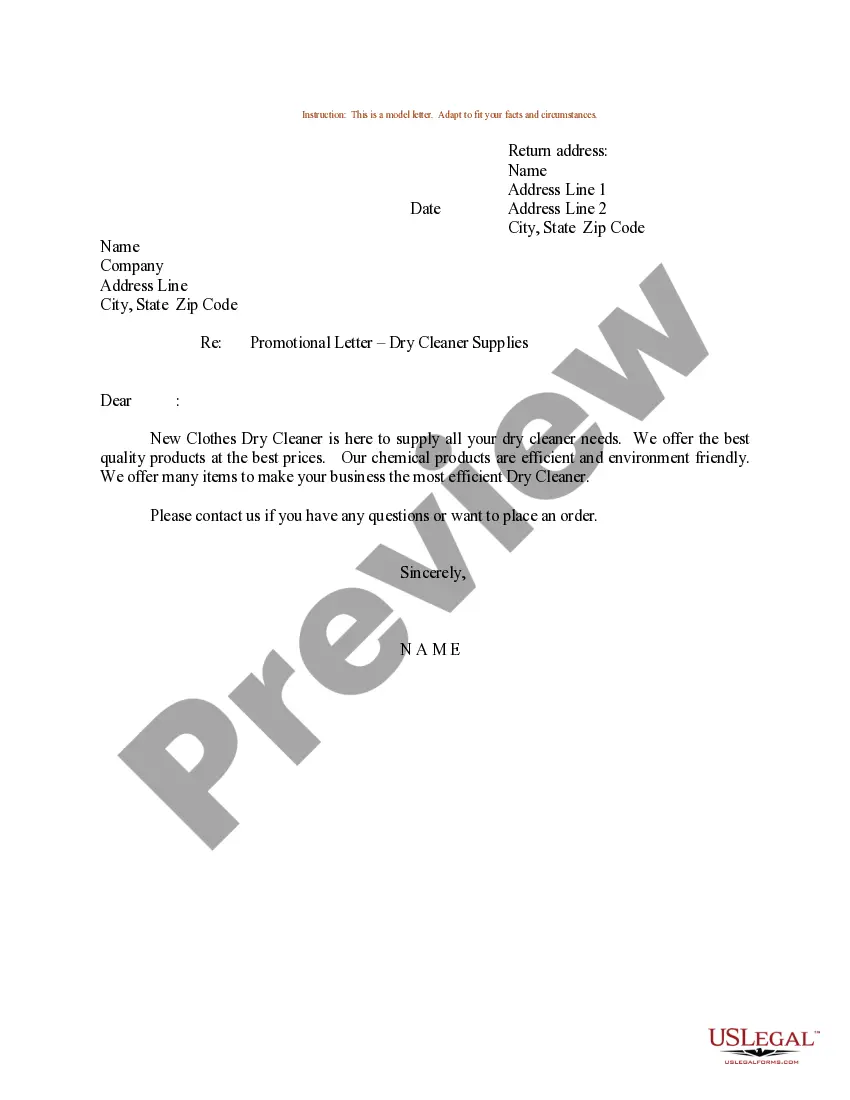
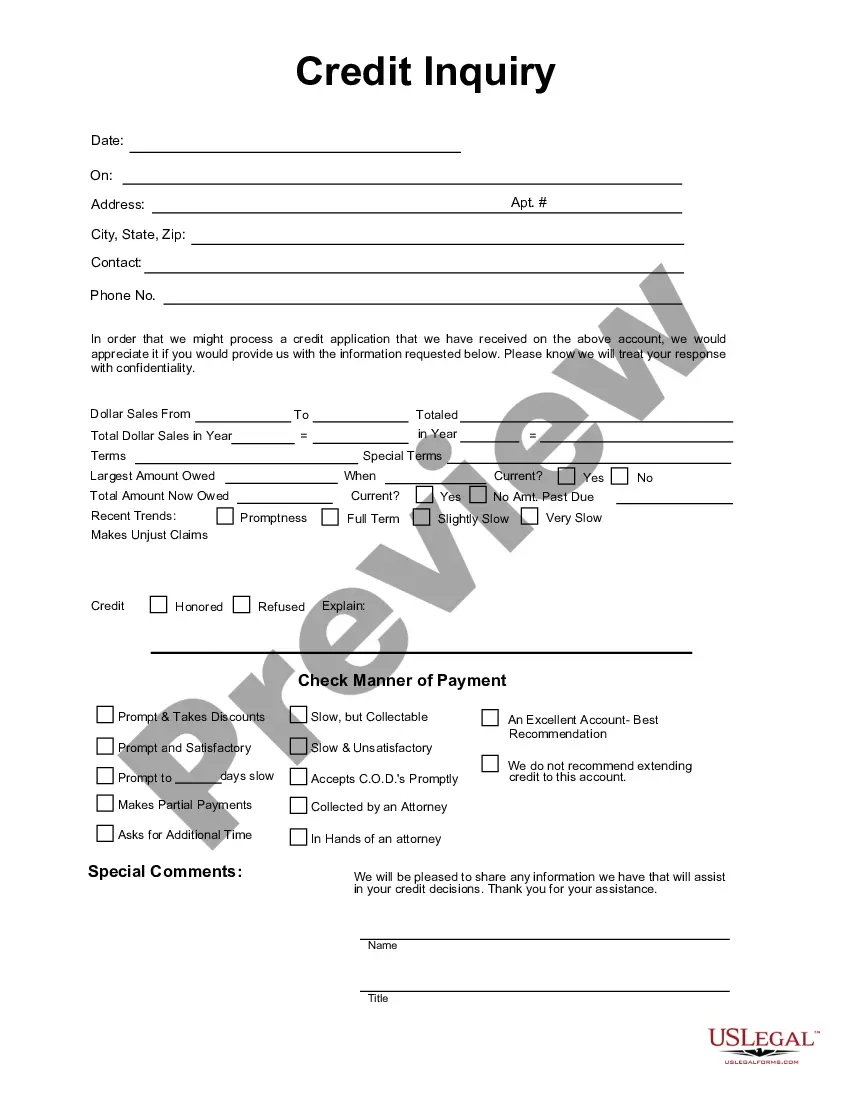
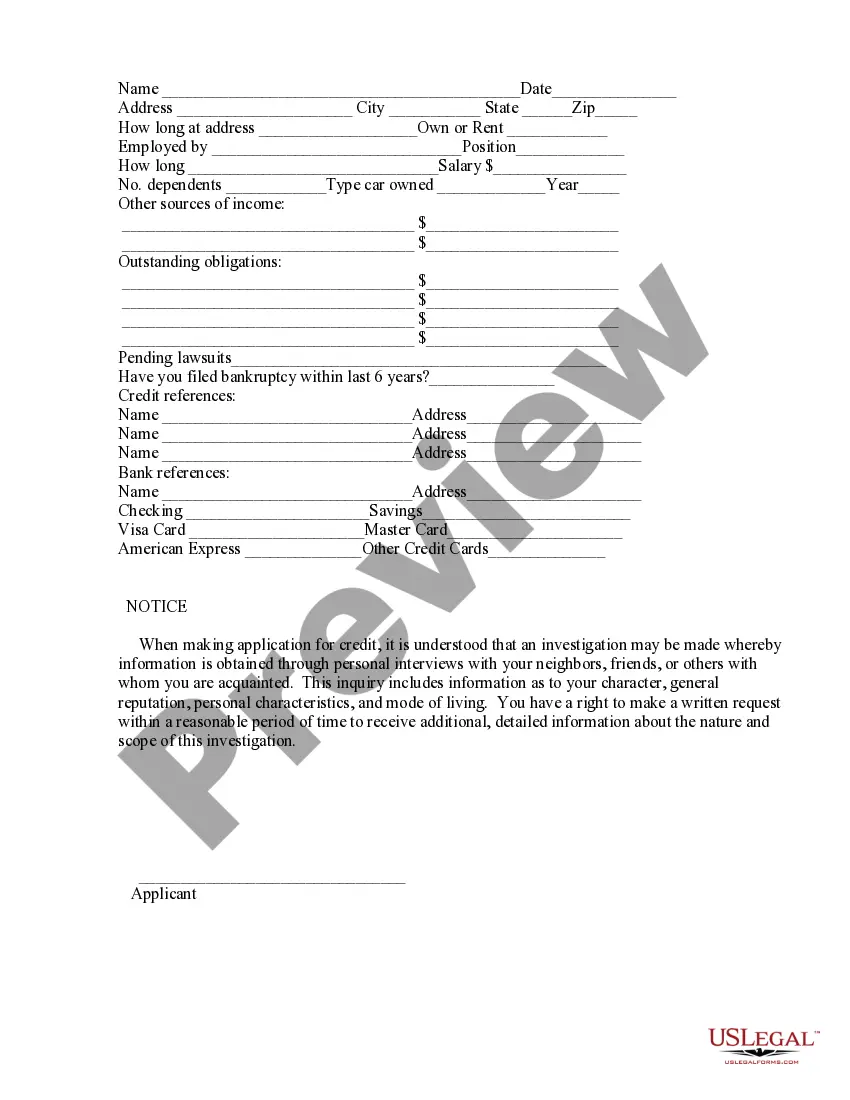
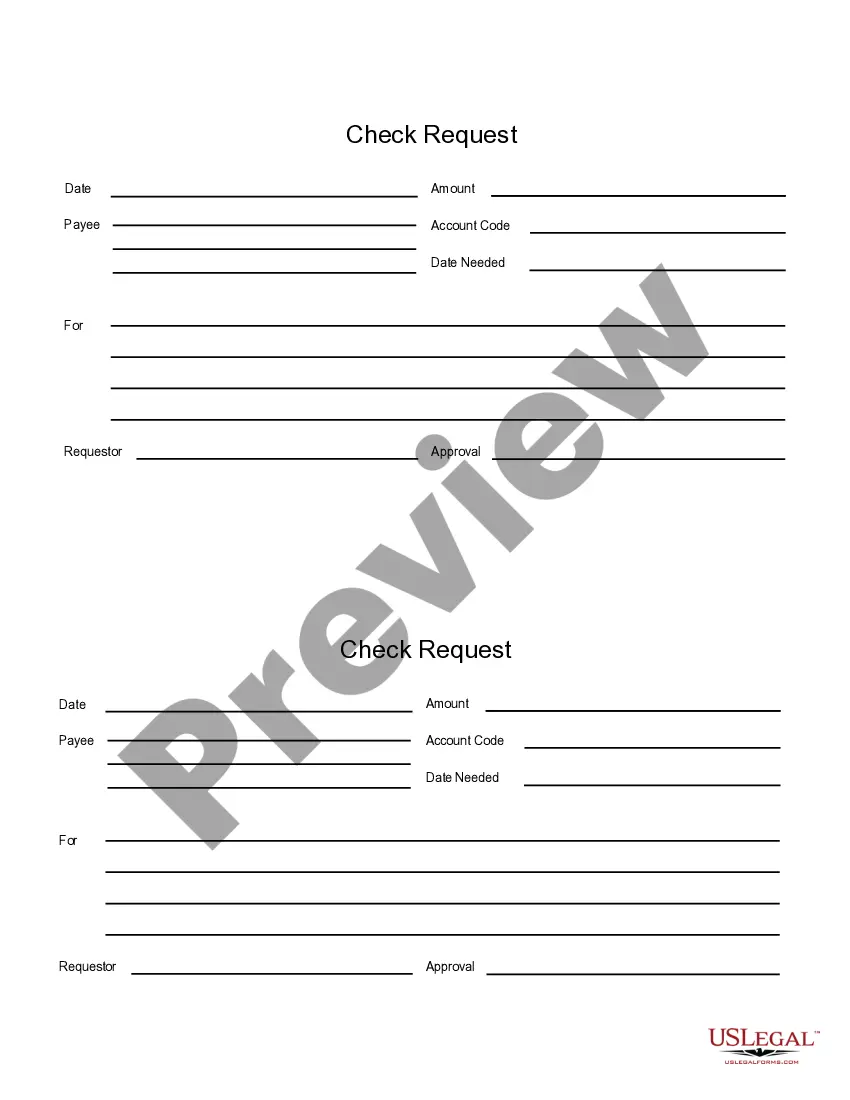
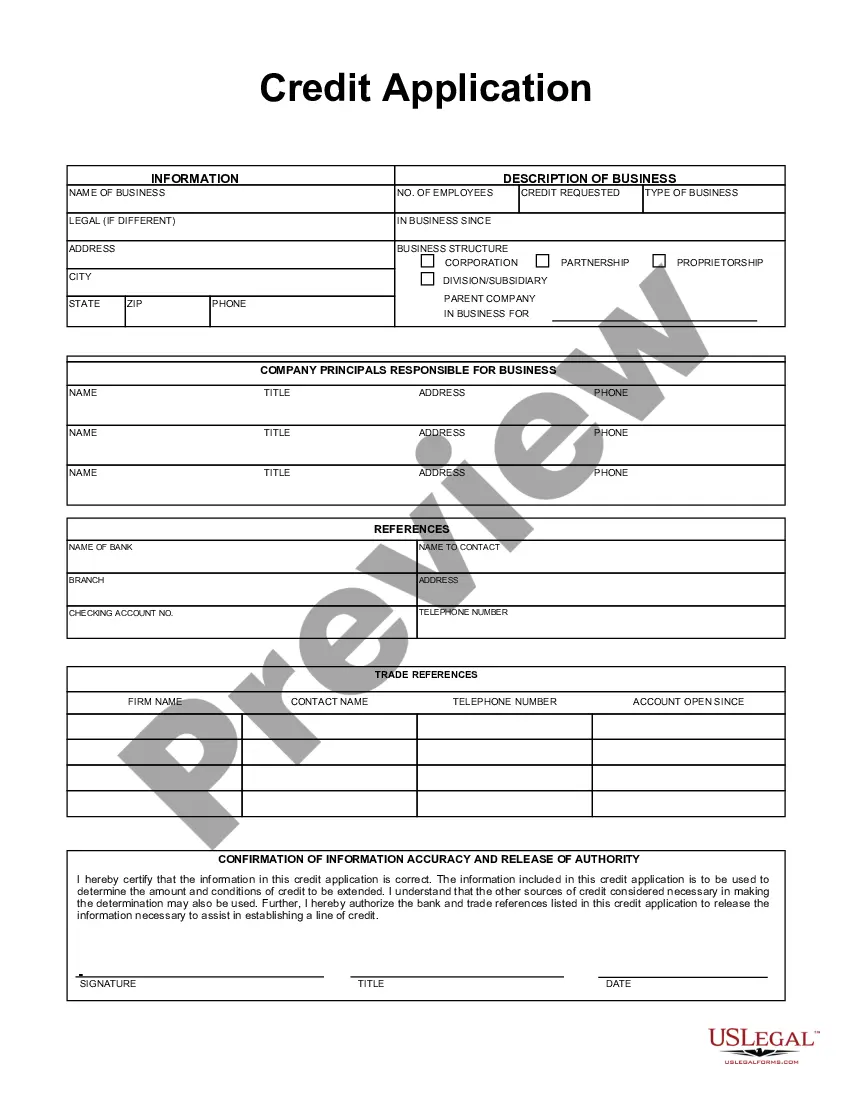
This form is a business type form that is formatted to allow you to complete the form using Adobe Acrobat or Word. The word files have been formatted to allow completion by entry into fields. Some of the forms under this category are rather simple while others are more complex. The formatting is worth the small cost.
Illinois Credit Inquiry
Category:
State:
Multi-State
Control #:
US-135-AZ
Format:
Word;
PDF;
Rich Text
Instant download
Description
Get your form ready online
Our built-in tools help you complete, sign, share, and store your documents in one place.
Built-in online Word editor
Make edits, fill in missing information, and update formatting in US Legal Forms—just like you would in MS Word.
Export easily
Download a copy, print it, send it by email, or mail it via USPS—whatever works best for your next step.
E-sign your document
Sign and collect signatures with our SignNow integration. Send to multiple recipients, set reminders, and more. Go Premium to unlock E-Sign.
Notarize online 24/7
If this form requires notarization, complete it online through a secure video call—no need to meet a notary in person or wait for an appointment.
Store your document securely
We protect your documents and personal data by following strict security and privacy standards.

Make edits, fill in missing information, and update formatting in US Legal Forms—just like you would in MS Word.

Download a copy, print it, send it by email, or mail it via USPS—whatever works best for your next step.

Sign and collect signatures with our SignNow integration. Send to multiple recipients, set reminders, and more. Go Premium to unlock E-Sign.

If this form requires notarization, complete it online through a secure video call—no need to meet a notary in person or wait for an appointment.

We protect your documents and personal data by following strict security and privacy standards.
Looking for another form?





How to fill out Credit Inquiry?
If you need to compile, acquire, or produce legal document templates, utilize US Legal Forms, the premier selection of legal forms accessible online.
Leverage the site’s simple and efficient search feature to find the documents you require. Various templates for corporate and personal purposes are categorized by areas and states, or keywords.
Use US Legal Forms to locate the Illinois Credit Inquiry with just a few clicks.
Each legal document template you purchase is yours indefinitely. You can access every form you’ve downloaded from your account. Select the My documents section and choose a form to print or download again.
Compete and download, and print the Illinois Credit Inquiry with US Legal Forms. There are millions of professional and state-specific forms available for your business or personal needs.
- If you are a current US Legal Forms user, sign in to your account and click on the Download button to retrieve the Illinois Credit Inquiry.
- You can also access forms you previously downloaded within the My documents section of your account.
- If you are using US Legal Forms for the first time, adhere to the steps outlined below.
- Step 1. Ensure you have selected the form for the correct region/state.
- Step 2. Utilize the Review option to browse through the content of the form. Remember to read the description.
- Step 3. If you are unsatisfied with the form, utilize the Search field at the top of the screen to find alternative versions of the legal form template.
- Step 4. Once you’ve found the form you need, click the Get now button. Choose the pricing plan you prefer and enter your credentials to create an account.
- Step 5. Complete the transaction. You can utilize your credit card or PayPal account to finalize the transaction.
- Step 6. Choose the format of the legal form and download it to your device.
- Step 7. Complete, modify, and produce or sign the Illinois Credit Inquiry.
Form popularity
FAQ
A good Illinois credit score typically ranges from 700 to 740 or higher. This score indicates to lenders that you are a responsible borrower. Maintaining a good score can result in better loans and lower interest rates. Using the services provided by uslegalforms can help you understand and improve your credit status.
If you find an unauthorized or inaccurate hard inquiry, you can file a dispute letter and request that the bureau remove it from your report. The consumer credit bureaus must investigate dispute requests unless they determine your dispute is frivolous. Still, not all disputes are accepted after investigation.
Thanks to the Fair Credit Reporting Act (FCRA), employers can't go checking your credit history behind your back. They must have written consent before pulling an applicant's credit history.
Can an Employer Access My Credit? The Fair Credit Reporting Act (FCRA) lists who can obtain your credit report and for what purpose. Employers, for instance, are allowed to run a credit check for hiring and promotion decisions, but only if the applicant or employee has given written permission for them to do so.
Though prospective employers don't see your credit score in a credit check, they do see your open lines of credit (such as mortgages), outstanding balances, auto or student loans, foreclosures, late or missed payments, any bankruptcies and collection accounts.
Illinois passed such a law in 2011, the Employee Credit Privacy Act (ECPA). It says employers can not use credit reports or histories to hire, fire, or set pay and conditions for many types of jobs in Illinois. The Illinois law doesn't cover everything.
No, requesting your credit report will not hurt your credit score. Checking your own credit report is not an inquiry about new credit, so it has no effect on your score.
This information is reported to Equifax by your lenders and creditors and includes the types of accounts (for example, a credit card, mortgage, student loan, or vehicle loan), the date those accounts were opened, your credit limit or loan amount, account balances, and your payment history.
Law and finance firms are legally required to perform credit checks on potential employees. But other companies may also ask for permission to run a credit check on you before offering you employment especially if the role you're applying for involves dealing with money.
Unfortunately, while federal laws prevent discrimination in the workplace regarding race and gender, no such laws exist to prevent being denied a job due to poor credit history.