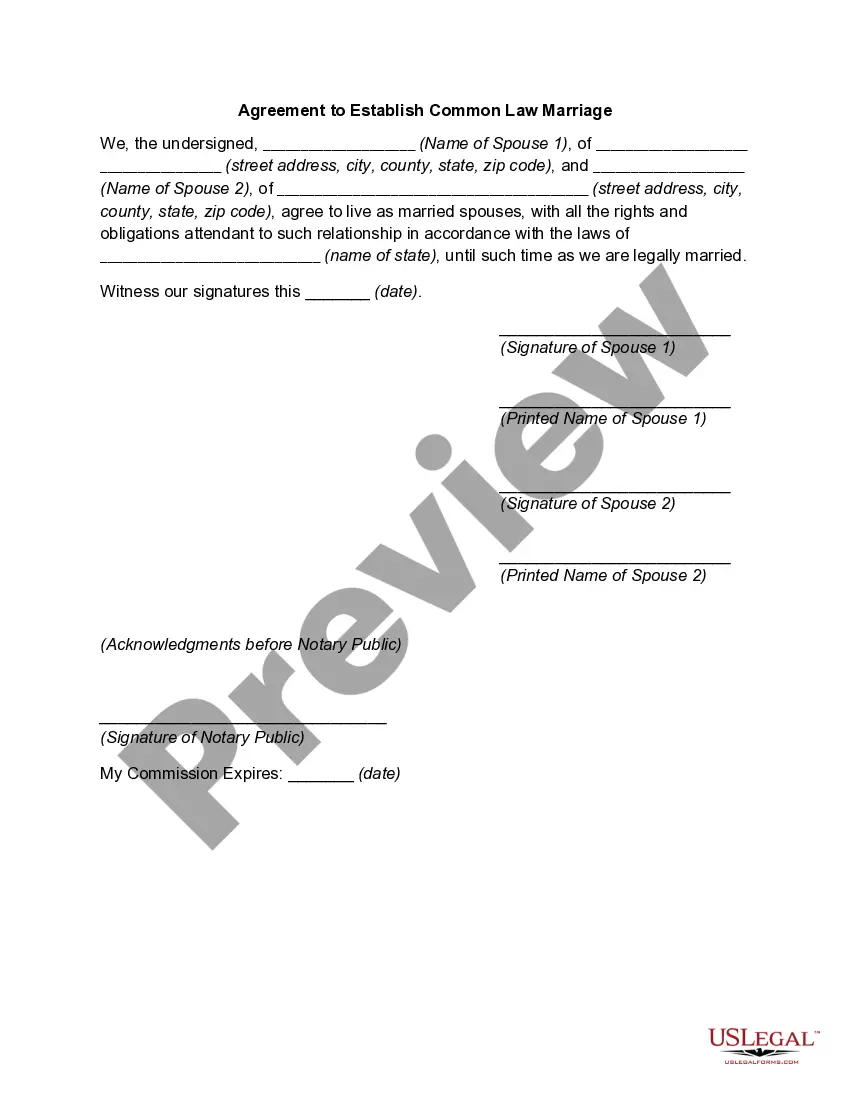
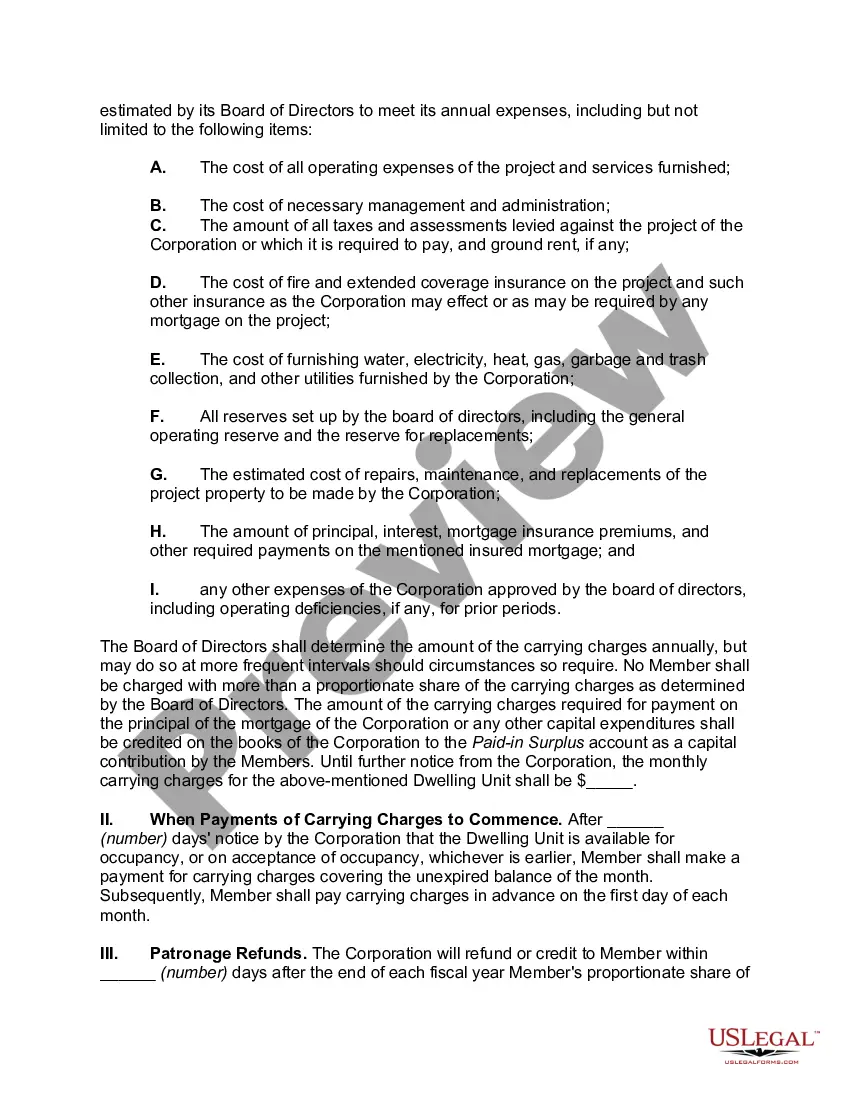
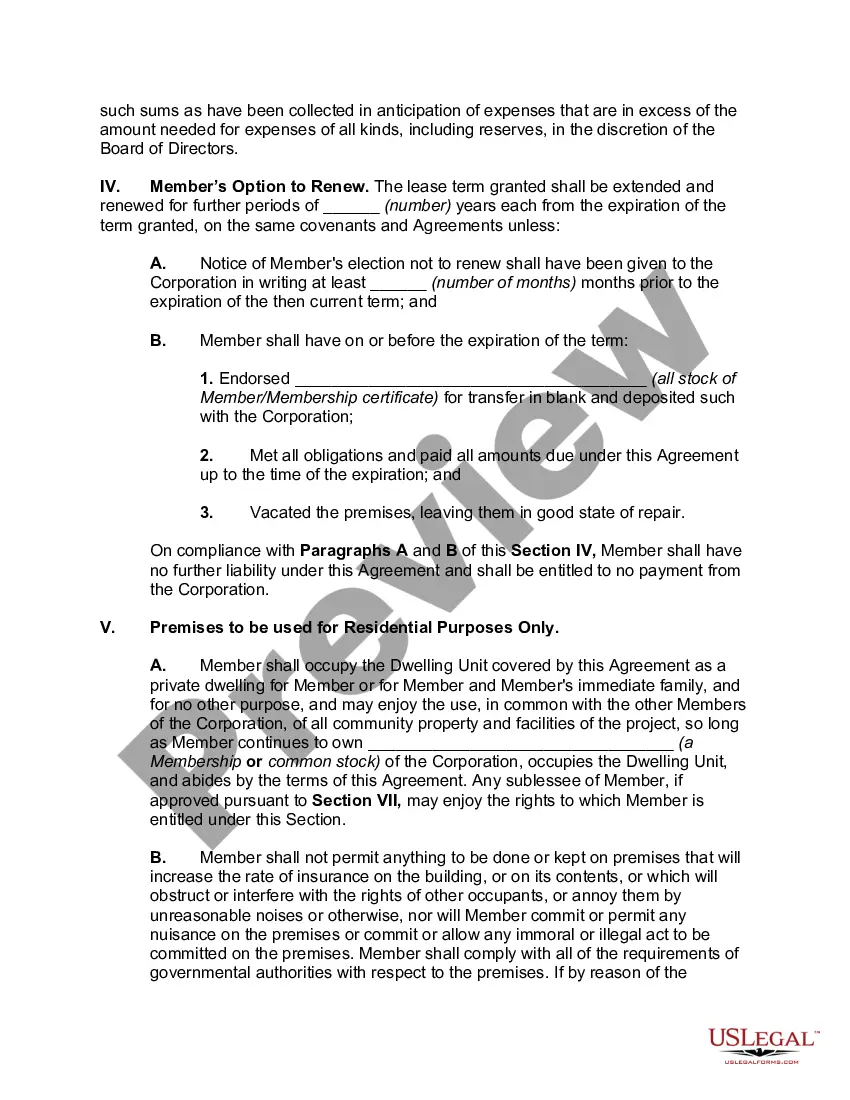
Illinois Occupancy Agreement Between Cooperative Housing Corporation and Member/Shareholder
Description
Get your form ready online
Our built-in tools help you complete, sign, share, and store your documents in one place.
Make edits, fill in missing information, and update formatting in US Legal Forms—just like you would in MS Word.
Download a copy, print it, send it by email, or mail it via USPS—whatever works best for your next step.
Sign and collect signatures with our SignNow integration. Send to multiple recipients, set reminders, and more. Go Premium to unlock E-Sign.
If this form requires notarization, complete it online through a secure video call—no need to meet a notary in person or wait for an appointment.
We protect your documents and personal data by following strict security and privacy standards.

Make edits, fill in missing information, and update formatting in US Legal Forms—just like you would in MS Word.

Download a copy, print it, send it by email, or mail it via USPS—whatever works best for your next step.

Sign and collect signatures with our SignNow integration. Send to multiple recipients, set reminders, and more. Go Premium to unlock E-Sign.

If this form requires notarization, complete it online through a secure video call—no need to meet a notary in person or wait for an appointment.

We protect your documents and personal data by following strict security and privacy standards.
Looking for another form?




How to fill out Occupancy Agreement Between Cooperative Housing Corporation And Member/Shareholder?
Are you in a situation where you frequently need documents for either business or personal purposes.
There are numerous legal document templates accessible online, but finding trustworthy ones can be challenging.
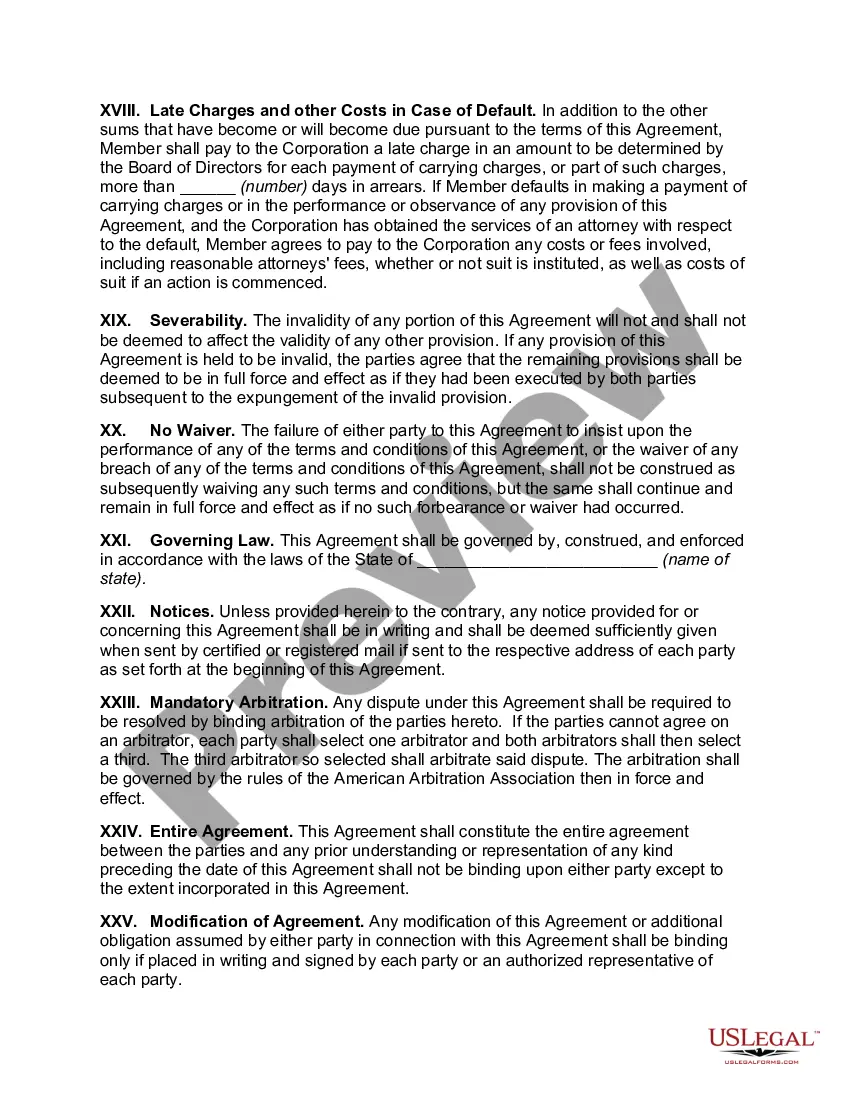
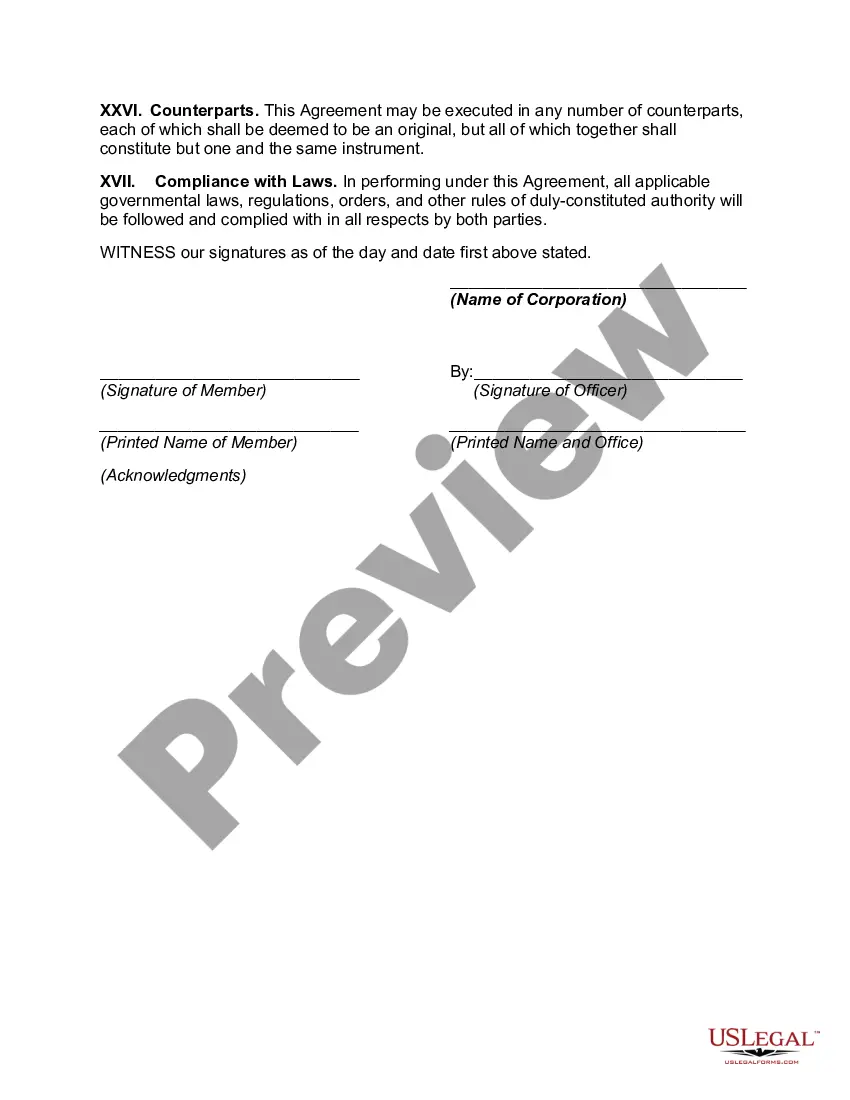
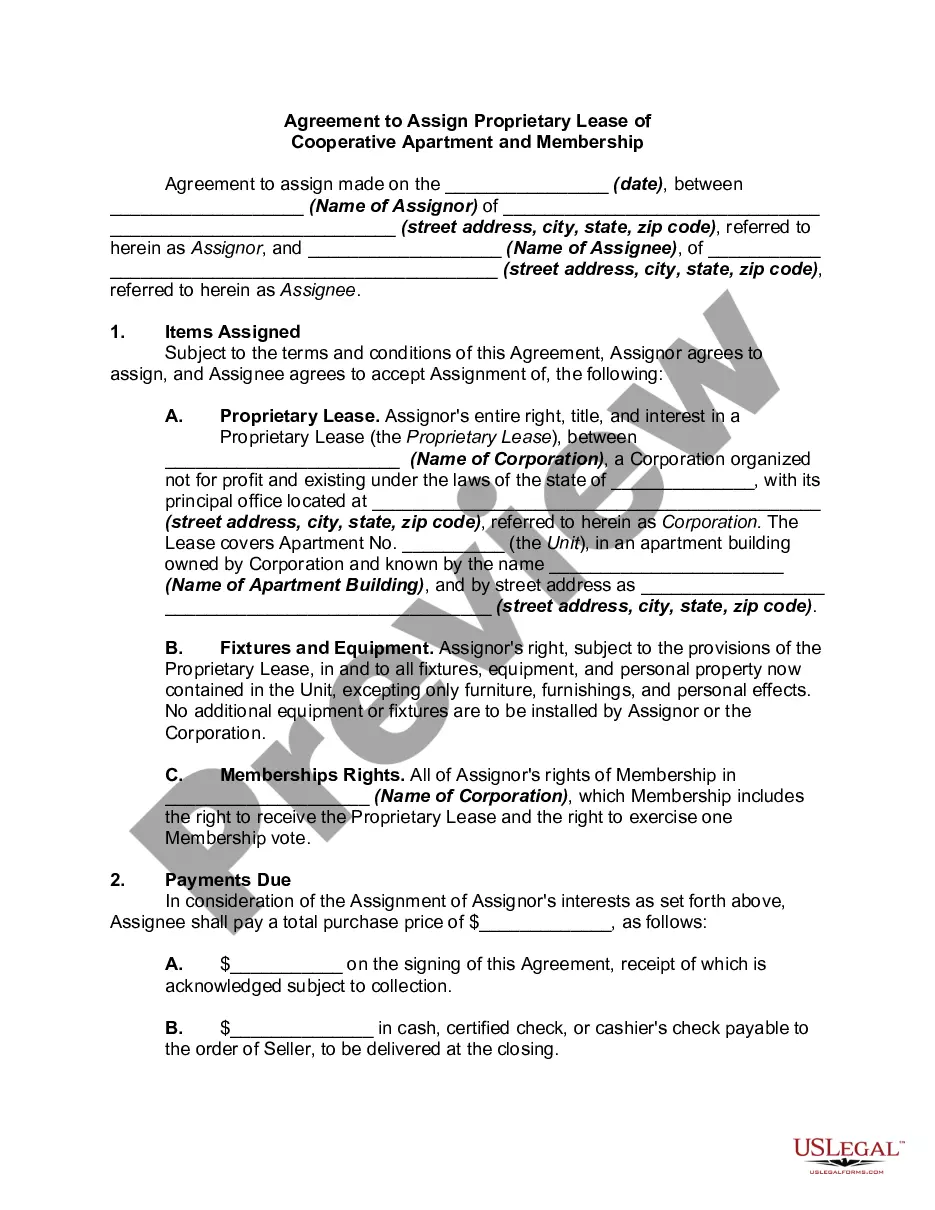
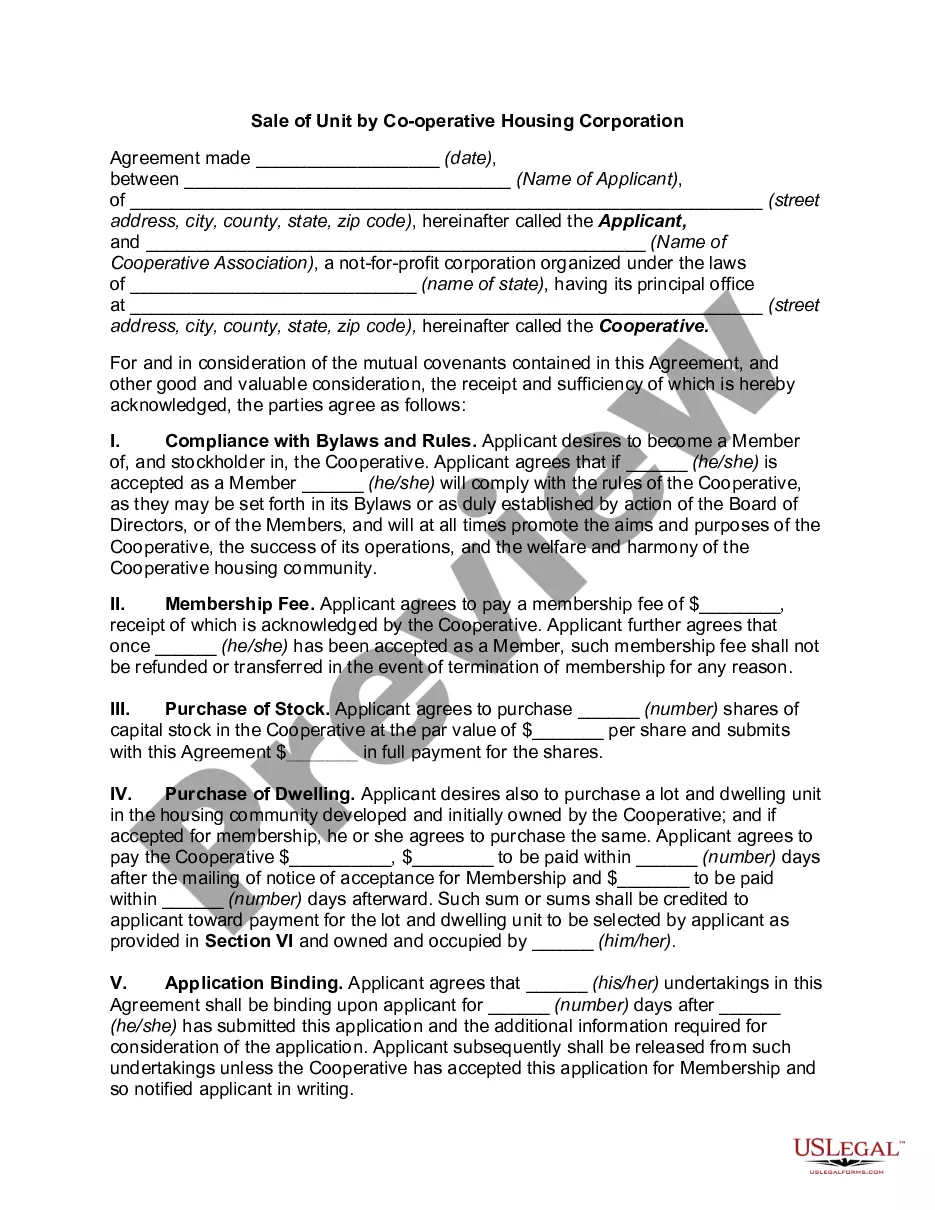
US Legal Forms offers thousands of form templates, including the Illinois Occupancy Agreement Between Cooperative Housing Corporation and Member/Shareholder, designed to comply with federal and state regulations.
Once you find the correct form, just click Purchase now.
Select the pricing plan you prefer, fill out the necessary information to create your account, and pay for the order using your PayPal or credit card.
- If you are already acquainted with the US Legal Forms website and possess an account, simply Log In.
- After that, you can download the Illinois Occupancy Agreement Between Cooperative Housing Corporation and Member/Shareholder template.
- If you do not have an account and wish to start using US Legal Forms, follow these instructions.
- Find the form you need and ensure it is for the correct city/state.
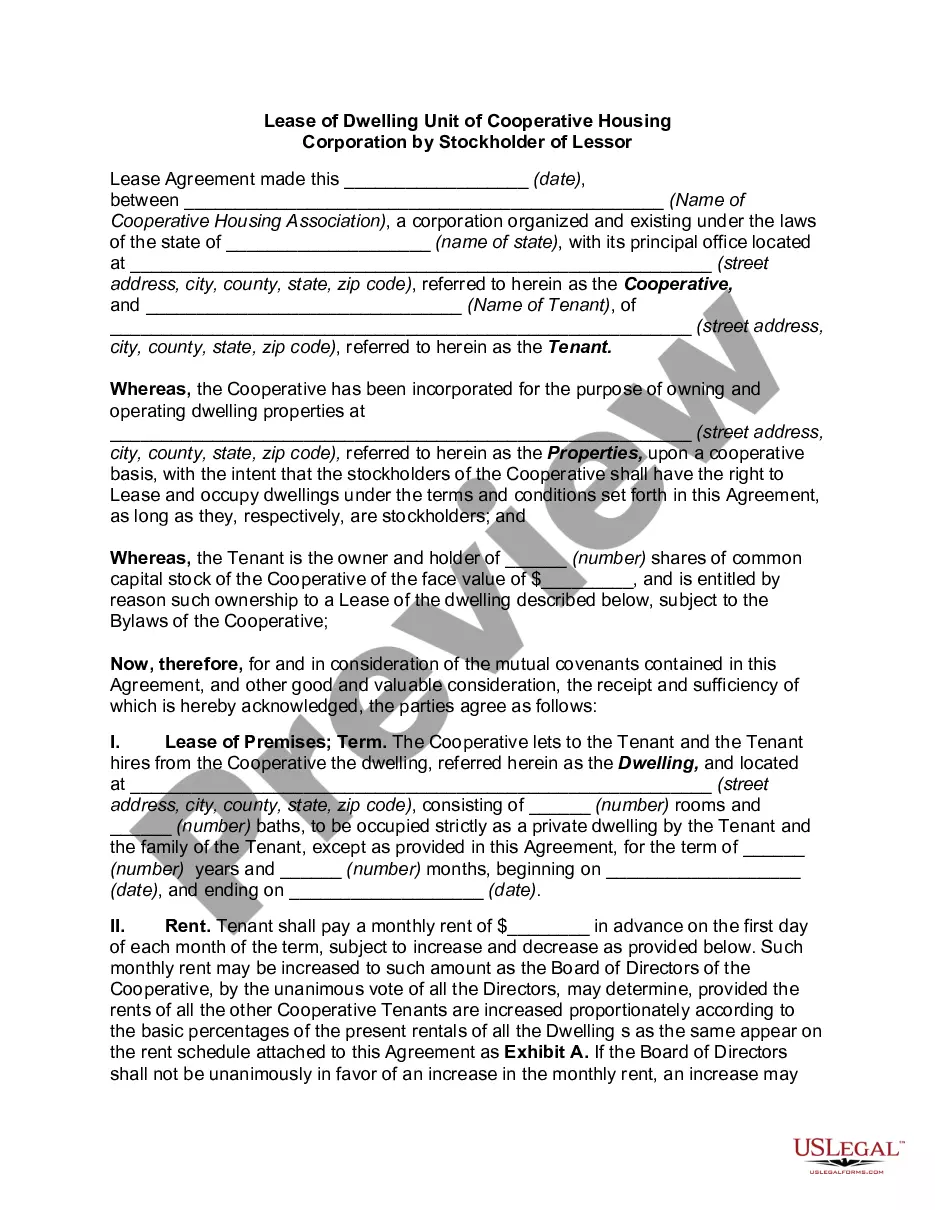
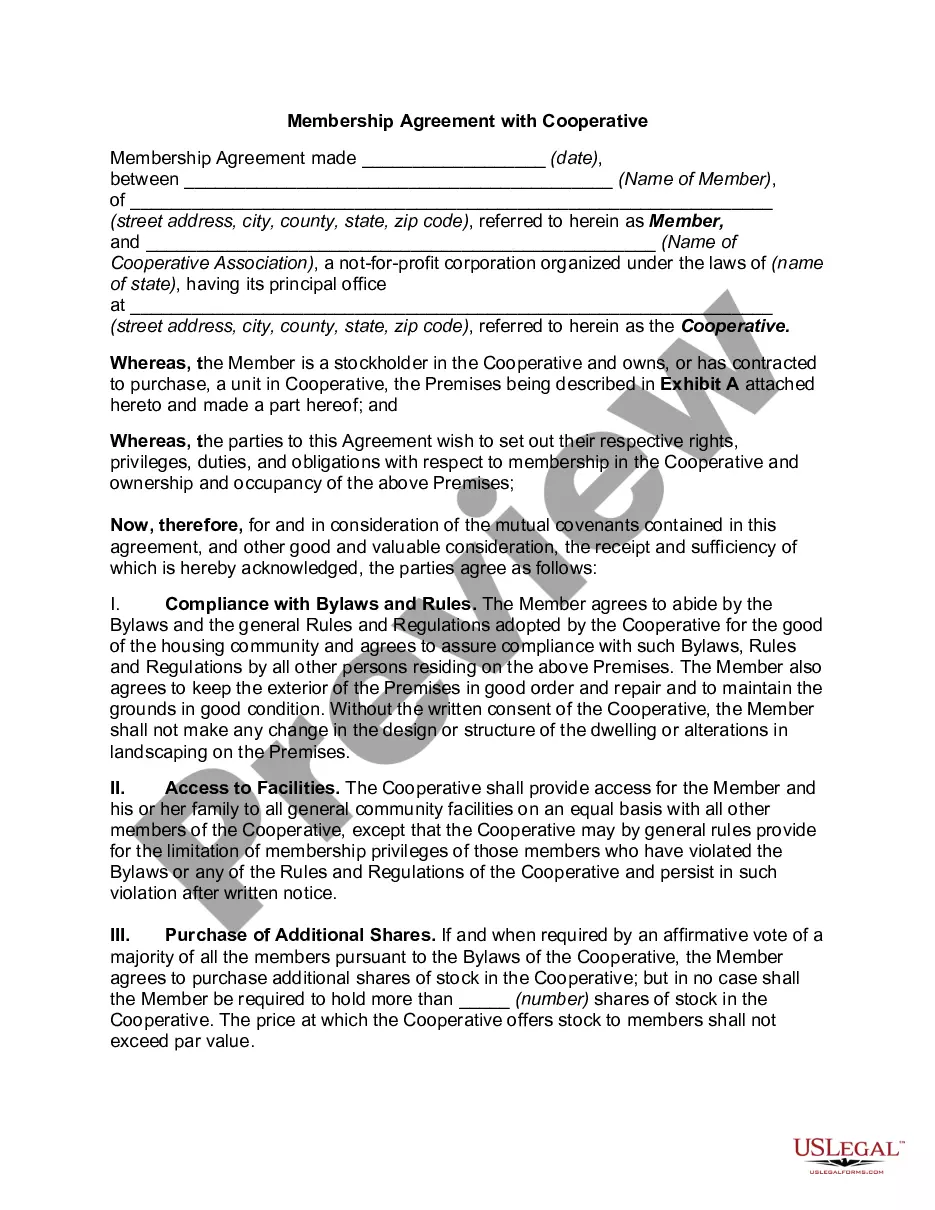
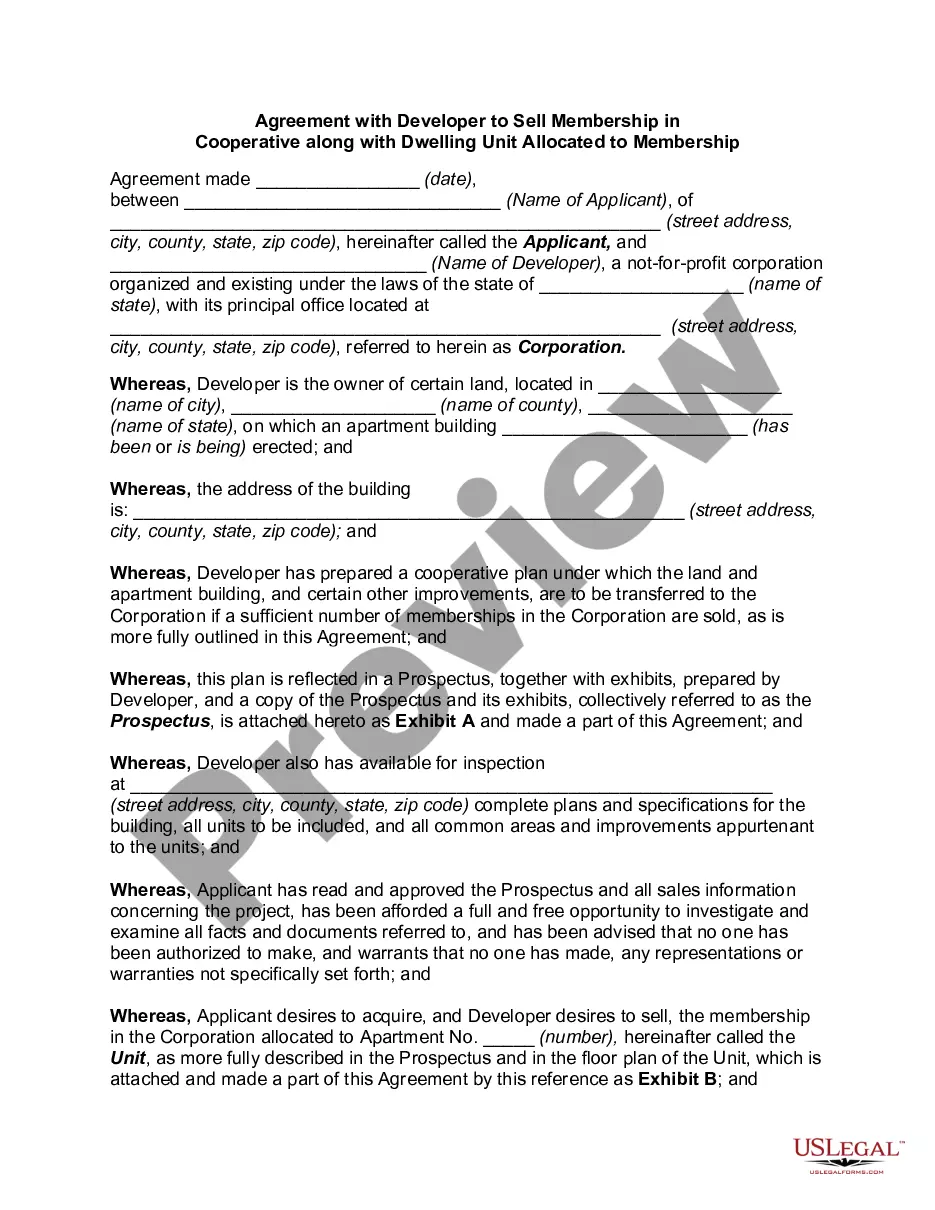
- Use the Preview button to review the document.
- Check the details to confirm that you have selected the correct form.
- If the form is not what you are looking for, use the Search field to find the form that matches your requirements.
Form popularity
FAQ
Yes, a co-op does have shareholders. These shareholders are members who own shares that entitle them to occupy a unit and participate in the governance of the cooperative. The Illinois Occupancy Agreement Between Cooperative Housing Corporation and Member/Shareholder specifically defines the roles and responsibilities of shareholders, ensuring transparency and cooperation within the community.
op owner has an interest or share in the entire building and a contract or lease that allows the owner to occupy a unit. While a condo owner owns a unit, a coop owner does not own the unit. Coops are collectively owned and managed by their residents, who own shares in a nonprofit corporation.
Cons Of Co-OpsHigher monthly fees: Although the purchase price of a co-op often comes in lower than buying a condo, monthly expenses and charges tend to be higher, based on what expenses that these fees cover (such as utilities, parking, etc.).
op, or housing cooperative, is a type of housing owned by a corporation made up of the owners within the coop. The corporation owns the interior, exterior and all common areas of the building.
A housing cooperative is formed when people join on a democratic basis to own or control the housing and/or related community facilities in which they live. Usually they form a not-for-profit cooperative corporation. Each month they pay a fee to cover their share of the operating expenses.
The main advantage of buying a co-op is that they are more affordable and cheaper to buy than a condo. This is one reason this type of housing is popular in cities with a high cost of living. What's more is that you typically get better square footage for your money.
Cooperative housing (commonly described by referring to an individual co-op) is a type of homeownership common to apartment buildings in big cities such as New York. For practical intents and purposes, a co-op can be defined as a building that is jointly owned by a corporation made up of all its inhabitants.
ConsMost co-ops require a 10 to 20 percent down payment.The rules for renting your co-op are often quite restrictive.Because there are a limited amount of lenders who do co-op loans, your loan options are restricted.Typically it is harder to rent your co-op with the restrictions that most co-ops have.
Ownership "Shares" in a Co-op The number of shares owned can be based on the size of the unit. As shareholders in the property, tenants get voting rights on issues affecting the property, including fees, common spaces, improvements, and when new prospective buyers are approved to live in the building.
Market-rate co-ops are just that you can buy or sell your interest in them at whatever price the market will bear. You acquire equity much the same as in other types of home ownership.