Illinois General Non-Competition Agreement

State:
Multi-State
Control #:
US-04098BG
Format:
Word; 
Rich Text
Instant download

Description

Before examining the reasonableness of a noncompetition agreement, courts first consider whether the agreement is ancillary, meaning connected and subordinate to another valid contract. If there is no such contract, the court will look to see if there was valid consideration to enforce such an agreement. If there is no adequate or independent consideration present, most courts will refuse to enforce such an agreement. This is to ensure that the noncompetition agreement is not an outright restraint on trade but, rather, the result of a bargained-for exchange that furthers legitimate commercial interests.


When a businessman sells his business, the purchaser may compete with him unless there is a valid restrictive covenant or covenant not to compete. The same is true when an employee leaves the employment of a company and begins soliciting customers of his former employer or competing with his employer in a similar way. When an ongoing business is sold, it is commonly stated in the sales contract that the seller shall not go into the same area or begin a similar business within a certain geographical area or for a certain period of time or both. Such an agreement can be valid and enforceable.


Restrictions to prevent competition by a former employee are held valid when they are reasonable and necessary to protect the interests of the employer. Courts will closely examine covenants not to compete signed by individuals in order to make sure that they are not unreasonable as to time or geographical area.


When a restriction of competition is invalid because it is too long or covers too great a geographical area, Courts will generally do one of two things. Some Courts will trim the restrictive covenant down to a period of time or geographical area that the Court deems reasonable. Other Courts will refuse to enforce the restrictive covenant at all and declare it void.


Caution: Statutory law in a few states completely prohibit covenants not to compete unless the covenant meets the state's statutory guidelines.
Free preview
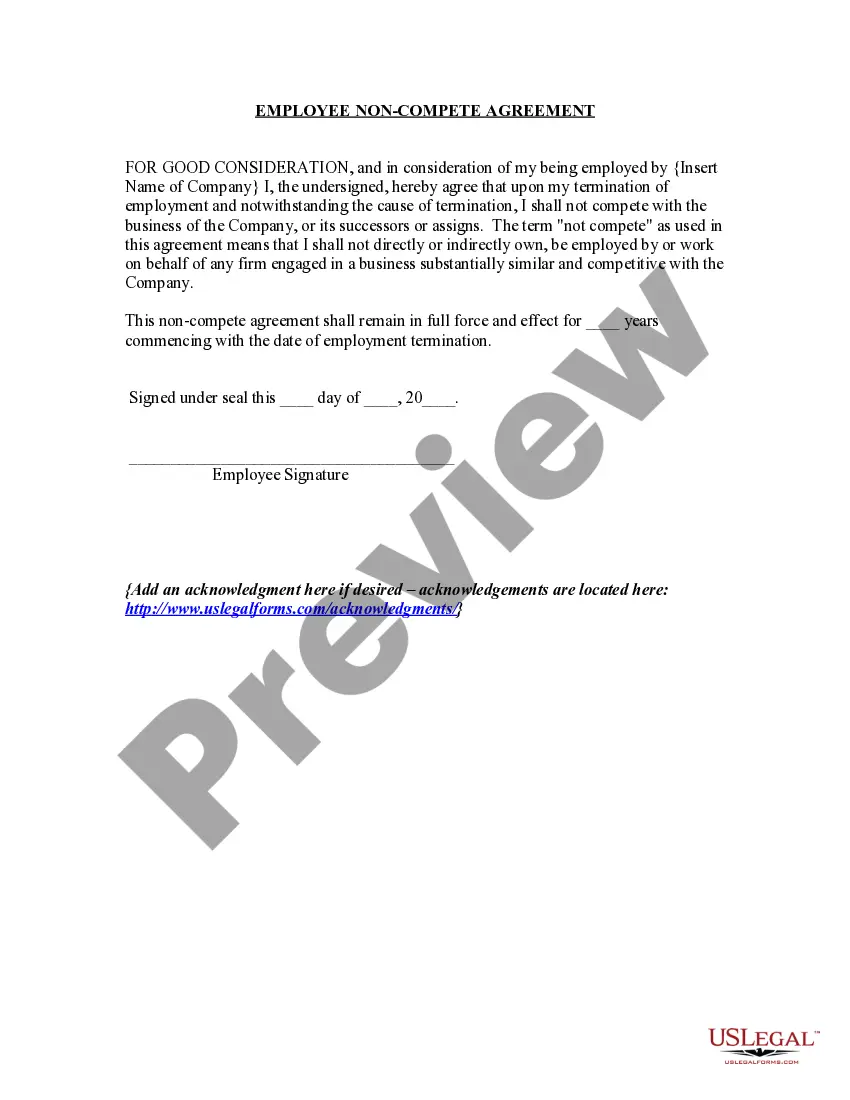
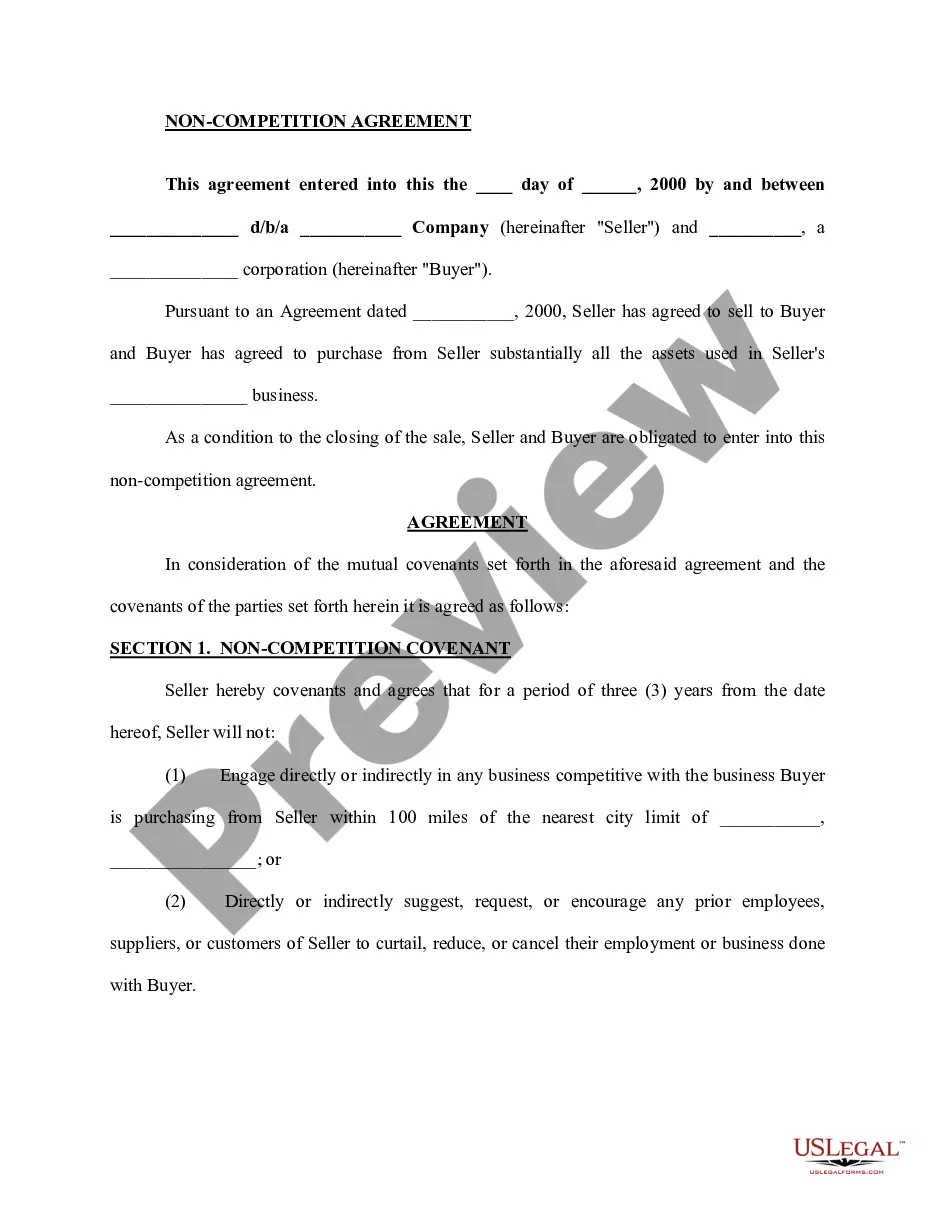
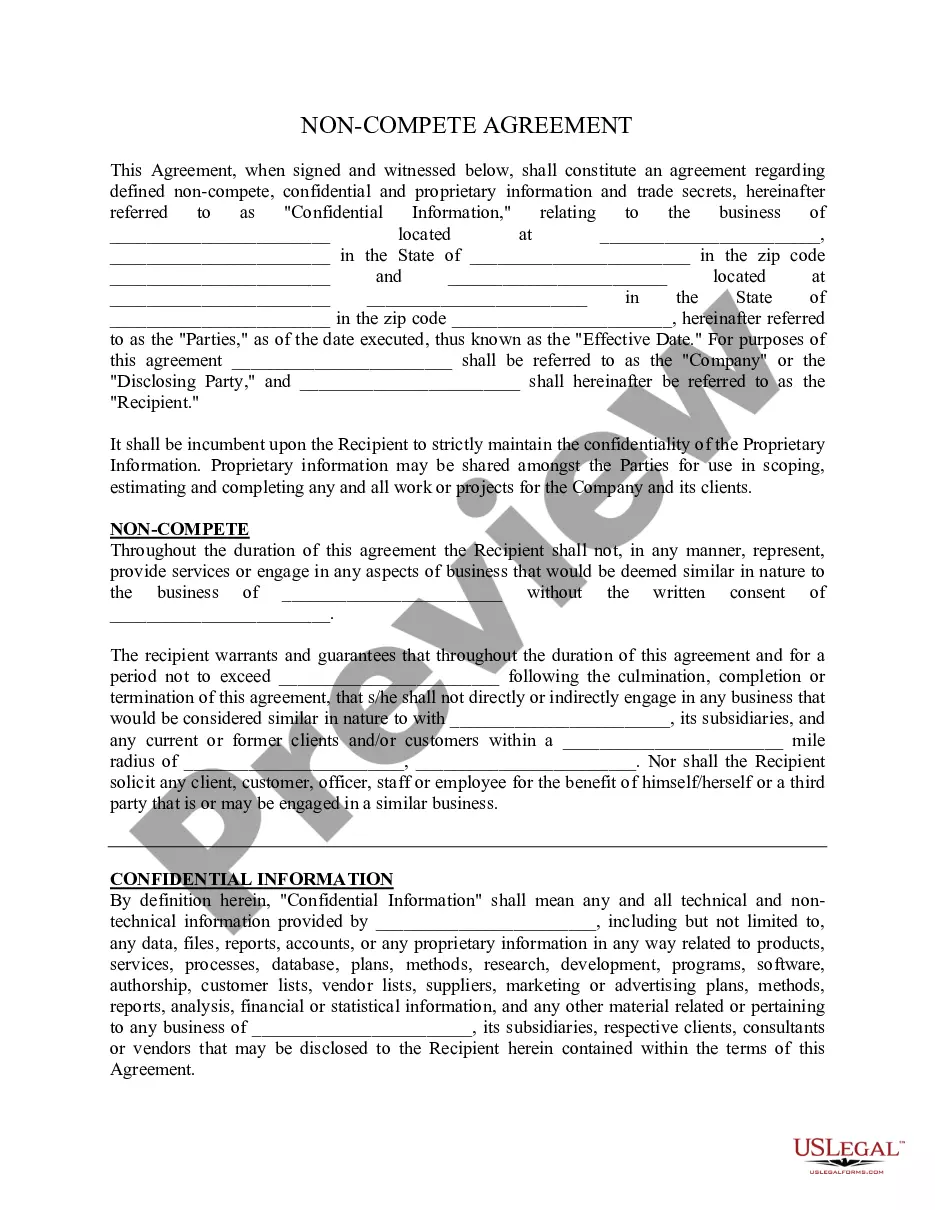
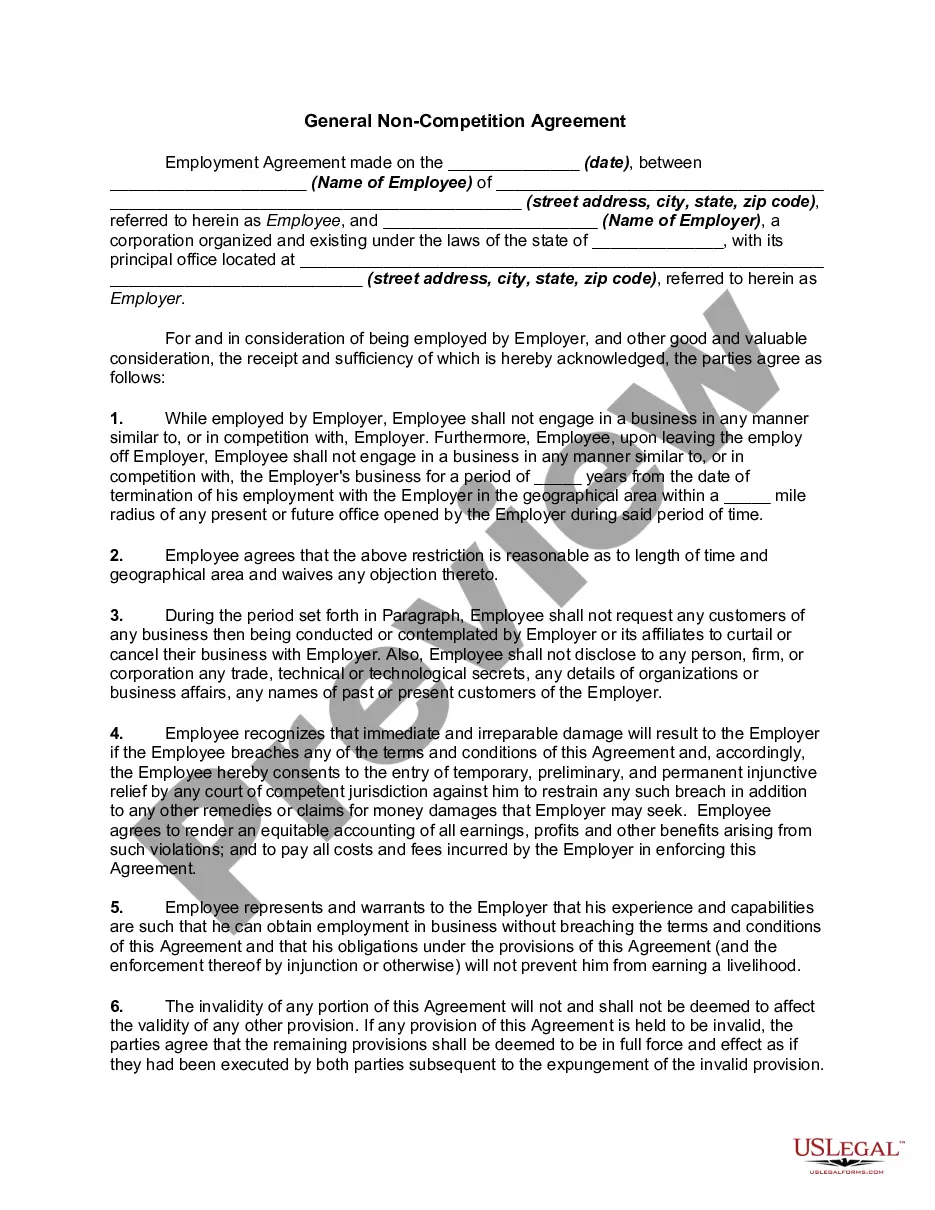
  • Preview General Non-Competition Agreement
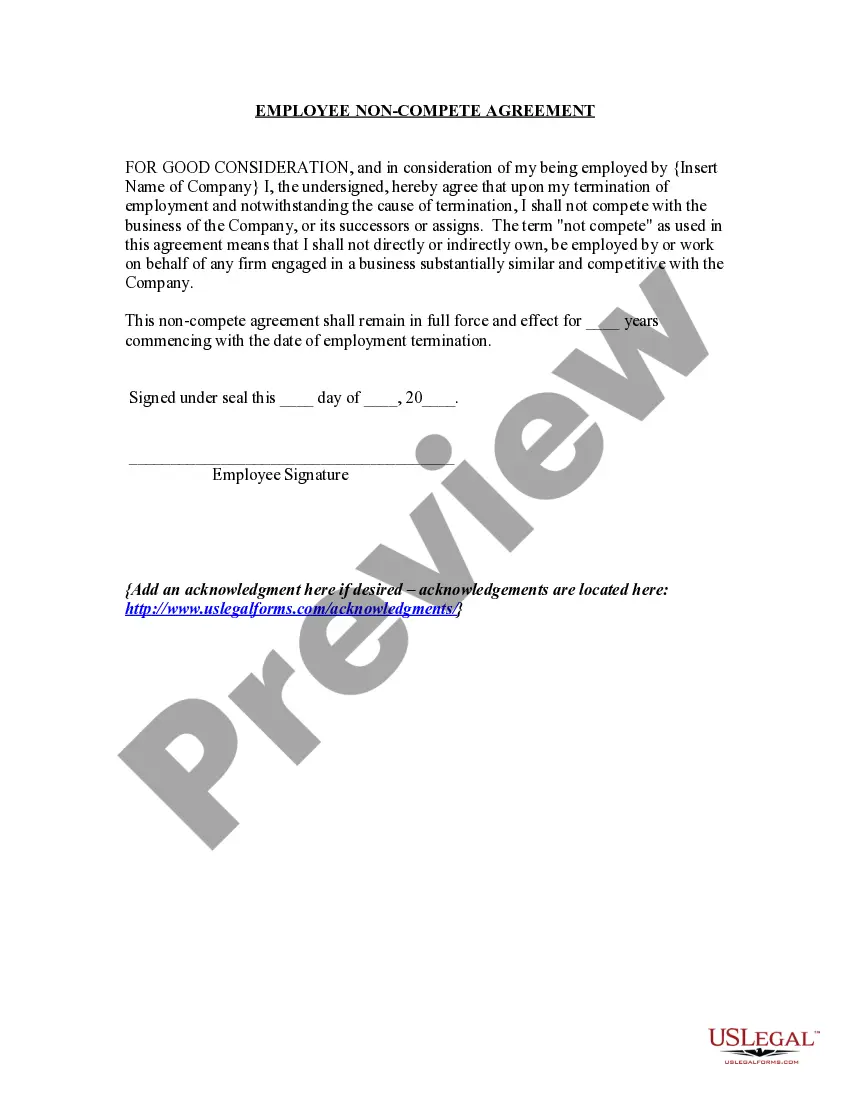
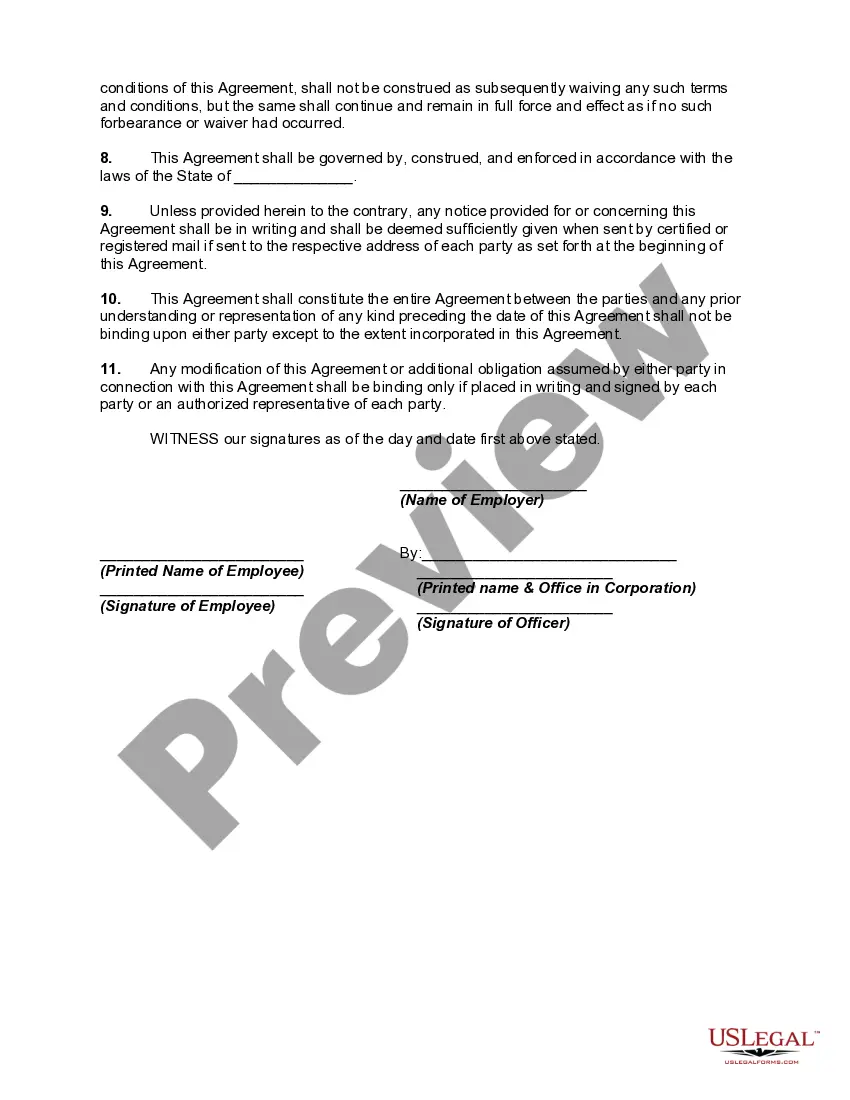
  • Preview General Non-Competition Agreement

How to fill out General Non-Competition Agreement?

You have the capacity to dedicate numerous hours online searching for the authentic document template that meets the federal and state criteria you require.

US Legal Forms offers thousands of authentic forms that are vetted by experts.

You can effortlessly download or create the Illinois General Non-Competition Agreement from our service.

Utilize the Review button if available to browse the document template as well.

  1. If you already possess a US Legal Forms account, you can Log In and click the Download button.
  2. Subsequently, you can complete, modify, print, or sign the Illinois General Non-Competition Agreement.
  3. Every authentic document template you purchase is yours for life.
  4. To obtain another copy of any purchased form, go to the My documents tab and click the respective button.
  5. If you are visiting the US Legal Forms website for the first time, follow the simple instructions provided below.
  6. First, ensure that you have selected the correct document template for the area/town of your choice.
  7. Check the form details to confirm you have chosen the right type.

Form popularity

FAQ

Non-solicitation clauses that are clear, carefully drafted, and suitably retrained in temporal and spatial terms, are often enforceable.

Escaping Nonsolicitation AgreementsDon't sign.Build your book independently.Carve out pre-existing relationships.Require for cause termination as the trigger.Provide for a payoff.Turn clients into friends.Don't treat clients as trade secrets.Invest in your own business.

It is possible to find non-compete loopholes in certain circumstances in order to void a non-compete contract. For instance, if you can prove that you never signed the contract, or if you can demonstrate that the contract is against the public interest, you may be able to void the agreement.

For example, if a non-compete or non-solicitation agreement relies solely on two years of continued employment for consideration, until the employee has worked for the employer for two years after signing the agreement, the employee is free to engage in competitive employment or to solicit customers or employees.

Here are five ways to beat a non-compete agreement.Prove your employer is in breach of contract.Prove there is no legitimate interest to enforce the non-compete agreement.Prove the agreement is not for a reasonable amount of time.Prove that the confidential information you had access to isn't special.More items...

Effective January 1, 2022, the law will prohibit Illinois employers from requiring non-solicitation agreements with employees earning less than $45,000 annually, and will also include similar pre-determined increases for the minimum threshold.

2022 Will Bring Strict Limits on Illinois Non-Compete and Non-Solicitation Agreements. On January 1, 2022, Illinois' amendment to the Illinois Freedom to Work Act (IFWA) will take effect. The amended statute will render unenforceable non-compete agreements with employees earning less than $75,000 annually.

If the court finds the non-compete too restricting, it won't hold up. Too broad or unnecessary: If the employer has created unnecessary restrictions on its employees, the court will not uphold the non-competition clauses.

Codifying into law requirements that were previously set forth in judicial decisions, the Amendment provides that non-compete and non-solicit agreements are illegal and void unless: (1) the employee receives adequate consideration, (2) the covenant is ancillary to a valid employment relationship, (3) the covenant is no

Trusted and secure by over 3 million people of the world’s leading companies

Illinois General Non-Competition Agreement