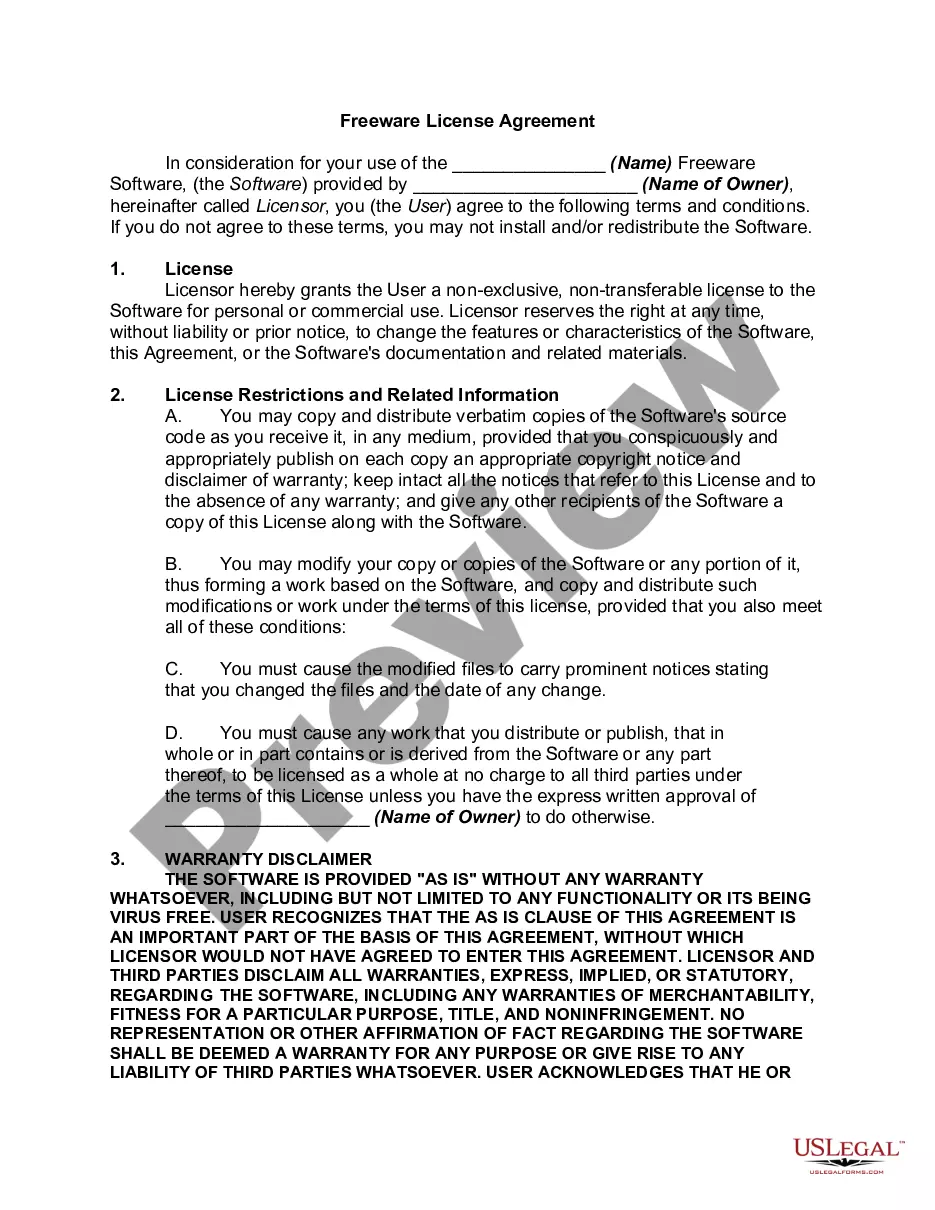
Illinois Freeware License Agreement
Description
Get your form ready online
Our built-in tools help you complete, sign, share, and store your documents in one place.
Make edits, fill in missing information, and update formatting in US Legal Forms—just like you would in MS Word.
Download a copy, print it, send it by email, or mail it via USPS—whatever works best for your next step.
Sign and collect signatures with our SignNow integration. Send to multiple recipients, set reminders, and more. Go Premium to unlock E-Sign.
If this form requires notarization, complete it online through a secure video call—no need to meet a notary in person or wait for an appointment.
We protect your documents and personal data by following strict security and privacy standards.

Make edits, fill in missing information, and update formatting in US Legal Forms—just like you would in MS Word.

Download a copy, print it, send it by email, or mail it via USPS—whatever works best for your next step.

Sign and collect signatures with our SignNow integration. Send to multiple recipients, set reminders, and more. Go Premium to unlock E-Sign.

If this form requires notarization, complete it online through a secure video call—no need to meet a notary in person or wait for an appointment.

We protect your documents and personal data by following strict security and privacy standards.
Looking for another form?




How to fill out Freeware License Agreement?
Finding the appropriate legal document template can be challenging.
Certainly, there is an array of templates available online, but how can you locate the legal form you require.
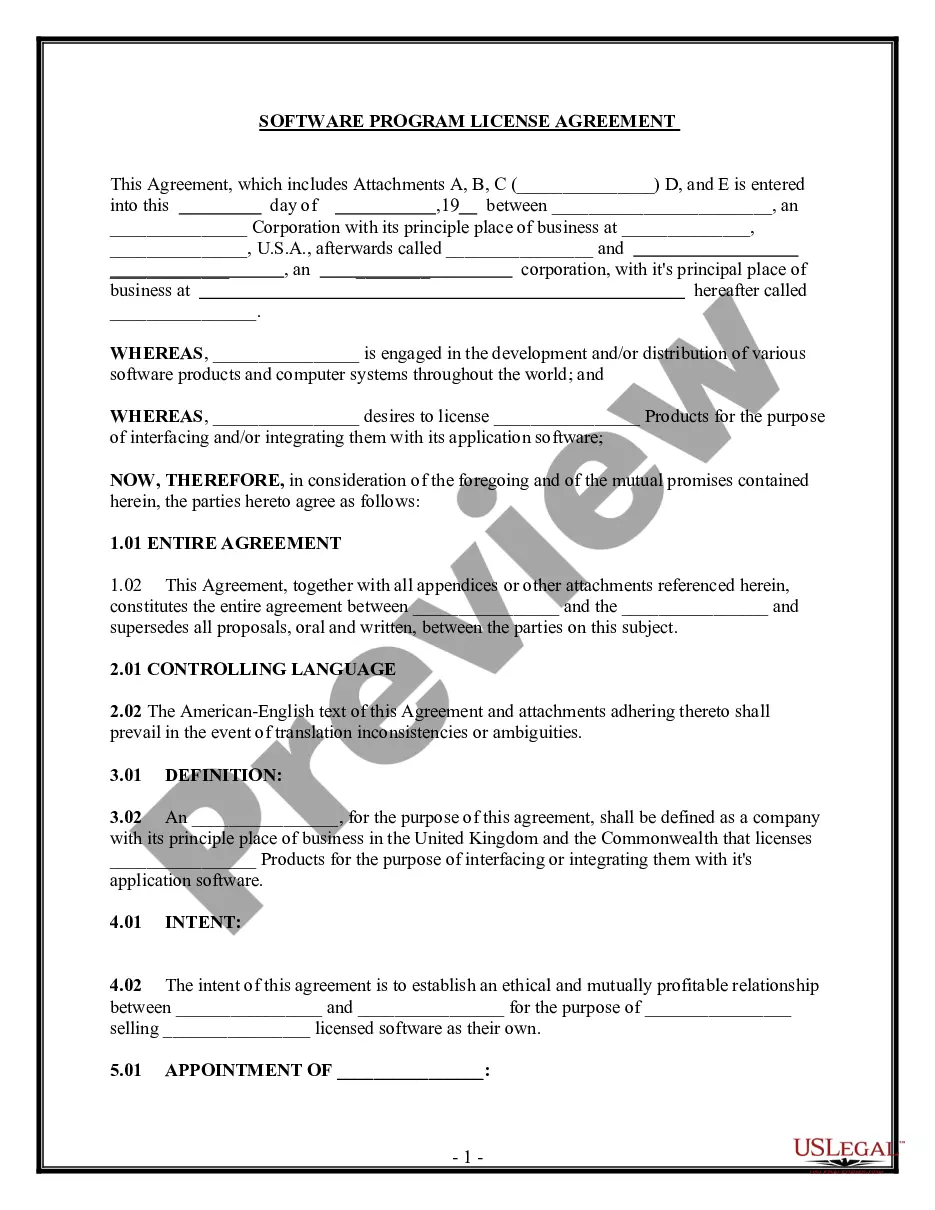
Utilize the US Legal Forms site. This service offers a vast collection of templates, including the Illinois Freeware License Agreement, which can serve both business and personal purposes.
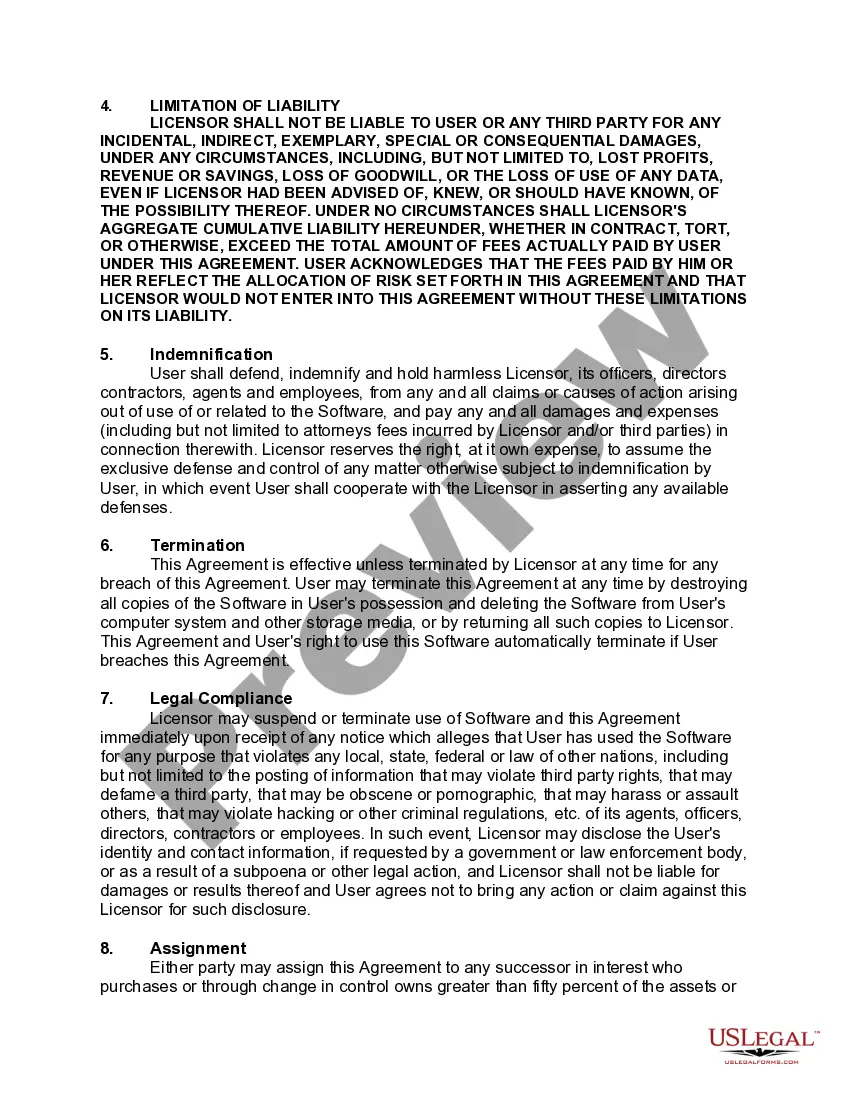
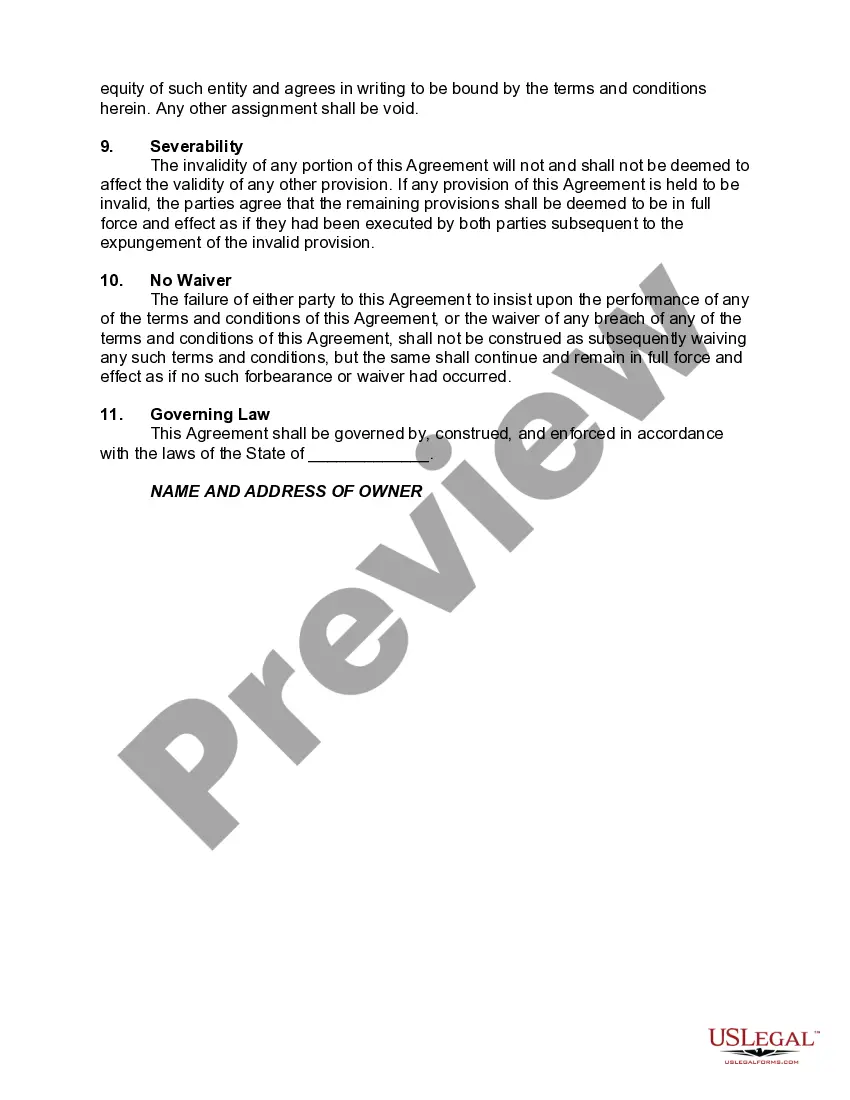
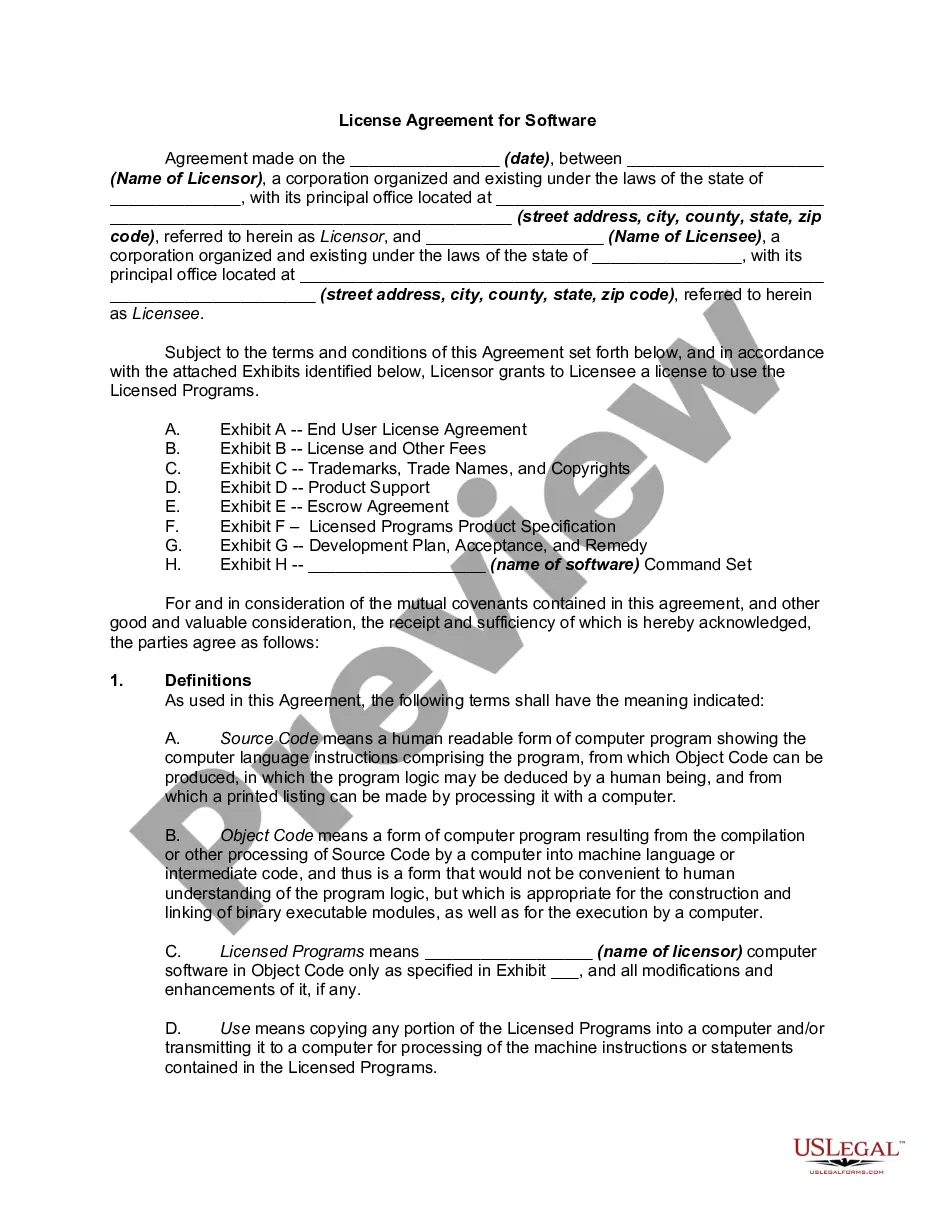
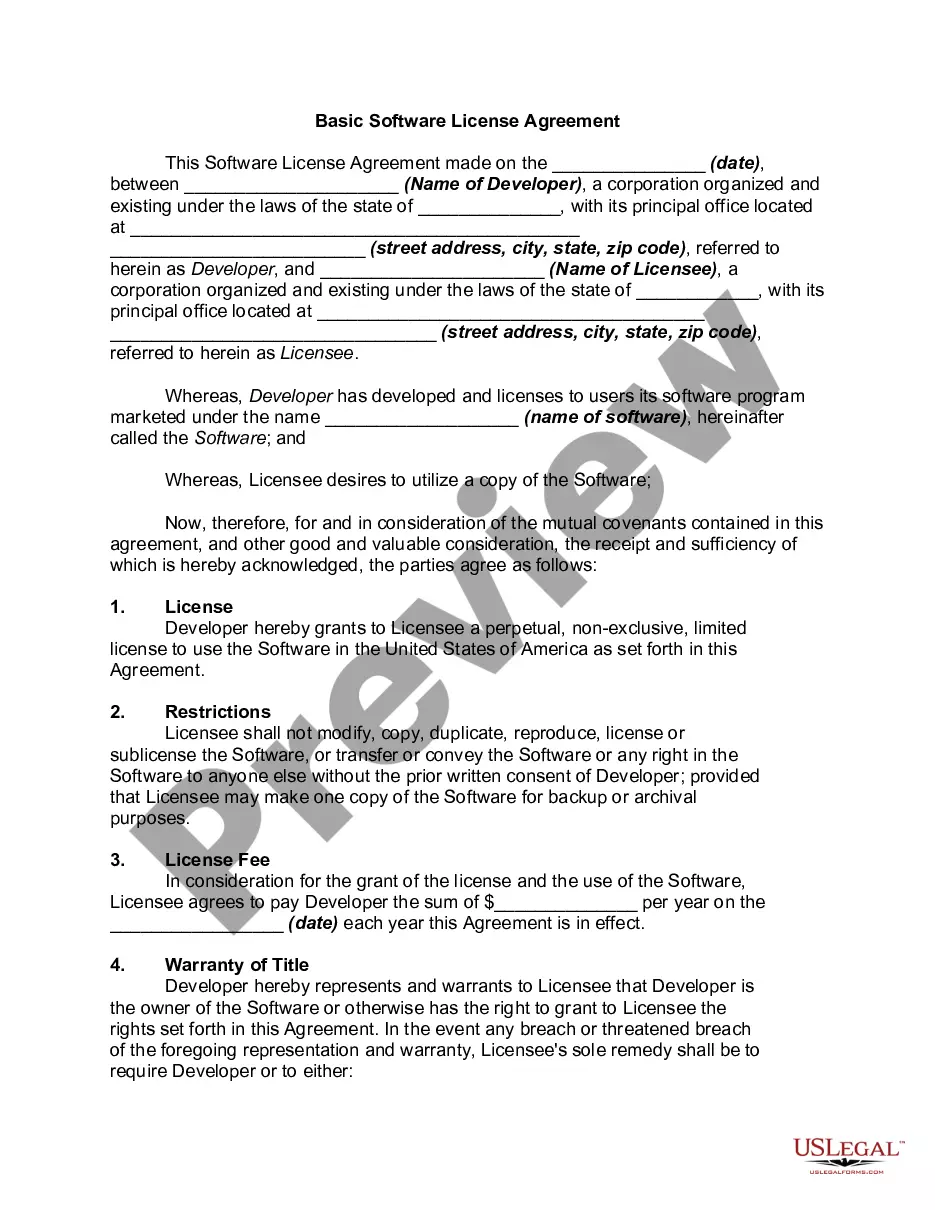
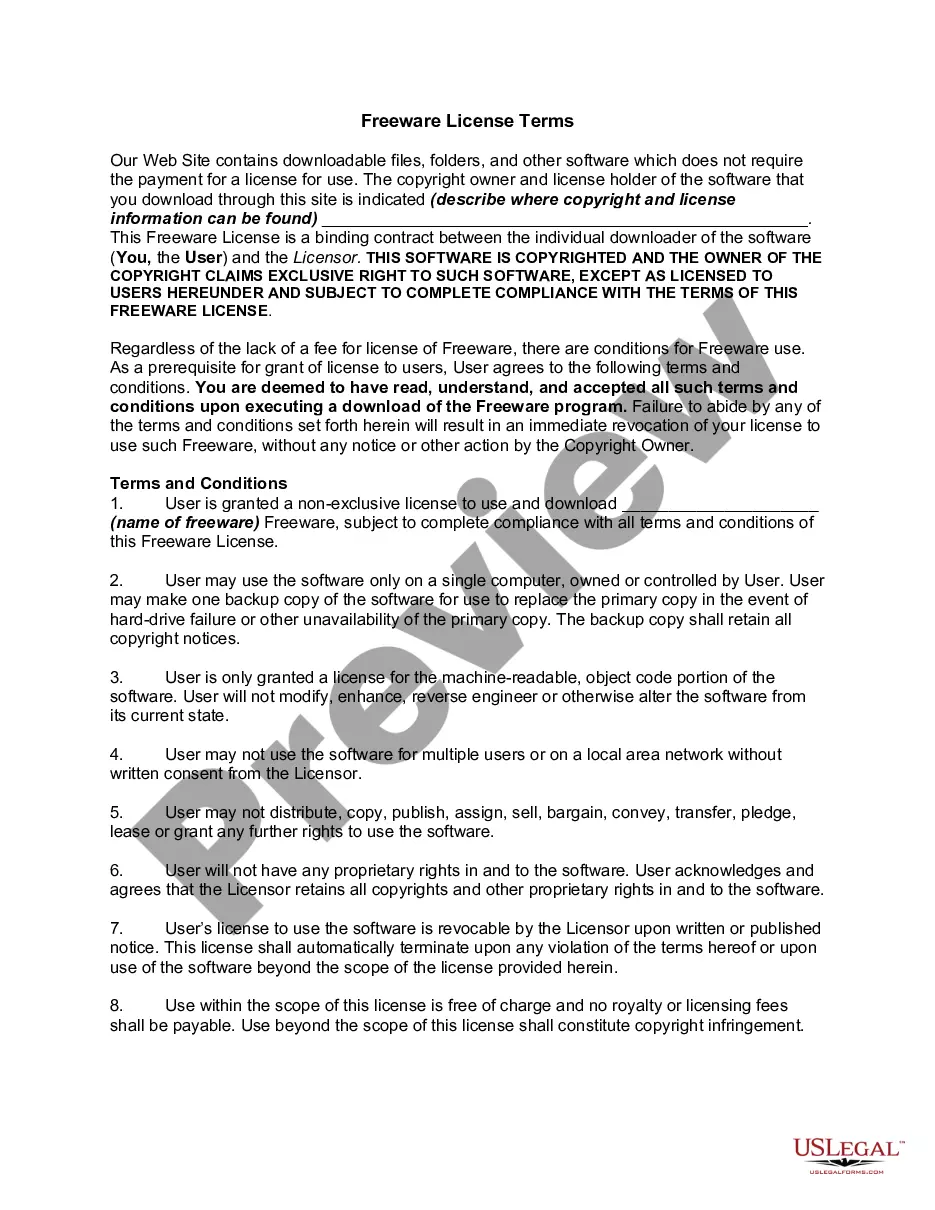
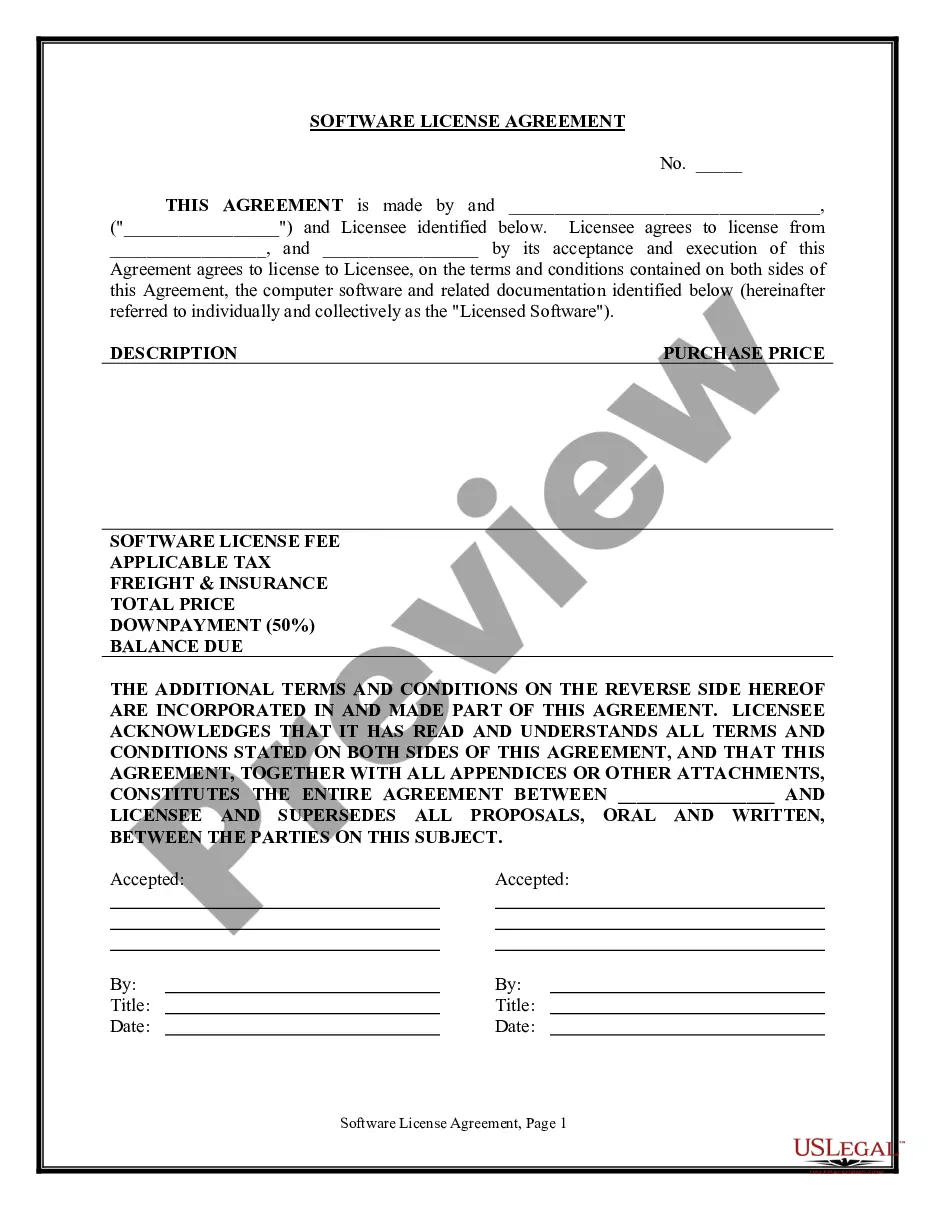
You can review the form using the Preview feature and read the description to confirm it is the appropriate one for you.
- All forms are vetted by experts and comply with state and federal regulations.
- If you are already registered, sign in to your account and click on the Download button to retrieve the Illinois Freeware License Agreement.
- Use your account to browse the legal documents you have previously purchased.
- Navigate to the My documents section of your account for another copy of the document you need.
- If you are a first-time user of US Legal Forms, follow these simple steps.
- First, ensure you have selected the right form for your locality.
Form popularity
FAQ
In Illinois, the taxability of software licenses can depend on the nature of the license. Generally, tangible software products are taxable, while downloadable programs may not be subject to sales tax under certain conditions. Understanding your Illinois Freeware License Agreement can provide clarity on whether your software usage incurs taxes.
An End User License Agreement (EULA) specifically pertains to the use of software, while terms and conditions apply to the use of a service or a website. An Illinois Freeware License Agreement functions as a type of EULA, dictating how the software should be used and any restrictions. Understanding this difference helps you navigate your rights when interacting with various digital products.
A Service Level Agreement (SLA) specifically defines the performance metrics and service quality a provider guarantees, while a general service agreement covers broader terms and responsibilities. If your Illinois Freeware License Agreement includes an SLA, it will detail specific expectations regarding uptime and support. This clarity helps ensure that you receive the level of service you're paying for.
Accepting an end user license agreement (EULA) is essential to legally use the software. With an Illinois Freeware License Agreement, you agree to the terms set forth by the software provider, which often include restrictions and permissions. It's important to read and understand the EULA before acceptance to avoid unexpected obligations.
A software license agreement allows a user to install and use a software program, whereas Software as a Service (SaaS) provides access to software via the internet. With an Illinois Freeware License Agreement, you usually install software on your device, while SaaS requires no local installation and is subscription-based. This understanding helps you choose the right model for your needs.
A license agreement grants permission to use intellectual property, while a service agreement outlines the terms of services provided. In the context of an Illinois Freeware License Agreement, it specifies how the software can be used. Understanding these distinctions is crucial for compliance and usage rights.
The 3 P's of licensing are Property, Permission, and Payment. Property involves the assets that are being licensed, while permission refers to the rights granted to use the property. Payment concerns any fees or royalties required for the use, reflecting the value agreed upon in terms of an Illinois Freeware License Agreement. Understanding these components is crucial for successful licensing.
To draft a licensing agreement, start with a clear title and introduce the parties involved. Outline the rights being granted, specify payment conditions, and include duration and termination clauses. For an effective Illinois Freeware License Agreement, using templates or services like USLegalForms can simplify the drafting process, ensuring all essential components are included.
To make a licensing deal, begin by identifying the assets you want to license and the party you want to work with. Negotiate terms that align with both parties' needs, such as the scope of use and payment structures. Utilizing resources from platforms like USLegalForms can help you create a solid Illinois Freeware License Agreement tailored to your specific situation.
An example of a licensing deal could be a software company allowing a user to access certain features of their program through an Illinois Freeware License Agreement. In this scenario, the user can use the software for specific purposes without incurring costs, while the company retains ownership of the software. Such agreements can foster innovation while respecting intellectual property rights.