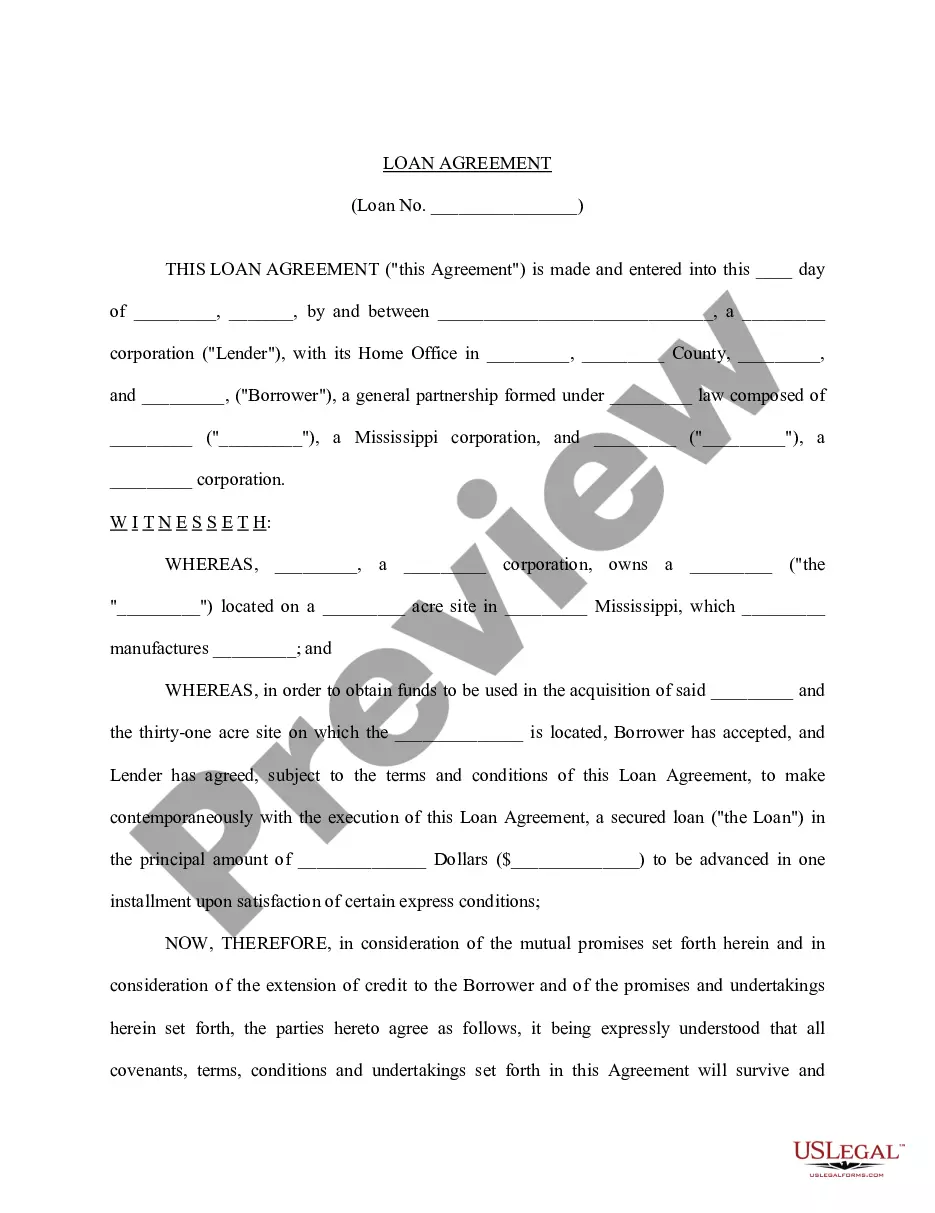
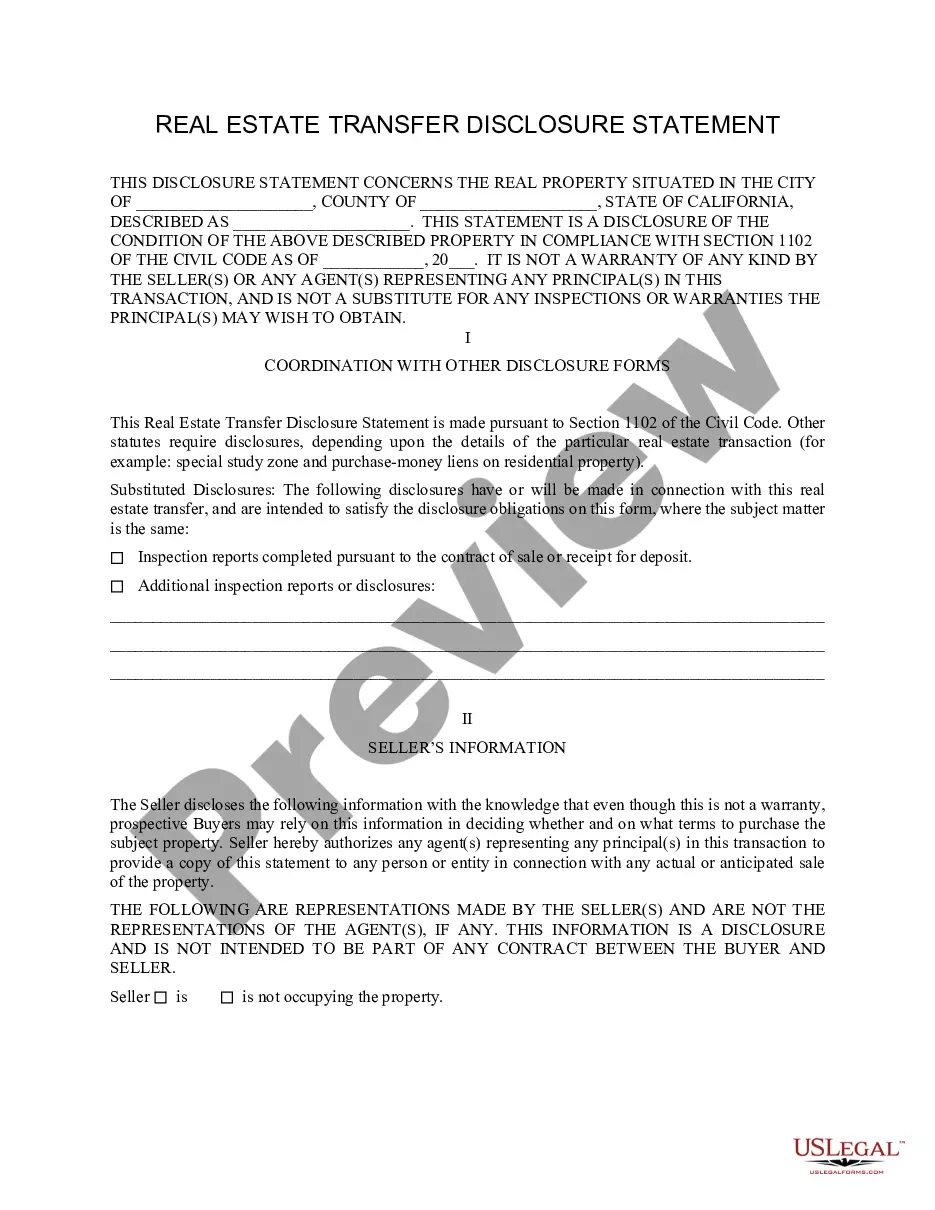
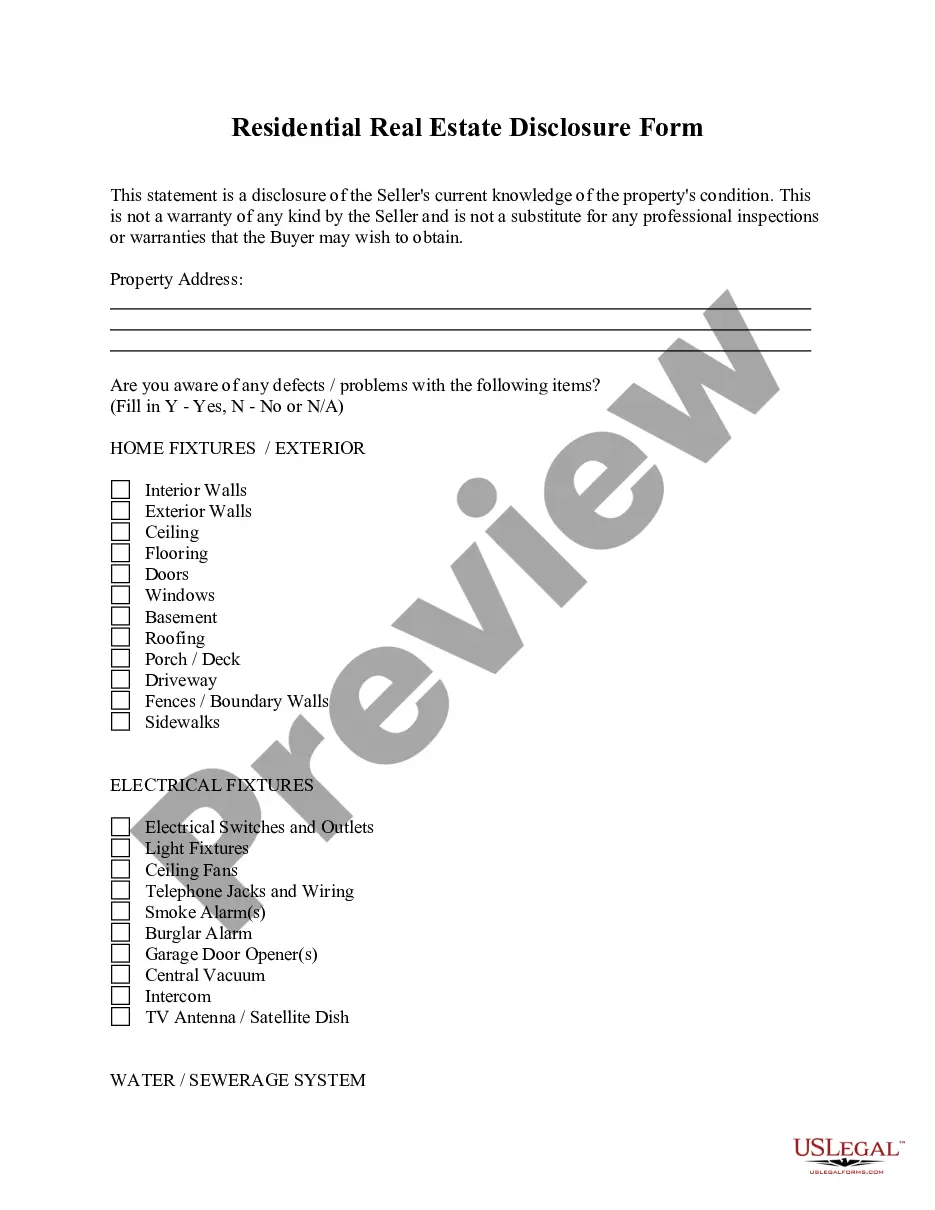
This form is a Seller's Disclosure Statement. This disclosure statement concerns the condition of property described in the document. The seller acknowledges that the information contained in the form is true and accurate.
Illinois Seller's Real Estate Disclosure Statement
487 downloads
Description
Free preview
Get your form ready online
Our built-in tools help you complete, sign, share, and store your documents in one place.
Built-in online Word editor
Make edits, fill in missing information, and update formatting in US Legal Forms—just like you would in MS Word.
Export easily
Download a copy, print it, send it by email, or mail it via USPS—whatever works best for your next step.
E-sign your document
Sign and collect signatures with our SignNow integration. Send to multiple recipients, set reminders, and more. Go Premium to unlock E-Sign.
Notarize online 24/7
If this form requires notarization, complete it online through a secure video call—no need to meet a notary in person or wait for an appointment.
Store your document securely
We protect your documents and personal data by following strict security and privacy standards.

Make edits, fill in missing information, and update formatting in US Legal Forms—just like you would in MS Word.

Download a copy, print it, send it by email, or mail it via USPS—whatever works best for your next step.

Sign and collect signatures with our SignNow integration. Send to multiple recipients, set reminders, and more. Go Premium to unlock E-Sign.

If this form requires notarization, complete it online through a secure video call—no need to meet a notary in person or wait for an appointment.

We protect your documents and personal data by following strict security and privacy standards.
Looking for another form?
How to fill out Seller's Real Estate Disclosure Statement?
You might spend hours online searching for the legal form template that meets the state and federal requirements you need.
US Legal Forms offers thousands of legal documents that are reviewed by experts.
You can easily download or print the Illinois Seller's Real Estate Disclosure Statement from your service.
If available, use the Preview button to view the document template as well.
- If you already have a US Legal Forms account, you may sign in and click the Download button.
- Then, you can complete, modify, print, or sign the Illinois Seller's Real Estate Disclosure Statement.
- Every legal document template you acquire is yours permanently.
- To obtain an additional copy of any purchased form, visit the My documents section and click the respective button.
- If you are using the US Legal Forms website for the first time, follow the simple instructions below.
- First, ensure that you have selected the correct document template for the state/city of your choice.
- Check the form details to make sure you have chosen the right form.
Form popularity
FAQ
The Illinois Real Property Act requires sellers to disclose known defects and problems with a property....Sellers are required to list the following information regarding the condition of the property:Unsafe Conditions.Environmental Healthfulness.Soil Problems.Flood Risk.Insect Infestation.Material Defects.
Here are eight common real estate seller disclosures to be aware of, whether you're on the buyer's side or the seller's side.Death in the Home.Neighborhood Nuisances.Hazards.Homeowners' Association Information.Repairs.Water Damage.Missing Items.Other Possible Disclosures.
Illinois requires mandatory disclosure by most sellers of property conditions under the Residential Real Property Disclosure Act which applies to real property improved with not less than one nor more than four residential dwelling units; units in residential cooperatives; or, condominium units, including the limited
Illinois requires home sellers to disclose in writing information regarding the quality, safety, and healthfulness of both commercial and residential real property....Required DisclosuresUnsafe Conditions.Environmental Healthfulness.Soil Problems.Flood Risk.Insect Infestation.Material Defects.
The Illinois Real Property Act requires sellers to disclose known defects and problems with a property. The law protects buyers from purchasing homes that have serious defects, and it protects sellers from liability for any defects that appear after a sale is completed.
To protect home buyers from encountering property problems and sellers who don't disclose property defects, the state of Illinois passed the Residential Real Property Disclosure Act. It's a law that obligates home sellers to disclose in writing any known material defects about their property.
Realtors are required to ensure the seller completes this form at the time of listing, but if you do not use a Realtor when selling your property, you still are required to complete the disclosure. This law applies to any residential property containing one to four units, including condos and manufactured homes.
The State Transfer Disclosure is required for all home sales in California. The transfer disclosure statement (TDS) evaluates the condition of a property. Every residential seller must complete the TDS document. It will let the buyer know about major defects at the property.
Types of Disclosures Illinois Home Sellers Must Make This could include things like past flooding and flood risk, unsafe conditions, municipal code violations, environmental issues, boundary line disputes, and defects in specified structures, components, and systems.