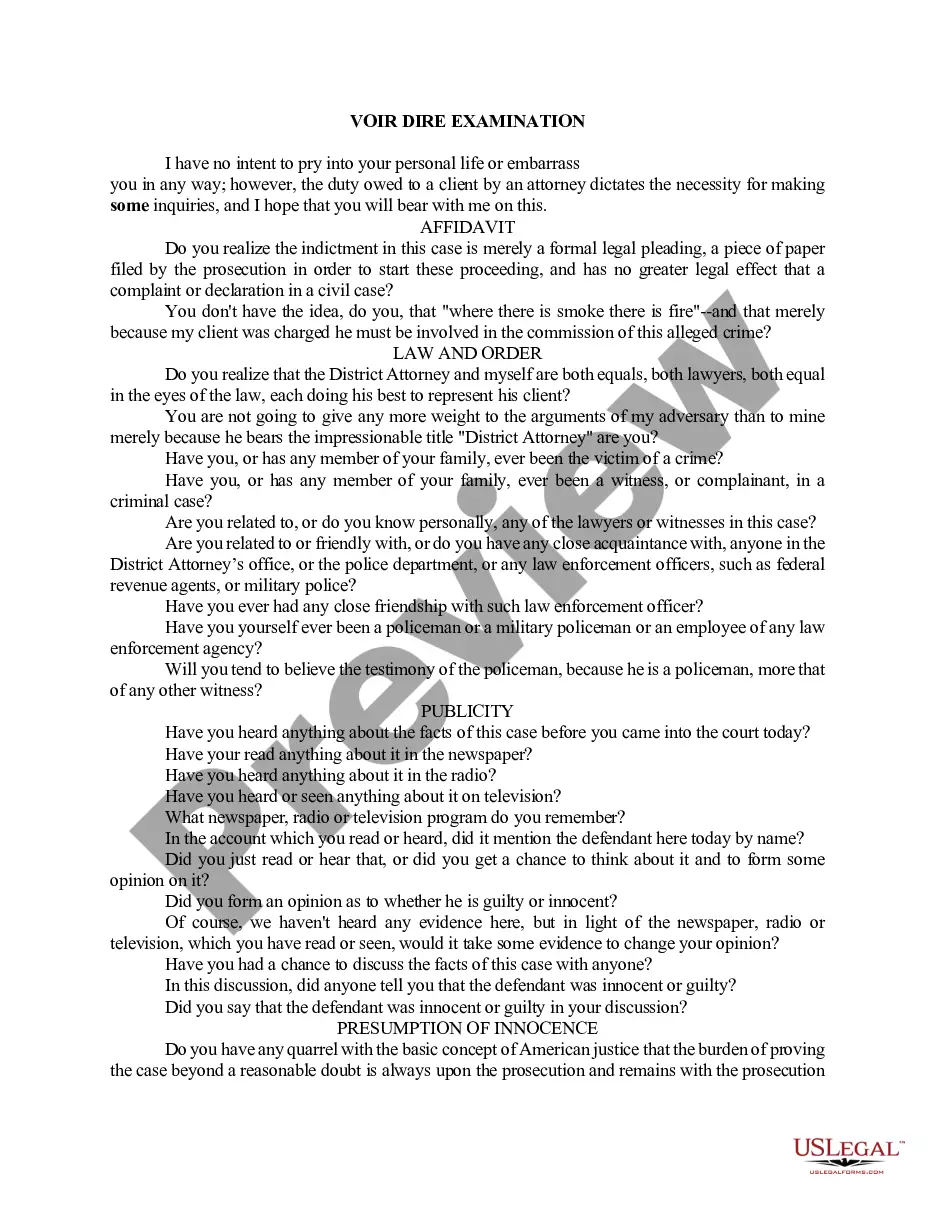
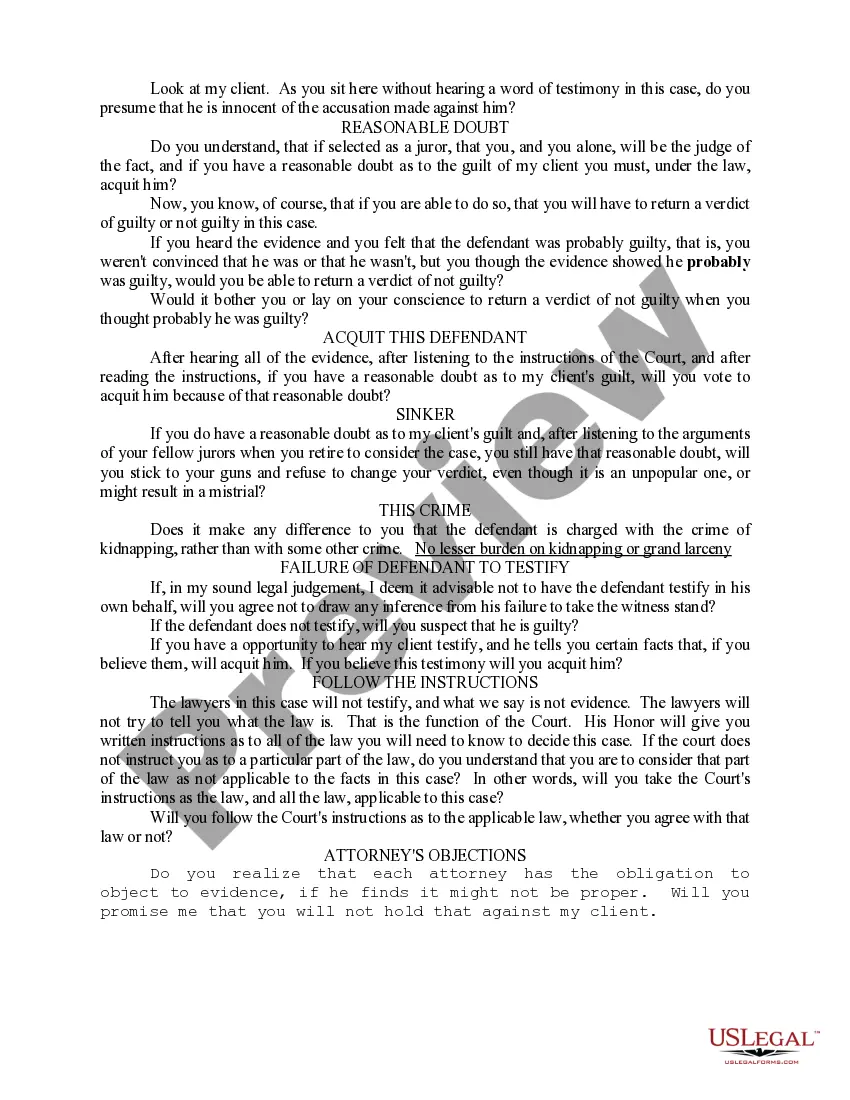
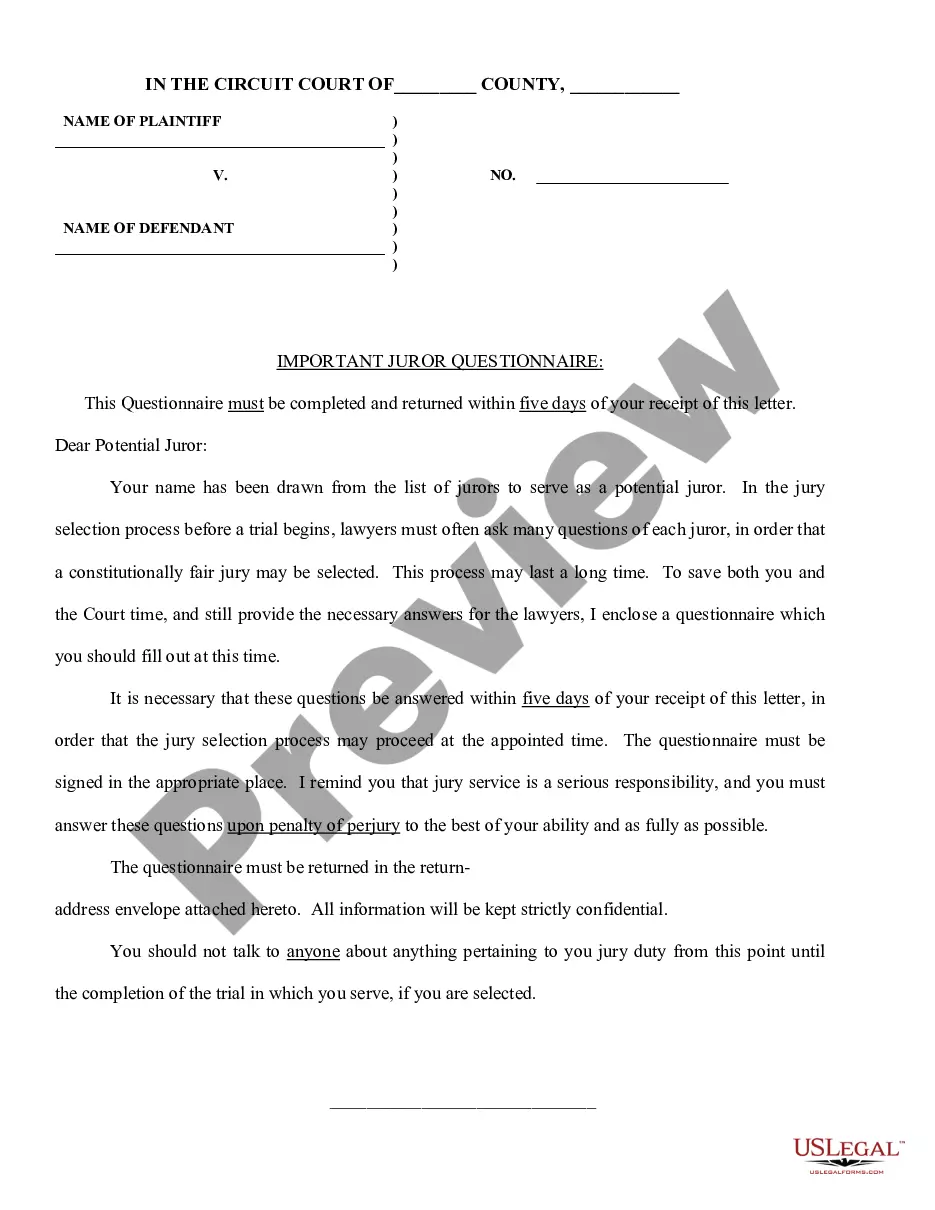
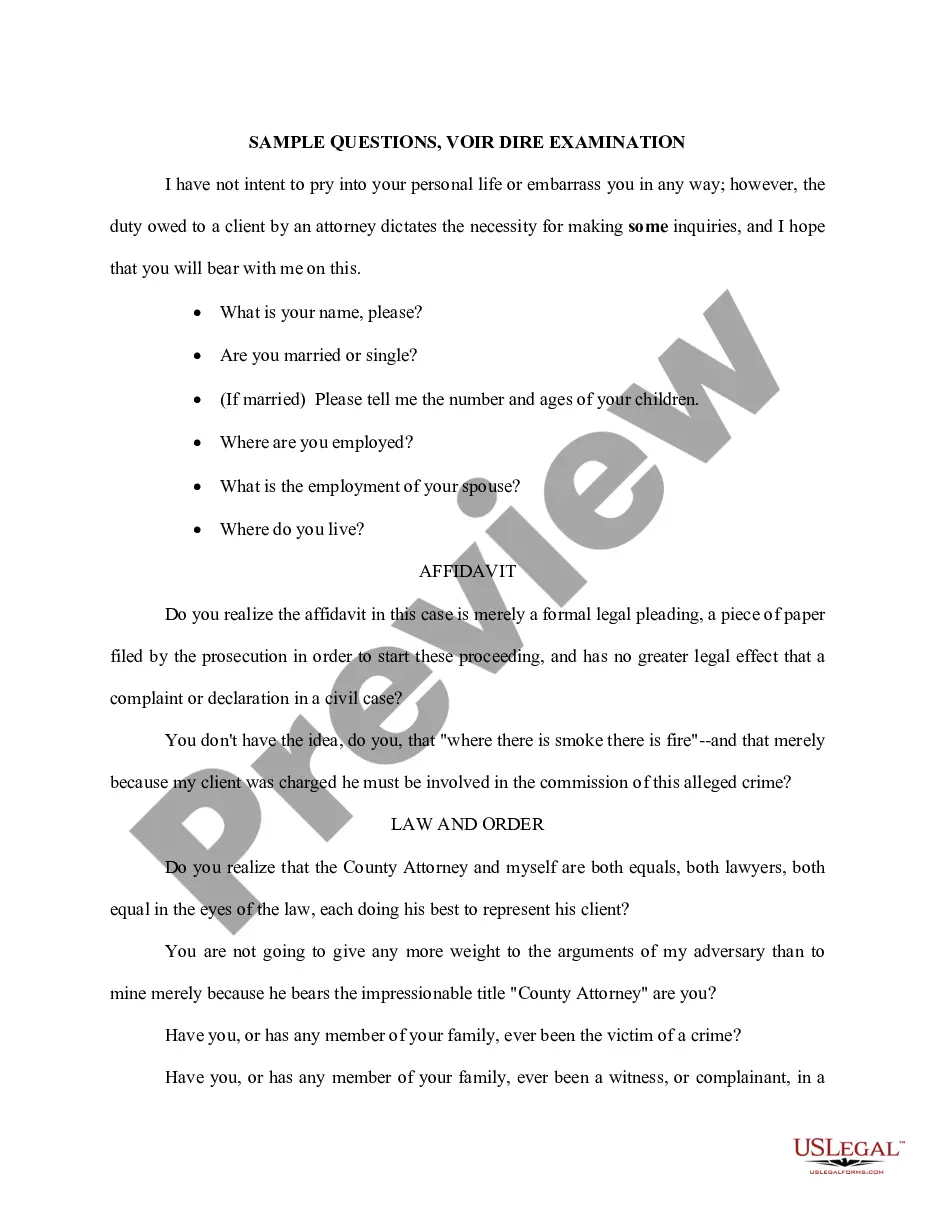
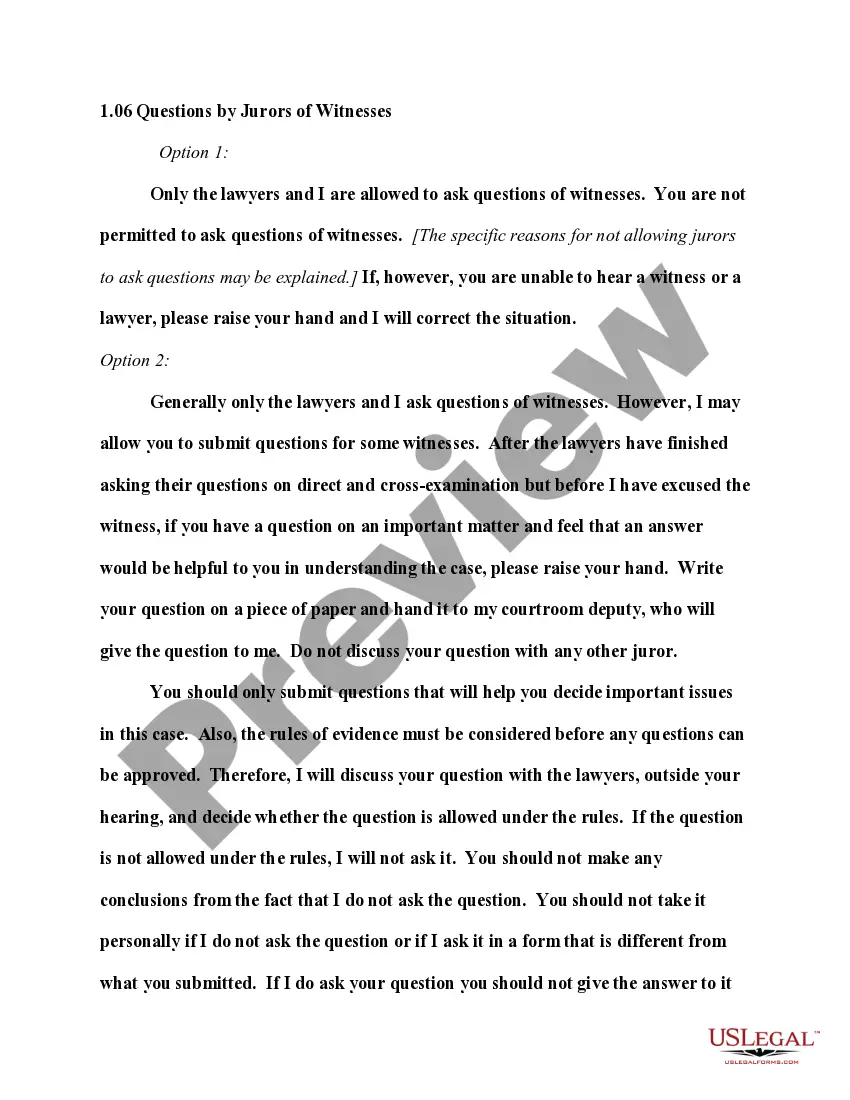
Illinois Voir Dire Examination
Description
Get your form ready online
Our built-in tools help you complete, sign, share, and store your documents in one place.
Make edits, fill in missing information, and update formatting in US Legal Forms—just like you would in MS Word.
Download a copy, print it, send it by email, or mail it via USPS—whatever works best for your next step.
Sign and collect signatures with our SignNow integration. Send to multiple recipients, set reminders, and more. Go Premium to unlock E-Sign.
If this form requires notarization, complete it online through a secure video call—no need to meet a notary in person or wait for an appointment.
We protect your documents and personal data by following strict security and privacy standards.

Make edits, fill in missing information, and update formatting in US Legal Forms—just like you would in MS Word.

Download a copy, print it, send it by email, or mail it via USPS—whatever works best for your next step.

Sign and collect signatures with our SignNow integration. Send to multiple recipients, set reminders, and more. Go Premium to unlock E-Sign.

If this form requires notarization, complete it online through a secure video call—no need to meet a notary in person or wait for an appointment.

We protect your documents and personal data by following strict security and privacy standards.
Looking for another form?



How to fill out Voir Dire Examination?
If you need to obtain, obtain, or print out valid document templates, utilize US Legal Forms, the premier selection of valid forms, which are available online.
Employ the site’s straightforward and user-friendly search feature to locate the documents you require. Various templates for business and personal purposes are organized by categories and states, or keywords.
Use US Legal Forms to find the Illinois Voir Dire Examination with just a few clicks.
Every legal document template you purchase is yours indefinitely. You will have access to every form you saved in your account. Select the My documents section and choose a form to print or download again.
Be proactive and download, and print the Illinois Voir Dire Examination with US Legal Forms. There are numerous professional and state-specific forms you can utilize for your personal or business needs.
- If you are already a US Legal Forms user, Log In to your account and click the Download option to access the Illinois Voir Dire Examination.
- You can also retrieve forms you previously saved from the My documents section of your account.
- If you are using US Legal Forms for the first time, adhere to the following steps.
- Step 1. Ensure you have selected the form for the correct region/state.
- Step 2. Utilize the Review option to examine the form’s content. Don’t forget to read the description.
- Step 3. If you are not satisfied with the form, use the Search field at the top of the screen to find alternative versions of the legal form template.
- Step 4. Once you have identified the form you need, click the Purchase now option. Choose the pricing plan you prefer and enter your details to register for the account.
- Step 5. Complete the transaction. You can use your Visa or MasterCard or PayPal account to finalize the payment.
- Step 6. Select the format of the legal form and download it to your device.
- Step 7. Complete, modify, and print or sign the Illinois Voir Dire Examination.
Form popularity
FAQ
Rule 431 - Voir Dire Examination (a) The court shall conduct voir dire examination of prospective jurors by putting to them questions it thinks appropriate, touching upon their qualifications to serve as jurors in the case at trial.
The Importance of Voir Dire For both the defense and prosecution, voir dire constitutes a very important part of a jury trial. Effective voir dire can work to identify jurors who can be fair and impartial, rather than unfair and biased regarding a particular party or the entire criminal justice system.
Each voir dire begins with questions about the jurors' background and case-related experiences, and builds toward more sensitive questions about jurors' attitudes toward your client and the key issues in your case.
French for "to speak the truth." The process through which potential jurors from the venire are questioned by either the judge or a lawyer to determine their suitability for jury service. Also the preliminary questioning of witnesses (especially experts) to determine their competence to testify.
French for "to speak the truth." The process through which potential jurors from the venire are questioned by either the judge or a lawyer to determine their suitability for jury service. Also the preliminary questioning of witnesses (especially experts) to determine their competence to testify.
The judge and the attorneys ask jurors questions to determine if the jurors are free of bias (prejudice) or whether there is any other reason why they cannot be fair and impartial; this process is called voir dire. It is important to ask questions if you do not understand a question.