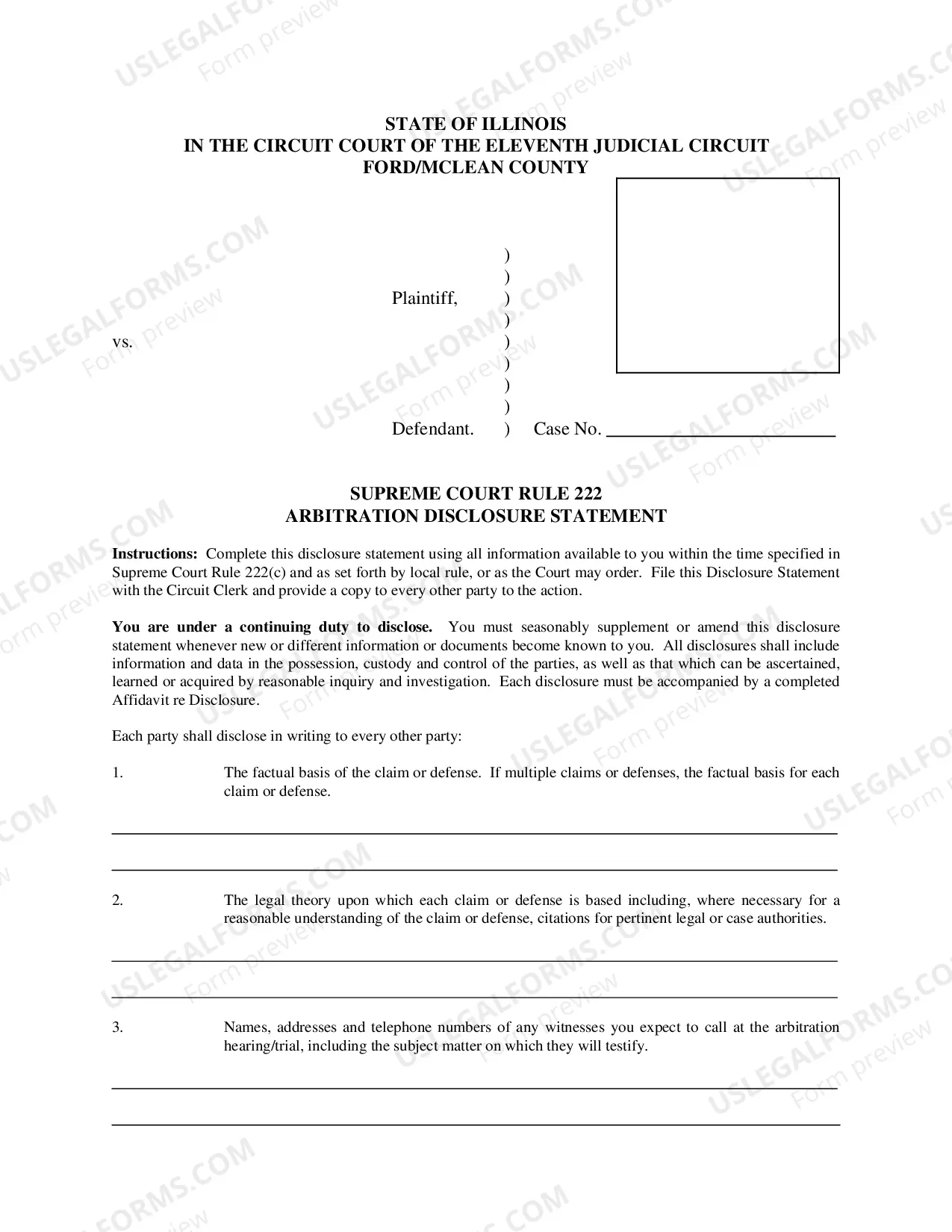
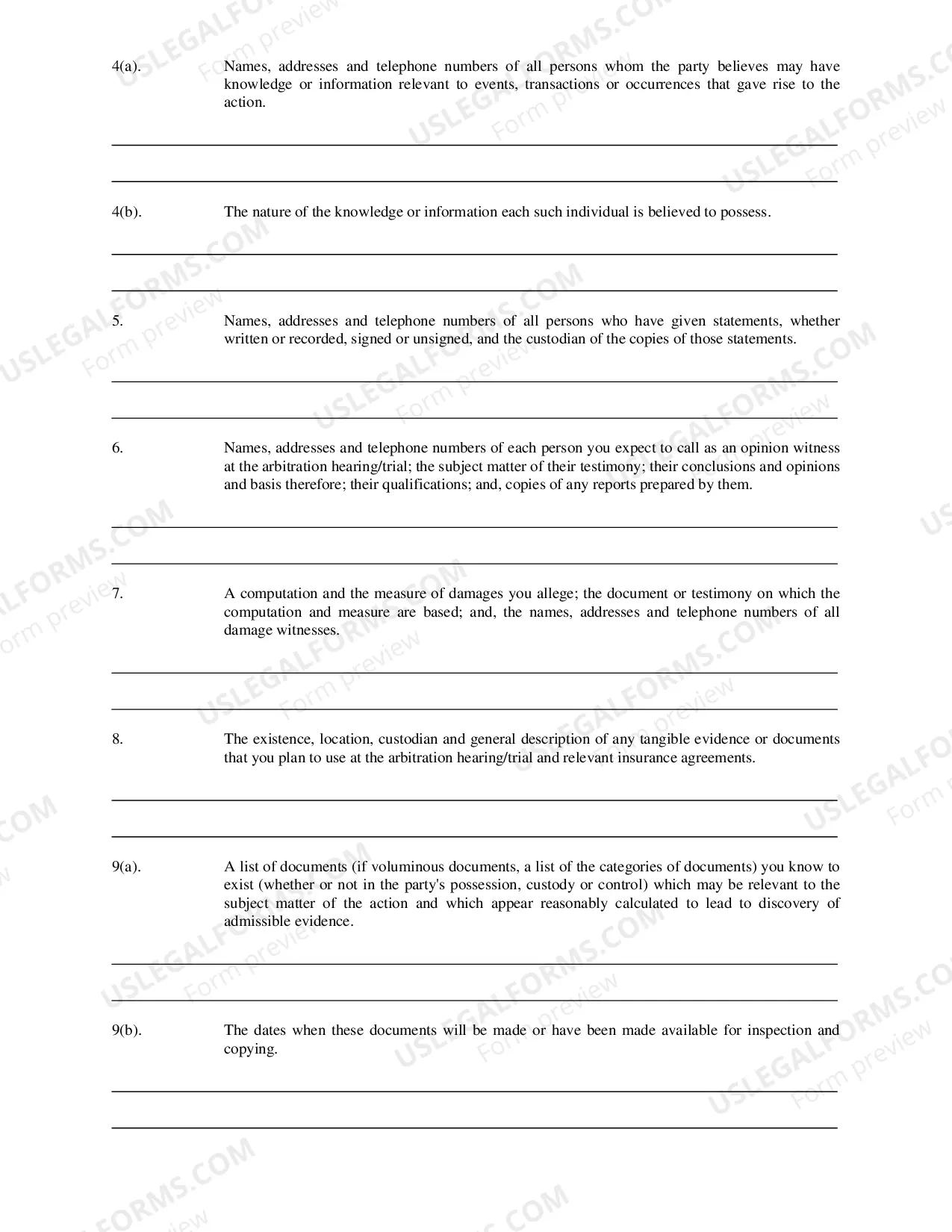
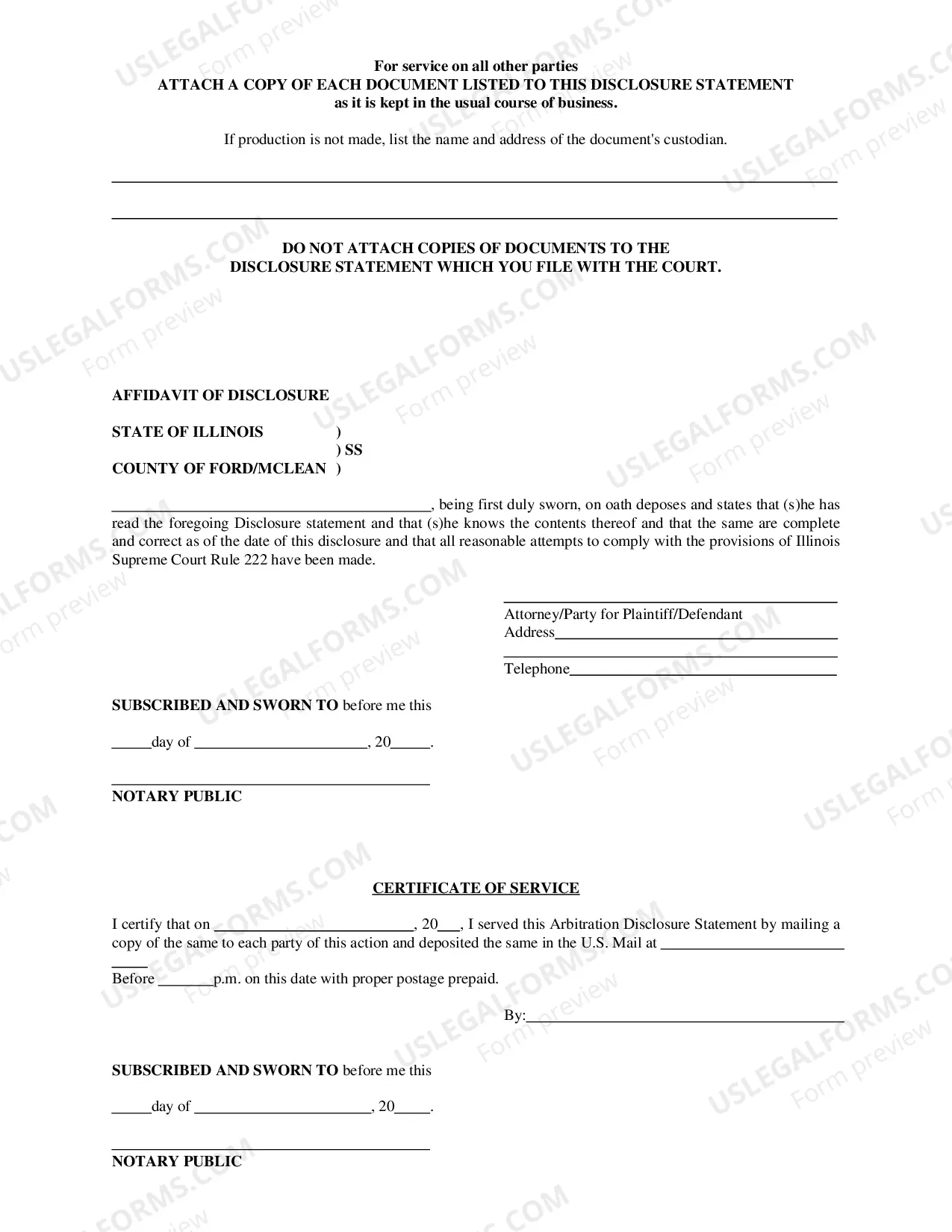
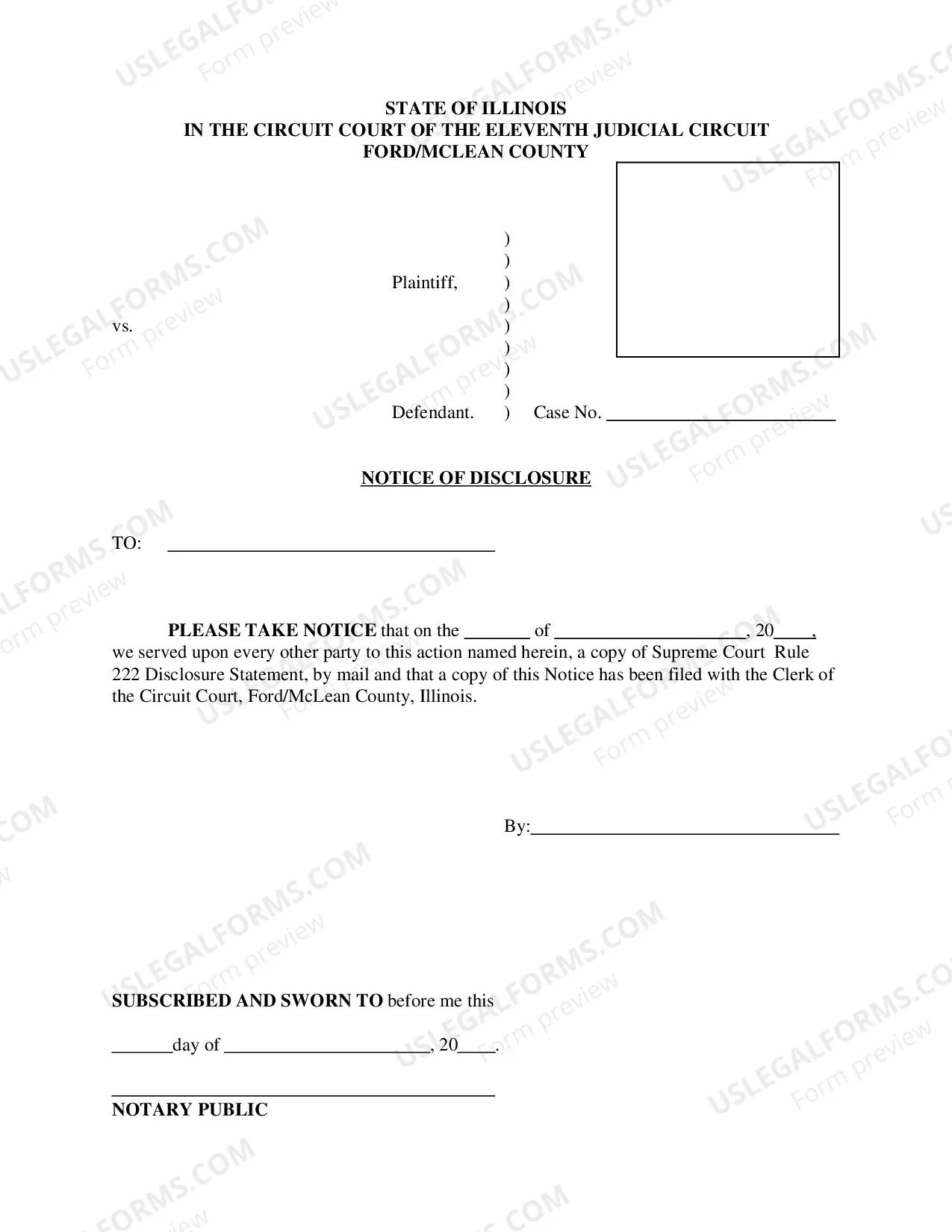
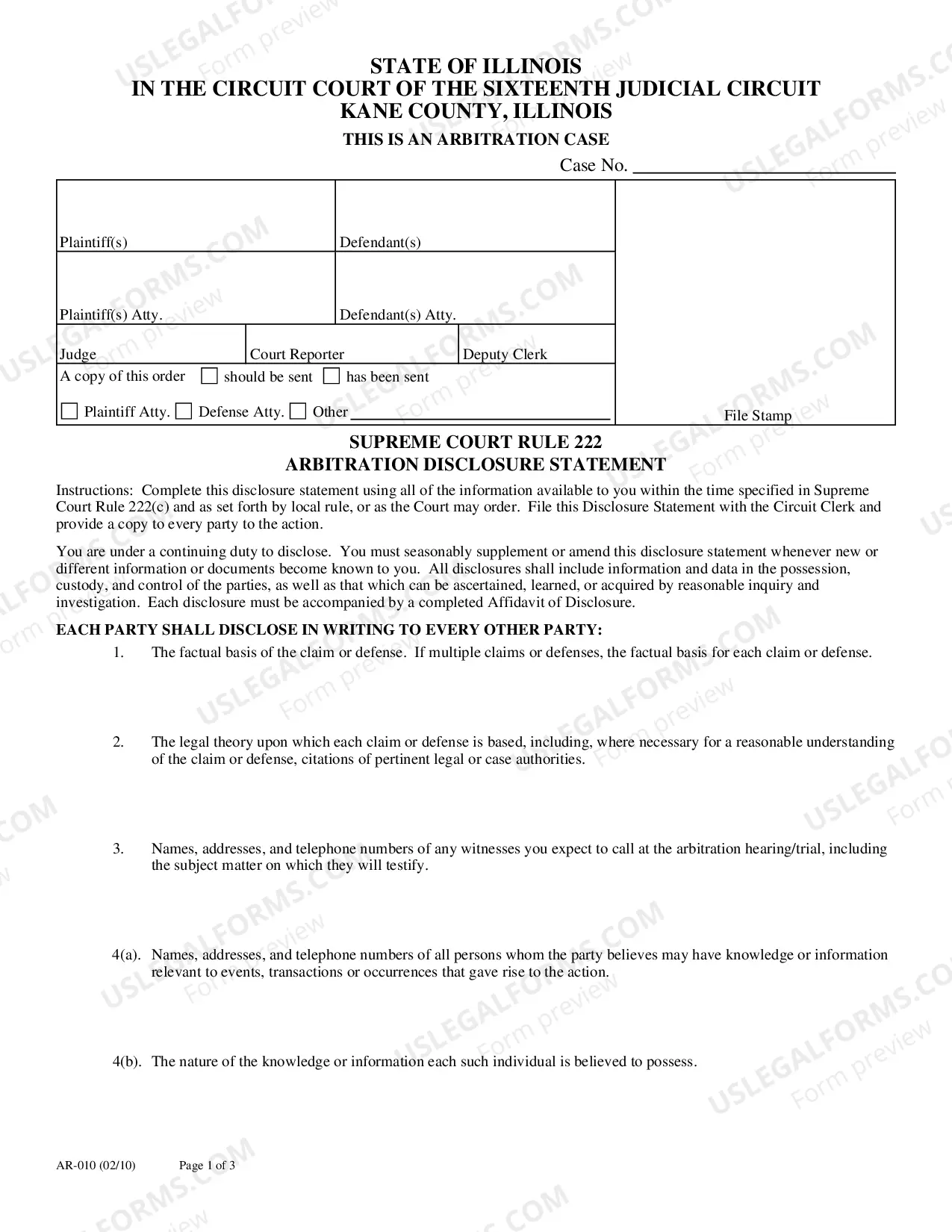
The Illinois Supreme Court Rule 222 arbitration Disclosure Statement is a document that outlines the process and procedures for arbitration proceedings in the state of Illinois. It is designed to provide parties with information about the arbitration process and their rights, help them understand the role of the arbitrator, and inform them of the remedies available to them in the event of a dispute. The Rule 222 Disclosure Statement applies to all arbitration conducted under the Arbitration Act of Illinois. The Illinois Supreme Court Rule 222 Disclosure Statement consists of two parts. The first part provides information about the arbitration process and the parties' rights, and the second part outlines the remedies available to the parties in the event of a dispute. The Rule 222 Disclosure Statement must be provided to the parties before an arbitration proceeding begins. It must be signed and dated by both parties and contain the name of the arbitrator and any witnesses, as well as the date, time, and place of the hearing. Additionally, the Disclosure Statement must contain a statement confirming that the parties have read the document and understand its contents. There are two types of Illinois Supreme Court Rule 222 Disclosure Statements: the Standard Rule 222 Disclosure Statement and the Rule 222(h) Disclosure Statement. The Standard Rule 222 Disclosure Statement outlines the process and procedures for all arbitration conducted under the Arbitration Act of Illinois, while the Rule 222(h) Disclosure Statement is only applicable to arbitration governed by the Consumer Fraud and Deceptive Business Practices Act.
Illinois Supreme Court Rule 222 arbitration Disclosure Statement
Description
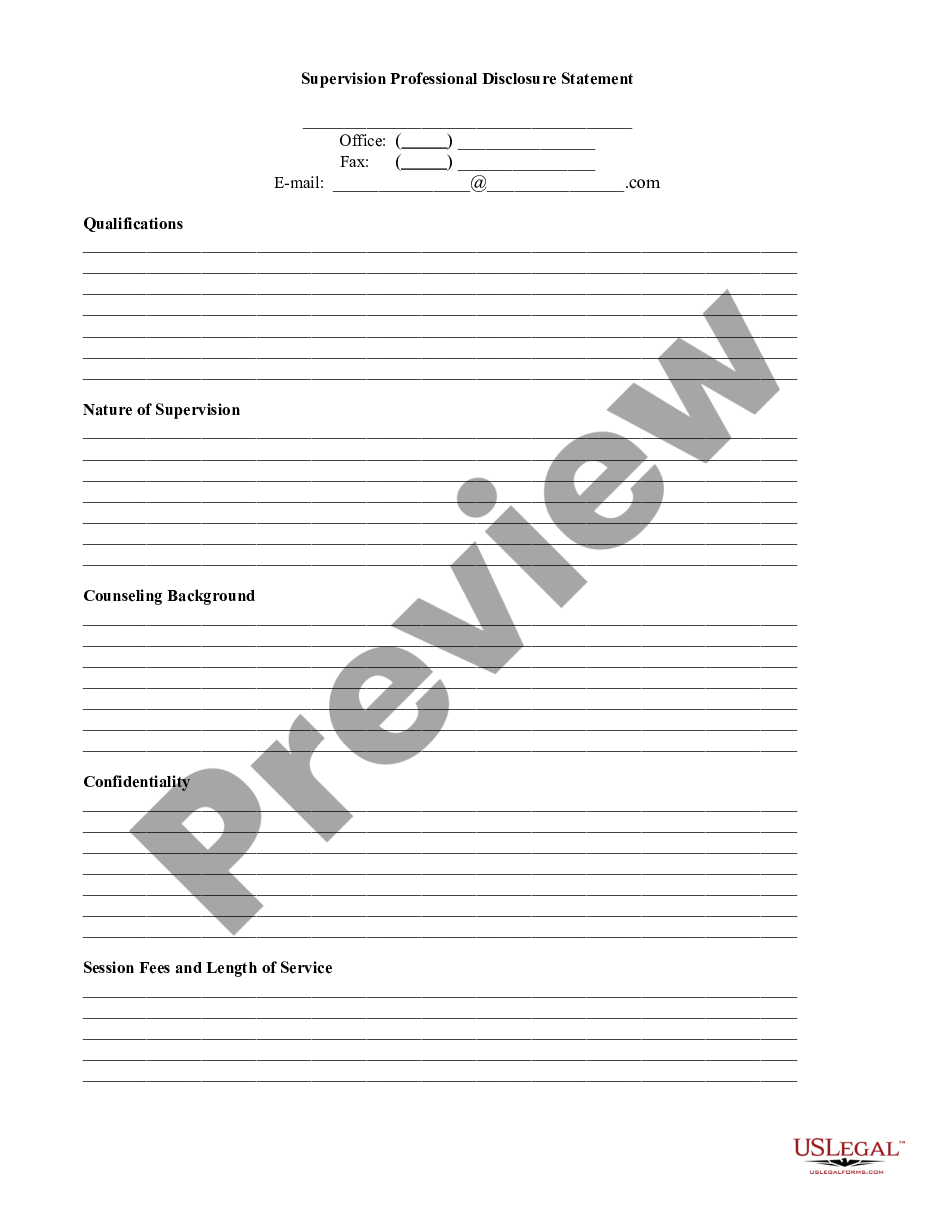
Get your form ready online
Our built-in tools help you complete, sign, share, and store your documents in one place.
Make edits, fill in missing information, and update formatting in US Legal Forms—just like you would in MS Word.
Download a copy, print it, send it by email, or mail it via USPS—whatever works best for your next step.
Sign and collect signatures with our SignNow integration. Send to multiple recipients, set reminders, and more. Go Premium to unlock E-Sign.
If this form requires notarization, complete it online through a secure video call—no need to meet a notary in person or wait for an appointment.
We protect your documents and personal data by following strict security and privacy standards.

Make edits, fill in missing information, and update formatting in US Legal Forms—just like you would in MS Word.

Download a copy, print it, send it by email, or mail it via USPS—whatever works best for your next step.

Sign and collect signatures with our SignNow integration. Send to multiple recipients, set reminders, and more. Go Premium to unlock E-Sign.

If this form requires notarization, complete it online through a secure video call—no need to meet a notary in person or wait for an appointment.

We protect your documents and personal data by following strict security and privacy standards.
Looking for another form?
How to fill out Illinois Supreme Court Rule 222 Arbitration Disclosure Statement?
Finalizing formal documents can be quite a hassle unless you utilize ready-to-use fillable forms.
With the US Legal Forms online repository of official documents, you can trust the forms you receive, as they all comply with both federal and state regulations and are verified by our experts.
Here’s a brief guide for you: Document compliance verification. You need to thoroughly check the details of the form you wish to obtain and ensure it meets your requirements and adheres to your state’s legal norms. Previewing your form and perusing its overview will assist you in this process.
- Acquiring your Illinois Supreme Court Rule 222 arbitration Disclosure Statement from our platform is as straightforward as 1-2-3.
- Previously registered members with an active subscription just need to Log In and click the Download button after they find the correct template.
- If necessary, users can also select the same document from the My documents section of their account.
- Additionally, even if you're new to our service, signing up with a valid subscription will only take a couple of minutes.
Form popularity
FAQ
Rule 304 in Illinois allows for an appeal to be filed before a final judgment is made on all claims in a case. This rule is particularly important in situations where immediate review might prevent irreparable harm. Understanding Rule 304 is critical, especially when dealing with matters encapsulated in the Illinois Supreme Court Rule 222 arbitration Disclosure Statement. For detailed insights and templates relevant to these procedures, uslegalforms is a helpful resource.
Rule 90 C in Illinois relates to the procedures for submitting a motion to reconsider, allowing parties to address errors in a ruling. This rule helps ensure that all relevant matters are reconsidered before a final decision is made. Knowledge of this rule is vital, particularly in cases involving the Illinois Supreme Court Rule 222 arbitration Disclosure Statement, where proper procedure can influence outcomes. To navigate these complexities, uslegalforms offers valuable templates and guides.
Rule 922 in Illinois deals with the disclosure of financial documents during court proceedings. This rule mandates that parties provide necessary documentation to ensure transparency in financial matters, especially in divorce cases. Compliance with Rule 922 helps foster fair negotiations and can significantly influence outcomes. It is essential to align this disclosure with the Illinois Supreme Court Rule 222 arbitration Disclosure Statement when relevant.
The 60-day rule for discovery in Illinois obligates parties to disclose certain information within 60 days of a request. This process is crucial in preparing for trial or settlement discussions. Timely and complete disclosures can lead to more efficient case management and resolution. Adhering to this rule is especially important when drafting your Illinois Supreme Court Rule 222 arbitration Disclosure Statement.
Rule 224 in Illinois allows a party to seek additional information in a civil case before filing a suit. This rule seeks to clarify the facts necessary to establish the basis for the lawsuit. By utilizing this rule, parties can ensure they have sufficient evidence for their claims. Understanding this aspect can be crucial when preparing your Illinois Supreme Court Rule 222 arbitration Disclosure Statement.
In representing a client, a lawyer shall not communicate about the subject of the representation with a person the lawyer knows to be represented by another lawyer in the matter, unless the lawyer has the consent of the other lawyer or is authorized to do so by law or a court order.
Rule 404(b) renders inadmissible evidence of other crimes, wrongs, or acts to prove the character of a person in order to show action in conformity therewith, but allows proof of other crimes, wrongs, or acts where they are relevant under statutes related to certain criminal offenses, as well as for other purposes,
Illinois Supreme Court Rule 282(b) reads in full: ?No corporation may appear as claimant, assignee, subrogee or counterclaimant in a small claims proceeding, unless represented by counsel.
Rule 1.6 - Confidentiality of Information (a) A lawyer shall not reveal information relating to the representation of a client unless the client gives informed consent, the disclosure is impliedly authorized in order to carry out the representation, or the disclosure is permitted by paragraph (b) or required by
(b)Informal Hearings in Small Claims Cases. In any small claims case, the court may, on its own motion or on motion of any party, adjudicate the dispute at an informal hearing. At the informal hearing all relevant evidence shall be admissible and the court may relax the rules of procedure and the rules of evidence.