Illinois Exclusive Easement
What this document covers
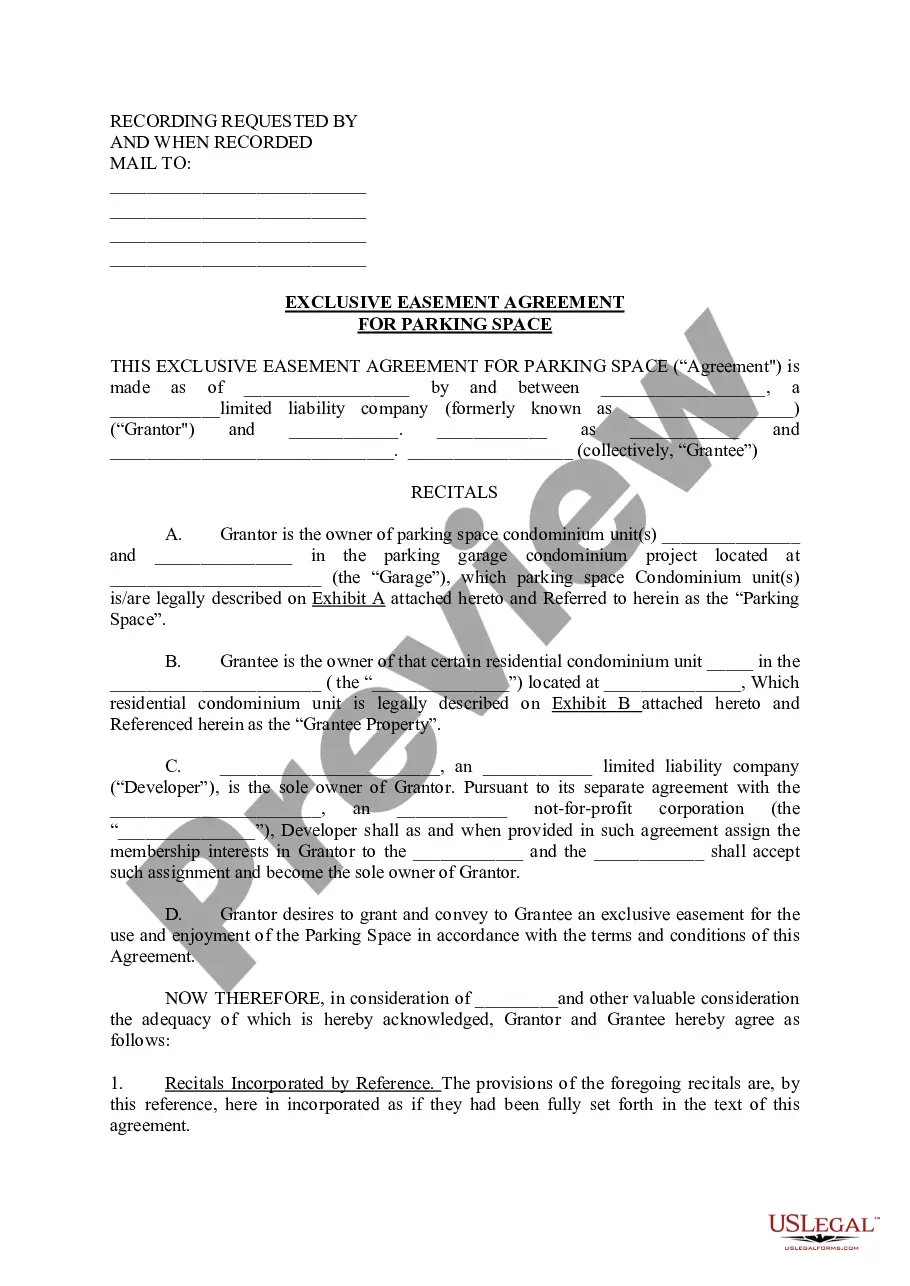
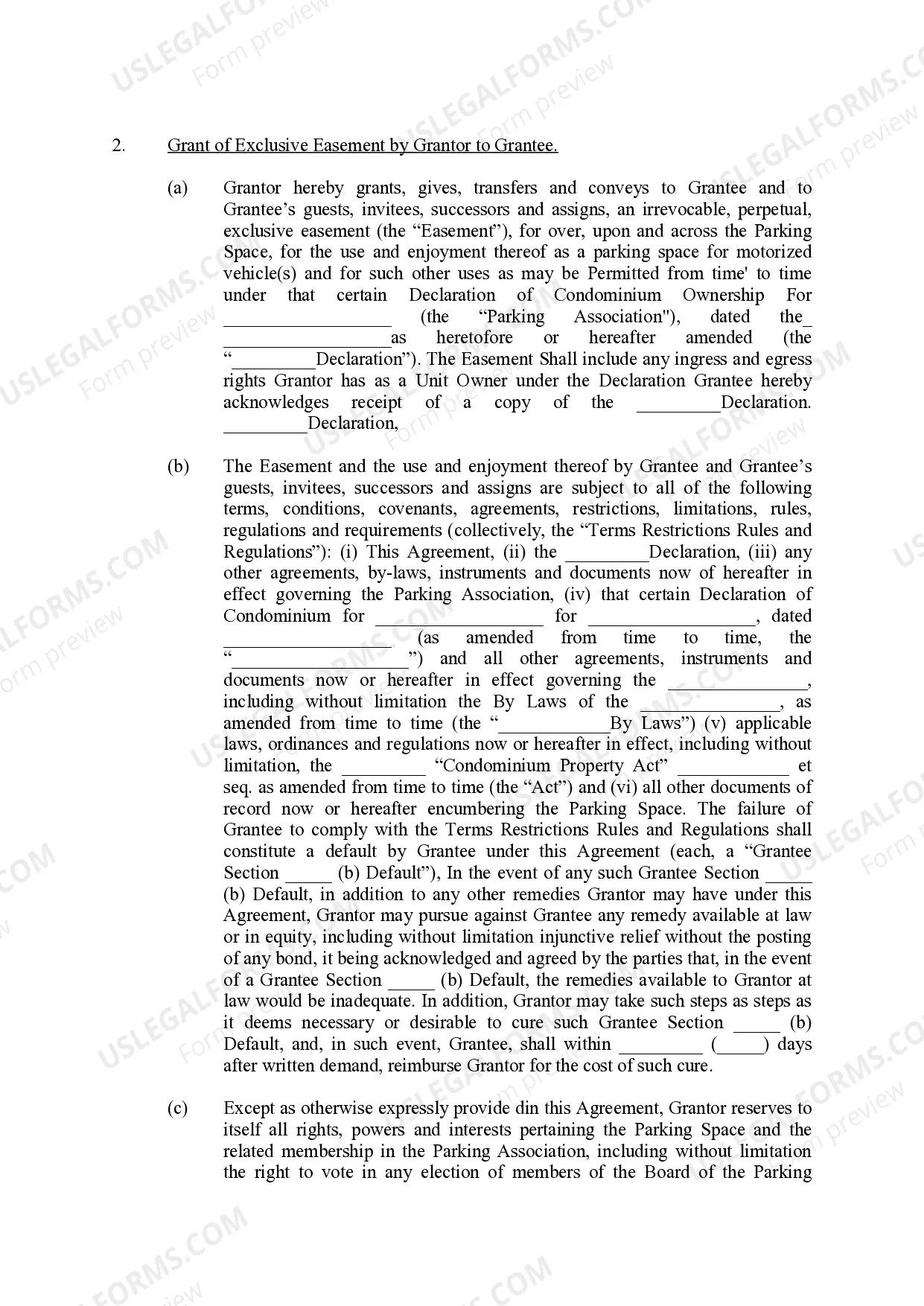
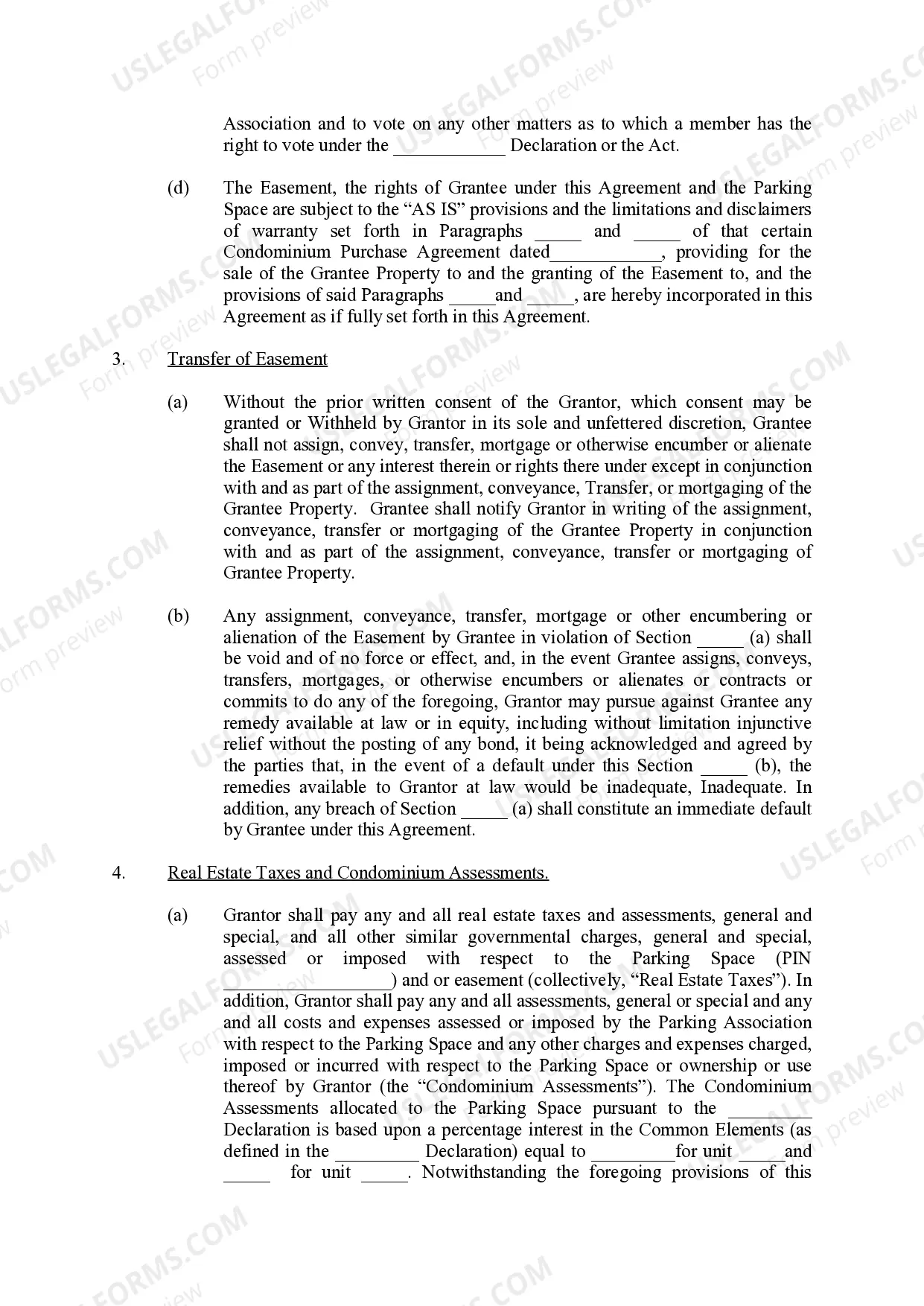
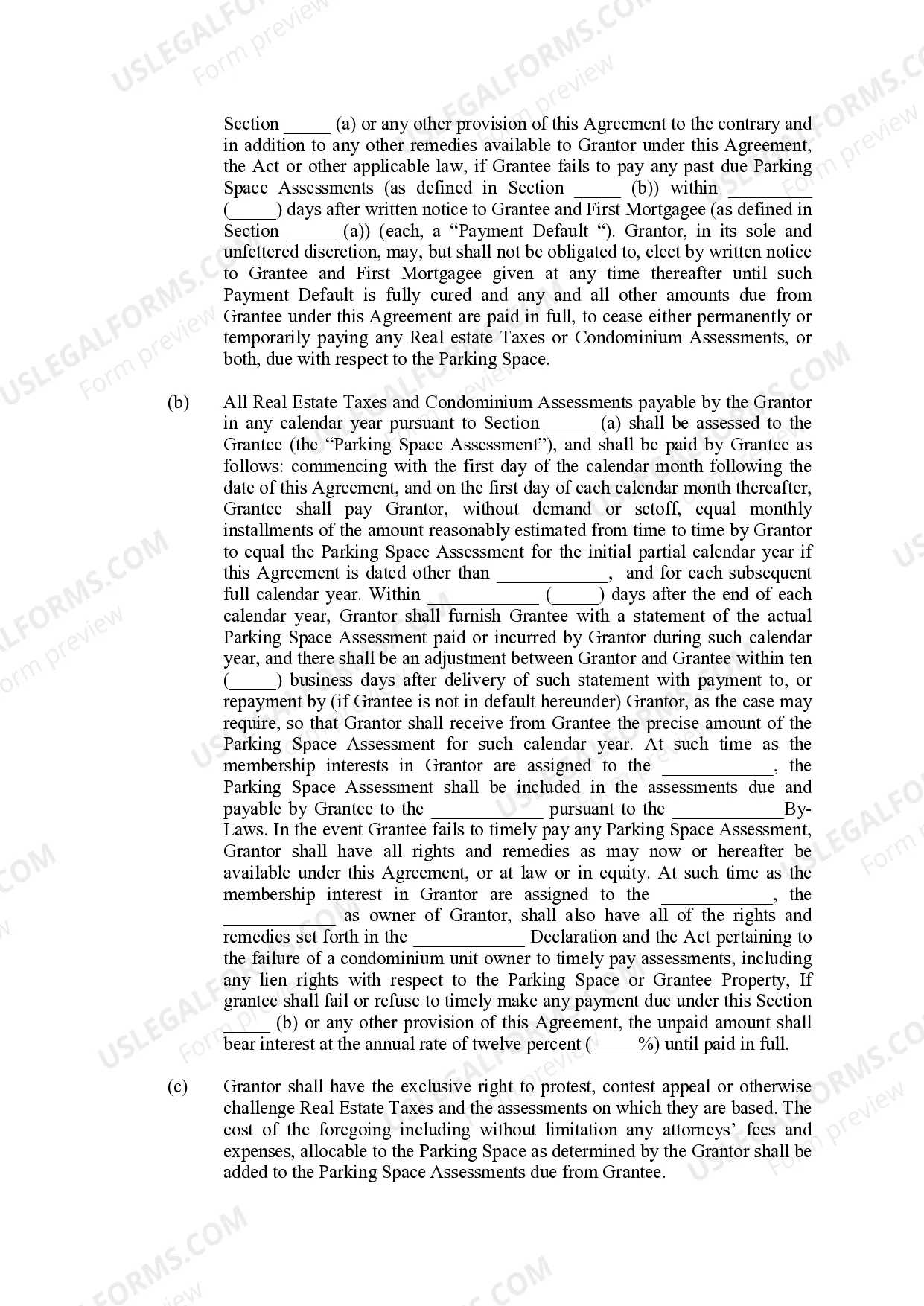
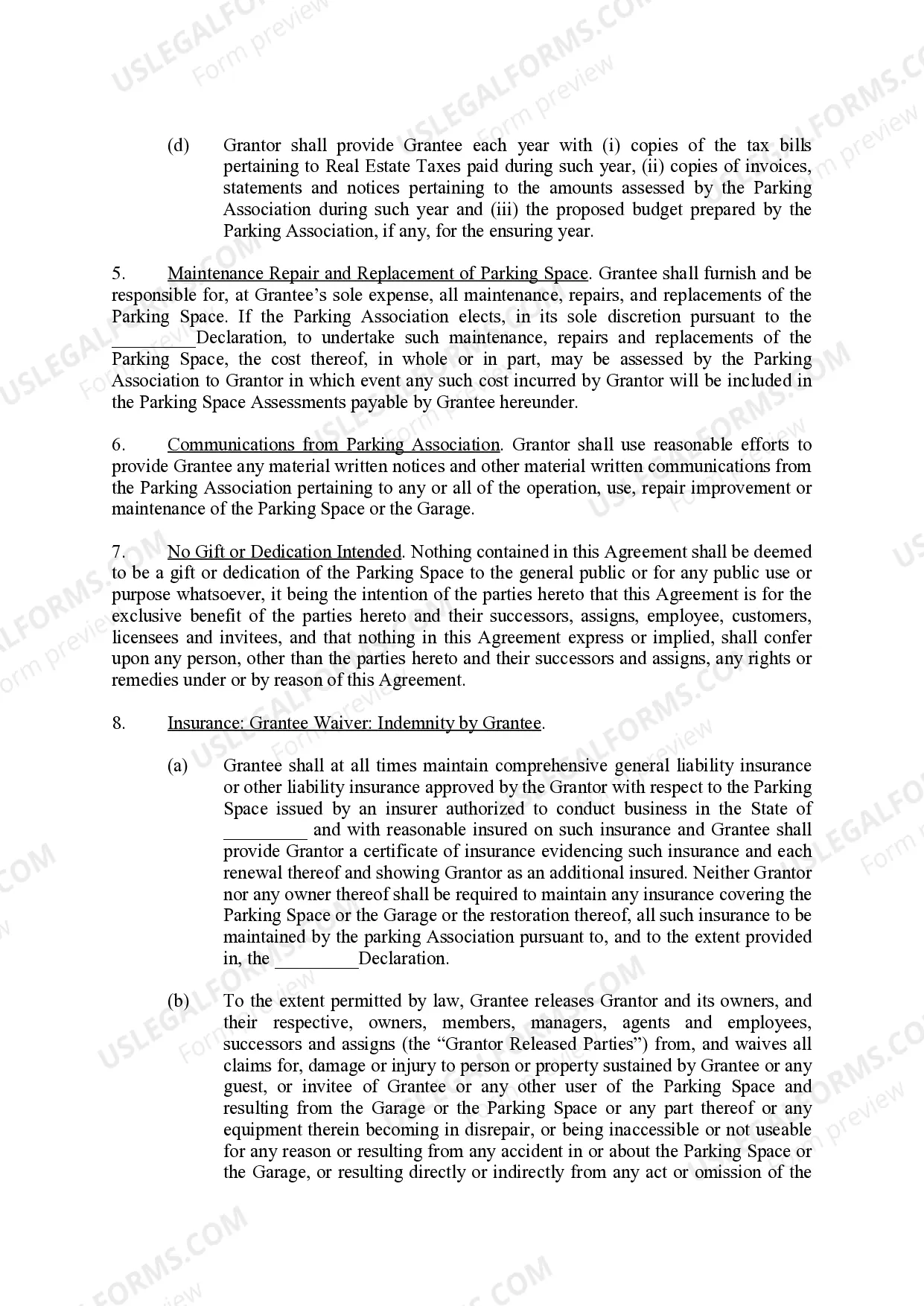
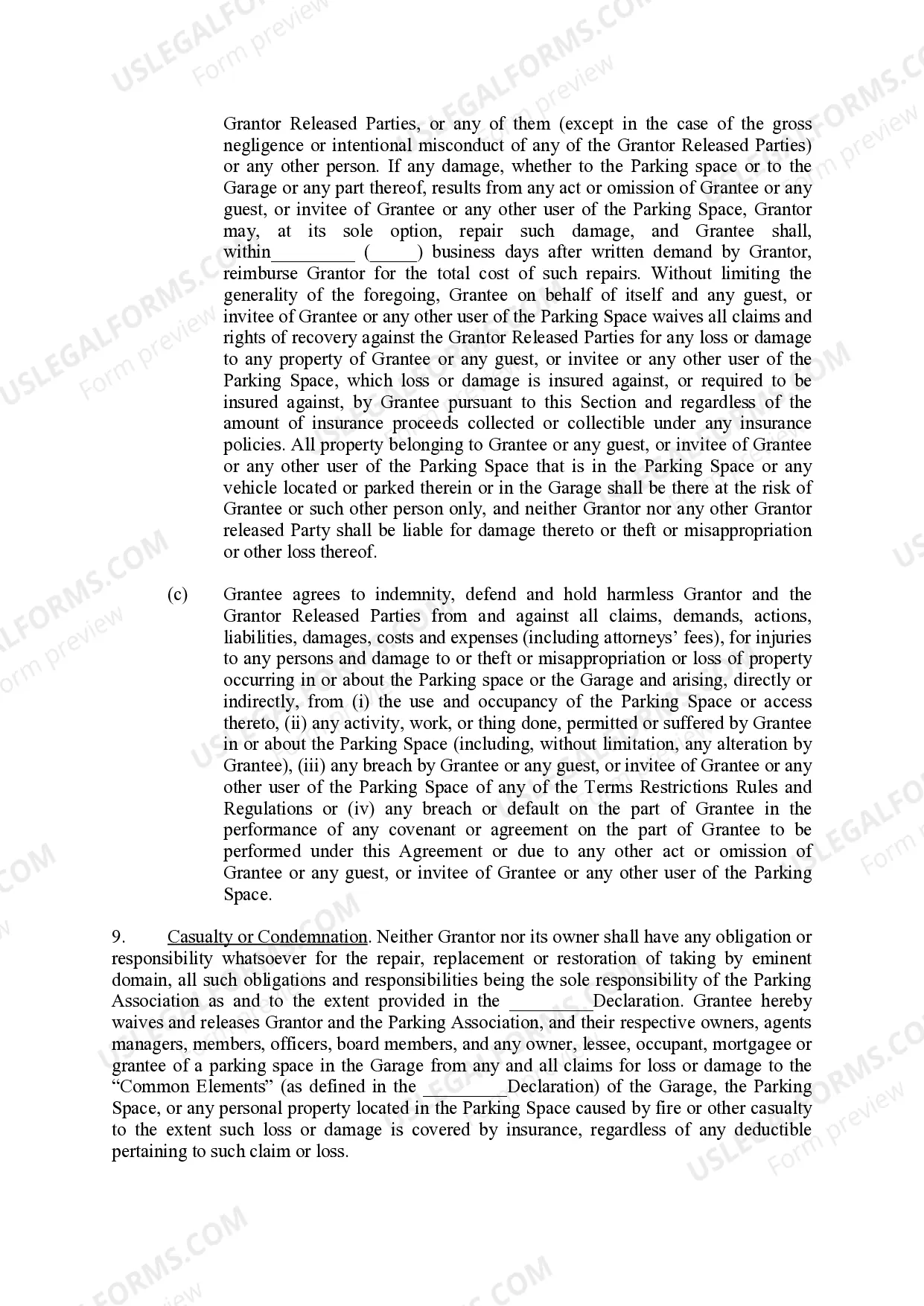
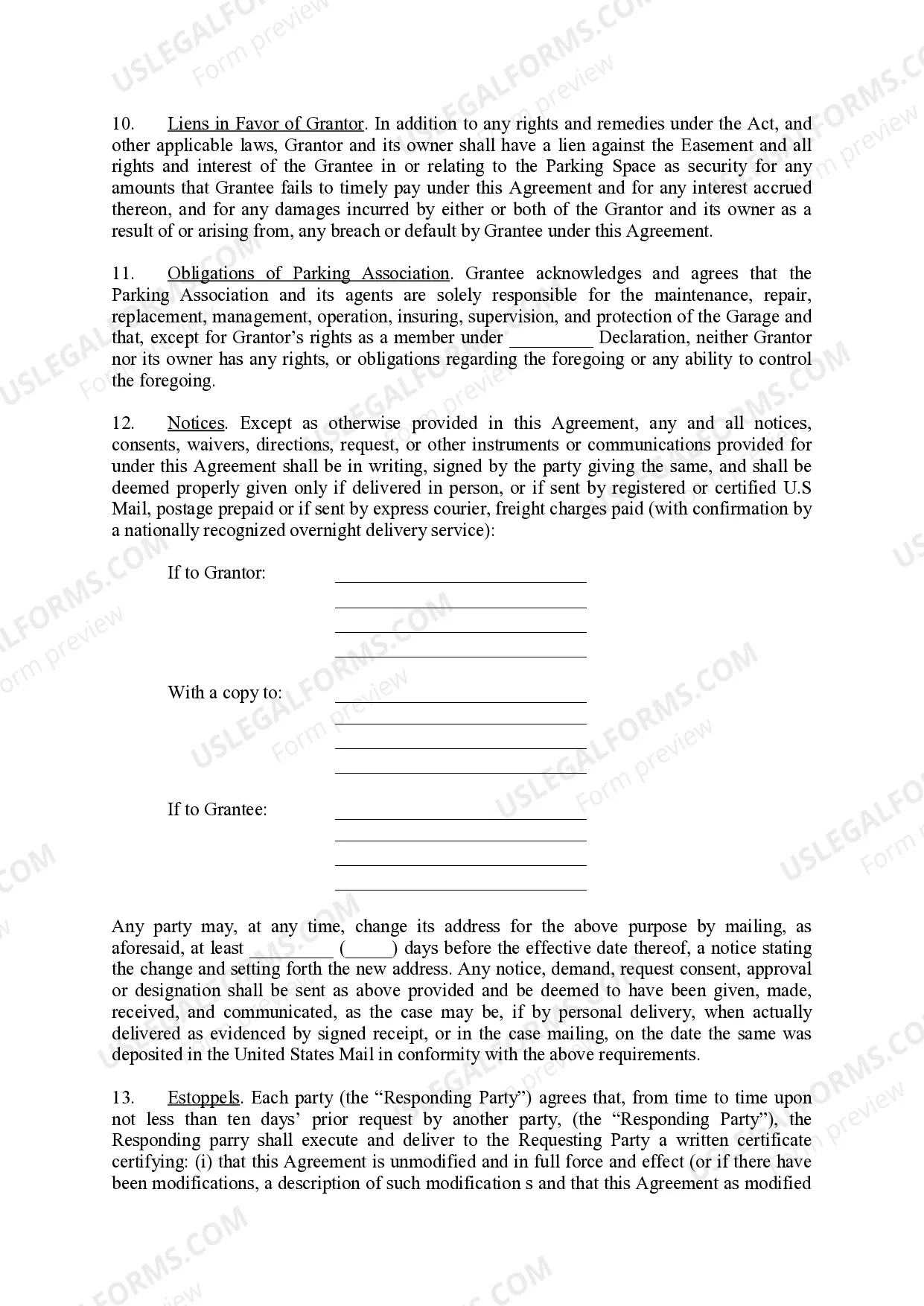
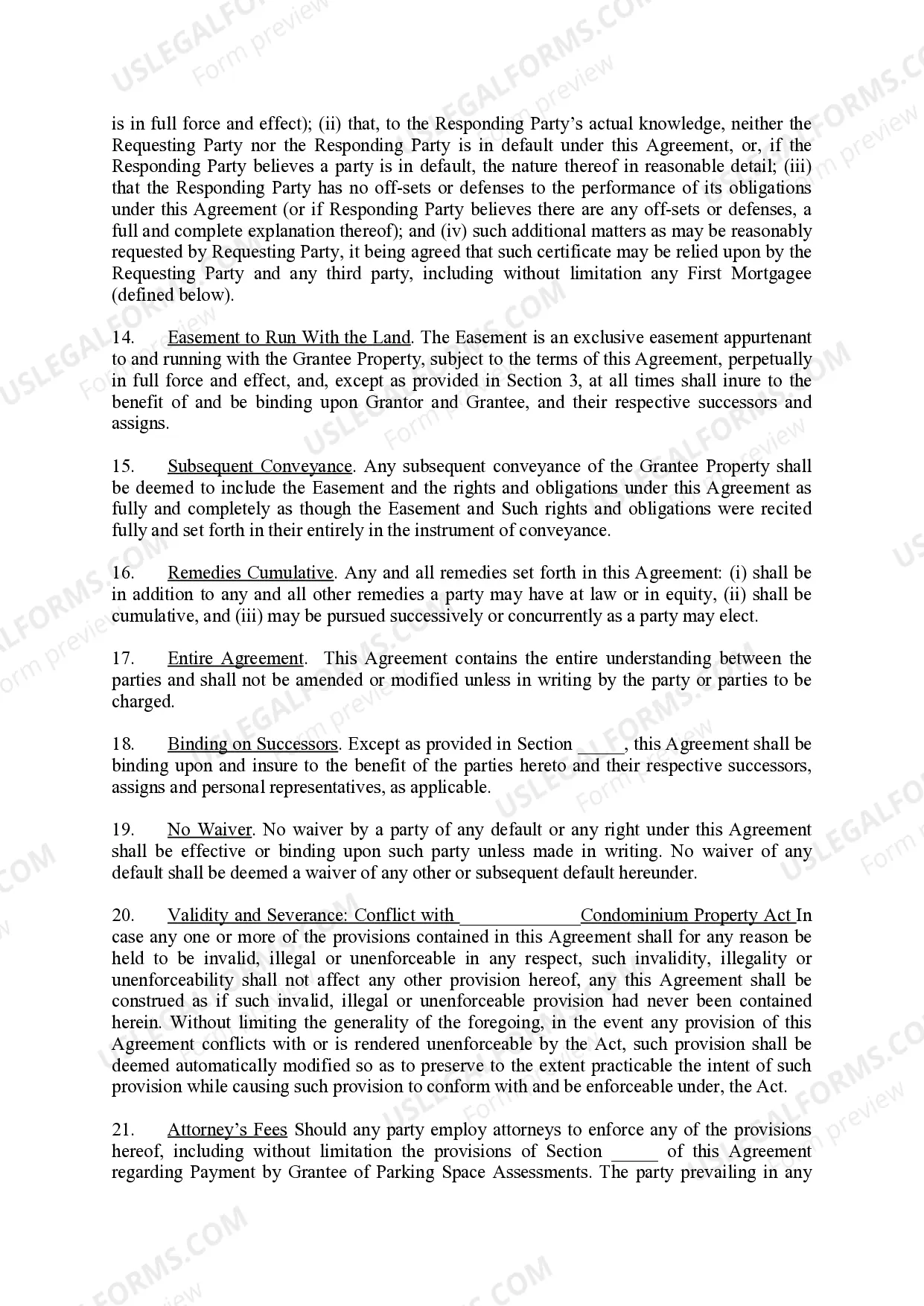
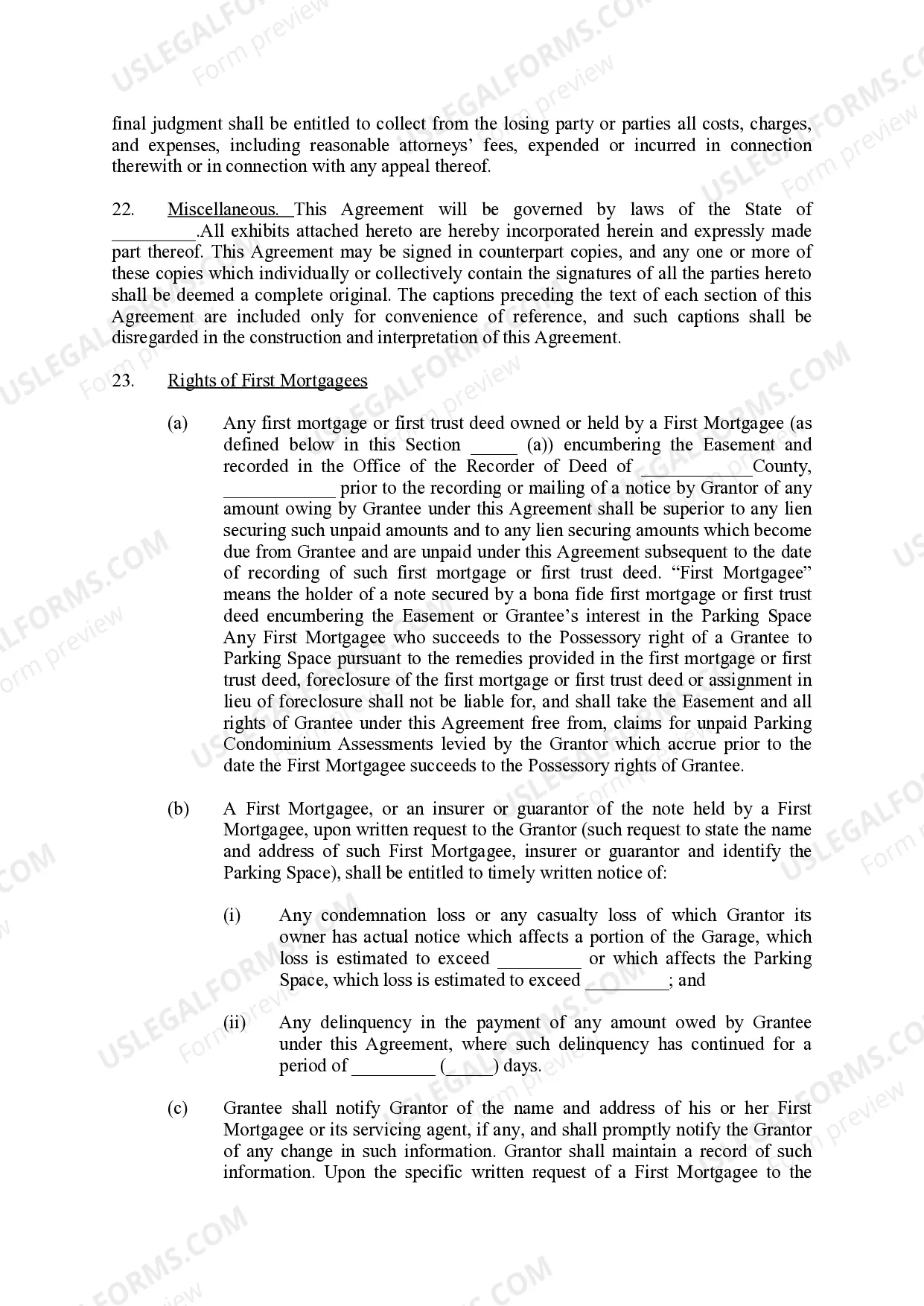
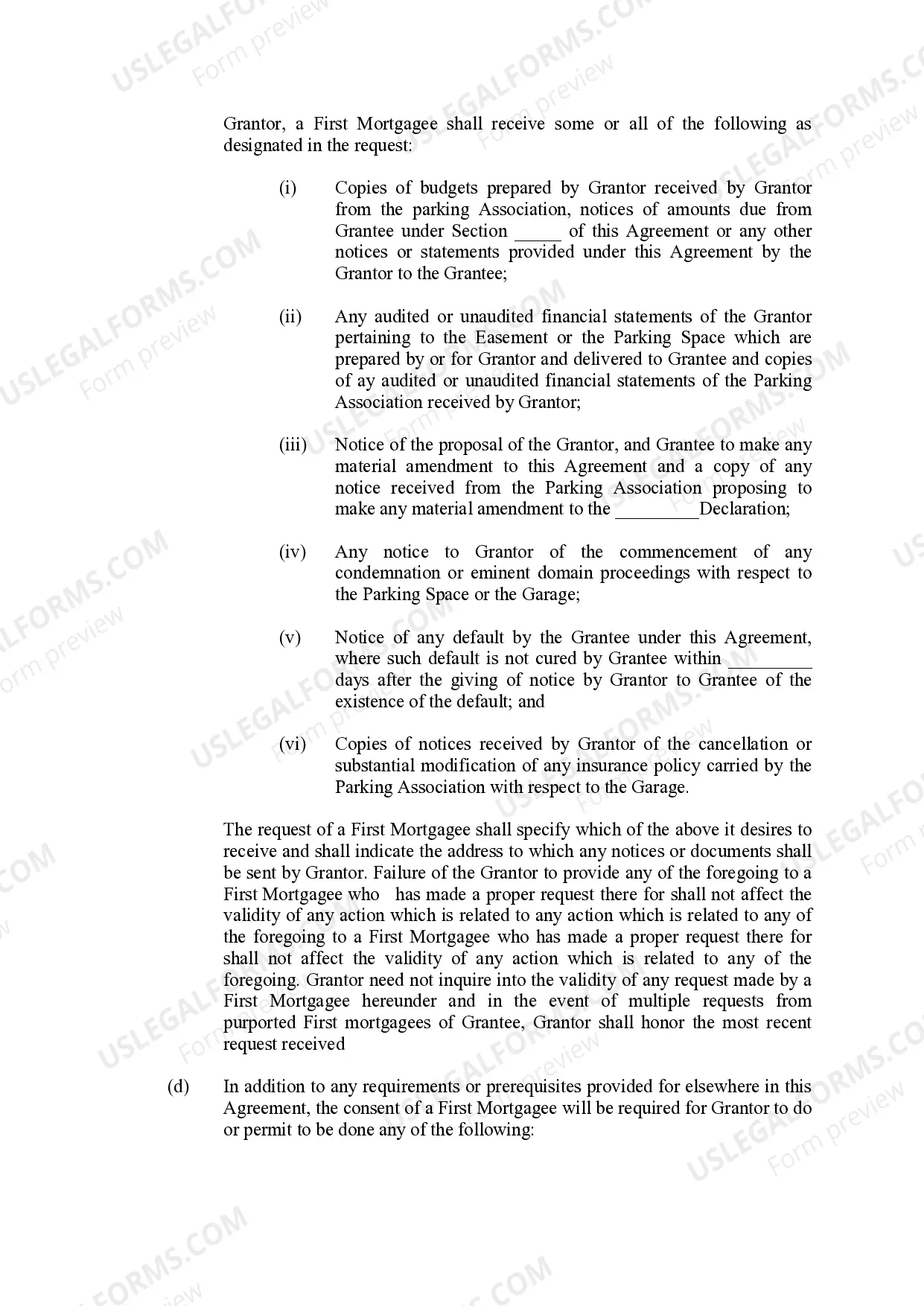
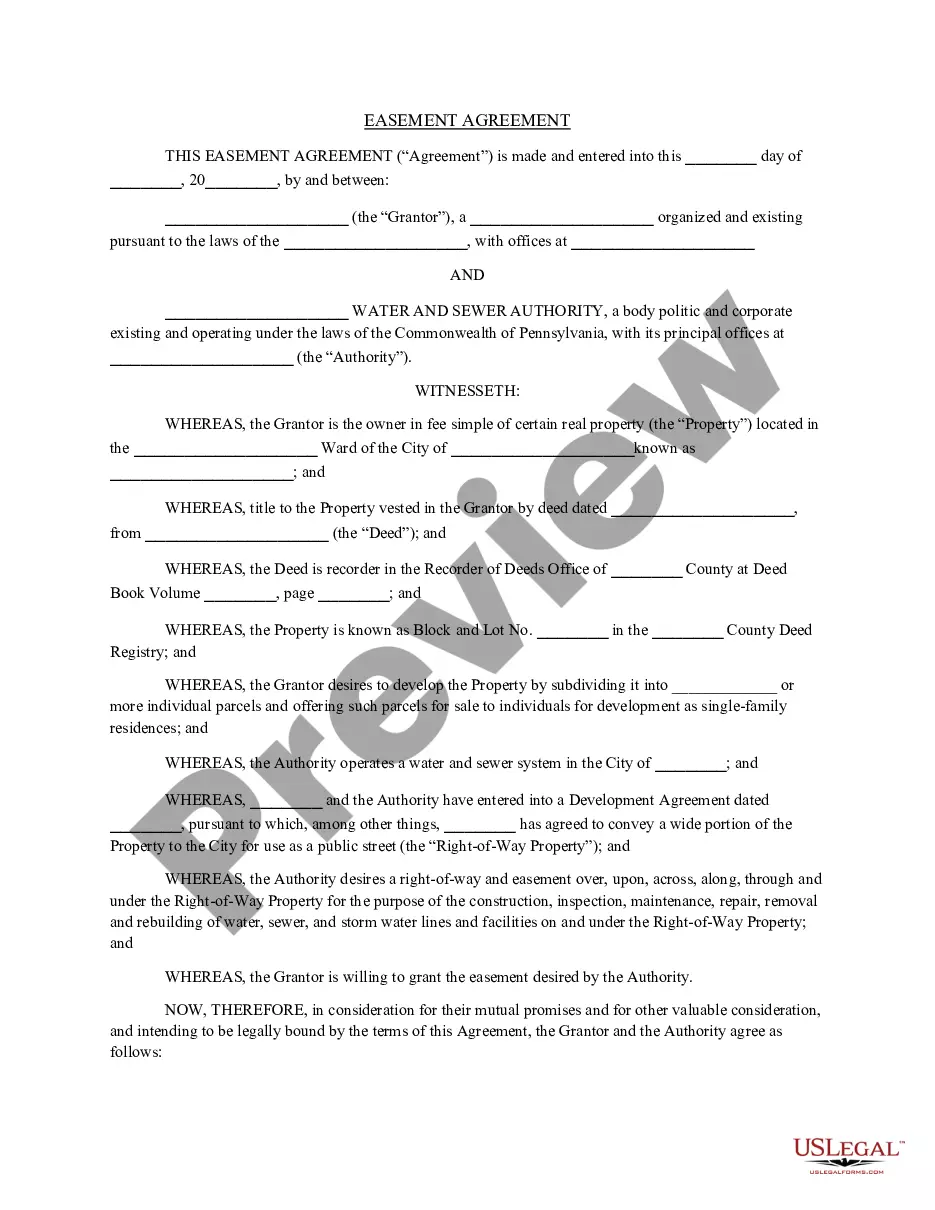
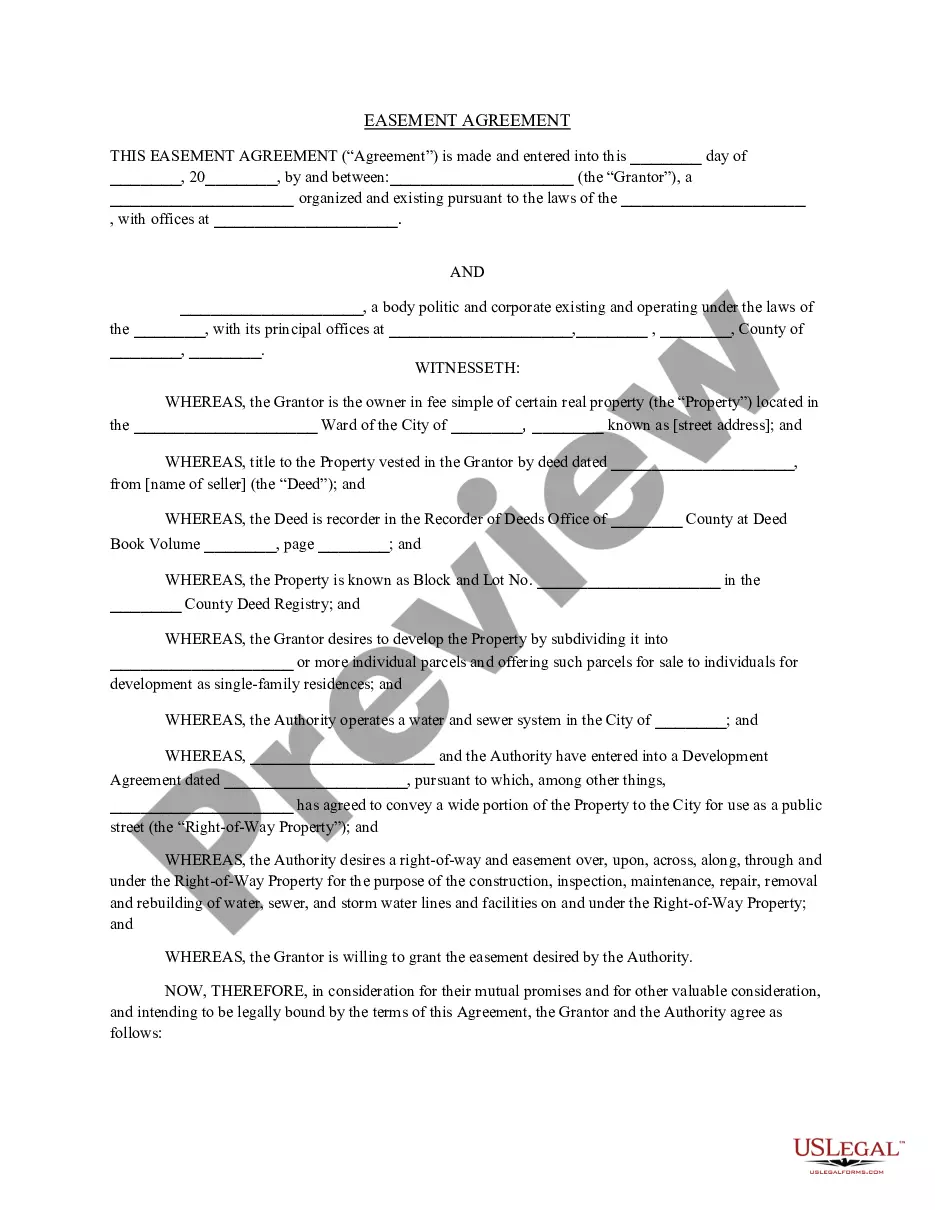
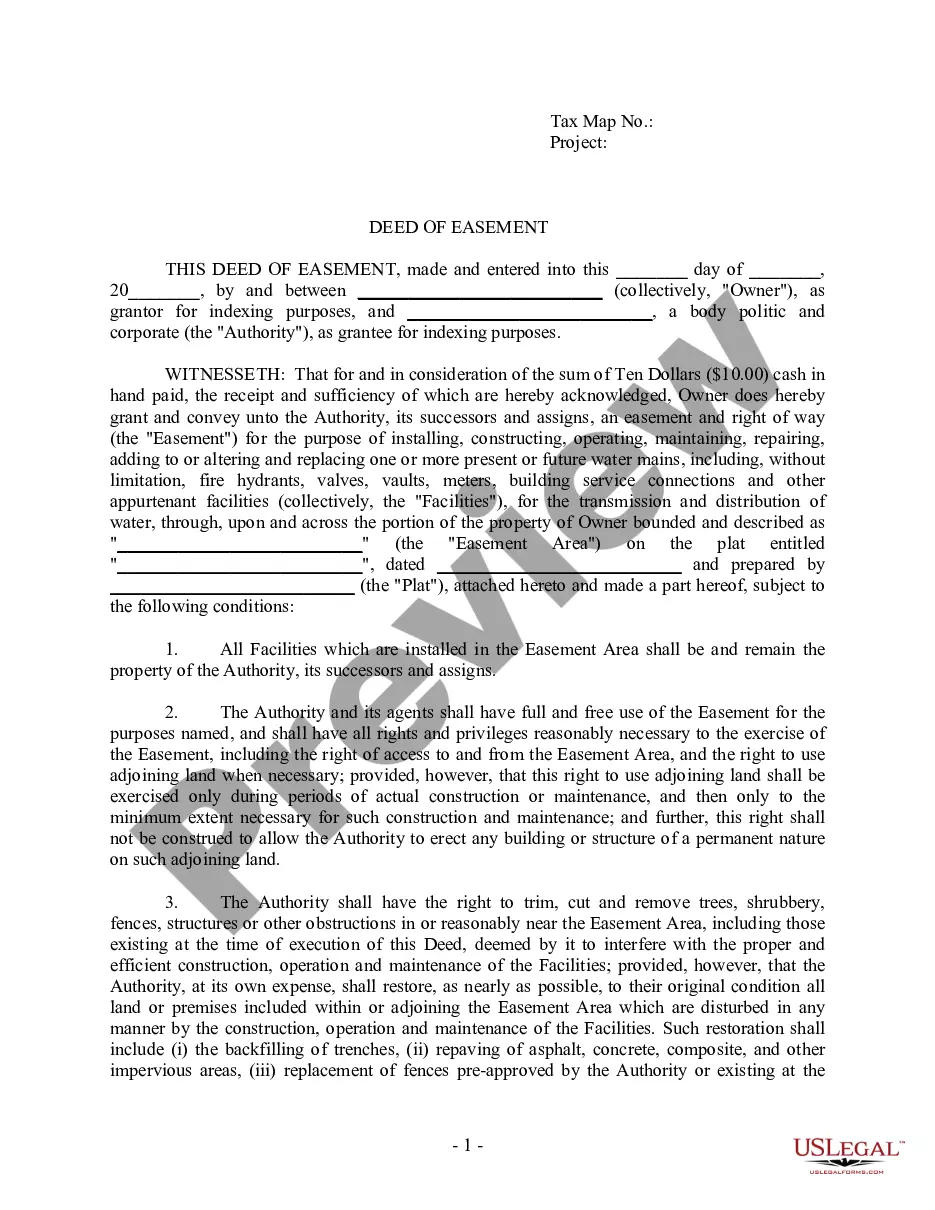
The Exclusive Easement form is a legal document that grants a specific party (the Grantee) the sole right to use a parking space in a residential condominium. This agreement differs from general easements as it provides exclusive rights, ensuring that only the Grantee and authorized individuals have access to the designated parking area. This form is essential for clearly defining the rights and responsibilities of both the Grantor and Grantee regarding the use and maintenance of the parking space.
Key components of this form
- Parties involved: Identification of the Grantor (property owner) and Grantee (resident).
- Description of the parking space: Detailed information on the specific parking area being granted.
- Terms of use: Outlines how the parking space can be utilized, including any restrictions.
- Maintenance obligations: Responsibilities for upkeep and repairs related to the parking space.
- Transfer conditions: Rules governing the transfer of easement rights to other parties.


When to use this form
This form is necessary when a property owner wishes to grant exclusive access to a parking space to another individual, typically in a condominium setting. It is used to formalize agreements about the use of shared space, defining who has the rights to occupy and maintain that area. This agreement is especially relevant in situations where multiple units share limited parking resources and clear ownership is required to prevent disputes.
Intended users of this form
This form is intended for:
- Property owners (Grantors) who want to grant exclusive parking privileges.
- Residents (Grantees) of a condominium complex who need secured parking rights.
- Developers or property management companies facilitating parking agreements on behalf of owners.
How to prepare this document
- Identify the parties: Complete the names and addresses of the Grantor and Grantee.
- Describe the property: Provide a detailed description of the parking space being granted, including any legal identifiers.
- Specify terms and conditions: Clearly outline the rules governing the use of the parking space and any maintenance responsibilities.
- Insert dates: Fill in the effective date of the agreement.
- Sign and notarize: Ensure that both parties sign the agreement and have it notarized if required.
Notarization requirements for this form
This form does not typically require notarization unless specified by local law. It is advisable to check with local regulations to ensure compliance, as notarization can provide additional legal protection and acknowledgment of the parties' agreement.
Get your form ready online
Our built-in tools help you complete, sign, share, and store your documents in one place.
Make edits, fill in missing information, and update formatting in US Legal Forms—just like you would in MS Word.
Download a copy, print it, send it by email, or mail it via USPS—whatever works best for your next step.
Sign and collect signatures with our SignNow integration. Send to multiple recipients, set reminders, and more. Go Premium to unlock E-Sign.
If this form requires notarization, complete it online through a secure video call—no need to meet a notary in person or wait for an appointment.
We protect your documents and personal data by following strict security and privacy standards.

Make edits, fill in missing information, and update formatting in US Legal Forms—just like you would in MS Word.

Download a copy, print it, send it by email, or mail it via USPS—whatever works best for your next step.

Sign and collect signatures with our SignNow integration. Send to multiple recipients, set reminders, and more. Go Premium to unlock E-Sign.

If this form requires notarization, complete it online through a secure video call—no need to meet a notary in person or wait for an appointment.

We protect your documents and personal data by following strict security and privacy standards.
Avoid these common issues
- Failing to identify all parties involved adequately.
- Not providing a clear and comprehensive description of the parking space.
- Omitting specific terms and conditions that govern the use of the easement.
- Not having the document notarized when required by local law.
Benefits of completing this form online
- Convenient access: Easily download and complete the form from anywhere.
- Editable format: Customize the document to fit your specific situation.
- Reliable legal framework: Drafted by licensed attorneys to ensure legal validity.
Looking for another form?
Form popularity
FAQ
The main difference between exclusive and non-exclusive easements in gross lies in the rights granted to the easement holder. An exclusive easement allows only the easement holder to use the specified property, while a non-exclusive easement permits multiple users. This difference can significantly impact property use and rights. For instance, an Illinois Exclusive Easement ensures that a specific party has sole access, providing more control and potential benefits.
There are two types of easements: affirmative and negative. An affirmative easement gives the easement holder the right to do something on the grantor of the easement's land, such as travel on a road through the grantor's land.
Exclusive Easements in California This is known as an exclusive easement. With this type of arrangement, only one party (or maybe a limited number of parties) have the right to use the land for a specified purpose.
An easement grants its holder a non-possessory right to use the land for some purpose.In a non-exclusive easement, the party who benefits from the easement is not permitted to exclude other individuals, including the property owner, from use of that property.
Exclusive means that only one party or perhaps a limited number of parties can use that easement. Non-exclusive means that a number of different parties can use the easement. Non-exclusive can also mean that additional parties could be granted the right to use that same easement in the future.
Exclusive means that only one party or perhaps a limited number of parties can use that easement. Non-exclusive means that a number of different parties can use the easement. Non-exclusive can also mean that additional parties could be granted the right to use that same easement in the future.
A non-exclusive easement just means that the easement will run with the land (future owners are subject to the easement). It does not mean that anyone and everyone can use the easement. The only properties that get rights to the easement would be those set forth in the grant of easement.
The Exclusive Easement Explained Most easements are non-exclusive where the person benefitting cannot exclude others from these benefits. Someone with an exclusive easement may stop others from obtaining the benefits even though this individual is not the owner of the land.