Illinois Memorandum of Option
What is this form?
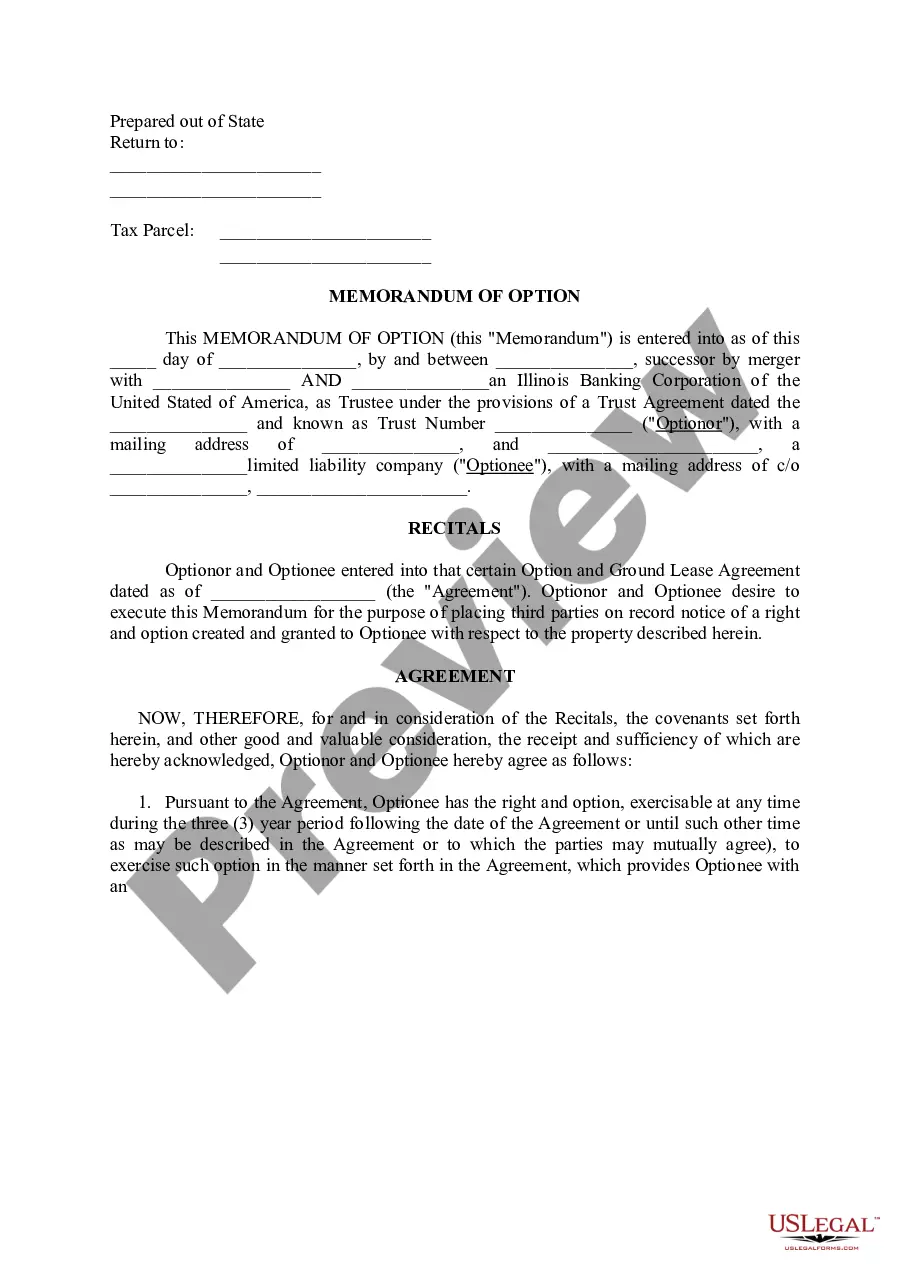
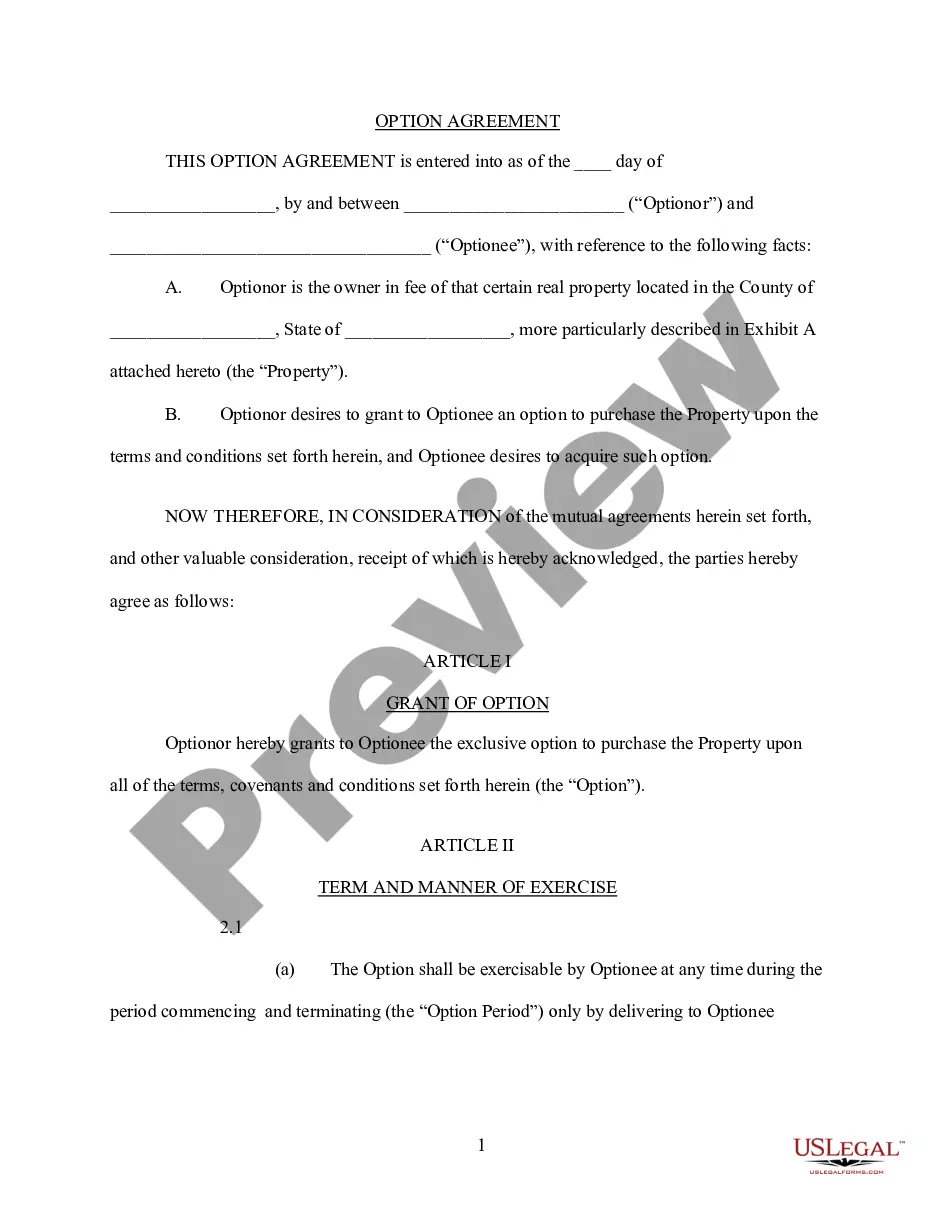
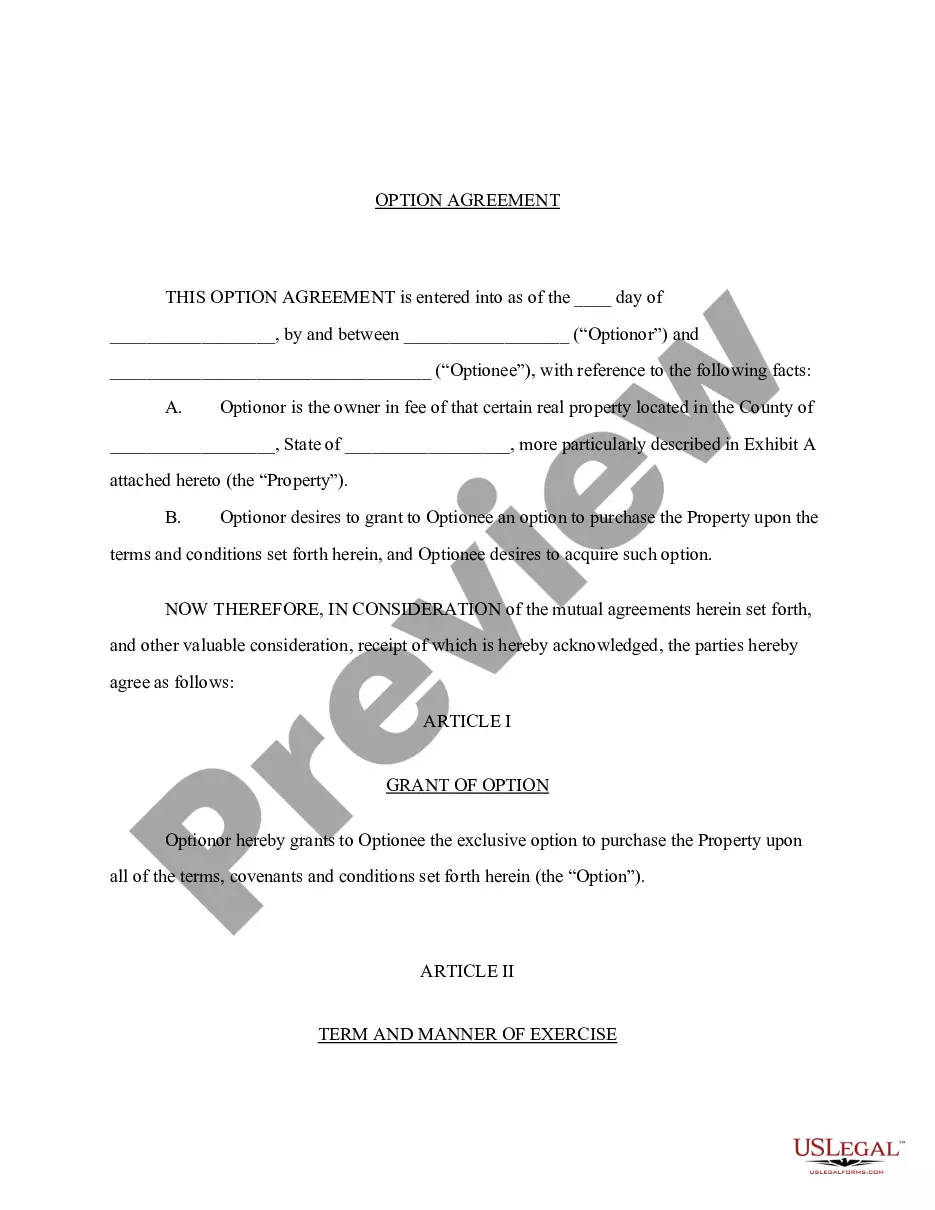
The Memorandum of Option is a legal document that serves as a recordable instrument, crucial for notifying third parties about a lease interest associated with a specific property. This form is important for option holders, allowing them to establish their rights and options concerning the property, while preventing others from claiming any competing interest. It differs from other real estate forms by focusing specifically on the rights granted through an option agreement.
Key parts of this document
- Names of the Optionor and Optionee, including business structure and addresses.
- Details regarding the specific property and tax parcel.
- Recitals explaining the background of the agreement leading to the memorandum.
- Agreement section outlining the rights and options provided to the Optionee.
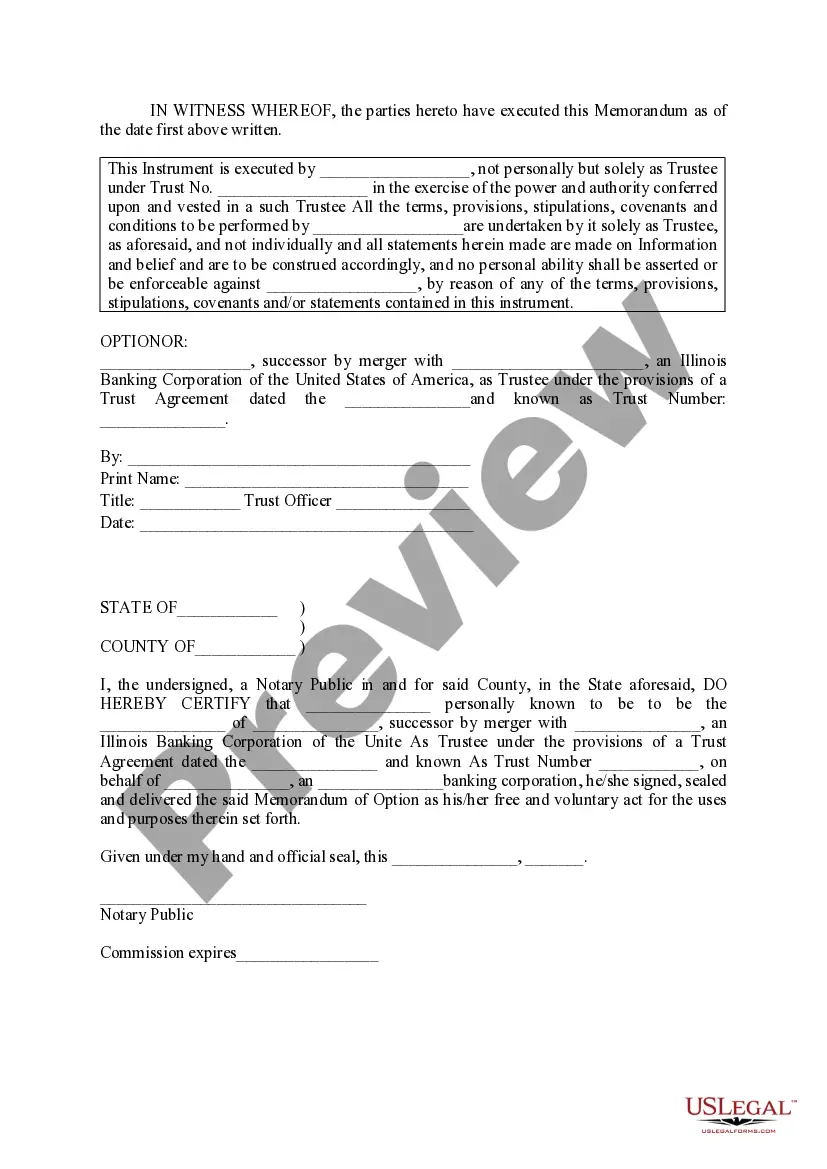
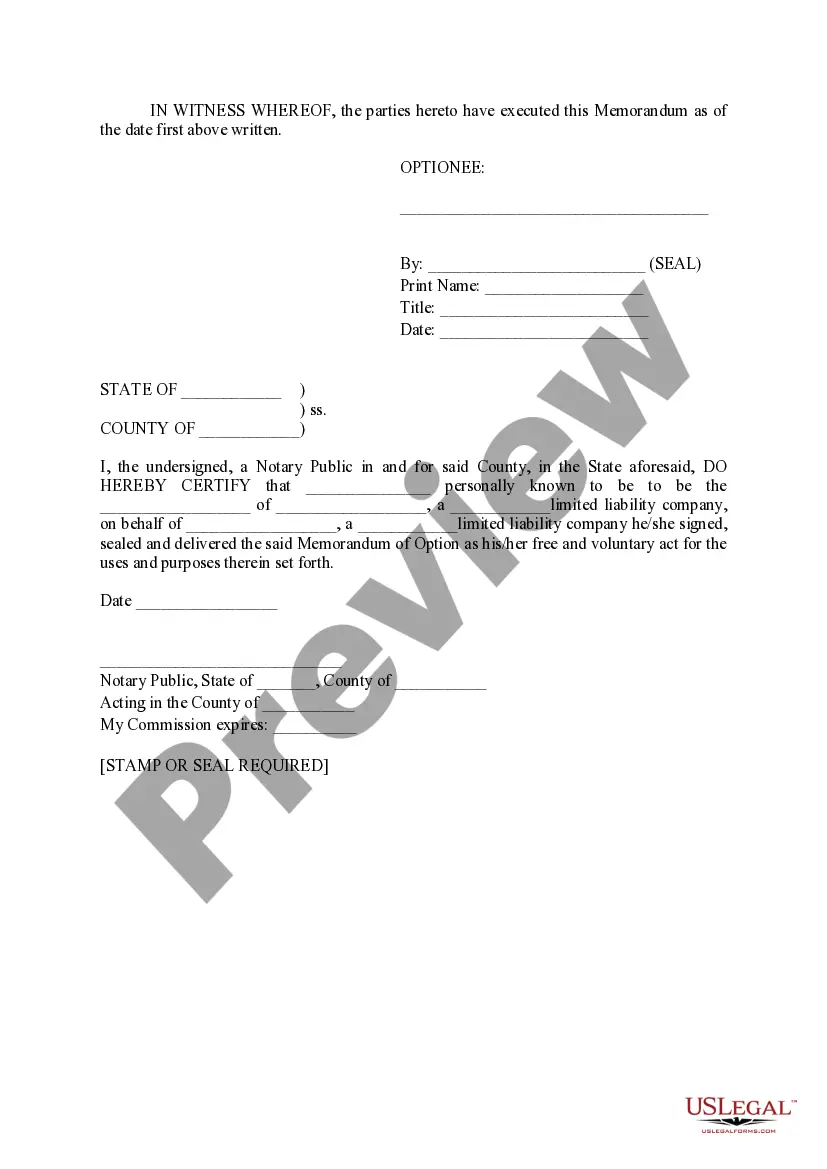
- Signatures of both parties, including notarization details for legal validity.
Situations where this form applies
This form should be used when an option holder (Optionee) wishes to formalize their right to lease or purchase property as specified in the Option and Ground Lease Agreement. It is particularly useful when the Optionee wants to create a public record of their interest to prevent third parties from asserting claims to the property. Typical scenarios include commercial real estate transactions, lease negotiations, and property developments.
Intended users of this form
- Individuals or businesses involved in real estate transactions as option holders.
- Landowners or property managers who are granting an option to a lessee or buyer.
- Real estate attorneys assisting clients with property leases or options.
How to prepare this document
- Identify the parties involved: Fill in the names and addresses of the Optionor and Optionee.
- Specify the property: Include detailed descriptions and tax parcel numbers of the property in question.
- Enter the effective date: Mark the date when the Memorandum of Option is executed.
- Set forth agreement details: Confirm the terms of the option agreement referenced in the Memorandum.
- Complete notarization: Have the document signed by both parties and notarized to ensure legal validity.
Notarization guidance
Yes, this form must be notarized to be legally valid. US Legal Forms offers integrated online notarization services, available 24/7 through secure video calls. This allows you to complete the notarization process without needing to travel.
Get your form ready online
Our built-in tools help you complete, sign, share, and store your documents in one place.
Make edits, fill in missing information, and update formatting in US Legal Forms—just like you would in MS Word.
Download a copy, print it, send it by email, or mail it via USPS—whatever works best for your next step.
Sign and collect signatures with our SignNow integration. Send to multiple recipients, set reminders, and more. Go Premium to unlock E-Sign.
If this form requires notarization, complete it online through a secure video call—no need to meet a notary in person or wait for an appointment.
We protect your documents and personal data by following strict security and privacy standards.

Make edits, fill in missing information, and update formatting in US Legal Forms—just like you would in MS Word.

Download a copy, print it, send it by email, or mail it via USPS—whatever works best for your next step.

Sign and collect signatures with our SignNow integration. Send to multiple recipients, set reminders, and more. Go Premium to unlock E-Sign.

If this form requires notarization, complete it online through a secure video call—no need to meet a notary in person or wait for an appointment.

We protect your documents and personal data by following strict security and privacy standards.
Common mistakes
- Failing to identify all parties clearly, which can lead to disputes.
- Neglecting to include property details that are crucial for clarity and legal reasons.
- Not obtaining notarization, which can invalidate the document if required.
Why complete this form online
- Convenience: Access and complete the form from anywhere at any time.
- Editability: Easily make changes or updates to your document as needed.
- Reliability: Utilize forms created by licensed attorneys to ensure legal validity.
Looking for another form?
Form popularity
FAQ
The Difference Between Renting to Own and a Contract for Deed. Renting to own usually means renting now, with an option to buy later. When you make this kind of deal, you are still a tenant, and the seller is still a landlord, until the final purchase. A contract for deed is very different.
This Standard Document is a recordable instrument used to provide third parties with constructive notice of a purchase option encumbering California commercial real property.
A contract for deed, also called a land contract or contract for sale, is a financing option for buyers who do not qualify for a mortgage loan to purchase property. In a contract for deed, the seller finances the purchase of the property, much like a mortgage company in a more traditional mortgage situation.
A disadvantage to the seller is that a contract for deed is frequently characterized by a low down payment and the purchase price is paid in installments instead of one lump sum. If a seller needs funds from the sale to buy another property, this would not be a beneficial method of selling real estate.
A contract for deed is an agreement for buying property without going to a mortgage lender. The buyer agrees to pay the seller monthly payments, and the deed is turned over to the buyer when all payments have been made.
Contract for Deed Seller Financing. A contract for deed is used by some sellers who finance the sale of their homes. Seller's Ownership Liability. Buyer Default Risk. Seller Performance. Property Liens Could Hinder Purchase.
A Contract for Deed is a way to buy a house that doesn't involve a bank. The seller finances the property for the buyer. The buyer moves in when the contract is signed. The buyer pays the seller monthly payments that go towards payment for the home.