Illinois Living Trust for Individual Who is Single, Divorced or Widow or Widower with No Children

About this form
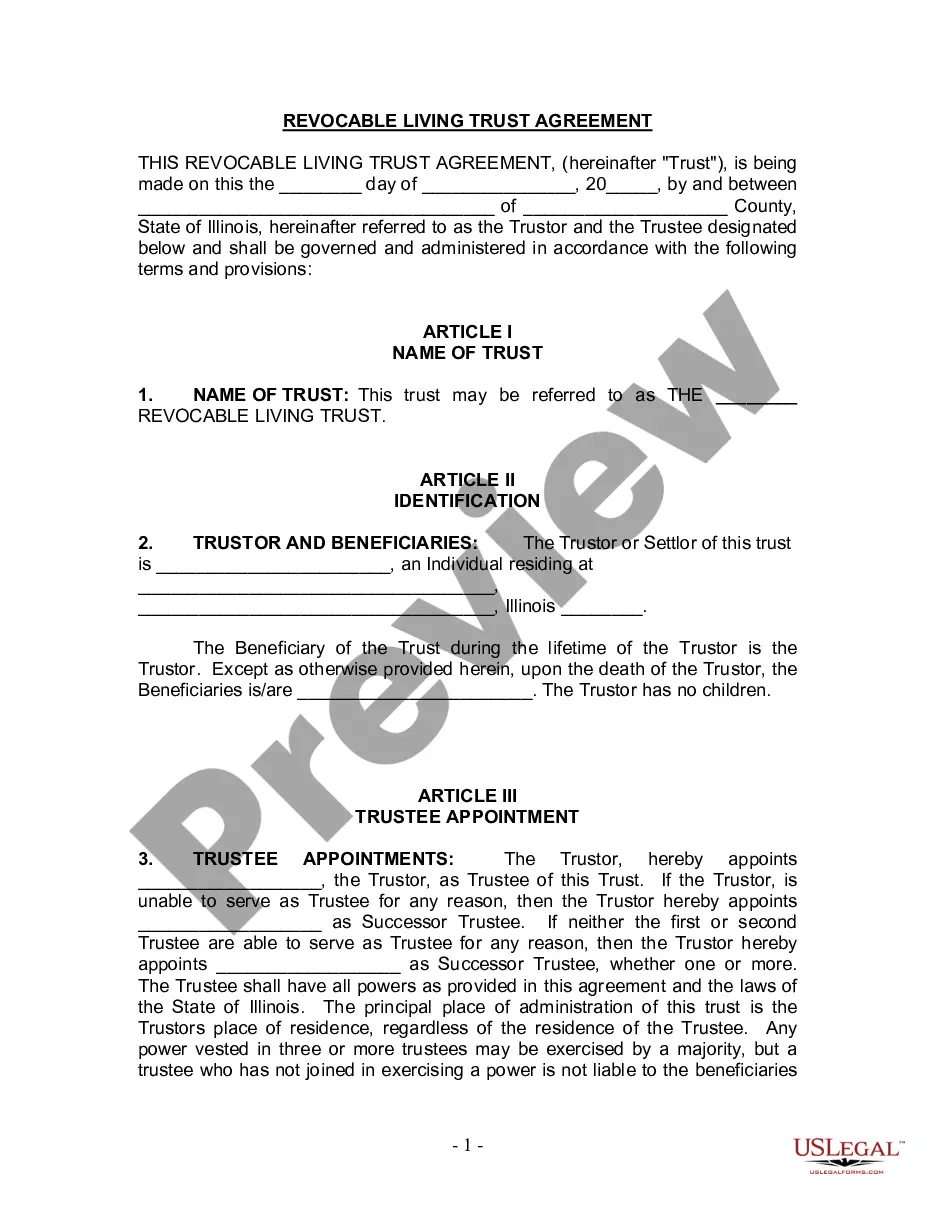
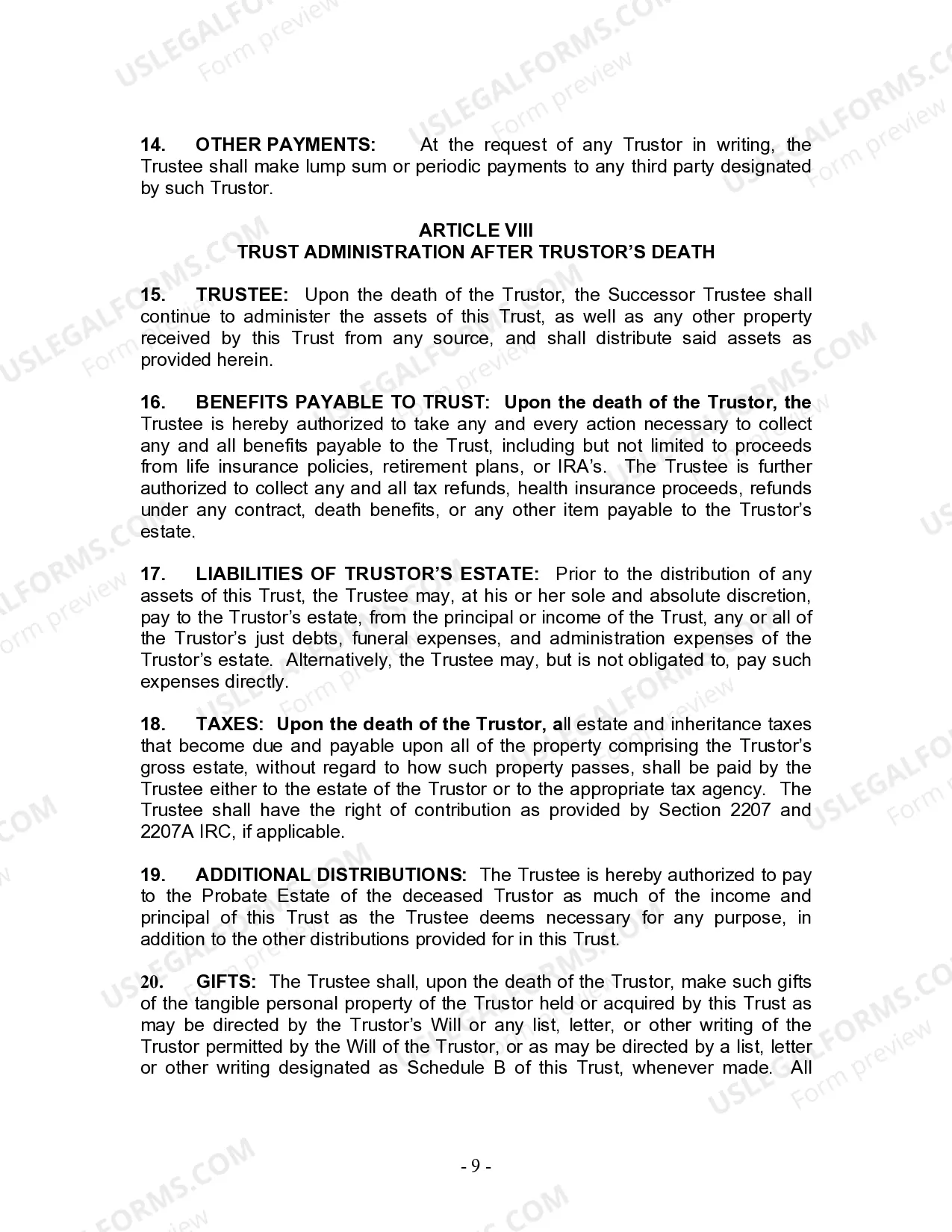
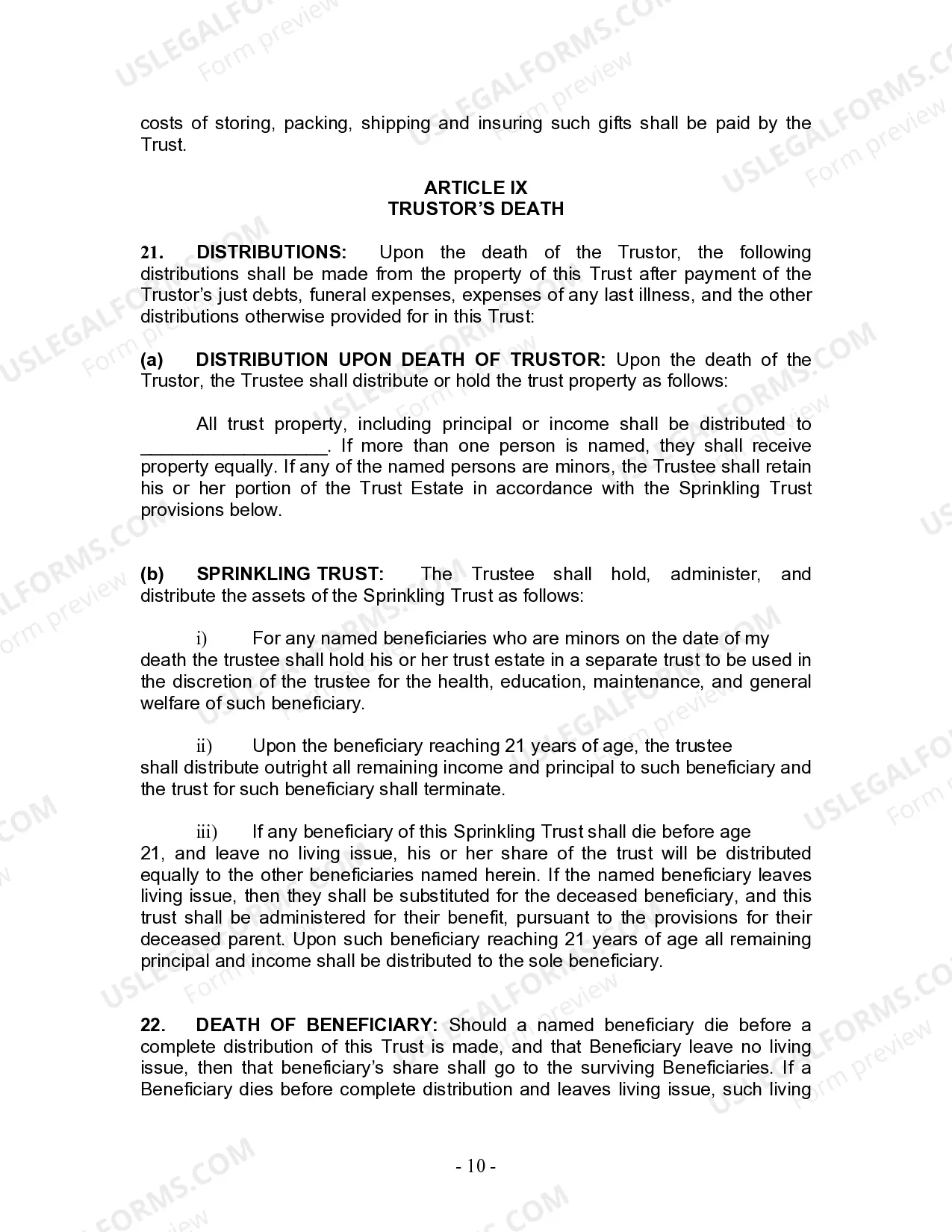
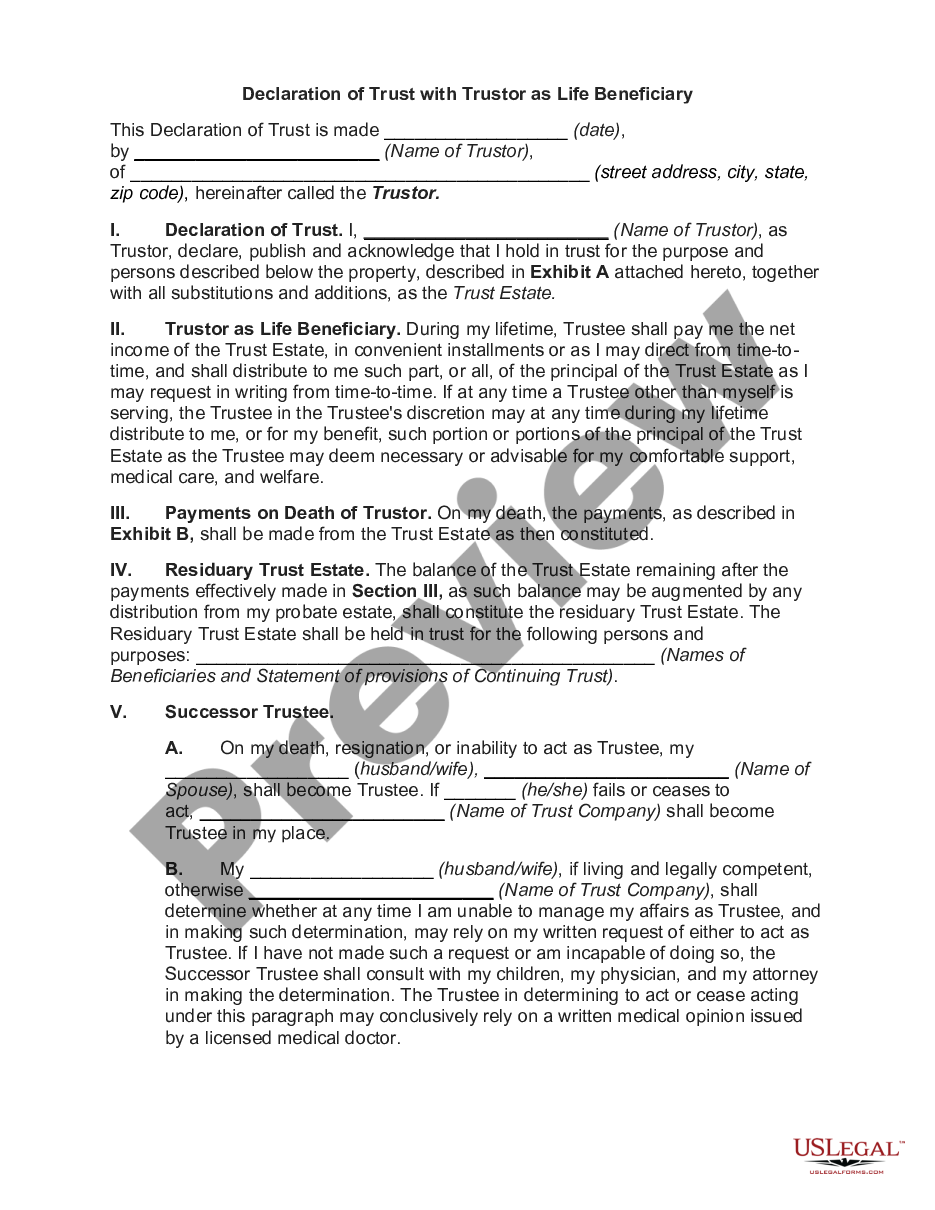
This Living Trust for an Individual Who is Single, Divorced or Widow(er) with No Children is a legal document that allows a person to manage their assets during their lifetime and efficiently transfer them upon death, avoiding the probate process. Unlike a last will and testament, a living trust provides more flexibility as it can be altered or revoked at any time while the trustor (the person creating the trust) is alive. This form is specifically tailored for individuals without children, simplifying the inheritance process according to the trustor's wishes.
Key components of this form
- Name of Trust: Identifies the trust by a specific name.
- Trustor Information: Details about the trustor, including their residency.
- Trustee Appointments: Designates the individual(s) responsible for managing the trust.
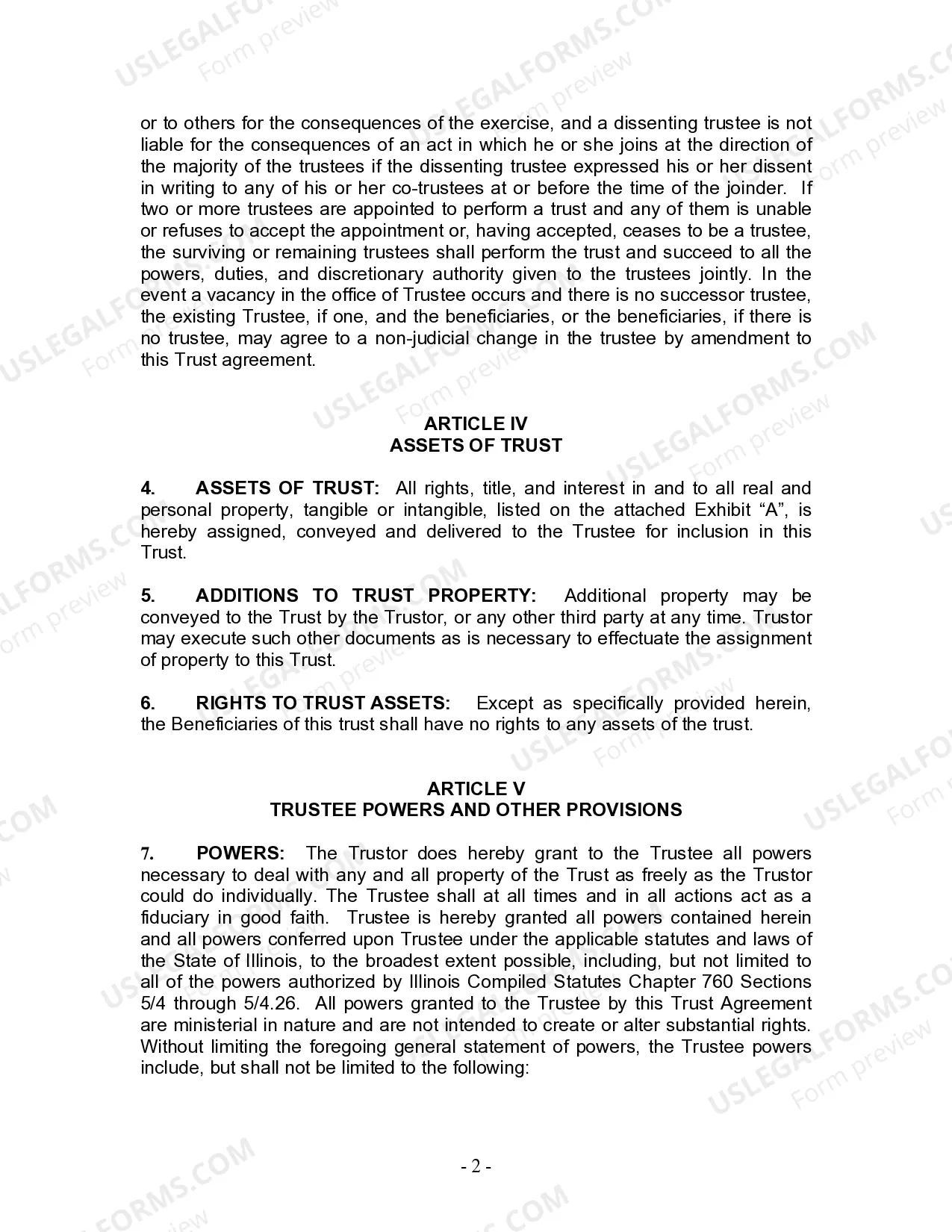
- Trust Assets: Specifies the assets included in the trust and any provisions for adding new assets.
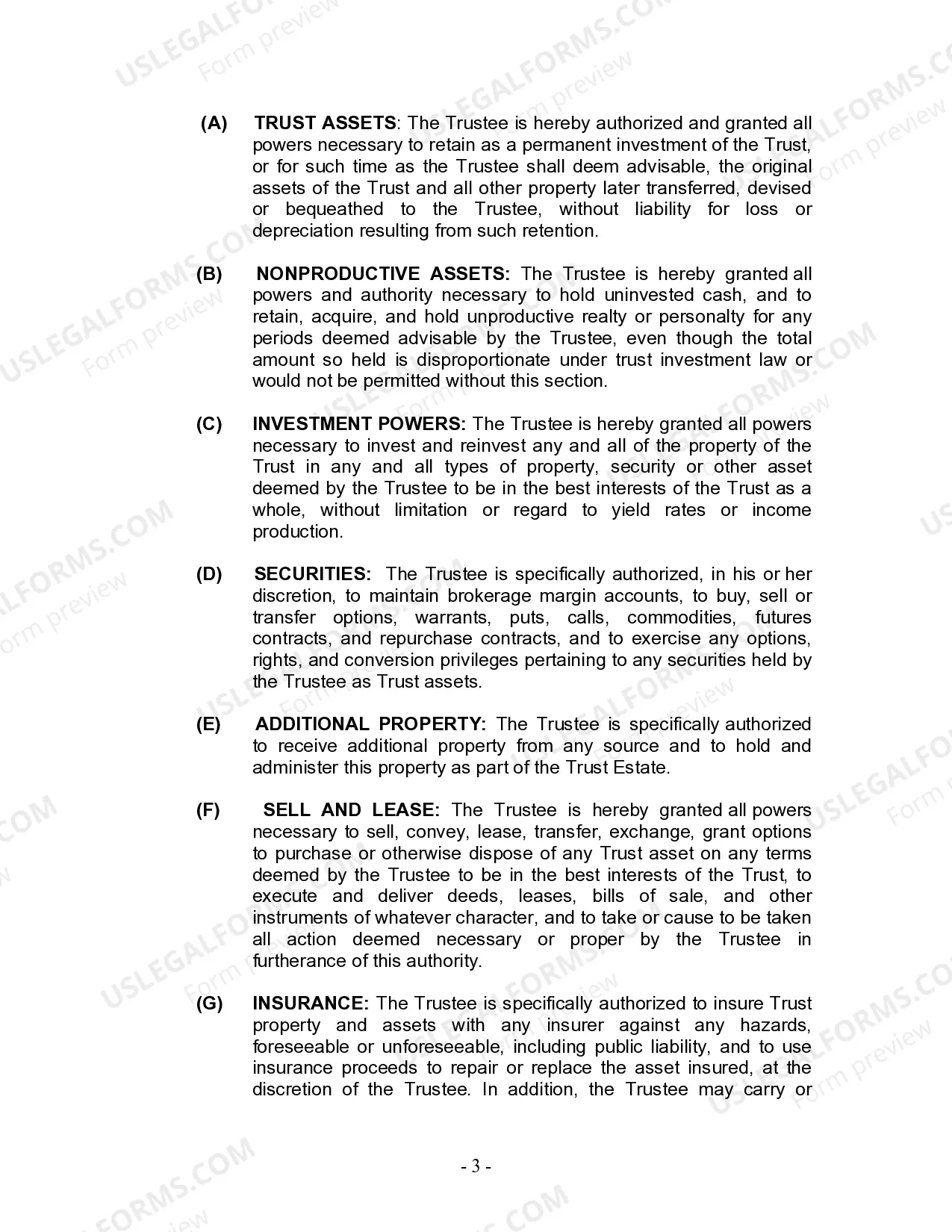
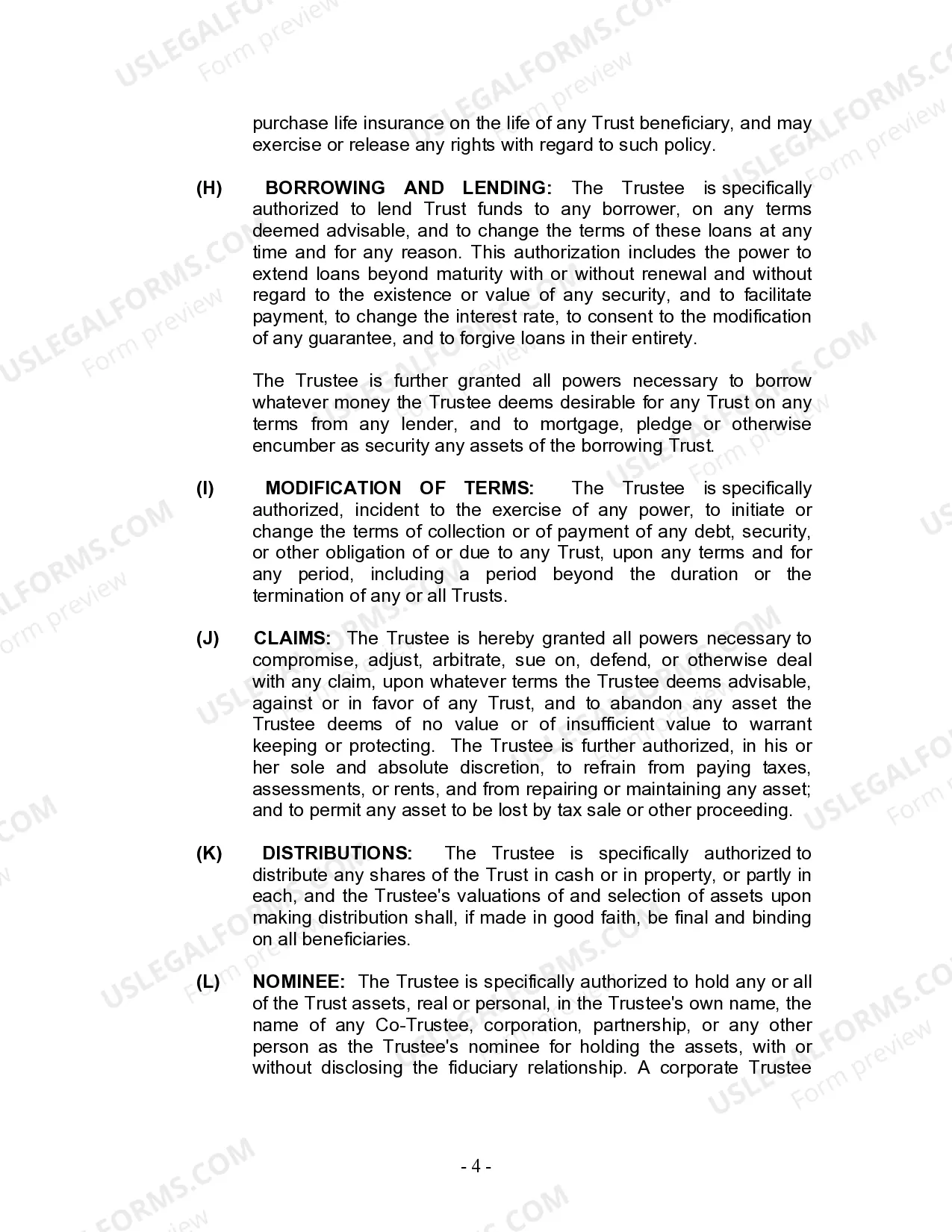
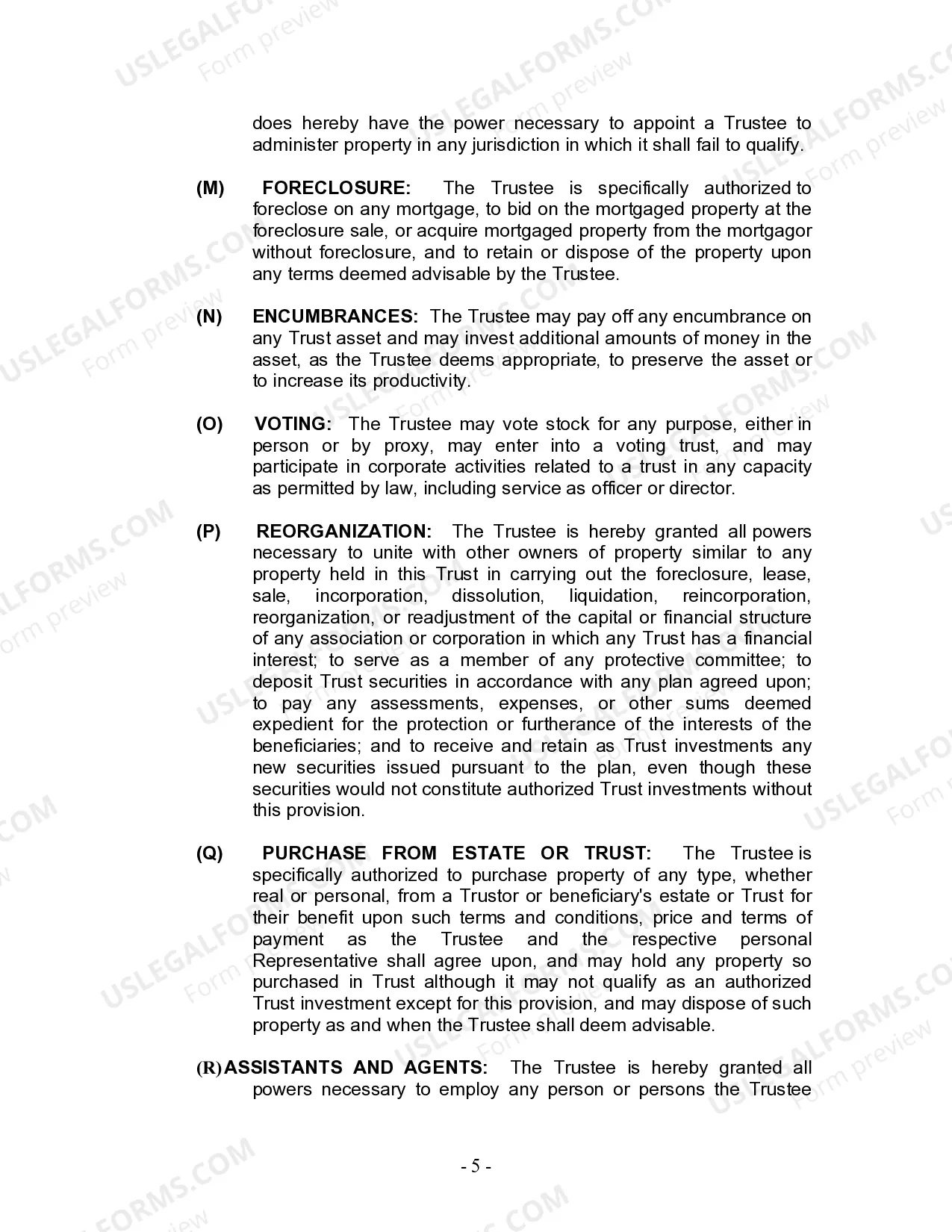
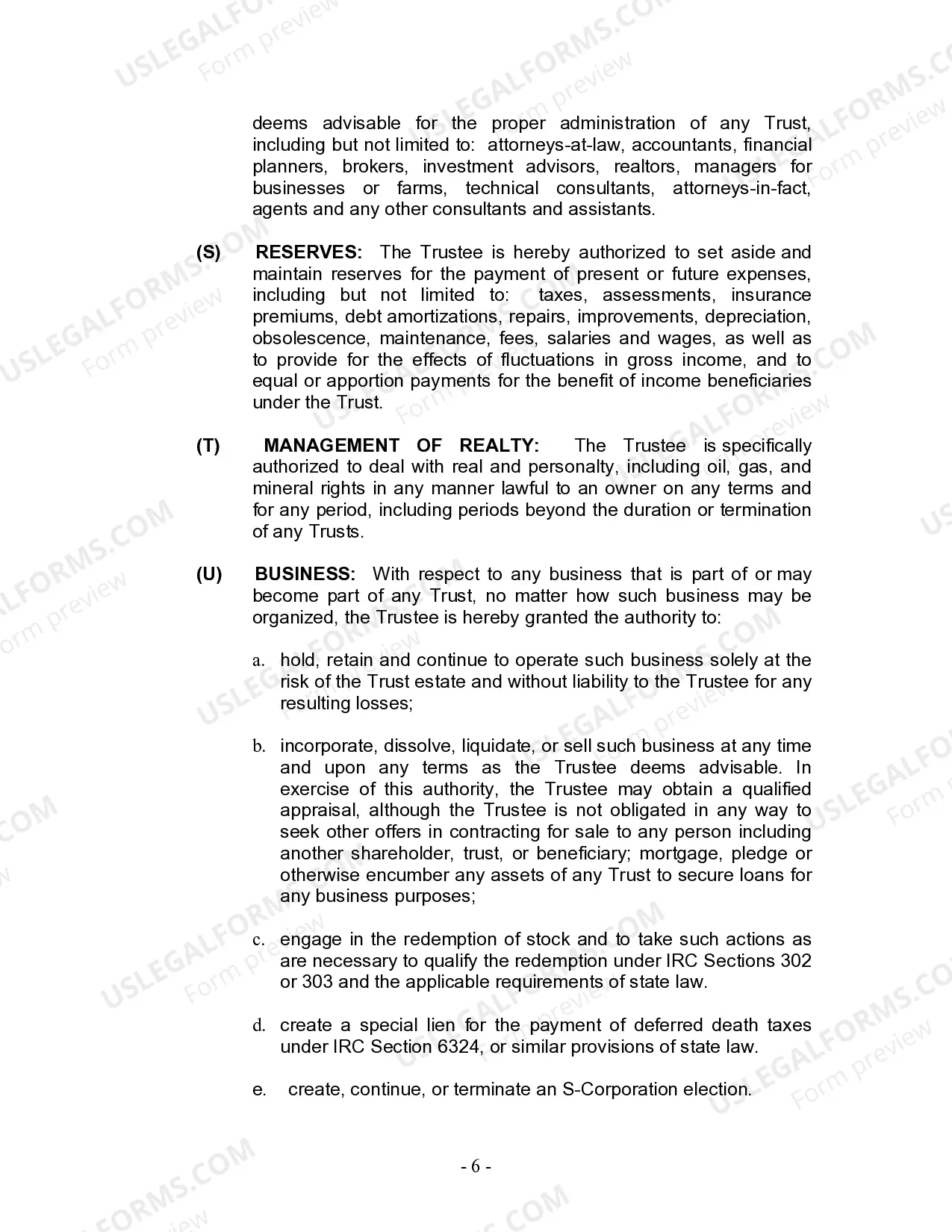
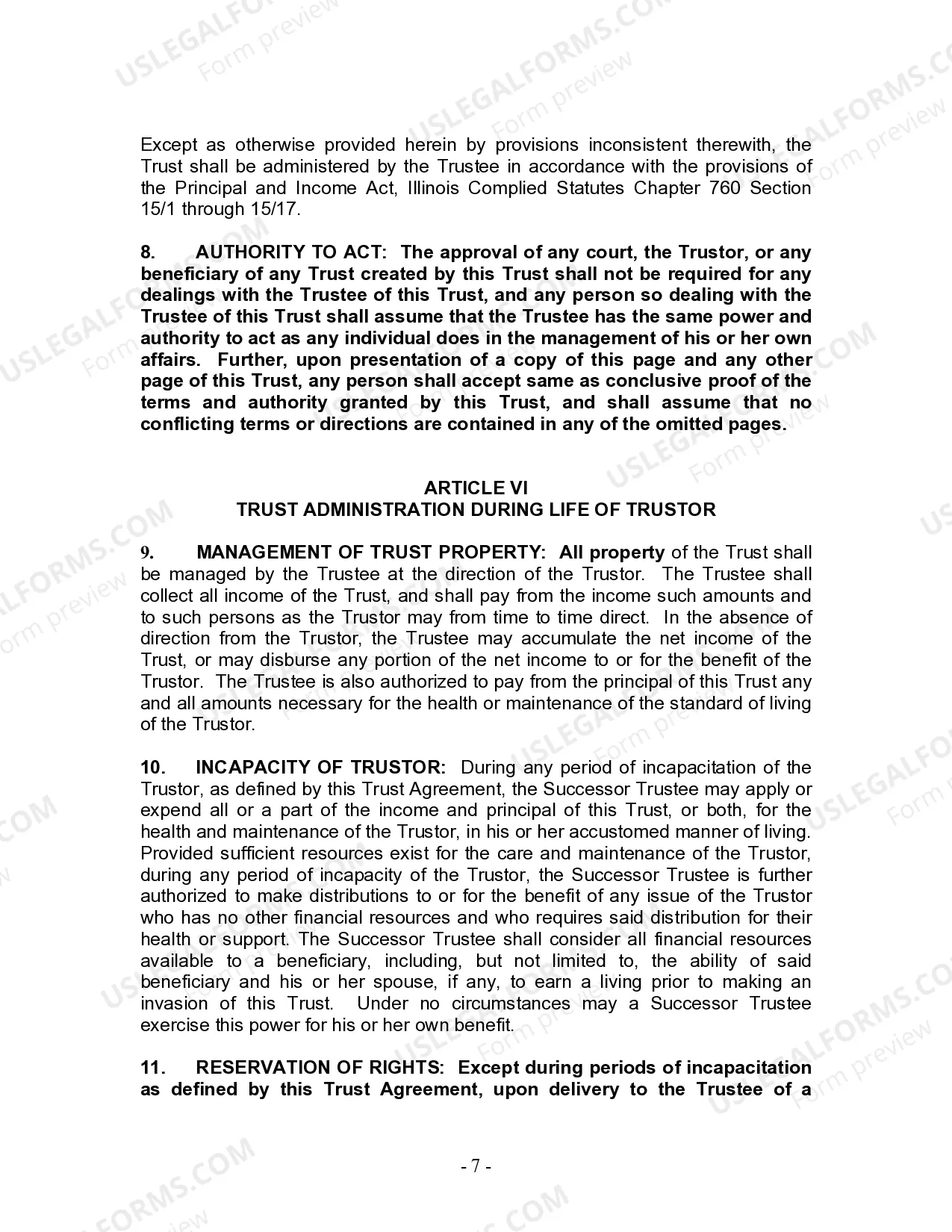
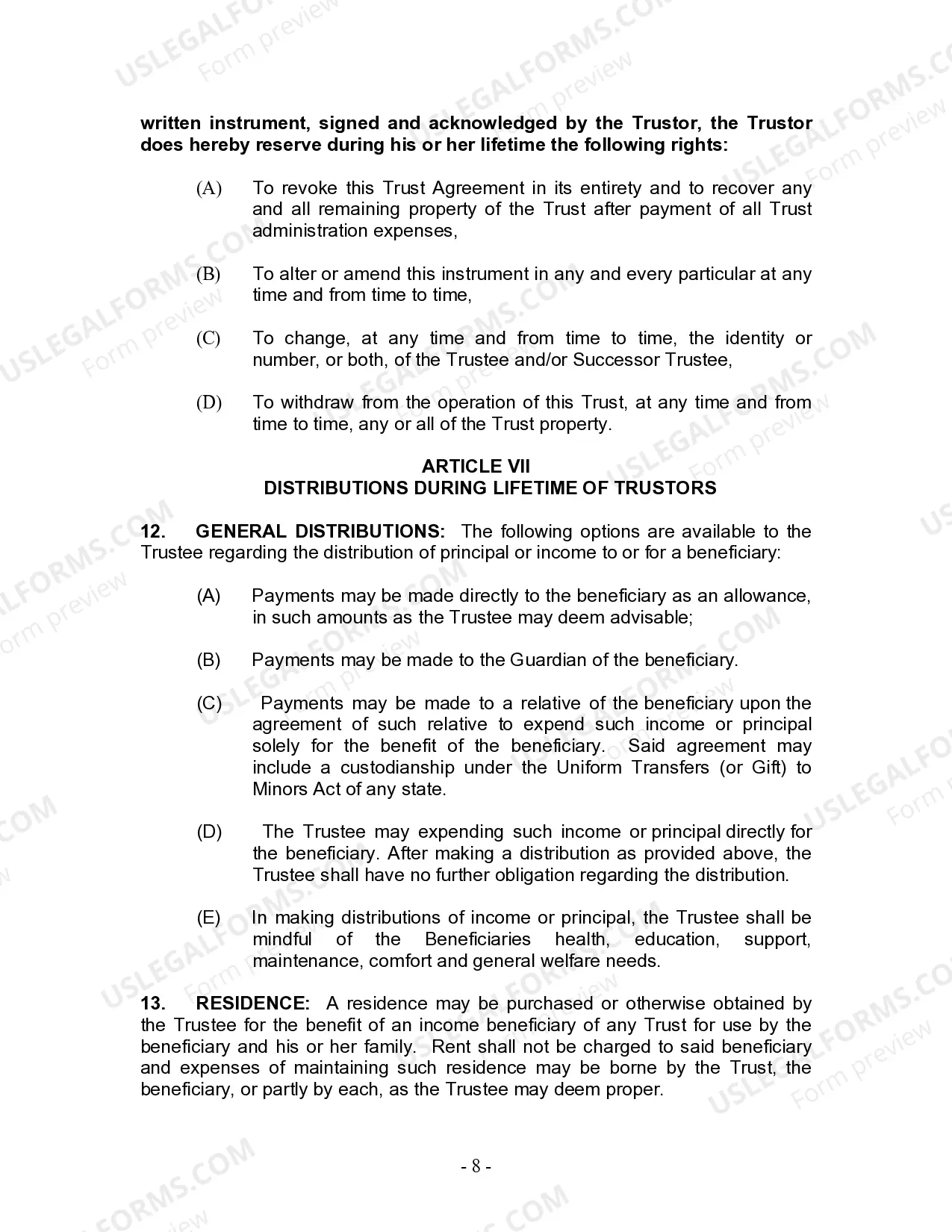
- Trustee Powers: Outlines the authority and responsibilities assigned to the trustee.
- Distribution Provisions: Details how the trust assets will be distributed upon the trustor's death.



Common use cases
This form should be utilized when an individual who is single, divorced, or widowed without children wishes to establish a trust for managing their assets. It is particularly useful for estate planning, allowing for privacy and control over how assets are distributed after their passing. Individuals concerned about property going through probate or looking to minimize estate taxes may also benefit from this trust.
Who can use this document
- Individuals who are single, divorced, or widowed.
- Those without children who want to direct their assets after death.
- Individuals looking to avoid the probate process.
Completing this form step by step
- Identify the trustor by providing the full legal name and address.
- Assign a name to the trust for identification purposes.
- Designate a trustee who will manage the trust assets.
- List the assets to be included in the trust.
- Sign and date the agreement in the presence of a notary, if required.
Does this document require notarization?
This form does not typically require notarization unless specified by local law. However, it is recommended to consult a legal professional to ensure compliance with any necessary formalities in your jurisdiction.
Get your form ready online
Our built-in tools help you complete, sign, share, and store your documents in one place.
Make edits, fill in missing information, and update formatting in US Legal Forms—just like you would in MS Word.
Download a copy, print it, send it by email, or mail it via USPS—whatever works best for your next step.
Sign and collect signatures with our SignNow integration. Send to multiple recipients, set reminders, and more. Go Premium to unlock E-Sign.
If this form requires notarization, complete it online through a secure video call—no need to meet a notary in person or wait for an appointment.
We protect your documents and personal data by following strict security and privacy standards.

Make edits, fill in missing information, and update formatting in US Legal Forms—just like you would in MS Word.

Download a copy, print it, send it by email, or mail it via USPS—whatever works best for your next step.

Sign and collect signatures with our SignNow integration. Send to multiple recipients, set reminders, and more. Go Premium to unlock E-Sign.

If this form requires notarization, complete it online through a secure video call—no need to meet a notary in person or wait for an appointment.

We protect your documents and personal data by following strict security and privacy standards.
Common mistakes
- Failing to name a successor trustee.
- Not clearly listing all assets meant to be transferred into the trust.
- Omitting necessary signatures and dates.
Why complete this form online
- Convenience of completing and managing your legal documents from home.
- Editable templates allow you to customize the trust according to your specific needs.
- Reliable access to attorney-drafted forms ensures you are following the correct legal guidelines.
- The living trust allows for the management of assets during the Trustor's lifetime and ensures smooth transfer upon death.
- It avoids probate, making property distribution more efficient and private.
- Trust provisions must comply with state laws to be valid and enforceable.
Summary of main points
- This living trust is designed for single, divorced, or widowed individuals with no children.
- By using this form, individuals can ensure their assets are managed and distributed as they wish.
- It is important to complete the form accurately to avoid future complications.
Looking for another form?


Form popularity
FAQ
A "living trust" (also called an "inter vivos" trust by lawyers who can't give up Latin) is simply a trust you create while you're alive, rather than one that is created at your death under the terms of your will. The beneficiaries you name in your living trust receive the trust property when you die.
Does a Beneficiary Have the Right to See the Trust? The California Probate Law section 16061.7 provides for the beneficiaries right to see the trust. Trustees should furnish beneficiaries and heirs with copies of the trust document.
Of the trust's existence, the beneficiary's right to request a copy of the trust agreement and right to an account (within 90 days of the trust becoming irrevocable or a change in trusteeship) when a trust becomes irrevocable (within 90 days of the event) appointment of a new trustee (within 90 days of acceptance)
Funding a Trust Is Expensive... This is the major drawback to using a revocable living trust for many people, but it's not worth the time, money, and effort to create one if the trust isn't fully funded.
A revocable living trust is a trust document created by an individual that can be changed over time. Revocable living trusts are used to avoid probate and to protect the privacy of the trust owner and beneficiaries of the trust as well as minimize estate taxes.
The main purpose of a living trust is to oversee the transfer of your assets after your death. Under the terms of the living trust, you are the grantor of the trust, and the person you designate to distribute the trust's assets after your death is known as the successor trustee.
Basic revocable living Trusts may be included in a flat-fee estate planning package costing between $2,500 and $6,000. Revocable living Trusts help you bypass the costly and public probate process and can evolve into testamentary Trusts that allow you to control your assets long after you have departed this world.
When it comes to protecting your loved ones, having both a will and a trust is essential. The difference between a will and a trust is when they kick into action. A will lays out your wishes for after you die. A living revocable trust becomes effective immediately.