Illinois Commercial Building or Space Lease
Description
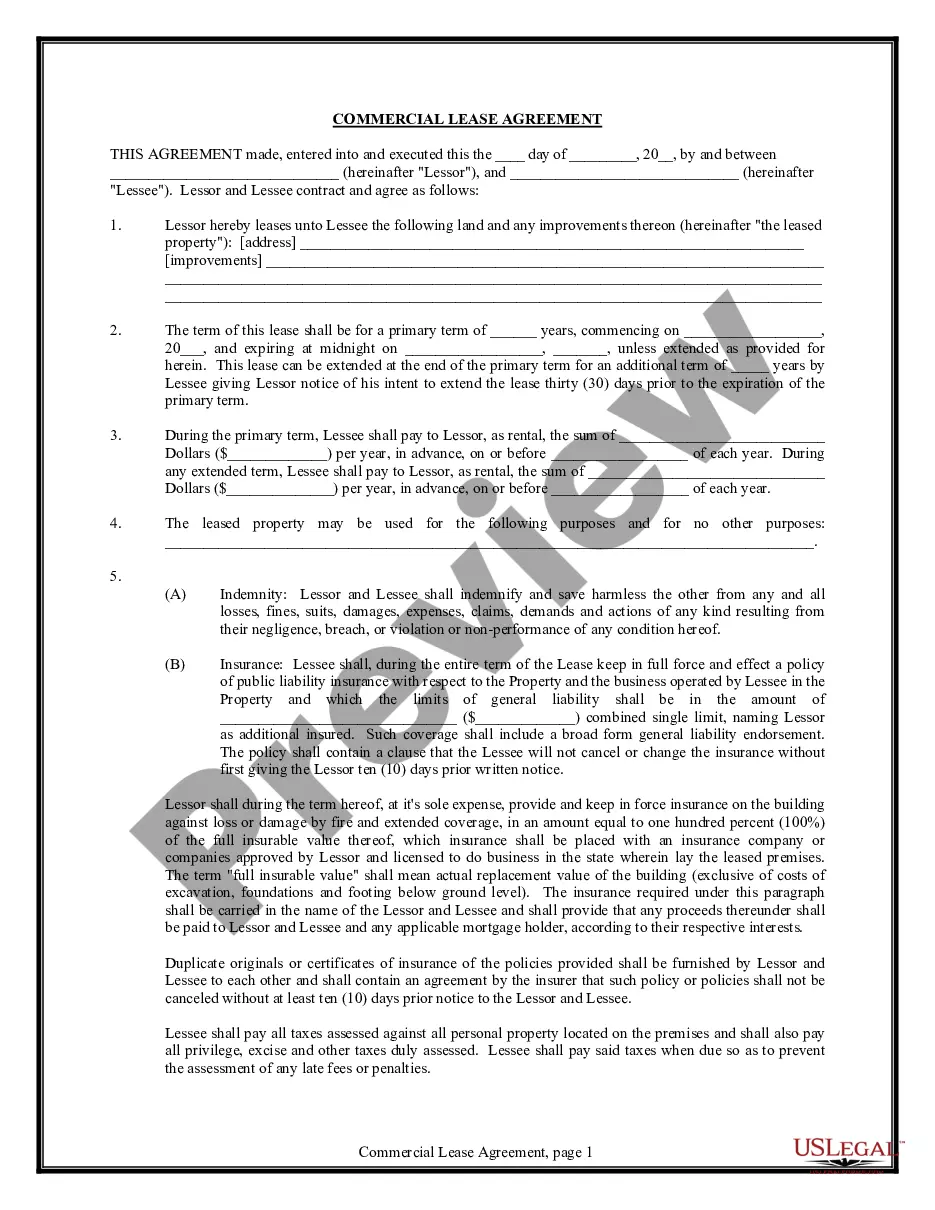
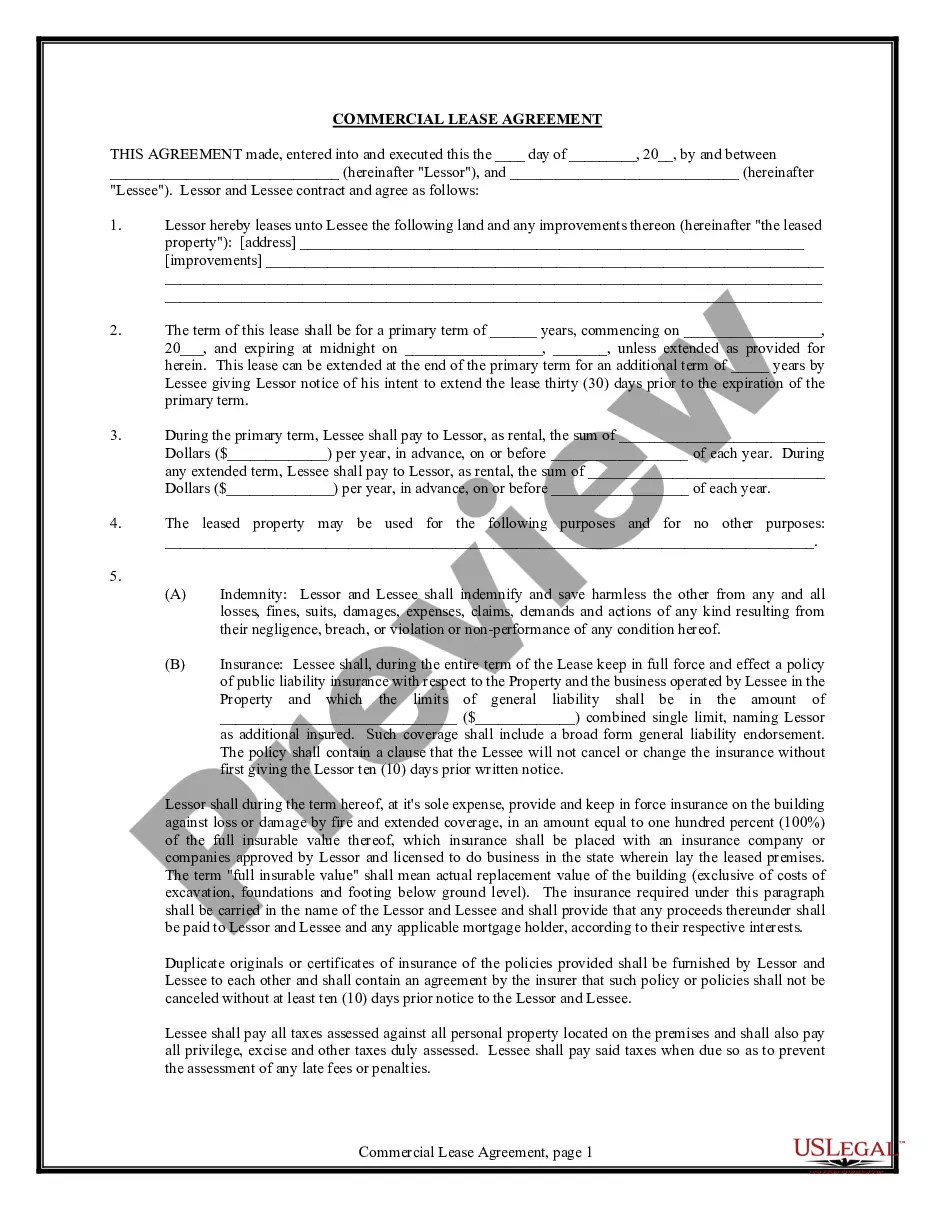
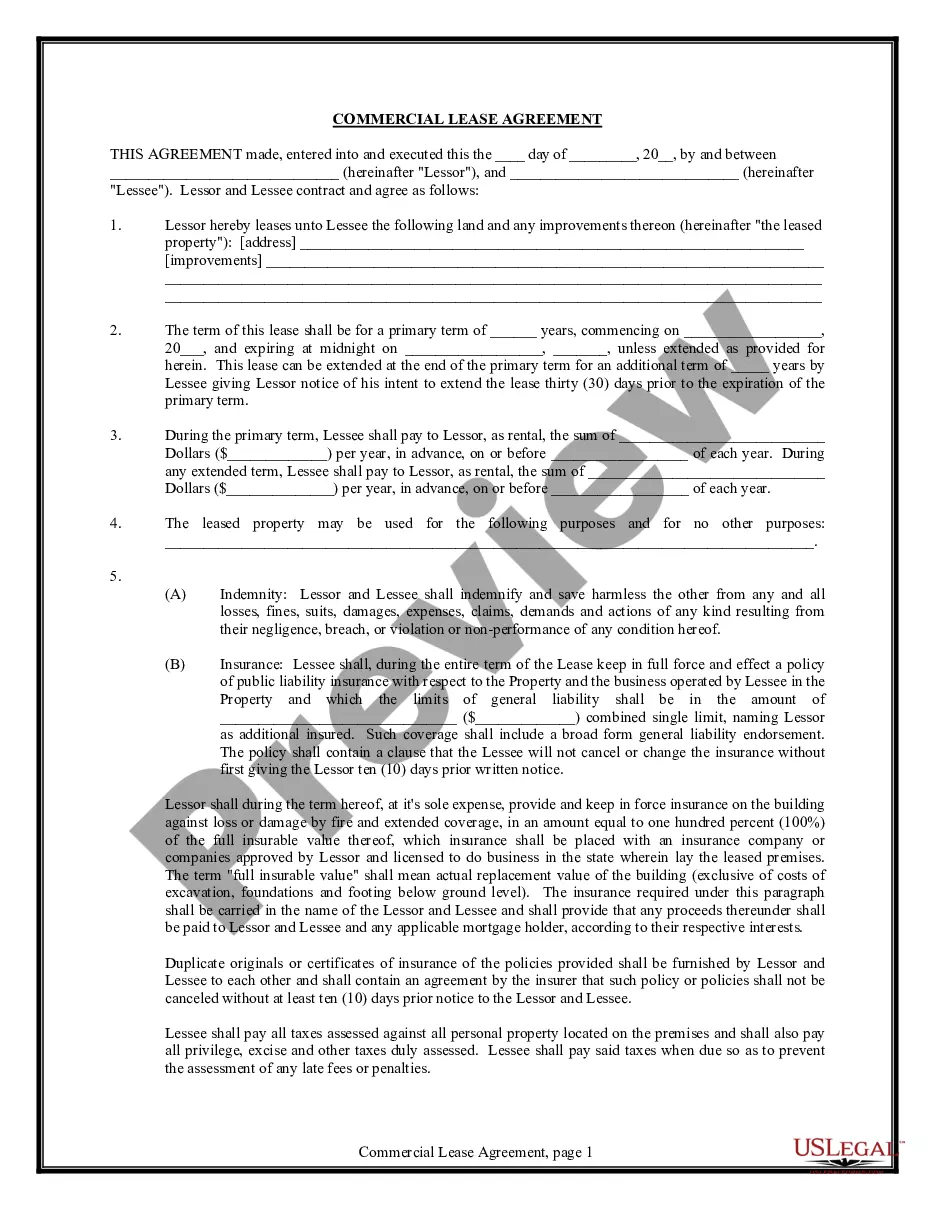
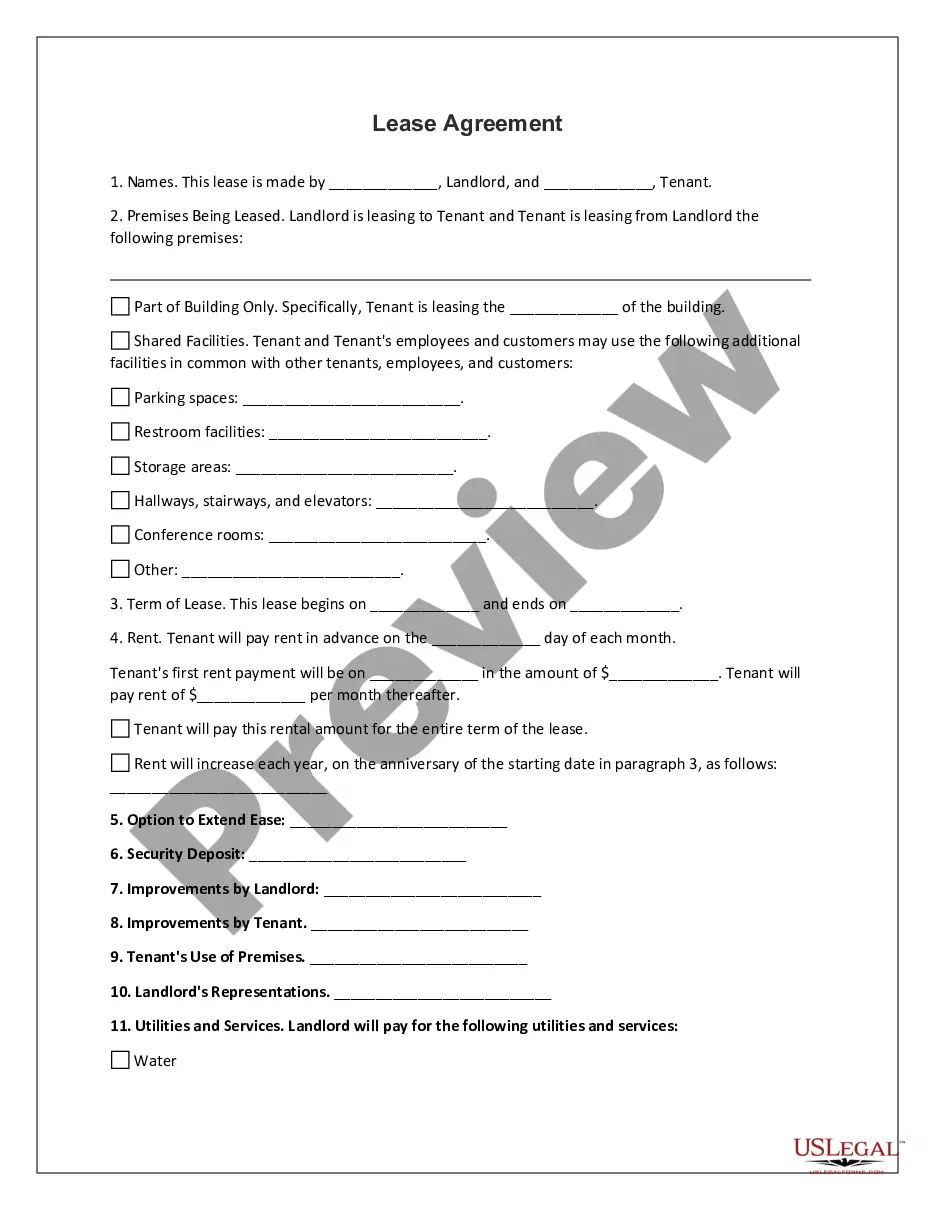

Key Concepts & Definitions
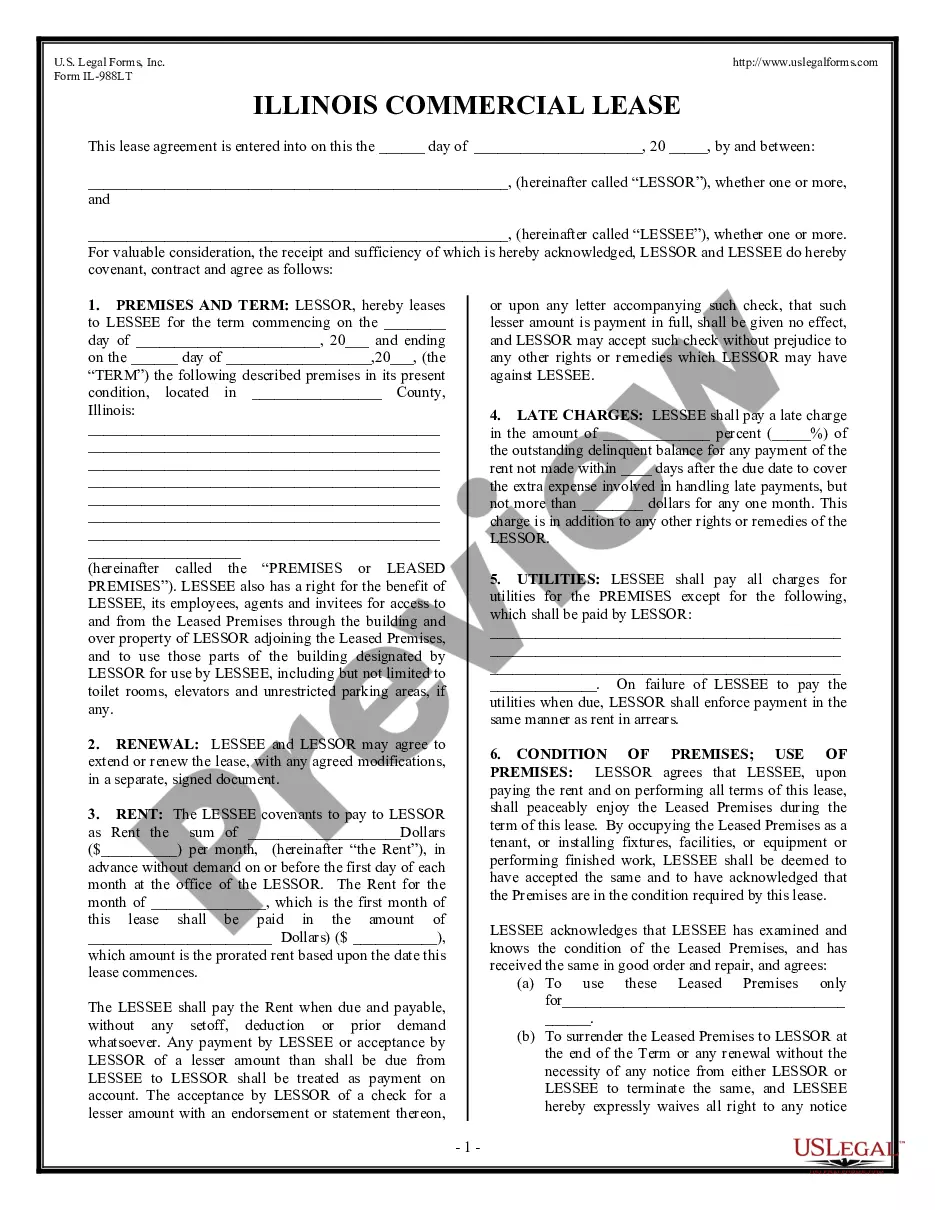
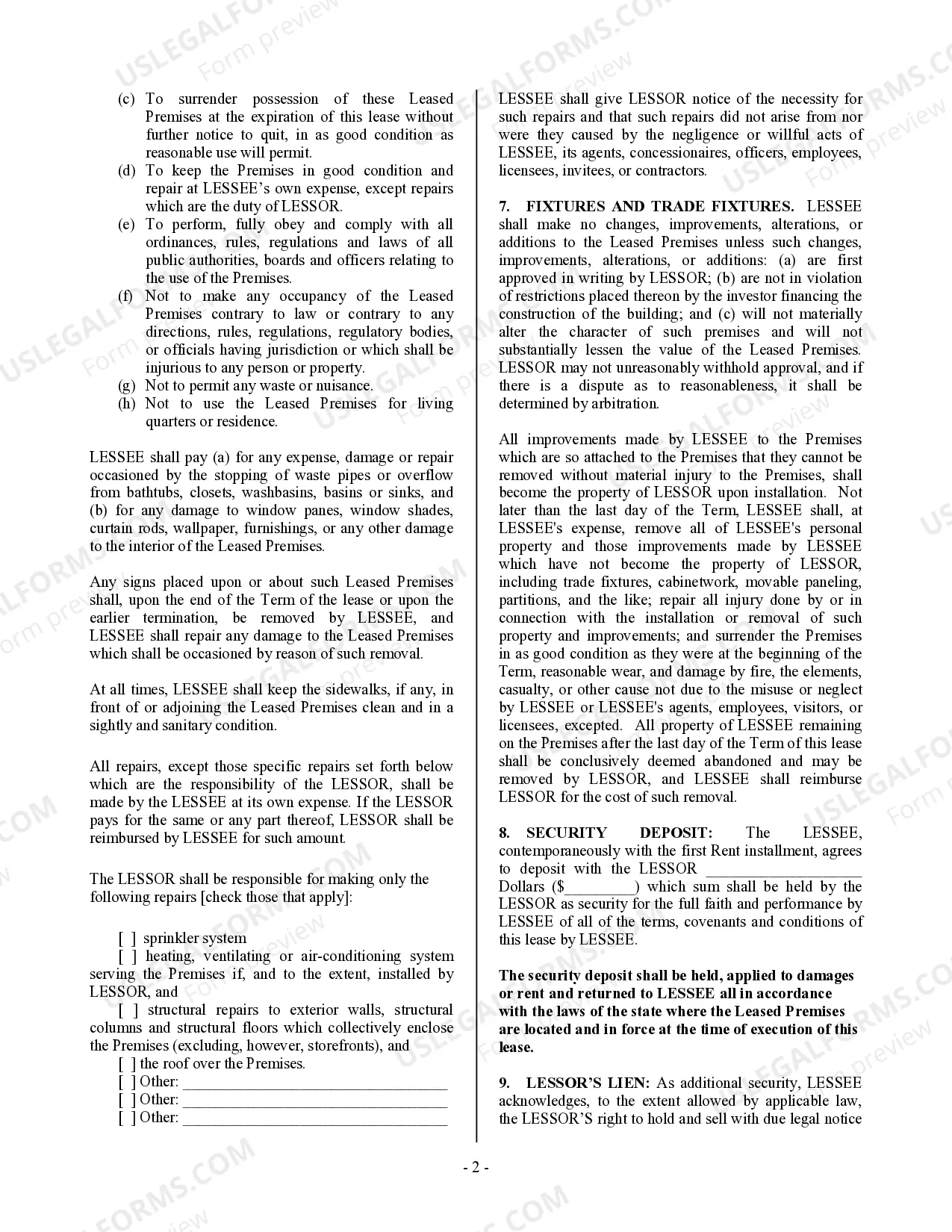
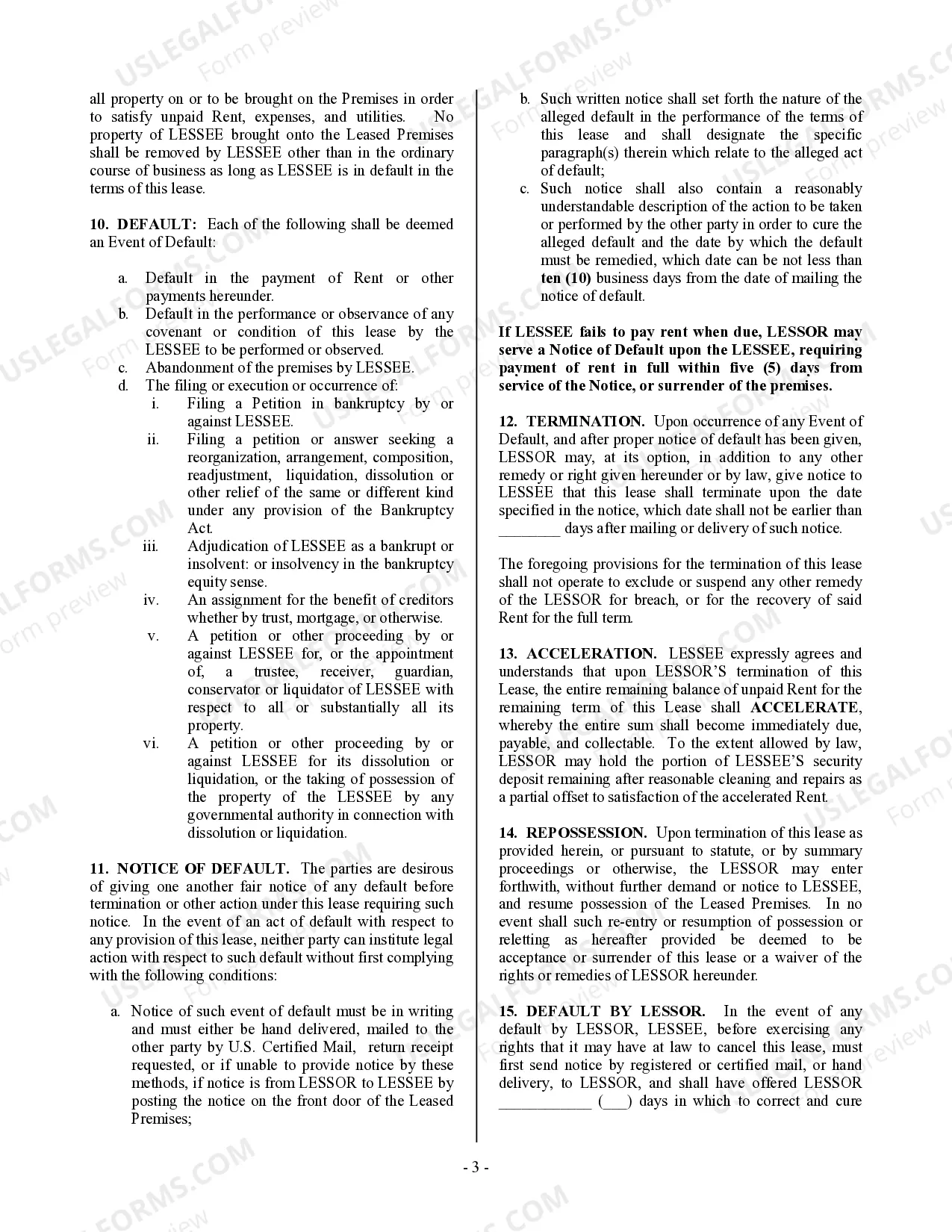
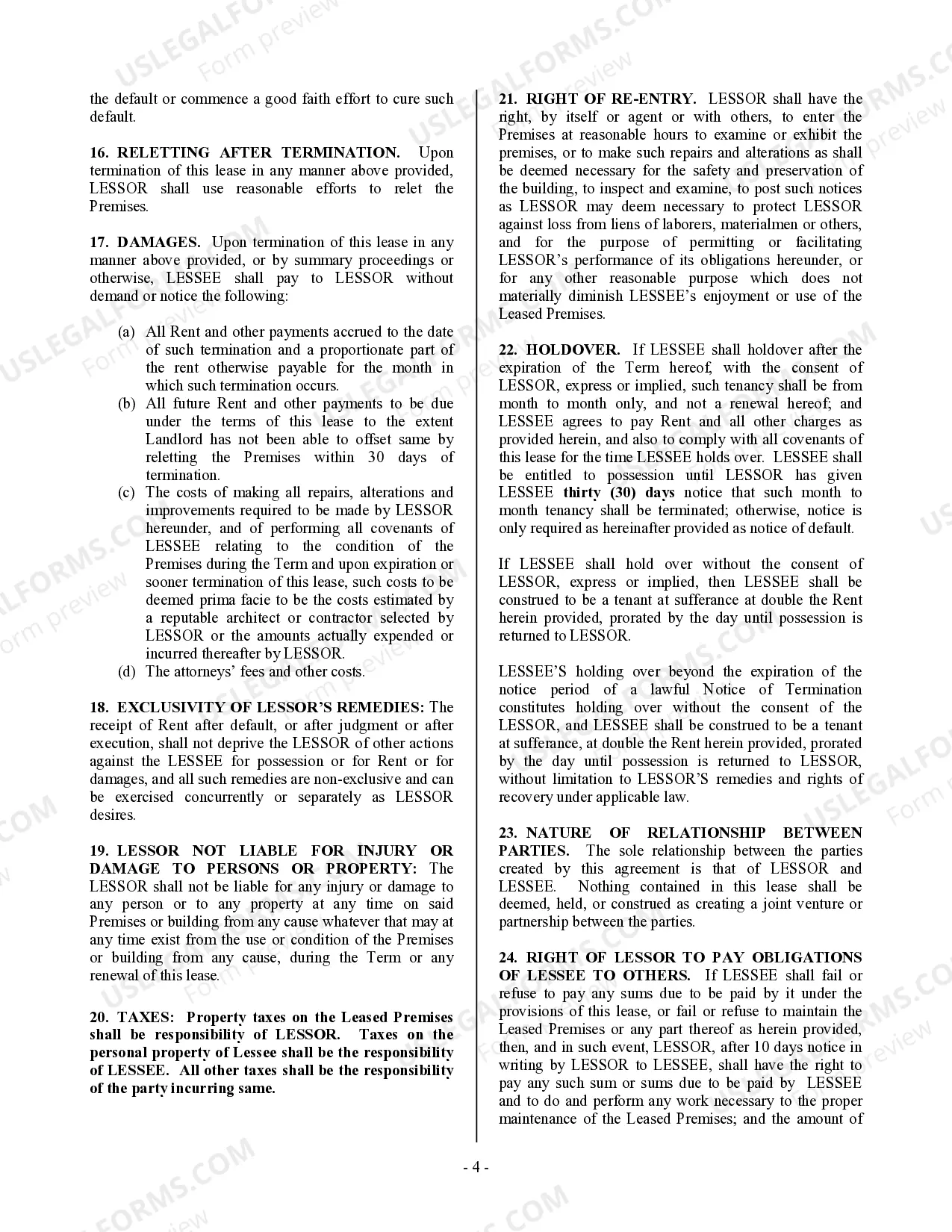
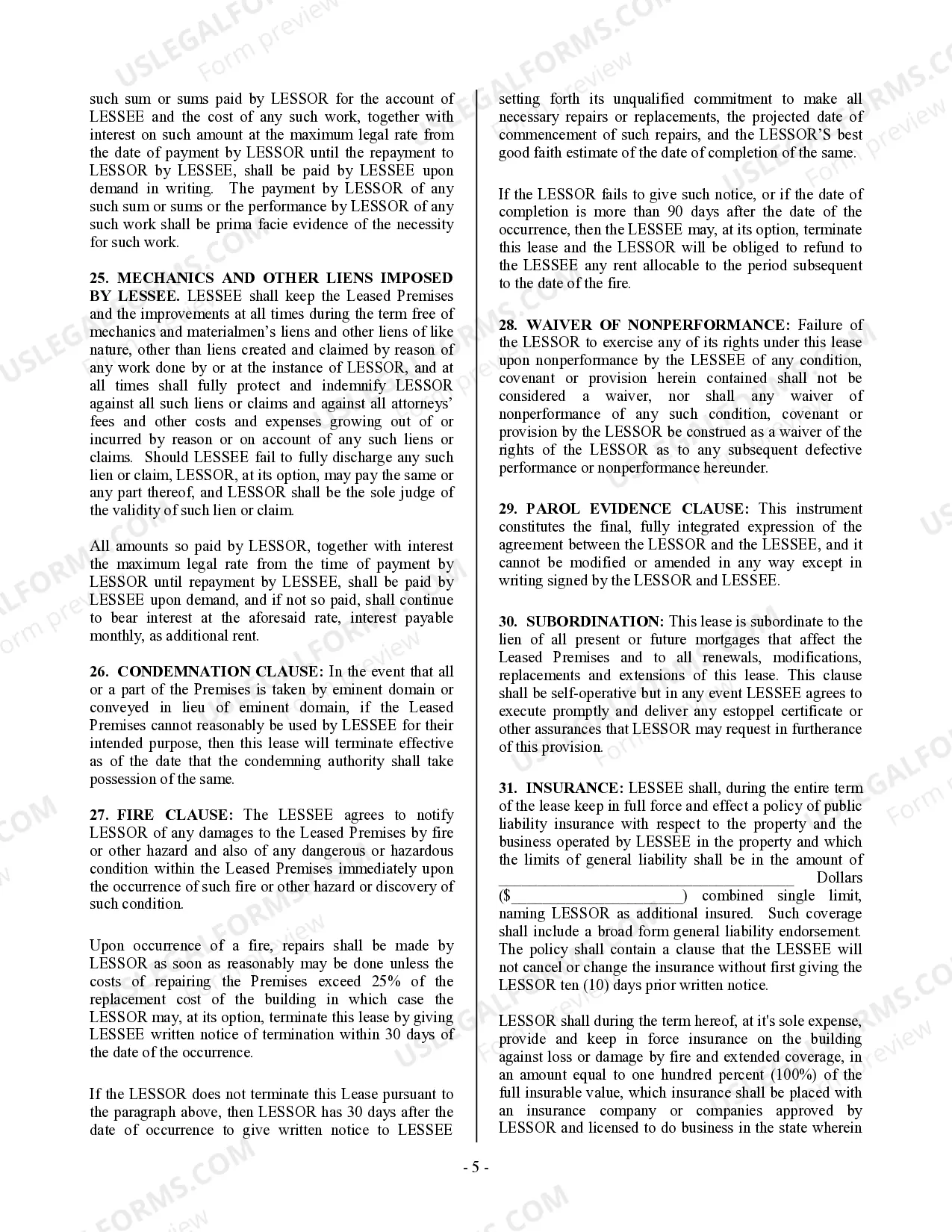
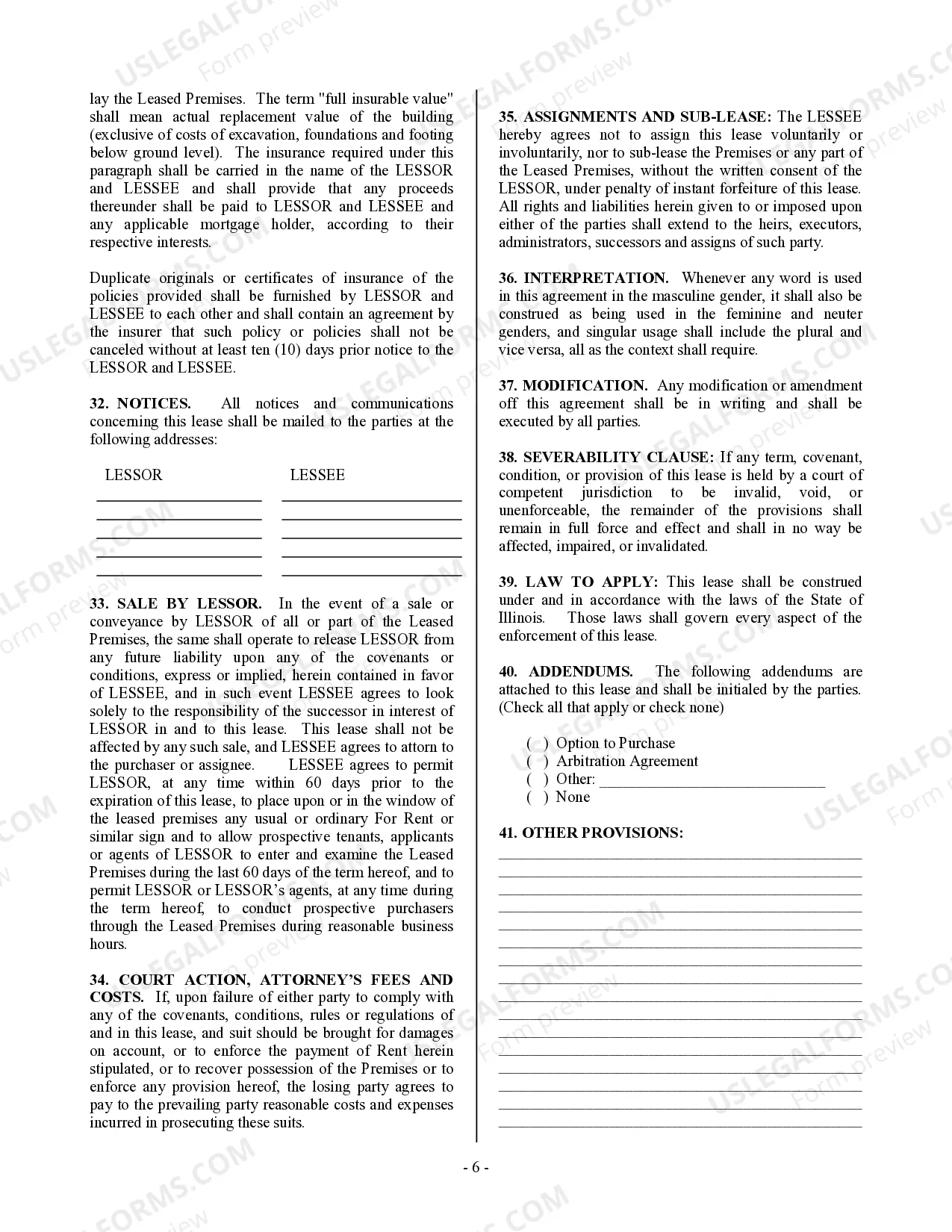
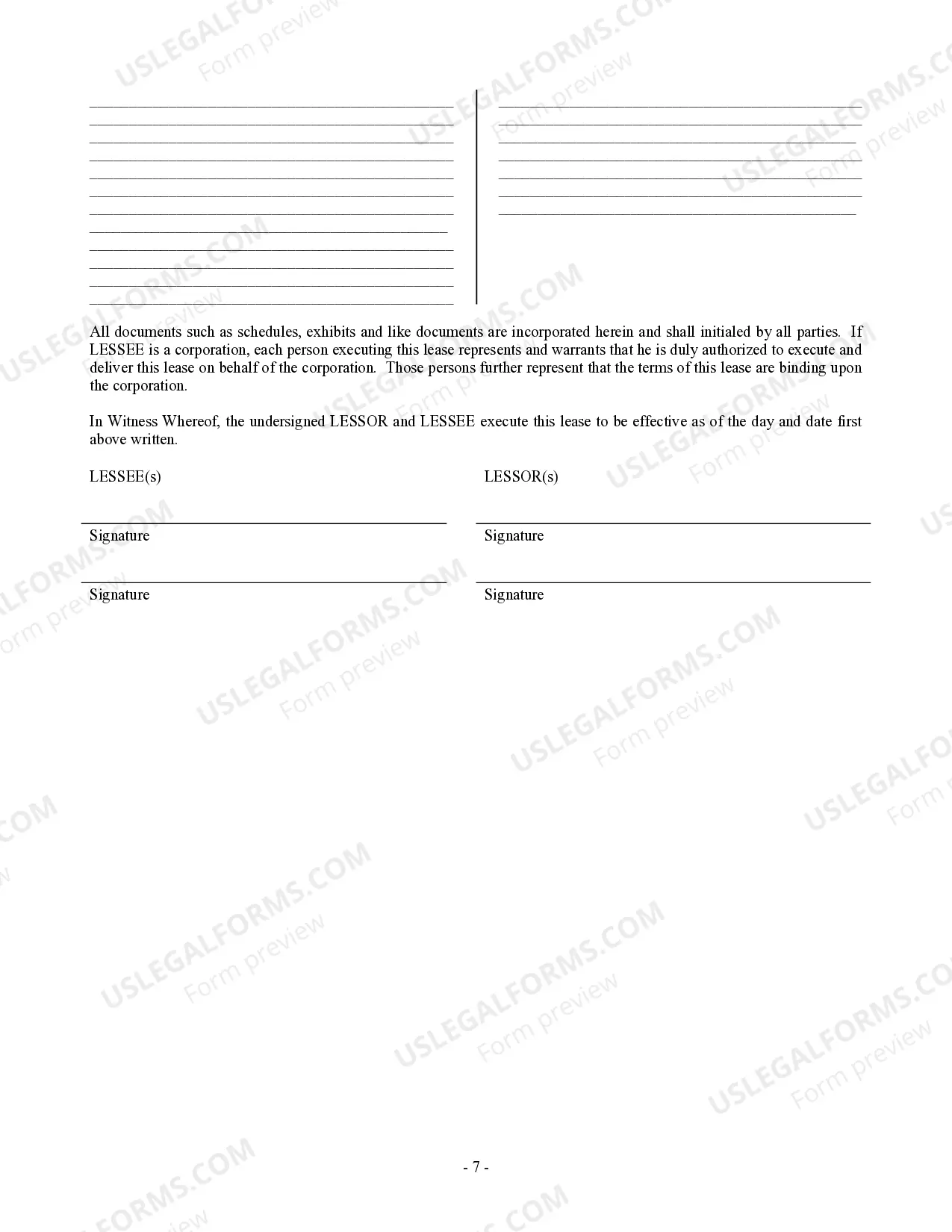
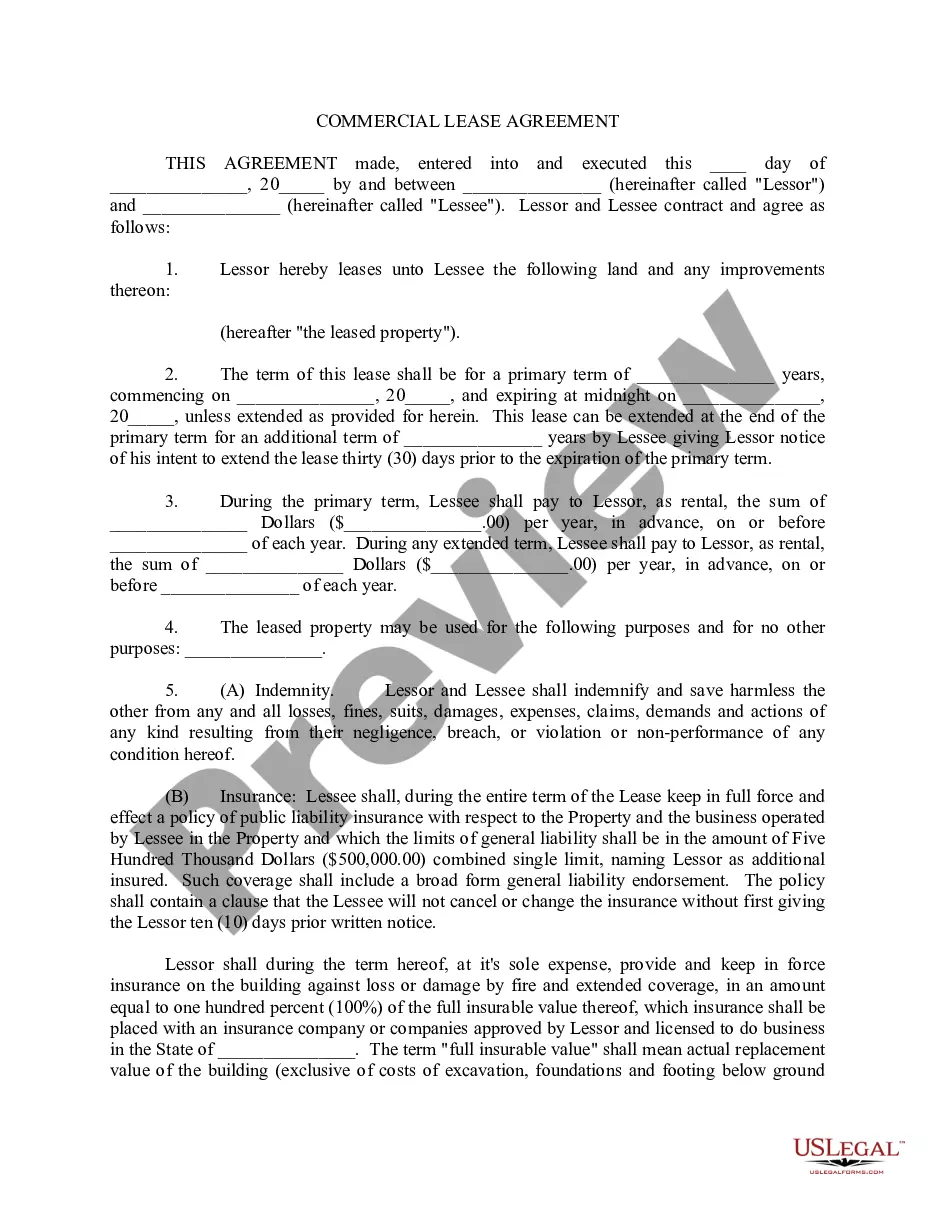
Commercial Building or Space Lease: This refers to a formal agreement wherein a landlord rents out commercial property to a business, where the premises are primarily used for conducting business activities rather than residential purposes. Key types include retail spaces, office buildings, warehouses, and industrial units.
Step-by-Step Guide to Lease a Commercial Space
- Determine Your Needs: Assess the type of space, square footage, location, and budget required for your business.
- Market Research: Explore available properties that fit your criteria and compare features and pricing.
- Site Visits: Schedule visits to promising locations to check for suitability and condition of the premises.
- Negotiate Lease Terms: Work with a real estate agent or lawyer to negotiate the lease terms with the landlord.
- Review and Sign the Lease: Carefully review all lease documents, ensure clarity on terms like lease duration, rent increases, maintenance responsibilities, etc., and then sign the lease to secure the space.
Risk Analysis in Commercial Leasing
- Financial Risk: Long-term leasing commitments can be financially risky, especially if business revenues decline.
- Legal Liabilities: Lease agreements might have clauses that could impose significant legal responsibilities on a tenant.
- Market Risks: Economic downturns can affect business operations and the ability to fulfill rental agreements.
Common Mistakes & How to Avoid Them
- Overlooking Hidden Costs: Ensure to ask about and understand all associated costs outside of rent, including utility bills, maintenance fees, and property taxes.
- Inadequate Lease Review: Always involve a legal expert or a commercial real estate advisor when reviewing the lease documents to avoid detrimental clauses.
- Neglecting Exit Strategy: Ensure the lease includes clear terms for subleasing or lease termination to provide flexibility if business needs change.
Industry Trends & Future Insights
The trend in commercial real estate is increasingly moving towards flexible workspaces and shorter, more flexible lease terms. This shift is driven by the rise of remote work and the growing startup culture, which favors less traditional office environments and shorter financial commitments.
How to fill out Illinois Commercial Building Or Space Lease?
Searching for Illinois Commercial Building or Space Lease documents and completing them can be rather difficult.
To conserve time, expenses, and effort, utilize US Legal Forms and locate the appropriate template specifically for your state in merely a few clicks.
Our legal experts prepare every document, so you only need to complete them. It is truly that easy.
Select your plan on the pricing page and create your account. Choose your payment method using a credit card or PayPal. Download the document in your desired format. You can print the Illinois Commercial Building or Space Lease template or fill it out using any online editor. There’s no need to fret about typographical errors since your template can be utilized, submitted, and printed as many times as necessary. Try US Legal Forms and gain access to over 85,000 state-specific legal and tax documents.
- Access your account by logging in and navigate back to the form's page to download the sample.
- Your saved samples are stored in My documents and are available always for future use.
- If you haven't signed up yet, it is advisable to register.
- Review our comprehensive instructions on how to obtain your Illinois Commercial Building or Space Lease document in just a few minutes.
- To obtain a valid form, verify its suitability for your state.
- Examine the form using the Preview feature (if available).
- If there’s a description, read it to understand the key details.
- Click Buy Now if you have found what you're looking for.
Form popularity
FAQ
Just like a residential rental or lease, your commercial landlord is going to insist on a security deposit. The security deposit can be used by the landlord for a number of reasons, but most commonly it will be used to cover any damage at the end of your lease if you do not renew your agreement.
The Introduction. The beginning of the lease agreement should contain the name of the landlord and tenant, as well as a statement of the agreement into which they are entering. Rent. Deposit. Taxes. Property Insurance. Utilities and Amenities. Remodeling and Improvements. Repairs and Maintenance.
Names of all tenants. Limits on occupancy. Term of the tenancy. Rent. Deposits and fees. Repairs and maintenance. Entry to rental property. Restrictions on tenant illegal activity.
The Lease Must be in Writing It does not matter if the lease is handwritten or typed. If the lease is for more than one year, it must be in written form and contain the following terms.
As long as the contract spells out specific details and both parties have signed that they agree to the contract's terms, a handwritten contract is legally binding and enforceable in court.
Specifically, the tenant pays the base rent, property but also taxes, insurance, utilities, and maintenance. This even includes standard property repairs associated with the commercial space being occupied.
Name the parties. A simple rental agreement form needs to name the parties signing the lease and where they live. Describe the premises. Define the term of the lease. Set how much rent is owed. Assign a security deposit amount. Finalize the lease.
Depending on how granularly you want to get into the details, an office lease can take anywhere from one day to a year or more to negotiate. Most commonly it will be in the three to nine month range.
Commercial leases generally fall into one of three major categories based on how the building's operating expenses are passed on to tenants: Gross or full-service lease. You pay a flat monthly rate from which the landlord pays all operating expenses, including utilities, property taxes and maintenance.