Illinois Commercial Building or Space Lease
What is this form?
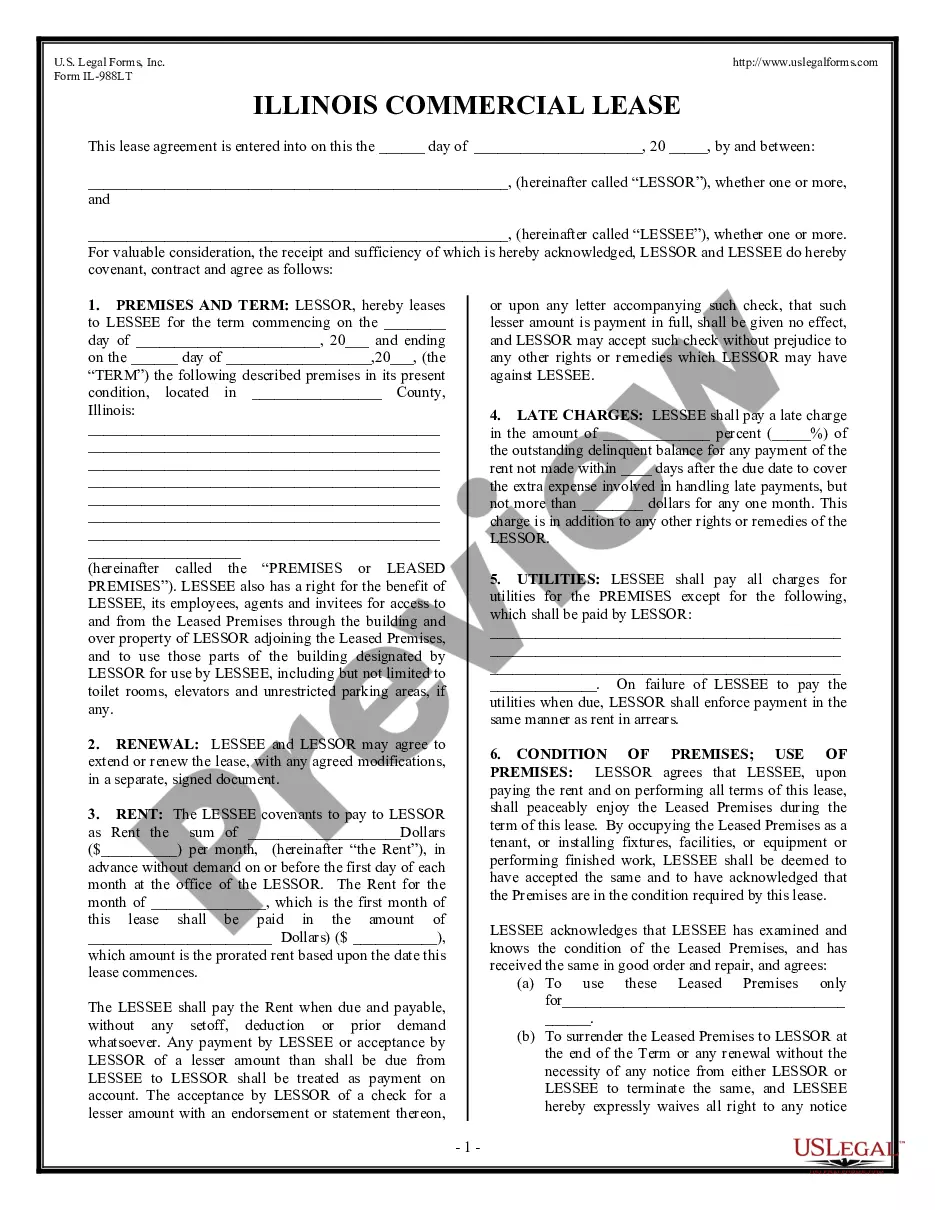
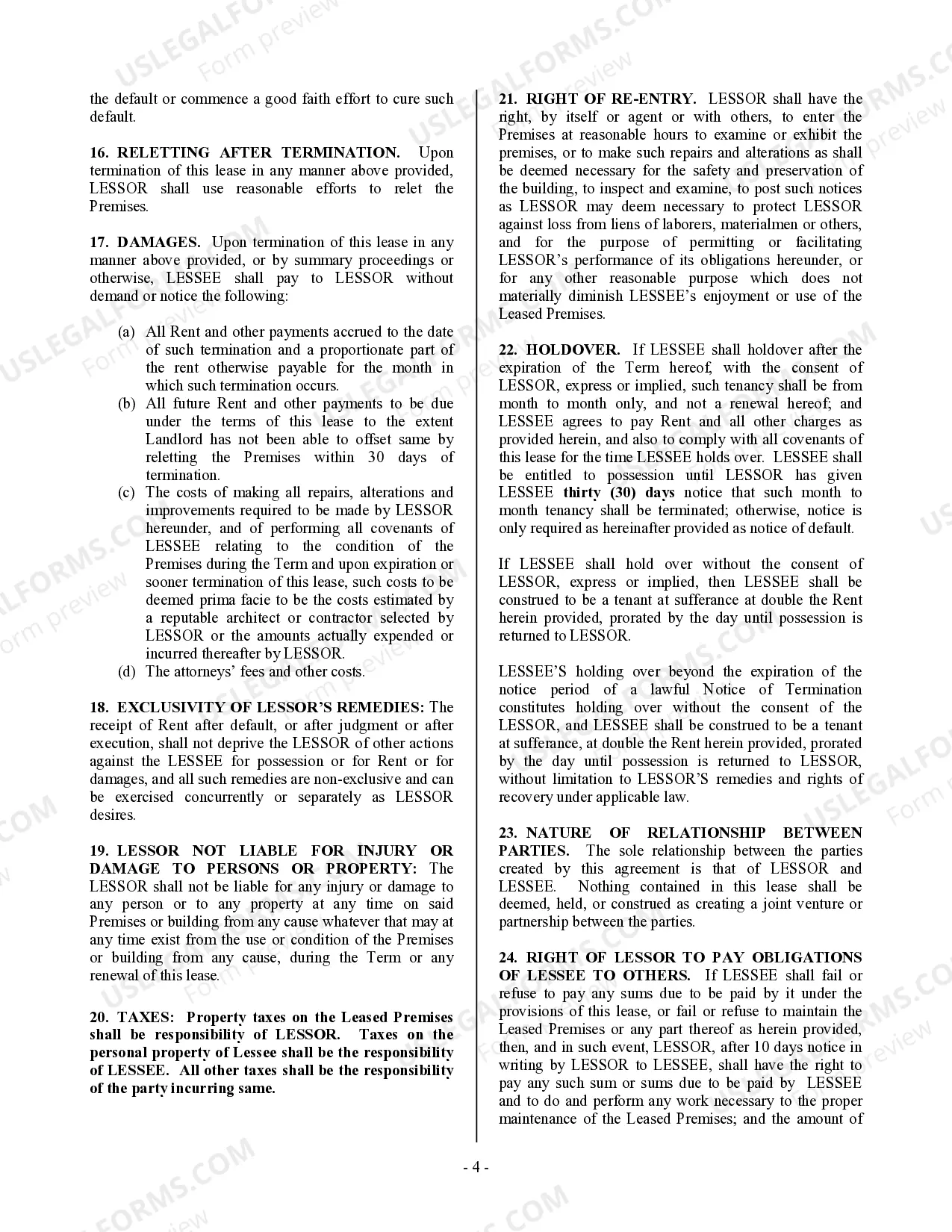
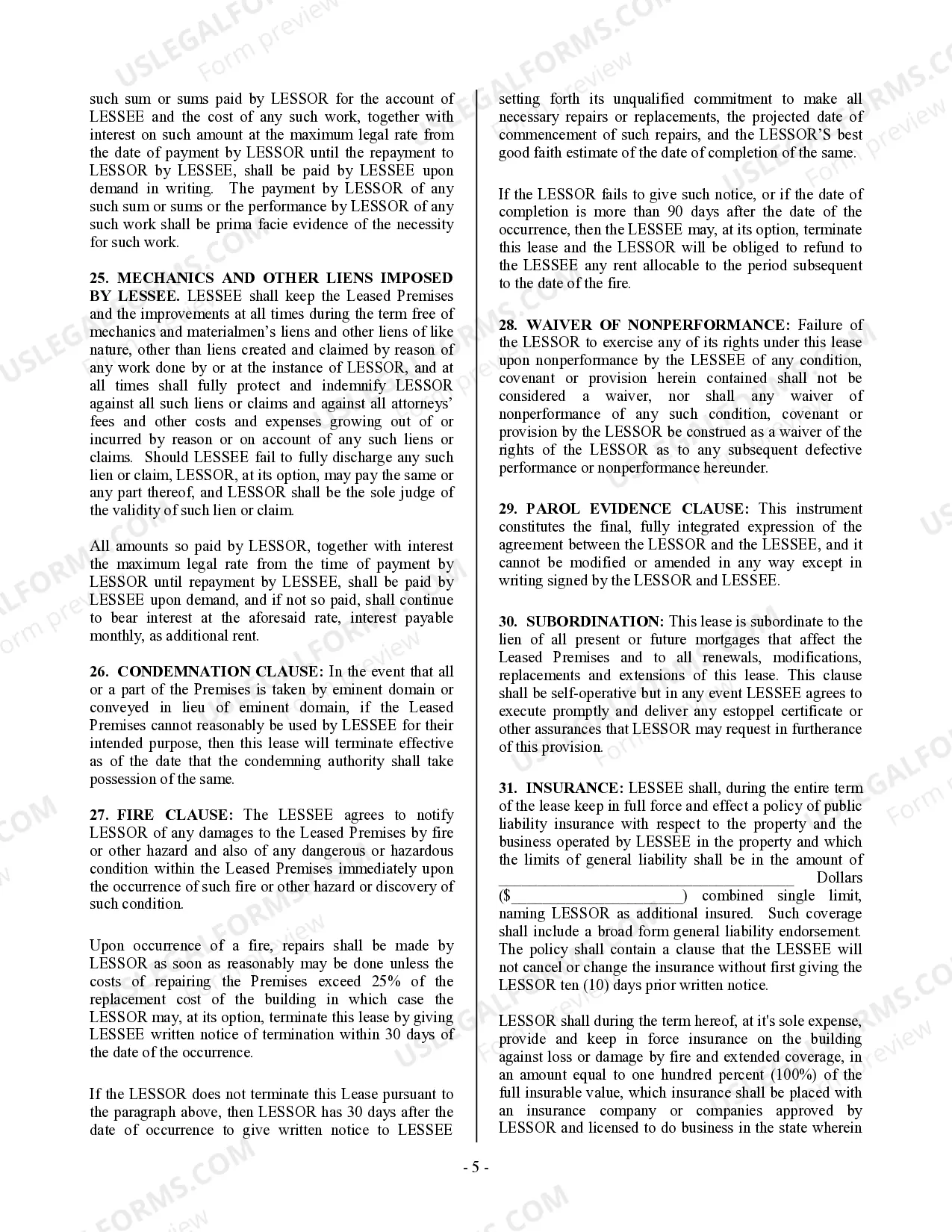
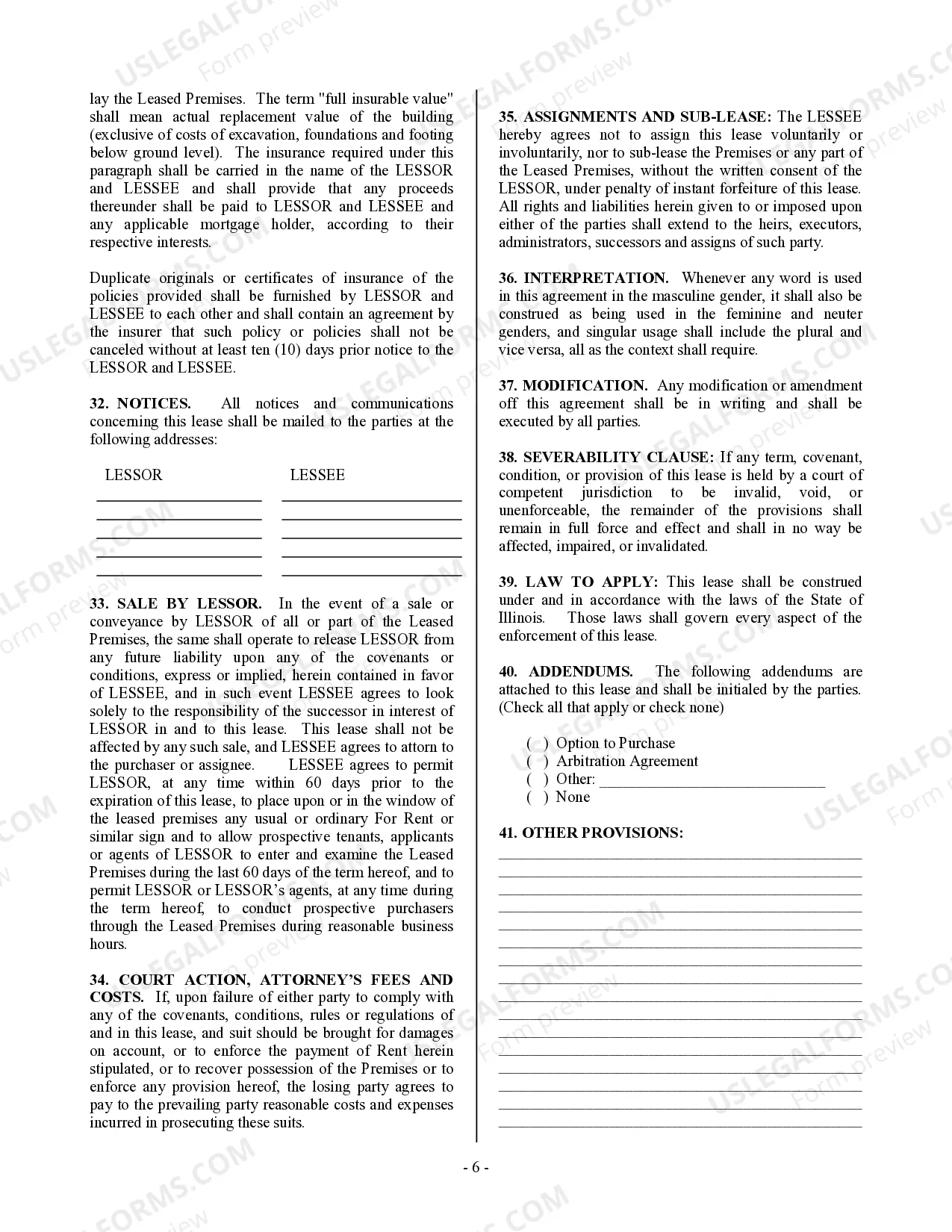
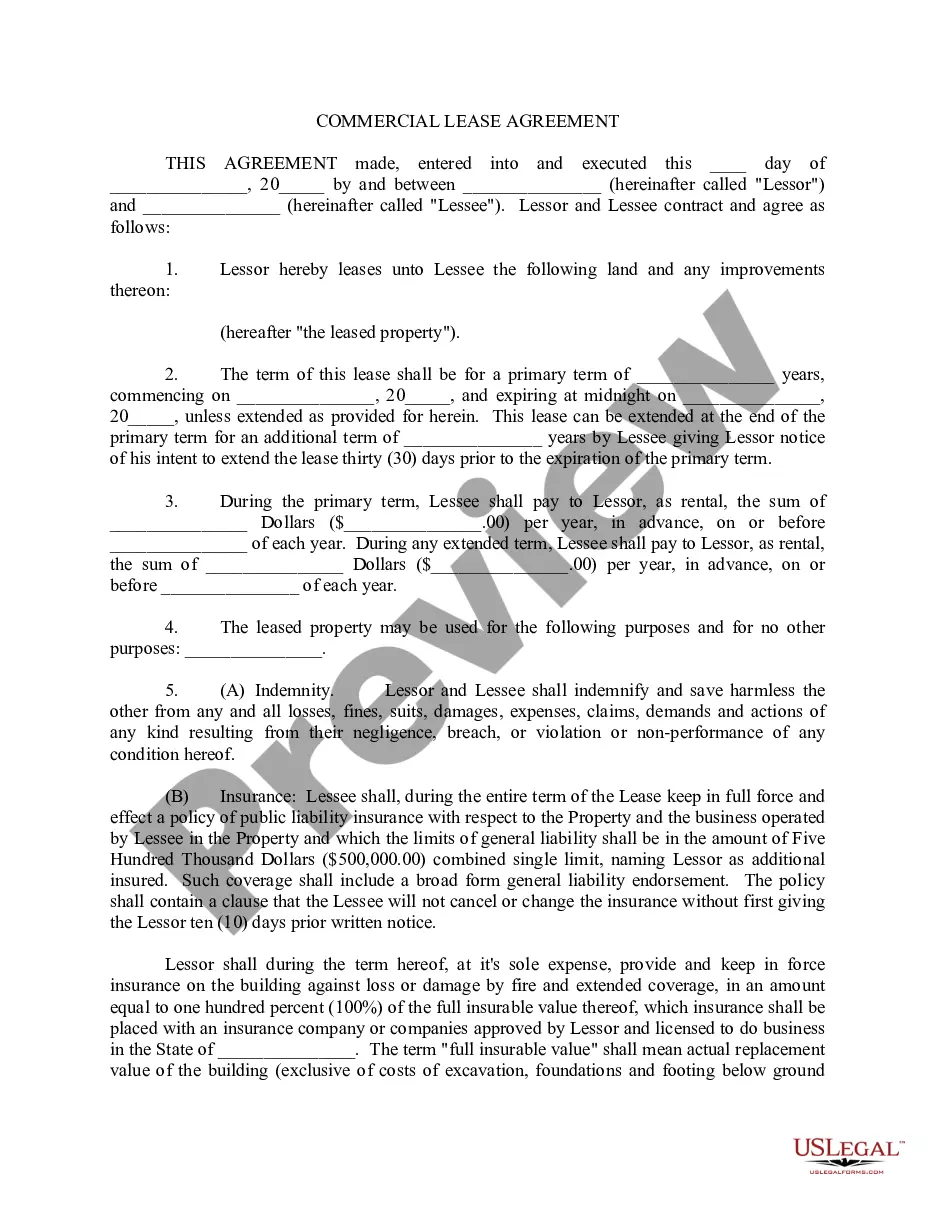
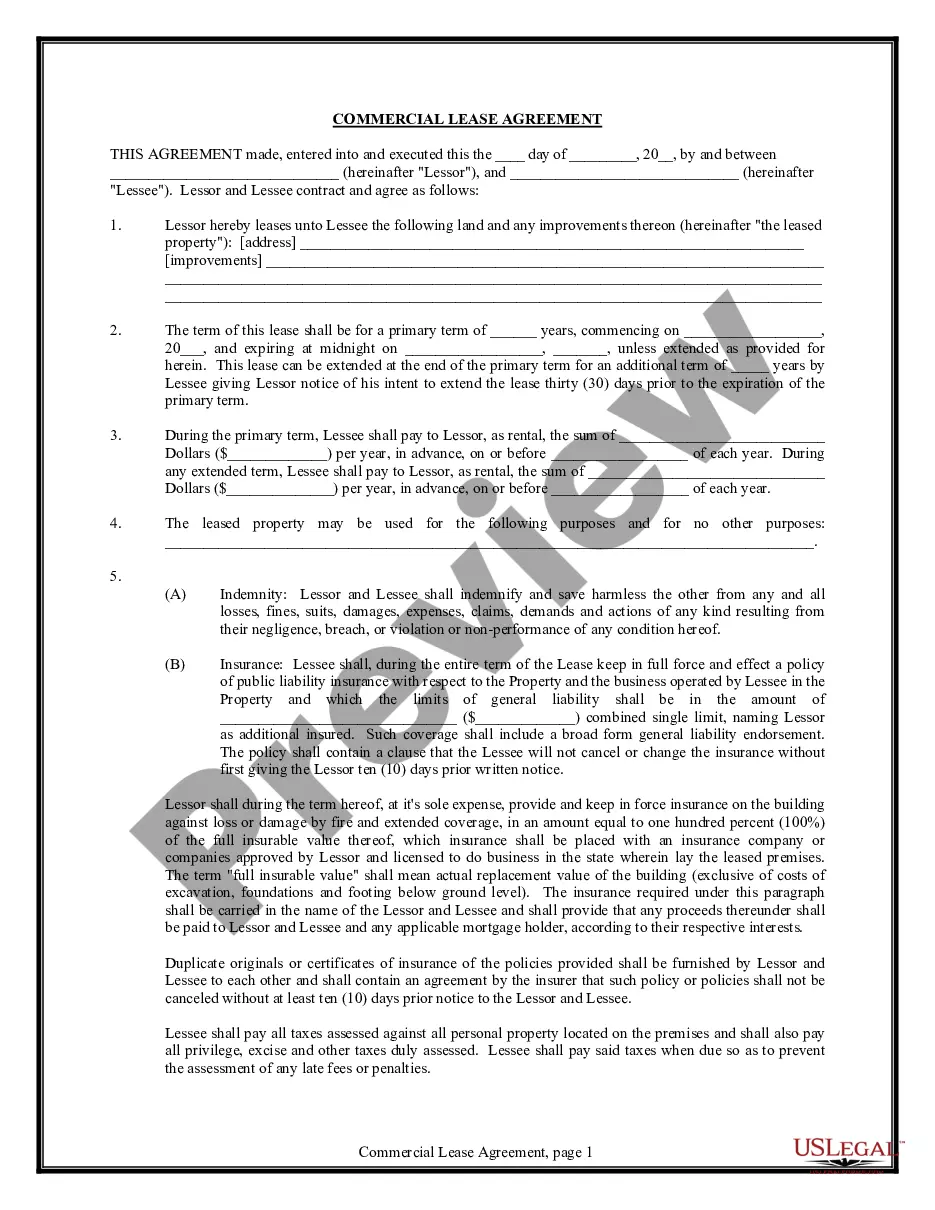
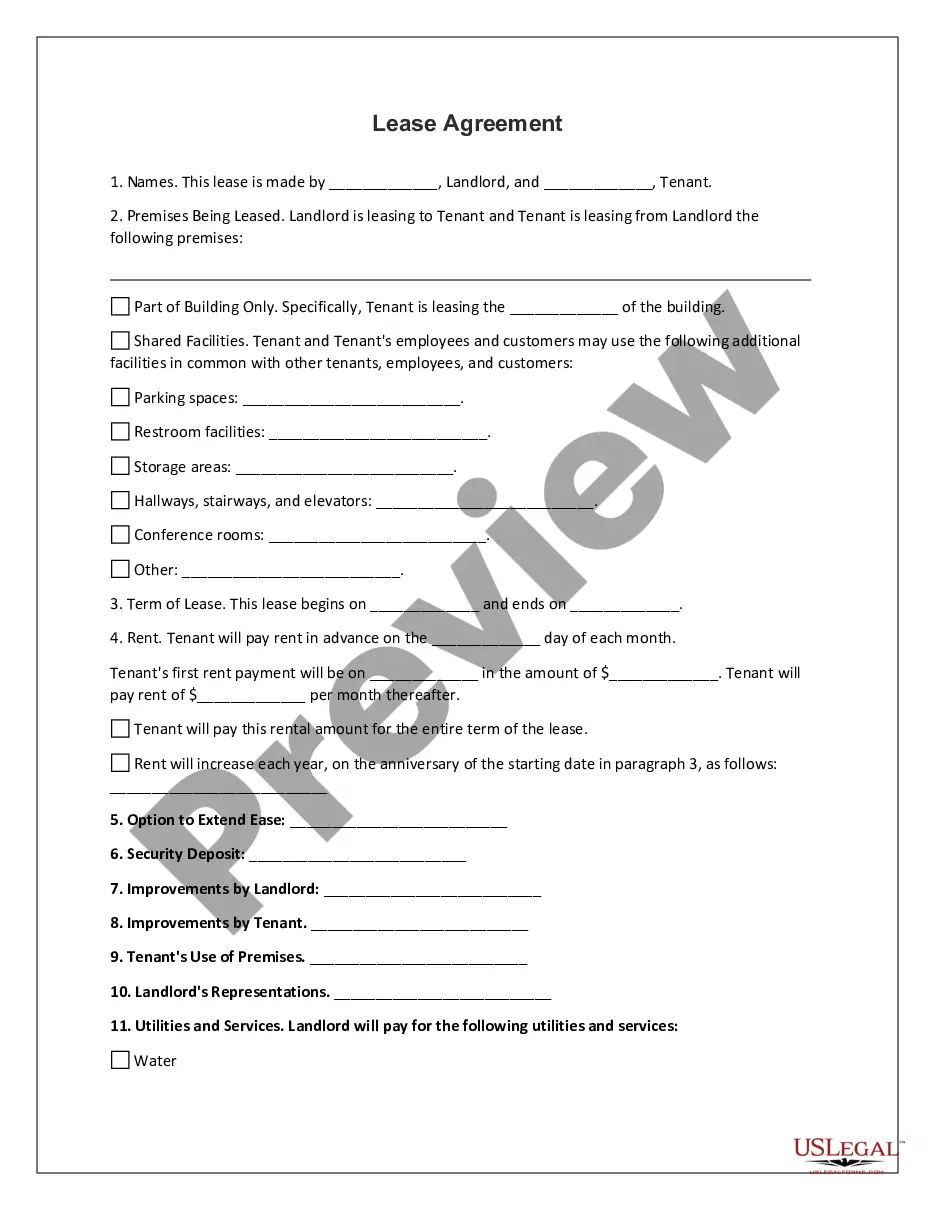
The Commercial Building or Space Lease is a detailed agreement for leasing commercial property in Illinois. This document is designed to outline the terms between the lessor (property owner) and lessee (tenant) for any type of commercial use, such as an office space. It includes essential provisions that distinguish it from other lease agreements, providing clarity and structure for both parties involved in the rental process.
Key components of this form
- Identification of parties: Specifies the lessor and lessee involved in the lease.
- Lease term: Outlines the start and end dates of the lease.
- Rent payments: Details the monthly rent amount, payment schedule, and any applicable late charges.
- Utilities: Specifies who is responsible for paying utility costs.
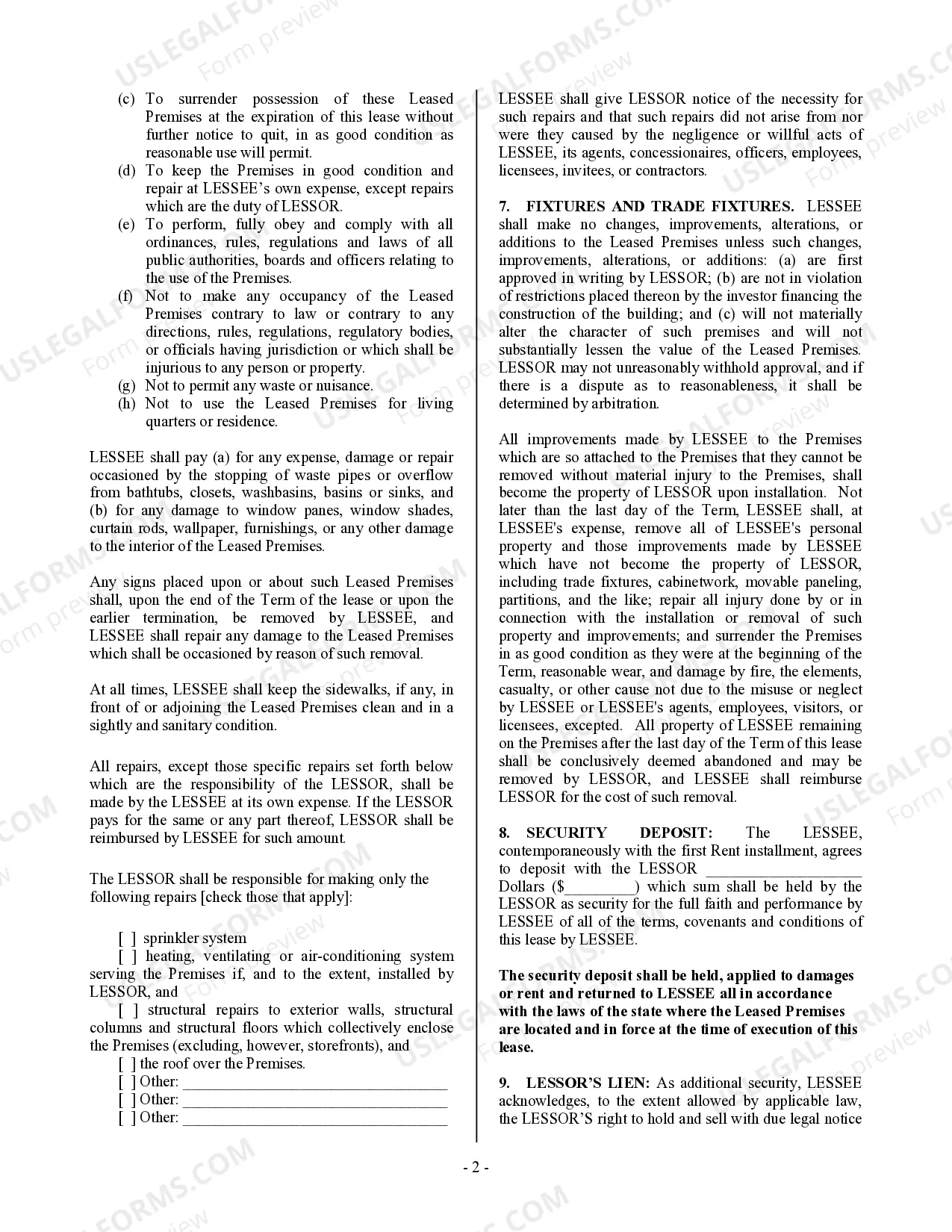
- Condition of premises: Defines the state of the premises at the time of leasing and maintenance responsibilities.
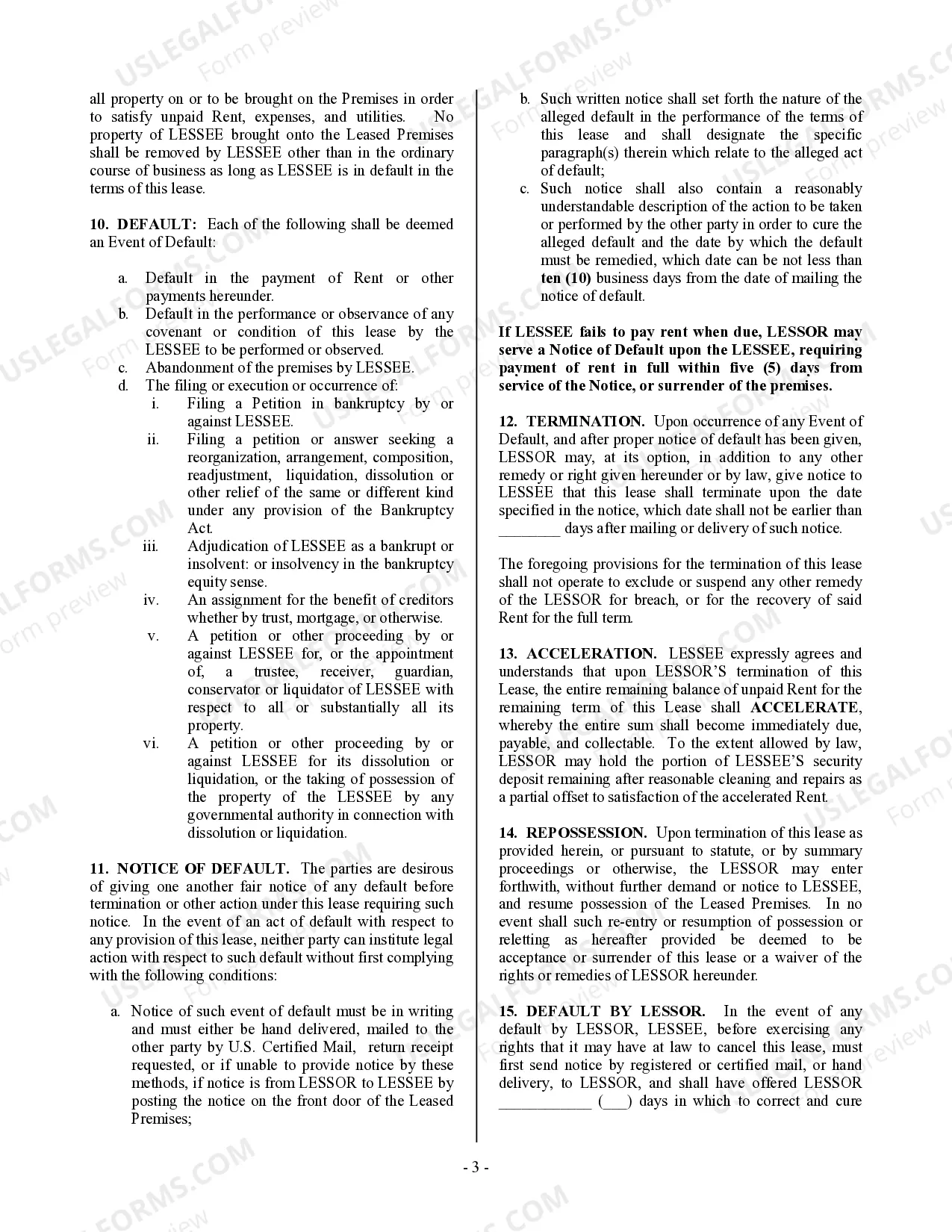
- Termination and default clauses: Covers the conditions under which the lease can be terminated and outlines the events that would be considered defaults.
When to use this form
This form is useful when a business or individual is looking to rent commercial space for purposes like retail, office, or service-related businesses. Whether you are a landlord seeking to generate income from your property or a tenant needing a commercial location for your operations, this lease ensures that both parties understand their rights and responsibilities.
Who this form is for
Eligible users include:
- Landlords who own commercial properties in Illinois.
- Individuals or businesses needing to lease commercial space.
- Real estate professionals facilitating lease agreements.
How to complete this form
Steps to complete the Commercial Building or Space Lease:
- Identify the parties: Enter the names and addresses of the lessor and lessee.
- Specify the property: Clearly describe the location and type of commercial space being leased.
- Enter dates: Fill in the start and end dates of the lease term.
- Detail rent and payment terms: Include the agreed monthly rent amount and scheduling for payments.
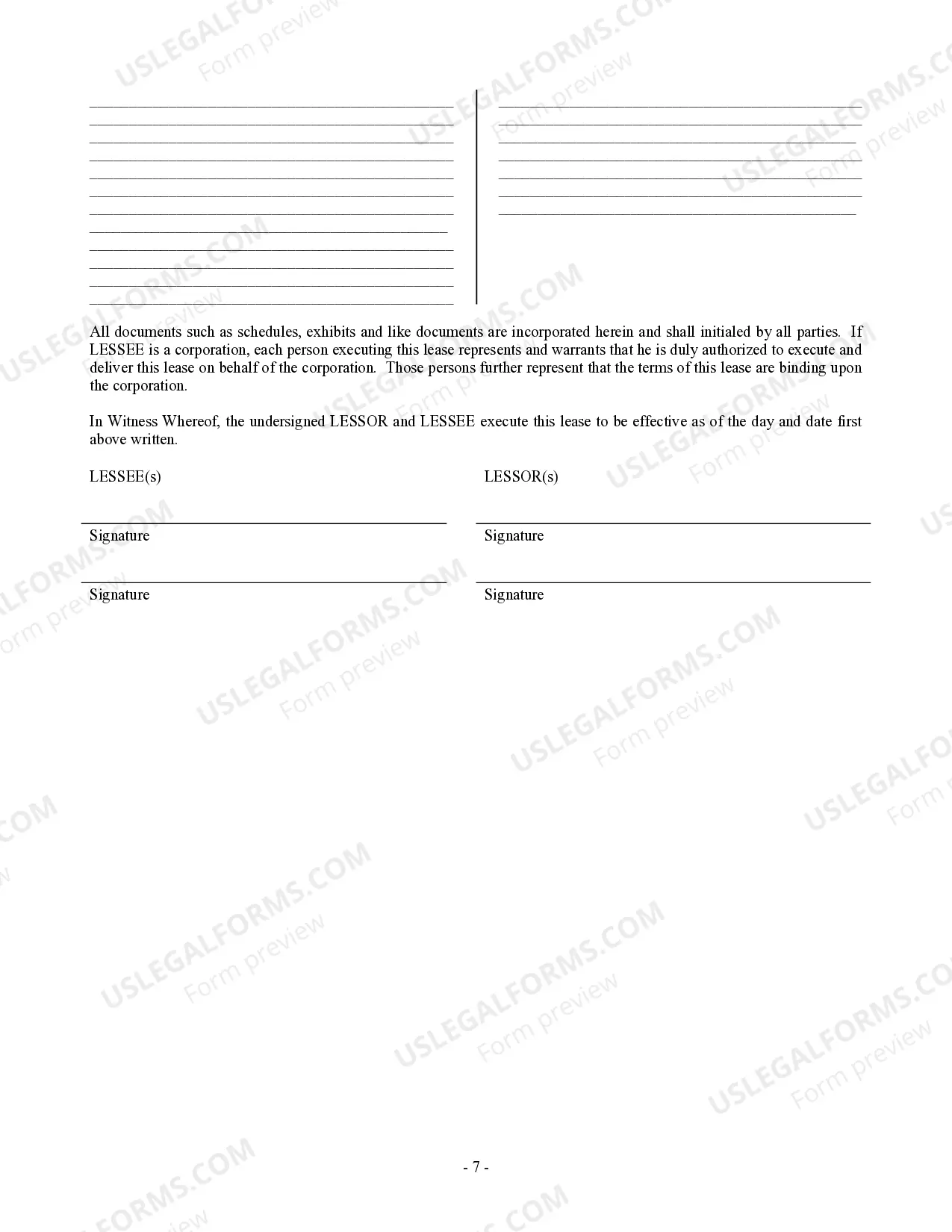
- Review and sign: Both parties should read the lease thoroughly and sign where required to ensure mutual agreement.
Does this document require notarization?
This form does not typically require notarization unless specified by local law. However, having a notary can add an extra layer of protection for all parties involved.
Get your form ready online
Our built-in tools help you complete, sign, share, and store your documents in one place.
Make edits, fill in missing information, and update formatting in US Legal Forms—just like you would in MS Word.
Download a copy, print it, send it by email, or mail it via USPS—whatever works best for your next step.
Sign and collect signatures with our SignNow integration. Send to multiple recipients, set reminders, and more. Go Premium to unlock E-Sign.
If this form requires notarization, complete it online through a secure video call—no need to meet a notary in person or wait for an appointment.
We protect your documents and personal data by following strict security and privacy standards.

Make edits, fill in missing information, and update formatting in US Legal Forms—just like you would in MS Word.

Download a copy, print it, send it by email, or mail it via USPS—whatever works best for your next step.

Sign and collect signatures with our SignNow integration. Send to multiple recipients, set reminders, and more. Go Premium to unlock E-Sign.

If this form requires notarization, complete it online through a secure video call—no need to meet a notary in person or wait for an appointment.

We protect your documents and personal data by following strict security and privacy standards.
Common mistakes to avoid
Common mistakes to avoid:
- Not specifying utility responsibilities, which can lead to disputes later.
- Failing to clearly define the lease term and renewal options.
- Ignoring local laws that could affect the terms of the lease.
- Allowing signed documents without thoroughly reviewing them.
Why complete this form online
Benefits of using this form online:
- Convenience of downloading and accessing the form anytime.
- Editability allows users to customize the document to fit specific needs.
- Reliability, knowing the forms are drafted by licensed attorneys.
Legal use & context:
- The lease helps establish a legally binding agreement between parties.
- It outlines specific rights and obligations, enhancing enforceability in case of disputes.
- This form is structured to comply with Illinois landlord-tenant law, which is critical for legal validity.
Quick recap
Key takeaways:
- The Commercial Building or Space Lease is essential for renting commercial property in Illinois.
- Clear terms protect both lessor and lessee, minimizing potential conflicts.
- Understanding your obligations under this lease helps ensure a smooth rental experience.
Looking for another form?
Form popularity
FAQ
Just like a residential rental or lease, your commercial landlord is going to insist on a security deposit. The security deposit can be used by the landlord for a number of reasons, but most commonly it will be used to cover any damage at the end of your lease if you do not renew your agreement.
The Introduction. The beginning of the lease agreement should contain the name of the landlord and tenant, as well as a statement of the agreement into which they are entering. Rent. Deposit. Taxes. Property Insurance. Utilities and Amenities. Remodeling and Improvements. Repairs and Maintenance.
Names of all tenants. Limits on occupancy. Term of the tenancy. Rent. Deposits and fees. Repairs and maintenance. Entry to rental property. Restrictions on tenant illegal activity.
The Lease Must be in Writing It does not matter if the lease is handwritten or typed. If the lease is for more than one year, it must be in written form and contain the following terms.
As long as the contract spells out specific details and both parties have signed that they agree to the contract's terms, a handwritten contract is legally binding and enforceable in court.
Specifically, the tenant pays the base rent, property but also taxes, insurance, utilities, and maintenance. This even includes standard property repairs associated with the commercial space being occupied.
Name the parties. A simple rental agreement form needs to name the parties signing the lease and where they live. Describe the premises. Define the term of the lease. Set how much rent is owed. Assign a security deposit amount. Finalize the lease.
Depending on how granularly you want to get into the details, an office lease can take anywhere from one day to a year or more to negotiate. Most commonly it will be in the three to nine month range.
Commercial leases generally fall into one of three major categories based on how the building's operating expenses are passed on to tenants: Gross or full-service lease. You pay a flat monthly rate from which the landlord pays all operating expenses, including utilities, property taxes and maintenance.