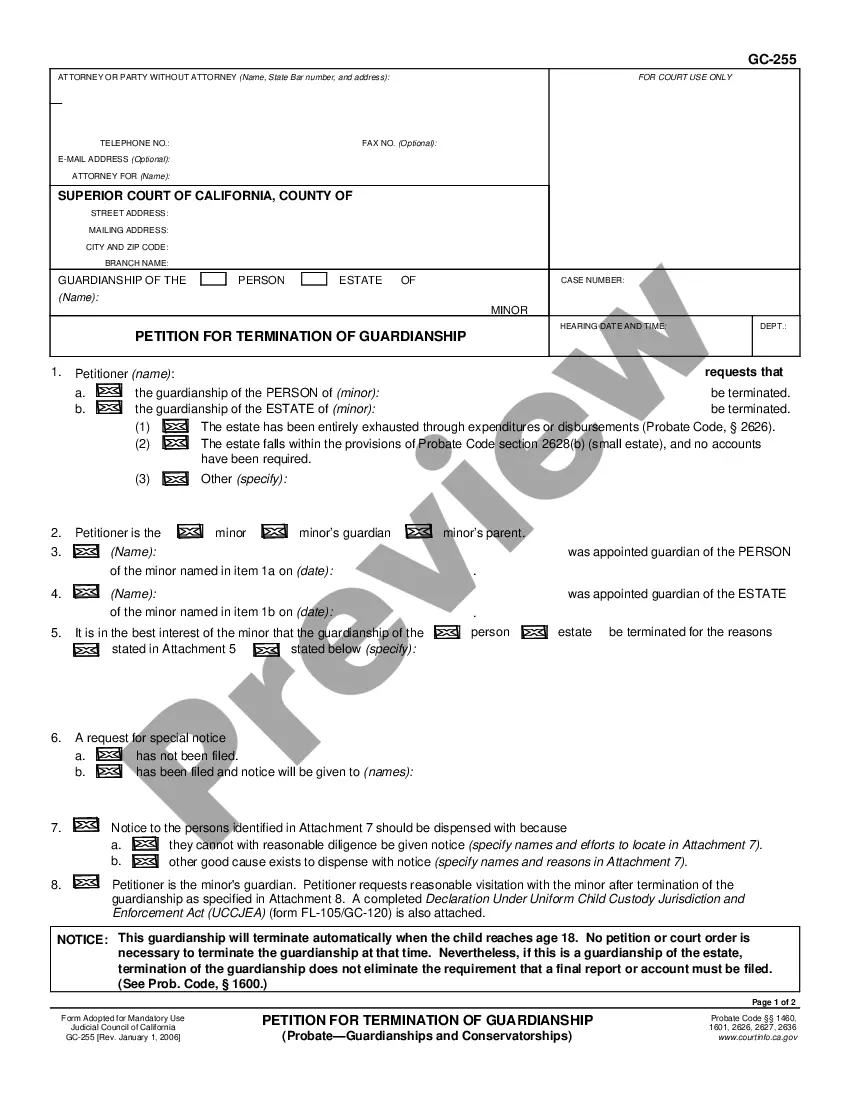
Illinois Termination Letter - Entry of Judgment
Overview of this form
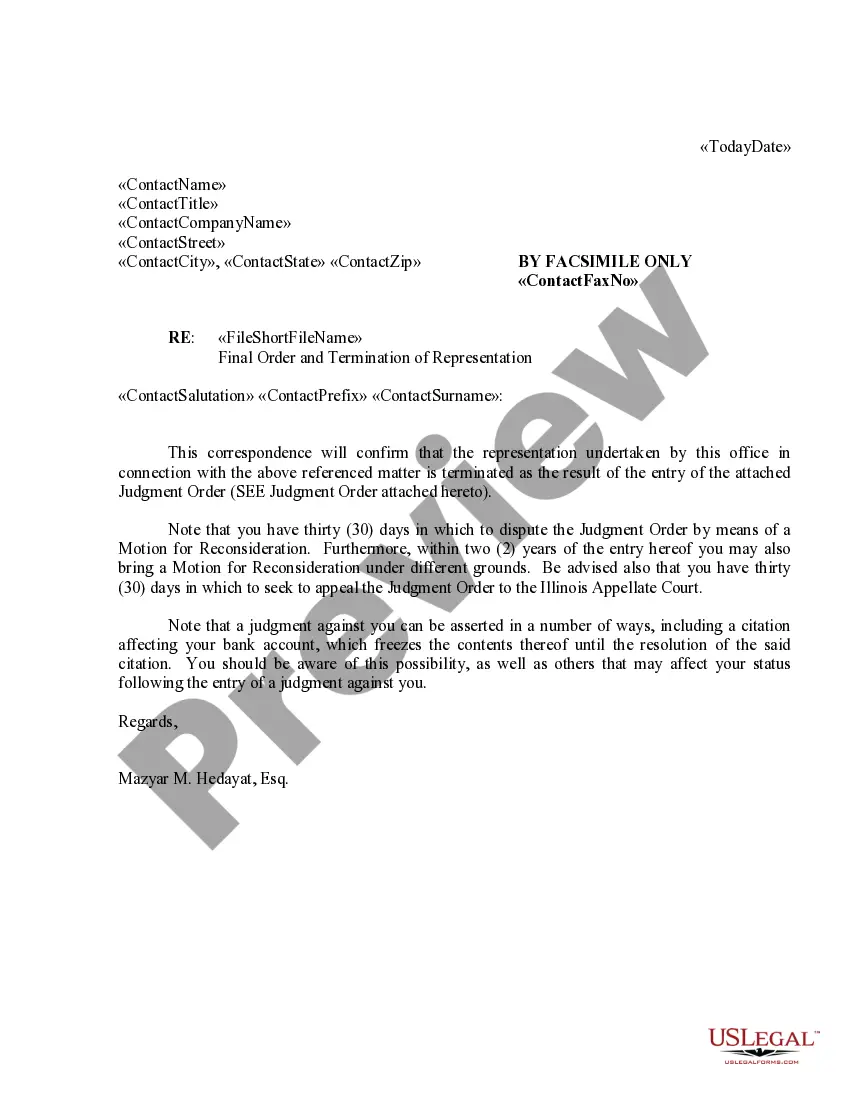
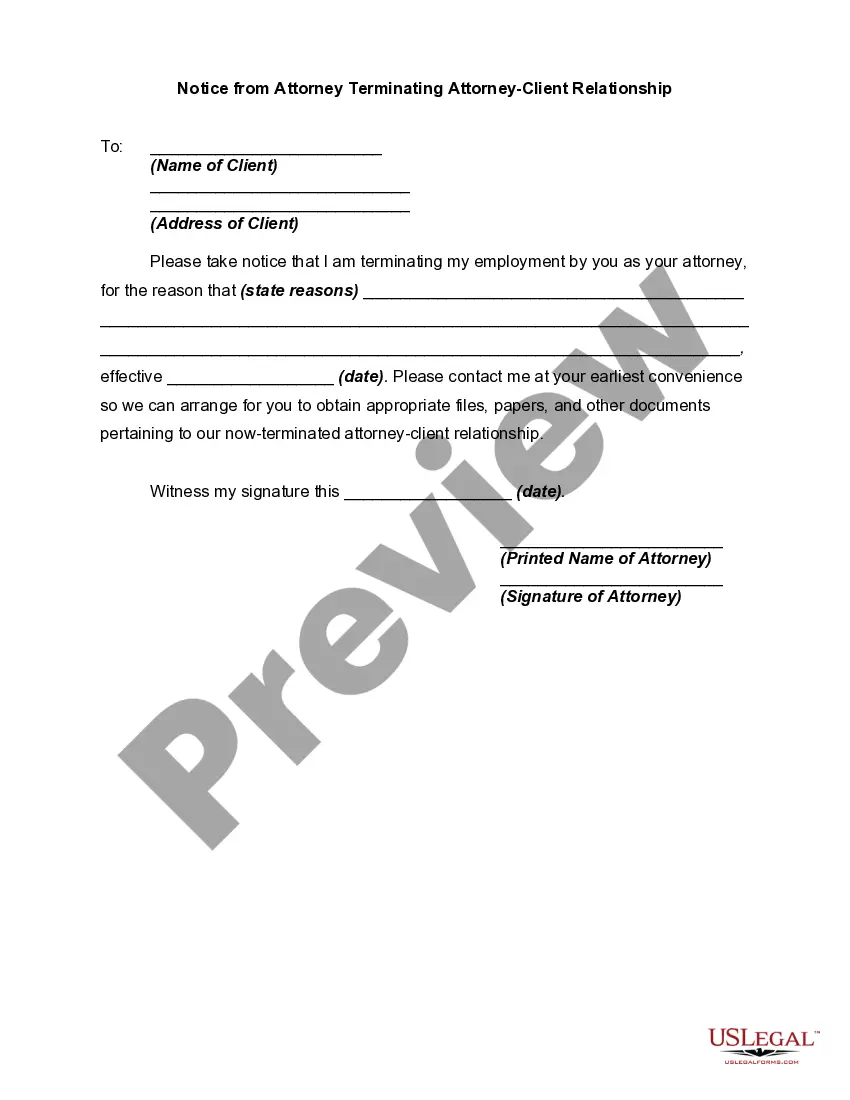
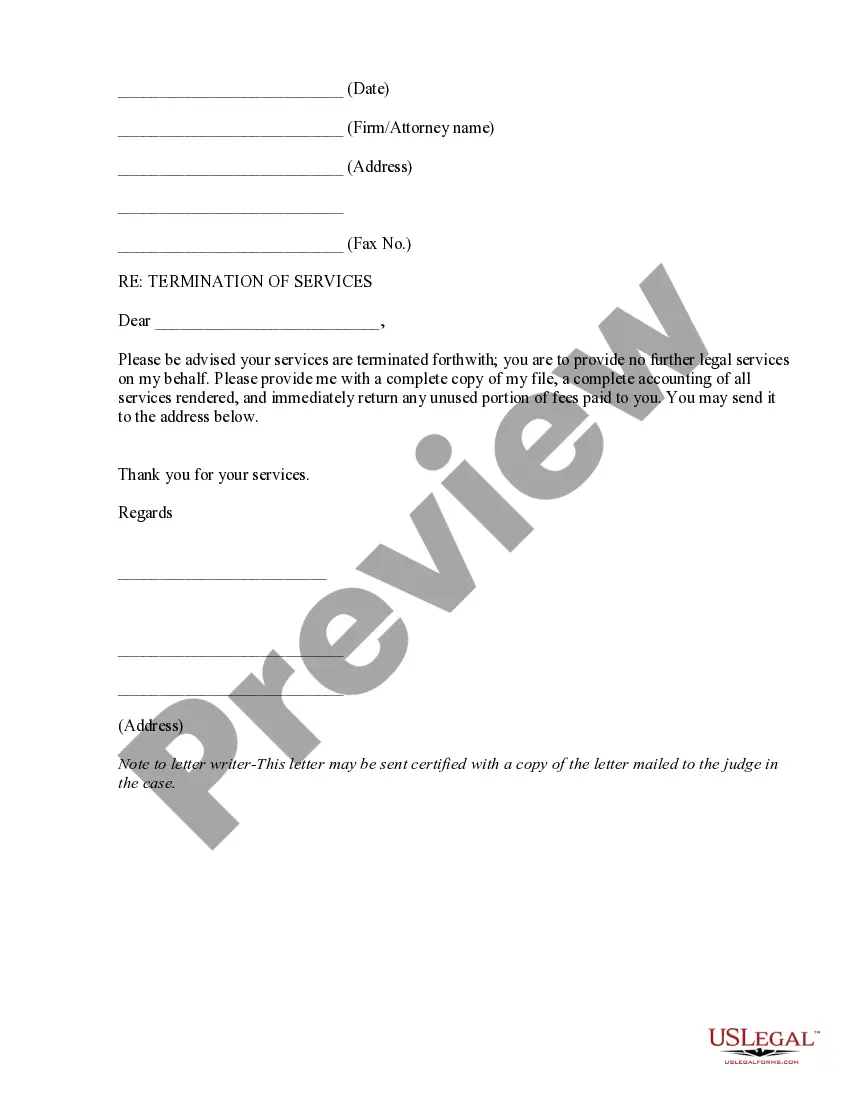
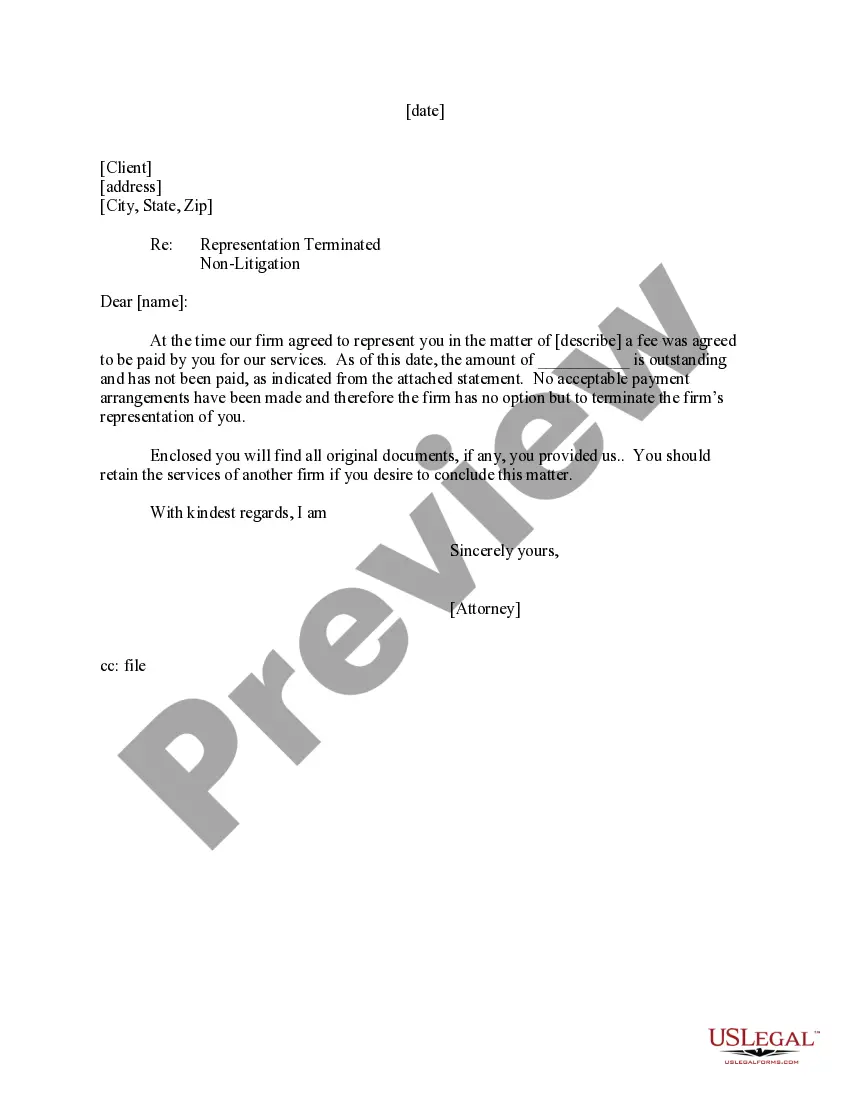
The termination letter - entry of judgment is a formal document issued by an attorney to notify a client that a judgment has been entered in their case. This letter signifies the end of the attorney's representation due to the conclusion of legal proceedings. Unlike other termination letters, this specific form highlights the clientâs options following the judgment, specifically the potential consequences of not hiring new legal representation. It serves as a crucial communication tool for clients, ensuring they are informed about their legal status following judgment entry.
What’s included in this form
- Contact information of the attorney and client.
- Statement confirming the termination of representation.
- Reference to the attached judgment order.
- Notification of deadlines for disputing or appealing the judgment.
- Advisory on potential negative consequences of not hiring a new attorney.
Situations where this form applies
This form should be used after a judgment has been entered in a legal case, signaling the conclusion of the attorney-client relationship. It is essential when the attorney intends to inform the client of the judgment and their rights to contest it, as well as to remind the client of any ramifications associated with not seeking further legal assistance.
Who should use this form
- Attorneys representing clients whose case has reached a judgment.
- Clients who have received a judgment and need to understand their options moving forward.
How to complete this form
- Fill in the date of the letter at the top.
- Insert the contact information for both the attorney and the client.
- Clearly state that the attorney is terminating representation due to the judgment entry.
- Attach the judgment order referenced in the letter.
- Outline important deadlines for the client regarding disputing the judgment and the appeal process.
Notarization requirements for this form
This form does not typically require notarization unless specified by local law. It is advisable to check for any additional requirements before submitting the form in Illinois.
Get your form ready online
Our built-in tools help you complete, sign, share, and store your documents in one place.
Make edits, fill in missing information, and update formatting in US Legal Forms—just like you would in MS Word.
Download a copy, print it, send it by email, or mail it via USPS—whatever works best for your next step.
Sign and collect signatures with our SignNow integration. Send to multiple recipients, set reminders, and more. Go Premium to unlock E-Sign.
If this form requires notarization, complete it online through a secure video call—no need to meet a notary in person or wait for an appointment.
We protect your documents and personal data by following strict security and privacy standards.

Make edits, fill in missing information, and update formatting in US Legal Forms—just like you would in MS Word.

Download a copy, print it, send it by email, or mail it via USPS—whatever works best for your next step.

Sign and collect signatures with our SignNow integration. Send to multiple recipients, set reminders, and more. Go Premium to unlock E-Sign.

If this form requires notarization, complete it online through a secure video call—no need to meet a notary in person or wait for an appointment.

We protect your documents and personal data by following strict security and privacy standards.
Mistakes to watch out for
- Failing to attach the judgment order.
- Missing important deadlines for disputes or appeals.
- Providing incorrect contact information.
- Not clearly communicating the consequences of not hiring a new attorney.
Why complete this form online
- Convenient access to the form from anywhere at any time.
- Editable format allows for quick adaptations to specific circumstances.
- Reliability ensures that the form complies with legal standards.
Looking for another form?


Form popularity
FAQ
A motion for judgment serves to request that the court issue a judgment based on the facts presented. In the scope of an Illinois Termination Letter - Entry of Judgment, this motion can help expedite the resolution process, allowing parties to receive definitive decisions on their disputes. This is particularly important when evidence supports a clear and decisive outcome. Understanding how to effectively use this motion can save time and reduce complications during legal proceedings.
To enforce a judgment in Illinois, you must take specific legal actions to compel payment. This often includes filing enforcement motions in court, which might involve asset discovery or garnishments. Understanding the enforcement process is critical, as it can lead to serious financial implications for the debtor. Using UsLegalForms can provide you with the templates and guidance needed to navigate the enforcement effectively.
Yes, judgments in Illinois typically fall off after seven years, meaning they can no longer be enforced. However, it's important to ensure that you take the necessary steps to formally address the judgment, as it may still appear on credit reports. Utilizing an Illinois Termination Letter - Entry of Judgment can aid in managing this aspect.
The 2-1401 petition is a legal document used to allow a party to challenge a final judgment in Illinois, after the normal appeal period has expired. This petition helps assert that new facts or evidence justifies setting aside the judgment. If you believe you have grounds to file this, it’s advisable to consult resources or assistance like an Illinois Termination Letter - Entry of Judgment.
To vacate a judgment in Illinois, you must file a motion in court, explaining your reasons and providing supporting evidence. The court will review your request, and if granted, it results in the removal of the judgment. You can streamline this process with an Illinois Termination Letter - Entry of Judgment, simplifying your legal obligations.
Yes, judgments can expire in Illinois, but there is a timeline to consider. Generally, a judgment remains enforceable for seven years from the date of entry. To retain the judgment beyond this period, you may need to take specific actions, such as an Illinois Termination Letter - Entry of Judgment.
Proving wrongful termination in Illinois will take demonstrating that your employer breached a contract, broke a law, or otherwise fired you based on illegal reasons. You will need sufficient evidence to support your claim, such as witness testimonies or documentation of your experience.
No notice at all is required. No reason of any kind must be given. No severance must be given. Earned but unused vacation must be paid out. No deductions may be made from final paycheck except where there is a voluntary written agreement on the part of the employee.
Yes. Illinois is an "employment at-will" state, meaning that an employer or employee may terminate the relationship at any time, without any reason or cause.
The following states require that employers provide written notice of separation (discharge, layoff, voluntary resignation) to a departing employee: Arizona, California, Connecticut, Georgia, Illinois, Louisiana, Massachusetts, Michigan, New Jersey, New York, and Tennessee.