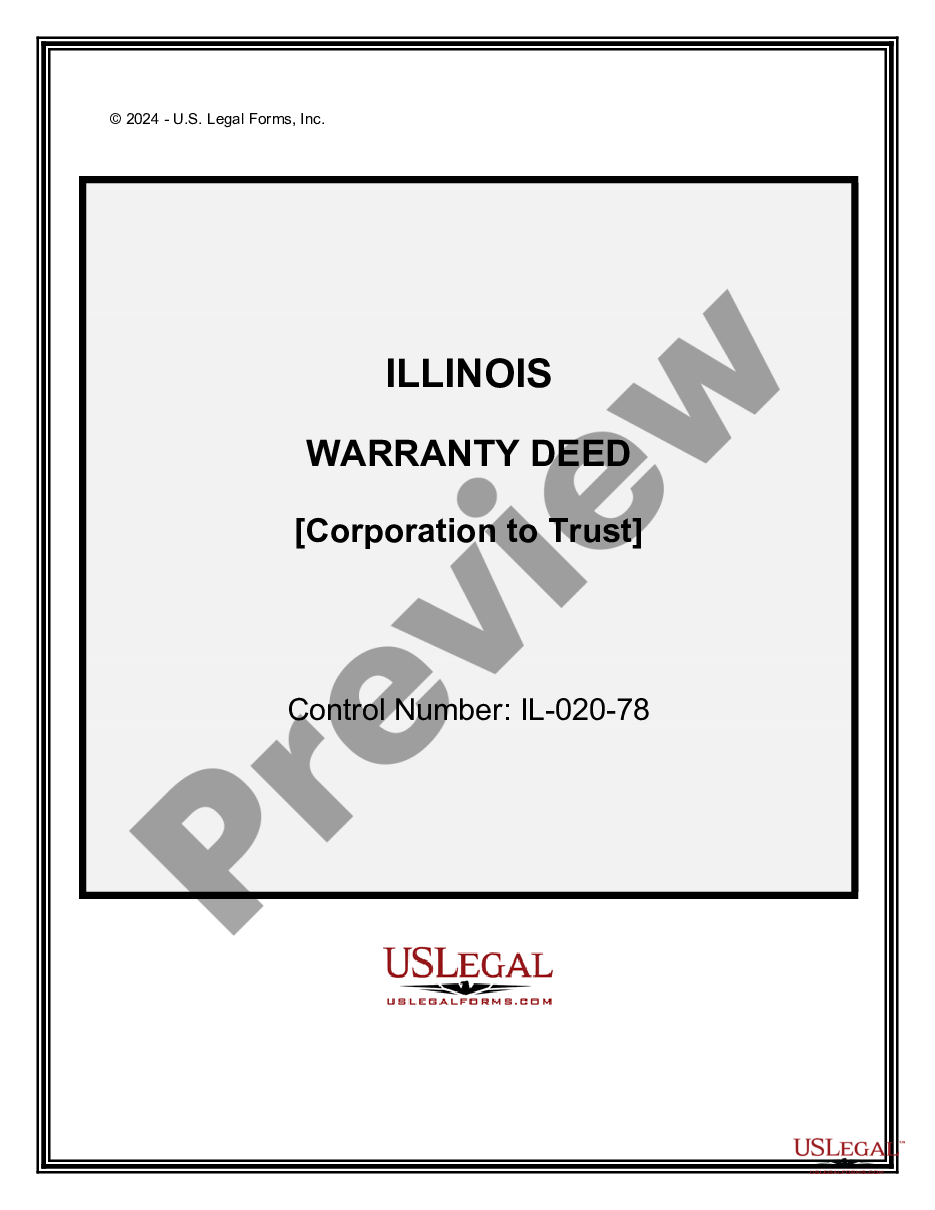
Illinois Warranty Deed - Corporation to Trust
What is this form?
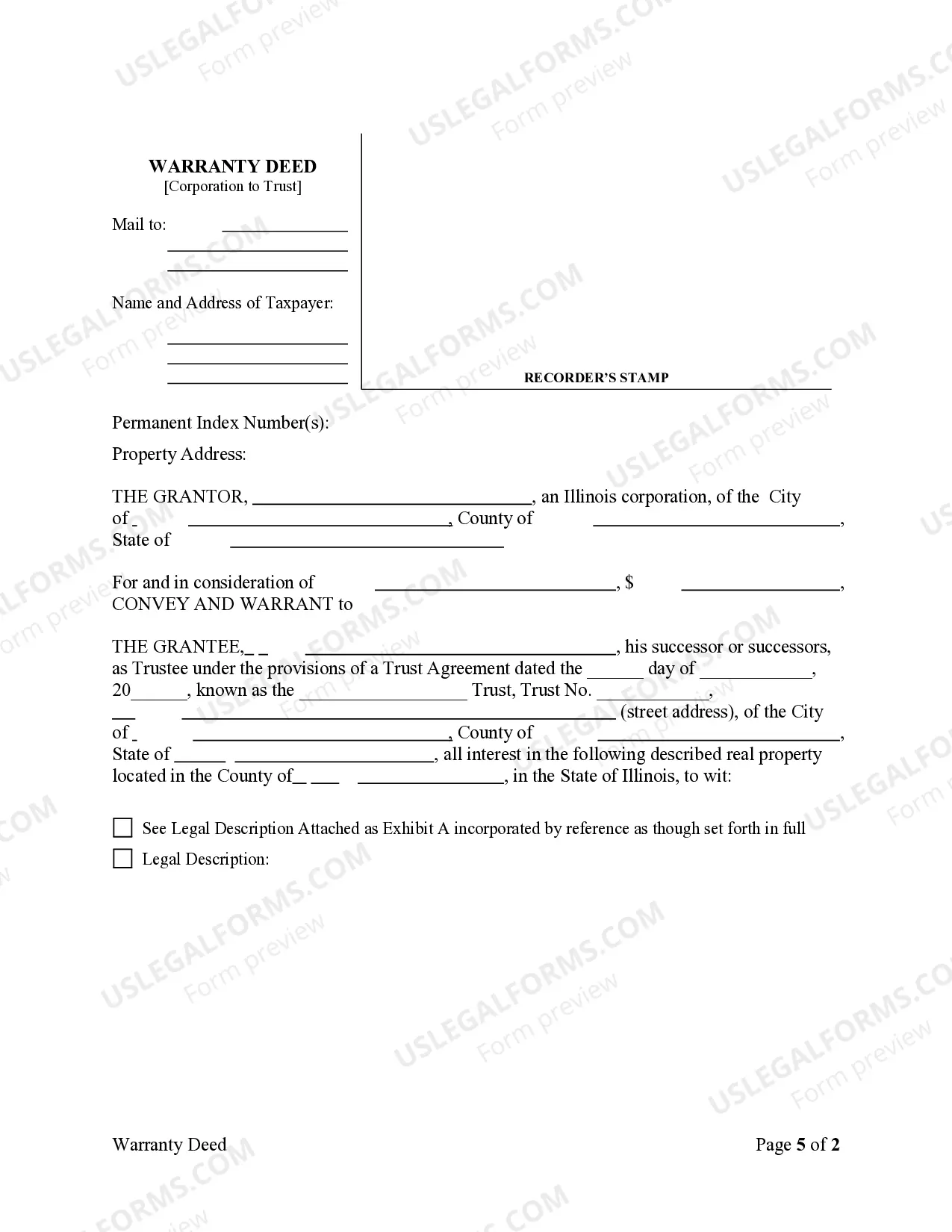
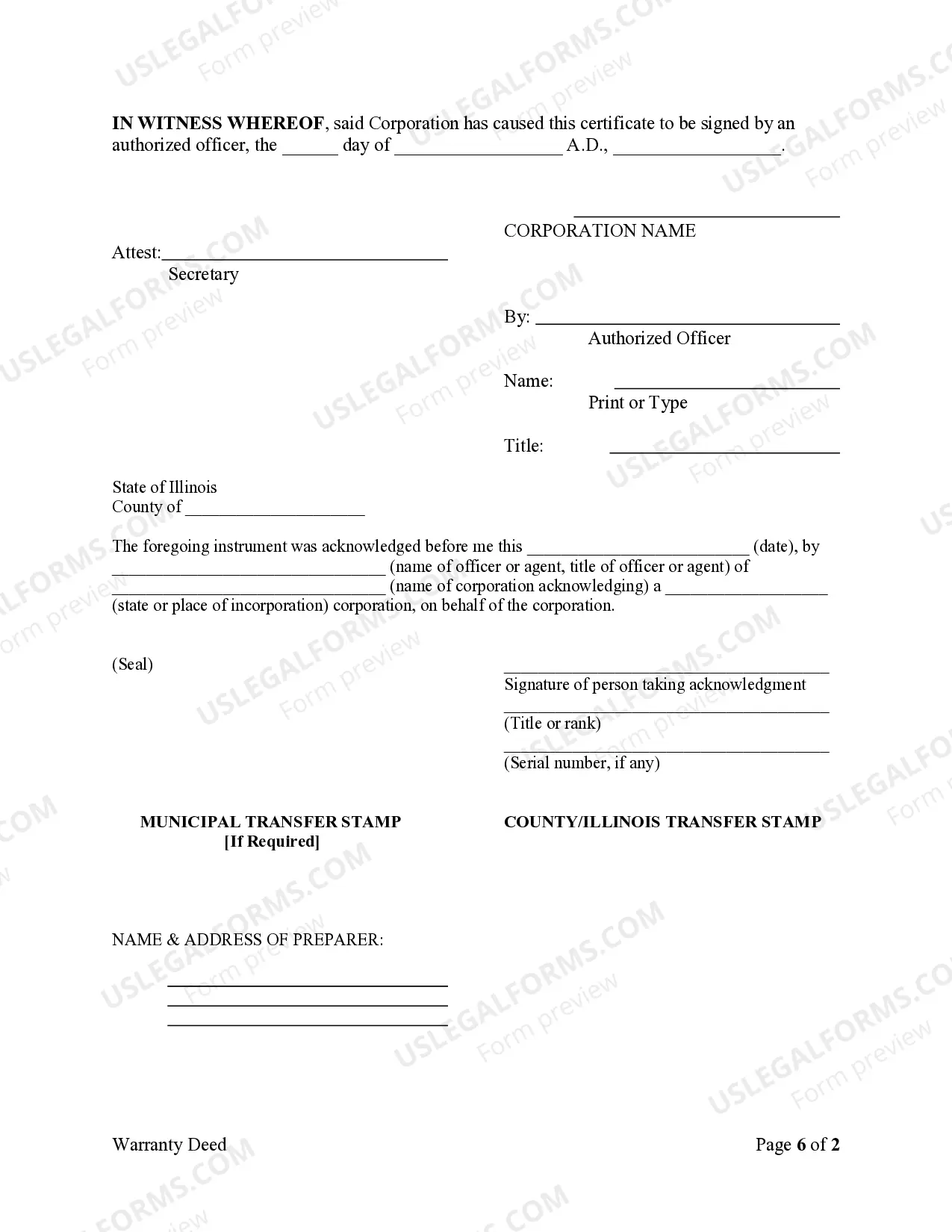
The Warranty Deed - Corporation to Trust is a legal document that allows a corporation (the grantor) to transfer property ownership to a trust (the grantee). This form ensures that the title of the property is transferred with a guarantee of clear ownership, differentiating it from other deed types by providing a warranty of title against any claims. This deed complies with all state statutory laws, making it a reliable choice for corporate transactions involving trusts.
Key parts of this document
- Grantor information: Details about the corporation transferring ownership.
- Grantee information: Identification of the trust receiving the property.
- Description of property: Legal description of the property being conveyed.
- Warranties of title: Assurances made by the grantor regarding clear ownership and absence of liens.
- Signatures: Required signatures from authorized representatives of the corporation and any necessary witnesses.
- Notary acknowledgment: Verification by a notary public to confirm the identities of the signatories.




When to use this form
This form should be used when a corporation needs to transfer real property into a trust for various legal or financial reasons. Common scenarios include estate planning, asset protection, or facilitating the management of property on behalf of beneficiaries. This form is particularly useful when the corporation is looking to secure ownership benefits or ensure a smooth transition of property within a trust framework.
Who needs this form
- Corporations wishing to transfer property they own to a trust.
- Trustees managing a trust that will receive real property from a corporation.
- Legal representatives or attorneys involved in corporate property transfers.
How to complete this form
- Identify the parties: Clearly state the corporation acting as the grantor and the trust as the grantee.
- Specify the property: Include the legal description of the property being transferred.
- Complete warranties: Fill out the sections that detail the warranties being provided by the grantor.
- Sign the document: Have authorized representatives of the grantor sign the deed.
- Obtain notarization: Ensure the document is notarized to validate the signatures.
Does this form need to be notarized?
To make this form legally binding, it must be notarized. Our online notarization service, powered by Notarize, lets you verify and sign documents remotely through an encrypted video session.
Get your form ready online
Our built-in tools help you complete, sign, share, and store your documents in one place.
Make edits, fill in missing information, and update formatting in US Legal Forms—just like you would in MS Word.
Download a copy, print it, send it by email, or mail it via USPS—whatever works best for your next step.
Sign and collect signatures with our SignNow integration. Send to multiple recipients, set reminders, and more. Go Premium to unlock E-Sign.
If this form requires notarization, complete it online through a secure video call—no need to meet a notary in person or wait for an appointment.
We protect your documents and personal data by following strict security and privacy standards.

Make edits, fill in missing information, and update formatting in US Legal Forms—just like you would in MS Word.

Download a copy, print it, send it by email, or mail it via USPS—whatever works best for your next step.

Sign and collect signatures with our SignNow integration. Send to multiple recipients, set reminders, and more. Go Premium to unlock E-Sign.

If this form requires notarization, complete it online through a secure video call—no need to meet a notary in person or wait for an appointment.

We protect your documents and personal data by following strict security and privacy standards.
Common mistakes
- Failing to accurately describe the property can lead to legal issues regarding ownership.
- Not having the deed properly notarized, which is essential for its enforceability.
- Omitting necessary signatures from authorized representatives of the corporation.
- Using incorrect or outdated forms that do not align with current state laws.
Benefits of using this form online
- Convenience: Access and download the form from anywhere without visiting a legal office.
- Editability: Fill in the form electronically and make corrections as needed prior to finalizing.
- Time-saving: Complete the form at your own pace without the need for appointments.
Looking for another form?

Form popularity
FAQ
Locate your current deed. Use the proper deed. Check with your title insurance company and lender. Prepare a new deed. Sign in the presence of a notary. Record the deed in the county clerk's office. Locate the deed that's in trust. Use the proper deed.
Warranty Deed Vs Deed of Trust. Both a warranty deed and deed of trust are used to transfer the title of a property from one person to another.As you now know, a deed of trust protects the beneficiary (lender). A warranty deed, on the other hand, protects the property owner.
It's important to note that a warranty deed does not actually prove the grantor has ownership (a title search is the best way to prove that), but it is a promise by the grantor that they are transferring ownership and if it turns out they don't actually own the property, the grantor will be responsible for compensating
A trustee deed offers no such warranties about the title.
A warranty deed protects property owners from future claims that someone else actually owns a portion (or all) of their property, while trustee deeds protect lenders when borrowers default on their mortgage loans.
Quitclaim Deed. Deed of Trust. Warranty Deed. Grant Deed. Bargain and Sale Deed. Mortgage Deed.
A deed conveys ownership; a deed of trust secures a loan.
Let's start with the definition of a deed: DEED: A written instrument by which one party, the Grantor, conveys the title of ownership in property to another party, the Grantee. A Warranty Deed contains promises, called covenants, that the Grantor makes to the Grantee.
Yes, there are key differences between the two. With a deed, you transfer the ownership of the property to one party. In contrast, a deed of trust does not mean the holder owns the property. In an arrangement involving a deed of trust, the borrower signs a contract with the lender with details regarding the loan.