Illinois Partial Lien Waiver - Mechanic Liens
What this document covers
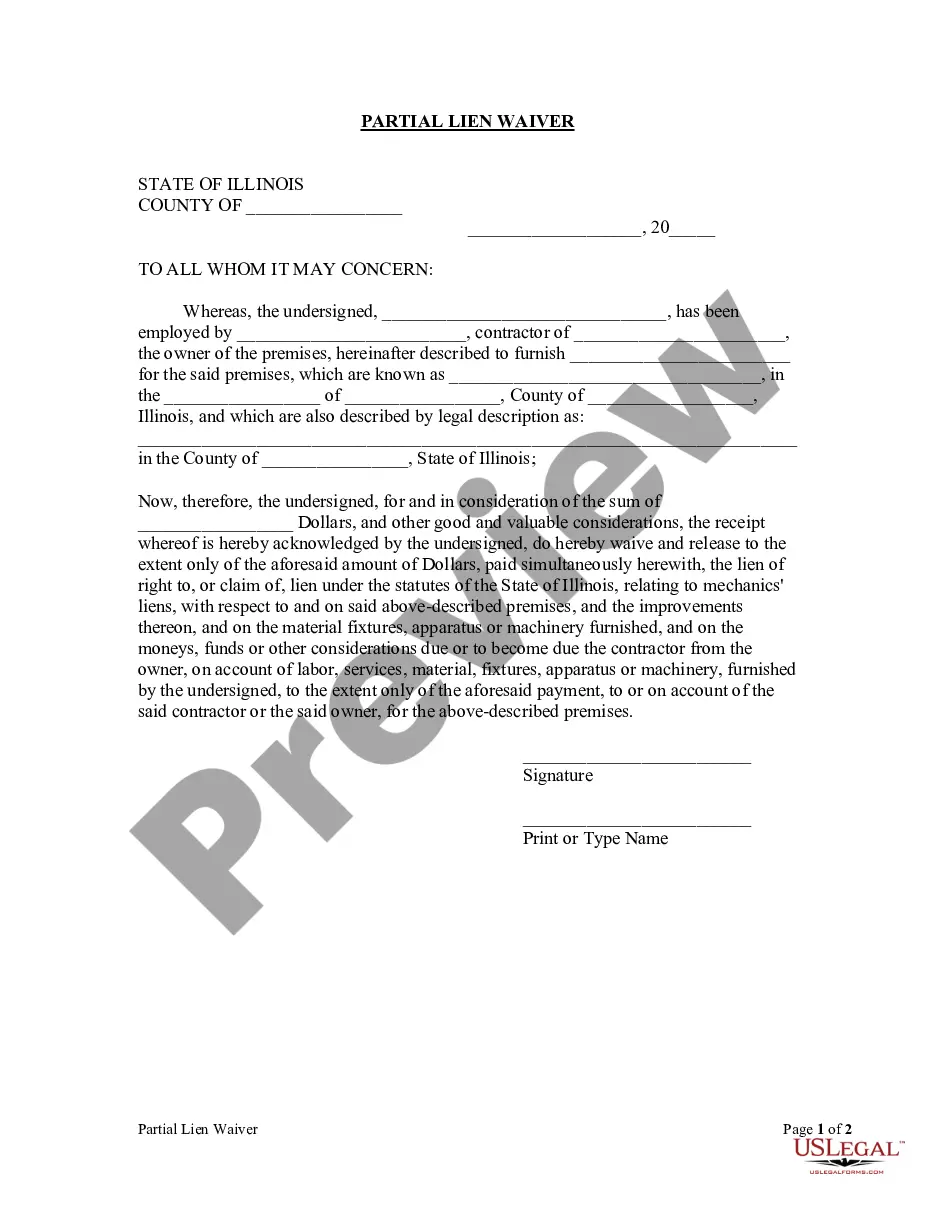
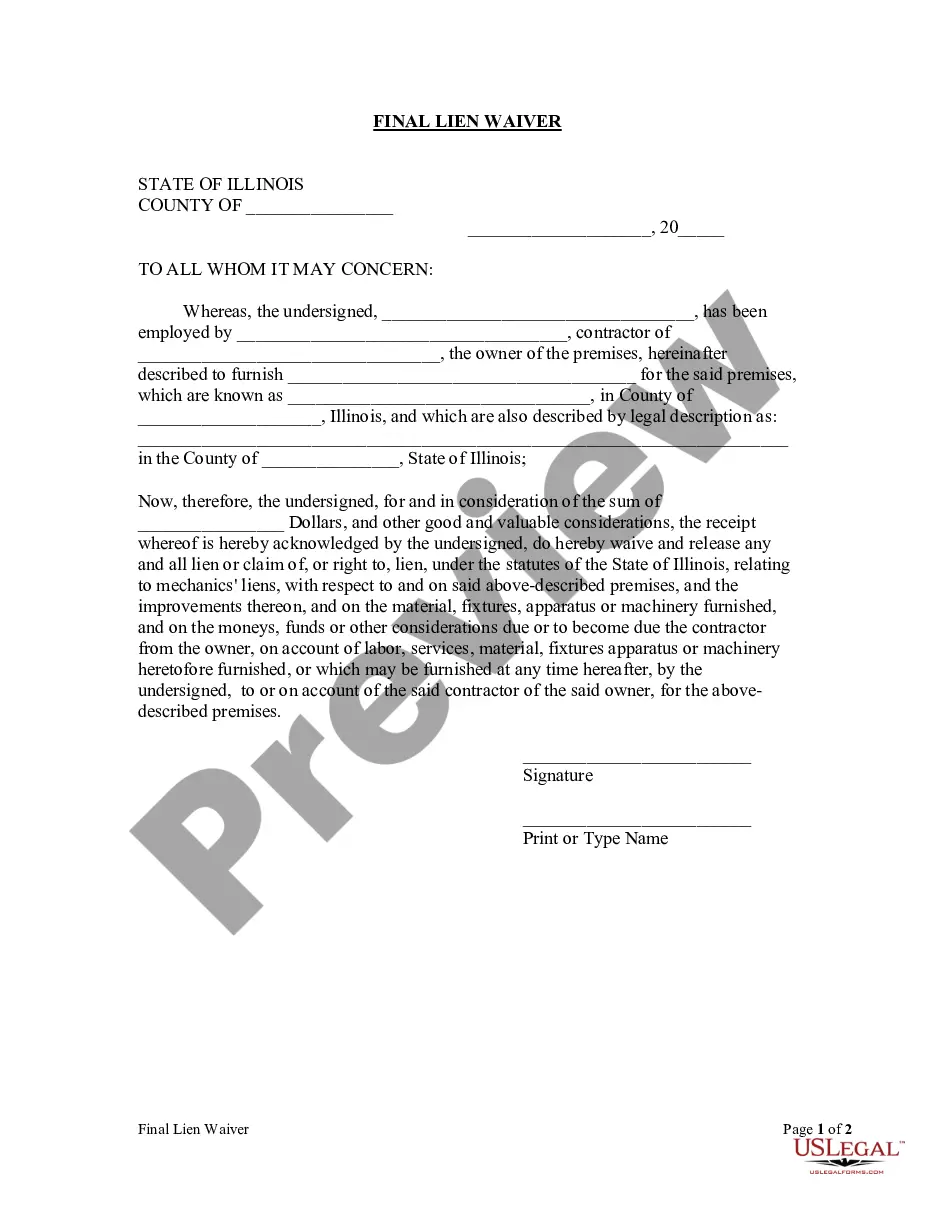
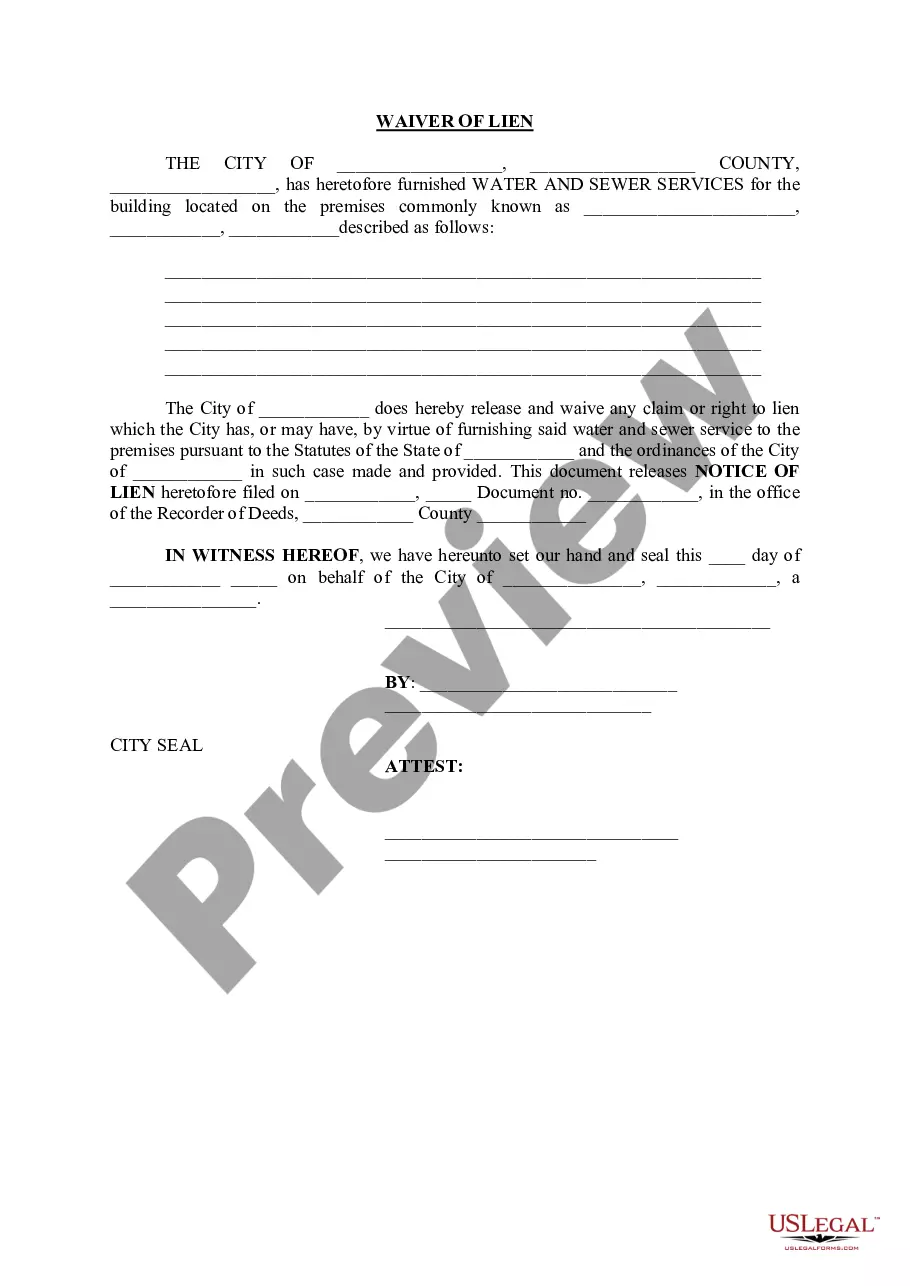
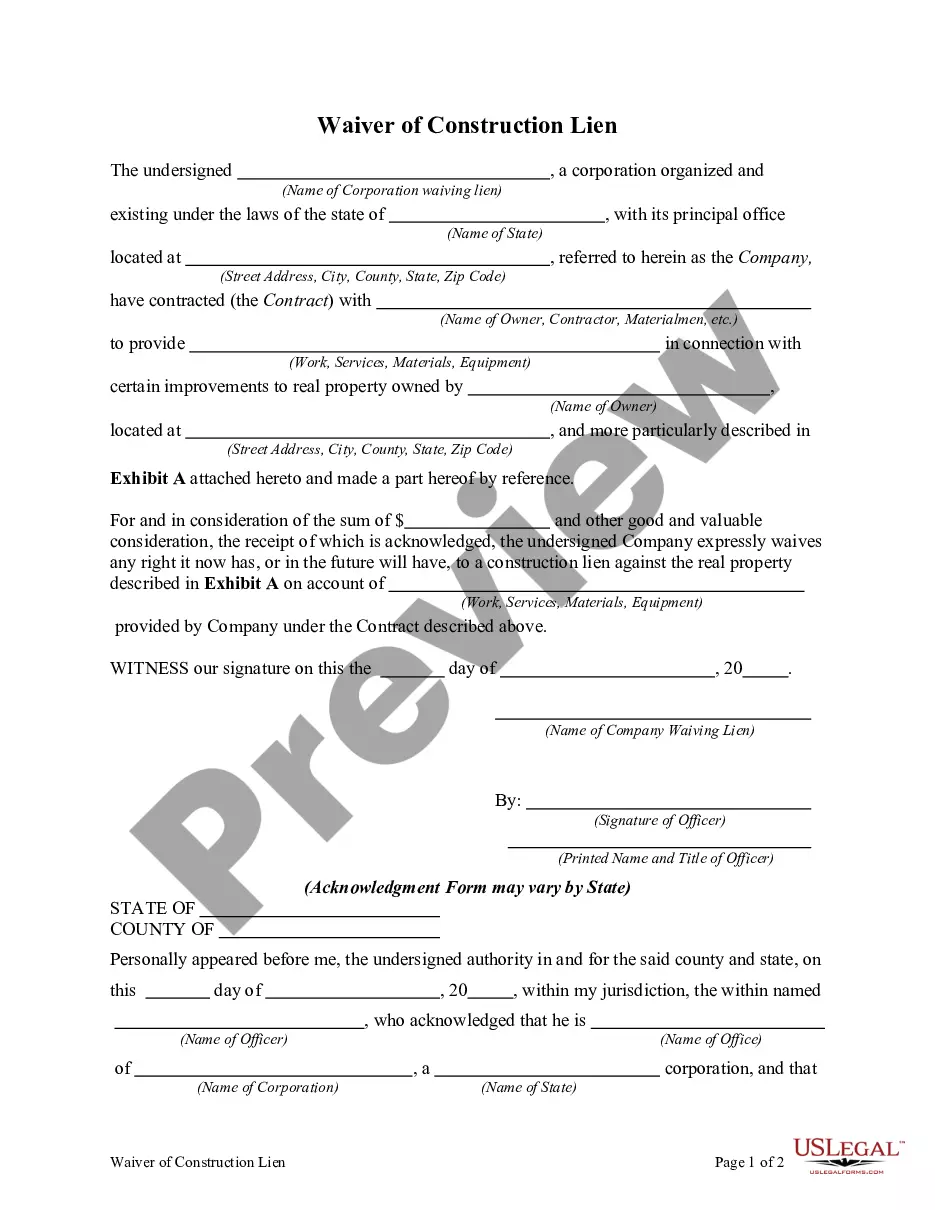
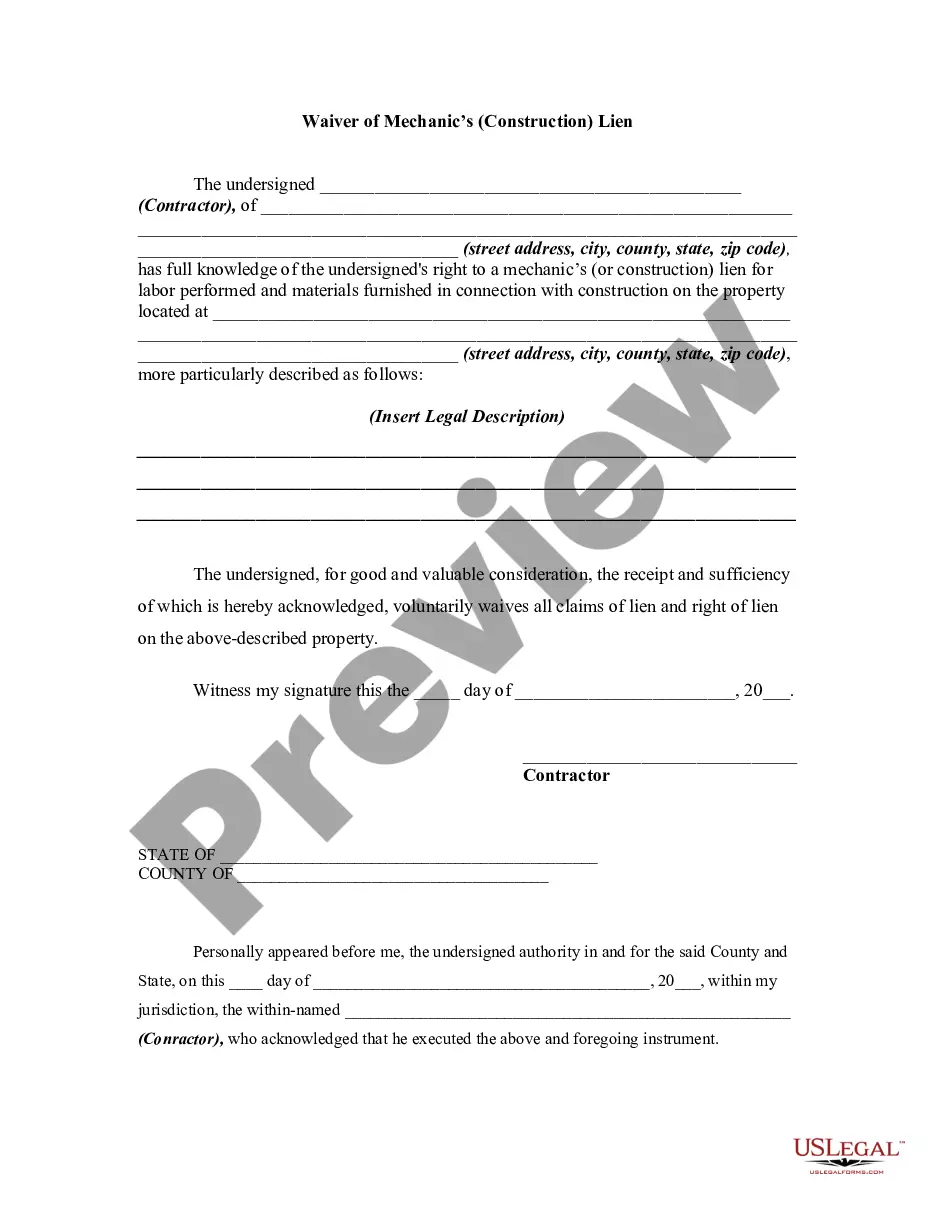
The Partial Lien Waiver for Mechanic Liens is a legal document that allows a subcontractor to waive their right to place a lien against a property in exchange for partial payment. This form is crucial in construction projects, as it helps ensure that payments are made smoothly while safeguarding the rights of contractors and subcontractors. Unlike a full lien waiver, this document only releases the claim for a specified amount, allowing further claims for any remaining balance in the project.
What’s included in this form
- Identification of the undersigned subcontractor and contractor involved.
- Description of the property, including location and legal description.
- The payment amount for which the lien is waived.
- A statement acknowledging the receipt of payment.
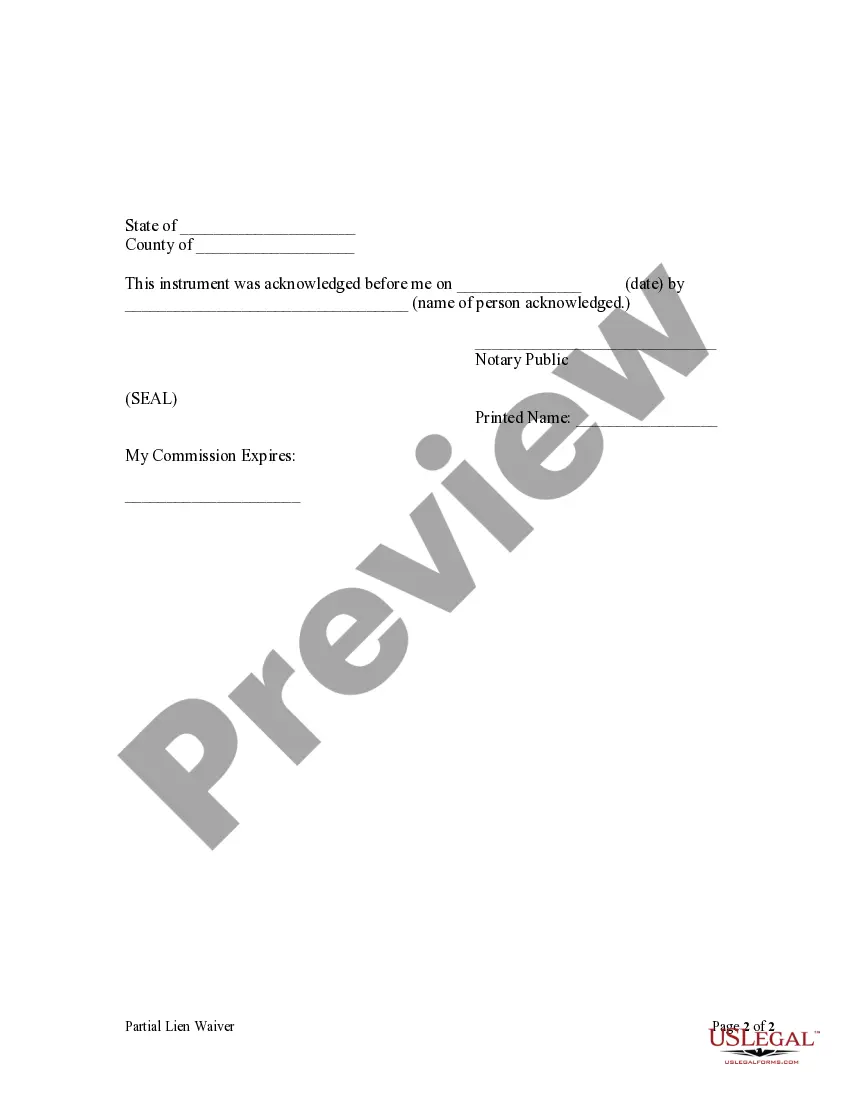
- Signature fields for the subcontractor and notary public.
When to use this document
This form should be used when a subcontractor has completed work on a project and is about to receive a partial payment. By signing the Partial Lien Waiver, the subcontractor confirms that they will not claim a lien for the amount received. It is often used in construction projects to facilitate cash flow while protecting the contractor's rights for future claims for unpaid amounts.
Intended users of this form
- Subcontractors who have performed work on a construction project.
- Contractors seeking to obtain clear and unconditional payments.
- Property owners looking to manage their liabilities associated with mechanic liens.
Instructions for completing this form
- Identify the parties involved by filling in the names of the subcontractor and contractor.
- Fill in the property description, including address and legal description.
- Specify the payment amount received for the work done.
- Sign the form in the designated area, ensuring it is notarized.
- Record the date and other required details where indicated.
Notarization requirements for this form
This document requires notarization to meet legal standards. US Legal Forms provides secure online notarization powered by Notarize, allowing you to complete the process through a verified video call, available 24/7.
Get your form ready online
Our built-in tools help you complete, sign, share, and store your documents in one place.
Make edits, fill in missing information, and update formatting in US Legal Forms—just like you would in MS Word.
Download a copy, print it, send it by email, or mail it via USPS—whatever works best for your next step.
Sign and collect signatures with our SignNow integration. Send to multiple recipients, set reminders, and more. Go Premium to unlock E-Sign.
If this form requires notarization, complete it online through a secure video call—no need to meet a notary in person or wait for an appointment.
We protect your documents and personal data by following strict security and privacy standards.

Make edits, fill in missing information, and update formatting in US Legal Forms—just like you would in MS Word.

Download a copy, print it, send it by email, or mail it via USPS—whatever works best for your next step.

Sign and collect signatures with our SignNow integration. Send to multiple recipients, set reminders, and more. Go Premium to unlock E-Sign.

If this form requires notarization, complete it online through a secure video call—no need to meet a notary in person or wait for an appointment.

We protect your documents and personal data by following strict security and privacy standards.
Common mistakes
- Failing to accurately describe the property can lead to legal issues.
- Not specifying the correct payment amount may create confusion in claims.
- Omitting signatures or not having the form notarized when required can invalidate the waiver.
Benefits of using this form online
- Immediate access to the form allows for quick processing.
- The form can be easily customized to fit specific project needs.
- Downloadable templates ensure that subcontractors can securely keep records.
Legal use & context
- The Partial Lien Waiver is an essential tool for subcontractors working in construction, as it clarifies payment status.
- It is enforceable under Illinois state law for the amount specified in the waiver.
- This form helps avoid future legal complications by documenting payments made and preventing unwarranted lien claims.
Summary of main points
- The Partial Lien Waiver acknowledges payments received while waiving the right to claim a lien for those payments.
- It is crucial for subcontractors to complete this form accurately to protect their interests in construction projects.
- Proper notarization is essential for the validity of the waiver.
Looking for another form?
Form popularity
FAQ
Negotiate with the contractor who placed the lien (the "lienor" to remove it. Obtain a lien bond to discharge the lien, or. File a lawsuit to vacate the lien.
The deadline for contractors and subcontractors to file their statement of mechanic's lien is four months (not 120 days) from the last date of work (exclusive of warranty work or other work performed free of charge), or from the last date that materials were supplied to the project.
The process of bonding off a mechanics lien starts after a claimant has filed a mechanics lien. After the claim is made, a general contractor or a property owner can contact a surety bond company to purchase a surety bond that replaces the value of the lien that was filed against the property.
Formalize a defense for disputing the amount of the lien. Gather supporting documentation for your rebuttal, depending on the type of lien. Contact the agent representing the creditor to dispute the amount of the claim. Negotiate a payment settlement with the creditor if you cannot pay the amount you owe in full.
Negotiate with the contractor who placed the lien (the "lienor" to remove it. Obtain a lien bond to discharge the lien, or. File a lawsuit to vacate the lien.
In order to enforce a lien, the contractor, subcontractor or supplier must file a lawsuit. The deadline to file a lawsuit is two years from the last date work was performed or materials were supplied. A recorded lien is valid for these two years, but a failure to sue within that time frame voids the lien.
Must Illinois lien waivers be notarized?Illinois does not require mechanics lien waivers to be notarized in order to be effective.
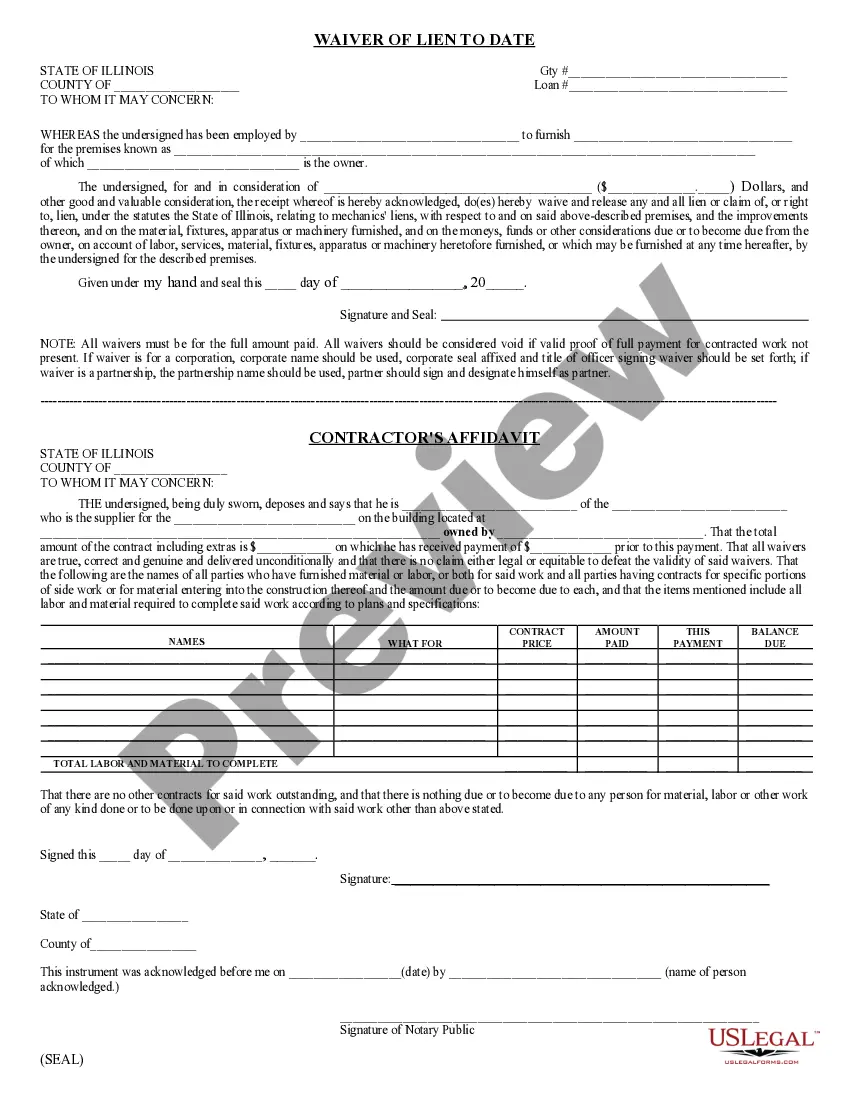
Partial lien waivers waive lien rights for a portion of the total contract value. For example, if a material supplier is expecting to be paid $30k for supplies delivered to a project but is to be paid in three installments of $10k each, they might sign a partial lien waiver for $10k for each payment received.