Illinois Pre-Incorporation Agreement, Shareholders Agreement and Confidentiality Agreement
What is this form?
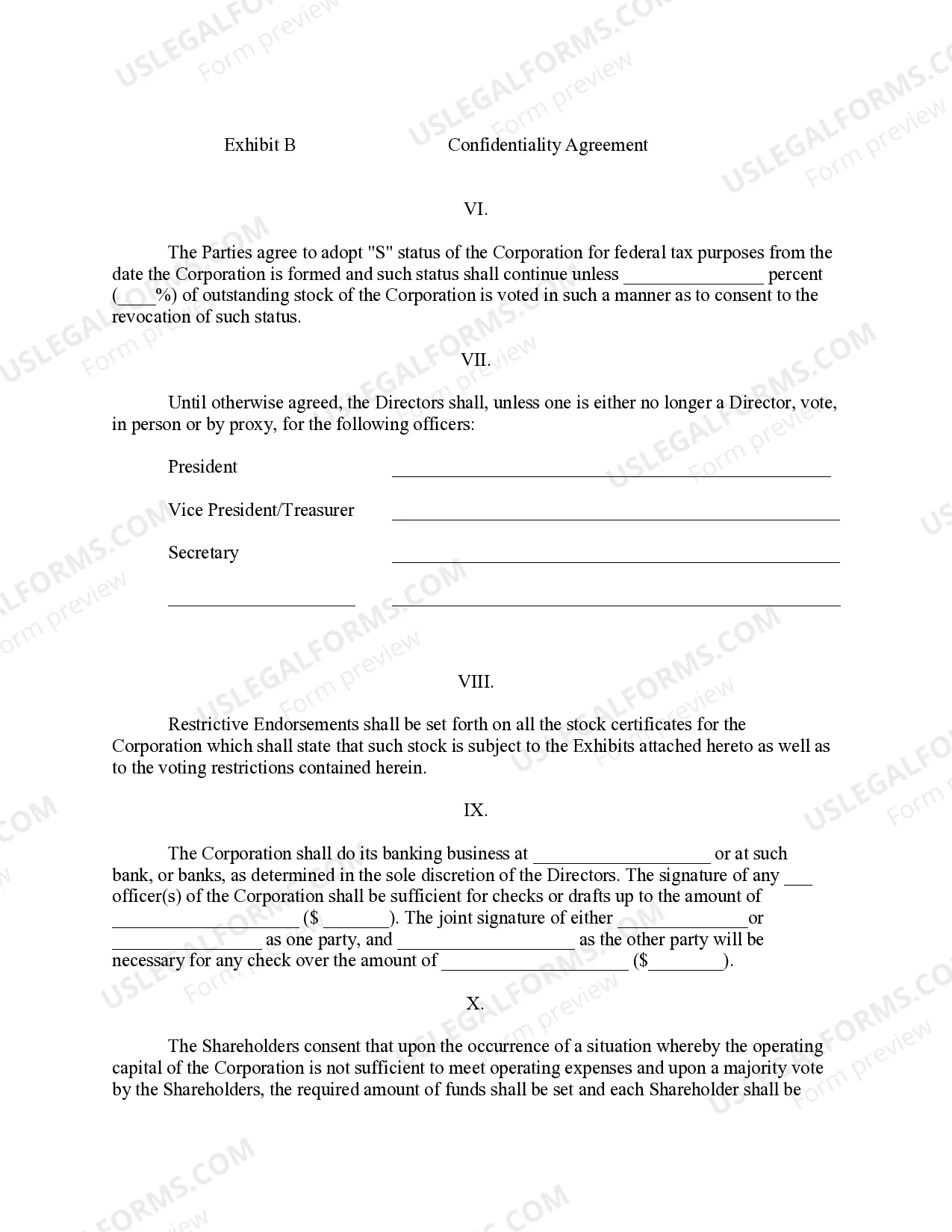
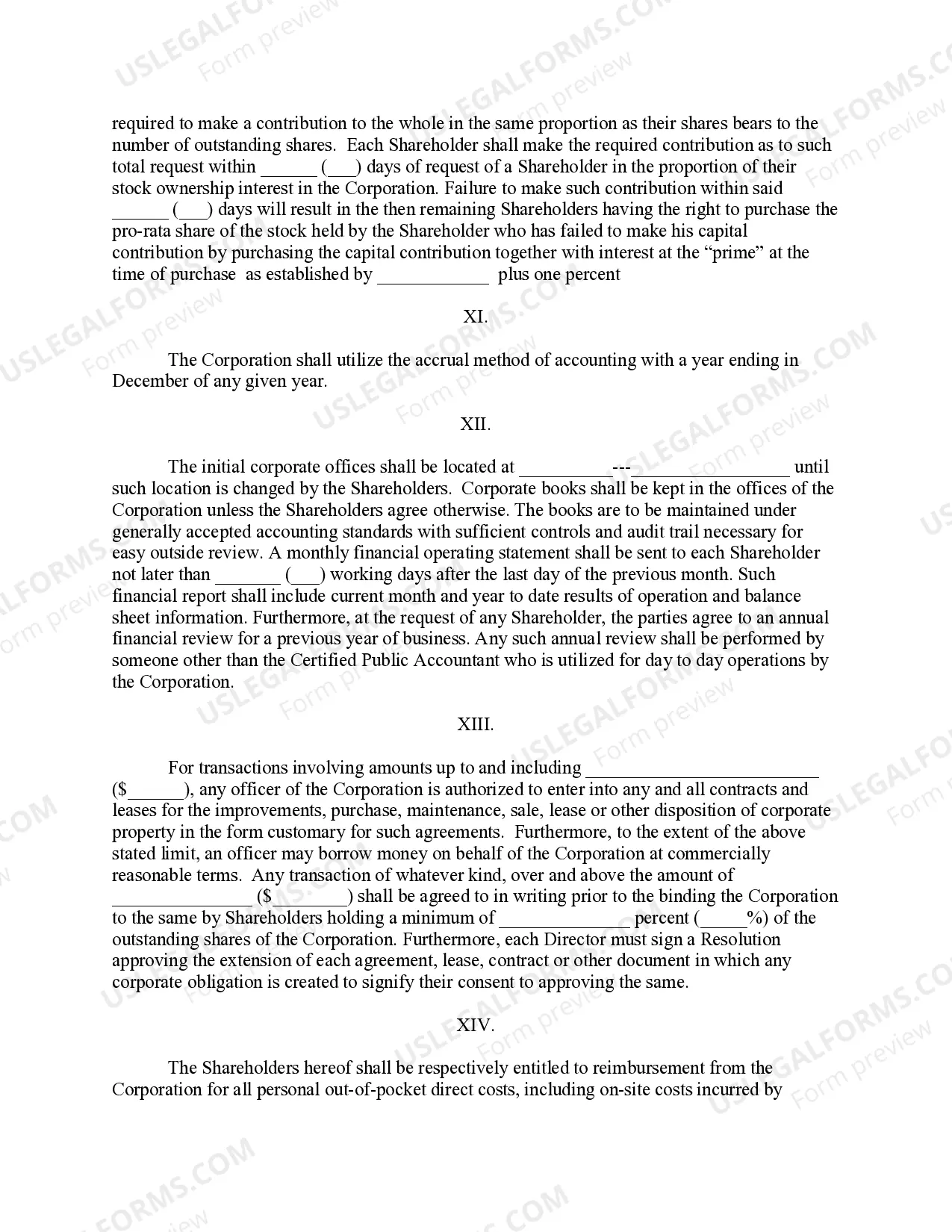
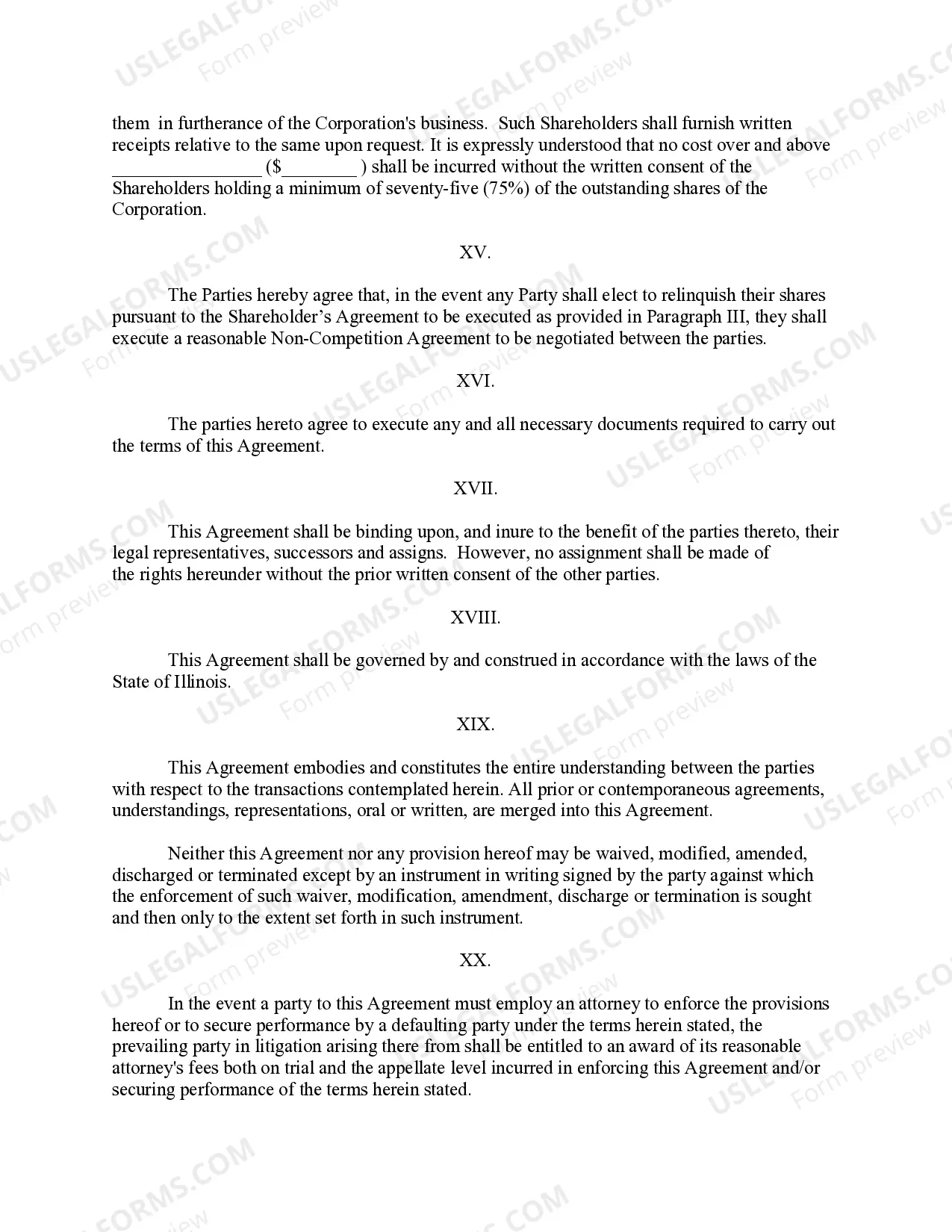
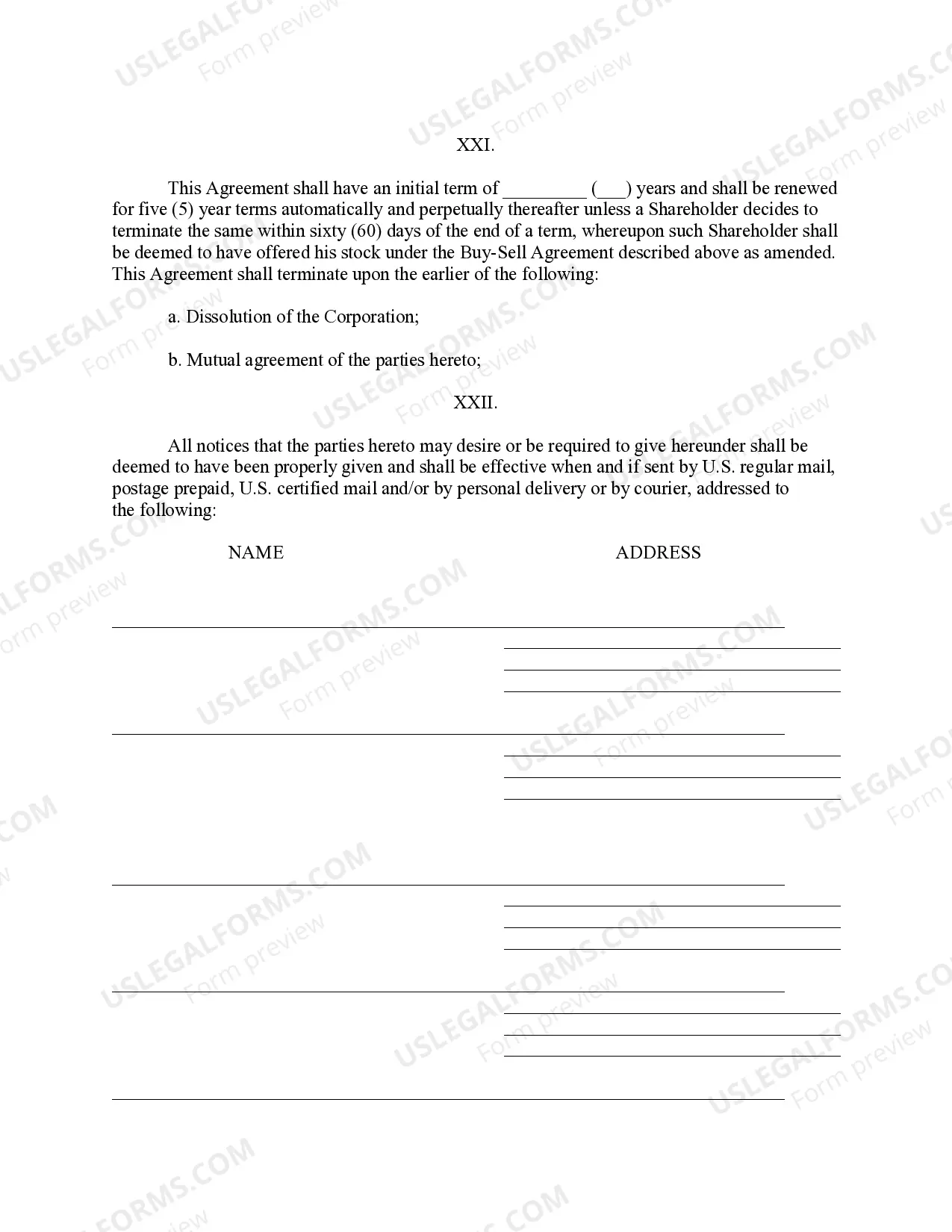
The Illinois Pre-Incorporation Agreement, Shareholders Agreement, and Confidentiality Agreement package is designed for individuals starting a corporation in Illinois. This comprehensive set of forms outlines the operational structure, management responsibilities, and confidentiality expectations before the formal incorporation of a business. It ensures all parties involved agree on vital aspects such as management roles, shareholder rights, and confidentiality measures, differing from standalone agreements by providing a cohesive framework for new corporate entities.
Main sections of this form
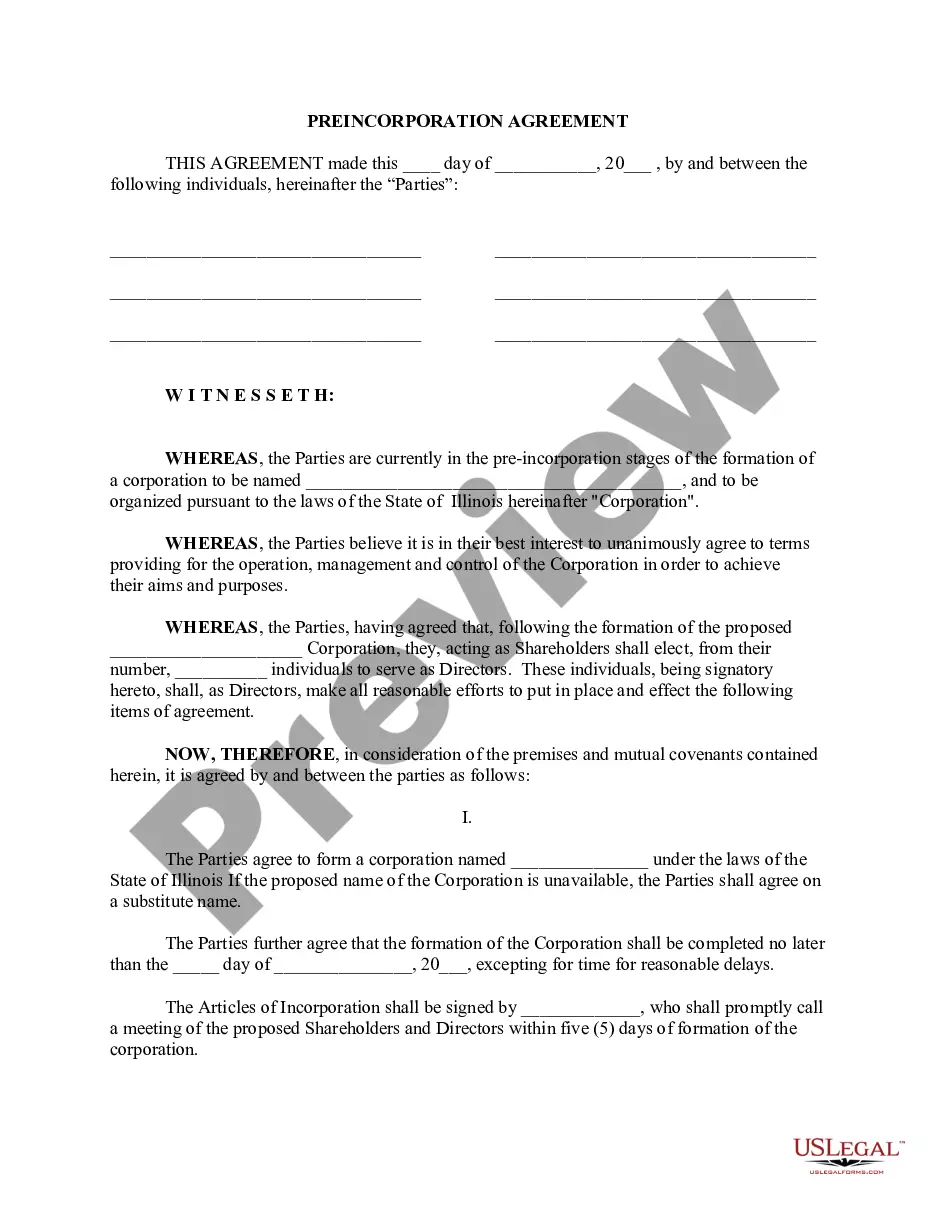
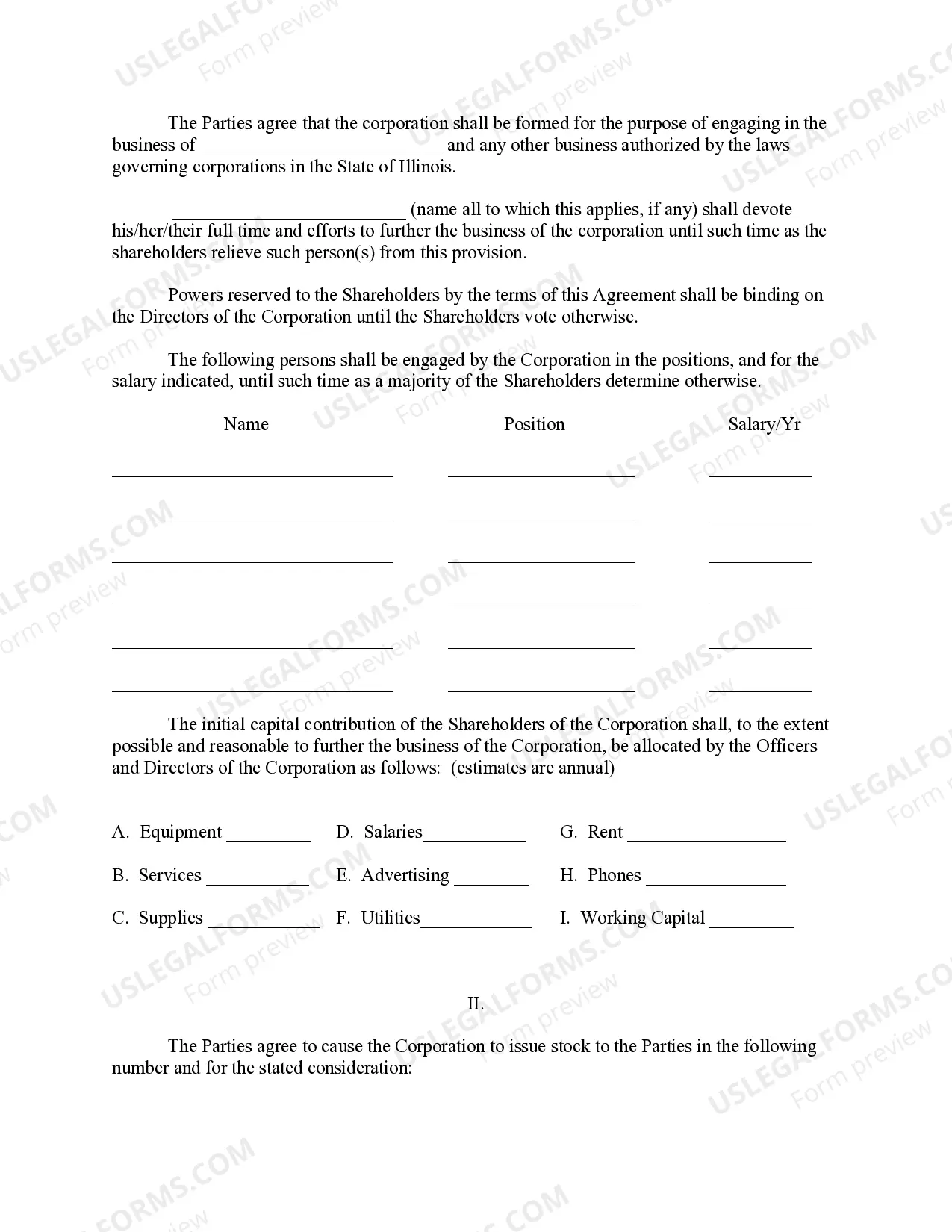
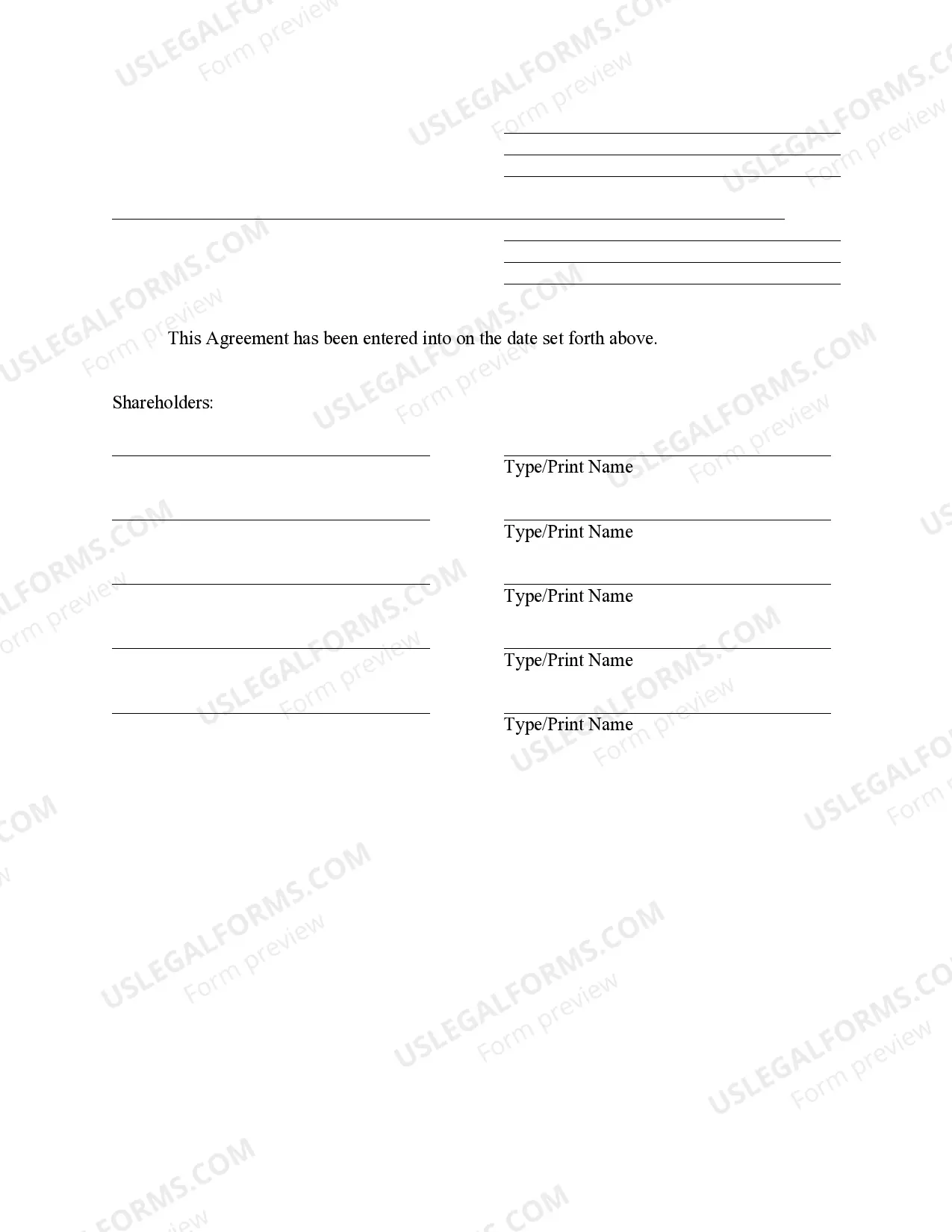
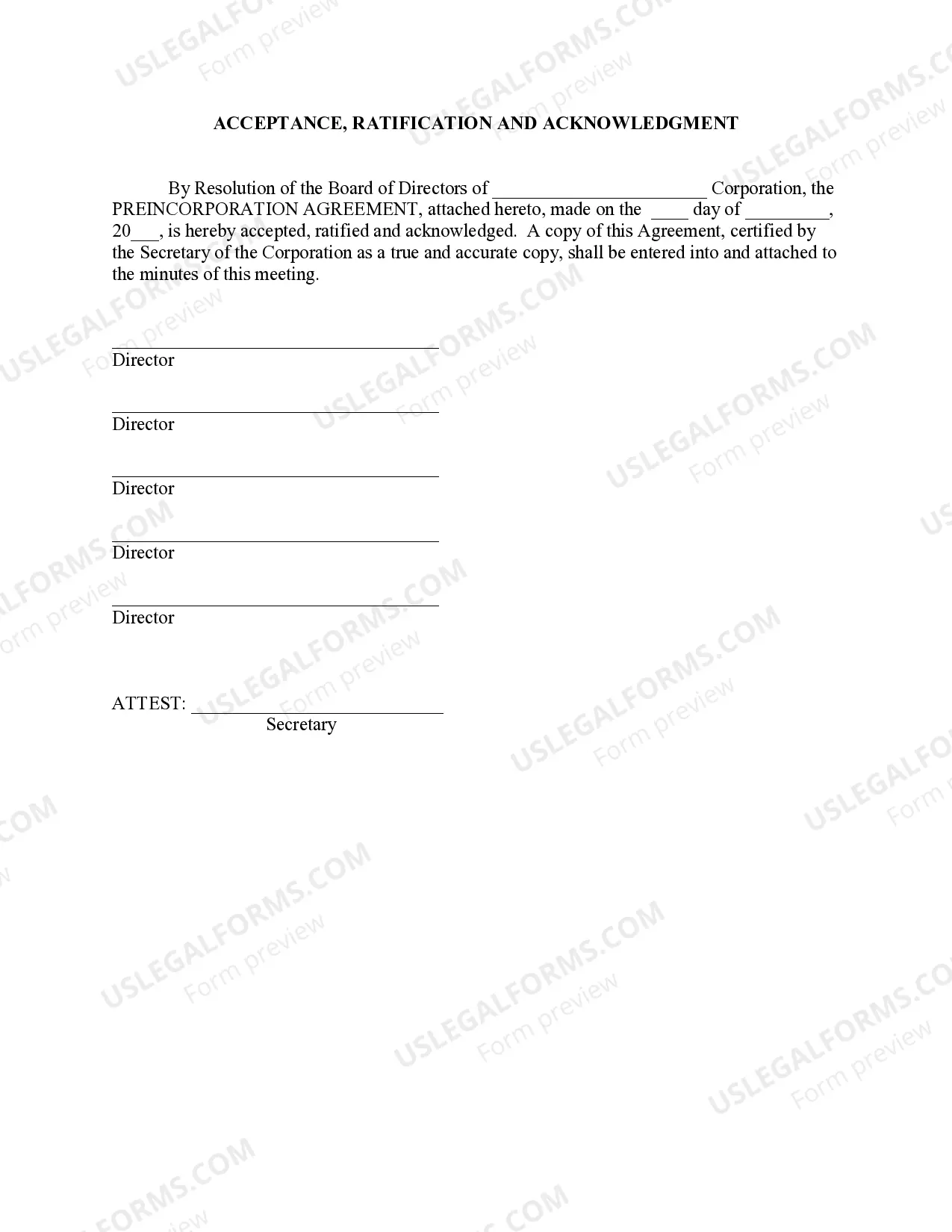
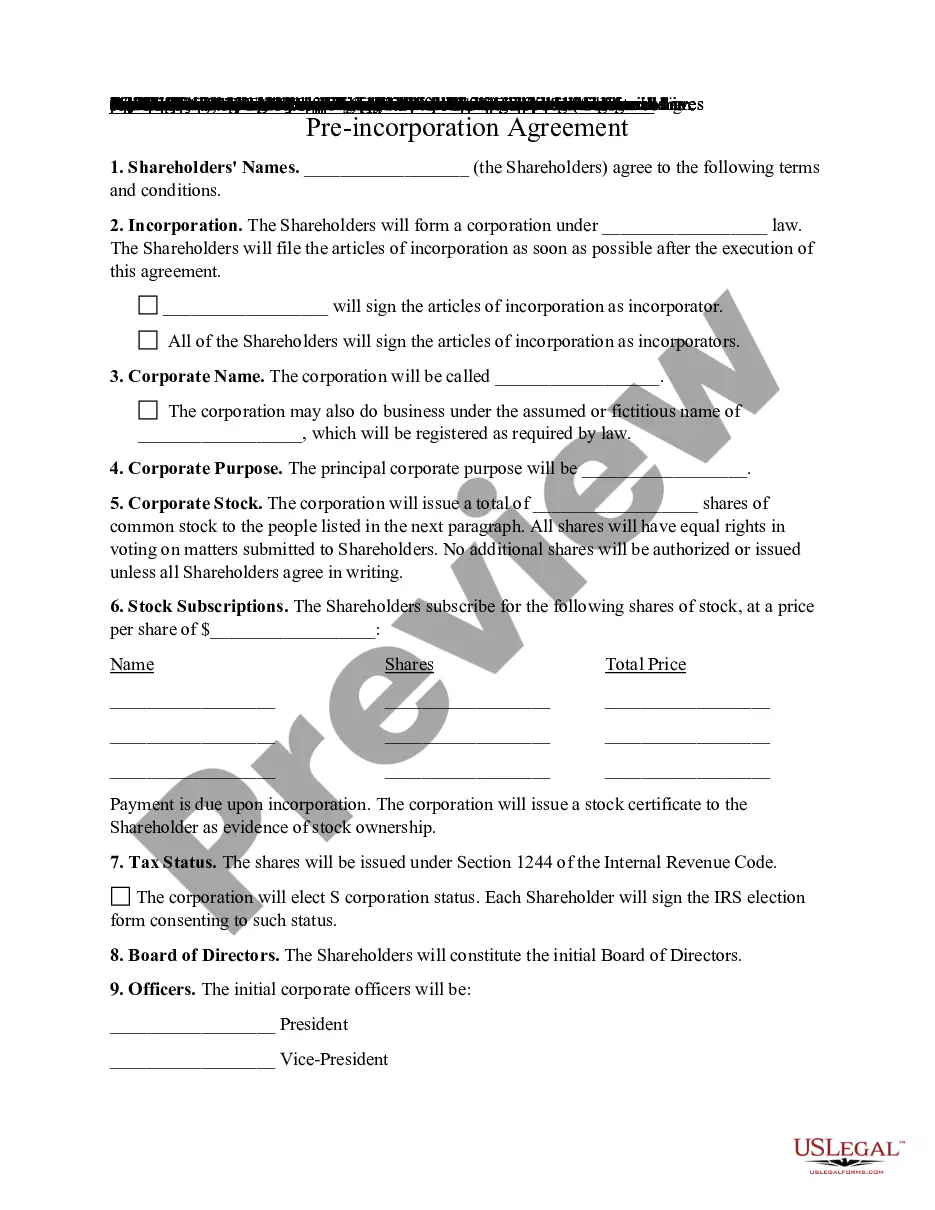
- Pre-Incorporation Agreement: Details the formation, purpose, management structure, and duties of officers and directors.
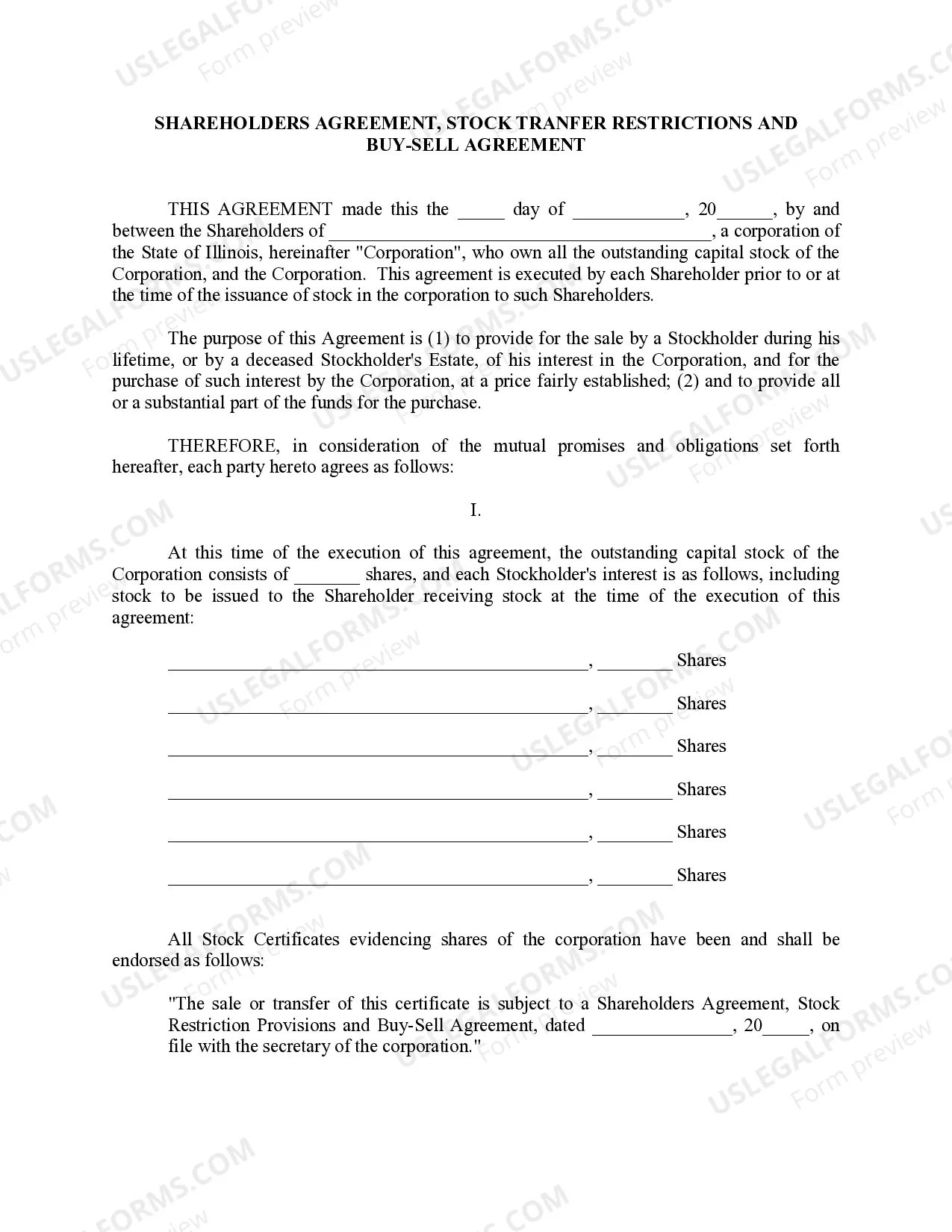
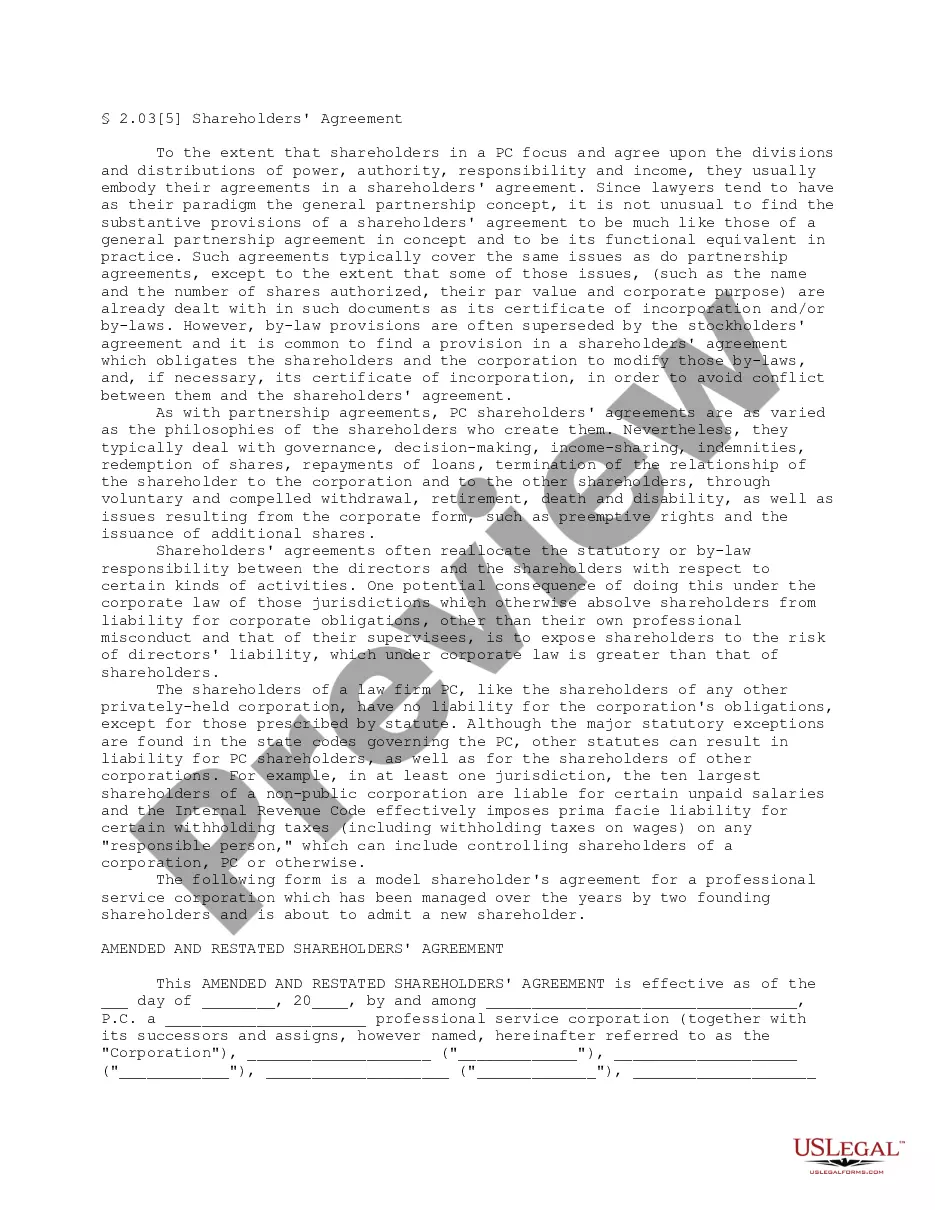
- Shareholders Agreement: Outlines the process for buying shares from deceased shareholders or those wishing to sell their stock.
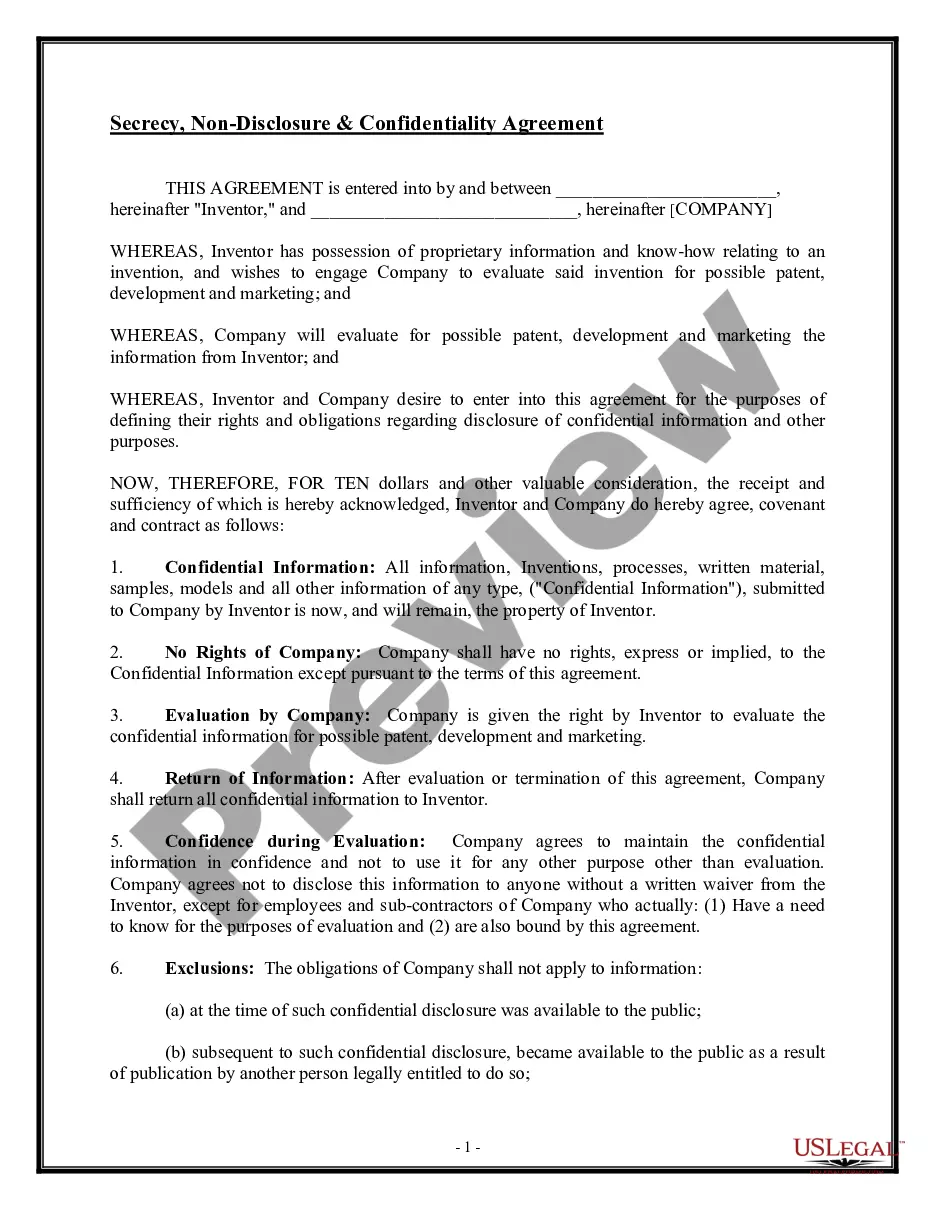
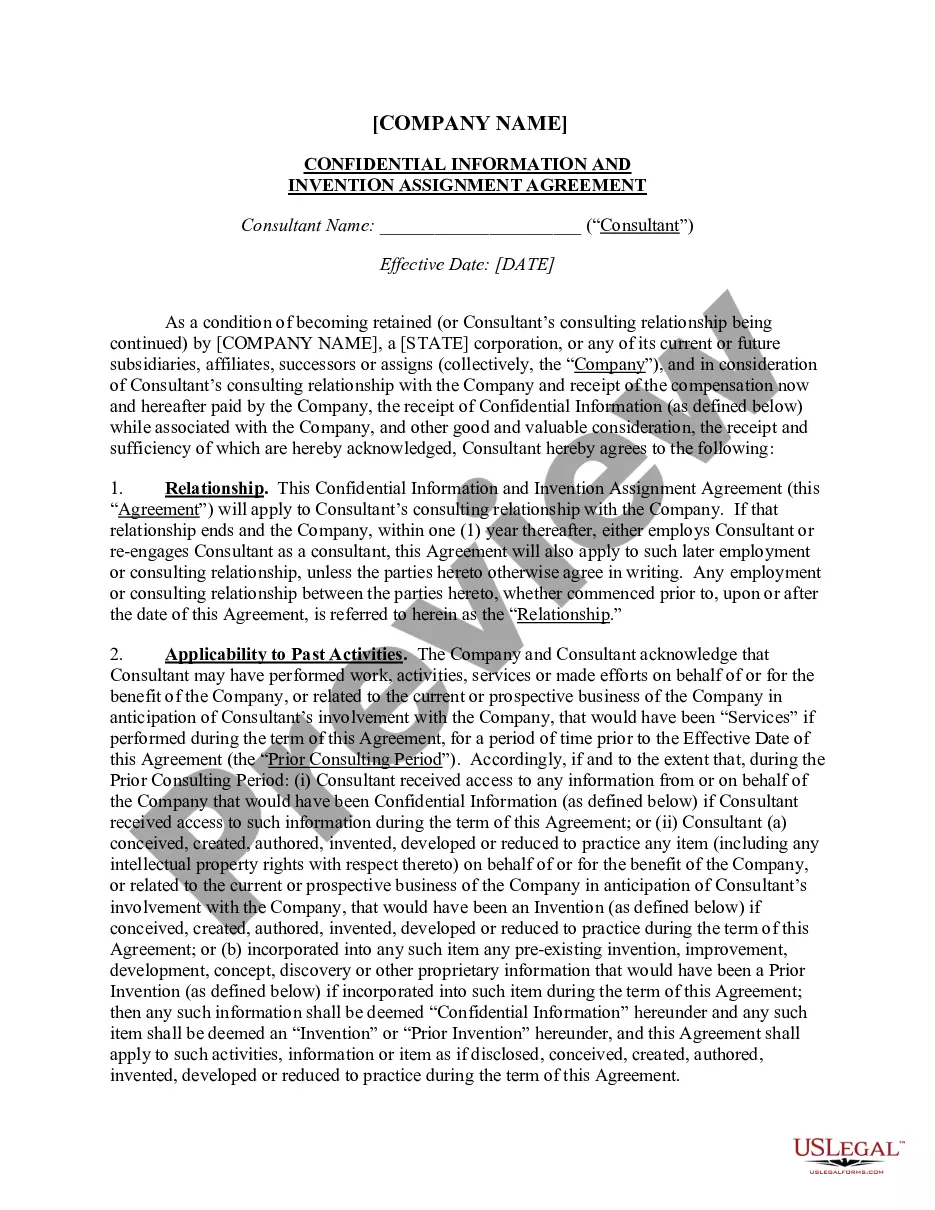
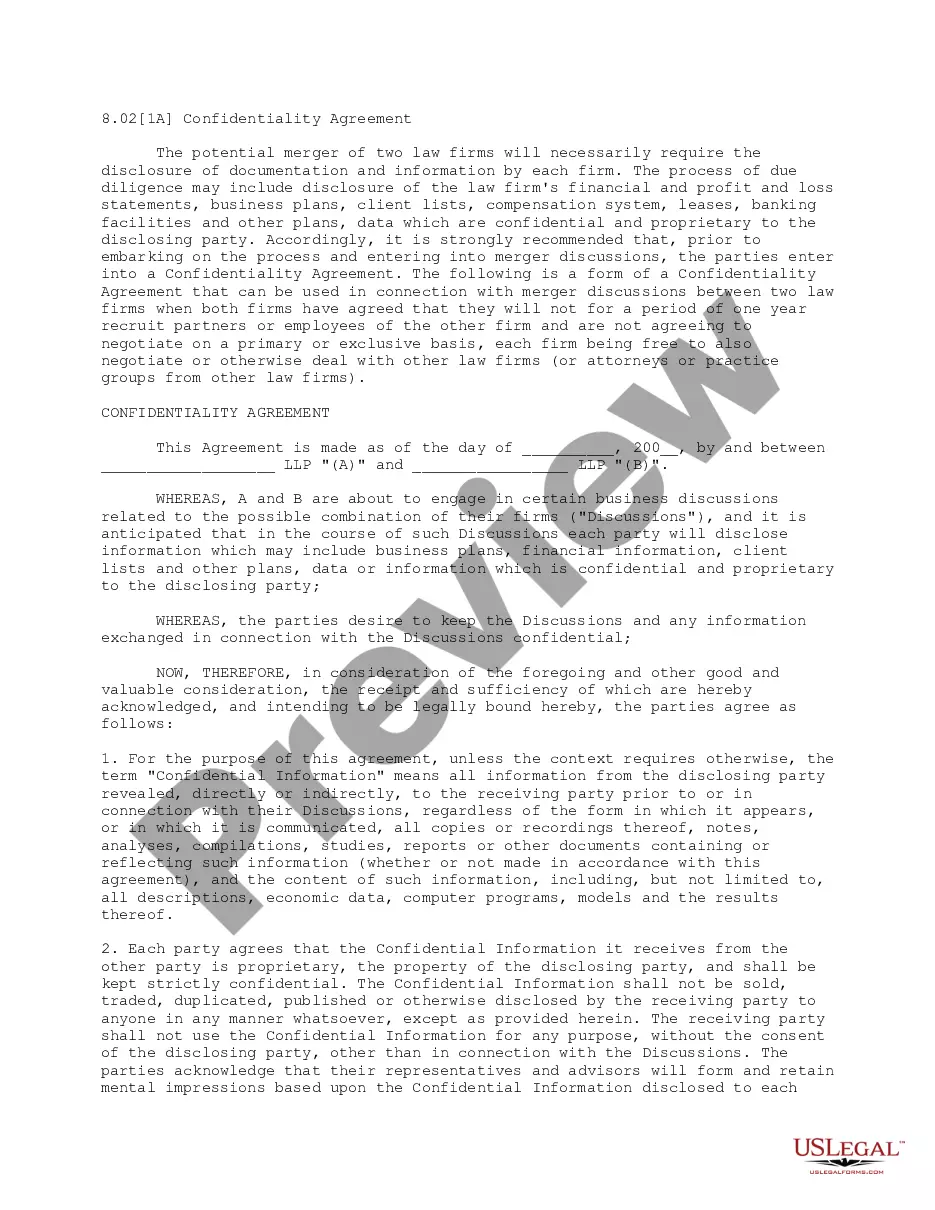
- Confidentiality Agreement: Establishes the expectation of confidentiality among shareholders regarding sensitive corporate information.
- Management Roles: Specifies the responsibilities and salaries for initial corporate officers and directors.
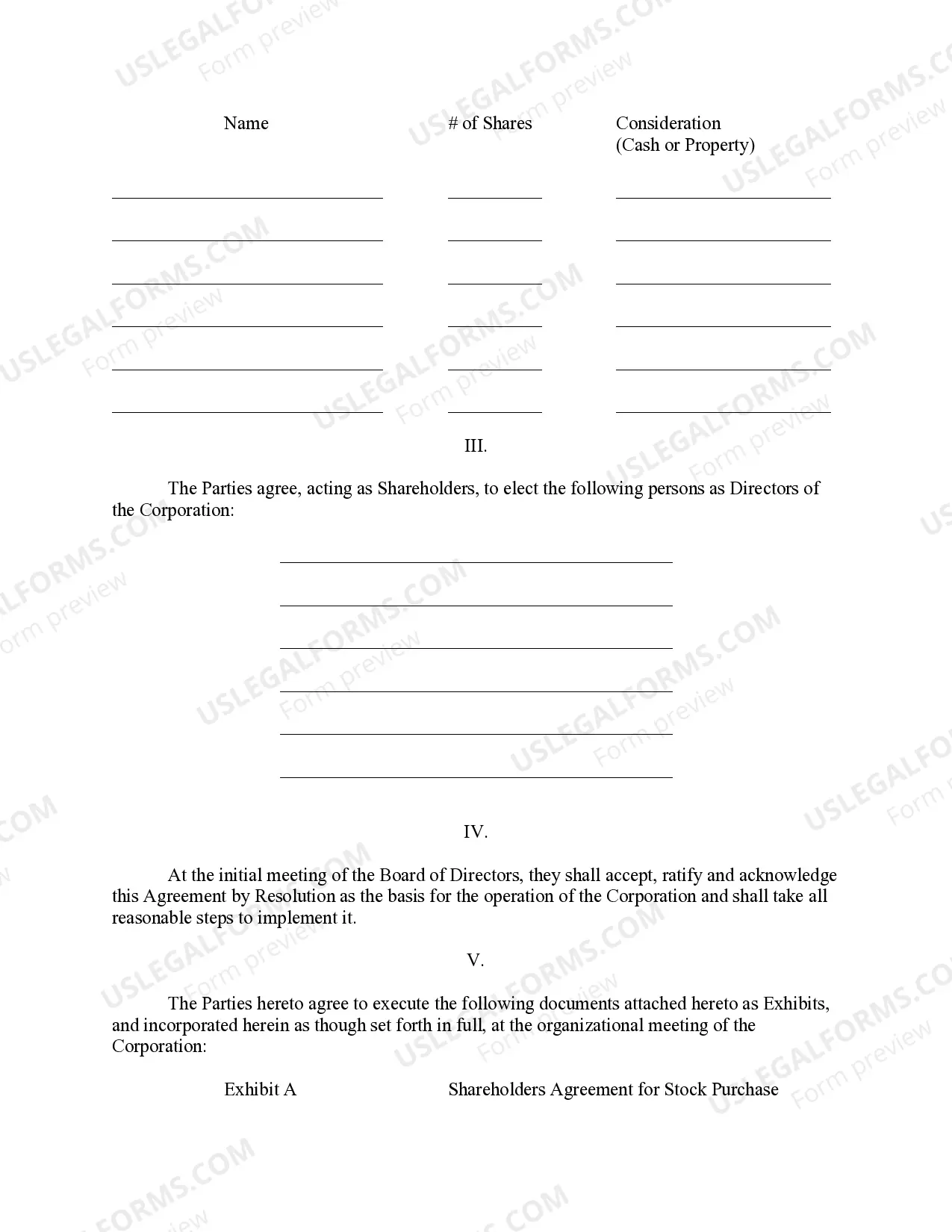
- Stock Issuance: Details the number of shares to be issued to each shareholder and the consideration for those shares.

Common use cases
This form package is essential for anyone looking to establish a corporation in Illinois. It should be utilized when forming a business to clearly define the management structure, shareholder agreements, and confidentiality requirements prior to incorporation. It is also advantageous when changes in ownership are anticipated or when establishing operational guidelines to maintain control among existing shareholders.
Who should use this form
- Individuals or groups planning to start a corporation in Illinois.
- Current and prospective shareholders looking to define their rights and responsibilities.
- Business partners who need to establish management structures and operational guidelines.
- Anyone involved in discussions about corporate governance and shareholder management.
Instructions for completing this form
- Identify the parties involved: List the names of all individuals participating in the agreement.
- Fill in the corporation's name: Specify the intended name for the corporation; provide an alternative if the name is unavailable.
- Define management roles: Detail the positions, responsibilities, and salaries of the initial officers and directors.
- List share distribution: Indicate how many shares each shareholder will receive and the compensation for those shares.
- Sign and date the agreements: Ensure all parties sign the agreement to finalize the terms and conditions outlined.
Notarization guidance
This form does not typically require notarization unless specified by local law.
Get your form ready online
Our built-in tools help you complete, sign, share, and store your documents in one place.
Make edits, fill in missing information, and update formatting in US Legal Forms—just like you would in MS Word.
Download a copy, print it, send it by email, or mail it via USPS—whatever works best for your next step.
Sign and collect signatures with our SignNow integration. Send to multiple recipients, set reminders, and more. Go Premium to unlock E-Sign.
If this form requires notarization, complete it online through a secure video call—no need to meet a notary in person or wait for an appointment.
We protect your documents and personal data by following strict security and privacy standards.

Make edits, fill in missing information, and update formatting in US Legal Forms—just like you would in MS Word.

Download a copy, print it, send it by email, or mail it via USPS—whatever works best for your next step.

Sign and collect signatures with our SignNow integration. Send to multiple recipients, set reminders, and more. Go Premium to unlock E-Sign.

If this form requires notarization, complete it online through a secure video call—no need to meet a notary in person or wait for an appointment.

We protect your documents and personal data by following strict security and privacy standards.
Typical mistakes to avoid
- Failing to list all parties explicitly involved in the agreement.
- Omitting details about share distribution or management roles.
- Not specifying an alternative name for the corporation if the desired name is taken.
- Neglecting to have all parties sign and date the agreement, making it unenforceable.
Benefits of completing this form online
- Convenience of filling out and accessing the forms from anywhere at any time.
- Editability allows users to customize their agreements according to specific business needs.
- Access to professionally drafted templates ensures compliance with legal standards.
- Quick download options save time compared to traditional legal processes.
Legal use & context
- The agreements provide a legally binding structure for managing a corporation.
- They ensure clarity and mutual understanding among shareholders regarding their rights and obligations.
- These forms are critical for protecting sensitive company information through confidentiality provisions.
Main things to remember
- The Illinois Pre-Incorporation Agreement, Shareholders Agreement, and Confidentiality Agreement are vital for new corporations.
- Properly completing these forms helps establish clear operational guidelines and shareholder rights.
- Using these forms online saves time and ensures adherence to legal standards.
- Always double-check for completeness and necessary signatures to make the agreements enforceable.
Looking for another form?
Form popularity
FAQ
Many social workers are unaware that duty to warn laws vary from state to state and that a few states have not established a statutory duty to warn. Twenty-two states have statutes applicable to social workers that establish a mandatory duty to warn.
The Mental Health Act does not have a specific section relating to confidentiality, and neither is confidentiality a guiding principle in the Mental Health Act Code of Practice for Wales. This reflects the fact that, in differing circumstances, professionals have to weigh up different considerations.
The terms 'privacy' and 'confidentiality' are commonly used interchangeably. Confidentiality relates to information only.The legal duty of confidentiality obliges health care practitioners to protect their patients against inappropriate disclosure of personal health information.
When the term disclosure is used, it is referring to both the written and oral communication of confidential information. This includes phone conversations, communication at meetings, casual conversations, written records, etc.
Other states, including Illinois, then enacted Tarasoff Laws that permit or require reporting when there is a serious, credible threat to a specific, targeted individual.
Confidentiality(n.) the state or attribute of being secret; privacy; as, you must respect the confidentiality of your client's communications.
In 1985, the California legislature codified the Tarasoff rule: California law now provides that a psychotherapist has a duty to protect or warn a third party only if the therapist actually believed or predicted that the patient posed a serious risk of inflicting serious bodily injury upon a reasonably identifiable
The duty to warn refers to a counselor's obligation to warn identifiable victims. The duty to protect is a counselor's duty to reveal confidential client information in the event that the counselor has reason to believe that a third party may be harmed.
Duty to warn refers to the responsibility of a counselor or therapist to inform third parties or authorities if a client poses a threat to themselves or another identifiable individual. 1feff It is one of just a few instances where a therapist can breach client confidentiality.