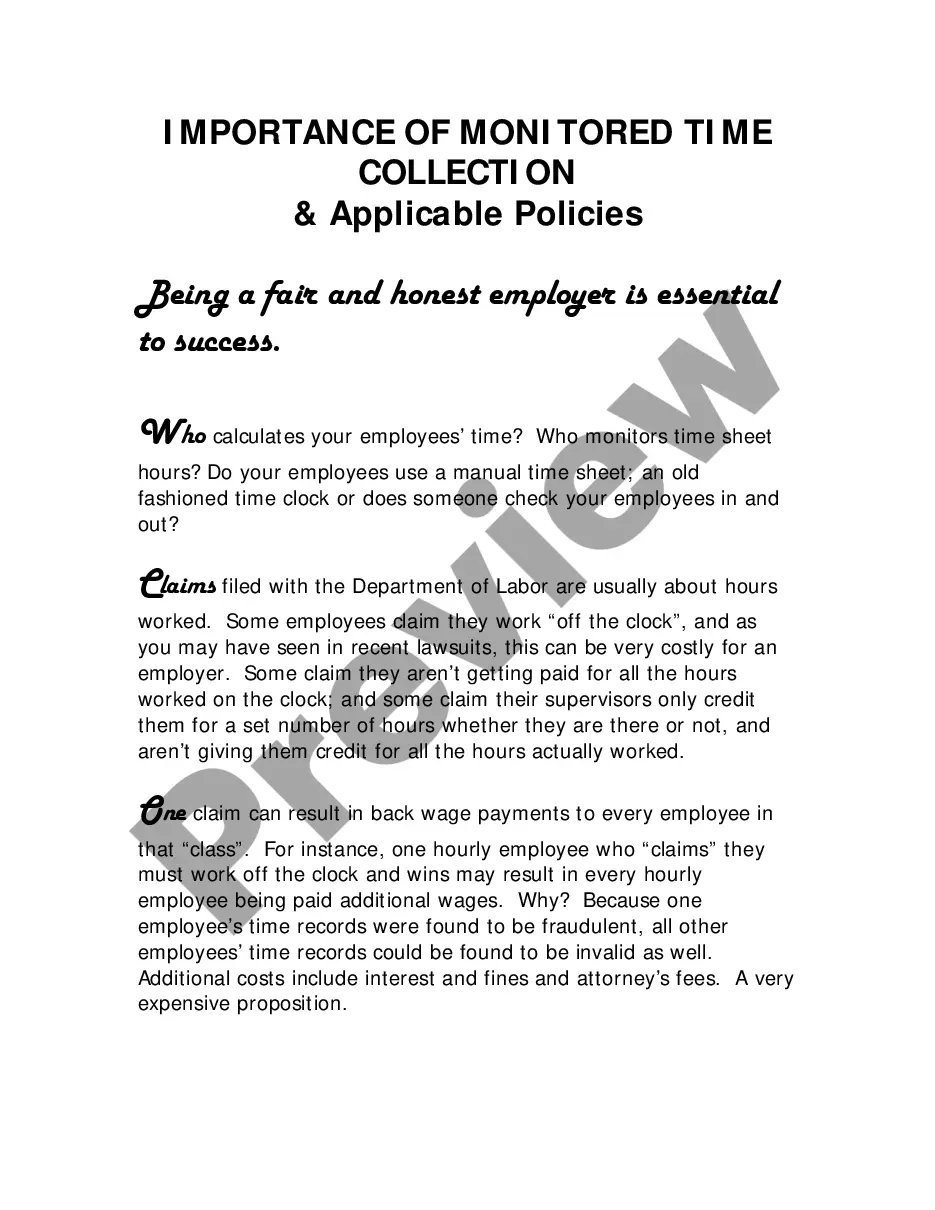
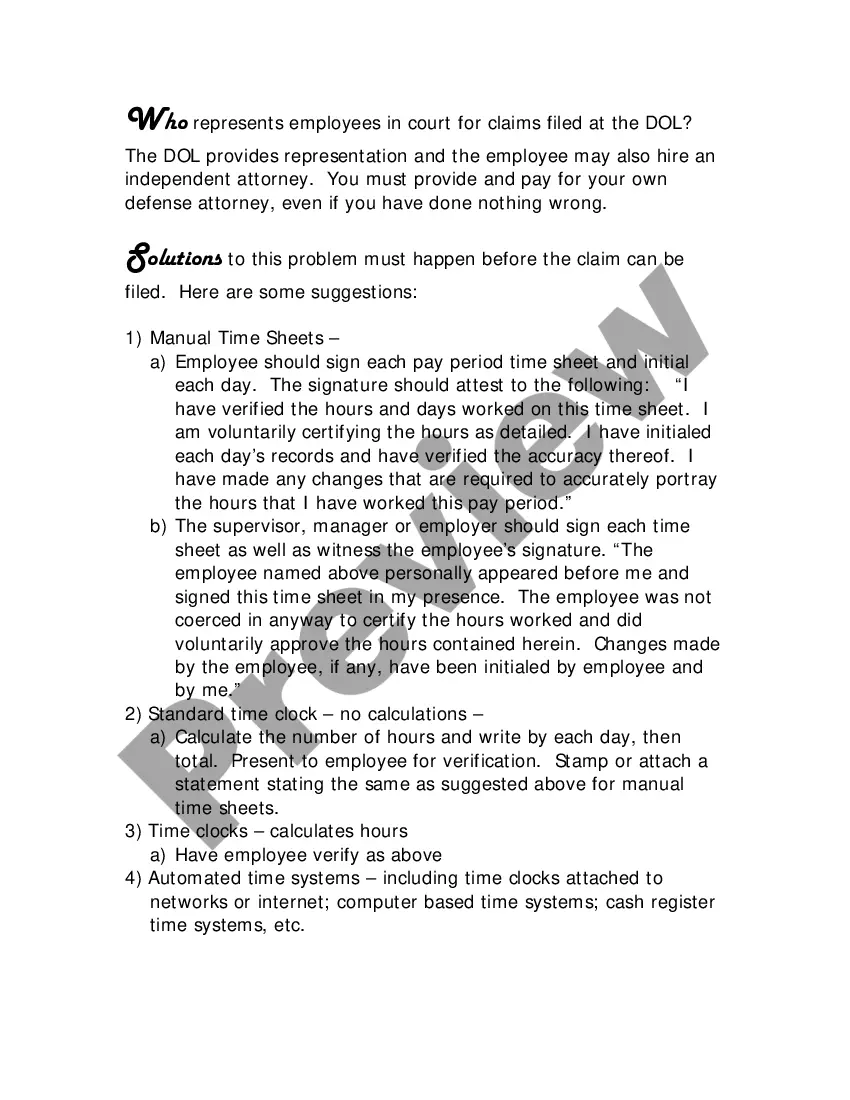
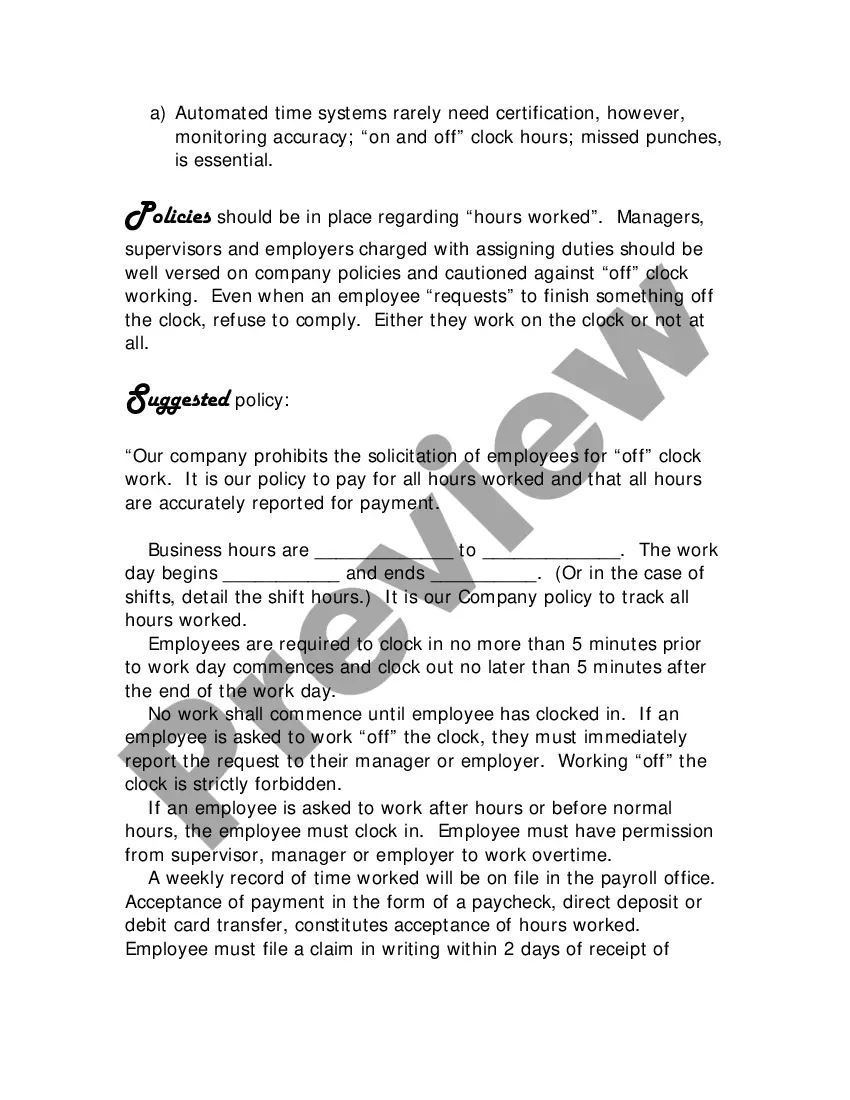
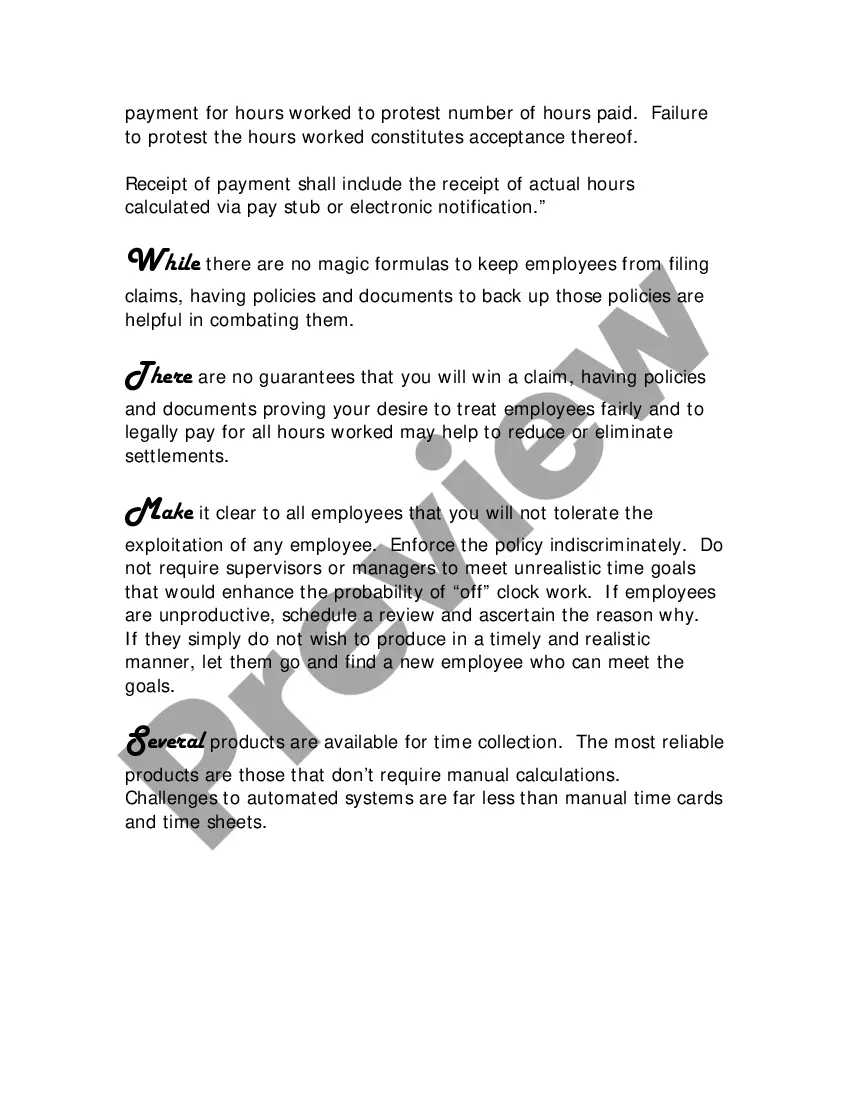
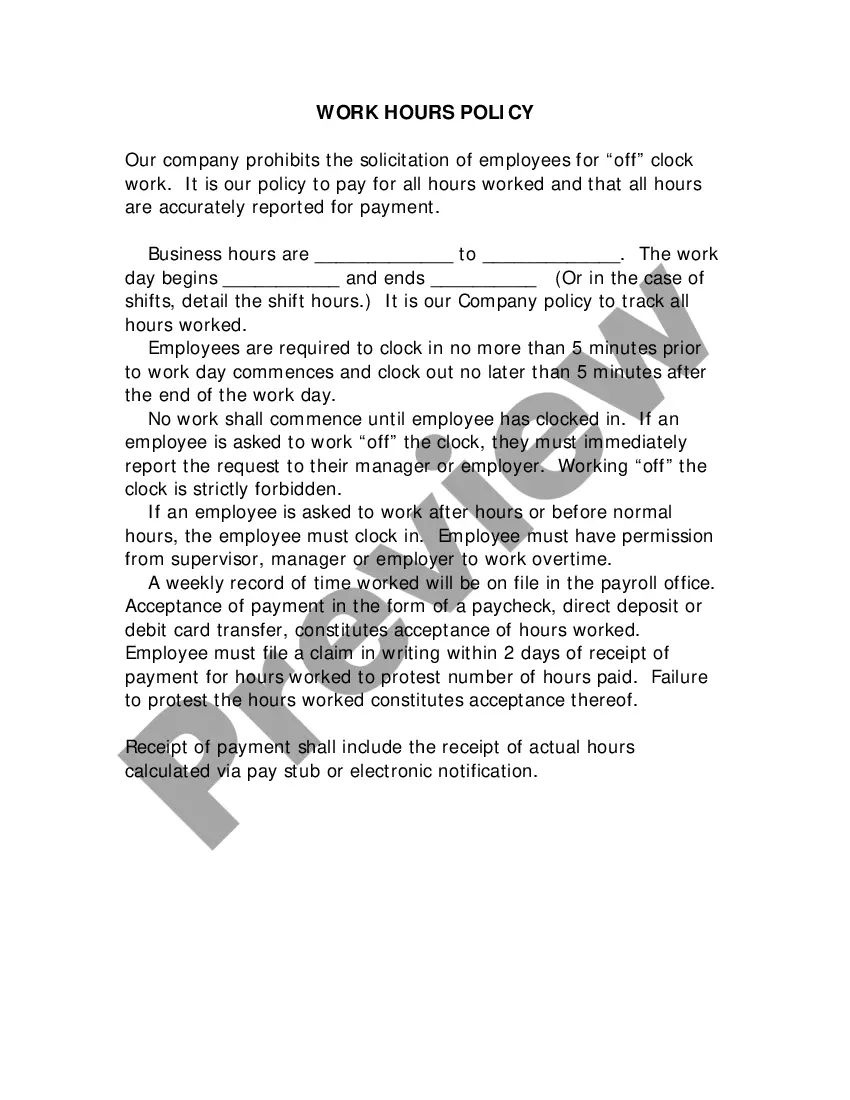
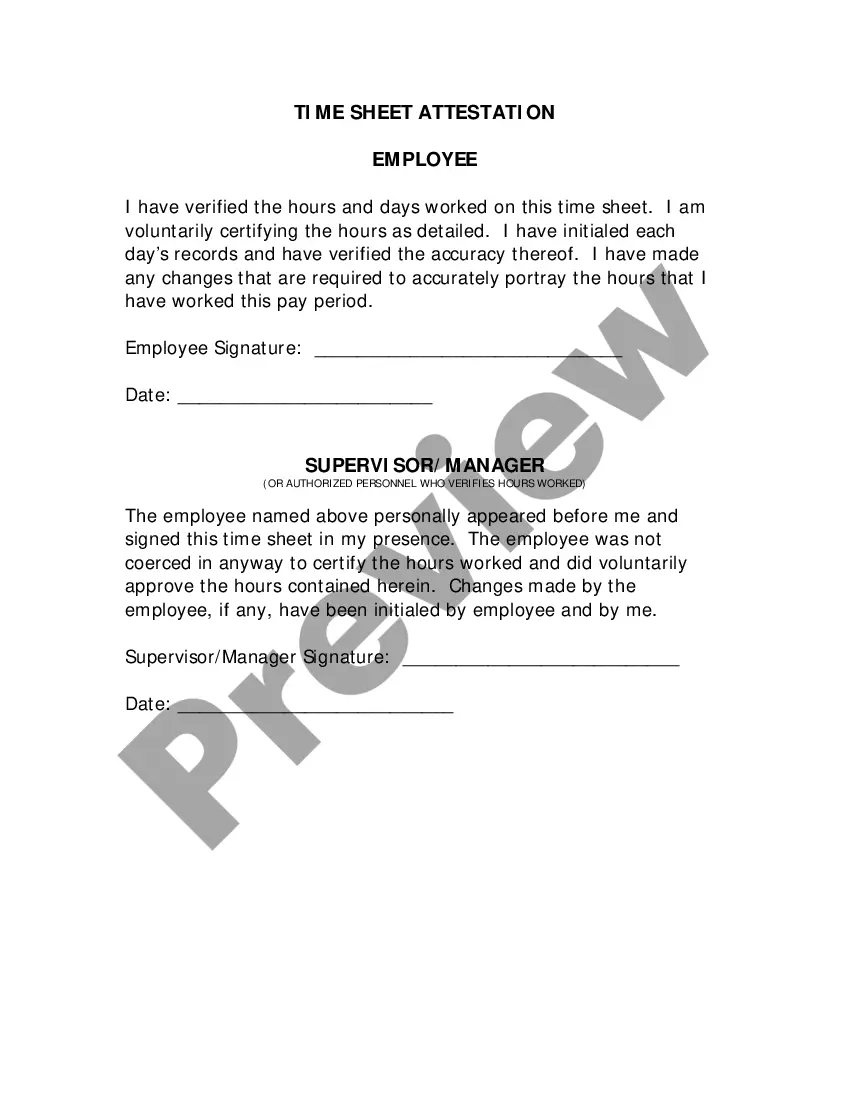
Information regarding "Off Clock" pitfalls & Policies to combat claims regarding time sheets and time cards.
Idaho Monitored Time Info and Pamphlet - Off Clock Pitfalls
Instant download
Description
Free preview
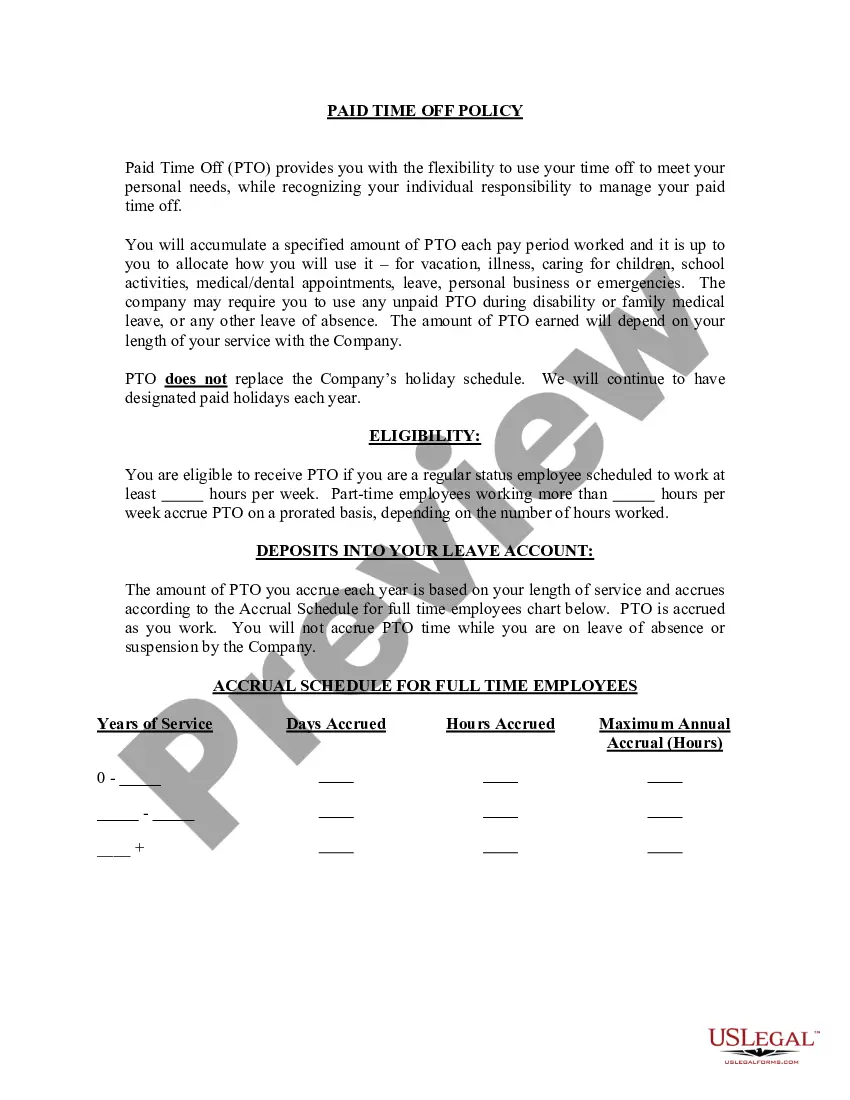
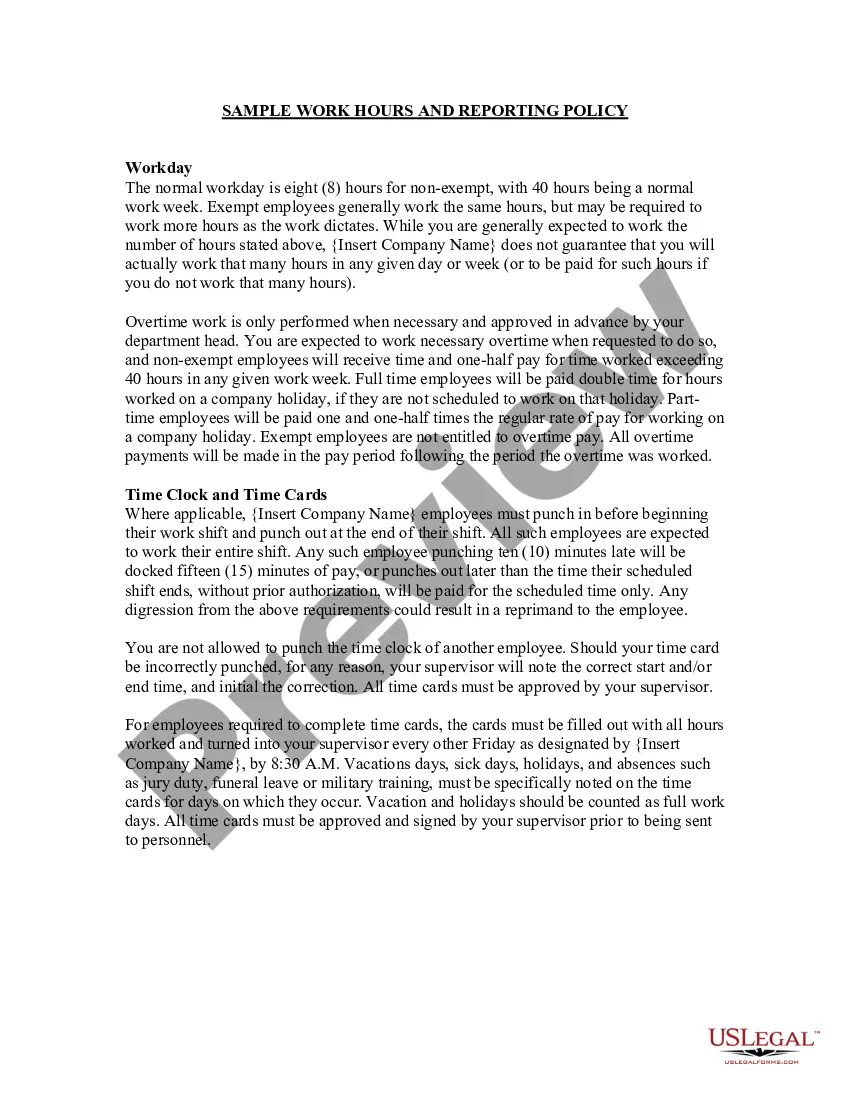
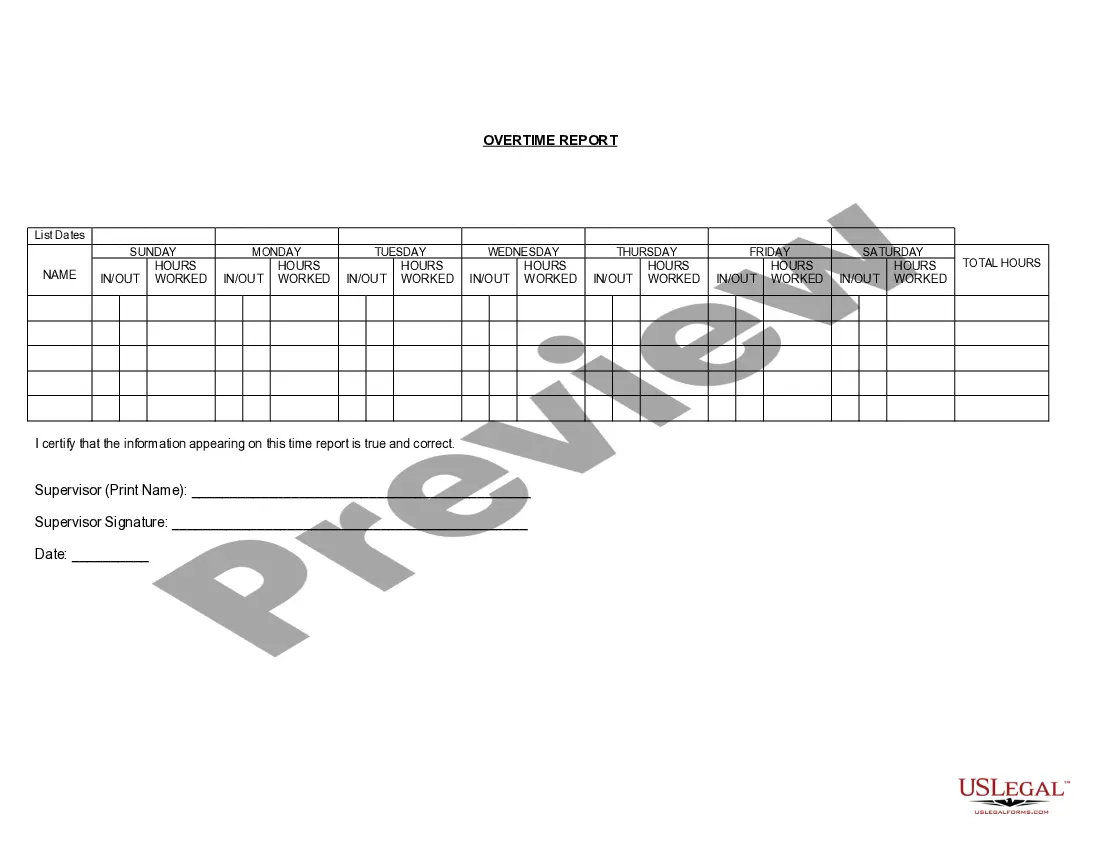
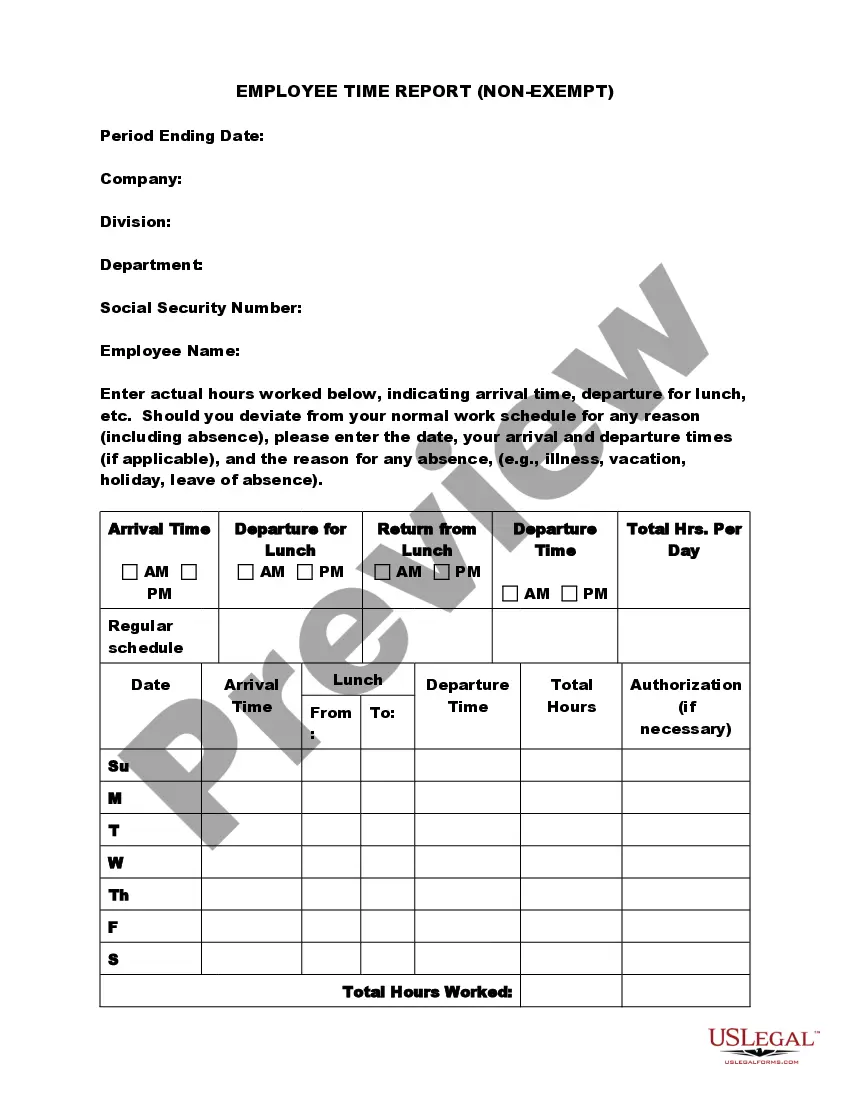
How to fill out Monitored Time Info And Pamphlet - Off Clock Pitfalls?
US Legal Forms - one of the largest collections of legal documents in the United States - offers a diverse selection of legal document templates that can be downloaded or printed.
By using the website, you can access thousands of forms for business and personal purposes, organized by categories, states, or keywords. You can find the latest versions of forms such as the Idaho Monitored Time Information and Pamphlet - Off Clock Risks within seconds.
If you already have a membership, Log In and download the Idaho Monitored Time Information and Pamphlet - Off Clock Risks from the US Legal Forms library. The Download button will appear on every form you view.
Once you are content with the form, confirm your choice by clicking on the Get now button. Then, select your desired payment plan and provide your information to create an account.
Complete the purchase. Use a credit card or PayPal account to finalize the transaction. Select the format and download the form to your device. Make edits. Fill out, modify, print, and sign the saved Idaho Monitored Time Information and Pamphlet - Off Clock Risks.
All templates you added to your account do not have an expiration date and are yours permanently. So, if you want to download or print another copy, just go to the My documents section and click on the form you need. Access the Idaho Monitored Time Information and Pamphlet - Off Clock Risks with US Legal Forms, the most extensive collection of legal document templates. Utilize a vast number of professional and state-specific templates that meet your business or personal needs and requirements.
- Access all previously saved forms in the My documents section of your account.
- If you are using US Legal Forms for the first time, here are simple steps to get started.
- Ensure you have selected the correct form for your city/state.
- Click the Preview button to review the content of the form.
- Check the form details to confirm you have chosen the correct form.
- If the form doesn’t meet your needs, use the Search box at the top of the screen to find one that does.
Form popularity
FAQ
Yes, in Idaho, you can sue someone for recording you without your consent under certain circumstances. Idaho law prohibits audio recordings made without the knowledge and consent of at least one party involved in the conversation. If you find yourself in this situation, it is crucial to understand your rights and options. Our Idaho Monitored Time Info and Pamphlet - Off Clock Pitfalls can guide you through the legal process.
The Open Records Act in Idaho is a law designed to promote transparency in government. This act allows individuals to request and obtain records, ensuring that citizens can hold their government accountable. Familiarizing yourself with this act will help you navigate the world of public records. For comprehensive details, refer to our Idaho Monitored Time Info and Pamphlet - Off Clock Pitfalls for essential tips.
In Idaho, public records include documents related to government operations, like meeting minutes, budgets, and contracts. Additionally, court records, property records, and various permits are accessible to the public. Understanding what qualifies as a public record can empower you to utilize these resources effectively. Our Idaho Monitored Time Info and Pamphlet - Off Clock Pitfalls provides more insights into accessing these records.
The new parental consent law in Idaho requires minors to obtain permission from a parent or guardian before accessing certain services. This law aims to enhance the protection of minors while ensuring that parents play a key role in their children's decision-making. For detailed information about this law and implications for individuals, our Idaho Monitored Time Info and Pamphlet - Off Clock Pitfalls can be a valuable resource.
Yes, Idaho is an open records state. This means that many government records are accessible to the public. Citizens can request these records to gain insight into government activities. To learn about how to request these records, consider our Idaho Monitored Time Info and Pamphlet - Off Clock Pitfalls for guidance.
Information that is generally not considered confidential includes employee names and job titles in a workplace setting. Such information is essential for accountability and public interest. By reviewing Idaho Monitored Time Info and Pamphlet - Off Clock Pitfalls, you can better recognize the types of disclosures that are permissible without risking legal complications.
In Idaho, information such as government spending reports and meeting minutes from public agencies is not considered confidential. This type of information is intended for public transparency and oversight. Familiarizing yourself with Idaho Monitored Time Info and Pamphlet - Off Clock Pitfalls will enhance your ability to distinguish between what must remain private and what can be shared.
An example of non-confidential information includes publicly available records such as property tax assessments. These records can be accessed by anyone and do not require special permissions or protection. Understanding what qualifies as Idaho Monitored Time Info and Pamphlet - Off Clock Pitfalls can help you navigate the boundaries of confidentiality and protect sensitive data.
A 32-hour work week is generally not considered full-time by traditional standards. Most employers define full-time status as 35 to 40 hours per week. If you seek to understand how work hours impact benefits or legal classifications, you’ll find useful details in the Idaho Monitored Time Info and Pamphlet - Off Clock Pitfalls.
Yes, in many cases, a 30-hour work week typically falls under part-time status. Employers often classify part-time positions as those requiring fewer than 35-40 hours per week. If you are looking for more insights on employment classification and the implications of working part-time, our Idaho Monitored Time Info and Pamphlet - Off Clock Pitfalls can provide valuable information.