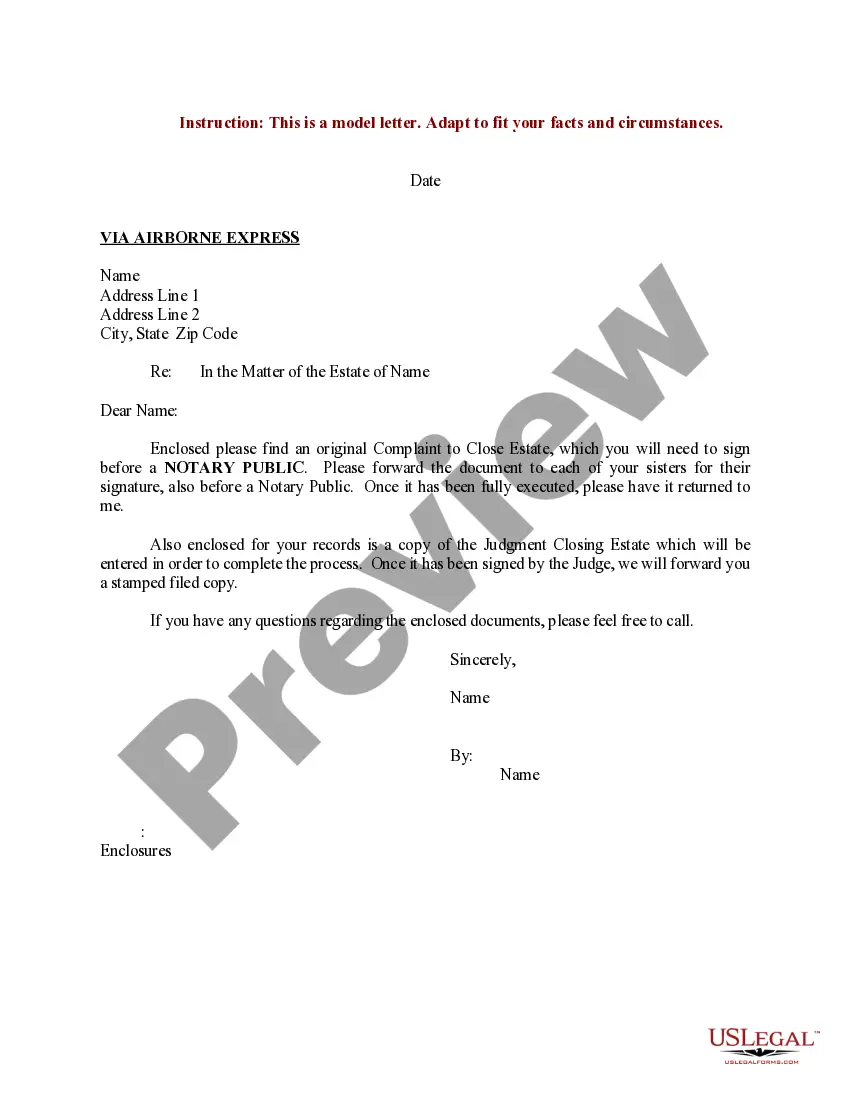
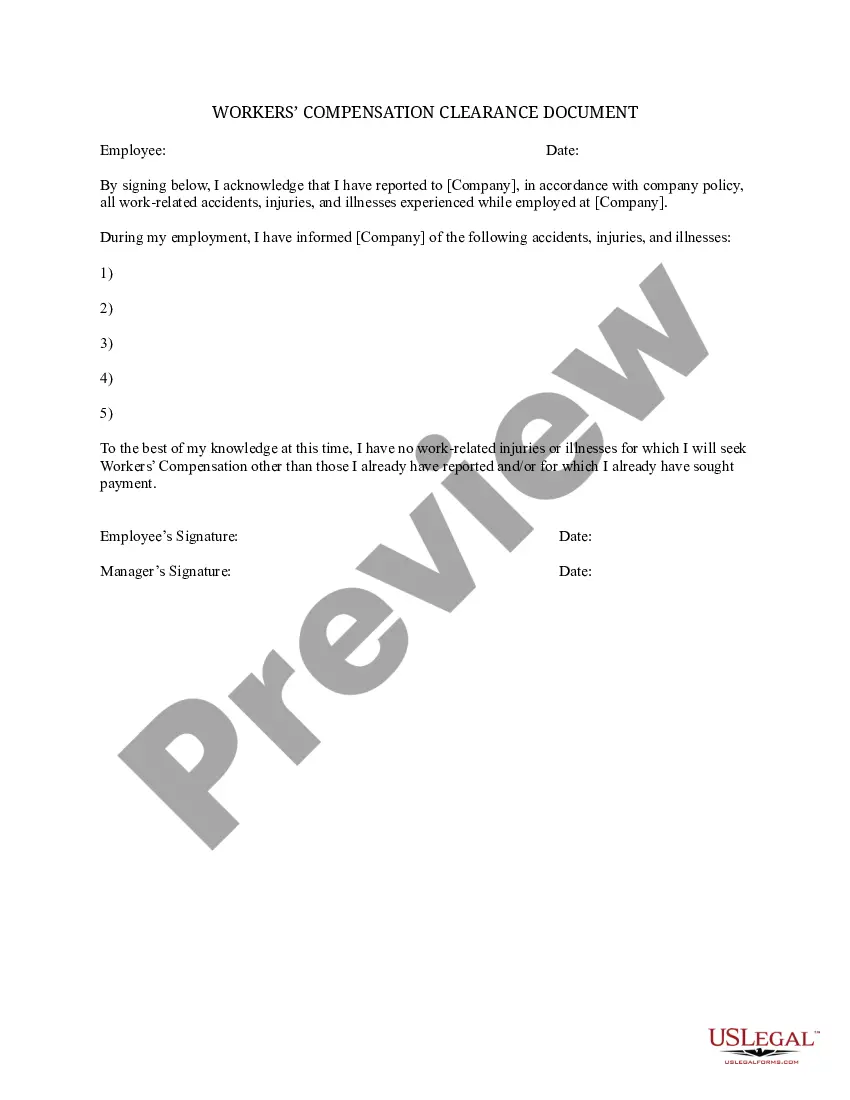
Idaho Workers' Compensation Clearance Document
Description
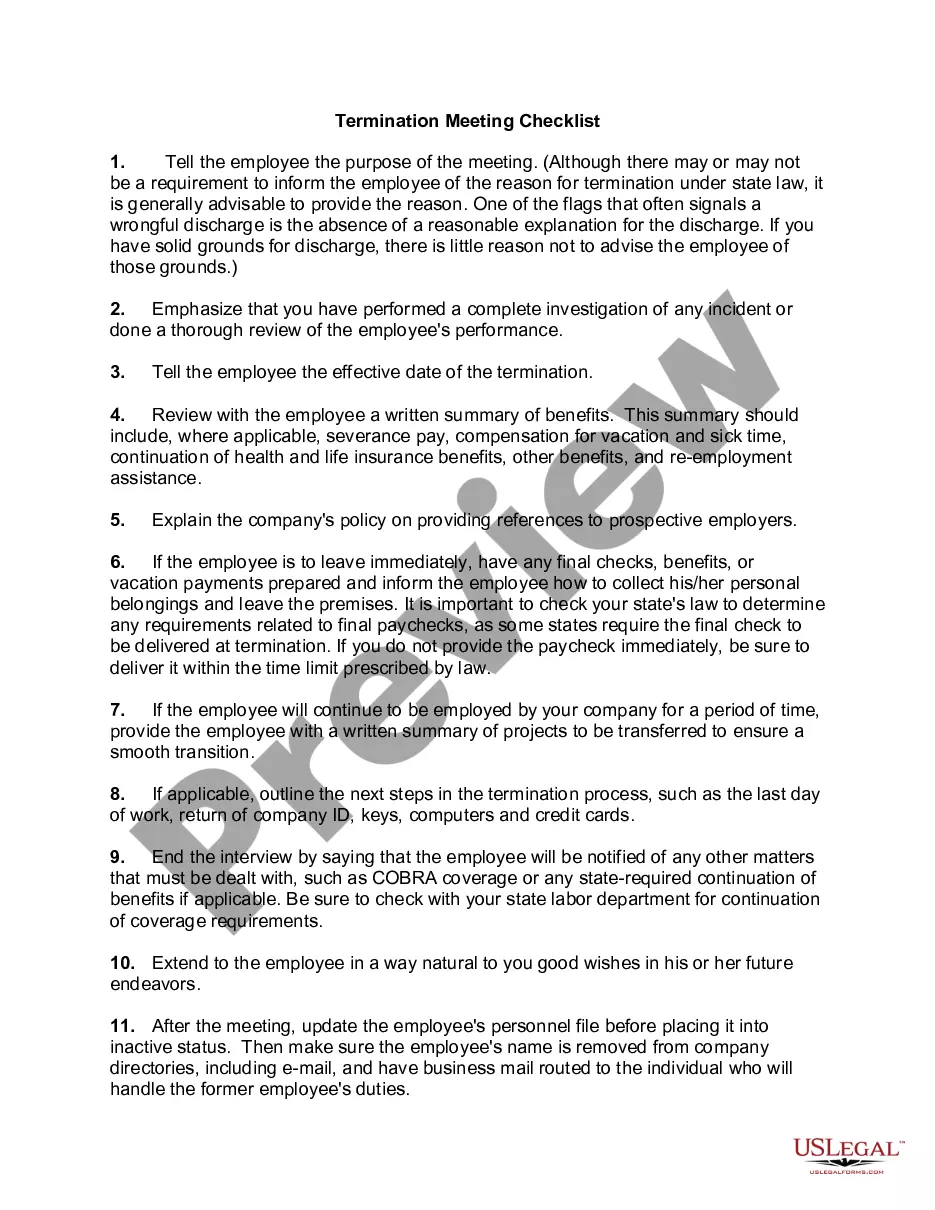
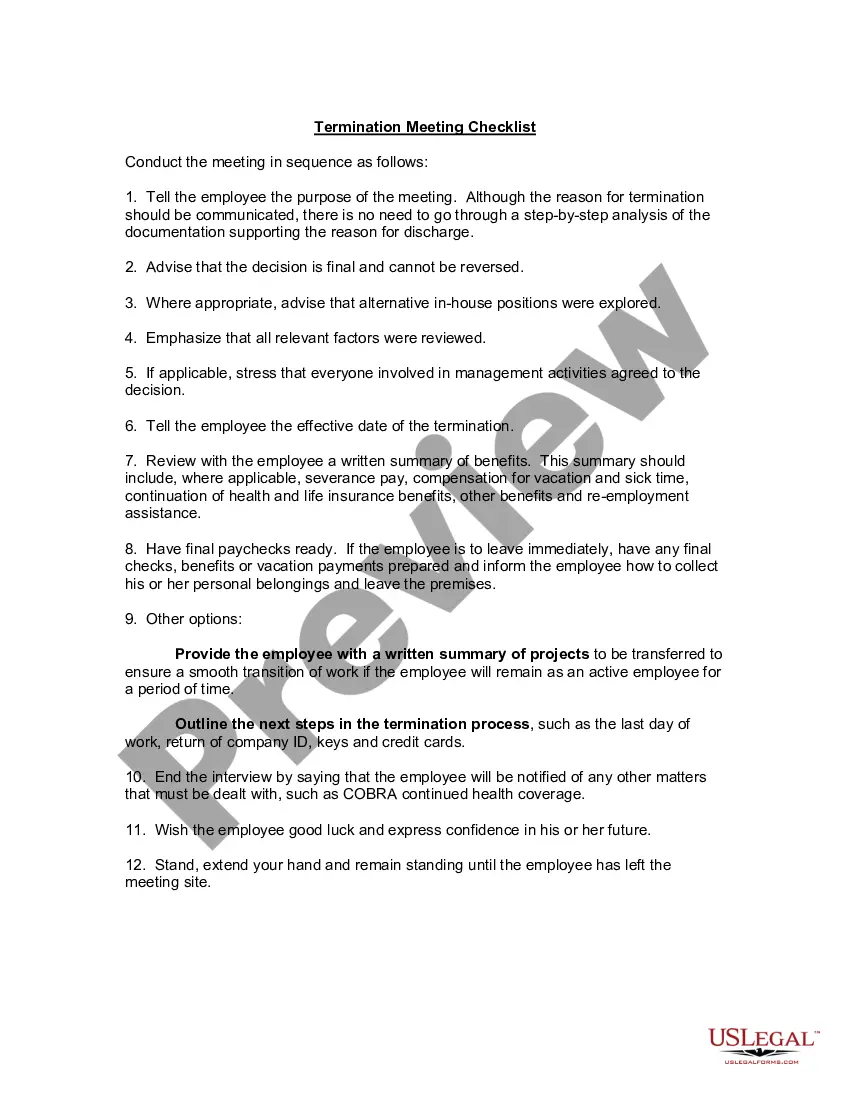
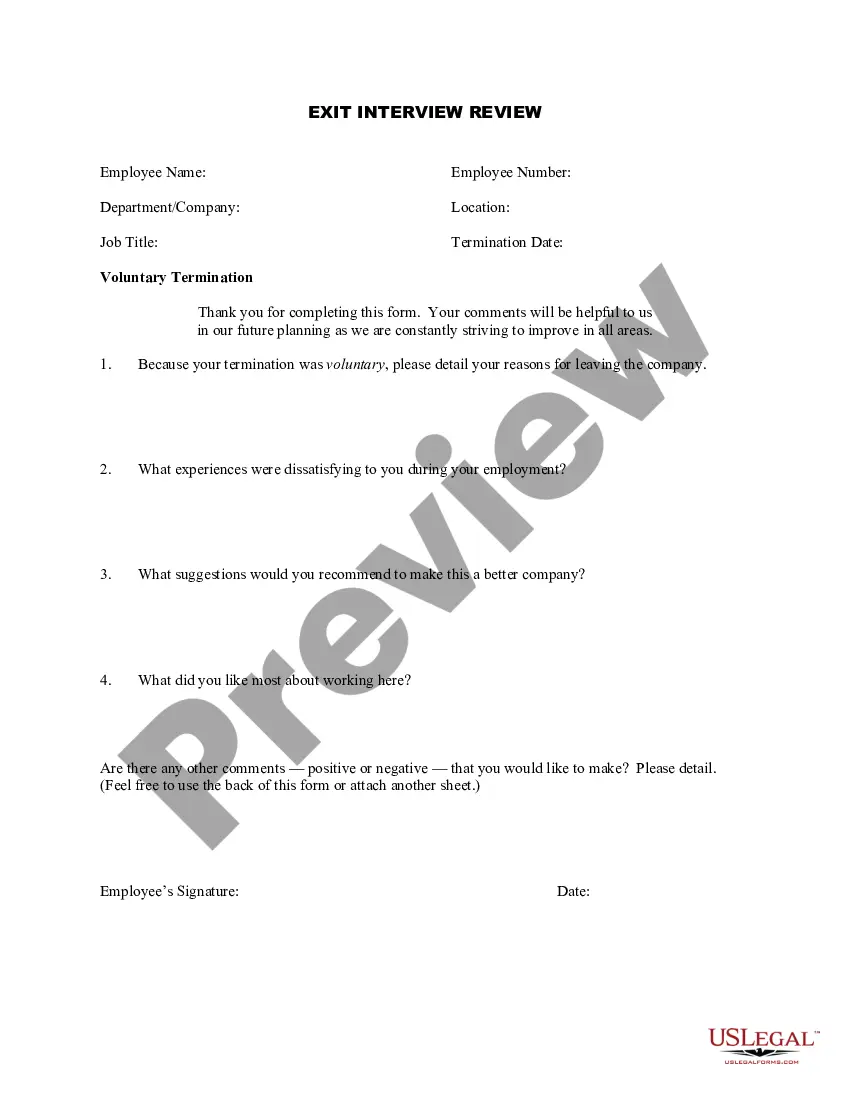
Get your form ready online
Our built-in tools help you complete, sign, share, and store your documents in one place.
Make edits, fill in missing information, and update formatting in US Legal Forms—just like you would in MS Word.
Download a copy, print it, send it by email, or mail it via USPS—whatever works best for your next step.
Sign and collect signatures with our SignNow integration. Send to multiple recipients, set reminders, and more. Go Premium to unlock E-Sign.
If this form requires notarization, complete it online through a secure video call—no need to meet a notary in person or wait for an appointment.
We protect your documents and personal data by following strict security and privacy standards.

Make edits, fill in missing information, and update formatting in US Legal Forms—just like you would in MS Word.

Download a copy, print it, send it by email, or mail it via USPS—whatever works best for your next step.

Sign and collect signatures with our SignNow integration. Send to multiple recipients, set reminders, and more. Go Premium to unlock E-Sign.

If this form requires notarization, complete it online through a secure video call—no need to meet a notary in person or wait for an appointment.

We protect your documents and personal data by following strict security and privacy standards.
Looking for another form?




How to fill out Workers' Compensation Clearance Document?
If you want to thoroughly, download, or create legal document templates, utilize US Legal Forms, the largest collection of legal forms available online.
Take advantage of the site's simple and efficient search to locate the documents you require.
A range of templates for business and individual needs are categorized by types and claims, or by keywords.
- Utilize US Legal Forms to find the Idaho Workers' Compensation Clearance Document with just a few clicks.
- If you are already a US Legal Forms user, Log In to your account and click on the Acquire option to download the Idaho Workers' Compensation Clearance Document.
- You can also access forms you previously downloaded in the My documents tab of your account.
- If you are using US Legal Forms for the first time, follow the instructions below.
- Step 1. Ensure you have selected the form for the correct city/state.
- Step 2. Use the Review option to examine the form's content. Don't forget to read the description.
Form popularity
FAQ
The Subsequent Injury Fund (SIF) encourages employers to hire employees with pre-existing health conditions. If an employer hired an employee with a pre-existing condition that contributed to a workplace injury, the employer's workers' compensation insurance carrier would be responsible for the claim.
To date, the largest settlement payment in a workers' comp case came in March of 2017, with a $10 million settlement agreement.
Pursuant to 85A O.S., §36, any individual or business entity that is not required to secure compensation under the. requirements of the Administrative Workers' Compensation Act (AWCA) may execute an Affidavit of Exempt Status.
For 2020, the maximum is $1,299.43 per week, while the minimum is $194.91. However, these amounts will be different for people who were injured before 2020; for two years after the injury, you're locked into the maximum TD payment that applied to your injury date.
It is called the Subsequent Injuries Fund. It is commonly referred to by the abbreviation SIF. This Special Program allows for Injured Workers who are seriously disabled to obtain additional compensation beyond their ordinary workers' compensation case.
The Division of Workers' Compensation (DWC) monitors the administration of workers' compensation claims, and provides administrative and judicial services to assist in resolving disputes that arise in connection with claims for workers' compensation benefits.
The Second Injury Fund (SIF) is a dedicated fund for the purpose of reimbursing compensation payments made by employers, or their insurers or adjusters, to certain injured employees. SIF revenue is collected from each insurer, adjuster, and uninsured employer every March 1st, when they file their annual reports.
Maximum Medical Improvement is the term used within California Workers' Compensation Law which applies to when one has recovered from their industrial injury. Previously, in Workers' Compensation Law, the term Permanent and Stationary was used.
DWC-1 Workers Compensation Claim Form. This is the form you will complete and send to EMPLOYERS to initiate the claim process for your employee. This form must be completed and provided to EMPLOYERS within one working day from you becoming aware of a work-related injury or occupational disease.
Exempt Workersfamily members living in the employer's household (sole proprietors only) sole proprietors; or working members of a partnership or limited liability company; or corporate officers who own at least 10% of the stock (and who are directors, if the corporation has directors)