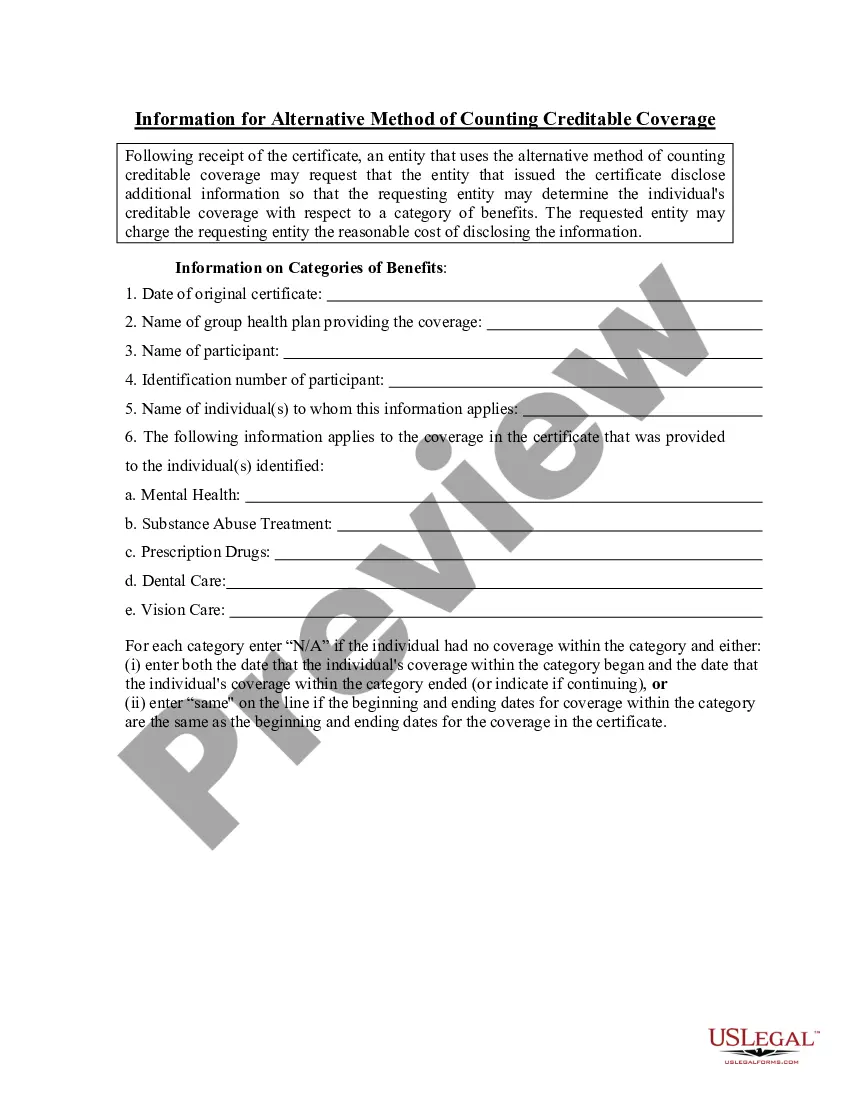
Idaho Information for Alternative Method of Counting Creditable Coverage
Description

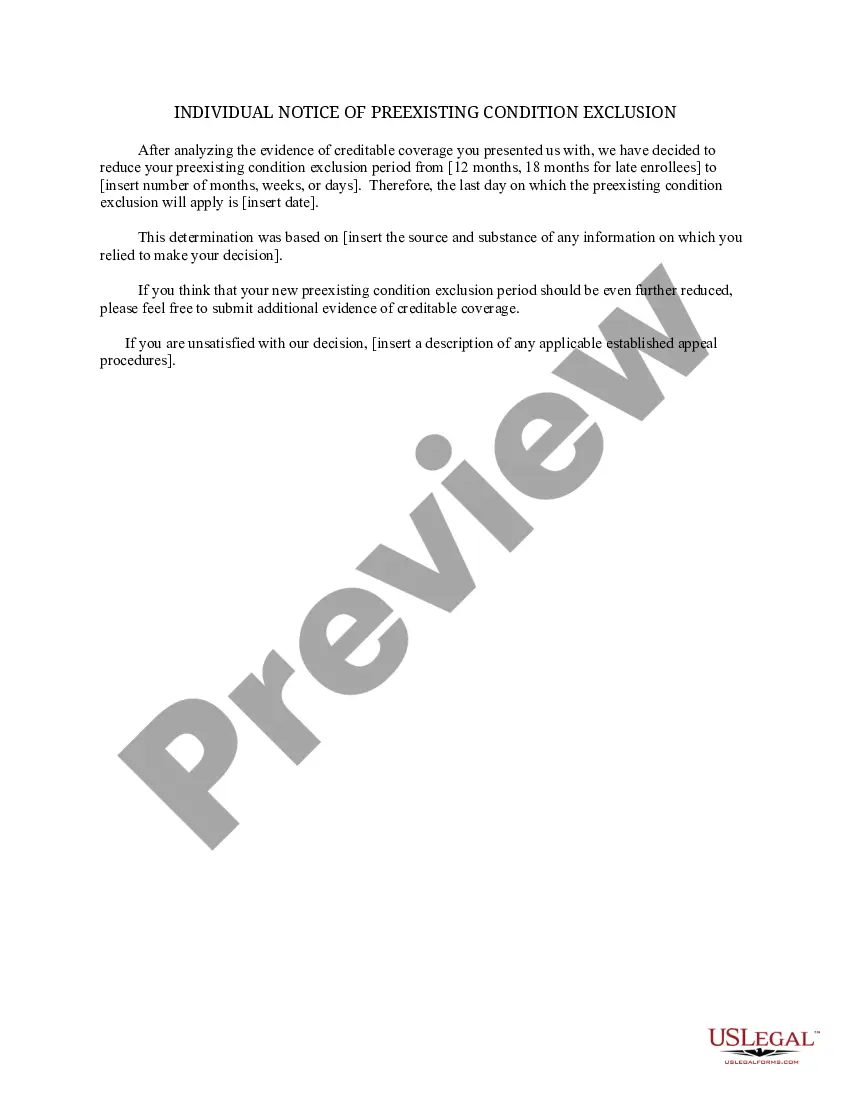
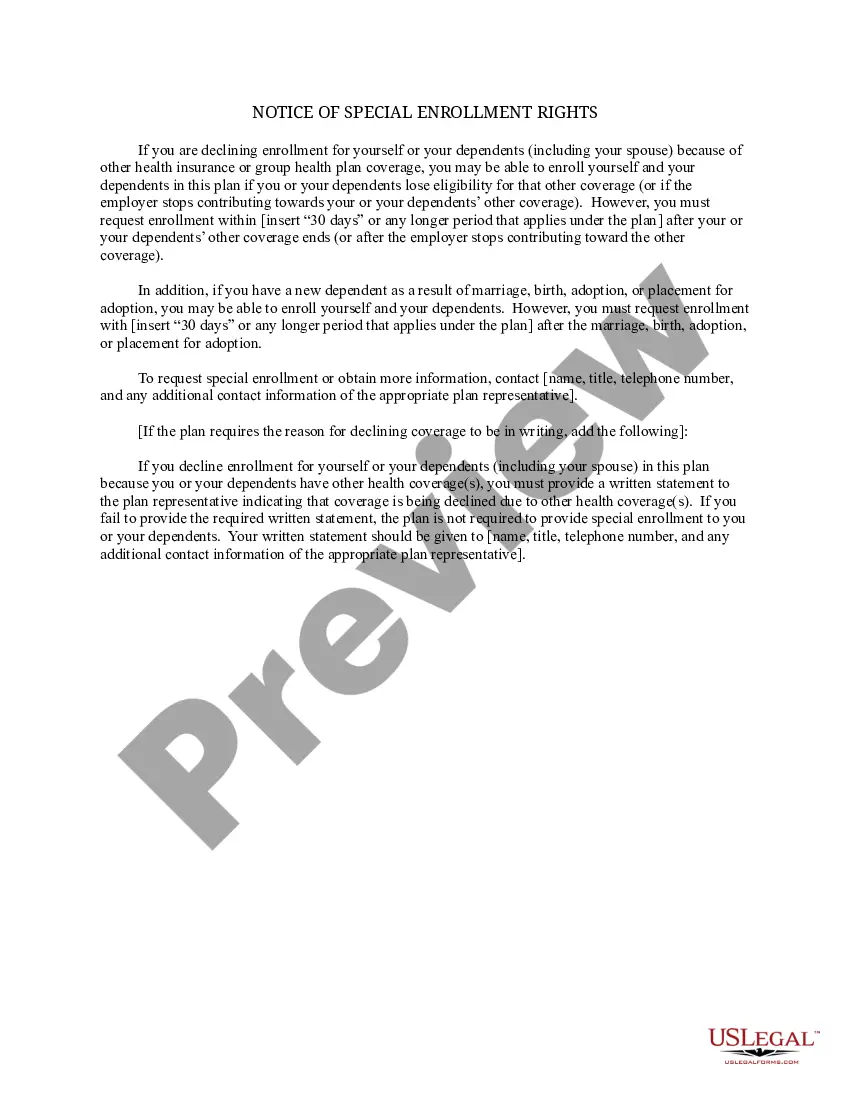
Get your form ready online
Our built-in tools help you complete, sign, share, and store your documents in one place.
Make edits, fill in missing information, and update formatting in US Legal Forms—just like you would in MS Word.
Download a copy, print it, send it by email, or mail it via USPS—whatever works best for your next step.
Sign and collect signatures with our SignNow integration. Send to multiple recipients, set reminders, and more. Go Premium to unlock E-Sign.
If this form requires notarization, complete it online through a secure video call—no need to meet a notary in person or wait for an appointment.
We protect your documents and personal data by following strict security and privacy standards.

Make edits, fill in missing information, and update formatting in US Legal Forms—just like you would in MS Word.

Download a copy, print it, send it by email, or mail it via USPS—whatever works best for your next step.

Sign and collect signatures with our SignNow integration. Send to multiple recipients, set reminders, and more. Go Premium to unlock E-Sign.

If this form requires notarization, complete it online through a secure video call—no need to meet a notary in person or wait for an appointment.

We protect your documents and personal data by following strict security and privacy standards.
Looking for another form?

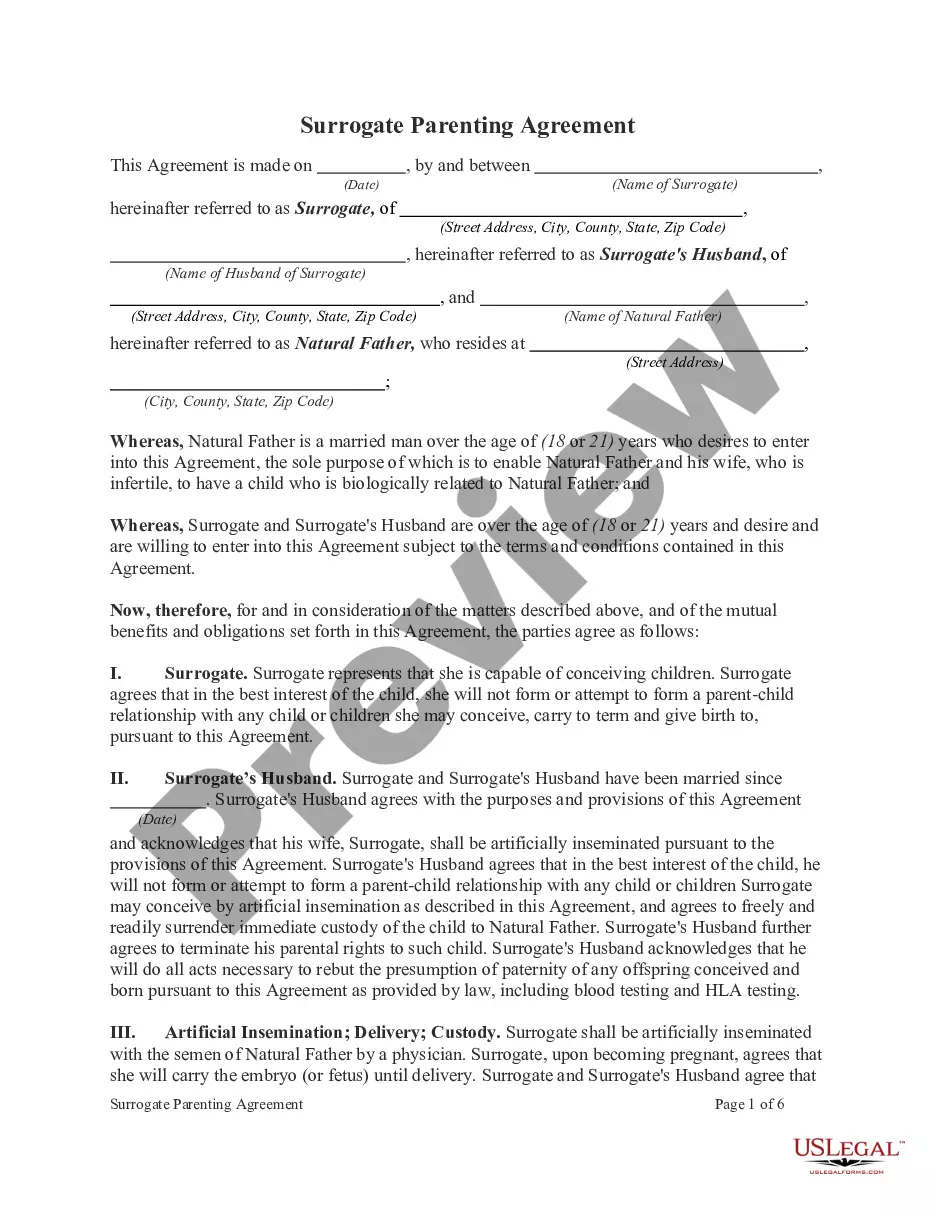




How to fill out Information For Alternative Method Of Counting Creditable Coverage?
Selecting the most suitable legal document format can be a challenge.
Clearly, there are many formats accessible online, but how can you find the legal document you require.
Utilize the US Legal Forms website.
If you are a new customer of US Legal Forms, here are some simple guidelines for you to follow.
- The service offers thousands of templates, such as the Idaho Information for Alternative Method of Counting Creditable Coverage, which can be employed for business and personal purposes.
- All documents are verified by experts and comply with federal and state regulations.
- If you are already registered, Log In to your account and click the Download button to get the Idaho Information for Alternative Method of Counting Creditable Coverage.
- Use your account to browse through the legal documents you may have purchased previously.
- Visit the My documents section of your account to obtain another copy of the documents you require.
Form popularity
FAQ
Creditable coverage is a health insurance or health benefit plan that meets a minimum set of qualifications. Some examples include group and individual health plans, student health plans, and government-provided plans.
Medicare defines creditable coverage" as coverage that is at least as good as what Medicare provides. Therefore, creditable drug coverage is as good as or better than Medicare Part D.
A certificate of Creditable Coverage (COCC) is a document provided by your previous insurance carrier that proves that your insurance has ended. This includes the name of the member to whom it applies as well as the coverage effective date and cancelation date.
Employers that offer prescription drug coverage must provide notices of "creditable" or "non-creditable" coverage to Medicare-eligible employees or covered dependents before each year's Medicare Part D annual enrollment period begins.
Non-creditable coverage: A health plan's prescription drug coverage is non-creditable when the amount the plan expects to pay, on average, for prescription drugs for individuals covered by the plan in the coming year is less than that which standard Medicare prescription drug coverage would be expected to pay.
You should receive a notice from your employer or plan around September of each year, informing you if your drug coverage is creditable. If you have not received this notice, contact your human resources department, drug plan, or benefits manager.
A certificate of Creditable Coverage (COCC) is a document provided by your previous insurance carrier that proves that your insurance has ended. This includes the name of the member to whom it applies as well as the coverage effective date and cancelation date.
HIPAA creditable coverage -- The concept of HIPAA creditable coverage is that an individual should be given day-for-day credit for previous health coverage against the application of a preexisting condition exclusion period when moving from one group health plan to another, from a group health plan to individual
The Notice of Creditable Coverage works as proof of your coverage when you first become eligible for Medicare. Those who have creditable coverage through an employer or union receive a Notice of Creditable Coverage in the mail each year. This notice informs you that your current coverage is creditable.