Idaho Revocable Living Trust for Husband and Wife with No Children
What is this form?
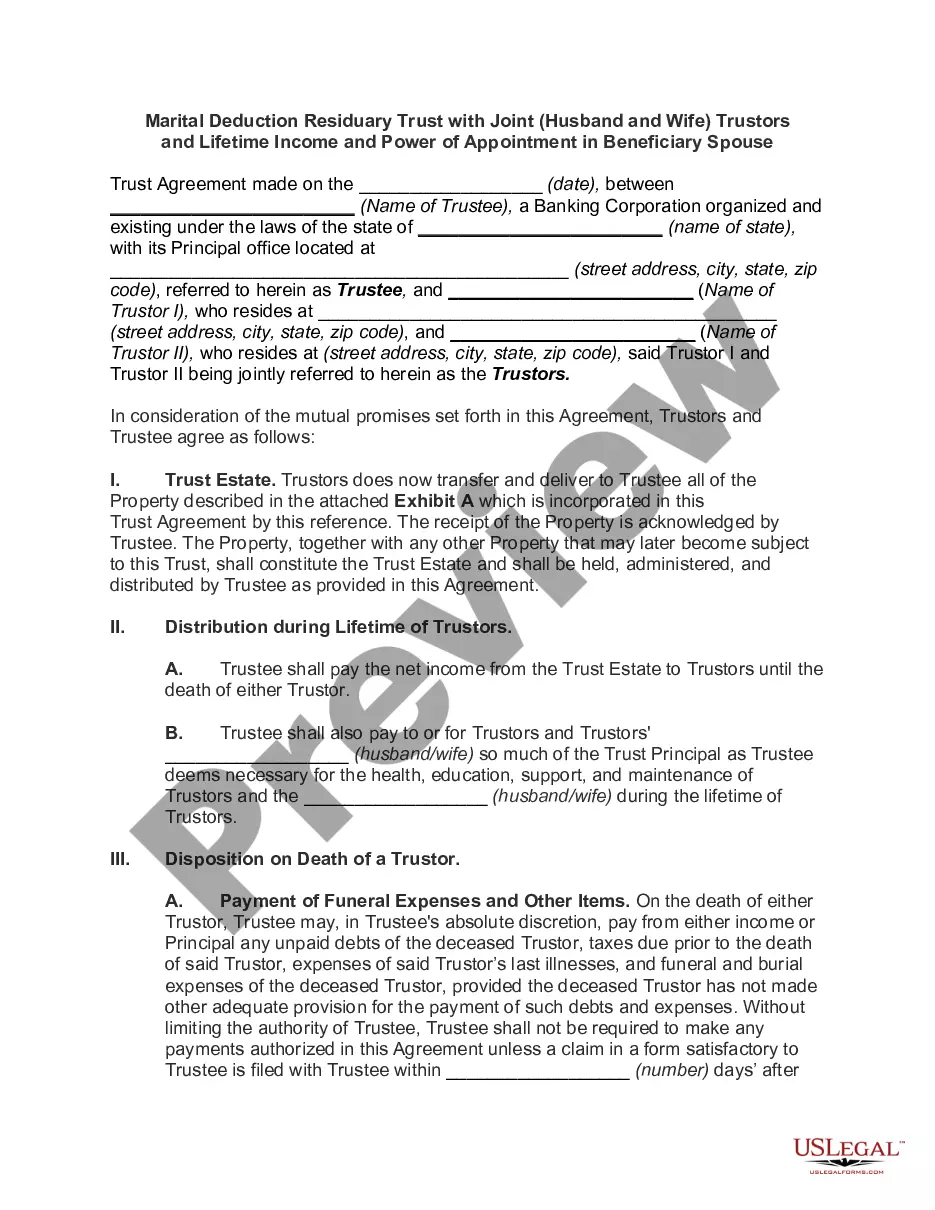
This Revocable Living Trust for Husband and Wife with No Children is a legal document that establishes a trust during the lifetime of the trustors. It is primarily designed for couples without children who wish to manage their assets and facilitate estate planning. Unlike a will, this trust allows for the direct transfer of assets to named beneficiaries upon the death of the trustor, bypassing costly probate proceedings. This form ensures that marital assets are protected and distributed according to the trust's provisions.
Key parts of this document
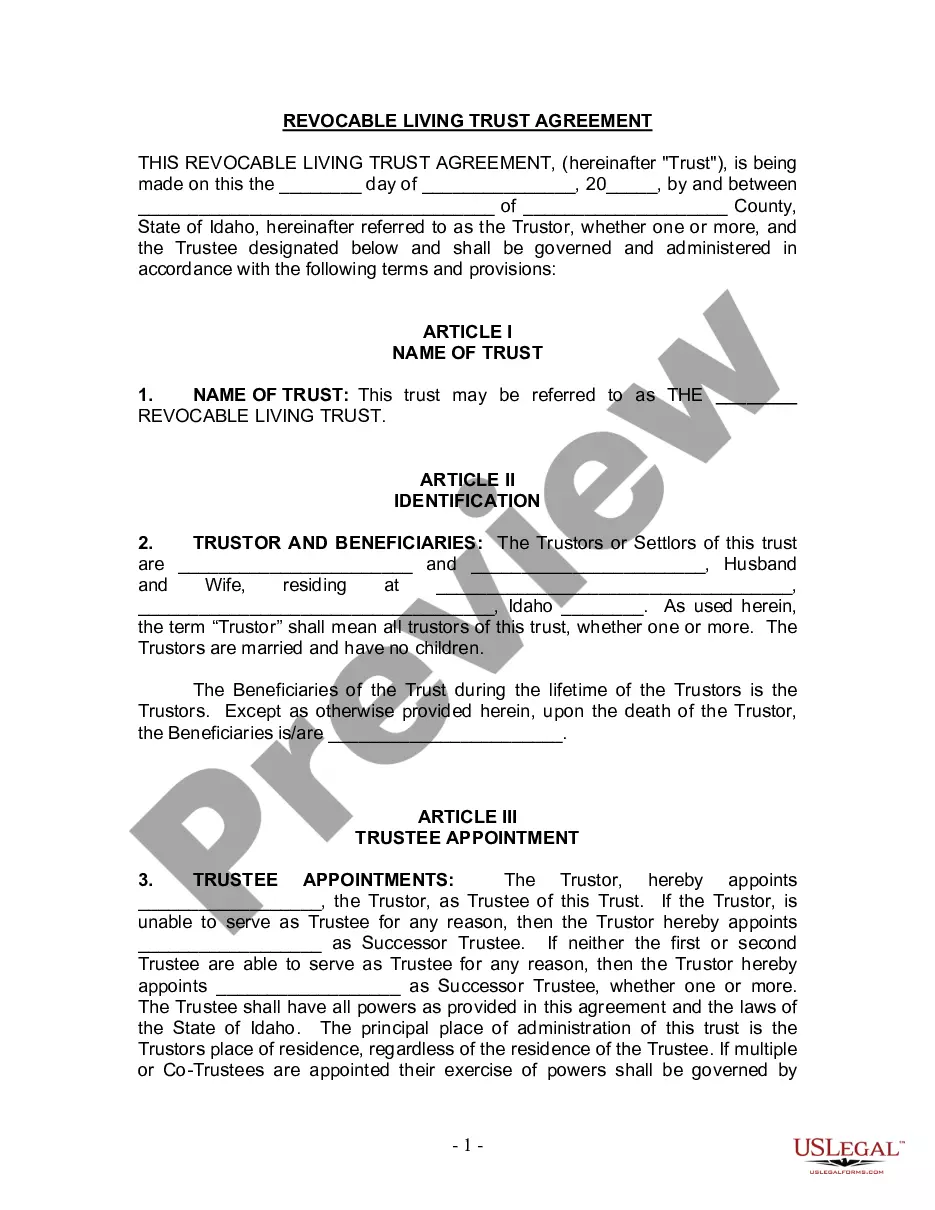
- Name of Trust: This section designates the official title of the trust.
- Trustor and Beneficiary Information: Identifies the husband and wife as the trustors and beneficiaries.
- Trustee Appointment: Specifies who will manage the trust assets and administer the terms of the trust.
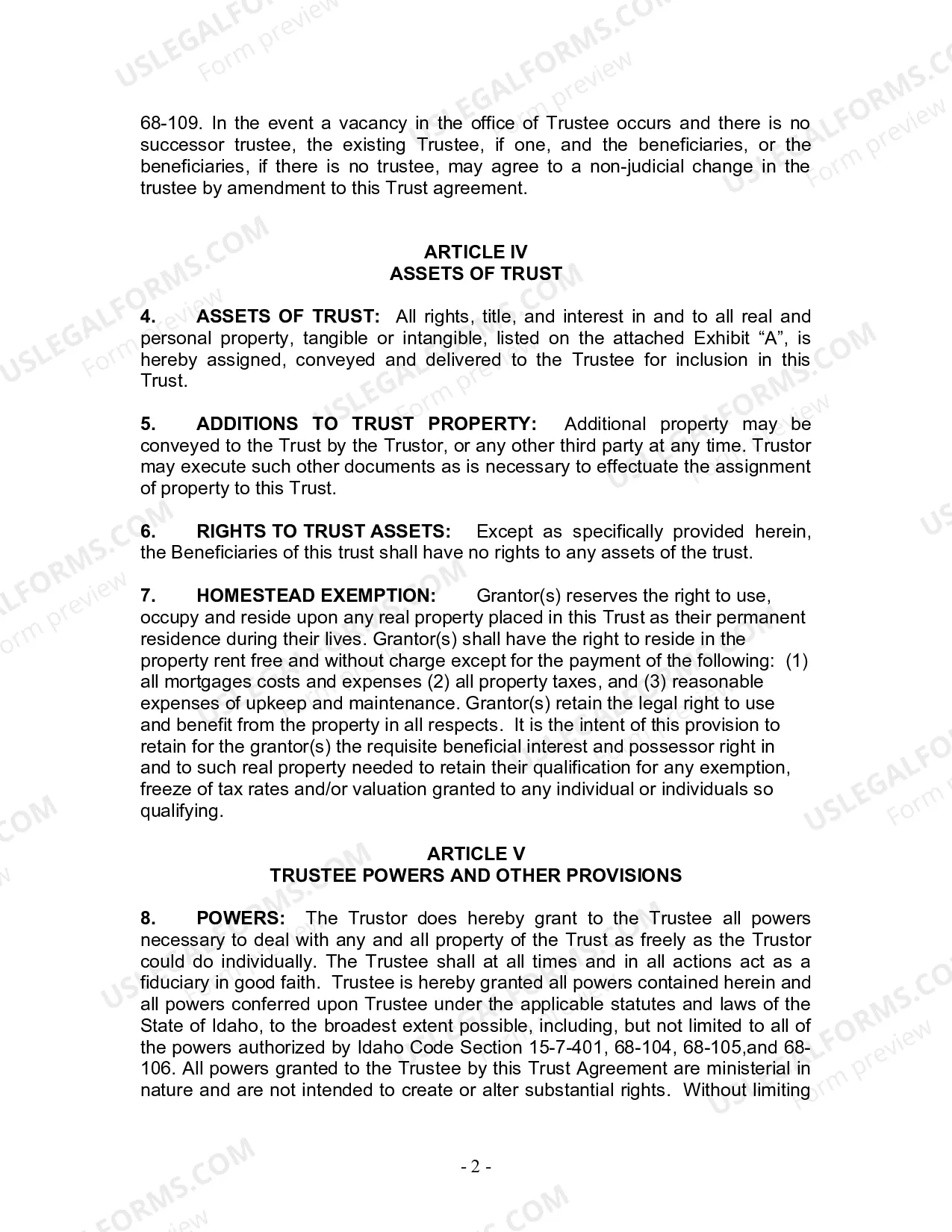
- Assets of Trust: Details the property and assets placed within the trust.
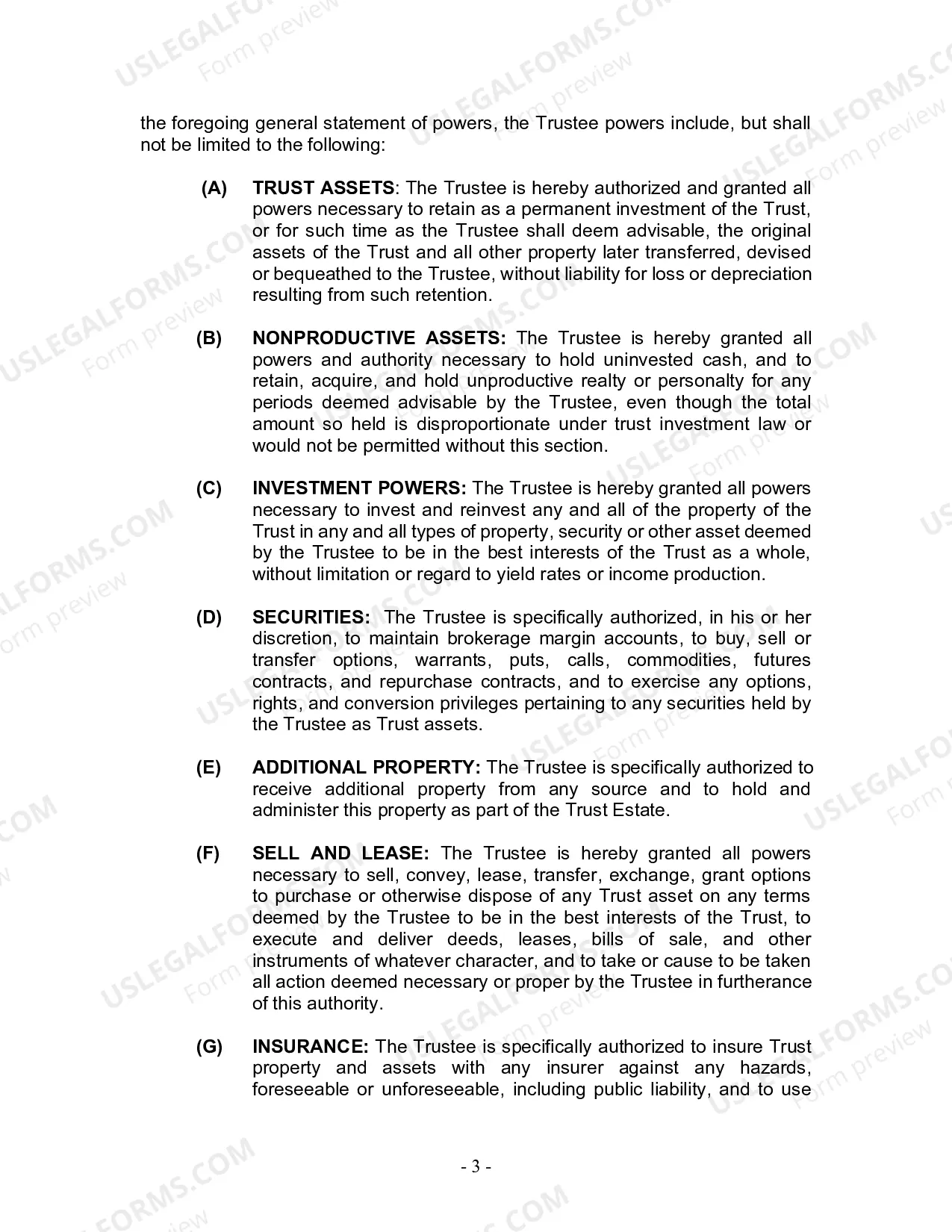
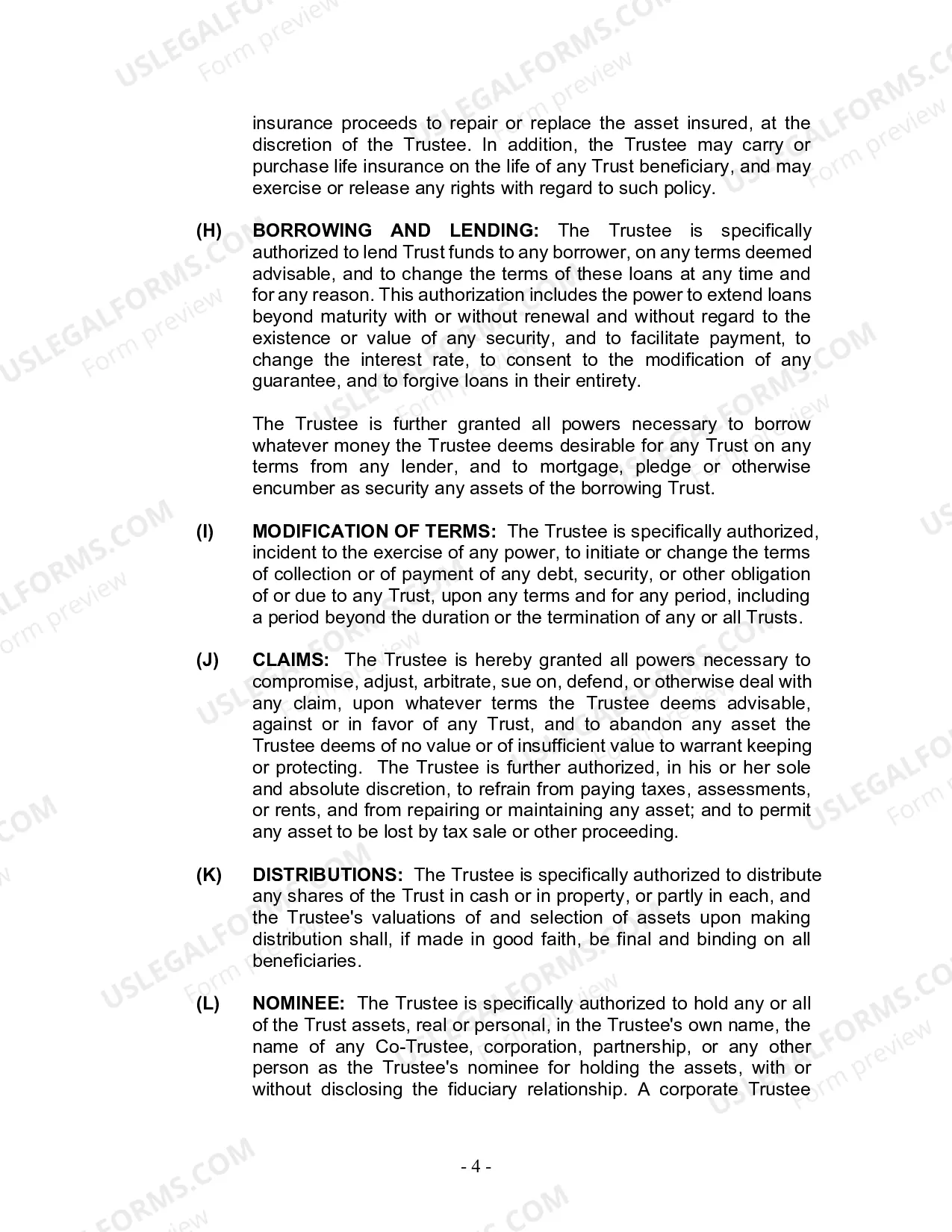
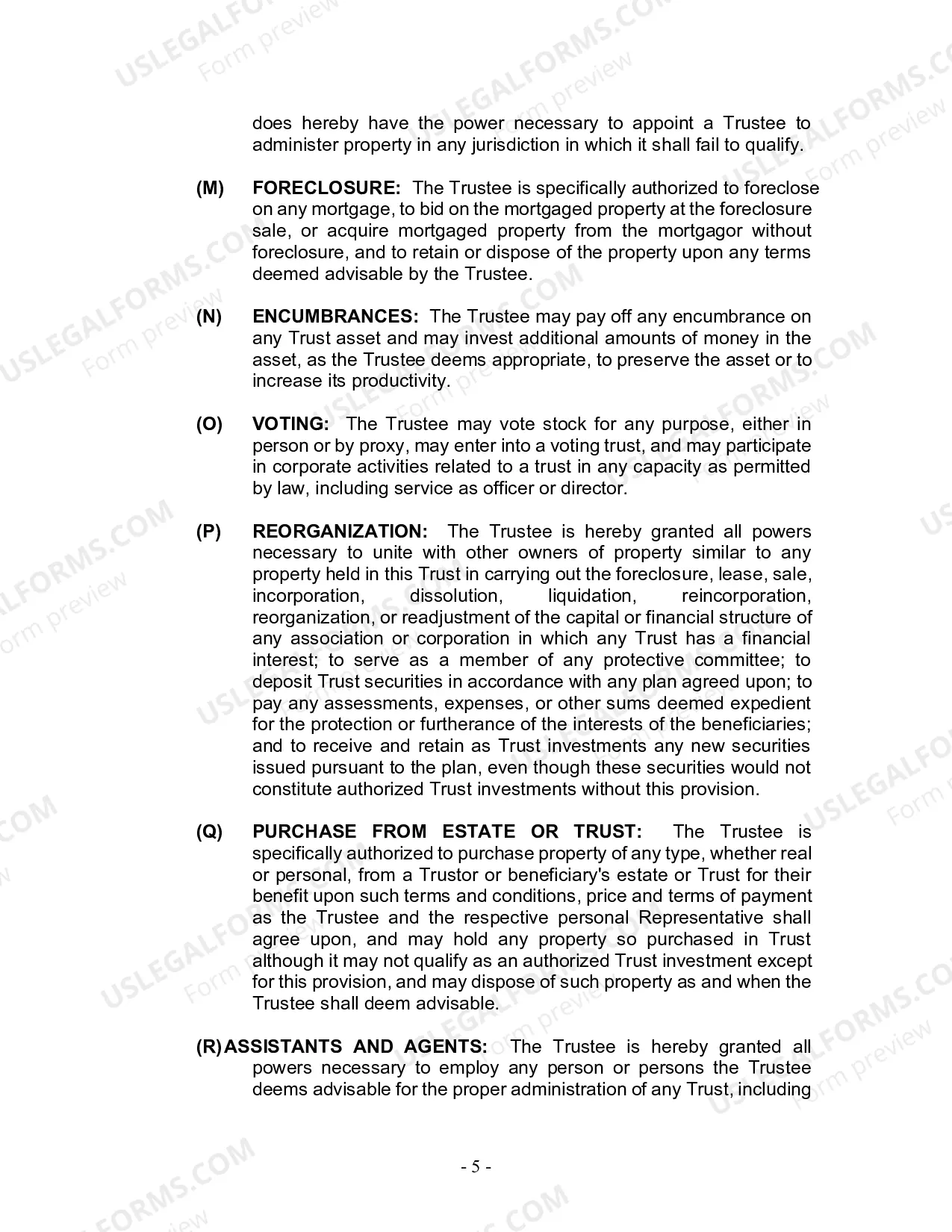
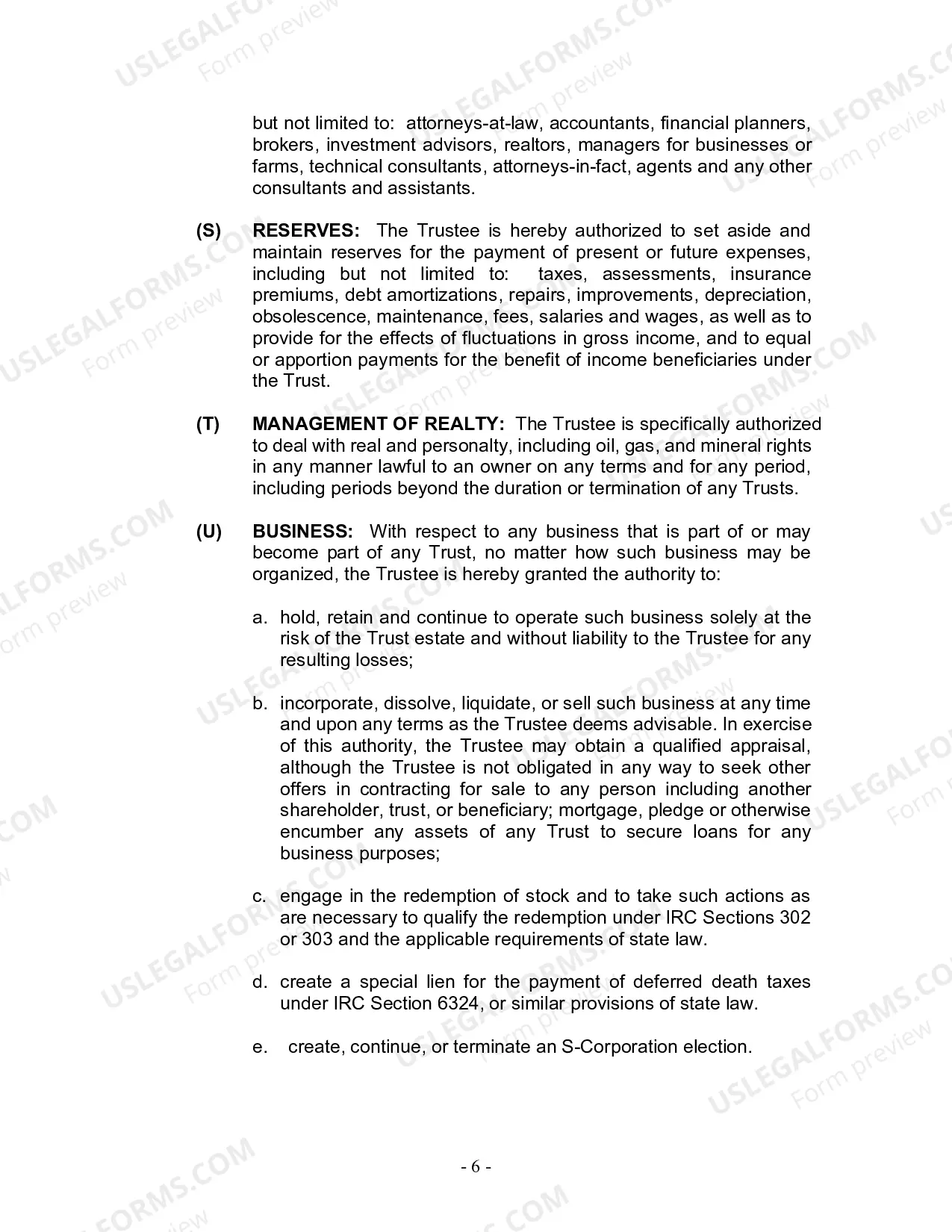
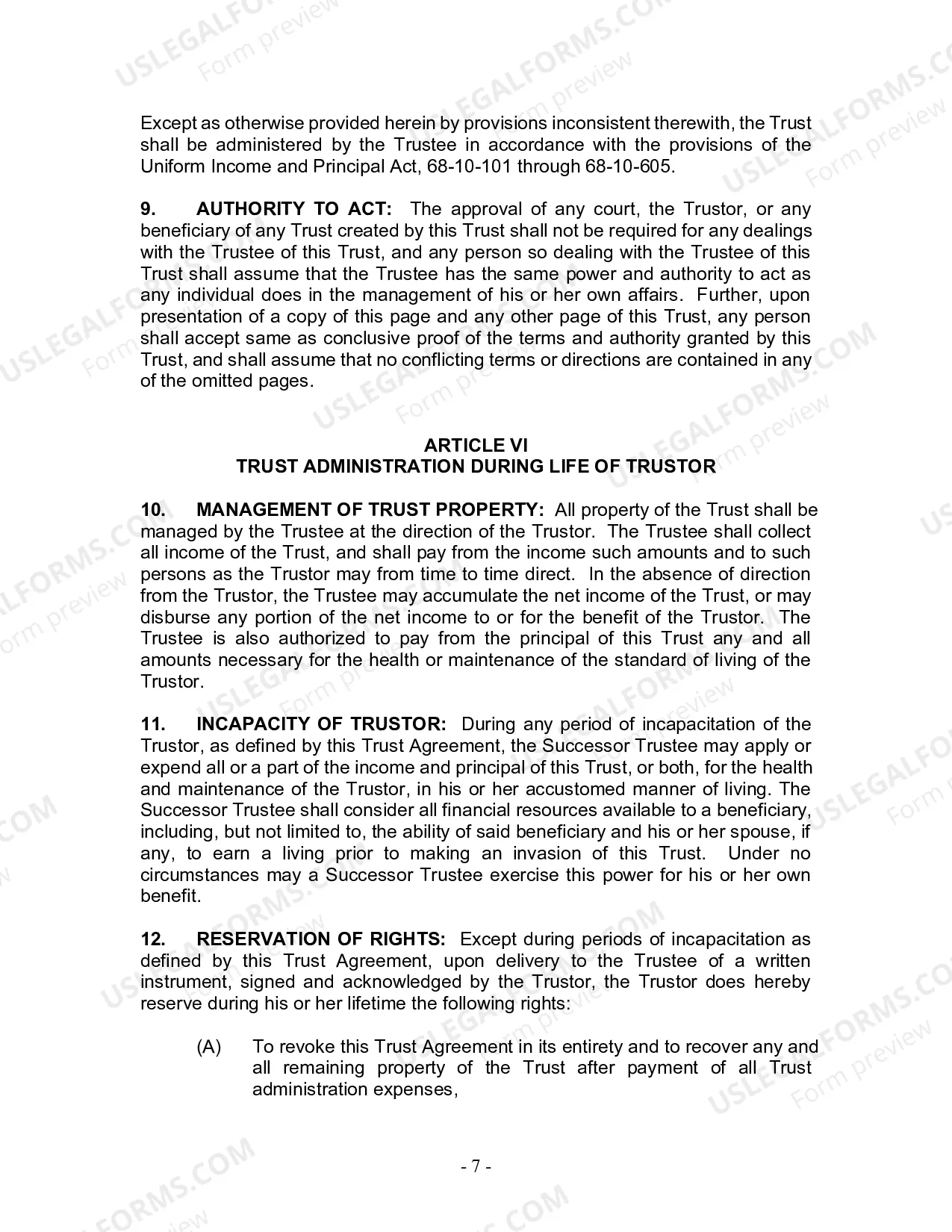
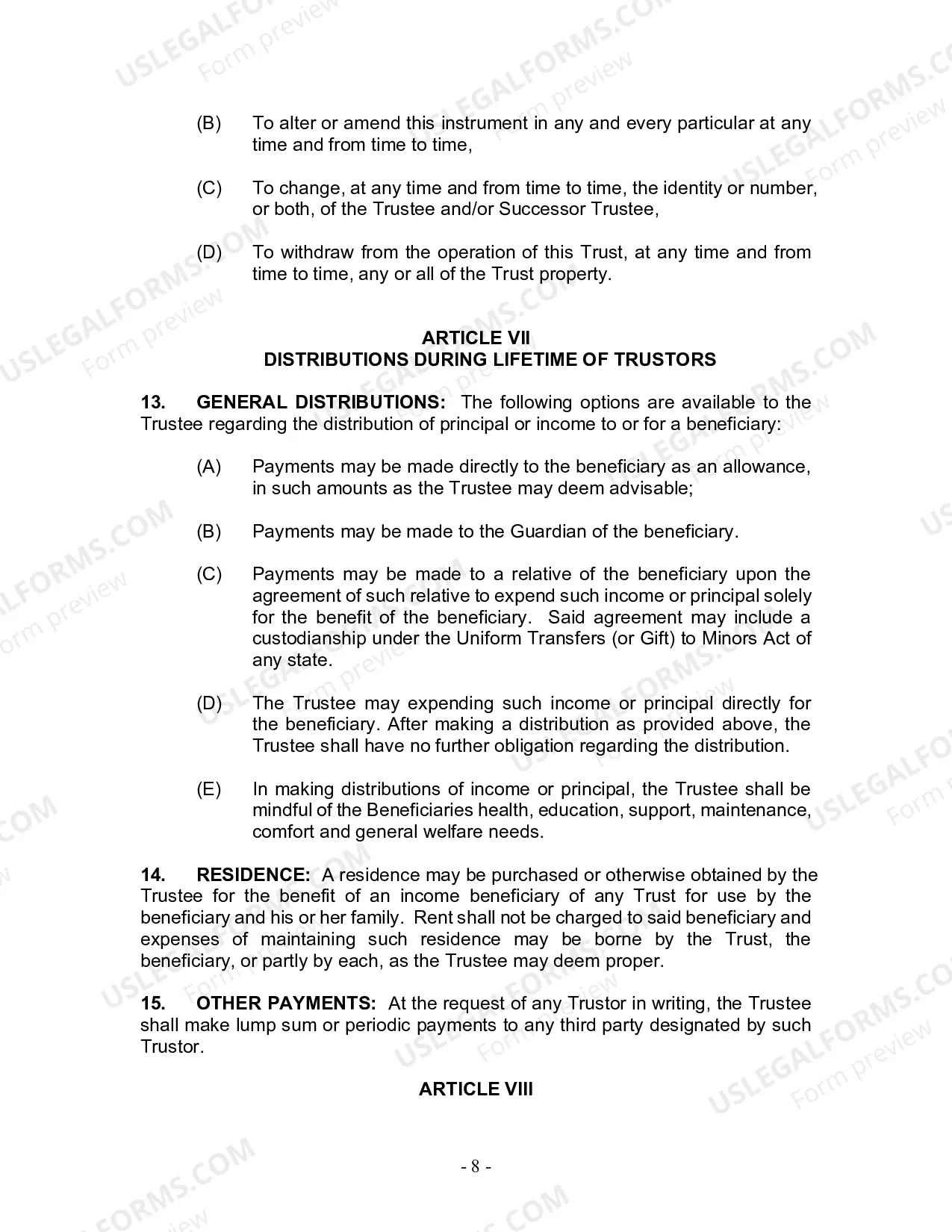
- Trustee Powers: Outlines the authority and responsibilities granted to the trustee.
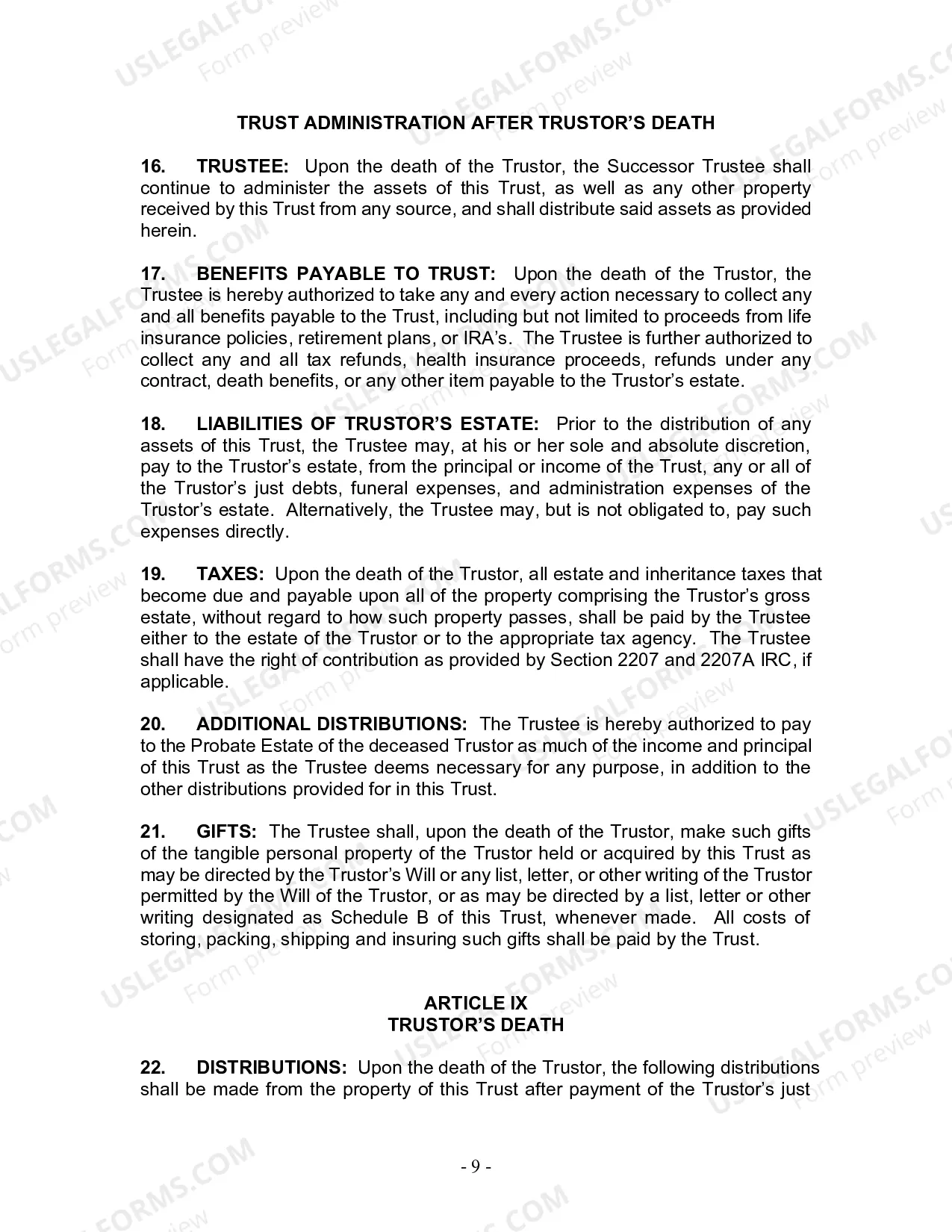
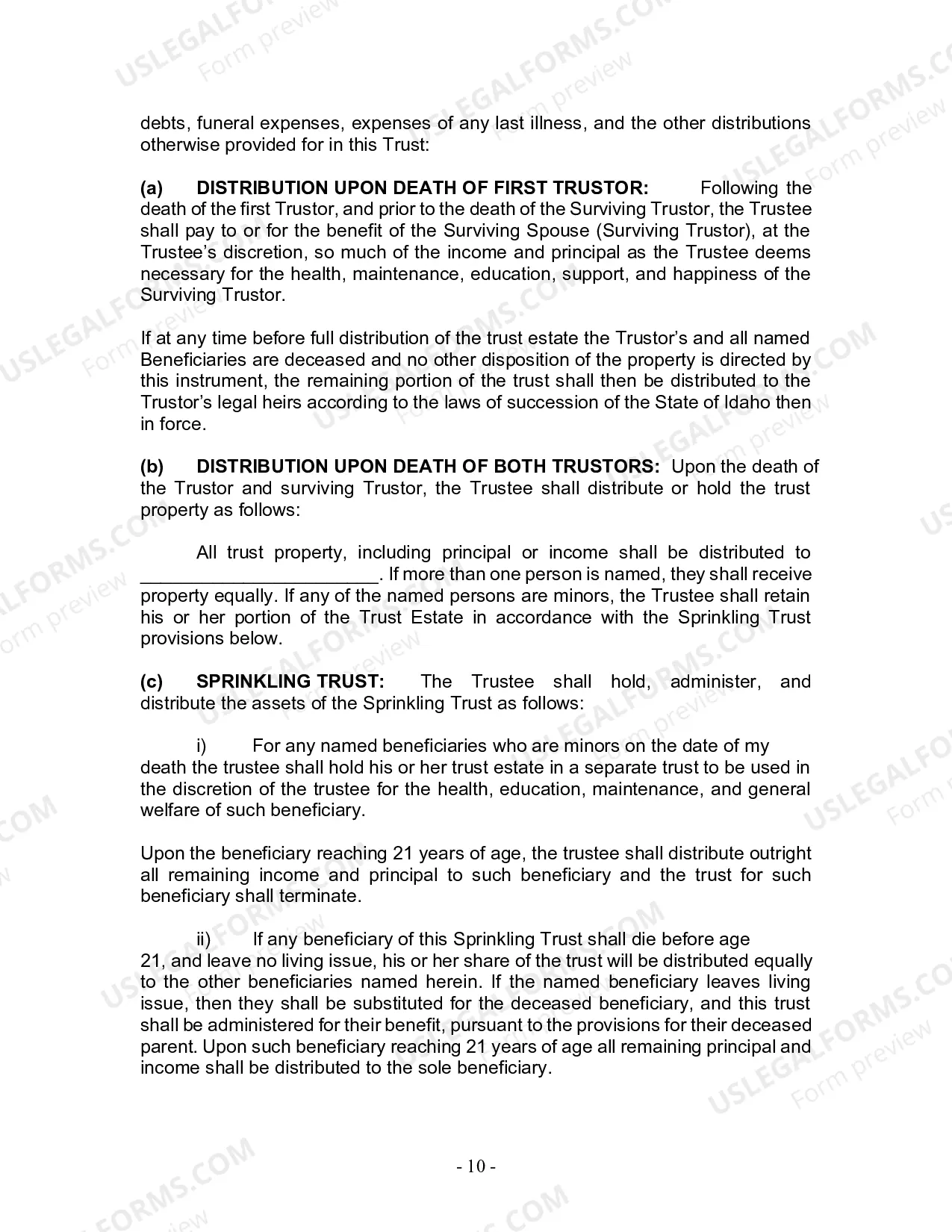
- Distributions: Describes how and when distributions are made to beneficiaries during and after the lifetime of the trustors.




Common use cases
This form is beneficial for couples who wish to have control over their assets and ensure a smooth transition of their estate after death. It is particularly useful for those without children who want to clarify how their assets should be distributed or managed, reducing the potential for family disputes and legal complications. Consider using this form if you want to avoid probate, protect your spouse's financial future, or ensure that your assets are handled according to your specific wishes.
Who needs this form
- Married couples without children looking to manage and distribute their assets effectively.
- Individuals who want to avoid probate and simplify the administration of their estate.
- Couples desiring flexibility in controlling their assets during their lifetime.
- Those seeking peace of mind regarding their estate planning and asset management.
Instructions for completing this form
- Identify the trustors: Enter the names of the husband and wife who are creating the trust.
- Specify the trustee: Designate the individual or entity who will manage the trust.
- List the assets: Itemize any real or personal property being included in the trust.
- Define distribution terms: Outline how the assets will be managed and distributed upon the death of the trustors.
- Provide signatures: Ensure all parties sign the document in the presence of a notary if required.
Notarization guidance
Notarization is required for this form to take effect. Our online notarization service, powered by Notarize, lets you verify and sign documents remotely through an encrypted video session, available 24/7.
Get your form ready online
Our built-in tools help you complete, sign, share, and store your documents in one place.
Make edits, fill in missing information, and update formatting in US Legal Forms—just like you would in MS Word.
Download a copy, print it, send it by email, or mail it via USPS—whatever works best for your next step.
Sign and collect signatures with our SignNow integration. Send to multiple recipients, set reminders, and more. Go Premium to unlock E-Sign.
If this form requires notarization, complete it online through a secure video call—no need to meet a notary in person or wait for an appointment.
We protect your documents and personal data by following strict security and privacy standards.

Make edits, fill in missing information, and update formatting in US Legal Forms—just like you would in MS Word.

Download a copy, print it, send it by email, or mail it via USPS—whatever works best for your next step.

Sign and collect signatures with our SignNow integration. Send to multiple recipients, set reminders, and more. Go Premium to unlock E-Sign.

If this form requires notarization, complete it online through a secure video call—no need to meet a notary in person or wait for an appointment.

We protect your documents and personal data by following strict security and privacy standards.
Avoid these common issues
- Failing to list all assets intended for the trust.
- Not updating the trust after significant life events (e.g., change of address or financial status).
- Neglecting to designate successor trustees, leading to management issues.
- Ignoring state-specific laws which may affect the trust's validity.
Advantages of online completion
- Convenience: Easily fill out and download the form from anywhere.
- Editability: Customize the form to fit your specific needs and preferences.
- Reliability: Utilize professionally drafted legal language by licensed attorneys.
- Cost savings: Avoid high attorney fees by using a self-service form.
Legal use & context
- This trust allows assets to be managed without court intervention.
- It provides clarity on asset distribution upon death, reducing family conflicts.
- A living trust is effective in minimizing estate taxes and maintaining privacy.
Main things to remember
- A Revocable Living Trust helps manage your assets and avoid probate.
- Designed specifically for married couples with no children.
- Control over asset distribution is maintained by the Trustors during their lifetime.
Looking for another form?
Form popularity
FAQ
The national average cost for a living trust for an individual is $1,100-1,500 USD. The national average cost for a living trust for a married couple is $1,700-2,500 USD. Part of the reason for this range in prices is the range of services that are available from various estate planning attorneys.
Compared to Simple Will Package, our office charges an additional $800 to upgrade to a Living Trust or Family Trust. In total dollars, the cost of a Family Trust or Living Trust package for an unmarried person would cost $1,895. For a married couple, the total cost would be just $2,295.
No, you don't need a lawyer to set up a trust, but it might be a good idea to seek legal advice to ensure the trust is set up correctly and that you have considered all long-term financial and estate planning aspects of the trust.Some living trusts are revocable, which means the trust can be changed at any time.
How Much Does a Living Trust Cost in California? A common question that people ask when they're considering if a living trust is right for their family is how much it costs. On average, a living trust costs between $1000 and $5000 to put together.
Many married couples own most of their assets jointly with the right of survivorship. When one spouse dies, the surviving spouse automatically receives complete ownership of the property. This distribution cannot be changed by Will.
Qualified retirement accounts 401ks, IRAs, 403(b)s, qualified annuities. Health saving accounts (HSAs) Medical saving accounts (MSAs) Uniform Transfers to Minors (UTMAs) Uniform Gifts to Minors (UGMAs) Life insurance. Motor vehicles.
If you die without one (referred to as intestate), the state where you live will divvy up your assets as it sees fit, and the outcome may not be what you intended. If no heirs are found, your property may be escheated, which means the state gets to keep it.
The process of funding your living trust by transferring your assets to the trustee is an important part of what helps your loved ones avoid probate court in the event of your death or incapacity. Qualified retirement accounts such as 401(k)s, 403(b)s, IRAs, and annuities, should not be put in a living trust.
Administering a living trust after your death is not cost-free.Living trusts are much more expensive to set up and maintain than a will. Probate can often be avoided without using a living trust, by setting up "payable on death" accounts, making beneficiary designations, holding assets jointly, etc.