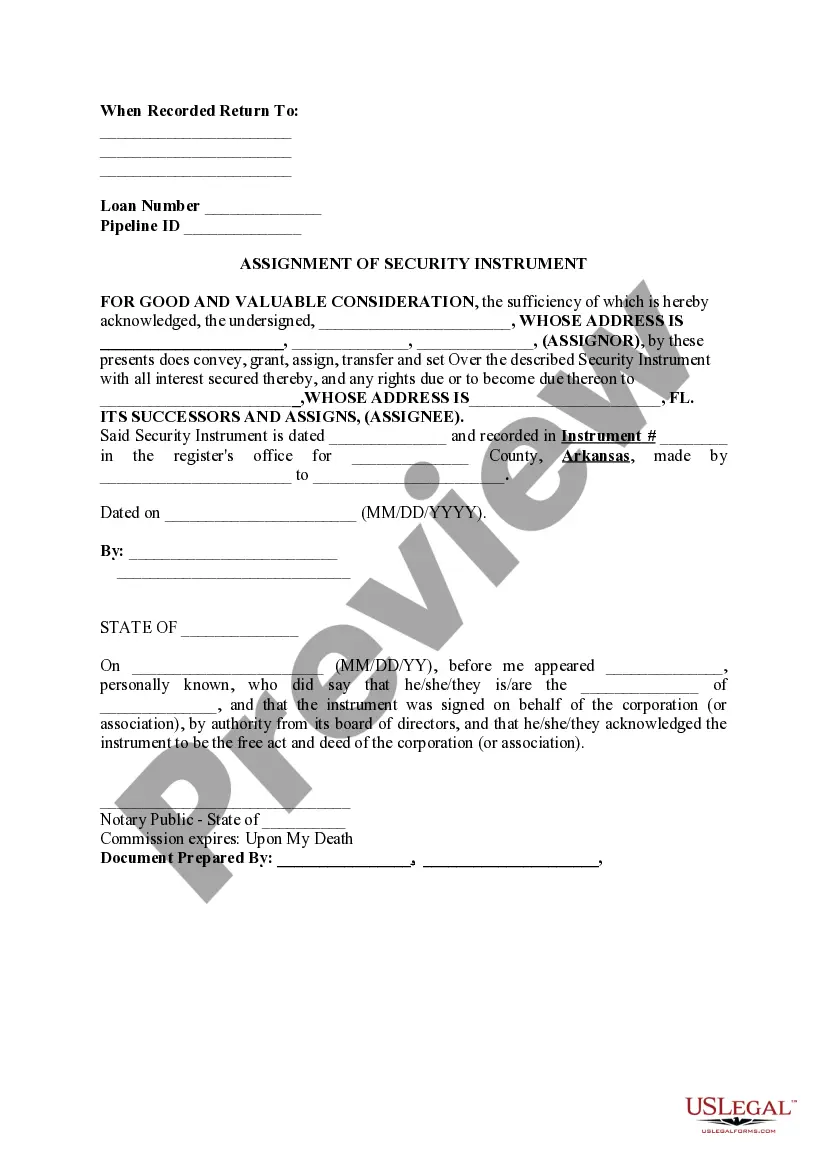
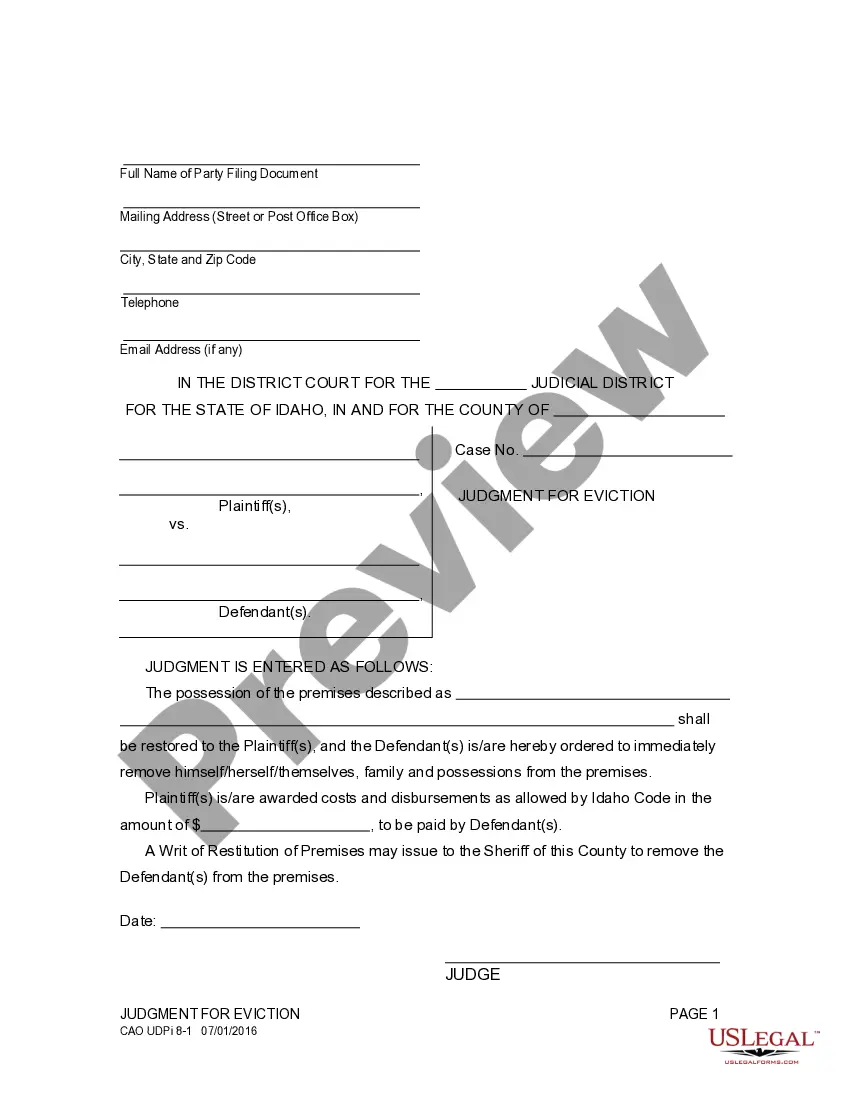
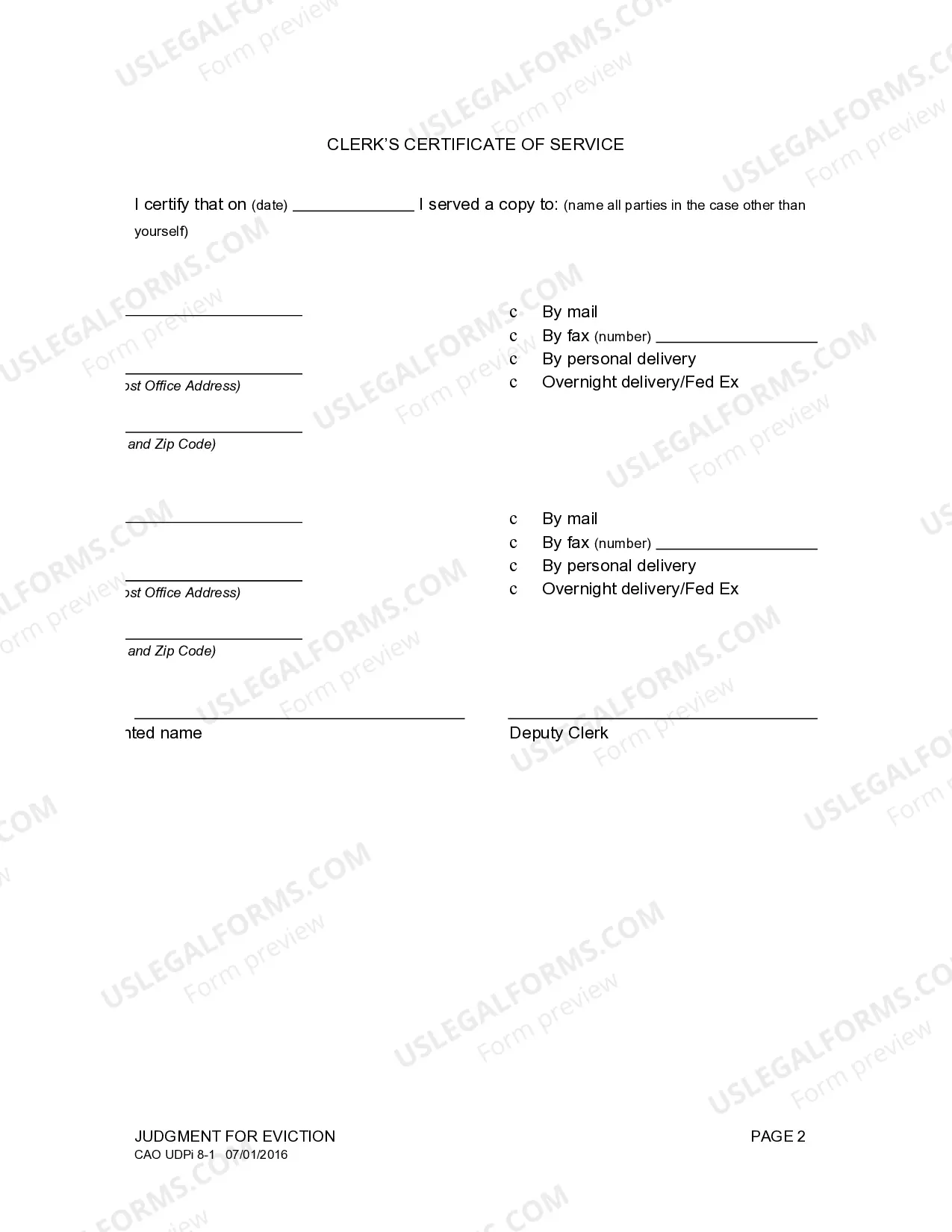
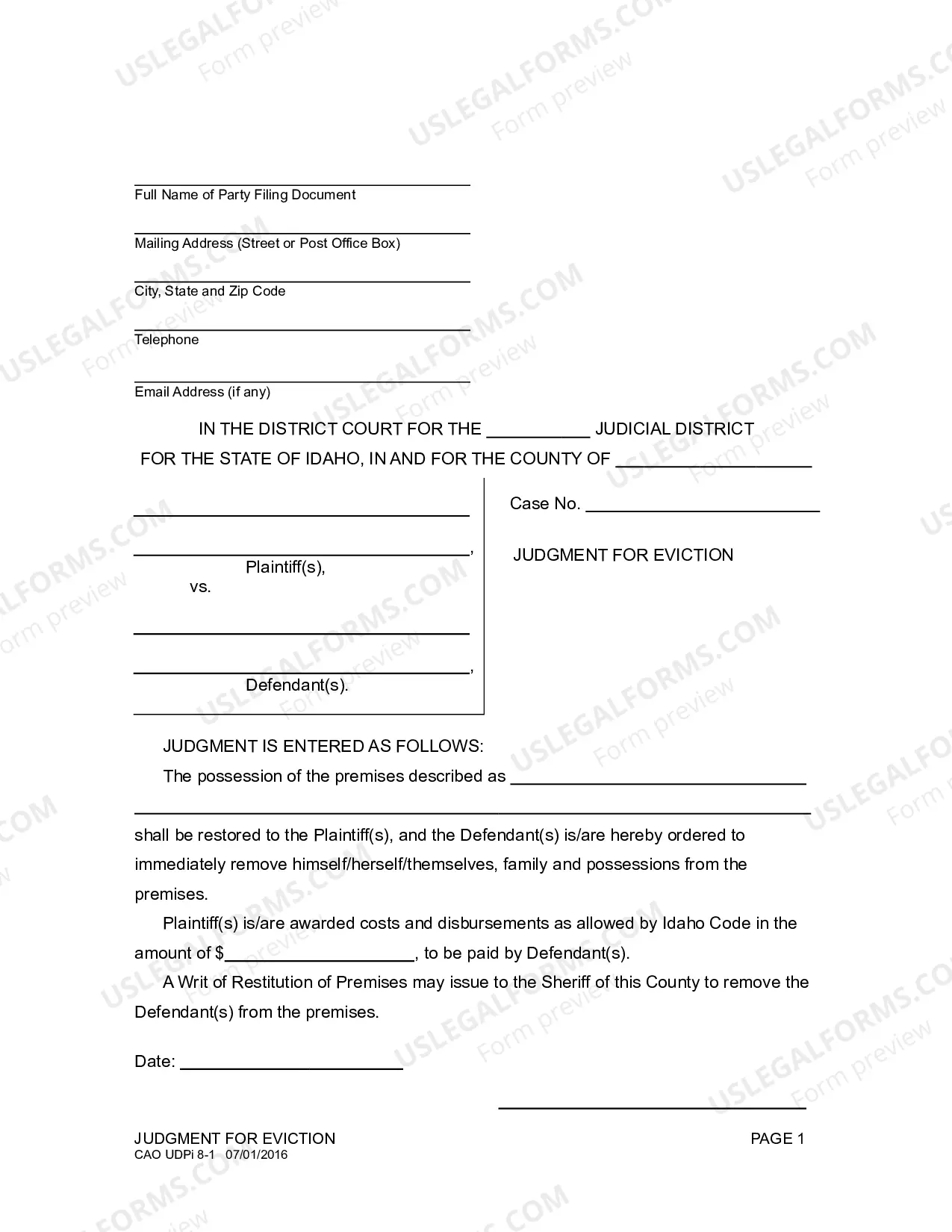
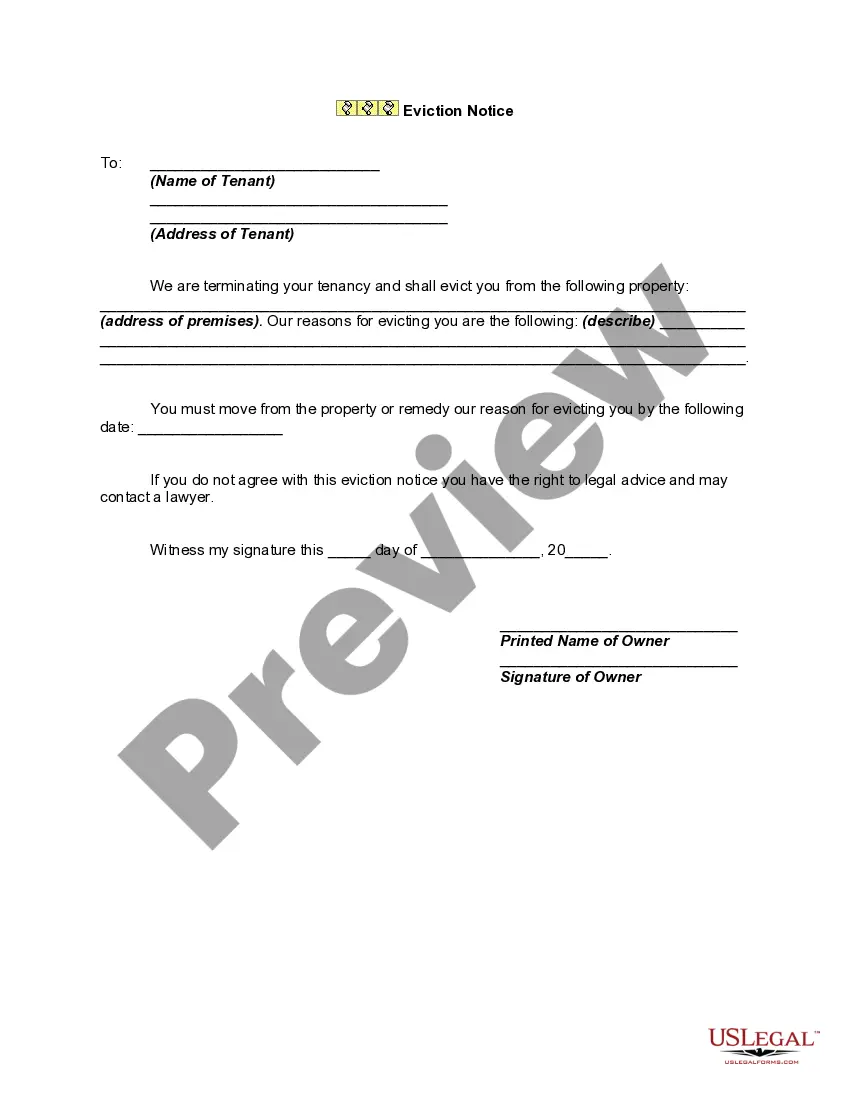
Judgment and Order for Eviction - This is signed by the judge to grant the landlord?ˆ™s request for the eviction of an unwanted tenant.
Idaho Judgment and Order for Eviction
State:
Idaho
Category:
Control #:
ID-CAO-UD-8-1
Format:
Word;
PDF;
Rich Text
Instant download
This website is not affiliated with any governmental entity
Public form
Description
Free preview
Get your form ready online
Our built-in tools help you complete, sign, share, and store your documents in one place.
Built-in online Word editor
Make edits, fill in missing information, and update formatting in US Legal Forms—just like you would in MS Word.
Export easily
Download a copy, print it, send it by email, or mail it via USPS—whatever works best for your next step.
E-sign your document
Sign and collect signatures with our SignNow integration. Send to multiple recipients, set reminders, and more. Go Premium to unlock E-Sign.
Notarize online 24/7
If this form requires notarization, complete it online through a secure video call—no need to meet a notary in person or wait for an appointment.
Store your document securely
We protect your documents and personal data by following strict security and privacy standards.

Make edits, fill in missing information, and update formatting in US Legal Forms—just like you would in MS Word.

Download a copy, print it, send it by email, or mail it via USPS—whatever works best for your next step.

Sign and collect signatures with our SignNow integration. Send to multiple recipients, set reminders, and more. Go Premium to unlock E-Sign.

If this form requires notarization, complete it online through a secure video call—no need to meet a notary in person or wait for an appointment.

We protect your documents and personal data by following strict security and privacy standards.
Looking for another form?
How to fill out Idaho Judgment And Order For Eviction?
Locating a sample Idaho Judgment and Order for Eviction and filling it out can be challenging.
To conserve time, expenses, and effort, utilize US Legal Forms to find the suitable template specifically for your state in just a few clicks.
Our lawyers create every document, so you only need to complete them. It's actually that simple.
Select your pricing plan to create your account. Choose to pay via a card or PayPal. You can download the form in your desired format. The Idaho Judgment and Order for Eviction template can be printed or filled out with any online editor. Don't worry about making errors, as your form can be used, submitted, and printed out as many times as necessary. Explore US Legal Forms and gain access to over 85,000 state-specific legal and tax documents.
- Log in to your account and navigate back to the form's webpage to download the sample.
- All downloaded samples are stored in My documents and are always available for later use.
- If you haven't subscribed yet, you'll need to sign up.
- Review our comprehensive instructions on how to obtain the Idaho Judgment and Order for Eviction template in a few minutes.
- To acquire a valid example, ensure it is suitable for your state.
- Examine the example using the Preview option (if available).
- If there's a description, read it to understand the specifics.
- Click on the Buy Now button once you find what you're seeking.
Form popularity
FAQ
A consent judgment is not an eviction itself, but it can lead to an eviction. In a consent judgment, both parties agree to terms that a judge then approves, often to settle a legal dispute. When it comes to Idaho Judgment and Order for Eviction, the terms of the consent judgment may include provisions for eviction if the tenant fails to comply. Therefore, while it can initiate the eviction process, it is crucial to understand the specific terms outlined in the agreement.
The Idaho law enacted in 1977 clearly specifies the rights of landlords and tenants. Some of the tenant rights include: Right to remain on the property until they're properly evicted by a court order. Right to have repairs made within a reasonable amount of time after a request is made.
In order to evict a tenant, a landlord must file an eviction lawsuit, also called a forcible entry and unlawful detainer suit, with the district court of the county in which the rental unit is located. To do this, the landlord will file a complaint and summons with the court.
Step 1: Understand your state's eviction laws. Step 2: Have a valid reason for eviction. Step 3: Talk to your tenants. Step 4: Give a formal notice of eviction. Step 5: File your eviction with the courts. Step 6: Prepare for and attend the court hearing. Step 7: Evict the tenant. Step 8: Collect past-due rent.
Idaho state law doesn't indicate how quickly the summons must be served for all other eviction types. 24 hours to 5 days, depending on the eviction type. Evictions for any reason other than nonpayment of rent, illegal drug activity, and removing squatters may take longer.
It will take generally between 6-8 weeks for the judge to grant a possession order under section 8/section 21. Tenants can ignore the possession order granted by the court, which is normally a 14 day order and sometimes tenants are told to stay put by the council and encourage the landlord to go to eviction.
A landlord cannot legally evict you without a court order, whether or not you have a lease.) How long does it take for a landlord to evict a tenant? A landlord can evict a tenant only by going through a formal eviction proceeding, which can take a few weeks from start to finish.
Eviction Cases must be filed in the Justice Court in the Justice of the Peace Precinct in the county in which the real property is located. See Section 24.004, Texas Property Code.
Understand your situation. Talk to your previous landlord. Try an apartment locator. Find a landlord that doesn't do background checks. Get references. Seek a co-signer. Stay on top of your credit. Be honest.
This notice will inform the tenant that the tenant has three days to either pay rent or move out of the rental unit. If the tenant does not comply with the notice within three days, then the landlord can go to court and file an eviction lawsuit (unlawful detainer suit) against the tenant.