Idaho Warranty Deed - Four Individuals to Two Trust with Two Trustees Each.
Overview of this form
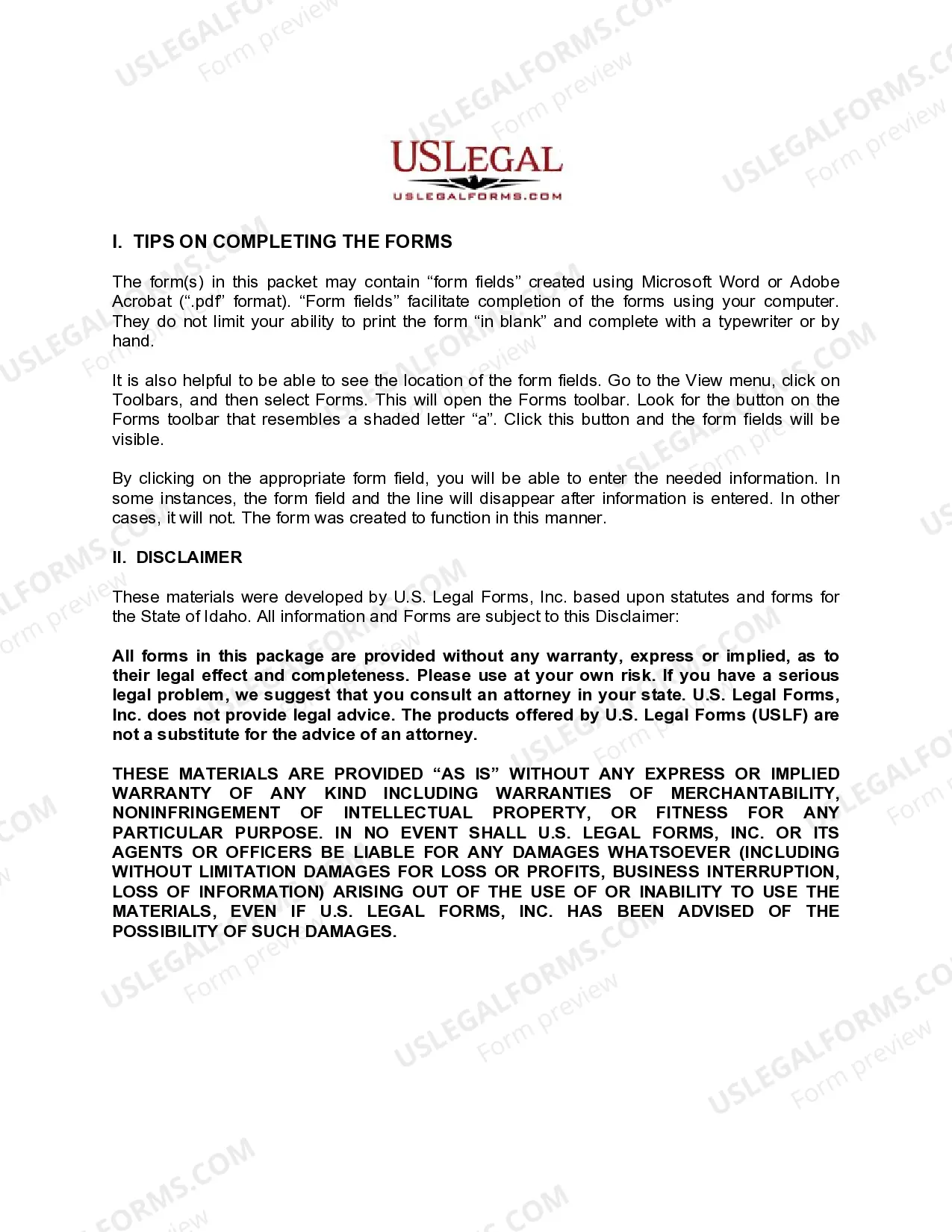
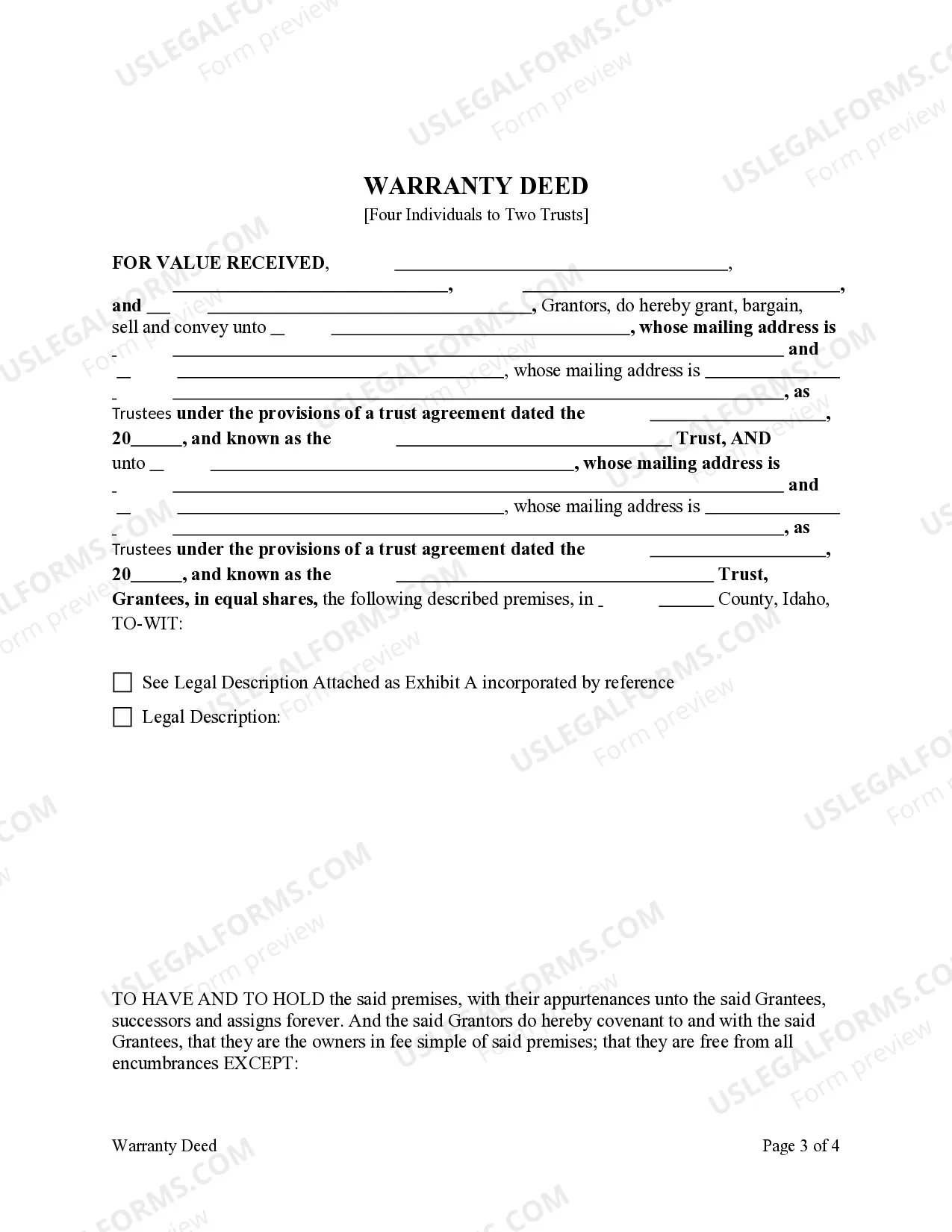
This Warranty Deed transfers property from four individuals, the Grantors, to two trusts, the Grantees. Each trust is managed by two Trustees or Co-Trustees who accept the transfer on behalf of their respective trusts. This form serves to legally document the transfer of property and ensures compliance with state statutes. Unlike other deeds, this Warranty Deed includes specific provisions for multiple Grantors and Grantees, making it suitable for complex ownership situations.
Form components explained
- Identification of the Grantors (four individuals) and Grantees (two trusts)
- Names of the two Co-Trustees for each trust
- Description of the property being transferred
- Clauses detailing the warranty of title provided by the Grantors
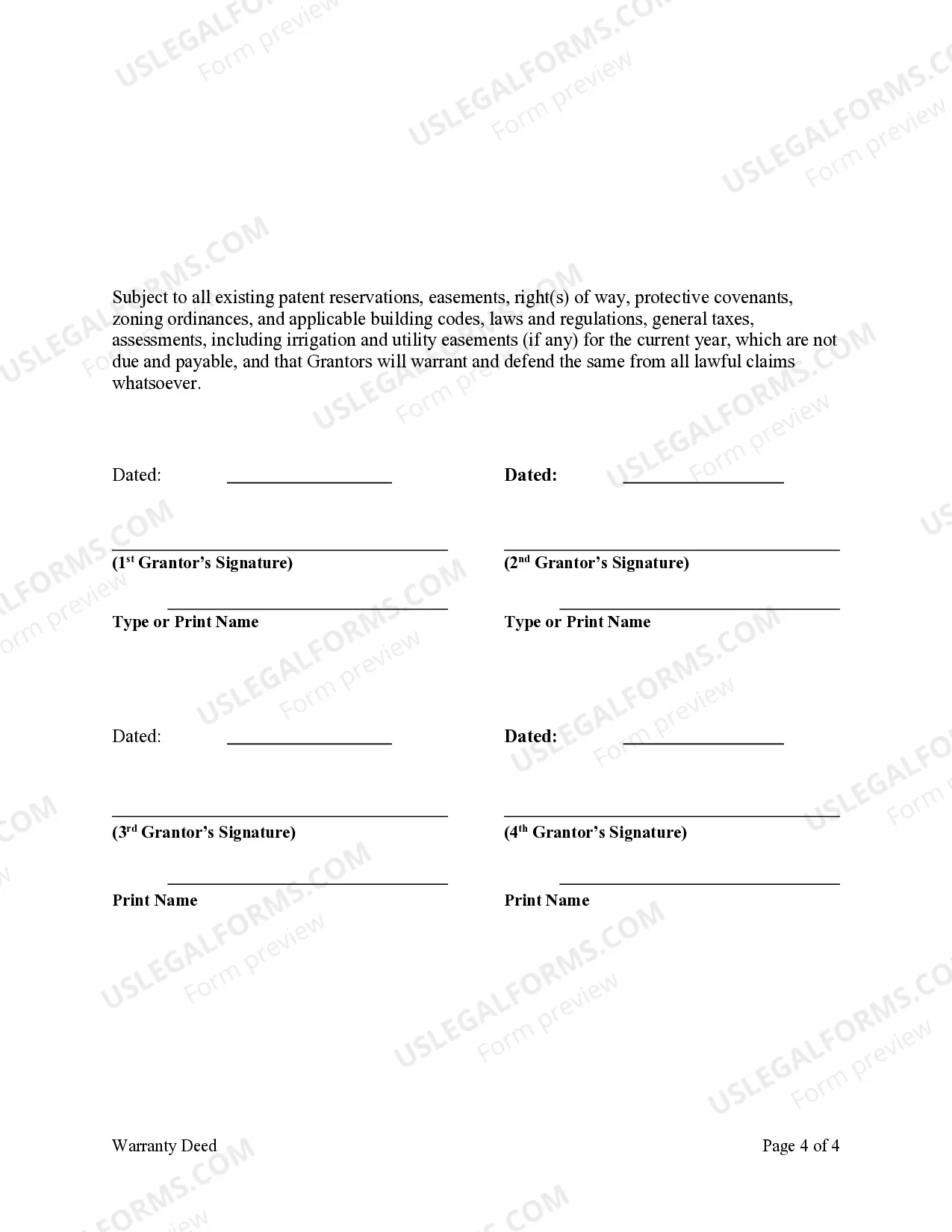
- Signatures of all parties involved, including the Grantors and Trustees
- Date of the transfer





Common use cases
This Warranty Deed is needed when transferring real property from multiple individuals to multiple trusts. It is particularly useful in estate planning scenarios where property is being placed into trust to manage assets for beneficiaries. Use this form when you want to clearly document the transfer and provide warranties regarding the title of the property.
Who should use this form
- Individuals who are the Grantors and wish to transfer property to trusts
- Trustees or Co-Trustees who are accepting property on behalf of a trust
- Estate planners and attorneys managing property transfers for clients
- Anyone involved in estate management where property is being transferred among multiple parties
Steps to complete this form
- Identify all parties involved: the four Grantors and two Co-Trustees for each trust.
- Clearly describe the property being transferred, including its address and legal description.
- Include the necessary warranty clauses that protect the Grantees against claims on the property.
- Make sure all Grantors and Trustees sign the deed in the designated spaces.
- Include the date of the transfer before submitting the form for recording.
Does this form need to be notarized?
Notarization is required for this form to take effect. Our online notarization service, powered by Notarize, lets you verify and sign documents remotely through an encrypted video session, available 24/7.
Get your form ready online
Our built-in tools help you complete, sign, share, and store your documents in one place.
Make edits, fill in missing information, and update formatting in US Legal Forms—just like you would in MS Word.
Download a copy, print it, send it by email, or mail it via USPS—whatever works best for your next step.
Sign and collect signatures with our SignNow integration. Send to multiple recipients, set reminders, and more. Go Premium to unlock E-Sign.
If this form requires notarization, complete it online through a secure video call—no need to meet a notary in person or wait for an appointment.
We protect your documents and personal data by following strict security and privacy standards.

Make edits, fill in missing information, and update formatting in US Legal Forms—just like you would in MS Word.

Download a copy, print it, send it by email, or mail it via USPS—whatever works best for your next step.

Sign and collect signatures with our SignNow integration. Send to multiple recipients, set reminders, and more. Go Premium to unlock E-Sign.

If this form requires notarization, complete it online through a secure video call—no need to meet a notary in person or wait for an appointment.

We protect your documents and personal data by following strict security and privacy standards.
Common mistakes to avoid
- Failing to clearly identify all Grantors and Trustees, which could lead to challenges in ownership.
- Not providing a complete property description, which may render the transfer invalid.
- Omitting signatures from required parties, making the deed legally unenforceable.
- Not including requisite warranty clauses, potentially leaving the Grantees unprotected.
Benefits of using this form online
- Convenient access to downloadable formats, allowing you to complete the form at your own pace.
- Editability features make it easy to correct errors without needing to start over.
- Reliable templates drafted by licensed attorneys to ensure legal accuracy.
Key takeaways
- A Warranty Deed is essential for transferring property among multiple parties with warranties of title.
- Proper identification of all parties and detailed property descriptions are critical for validity.
- Review state-specific laws to ensure compliance and avoid common mistakes.
Looking for another form?
Form popularity
FAQ
A deed of trust is a method of securing a real estate transaction that includes three parties: a lender, borrower and a third-party trustee.
No. And unless the deed identifies the trust as an owner, then father is the owner of an interest. It is a common mistake to set up a trust and then fail to deed property into the trust. However, you cannot force him to make the changes you are...
Trustees aren't allowed to sell trust property to themselves unless the trust agreement has explicitly allowed them to do so. They also shouldn't sell the trust property to another trust that they manage, or borrow trust funds for personal use.
Party information: names and addresses of the trustor(s), trustee(s), beneficiary(ies), and guarantor(s) (if applicable) Property details: full address of the property and its legal description (which can be obtained from the County Recorder's Office)
Either draft or have an attorney draft a Trustee's Deed transferring ownership of the real estate out of the trust to the beneficiary. After it is signed, you and the beneficiary must go to the clerk of the court to have the deed recorded in the public records.
A deed of trust has a borrower, lender and a trustee. The trustee is a neutral third party that holds the title to a property until the loan is completely paid off by the borrower.
Unless the trust document expressly authorizes it, a trustee generally cannot: Use trust funds to loan money to himself or herself. Buy or sell trust property to himself or herself.
A deed of trust involves three parties: a lender, a borrower, and a trustee. The lender gives the borrower money. In exchange, the borrower gives the lender one or more promissory notes. As security for the promissory notes, the borrower transfers a real property interest to a third-party trustee.
A Deed of Trust is a three party document prepared, signed and recorded to secure repayment of a loan. The Borrower (property owner) is named as Trustor, the Lender is called the Beneficiary, and a third party is called a Trustee.