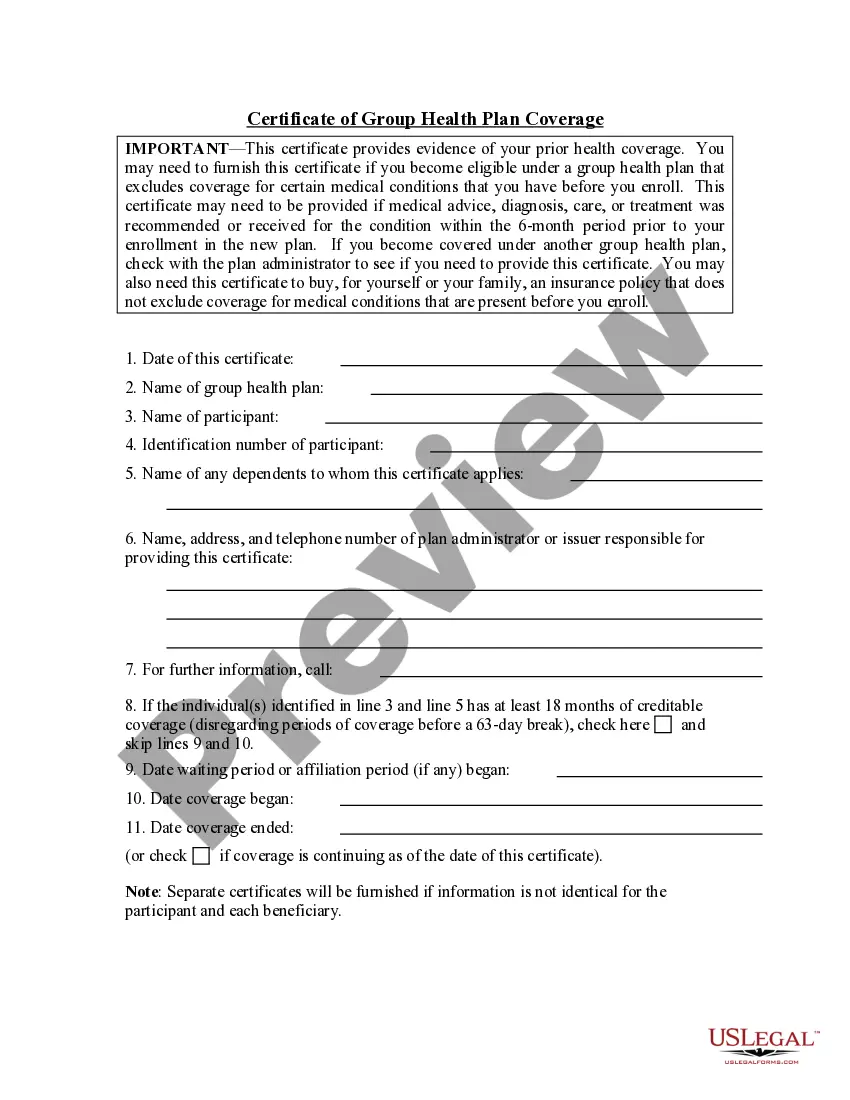
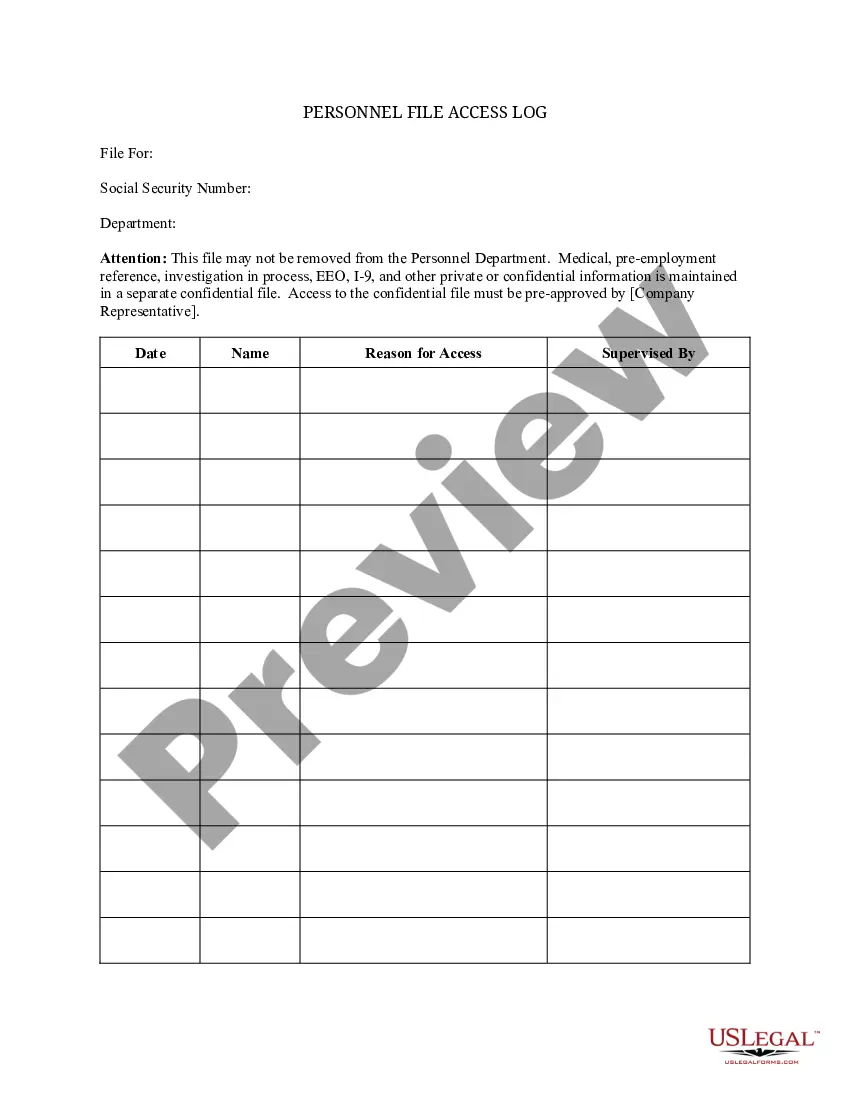
Iowa Personnel File Access Log
Description
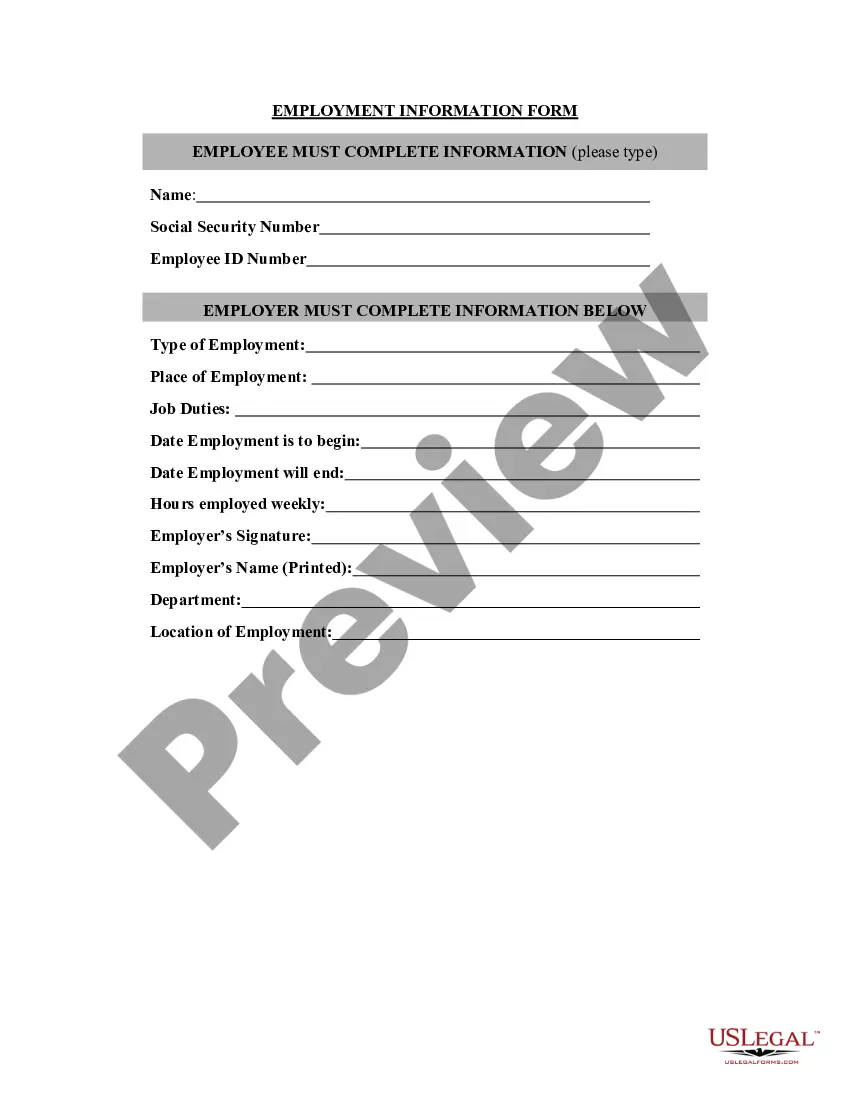
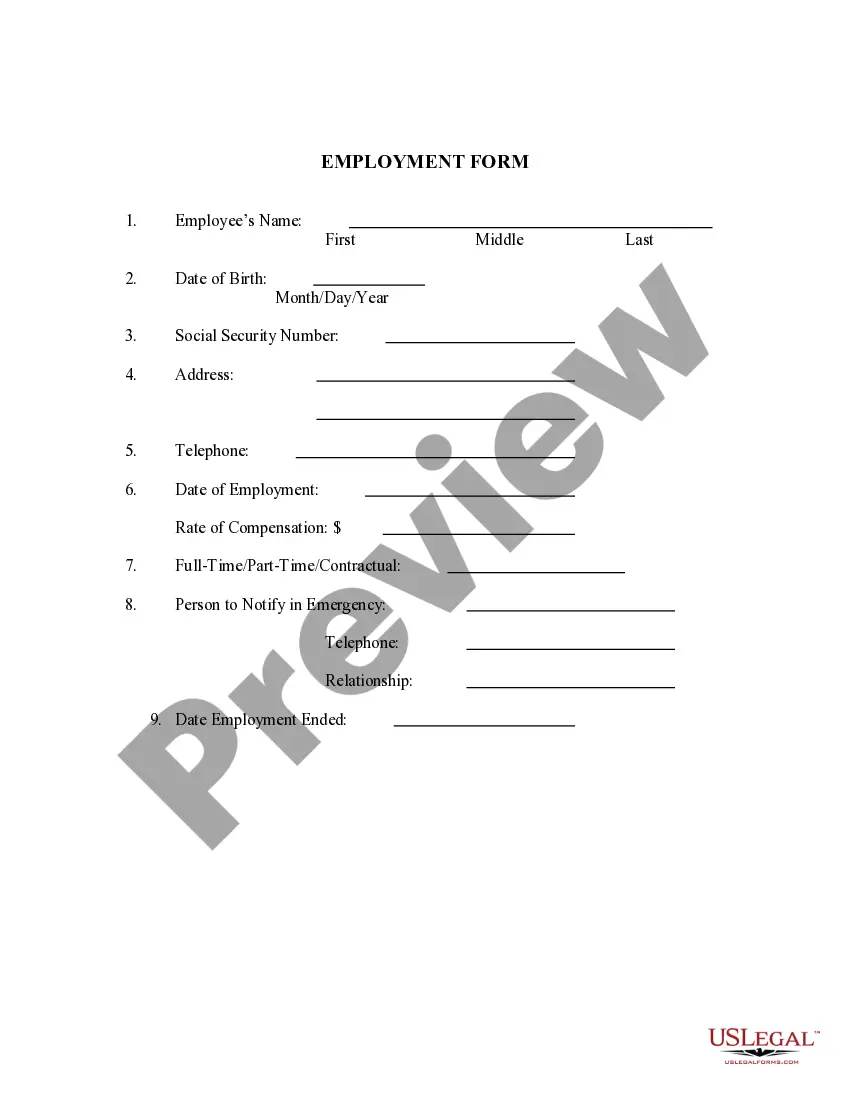
Get your form ready online
Our built-in tools help you complete, sign, share, and store your documents in one place.
Make edits, fill in missing information, and update formatting in US Legal Forms—just like you would in MS Word.
Download a copy, print it, send it by email, or mail it via USPS—whatever works best for your next step.
Sign and collect signatures with our SignNow integration. Send to multiple recipients, set reminders, and more. Go Premium to unlock E-Sign.
If this form requires notarization, complete it online through a secure video call—no need to meet a notary in person or wait for an appointment.
We protect your documents and personal data by following strict security and privacy standards.

Make edits, fill in missing information, and update formatting in US Legal Forms—just like you would in MS Word.

Download a copy, print it, send it by email, or mail it via USPS—whatever works best for your next step.

Sign and collect signatures with our SignNow integration. Send to multiple recipients, set reminders, and more. Go Premium to unlock E-Sign.

If this form requires notarization, complete it online through a secure video call—no need to meet a notary in person or wait for an appointment.

We protect your documents and personal data by following strict security and privacy standards.
Looking for another form?





How to fill out Personnel File Access Log?
You might spend hours online trying to locate the proper legal document template that fulfills the federal and state requirements you seek.
US Legal Forms offers a vast array of legal forms that can be reviewed by professionals.
You can easily download or print the Iowa Personnel File Access Log from our services.
If available, utilize the Preview feature to inspect the document template as well.
- If you already have a US Legal Forms account, you may Log In and then click the Obtain button.
- Once done, you may complete, edit, print, or sign the Iowa Personnel File Access Log.
- Each legal document template you purchase is yours indefinitely.
- To request an additional copy of a purchased form, go to the My documents section and click the corresponding option.
- If you are using the US Legal Forms site for the first time, follow the simple instructions below.
- First, ensure that you have selected the correct document template for the region/city of your preference.
- Review the form description to confirm you have chosen the accurate form.
Form popularity
FAQ
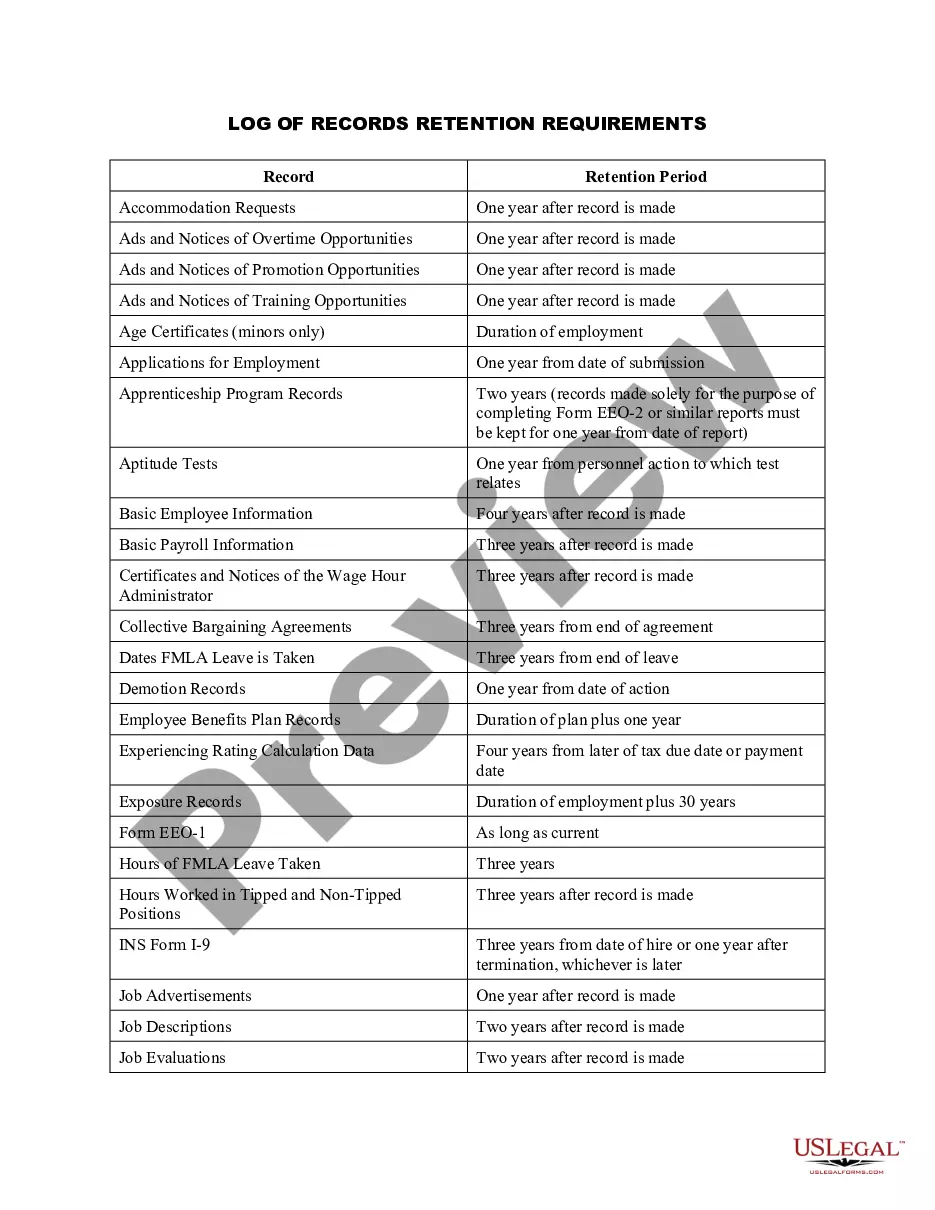
Issues covered: Employee files should be retained for the duration of the contract of employment and for a period of 7 years post-termination thereafter.
How long should I keep employee personnel files? You should keep an employee's personnel files for six years after the employee has left your organisation. The reason for this is that up until six years has passed, the former employee may sue you for breach of contract in the county court.
Employee files should be stored in a secure location and be kept strictly confidential. Access should be restricted to those with a legitimate need to know or as required by law.
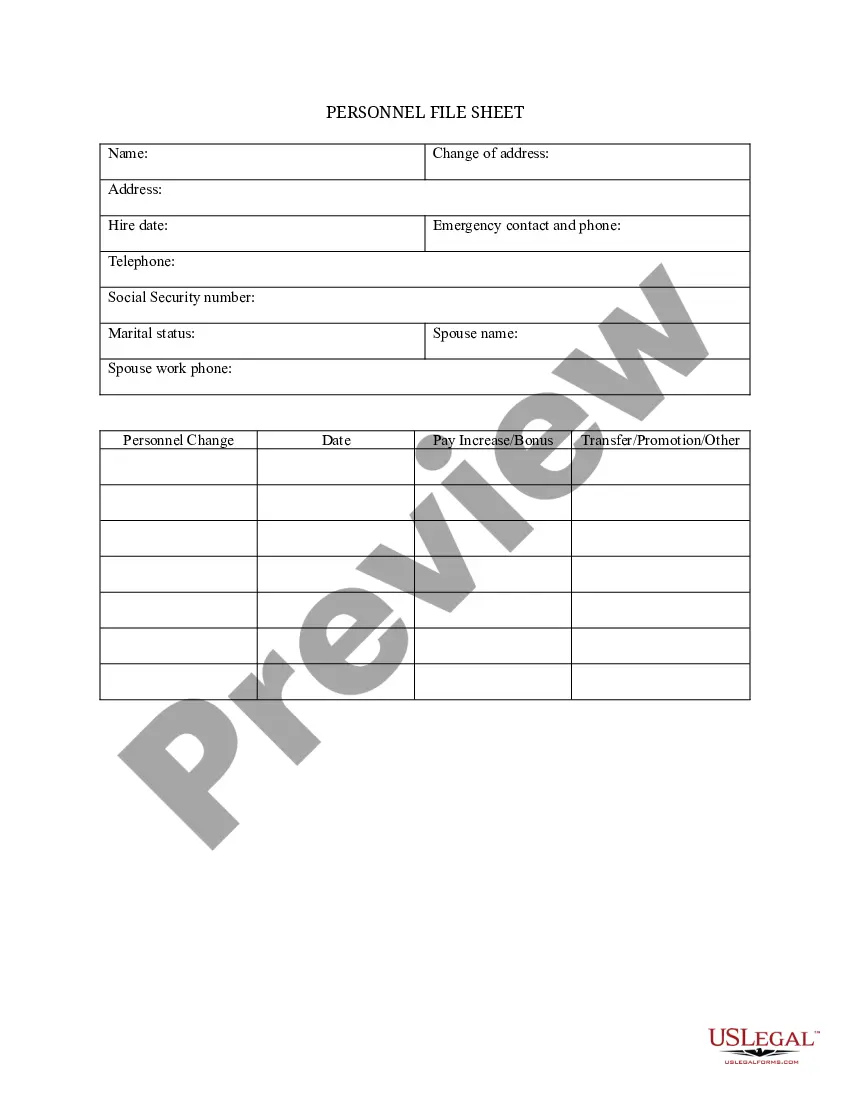
Types of Employee RecordsBasic Information. This category includes personal information such as the employee's full name, social security number, address, and birth date.Hiring Documents.Job Performance and Development.Employment-Related Agreements.Compensation.Termination and Post-Employment Information.
In practically all companies, most employee records are kept in an employee personnel file. However, each employee will have at least one additional file designated as a confidential file.
Each employer shall preserve for at least three years: 216.5(1) Payroll records. From the last date of entry, all payroll or other records containing the employee information and data required under any of the applicable rules.
Generally, any documents related to earnings, payroll, and pension plans require permanent retention. An employee's file should be retained for 7 years after the employee is fired, quits, or retires.
Records of employment contain applicants past records, list sources, employees progress, medical reports, etc. Wages and salaries records contains pay roll records, methods of wages and salaries, leave records, turnover records and other benefit records.
An employee file, or personnel record, is a group of documents that contain all relevant information about an employee's time in your business, from their job application to their resignation letter.
As an employee, do I have a right to see my personnel files? The short answer is 'yes'. You have a right to make a SAR to your employer, asking to see your personnel files, at any time. Your employer has the right to ask why you want to see your files, but must then provide all your records to you.