Partition and Assignment of Leasehold Estate
About this form
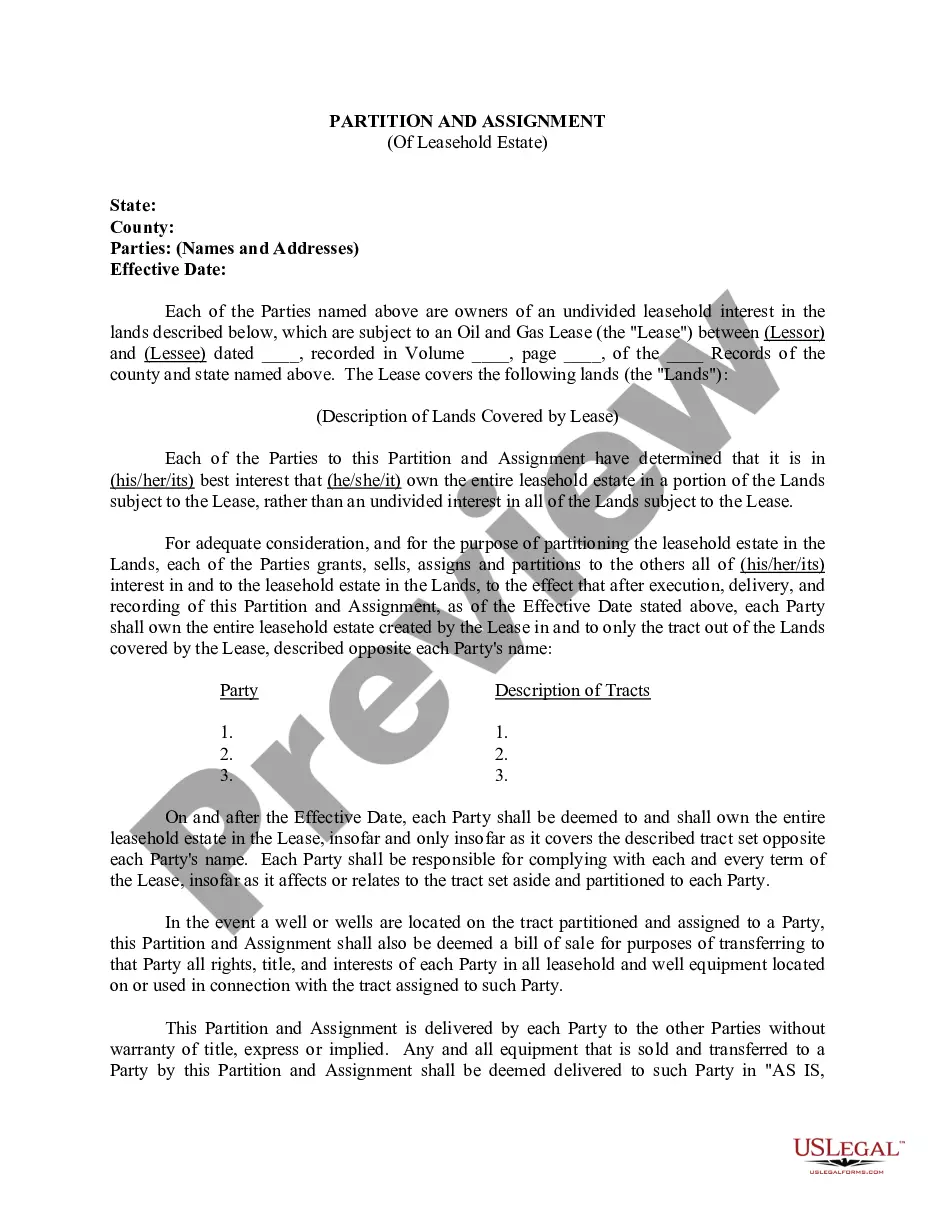
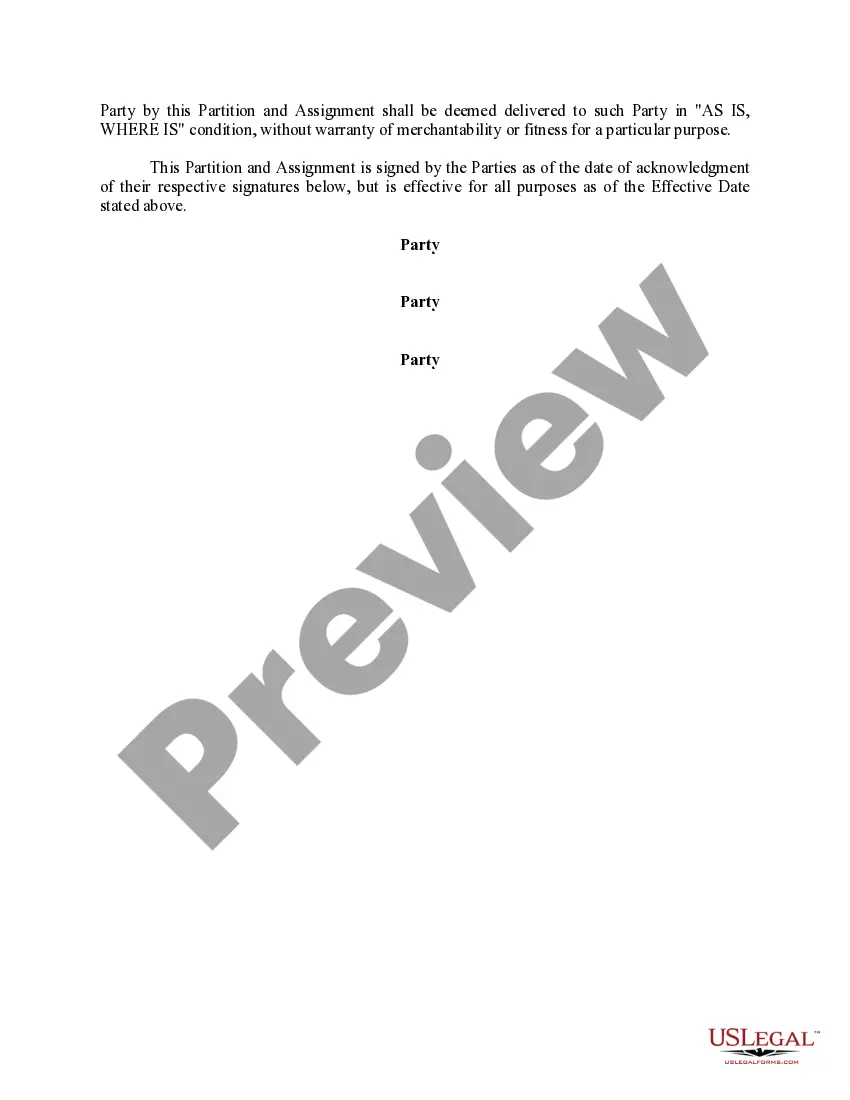
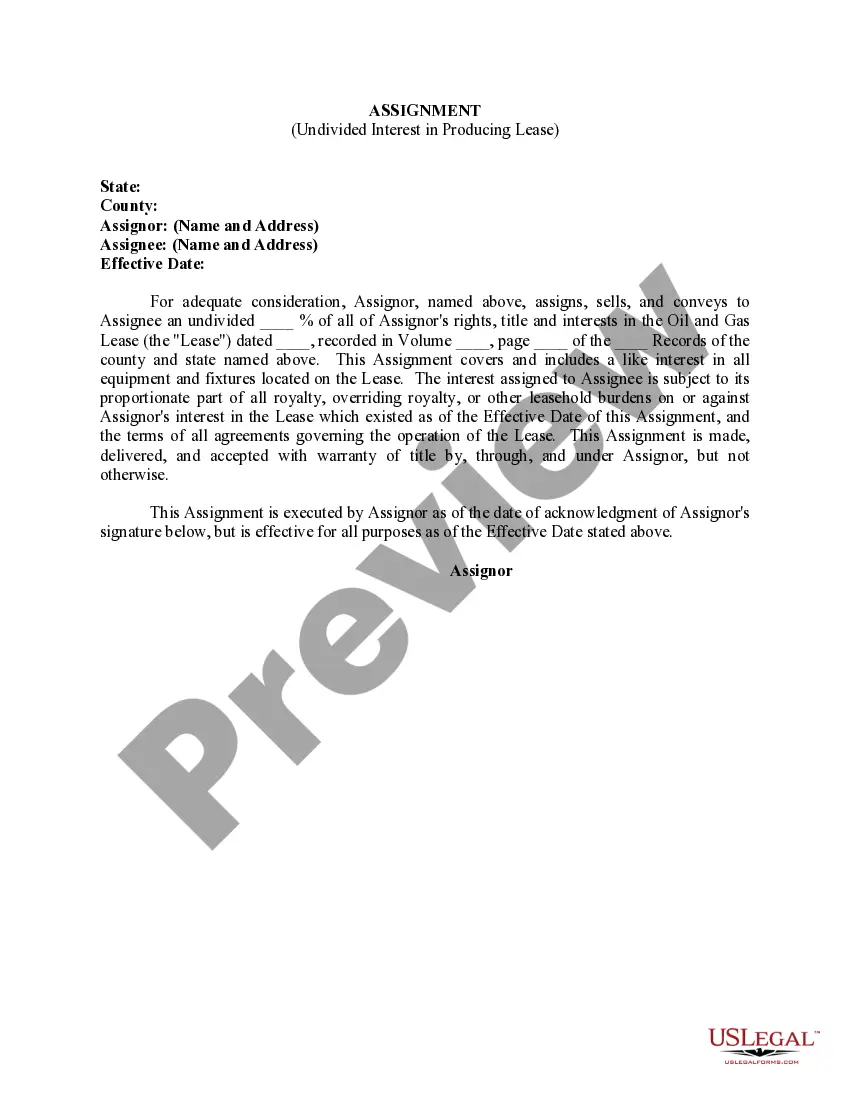
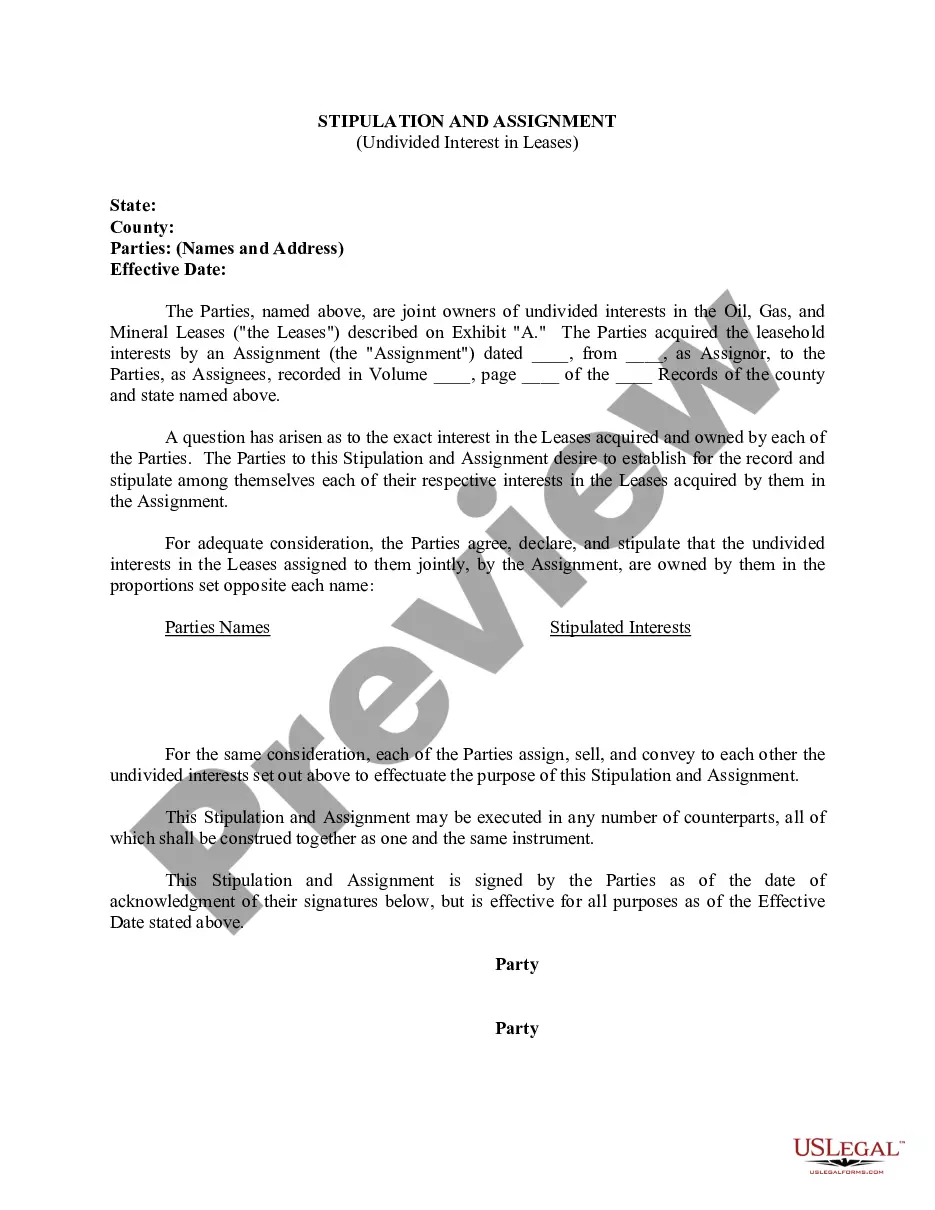
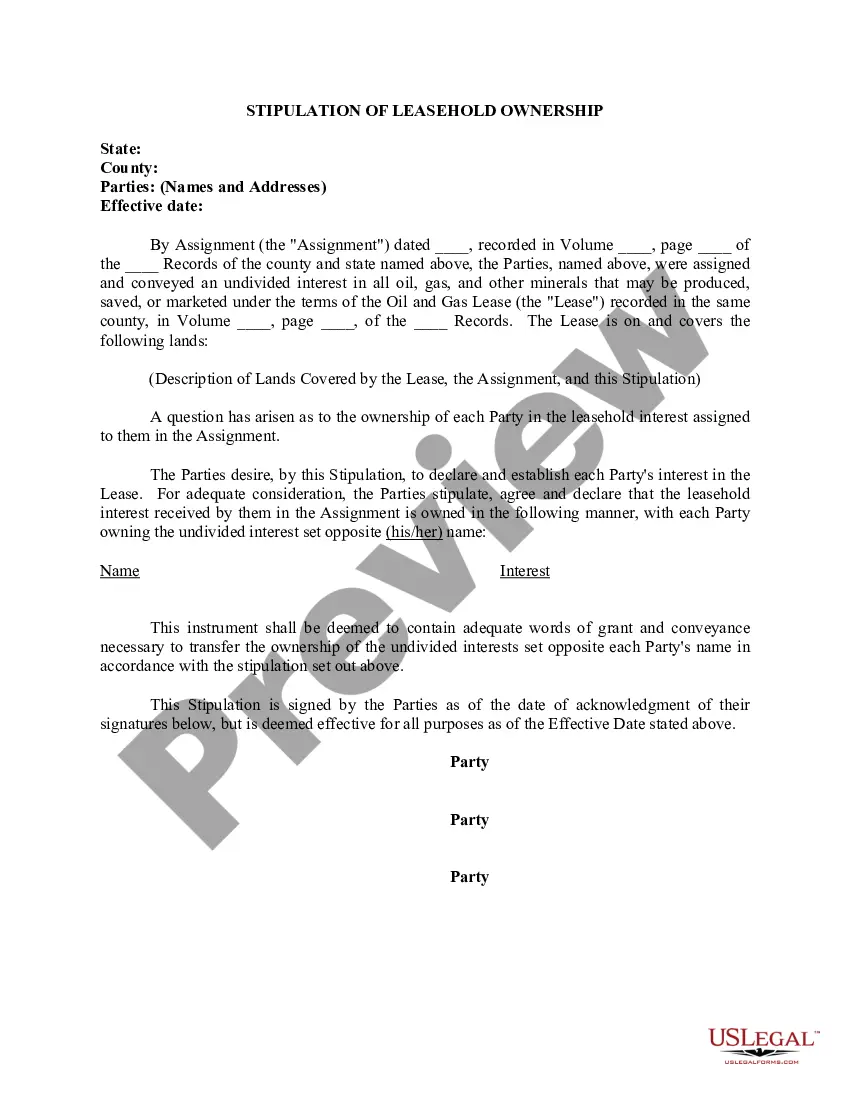
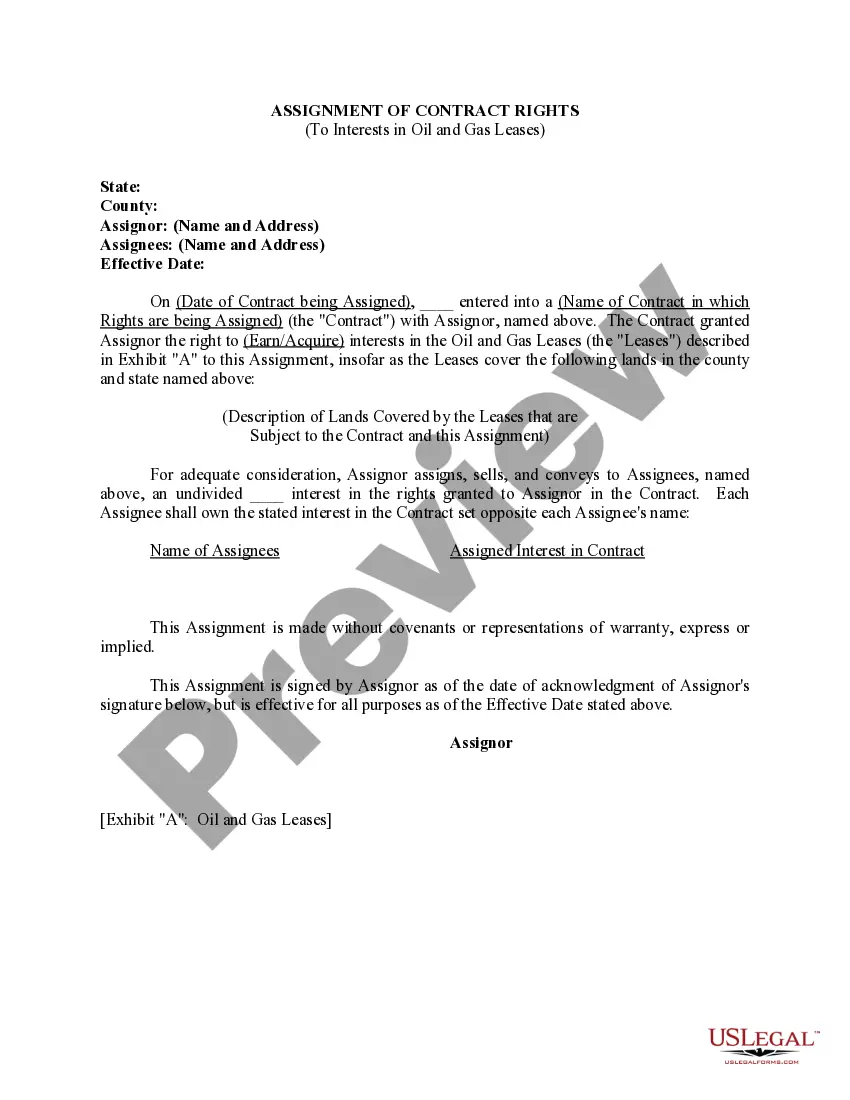
The Partition and Assignment of Leasehold Estate form is a legal document used by multiple parties who share an undivided leasehold interest in land. This form allows the parties to divide their interests, enabling each party to own a specified portion of the leasehold estate outright, rather than as a shared interest. By using this form, parties can clearly outline the division of their interests and responsibilities regarding the lease.
What’s included in this form
- Identification of Parties: Names and addresses of all parties involved.
- Effective Date: The date on which the partitioning takes effect.
- Description of Lands: A detailed description of the lands covered by the lease.
- Assignment and Partitioning Clause: Specifies how interests are granted, sold, and assigned among the parties.
- Ownership Declaration: Clarifies the ownership of each party in their respective tract post-partition.
- Warranty Disclaimer: Indicates that the transfer is done without warranty of title.
When this form is needed
This form is necessary when parties holding joint interests in a leasehold wish to divide their interests into separate, defined portions. It is suitable for situations involving real estate transactions involving oil and gas leases or similar agreements where partitioning the leasehold estate benefits the parties involved. Additionally, this form may be used when parties want to clarify ownership and responsibilities for specific tracts of land.
Who can use this document
- Individuals or entities holding an undivided leasehold interest in land.
- Co-owners of property seeking to clarify ownership interests.
- Parties engaged in oil and gas lease agreements wanting to partition their interests.
- Real estate professionals assisting clients in dividing leasehold estates.
Instructions for completing this form
- Identify the parties involved by entering their names and addresses.
- Specify the effective date for the partition and assignment.
- Describe the lands covered by the lease in detail.
- Include the agreed upon clauses for assignment and partitioning of interest.
- Enter each party's respective tract description next to their name.
- Ensure all parties sign and acknowledge the form as required.
Does this form need to be notarized?
This form does not typically require notarization unless specified by local law. However, having it notarized can help add an additional layer of security to the agreements made between parties.
Get your form ready online
Our built-in tools help you complete, sign, share, and store your documents in one place.
Make edits, fill in missing information, and update formatting in US Legal Forms—just like you would in MS Word.
Download a copy, print it, send it by email, or mail it via USPS—whatever works best for your next step.
Sign and collect signatures with our SignNow integration. Send to multiple recipients, set reminders, and more. Go Premium to unlock E-Sign.
If this form requires notarization, complete it online through a secure video call—no need to meet a notary in person or wait for an appointment.
We protect your documents and personal data by following strict security and privacy standards.

Make edits, fill in missing information, and update formatting in US Legal Forms—just like you would in MS Word.

Download a copy, print it, send it by email, or mail it via USPS—whatever works best for your next step.

Sign and collect signatures with our SignNow integration. Send to multiple recipients, set reminders, and more. Go Premium to unlock E-Sign.

If this form requires notarization, complete it online through a secure video call—no need to meet a notary in person or wait for an appointment.

We protect your documents and personal data by following strict security and privacy standards.
Mistakes to watch out for
- Failing to accurately describe the land involved in the lease.
- Not including all parties' names and addresses, leading to possible disputes.
- Neglecting to specify the effective date properly.
- Omitting necessary signatures or acknowledgments, making the form invalid.
- Forgetting to review local laws that may impose additional requirements.
Benefits of using this form online
- Convenience: Easily fill out and download the form at your own pace.
- Editability: Make necessary changes or additions before finalizing.
- Reliability: Receive professionally drafted templates vetted by licensed attorneys.
Summary of main points
- The Partition and Assignment of Leasehold Estate is key for clarifying ownership among co-owners of leased land.
- Carefully follow legal guidelines and local laws when completing this form.
- Double-check descriptions of the land to avoid future conflicts.
- All parties must sign the document for it to be effective and enforceable.
Looking for another form?
Form popularity
FAQ
As a rule a Partition action will take about one year to get to trial from the time of filing the complaint. Most Partition actions settle along the way. Sometimes within a month sometimes on the eve of trial.
Leasehold estates refer to land and any accompanying property at a specific address.For example, in California a leasehold designated for horticultural or agricultural reasons is not allowed to exceed a term of 51 years in length.
A partition deed is executed by co-owners The partition deed is required to be registered at the office of the sub-registrar of the place where the property is situated as in case of any other registration. The stamp duty payable in such a case is Rs 1,000 for each share of the property.
A partition is a term used in the law of real property to describe an act, by a court order or otherwise, to divide up a concurrent estate into separate portions representing the proportionate interests of the owners of property. It is sometimes described as a forced sale.
Although a tenant does hold rights to real property, a leasehold estate is typically considered personal property.As lease is a legal estate, leasehold estate can be bought and sold on the open market.
Types of Leasehold Estate The four types are (1) estate for years, (2) estate from period to period, (3) estate at will, and (4) estate at sufferance.
Freehold estates: rights of conveyable exclusive possession and use, having immobility and indeterminate duration. Leasehold estates: rights of possession and use but not ownership. Concurrent estates: owned or possessed by two or more individuals simultaneously.
Now, let's dive into the four types of leasehold estates. The most common type is known as an Estate for Years. An Estate for Years is an interest in land that arises by contract for possession for a definite, but limited, period of time.
The law recognizes three types of leasehold estates: the estate for years, the periodic tenancy, and the tenancy at will.