Iowa Trademark License Representation Agreement
Description
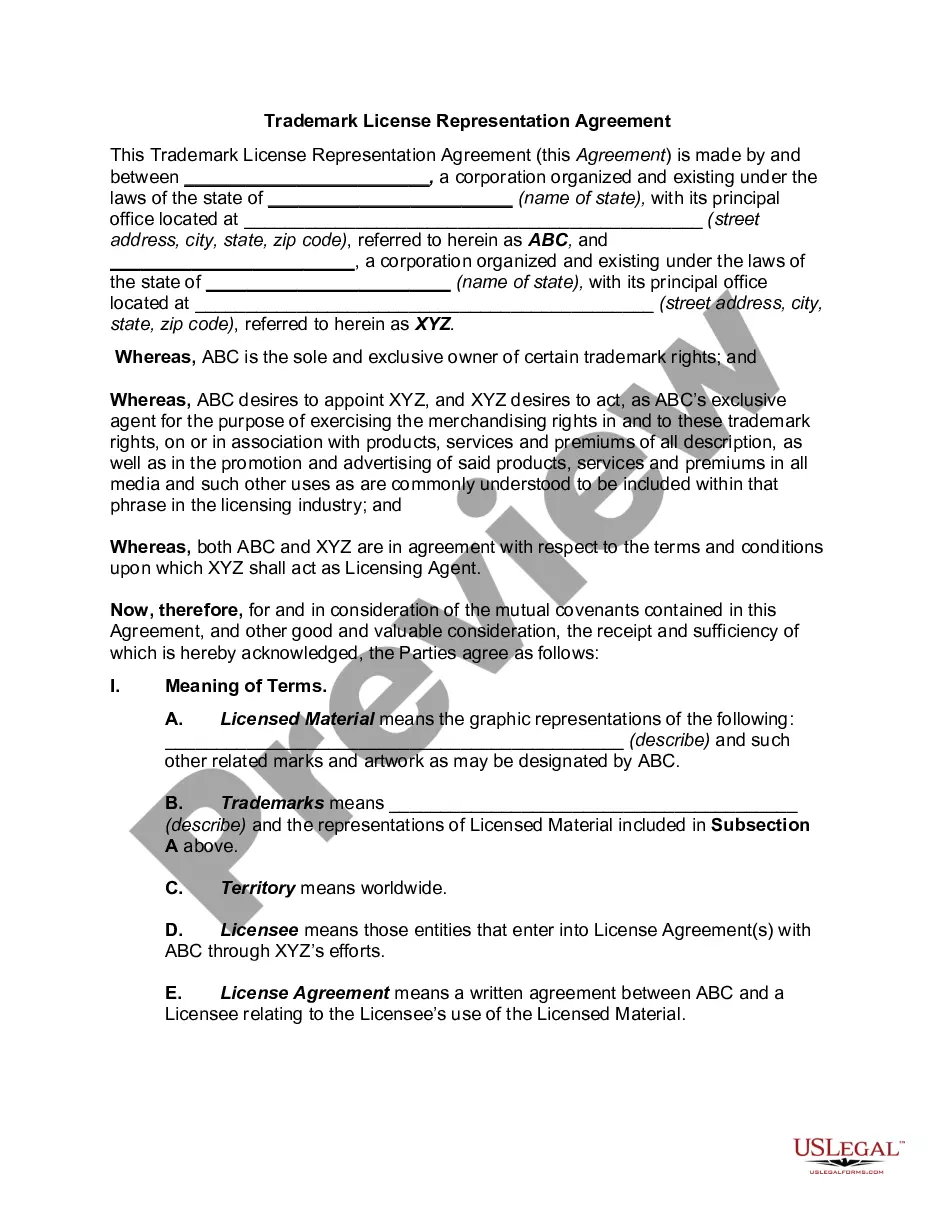
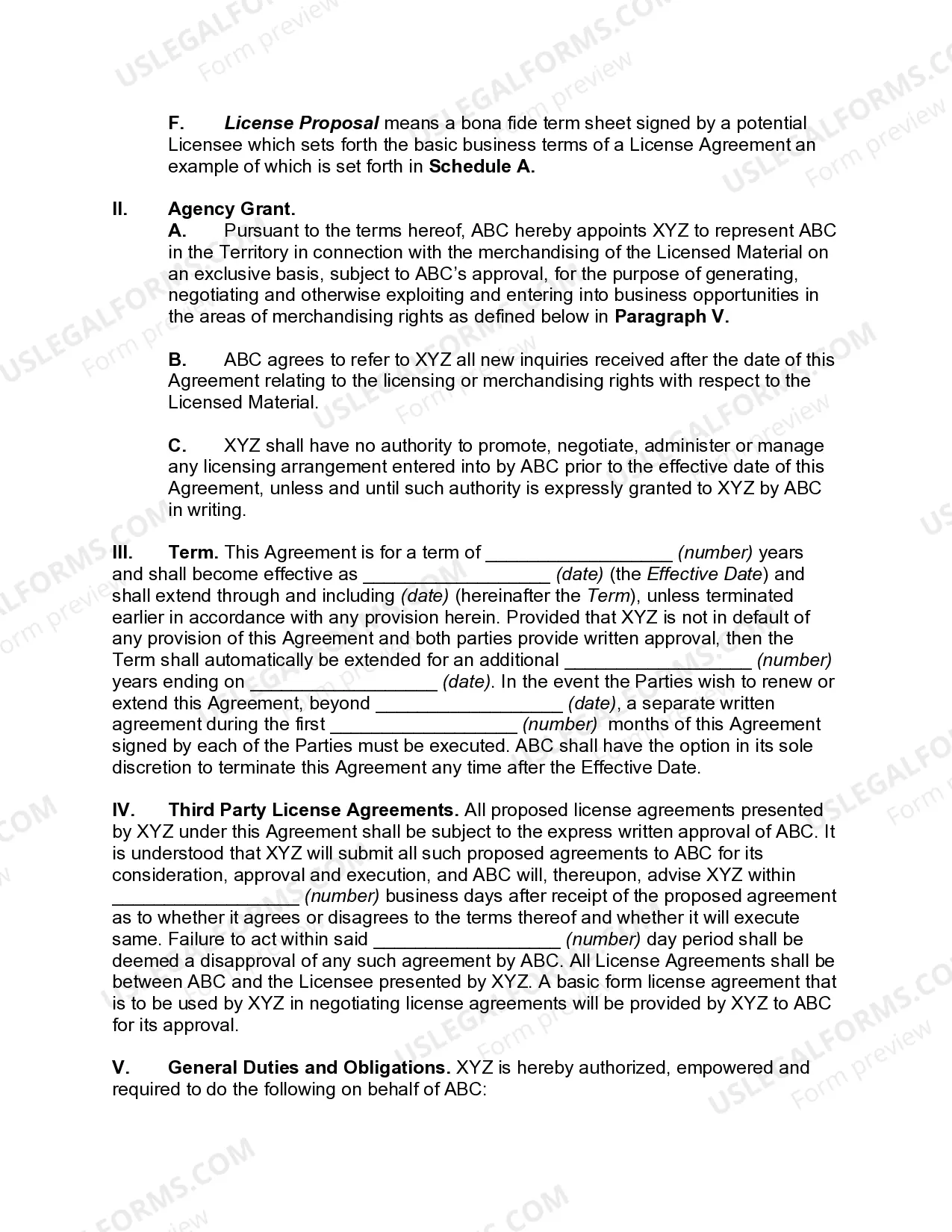
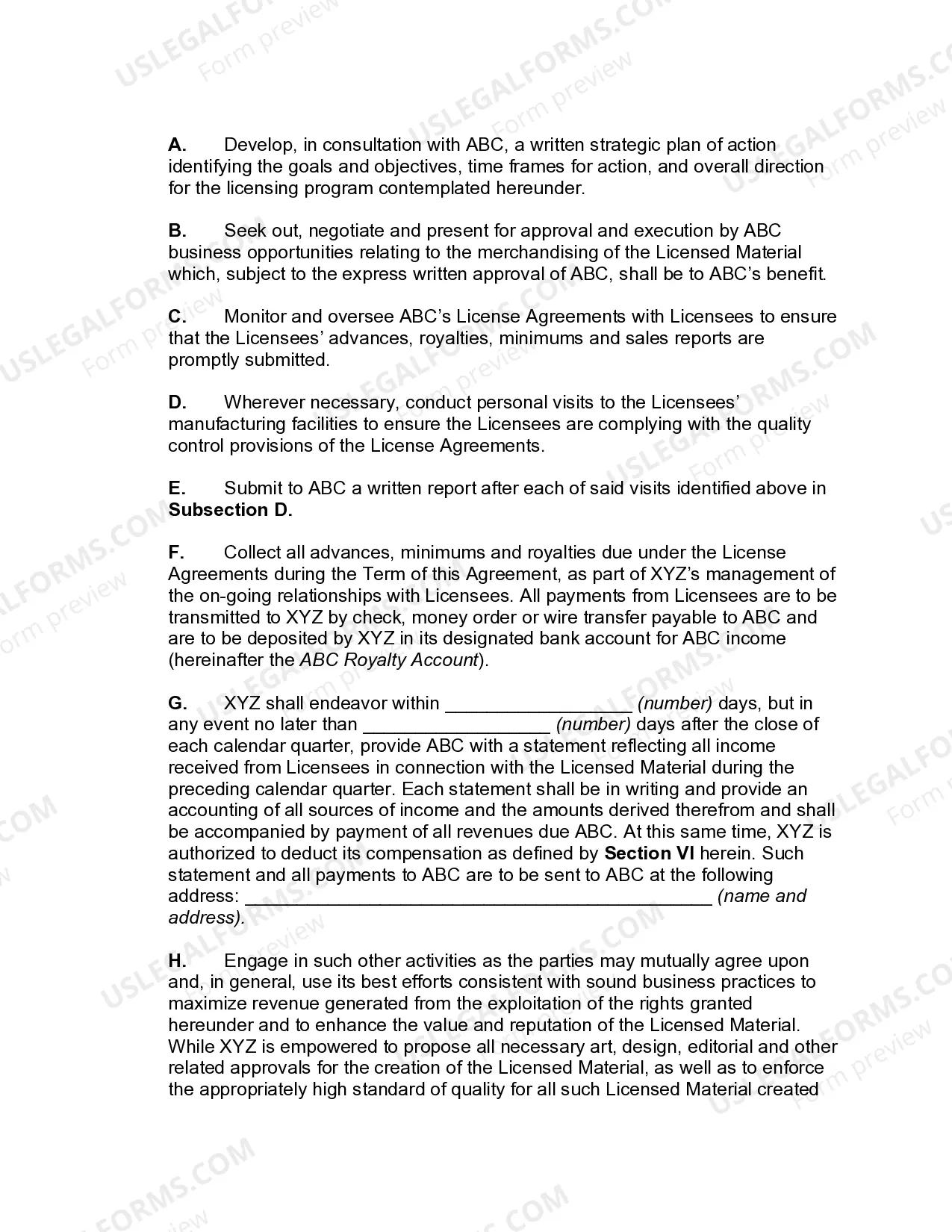
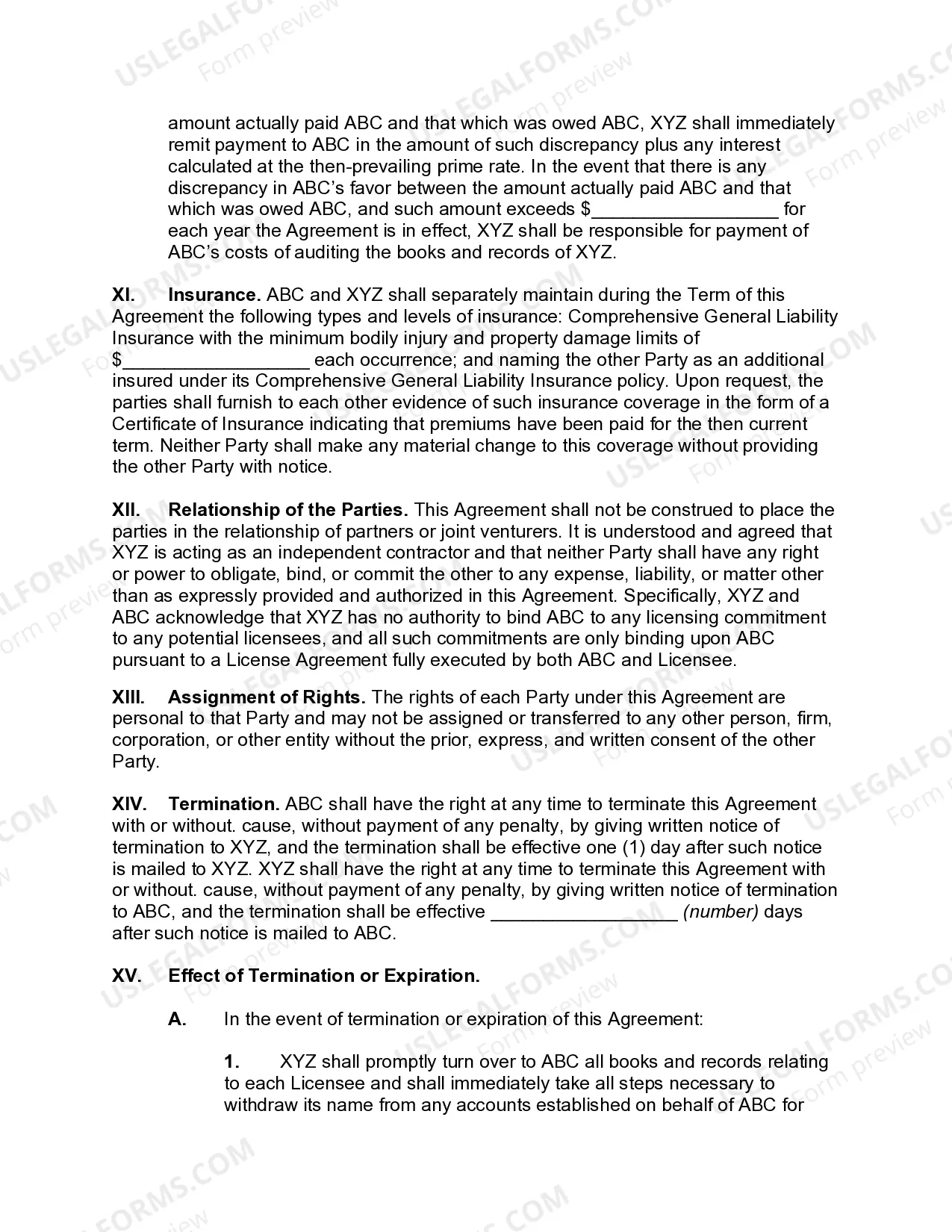
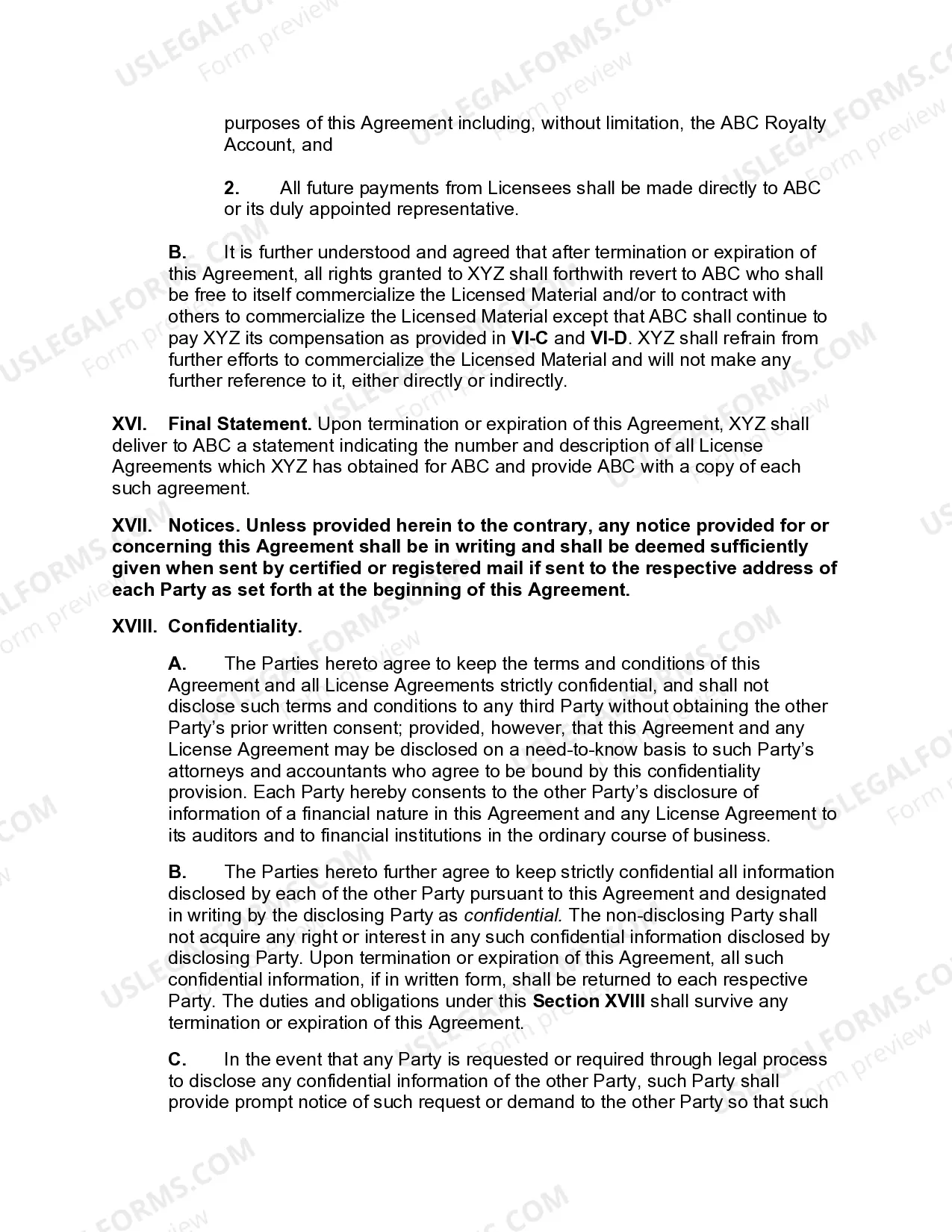
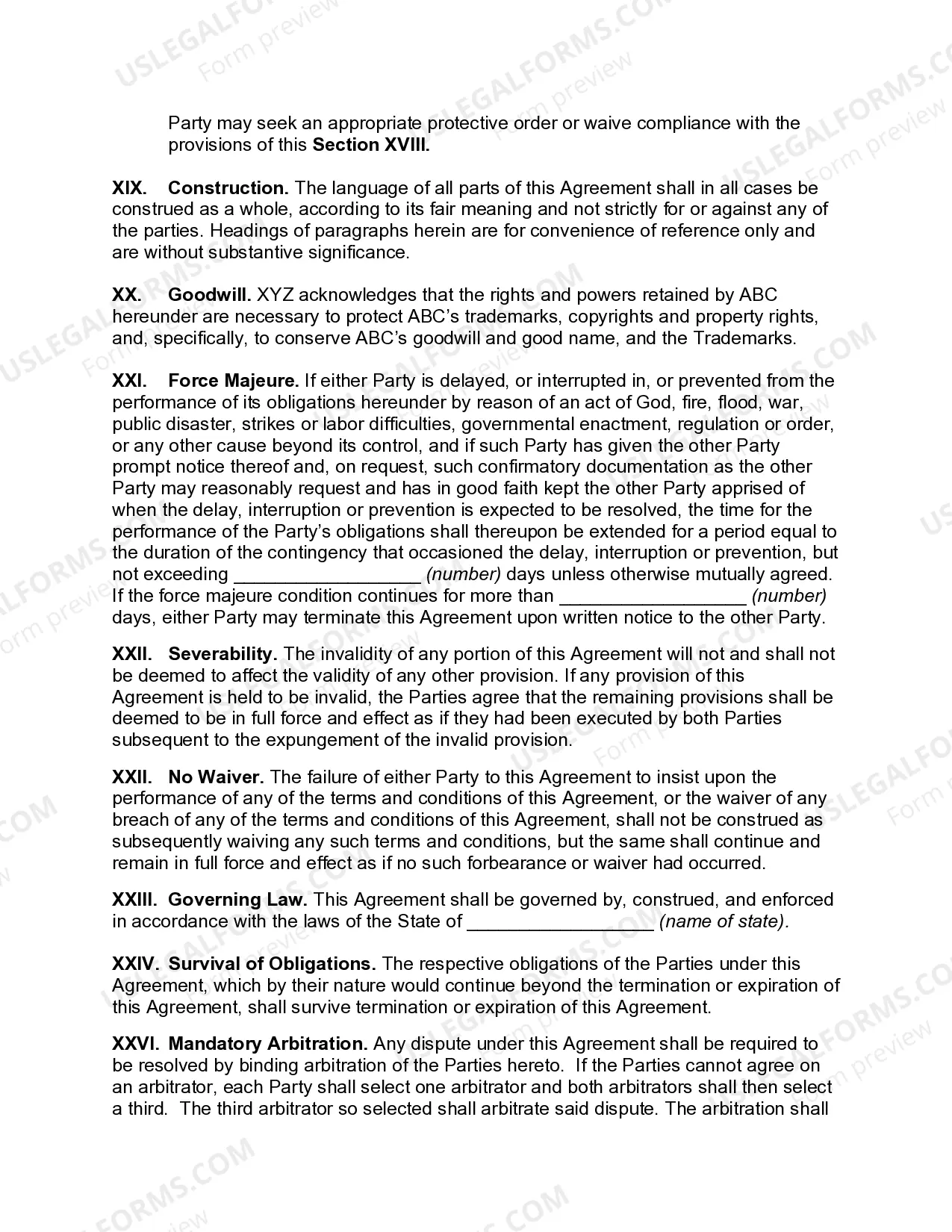

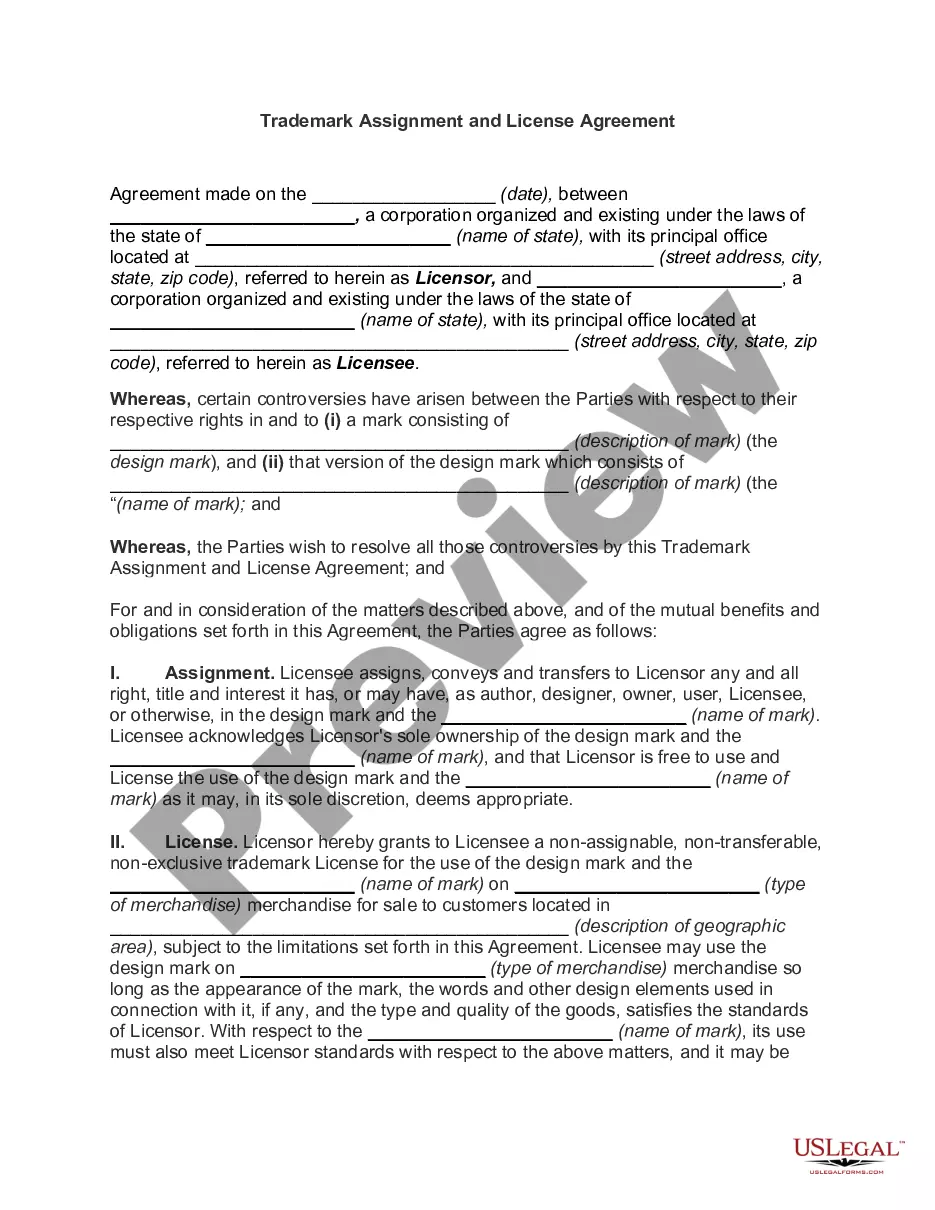



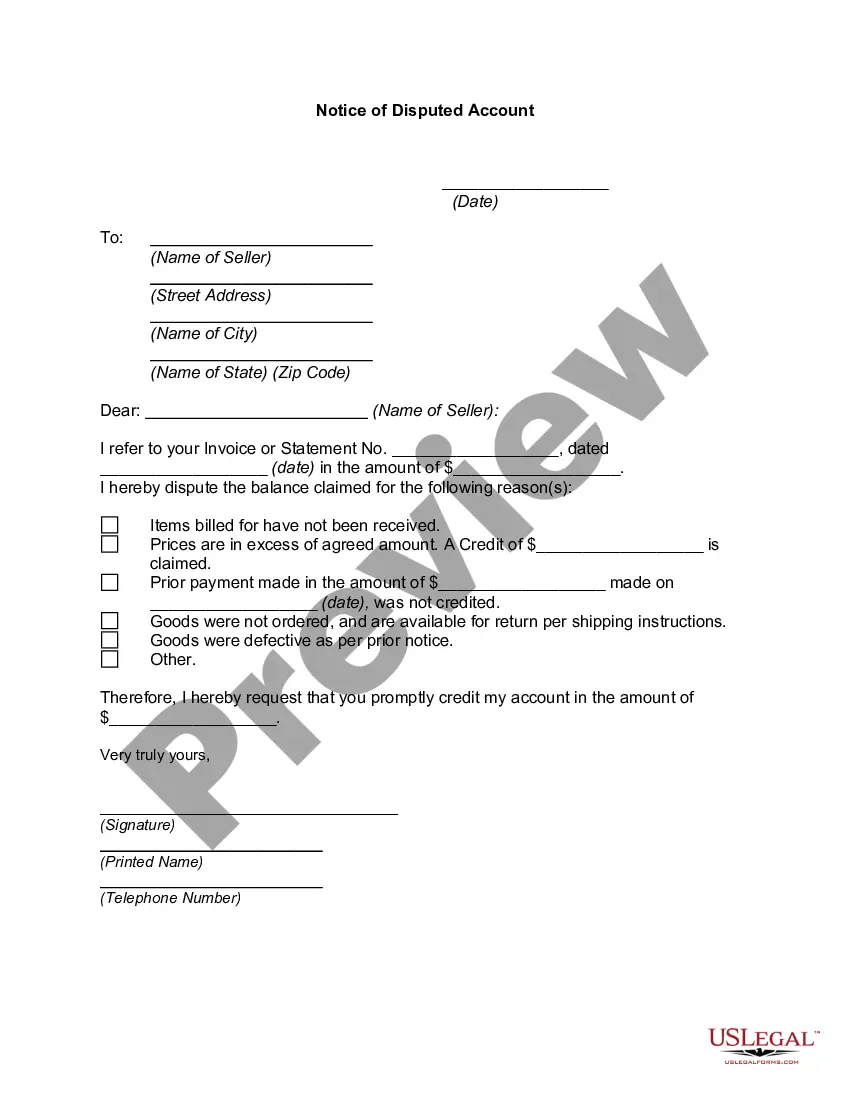
How to fill out Trademark License Representation Agreement?
US Legal Forms - one of the most important collections of legal documents in the USA - offers a variety of legal document templates that you can download or create.
By utilizing the website, you will obtain thousands of forms for business and personal purposes, categorized by types, states, or keywords. You can find the most recent versions of documents such as the Iowa Trademark License Representation Agreement within moments.
If you possess an account, Log In and download the Iowa Trademark License Representation Agreement from the US Legal Forms repository. The Download button will be available on every document you view. You can access all previously retrieved forms in the My documents tab of your account.
Complete the transaction. Use your credit card or PayPal account to finalize the payment.
Choose the format and download the document to your device. Edit. Fill out, edit, and print and sign the downloaded Iowa Trademark License Representation Agreement. Every document you add to your account has no expiration date and is yours indefinitely. Therefore, to download or create another copy, simply go to the My documents section and click on the document you need. Access the Iowa Trademark License Representation Agreement with US Legal Forms, one of the most extensive collections of legal document templates. Utilize thousands of professional and state-specific templates that cater to your business or personal needs and requirements.
- Ensure that you have chosen the correct document for your region/state.
- Click on the Review option to examine the document's content.
- Check the description of the document to confirm that you have selected the right one.
- If the document does not meet your needs, use the Search feature at the top of the screen to find an appropriate one.
- If you are satisfied with the document, confirm your choice by clicking the Purchase now button.
- Then, choose your preferred pricing plan and provide your details to register for the account.
Form popularity
FAQ
A perpetual license is one where a software application is sold on a one-time basis and the licensee can then use a copy of the software forever. A perpetual license model offers a customer access to a software application in perpetuity, hence the name.
Practitioners and licensing executives often refer to three basic types of voluntary licenses: non-exclusive, sole, and exclusive. A non-exclusive licence allows the licensor to retain the right to use the licensed property and the right to grant additional licenses to third parties.
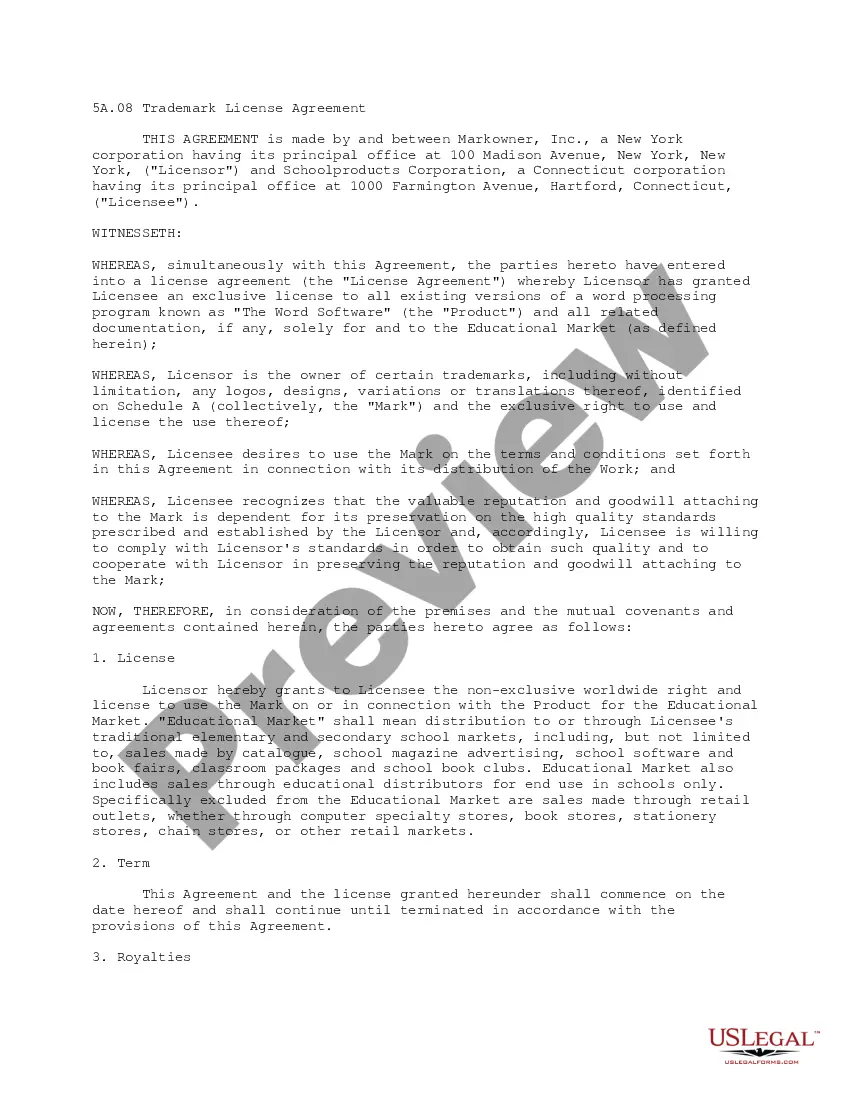
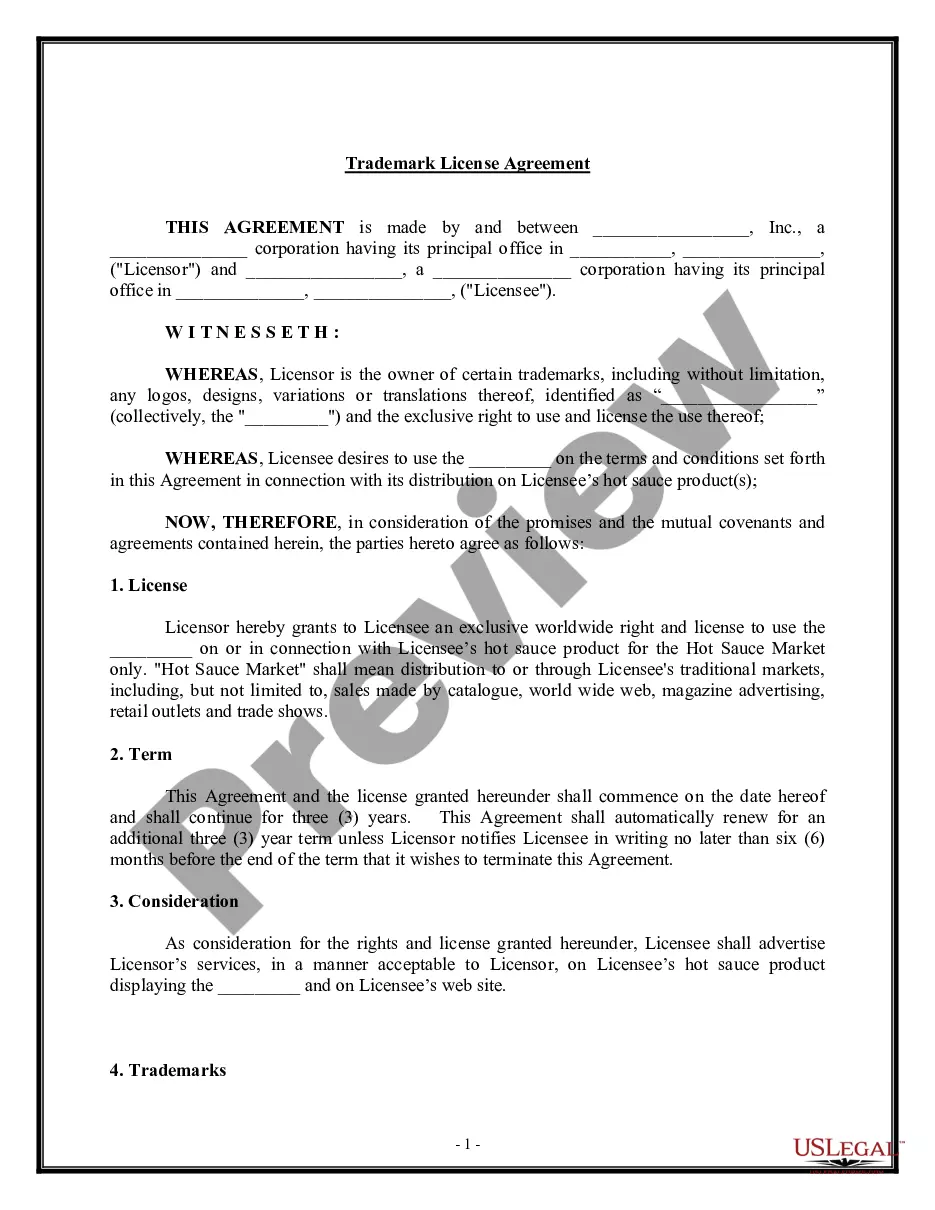
A trademark licence is an agreement between a trademark owner (the licensor) and another entity (the licensee) in which the licensor permits the licensee to use its trademark for commercial purposes.
A licensed mark is a trademark that a franchisee, or other licensee, has obtained the right to display for a certain period of time. The licensee doesn't own the trademark, but the trademark owner has granted him the right to display the trademark for a limited time, and subject to certain conditions.
A trademark licensing agreement is a legal contract between a trademark owner and another party that have agreed to use the trademark on preapproved terms decided between the contracting parties.
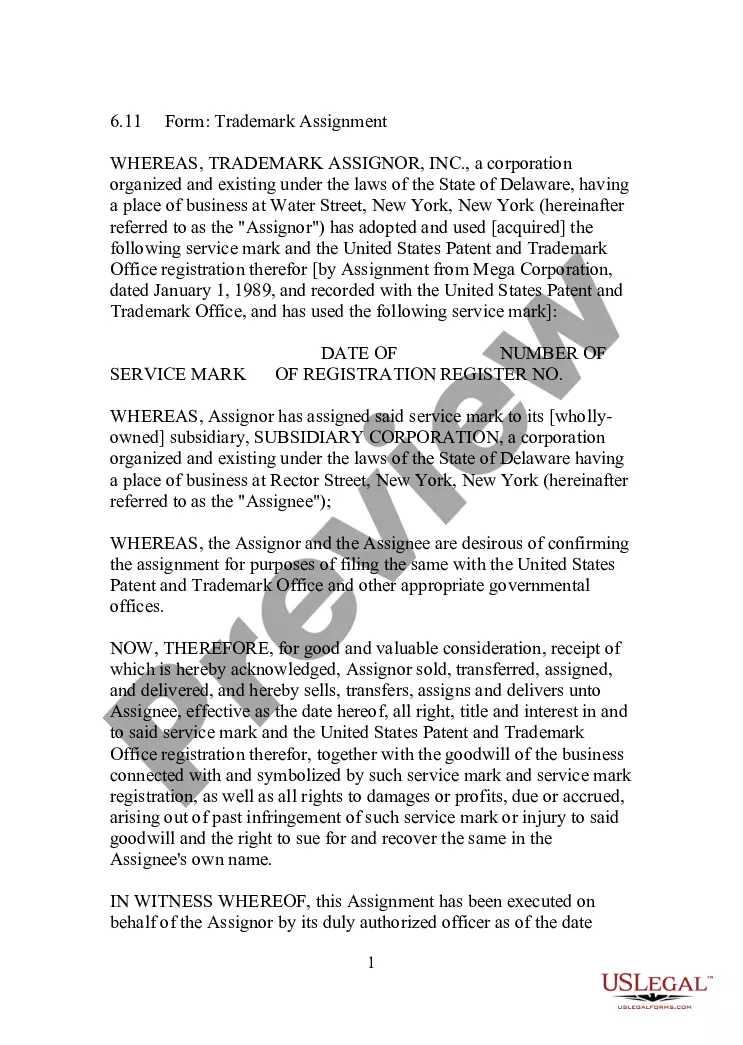
Most trademark license agreements aren't assignable, transferable or perpetual, and when you add in exclusive you get an agreement that looks much more like a transfer of all rights rather than a license.
Examples of common licensing agreements include: A sports team allowing another company to produce t-shirts with the team's logo. A movie company that allows another company to create a toy based on a character the movie company owns.
A perpetual license agreement is a legal contract between a customer and software provider where the customer purchases a license to use the software indefinitely. This type of licensing agreement does not have an expiration date and the licensee can continue using the product or service indefinitely.
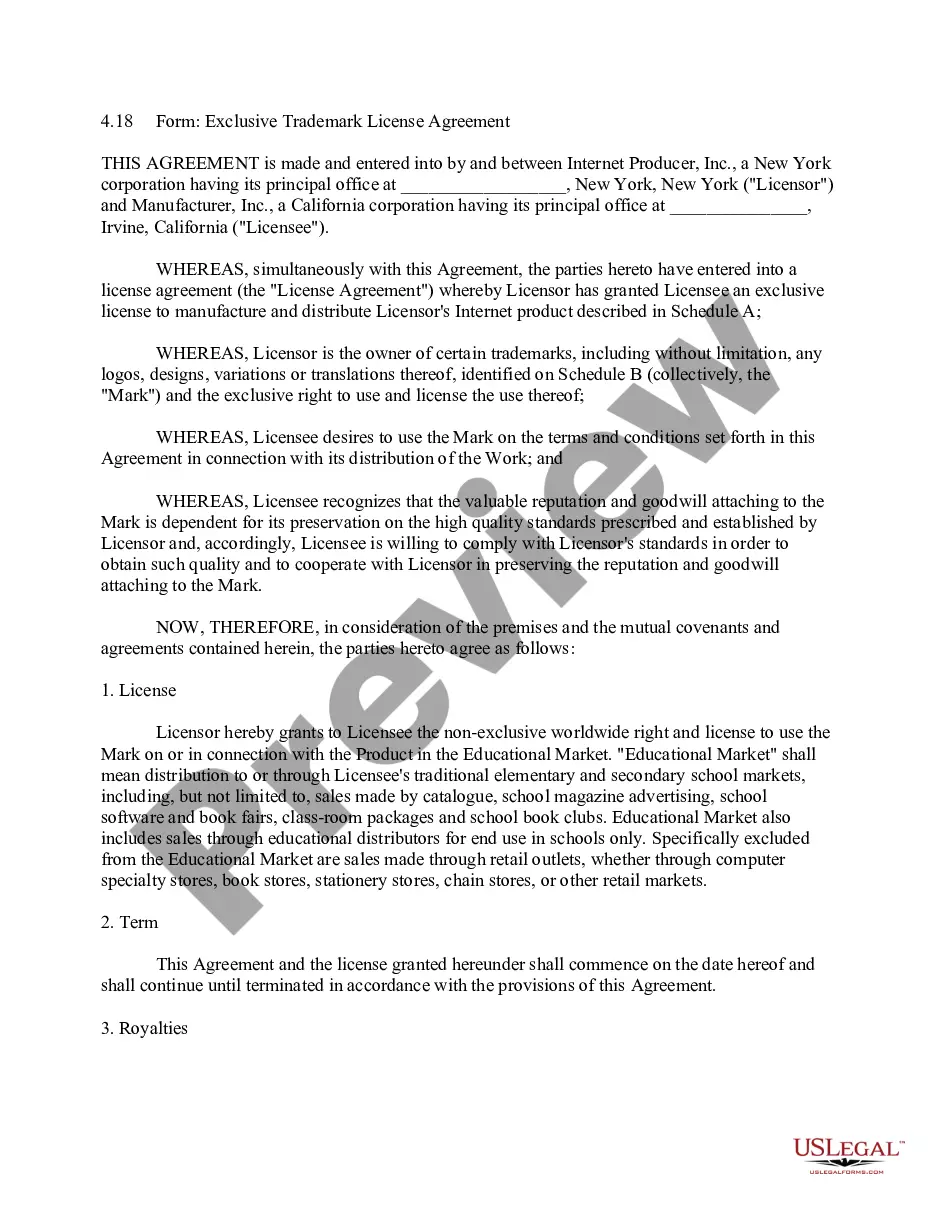
Exclusive license is an agreement between a trademark owner and another party that allows the other party to make certain use of the trademark. Exclusive license is provided with the understanding that the trademark owner will not permit other such uses to anyone else.
In trademark licensing, a trademark owner (Licensor) grants permission to another (Licensee) to use that trademark on mutually agreed terms and conditions.