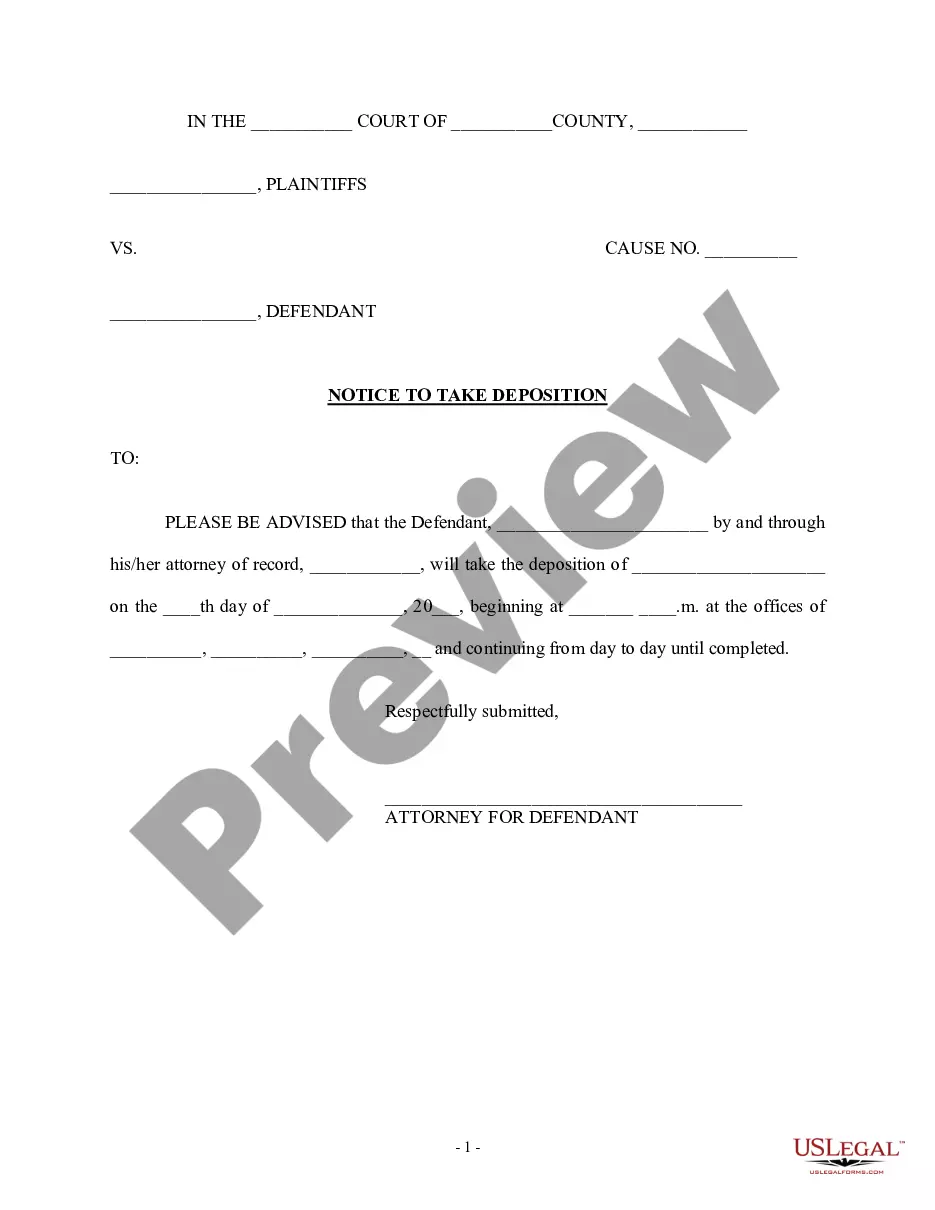
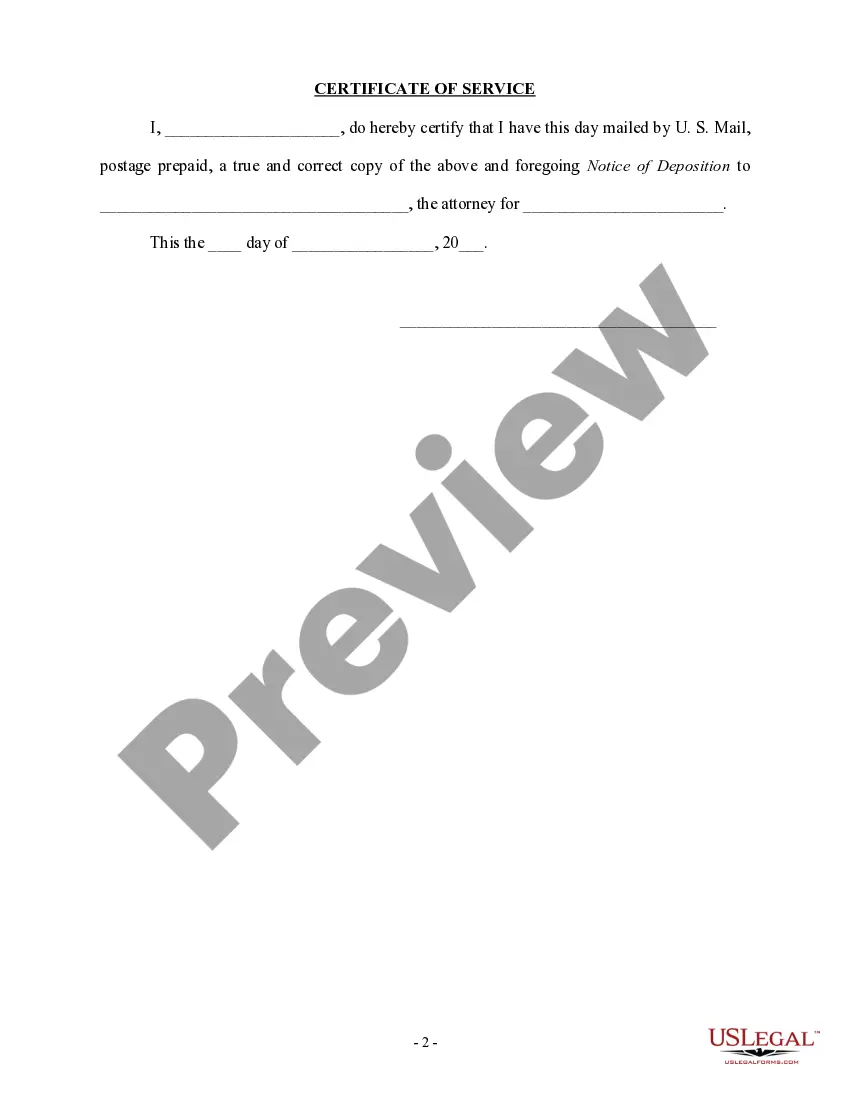
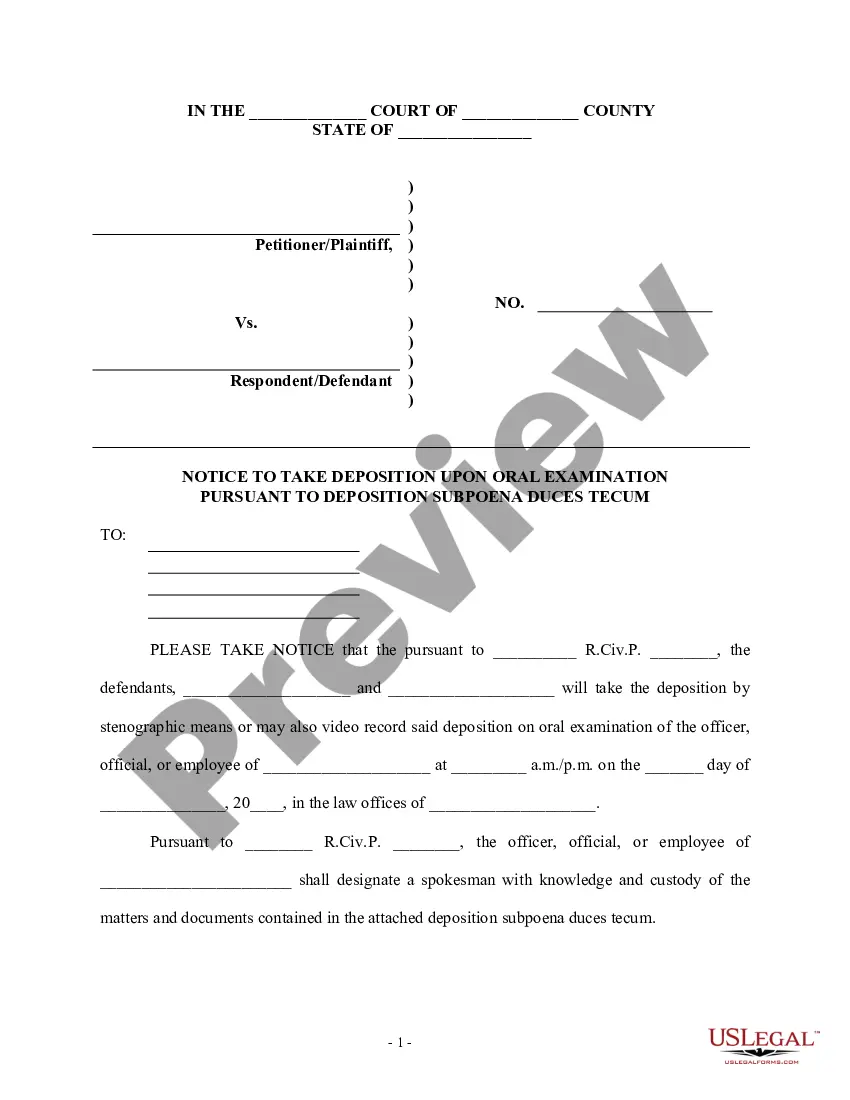
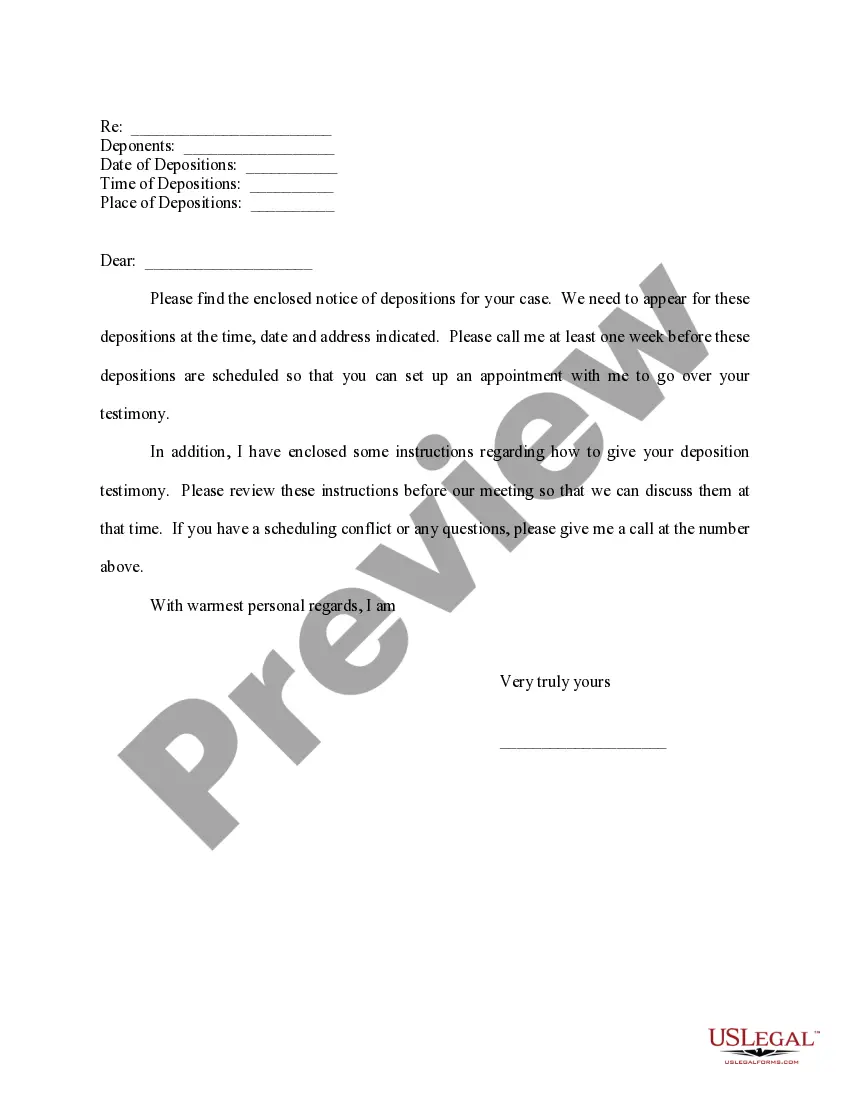
Defendant submits his/her notice to take depositions from day to day until completed. The form also contains a Certificate of Service which states that a true and correct copy of the Notice to Take Deposition was mailed via U.S. Mail and
Iowa Notice to Take Deposition - Discovery
State:
Multi-State
Control #:
US-00904
Format:
Word;
Rich Text
191 downloads
Description
Free preview
Get your form ready online
Our built-in tools help you complete, sign, share, and store your documents in one place.
Built-in online Word editor
Make edits, fill in missing information, and update formatting in US Legal Forms—just like you would in MS Word.
Export easily
Download a copy, print it, send it by email, or mail it via USPS—whatever works best for your next step.
E-sign your document
Sign and collect signatures with our SignNow integration. Send to multiple recipients, set reminders, and more. Go Premium to unlock E-Sign.
Notarize online 24/7
If this form requires notarization, complete it online through a secure video call—no need to meet a notary in person or wait for an appointment.
Store your document securely
We protect your documents and personal data by following strict security and privacy standards.

Make edits, fill in missing information, and update formatting in US Legal Forms—just like you would in MS Word.

Download a copy, print it, send it by email, or mail it via USPS—whatever works best for your next step.

Sign and collect signatures with our SignNow integration. Send to multiple recipients, set reminders, and more. Go Premium to unlock E-Sign.

If this form requires notarization, complete it online through a secure video call—no need to meet a notary in person or wait for an appointment.

We protect your documents and personal data by following strict security and privacy standards.
Looking for another form?

How to fill out Notice To Take Deposition - Discovery?
US Legal Forms - one of the largest collections of legal documents in the United States - provides a variety of legal form templates that you can download or create. By using the site, you will obtain numerous forms for business and personal purposes, organized by categories, states, or keywords. You can find the most recent versions of forms like the Iowa Notice to Take Deposition - Discovery in just minutes.
If you already have a monthly subscription, Log In and retrieve the Iowa Notice to Take Deposition - Discovery from the US Legal Forms library. The Download button will appear on every form you view. You can access all previously obtained forms from the My documents tab of your account.
To use US Legal Forms for the first time, here are simple steps to help you get started: Ensure you have selected the correct form for your city/county. Click the Review button to examine the form's content. Check the form outline to confirm you have chosen the right one. If the form does not meet your requirements, utilize the Search box at the top of the screen to find one that does. When you are satisfied with the form, confirm your choice by clicking the Buy now button. Then, select the payment option you prefer and provide your details to register for an account.
- Process the payment. Use your credit card or PayPal account to complete the transaction.
- Select the format and download the form to your device.
- Make edits. Fill out, modify, print, and sign the downloaded Iowa Notice to Take Deposition - Discovery.
- Each template you added to your account does not have an expiration date and is yours indefinitely. So, if you want to download or create another copy, simply go to the My documents section and click on the form you need.
- Access the Iowa Notice to Take Deposition - Discovery with US Legal Forms, the most extensive library of legal form templates.
- Utilize a multitude of professional and state-specific templates that meet your business or personal needs and requirements.
Form popularity
FAQ
Rule 16.401(2). This rule adds a layer of protection for parties. Registered filers' computer filters may occasionally filter out an emailed discovery request or response. Rule 16.401(2) ensures that registered filers will at least know they should have received a discovery document.
An attorney can issue a subpoena without a court file being opened, but if the clerk issues a blank subpoena, a court file must be opened and will collect a $50 fee. Rule 1.1702(5). A court file will also be opened for any motions relating to the subpoena and the clerk will collect a $50 fee then as well.
If the defendant does not waive speedy trial, depositions shall be taken within 30 days after arraignment unless the deadline is extended by the court. If the defendant waives speedy trial, depositions shall be taken at least 30 days before trial unless the court orders otherwise.
In addition, rule 1.943 allows for voluntary dismissal of the plaintiff's petition without prejudice once as a matter of right. Id. r. 1.943.
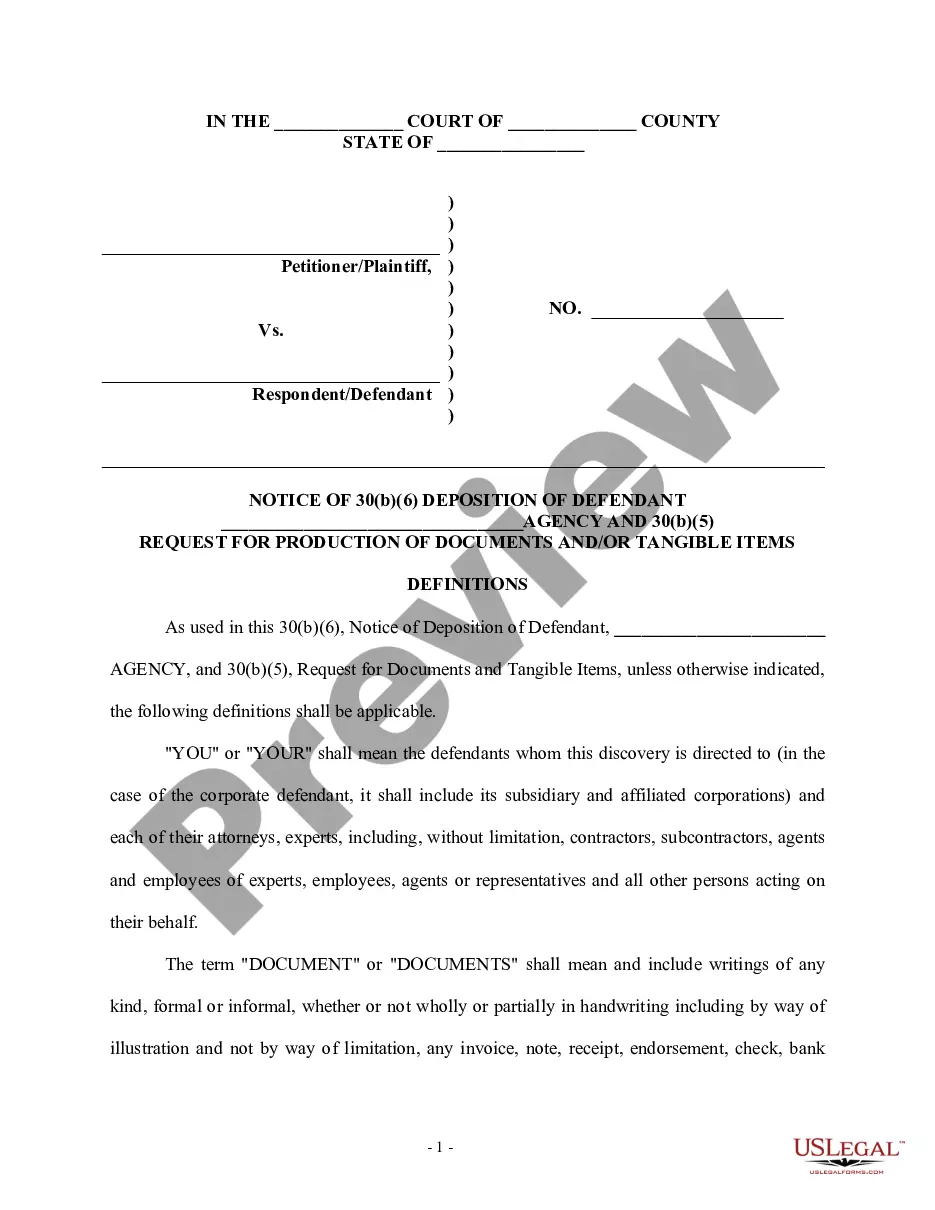
707(5) A notice or subpoena may name as the deponent a public or private corporation or a partnership or association or governmental agency and describe with reasonable particularity the matters on which examination is requested.
In ordering discovery of such materials when the required showing has been made, the court shall protect against disclosure of the mental impressions, conclusions, opinions, or legal theories of an attorney or other representative of a party concerning the litigation.
Parties may obtain discovery regarding any matter, not privileged, which is relevant to the subject matter involved in the pending action, whether it relates to the claim or defense of the party seeking discovery or to the claim or defense of any other party, including the existence, description, nature, custody, ...
Unless otherwise stipulated or ordered by the court, a deposition is limited to 1 day of 7 hours. The court must allow additional time consistent with Rule 26(b)(1) and (2) if needed to fairly examine the deponent or if the deponent, another person, or any other circumstance impedes or delays the examination.