Iowa Easement for City Sanitary Sewer Line Construction and Maintenance
What this document covers
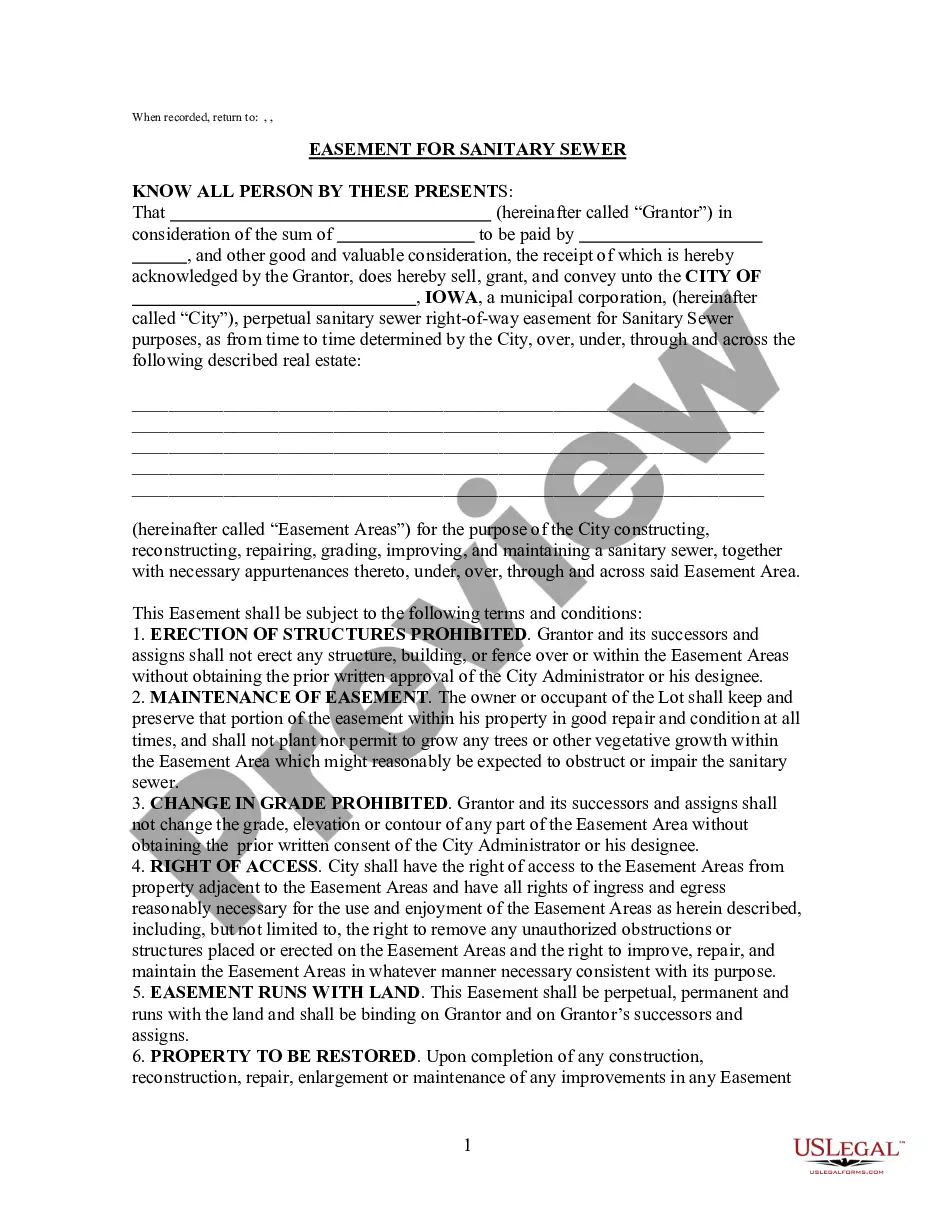
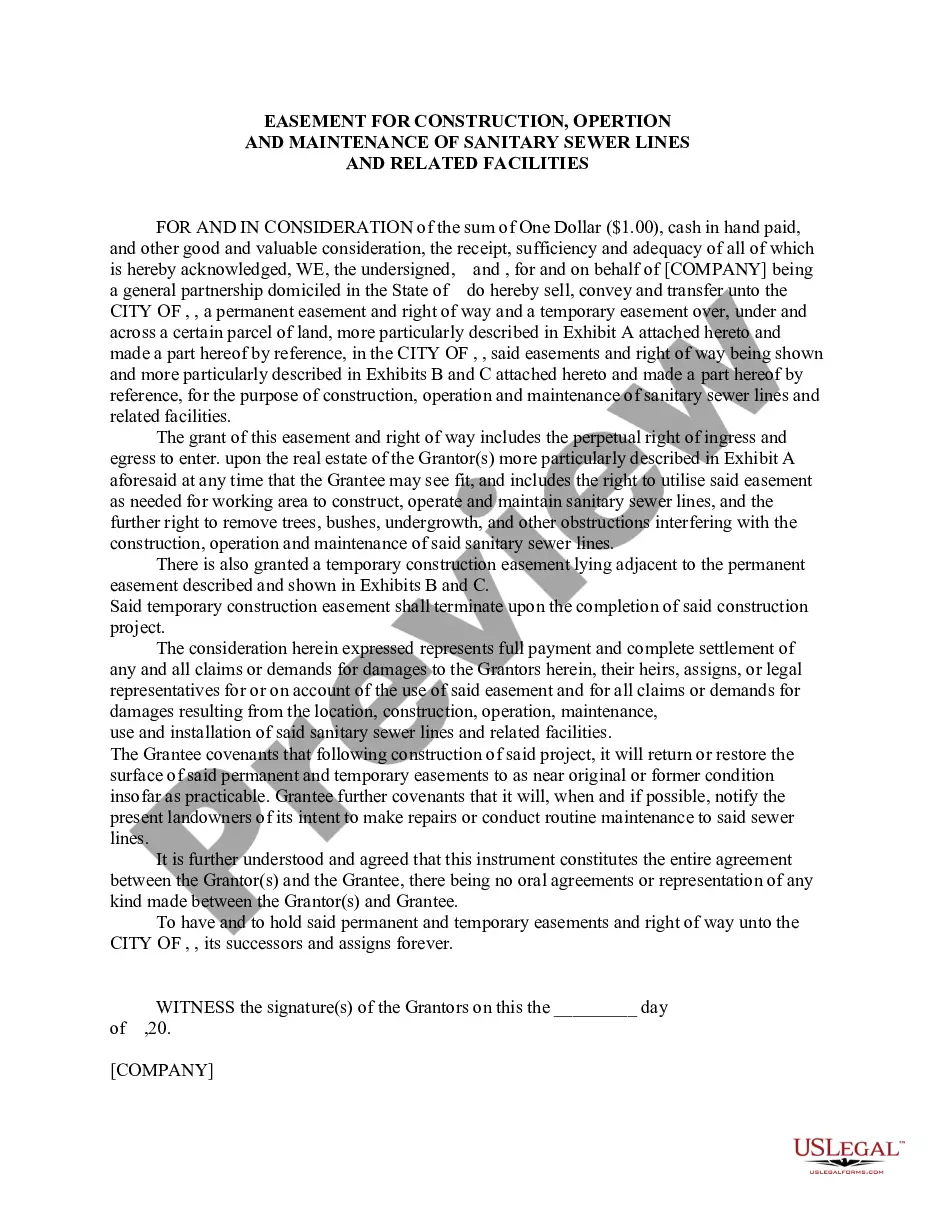
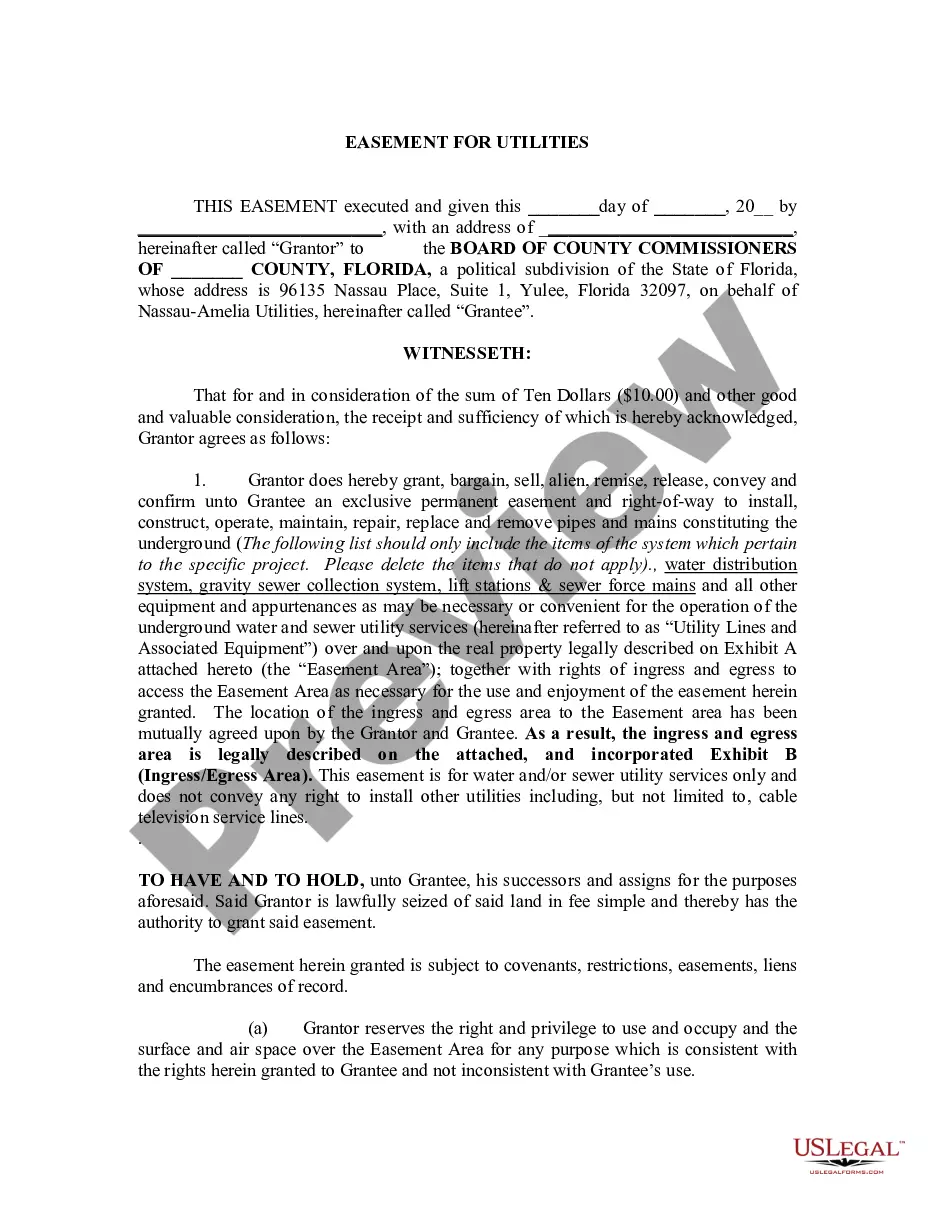
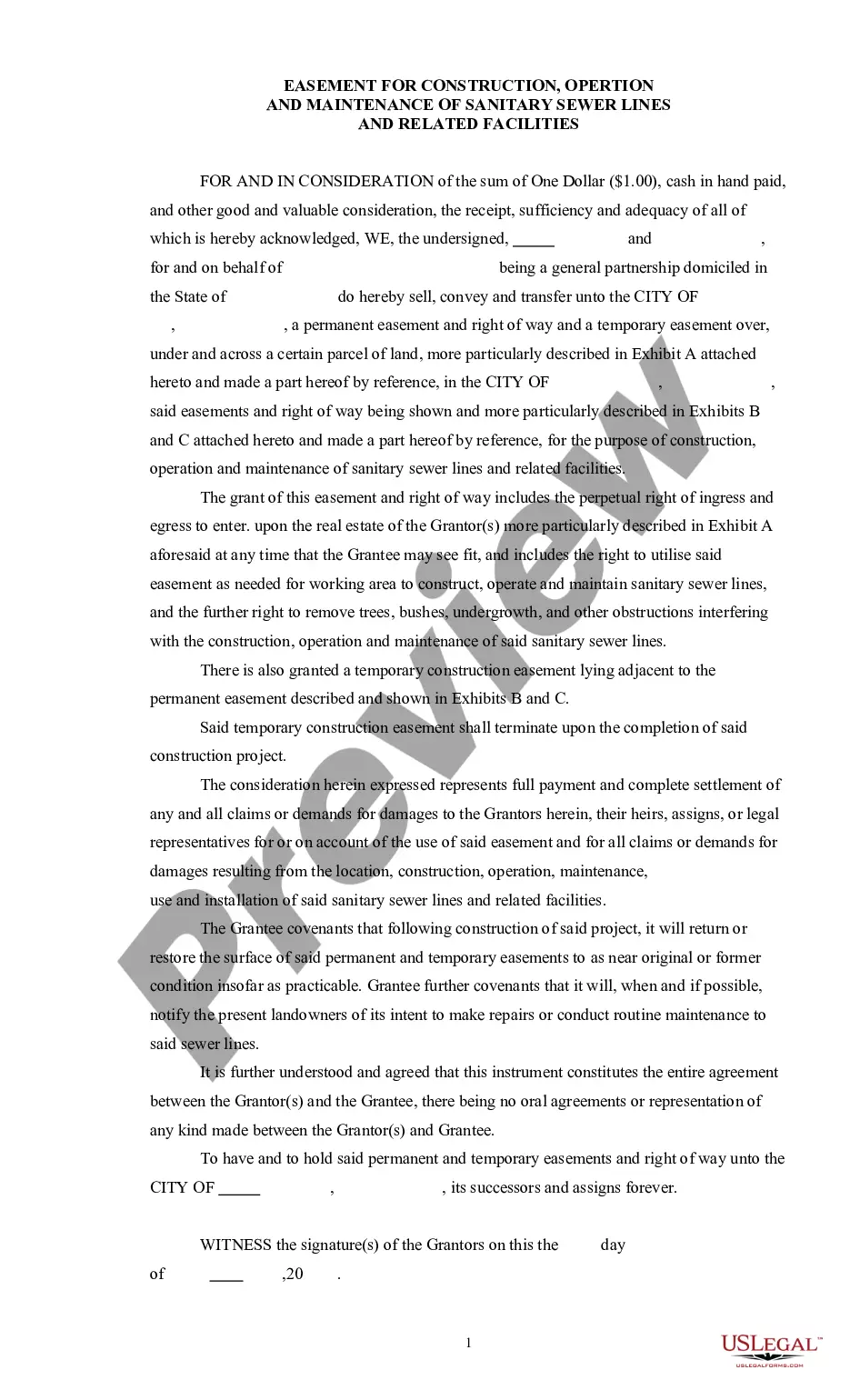
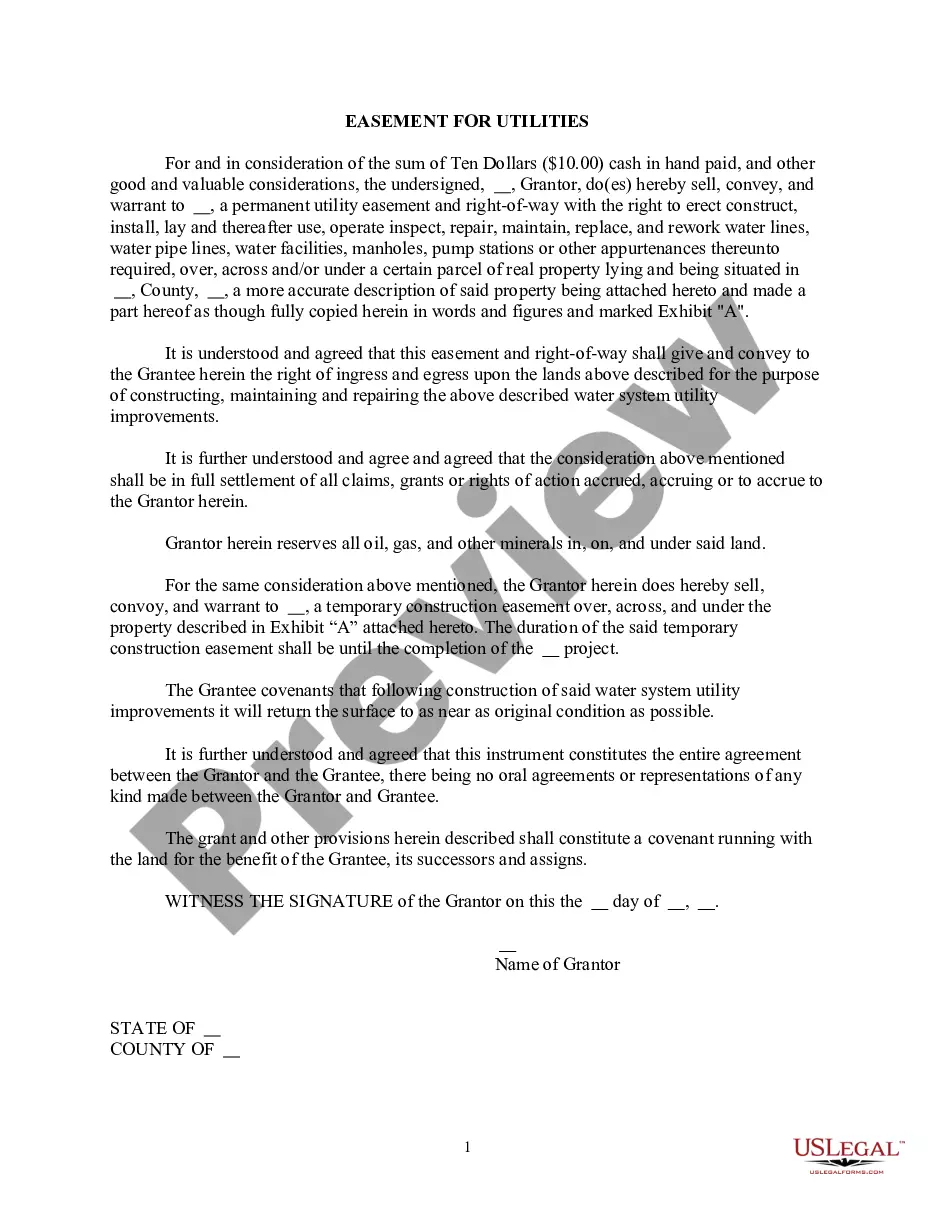
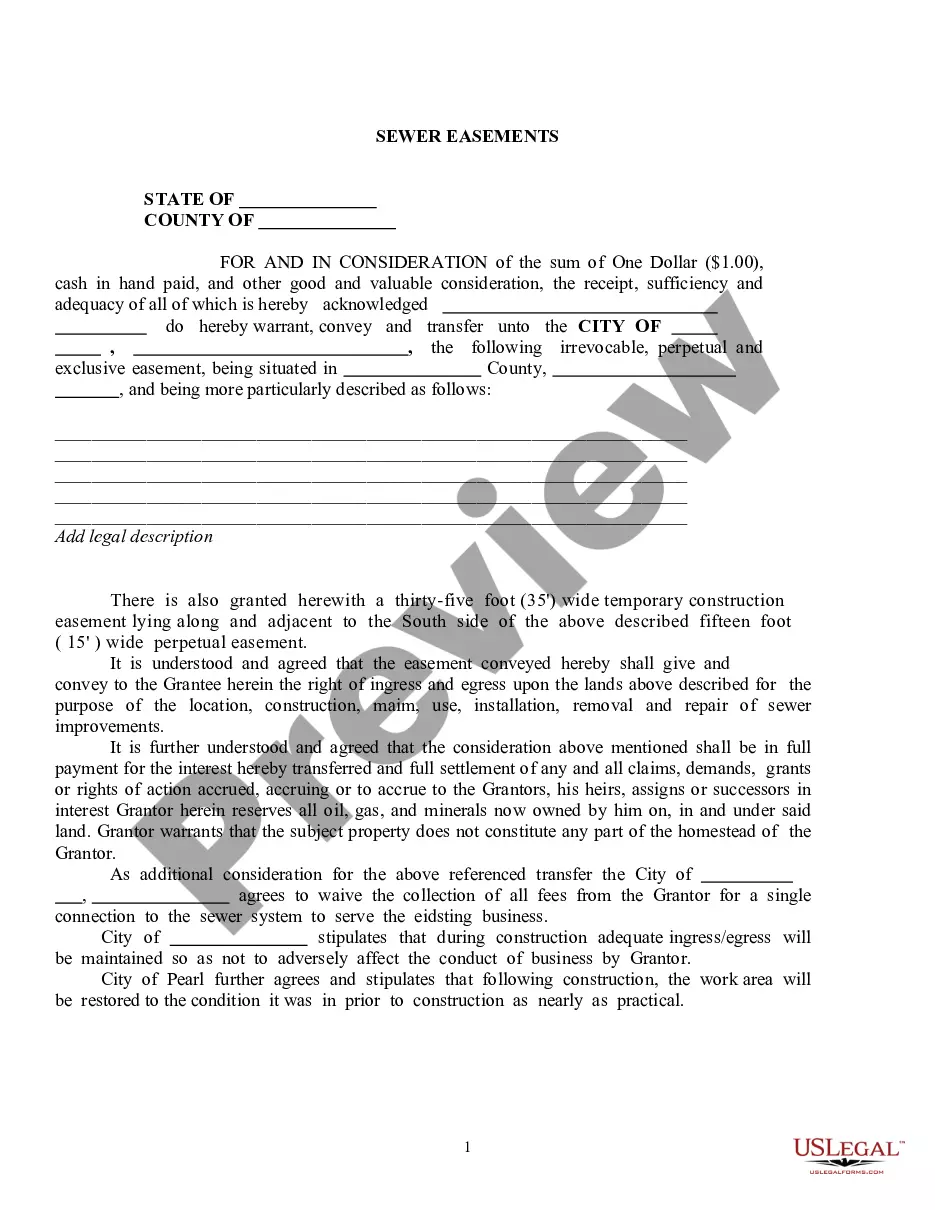
The Easement for City Sanitary Sewer Line Construction and Maintenance is a legal document that grants a city the right to access certain areas of private property to construct, repair, and maintain a sanitary sewer system. This easement is a crucial component for municipalities to ensure efficient sewage management and infrastructure development. Unlike other easements, this form specifically addresses the rights related to sanitary sewer operations and includes essential provisions for property owners regarding the use of the easement area.
Key components of this form
- Definitions of the easement area being granted.
- Restrictions on erecting structures within the easement area.
- Responsibilities for maintaining the easement by the property owner.
- Terms regarding access for city officials to the easement area.
- Conditions for restoring the easement area after any construction work.
- Legal assurances regarding the authority of the grantor to convey the easement.
When to use this document
This form should be used when a city plans to construct, reconstruct, or maintain a sanitary sewer line that requires access across private property. Property owners may be approached by the city to grant an easement, and this form serves to formalize the agreement, clearly outlining responsibilities and protections for both parties involved.
Who this form is for
- Municipalities seeking to establish rights over private property for sewer construction and maintenance.
- Property owners who agree to provide an easement for city utilities and wish to formalize the terms.
- Developers planning projects that require sewer access across different properties.
How to prepare this document
- Identify the parties involved, including the city and the property owner.
- Specify the easement areas clearly by providing property descriptions.
- Outline the rights granted to the city for maintenance and access.
- Include clauses covering the maintenance responsibilities of the property owner.
- Obtain the necessary signatures from both parties to execute the easement.
Does this document require notarization?
This form does not typically require notarization unless specified by local law. However, having the document notarized can provide additional legal verification.
Get your form ready online
Our built-in tools help you complete, sign, share, and store your documents in one place.
Make edits, fill in missing information, and update formatting in US Legal Forms—just like you would in MS Word.
Download a copy, print it, send it by email, or mail it via USPS—whatever works best for your next step.
Sign and collect signatures with our SignNow integration. Send to multiple recipients, set reminders, and more. Go Premium to unlock E-Sign.
If this form requires notarization, complete it online through a secure video call—no need to meet a notary in person or wait for an appointment.
We protect your documents and personal data by following strict security and privacy standards.

Make edits, fill in missing information, and update formatting in US Legal Forms—just like you would in MS Word.

Download a copy, print it, send it by email, or mail it via USPS—whatever works best for your next step.

Sign and collect signatures with our SignNow integration. Send to multiple recipients, set reminders, and more. Go Premium to unlock E-Sign.

If this form requires notarization, complete it online through a secure video call—no need to meet a notary in person or wait for an appointment.

We protect your documents and personal data by following strict security and privacy standards.
Typical mistakes to avoid
- Failing to clearly define the easement area, leading to future disputes.
- Not including clauses that outline maintenance responsibilities.
- Omitting to obtain the required signatures from all parties.
Benefits of using this form online
- Convenient access to legal templates that can be downloaded instantly.
- Editable documents that allow for customization to fit specific needs.
- Reliability of forms crafted by licensed attorneys, ensuring legal validity.
Looking for another form?
Form popularity
FAQ
To obtain an easement in Iowa, you generally need to negotiate with the property owner or the entity seeking access. It involves obtaining proper documentation, ensuring the easement is clear and legal. Utilizing resources like US Legal Forms can aid in creating the necessary agreements for Iowa easement for city sanitary sewer line construction and maintenance.
Maintenance responsibility for an easement road often lies with the entity that owns or utilizes the easement. In the case of an easement for city sewer lines, the city might be responsible for upkeep. Ensuring clarity on roles outlined in the Iowa Easement for City Sanitary Sewer Line Construction and Maintenance will help prevent disputes regarding maintenance obligations.
Generally, a property owner cannot block an established easement without facing potential legal consequences. Blocking access can be seen as infringement of the easement rights granted for uses like city sanitary sewer line maintenance. It is wise to refer to the Iowa Easement for City Sanitary Sewer Line Construction and Maintenance to understand your rights and the limitations imposed by existing easements.
Easements in Iowa are legal rights allowing one party to use another party's land for a specific purpose, such as for a city sanitary sewer line. They grant access without transferring ownership, ensuring both land use and property rights are respected. Familiarizing yourself with the Iowa Easement for City Sanitary Sewer Line Construction and Maintenance is crucial to navigating and understanding these rights effectively.
Liability on an easement can depend on various factors, including ownership and maintenance responsibilities. Generally, the party maintaining the easement, such as the city in the case of a sanitary sewer line, may be held liable if injuries occur due to negligence. Understanding the specific terms of the Iowa Easement for City Sanitary Sewer Line Construction and Maintenance can clarify liability concerns and help prevent potential legal issues.
In Iowa, the maintenance of an easement typically falls to the party that benefits from it. This means that if the easement is for a city sanitary sewer line, the city usually holds the responsibility for upkeep. It's essential for property owners to understand their rights and obligations concerning the Iowa Easement for City Sanitary Sewer Line Construction and Maintenance to ensure proper maintenance practices are followed.
Who maintains the property subject to an easement or right-of-way? Maintenance of the property is the responsibility of the landowner. If the holder of the easement or right-of-way causes any damage, they must restore the property to the original condition or pay damages.
The party gaining the benefit of the easement is the dominant estate (or dominant tenement), while the party granting the benefit or suffering the burden is the servient estate (or servient tenement). For example, the owner of parcel A holds an easement to use a driveway on parcel B to gain access to A's house.
Probably the most commonly used easement is one that allows the underground services (water, drainage, gas, electricity, telephone and TV cables, etc) of one property to pass beneath the land of one or more neighbouring properties. Perhaps the most widely known easement is the private right of way.
Basically, the person or party using an easement, known as an easement holder, has a duty to maintain it. Easement holders don't become owners of the land attached to their easements, though, and within limits the actual landowners retain most rights over it.