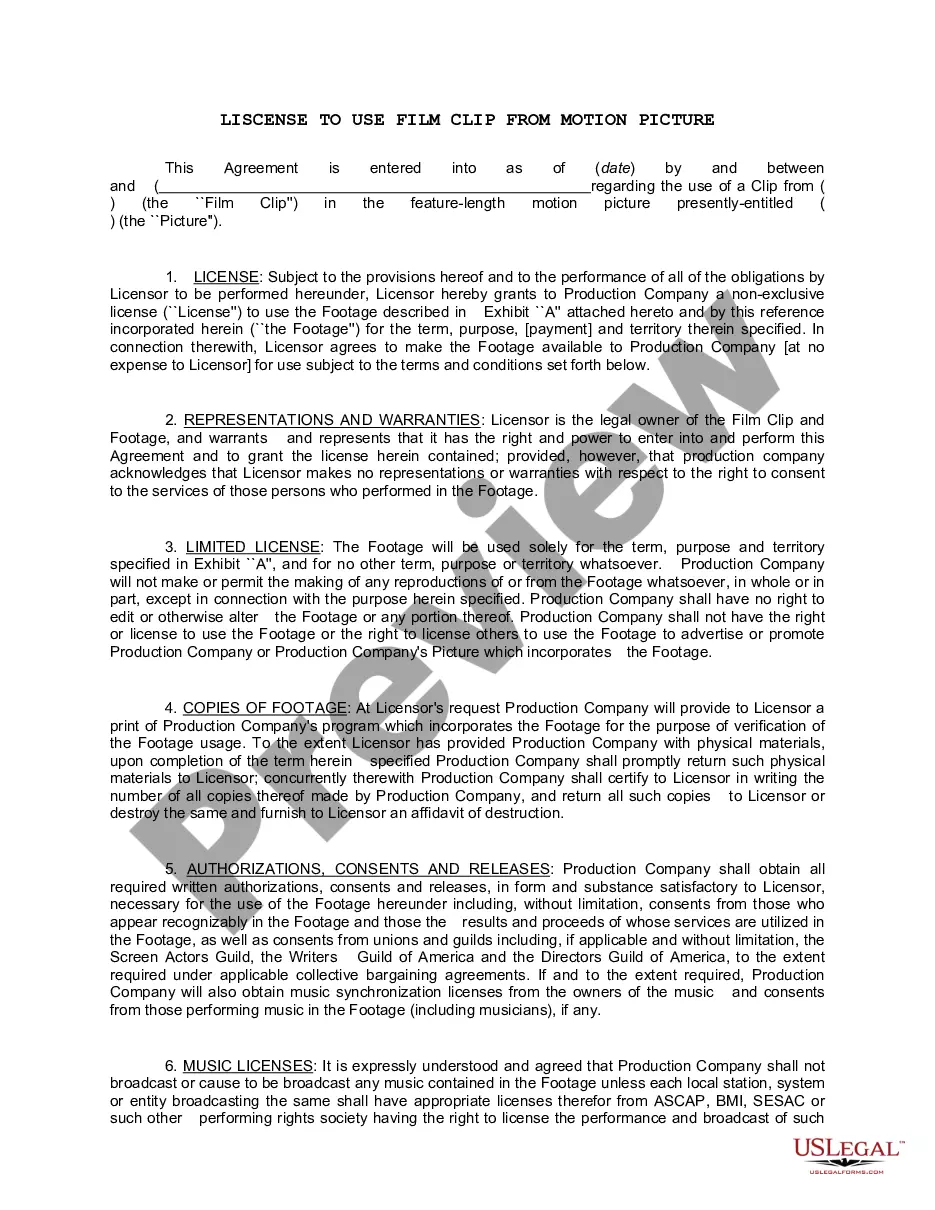
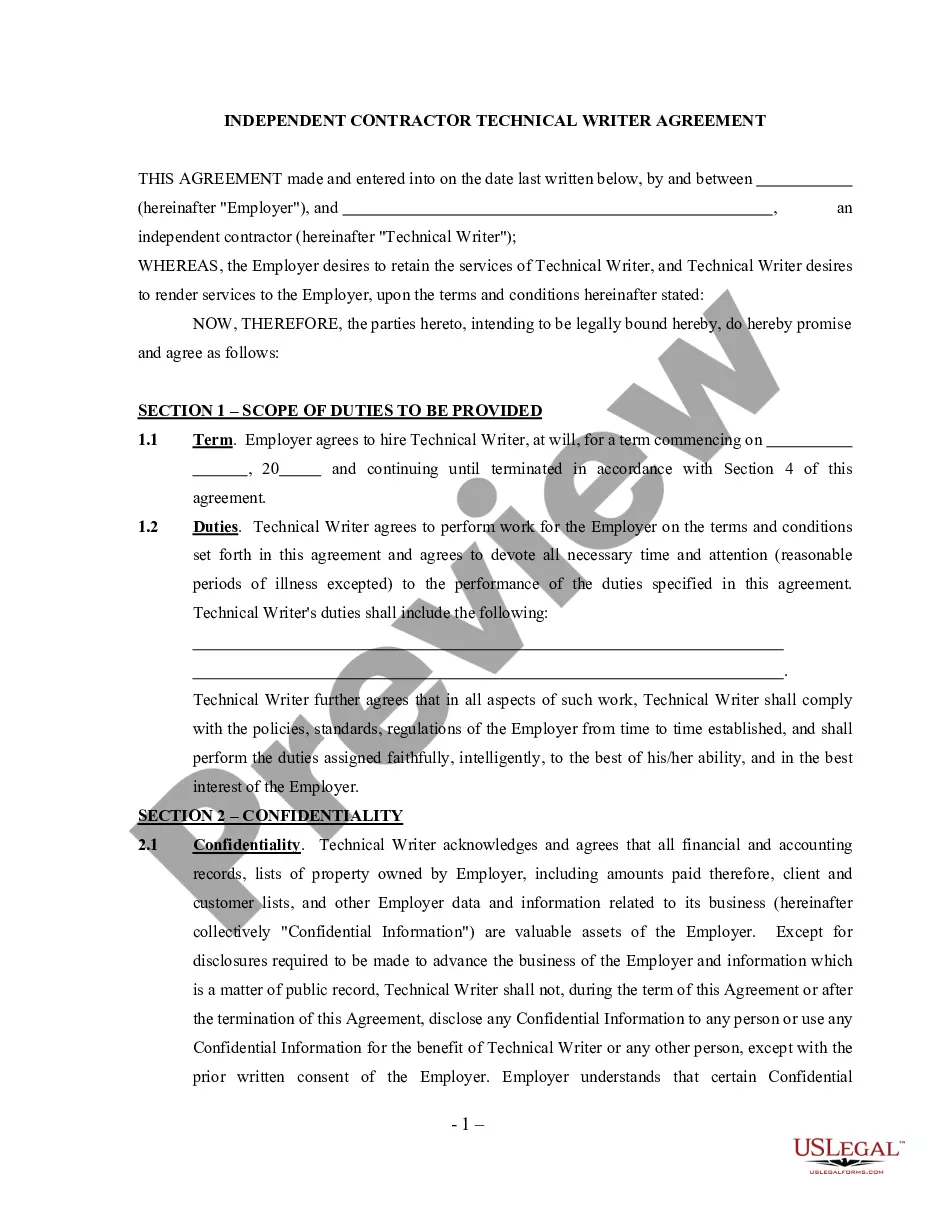
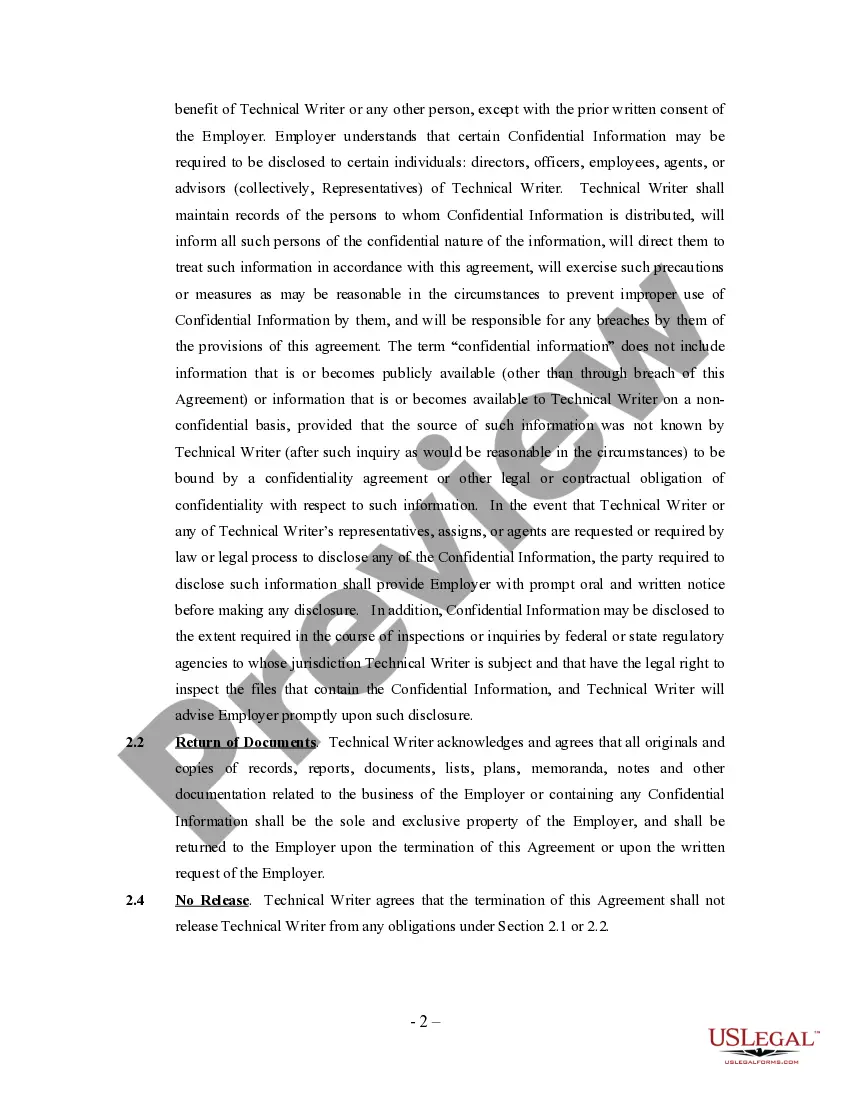
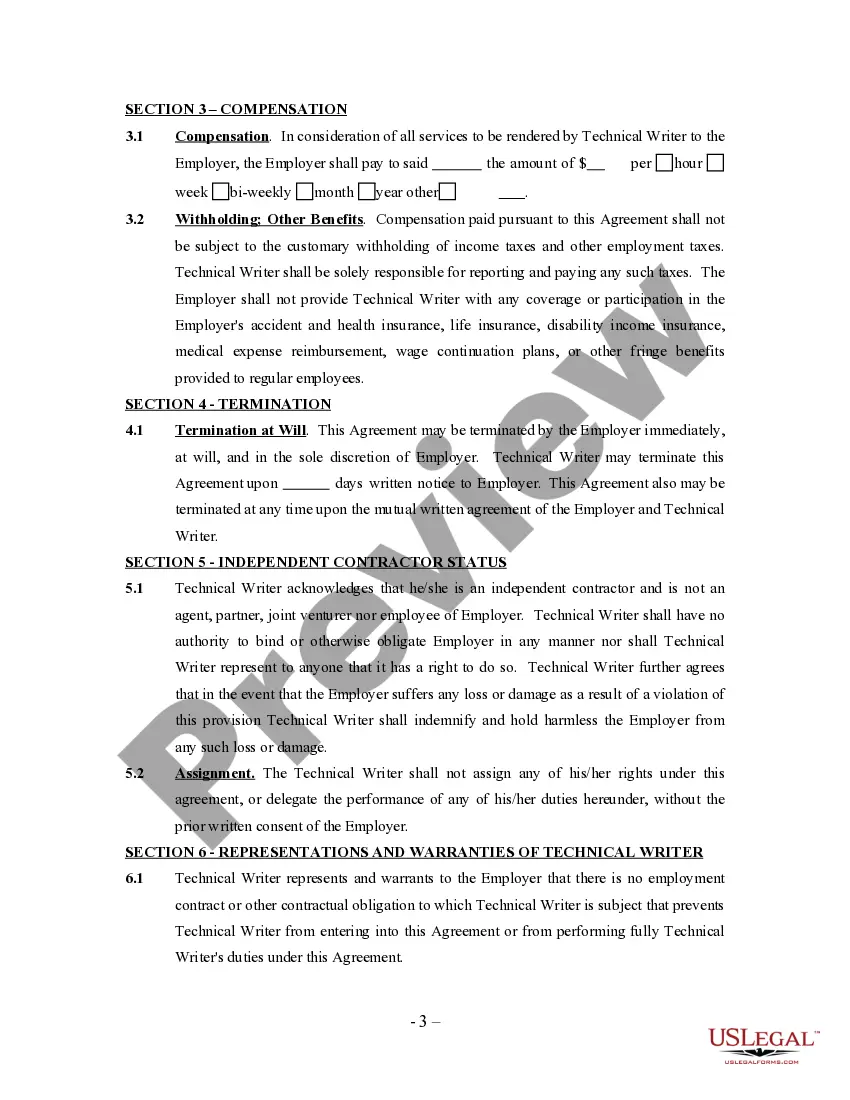
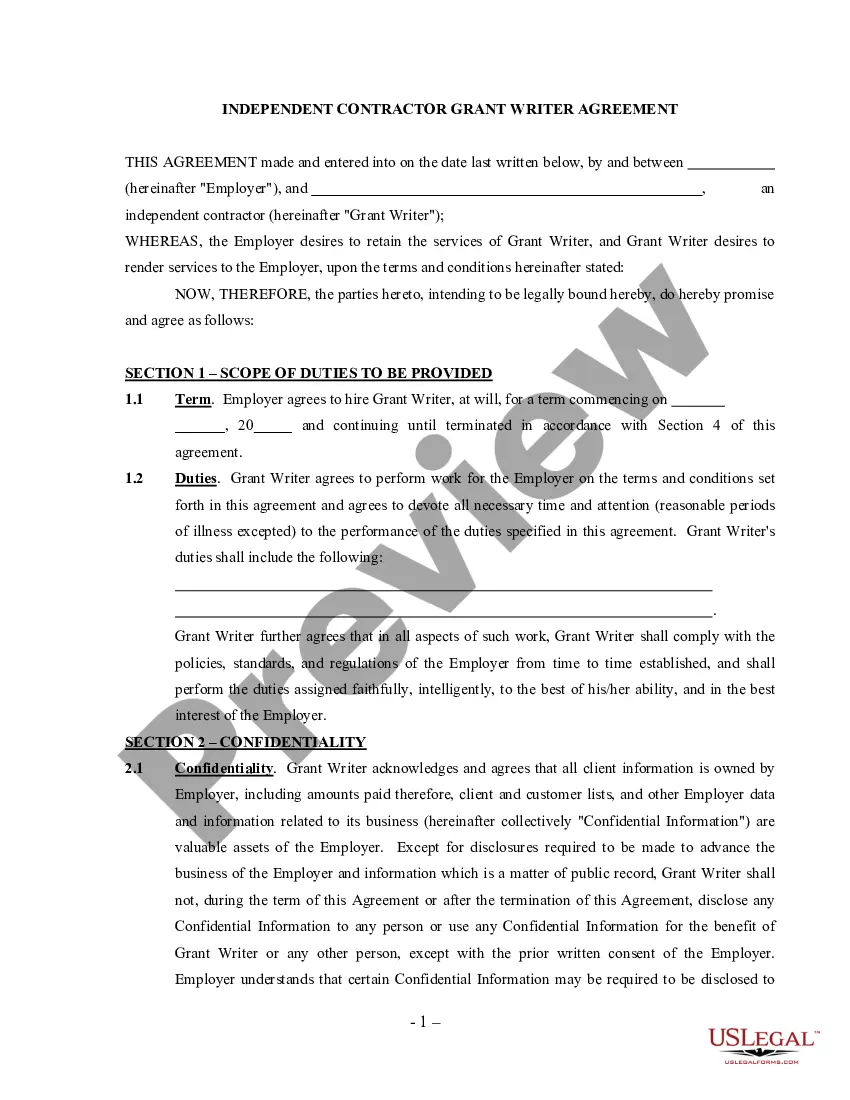
Employer hires a technical writer as an independent contractor as specified in the Agreement. Contract includes a confidentiality clause.
Hawaii Technical Writer Agreement - Self-Employed Independent Contractor
State:
Multi-State
Control #:
US-INDC-193
Format:
Word;
Rich Text
Instant download
Description
Free preview
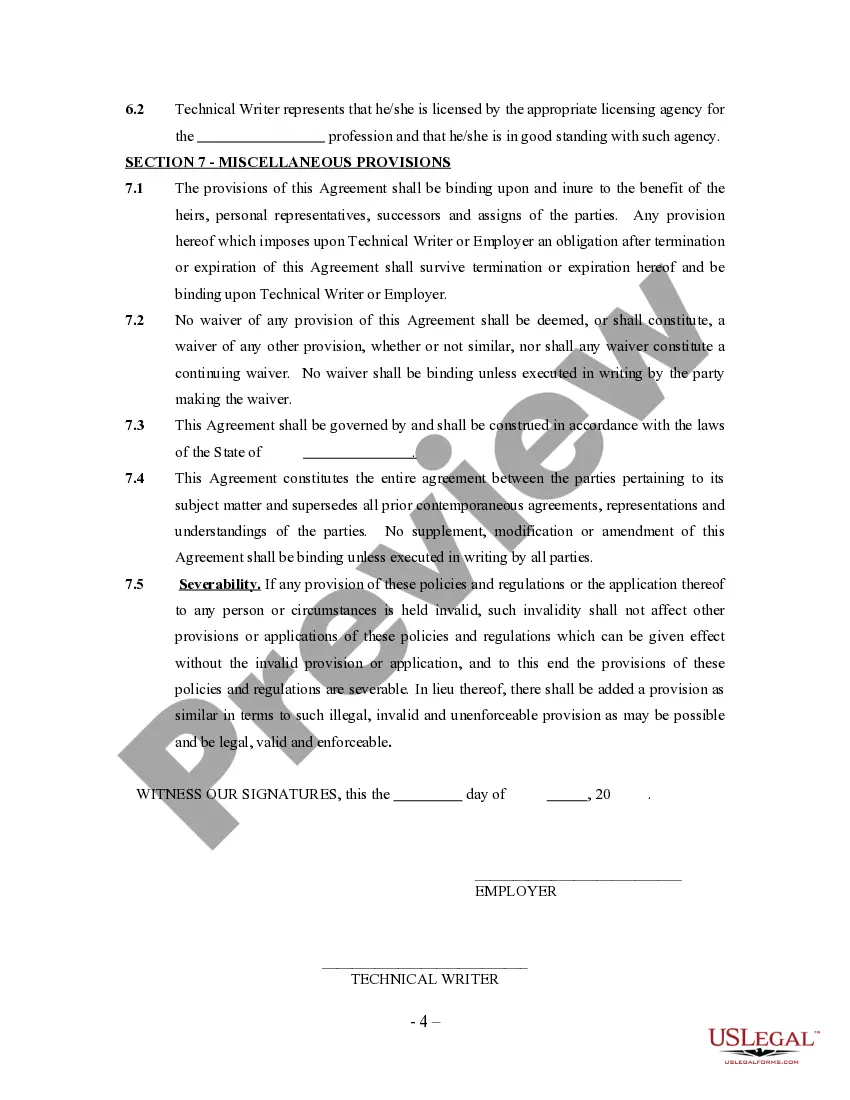
Get your form ready online
Our built-in tools help you complete, sign, share, and store your documents in one place.
Built-in online Word editor
Make edits, fill in missing information, and update formatting in US Legal Forms—just like you would in MS Word.
Export easily
Download a copy, print it, send it by email, or mail it via USPS—whatever works best for your next step.
E-sign your document
Sign and collect signatures with our SignNow integration. Send to multiple recipients, set reminders, and more. Go Premium to unlock E-Sign.
Notarize online 24/7
If this form requires notarization, complete it online through a secure video call—no need to meet a notary in person or wait for an appointment.
Store your document securely
We protect your documents and personal data by following strict security and privacy standards.

Make edits, fill in missing information, and update formatting in US Legal Forms—just like you would in MS Word.

Download a copy, print it, send it by email, or mail it via USPS—whatever works best for your next step.

Sign and collect signatures with our SignNow integration. Send to multiple recipients, set reminders, and more. Go Premium to unlock E-Sign.

If this form requires notarization, complete it online through a secure video call—no need to meet a notary in person or wait for an appointment.

We protect your documents and personal data by following strict security and privacy standards.
Looking for another form?





How to fill out Technical Writer Agreement - Self-Employed Independent Contractor?
Selecting the top authentic document template can be a challenge. Obviously, there are numerous templates accessible online, but how can you find the genuine version you need? Utilize the US Legal Forms website. This service offers a vast array of templates, including the Hawaii Technical Writer Agreement - Self-Employed Independent Contractor, which you can use for business and personal purposes. All of the documents are reviewed by experts and comply with state and federal regulations.
If you are already registered, Log In to your account and click the Download button to access the Hawaii Technical Writer Agreement - Self-Employed Independent Contractor. Use your account to browse through the legal documents you have previously obtained. Visit the My documents section of your account to retrieve another copy of the document you need.
If you are a new user of US Legal Forms, here are simple instructions for you to follow: First, make sure you have chosen the correct form for your city/state. You can review the form using the Preview feature and read the form description to ensure it is right for you. If the form does not meet your requirements, use the Search box to find the correct form. Once you are confident the form is suitable, click on the Buy now button to acquire the form. Select the pricing plan you prefer and enter the necessary information. Create your account and complete the transaction using your PayPal account or credit card. Choose the file format and download the legal document template to your device. Complete, modify, print, and sign the finalized Hawaii Technical Writer Agreement - Self-Employed Independent Contractor.
Using US Legal Forms, you can easily navigate through a variety of legal forms and templates to meet your needs.
- US Legal Forms is the largest repository of legal documents where you can find numerous document templates.
- Utilize the service to obtain professionally crafted papers that adhere to state regulations.
- Ensure all details are accurately filled in before finalizing your purchase.
- Review your options thoroughly to avoid any errors.
- Keep track of the documents you download for future reference.
- Feel free to reach out to customer support for assistance if needed.
Form popularity
FAQ
Freelance work and independent contracting often overlap, but there are distinctions. Freelancers typically work on a project-by-project basis for various clients, which aligns with the definition of an independent contractor. However, independent contractors may have more formal agreements, such as the Hawaii Technical Writer Agreement - Self-Employed Independent Contractor, outlining specific terms. Understanding these nuances can help you choose the best path for your business.
Writing an independent contractor agreement involves including essential information like scope of work, payment terms, and deadlines. You can start by clearly defining the services to be provided under the Hawaii Technical Writer Agreement - Self-Employed Independent Contractor, ensuring both parties understand their obligations. It's also wise to cover confidentiality and dispute resolution methods to protect your interests. Utilizing templates from uslegalforms can simplify this process, making it easier to create a tailored agreement.
Freelance writers do not necessarily need an LLC, but forming one can offer benefits like liability protection. An LLC can separate your personal assets from your business, which is advantageous if you are pursuing projects under agreements like the Hawaii Technical Writer Agreement - Self-Employed Independent Contractor. Additionally, having an LLC may enhance your professionalism and credibility in the eyes of clients. Ultimately, whether you need an LLC depends on your personal business goals and the level of risk you're willing to accept.
Yes, an independent contractor is indeed considered self-employed. As an independent contractor, you operate your own business, providing services to clients without the usual employment benefits. This is particularly relevant when discussing documents like the Hawaii Technical Writer Agreement - Self-Employed Independent Contractor, which clearly outlines your responsibilities and rights. Therefore, recognizing your status can help you manage taxes and business obligations more effectively.
Yes, a freelance writer operates as an independent contractor. This means they work for various clients and are responsible for their business expenses and taxes. By doing so, they maintain flexibility and autonomy in their work. If you are a freelance writer, consider formalizing your arrangements with a Hawaii Technical Writer Agreement - Self-Employed Independent Contractor for better clarity.
Yes, independent contractors typically file as self-employed. This means they report their income on Schedule C when filing their personal tax returns. It is important to keep accurate records of all income and expenses to ensure compliance. Understanding this process helps independent contractors, particularly those focusing on a Hawaii Technical Writer Agreement - Self-Employed Independent Contractor.
Filling out an independent contractor agreement starts by providing your full name and the client’s details. Next, describe the work you will perform and specify compensation terms. Don’t forget to include timelines and any confidentiality agreements, safeguarding both parties' interests. This structured approach aligns well with the requirements of a Hawaii Technical Writer Agreement - Self-Employed Independent Contractor.
Writing an independent contractor agreement involves outlining key details such as the scope of work, payment terms, and duration of the contract. Be clear about the rights and responsibilities of both parties to avoid future misunderstandings. You can utilize templates available on platforms like US Legal Forms to create a well-structured Hawaii Technical Writer Agreement - Self-Employed Independent Contractor.
To fill out an independent contractor form, first gather the necessary information such as your name, business name, and address. Next, input details like your tax identification number and the services you will provide. Finally, review the form carefully to ensure accuracy, and include your signature where indicated. An effective Illinois Technical Writer Agreement - Self-Employed Independent Contractor can streamline this process.
To provide proof of employment as an independent contractor, you can share documents such as your signed Hawaii Technical Writer Agreement - Self-Employed Independent Contractor, invoices sent to your clients, or payment receipts. These documents demonstrate your work history and agreement with clients. Additionally, you can ask clients for a letter of recommendation that outlines your role and contributions. Having these materials ready can effectively validate your independent contractor status.