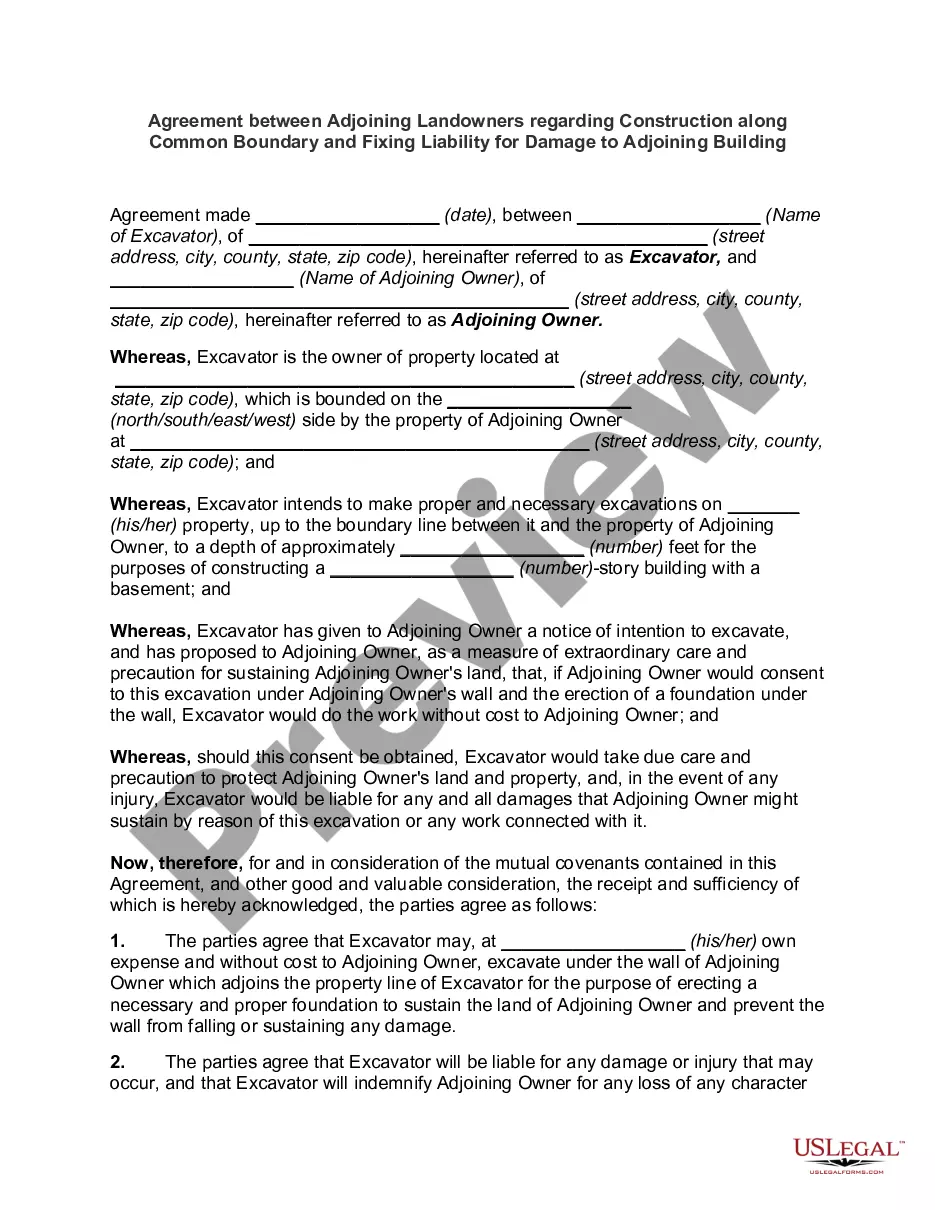
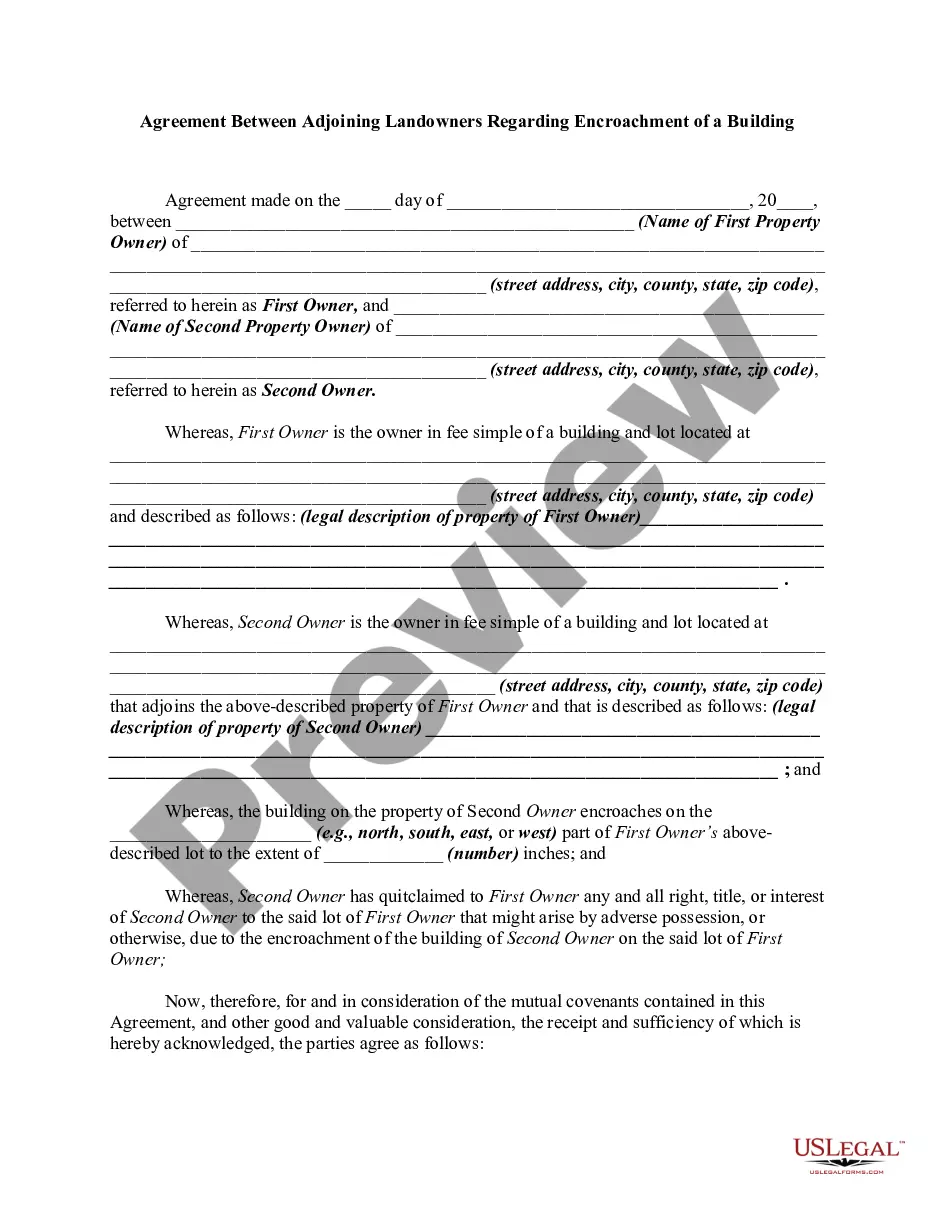
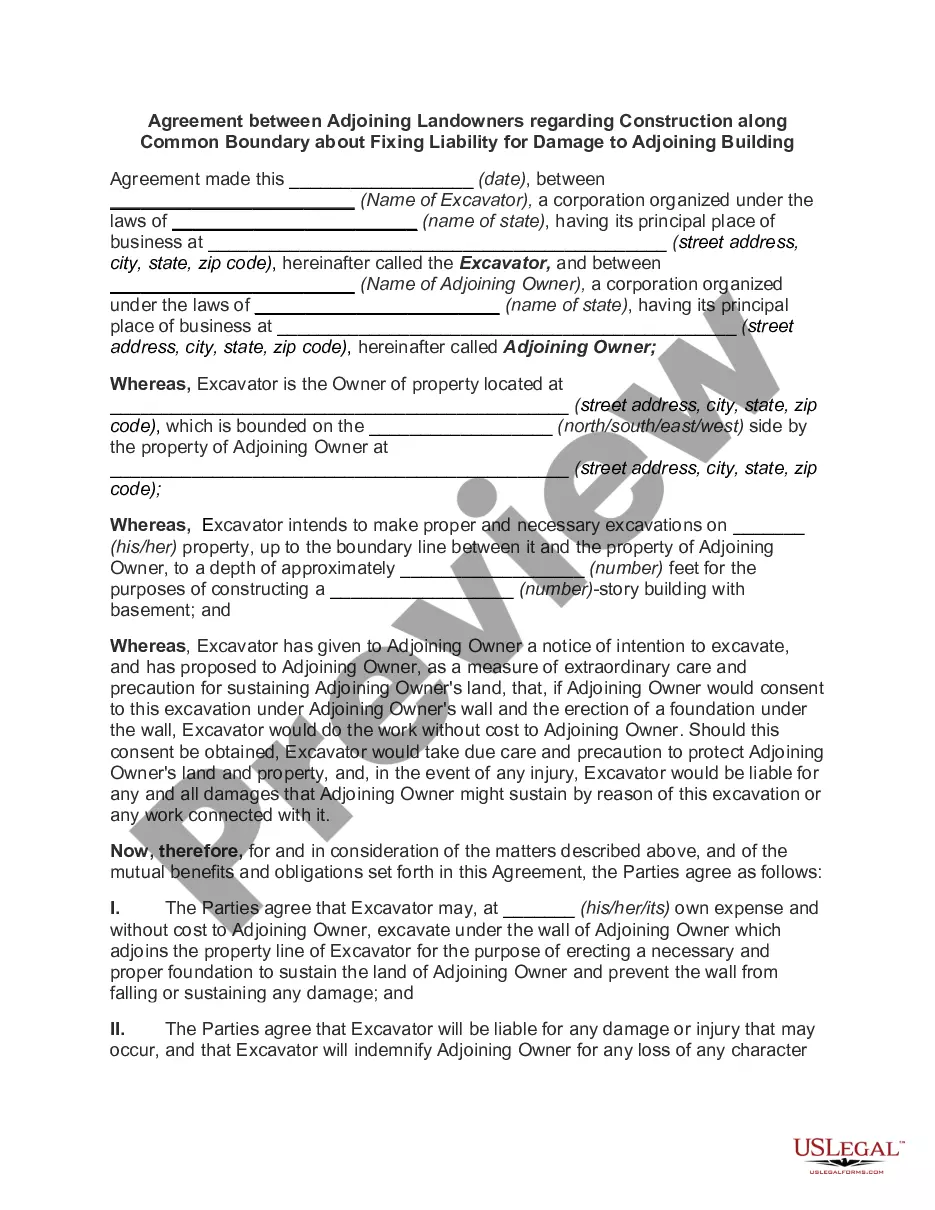
Hawaii Agreement between Adjoining Landowners Regarding Construction along Common Boundary and Fixing Liability for Damage
Description
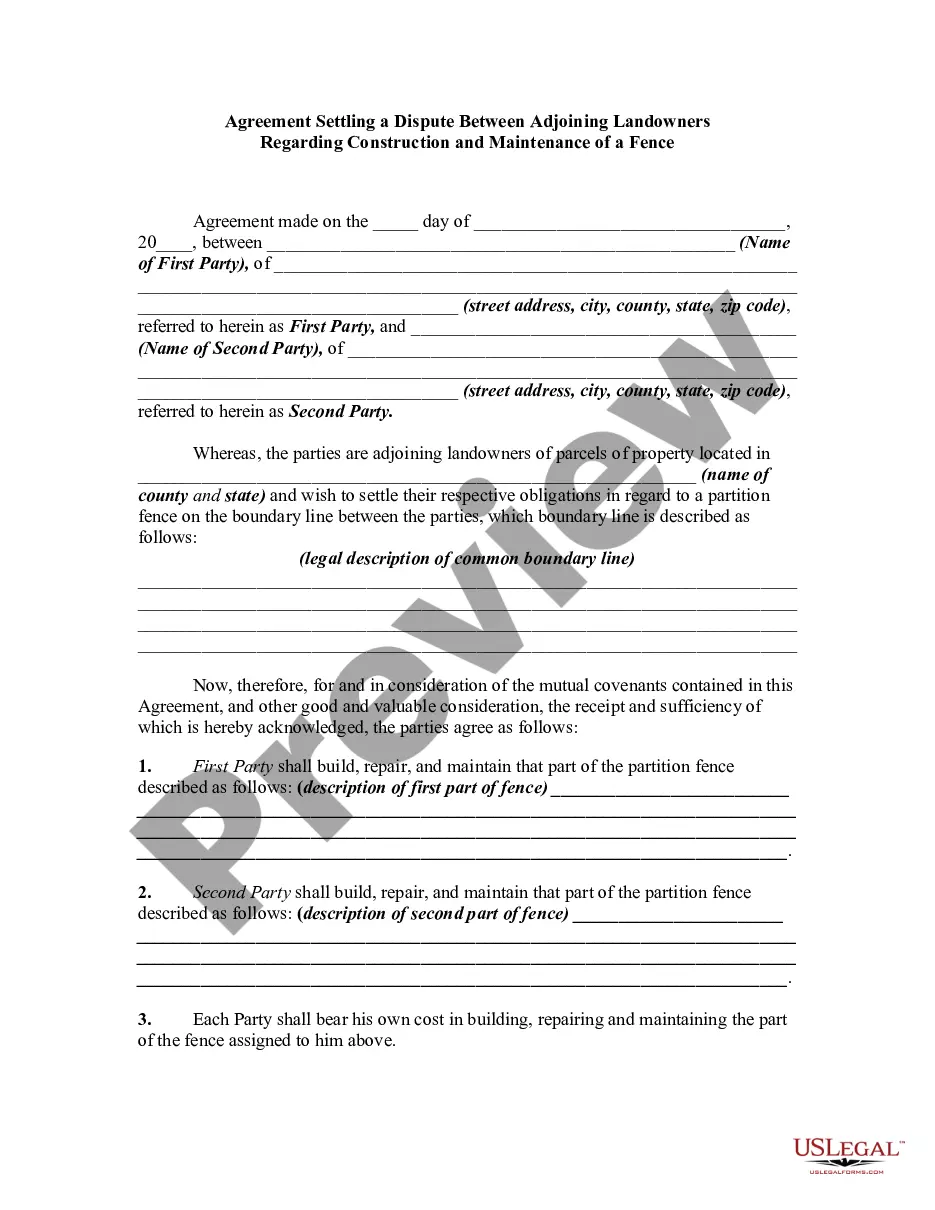
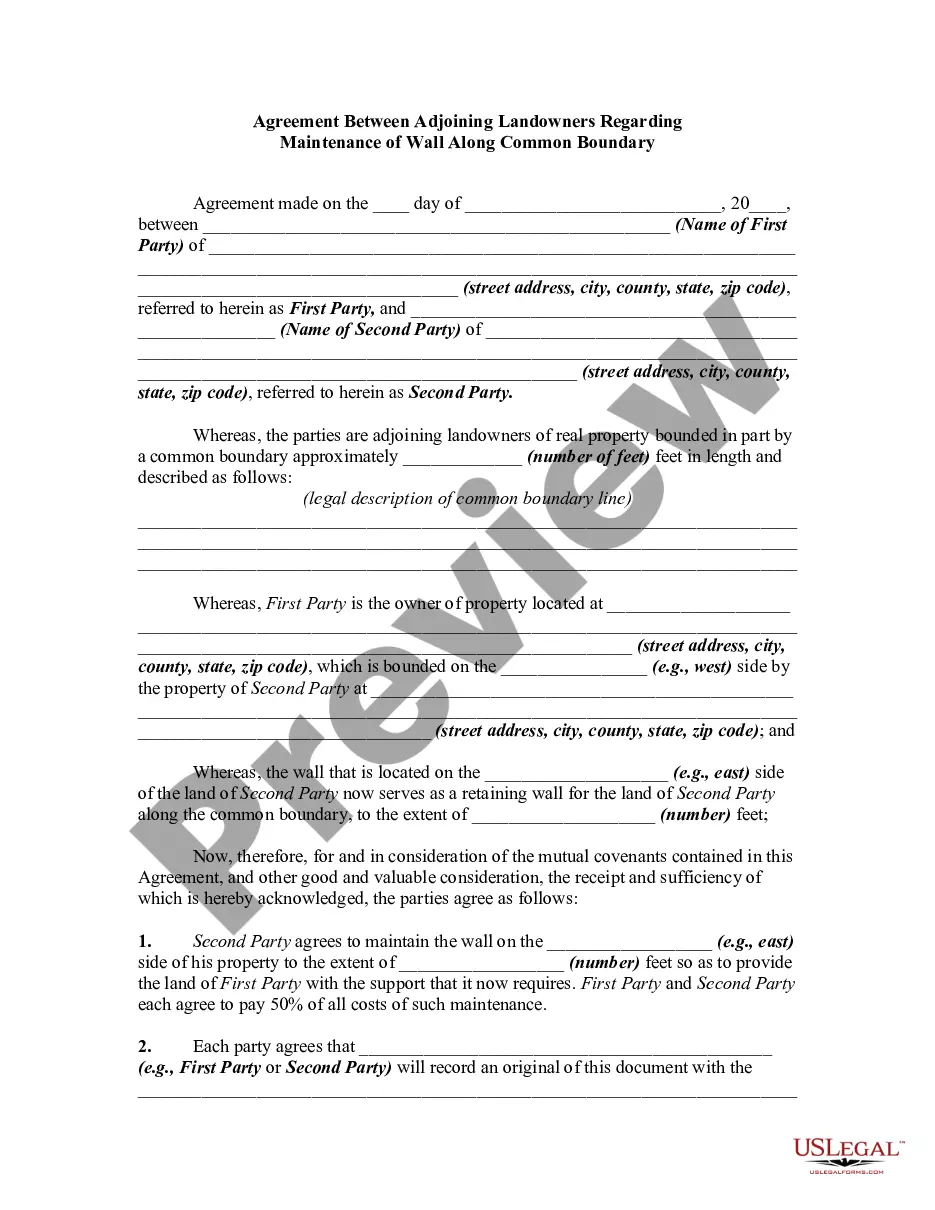
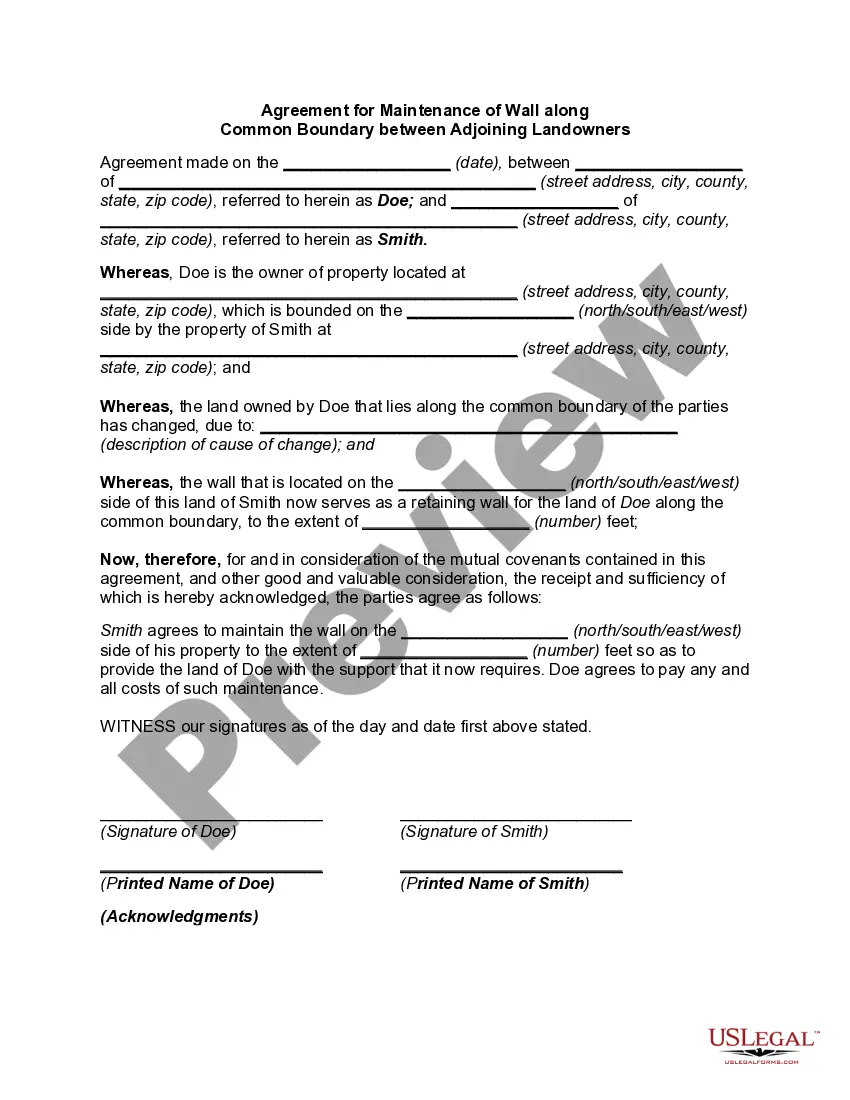
Get your form ready online
Our built-in tools help you complete, sign, share, and store your documents in one place.
Make edits, fill in missing information, and update formatting in US Legal Forms—just like you would in MS Word.
Download a copy, print it, send it by email, or mail it via USPS—whatever works best for your next step.
Sign and collect signatures with our SignNow integration. Send to multiple recipients, set reminders, and more. Go Premium to unlock E-Sign.
If this form requires notarization, complete it online through a secure video call—no need to meet a notary in person or wait for an appointment.
We protect your documents and personal data by following strict security and privacy standards.

Make edits, fill in missing information, and update formatting in US Legal Forms—just like you would in MS Word.

Download a copy, print it, send it by email, or mail it via USPS—whatever works best for your next step.

Sign and collect signatures with our SignNow integration. Send to multiple recipients, set reminders, and more. Go Premium to unlock E-Sign.

If this form requires notarization, complete it online through a secure video call—no need to meet a notary in person or wait for an appointment.

We protect your documents and personal data by following strict security and privacy standards.
Looking for another form?
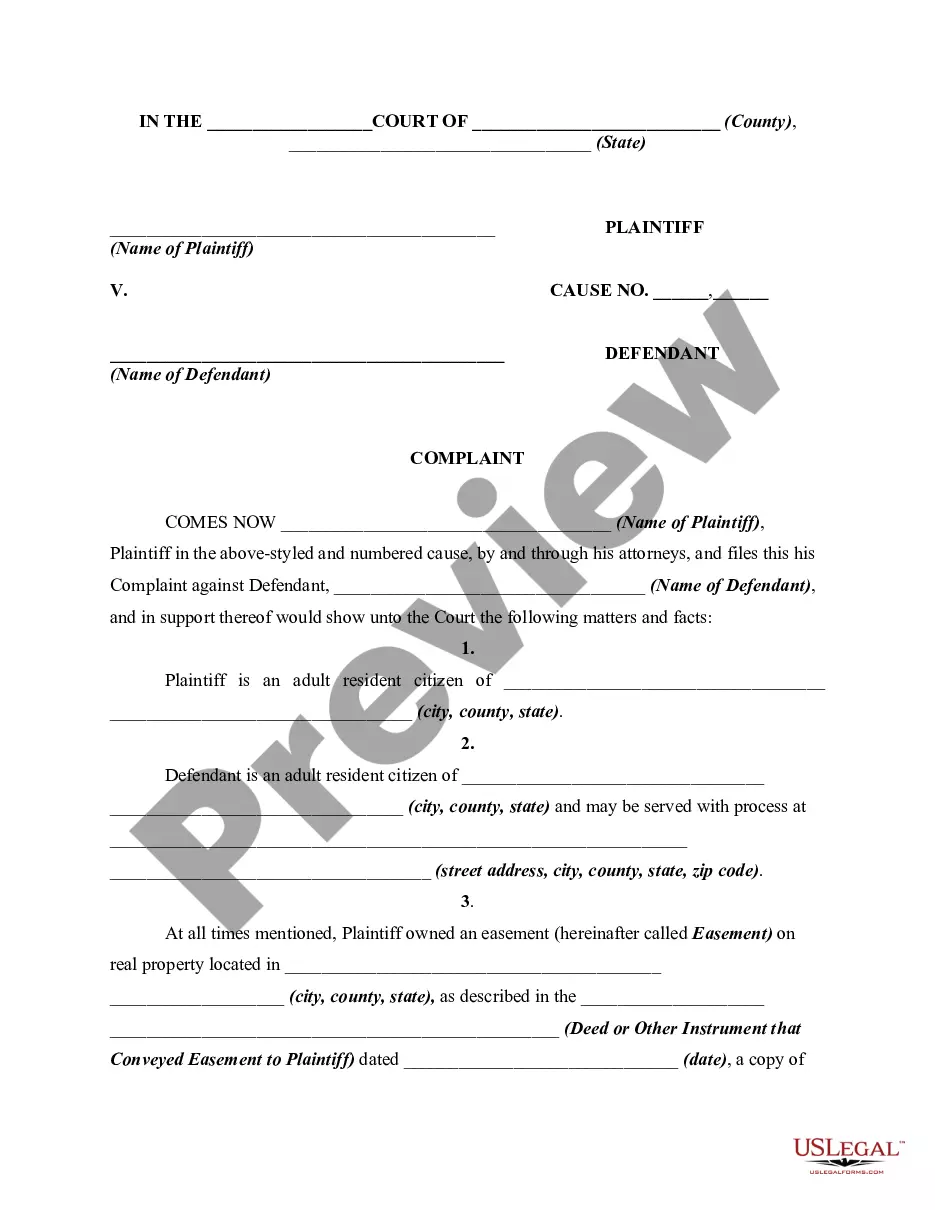
How to fill out Agreement Between Adjoining Landowners Regarding Construction Along Common Boundary And Fixing Liability For Damage?
You might spend countless hours online attempting to locate the legal document template that satisfies the federal and state requirements you need.
US Legal Forms offers thousands of legal documents that are reviewed by experts.
You can conveniently download or print the Hawaii Agreement between Neighboring Landowners Regarding Construction along Shared Boundary and Determining Liability for Damage from the service.
First, ensure that you have selected the appropriate document template for the state/city of your choice.
- If you already possess a US Legal Forms account, you can Log In and press the Obtain button.
- After that, you can complete, modify, print, or sign the Hawaii Agreement between Neighboring Landowners Regarding Construction along Shared Boundary and Determining Liability for Damage.
- Every legal document template you acquire is yours permanently.
- To obtain another copy of the purchased form, go to the My documents section and click on the corresponding button.
- If you are visiting the US Legal Forms website for the first time, follow the simple guidelines outlined below.
Form popularity
FAQ
The right of a landowner to have his buildings supported by his neighbour's house or other structure.
The building distance limit depends on the structure you intend on building. It usually ranges between five to 15 feet. It is important to communicate property boundaries with your neighbor before beginning any permanent or semi-permanent projects, due to the risk of township or county penalties.
In most cases, if you add an outdoor structure such as a fence, you need a permit. However, it specifically depends on the codes, zoning and regulations of where you live. In some cases, you may not need a permit but you must adhere to the local regulations regarding height limits and specific fence materials.
How Close To The Property Line Can I Build? Fences are typically built between 2 and 8 inches from the line between properties. Some areas will allow the building of fences directly on the property line, but in this case, you'll have to cooperate with your neighbor and potentially share the cost of the fence.
Building a Fence on a Boundary Line In most areas, fences can be installed between 2-8 inches from the boundary line. However, some areas may allow you to build right up to the property line. Make sure you contact your local council to find out what applies to your area.
Write the LetterDescribe the violation.Explain that you are giving the neighbor notice that she needs to remove the encroaching structure.If relevant, mention other solutions such as selling the land or giving the neighbor permission to use the encroached-upon area.More items...?
The exact amount a building needs to be set back from the property line will vary from one location to another. However, the required setback on the side is typically between 5 10 feet, while the front and back require around 10 20 feet at a minimum.
How Close To The Property Line Can I Build? Fences are typically built between 2 and 8 inches from the line between properties. Some areas will allow the building of fences directly on the property line, but in this case, you'll have to cooperate with your neighbor and potentially share the cost of the fence.
For commercial, industrial, and multi-unit residential property - 0.25 feet. For all other residential property - 0.5 feet. For agricultural and rural property - 0.75 feet. For conservation property - 1.5 feet.