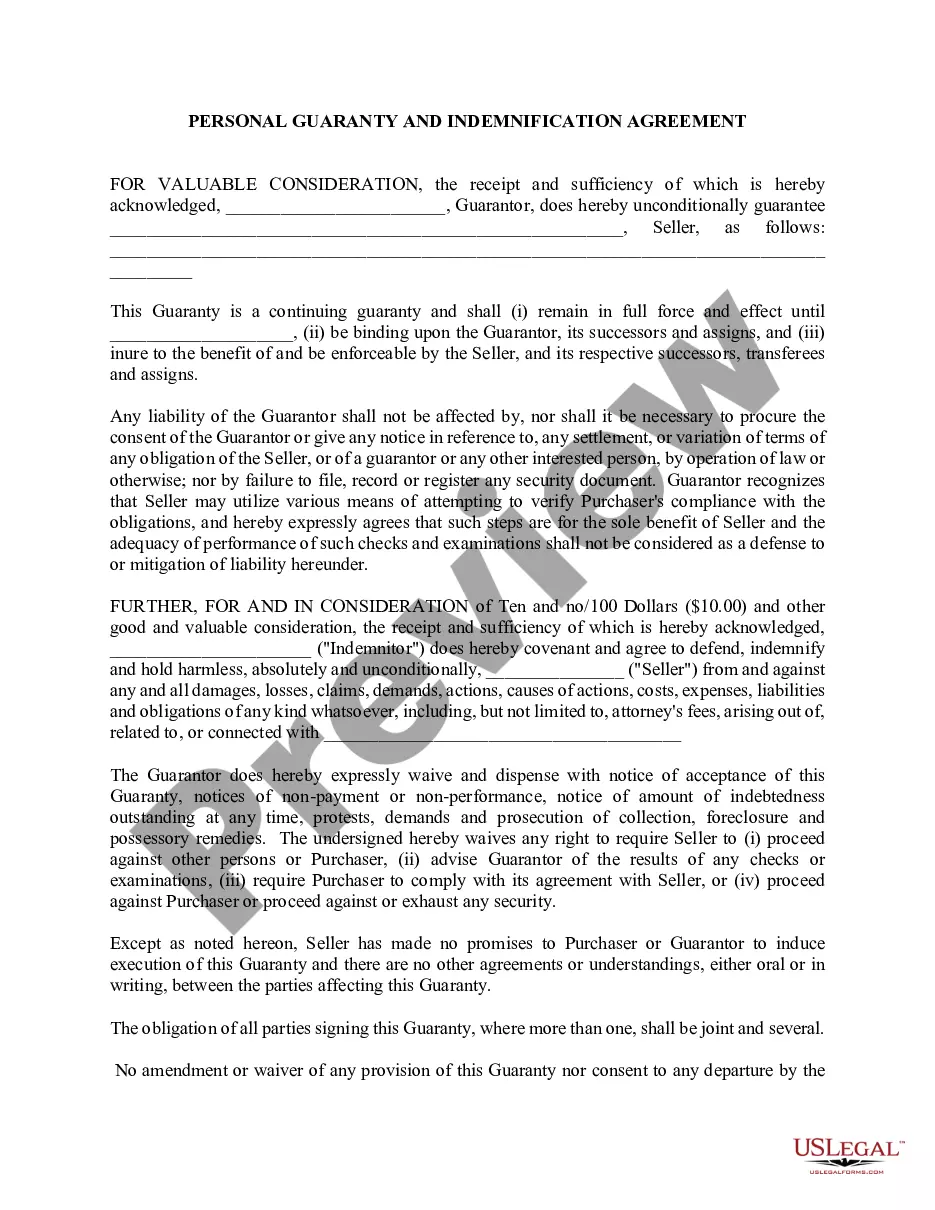
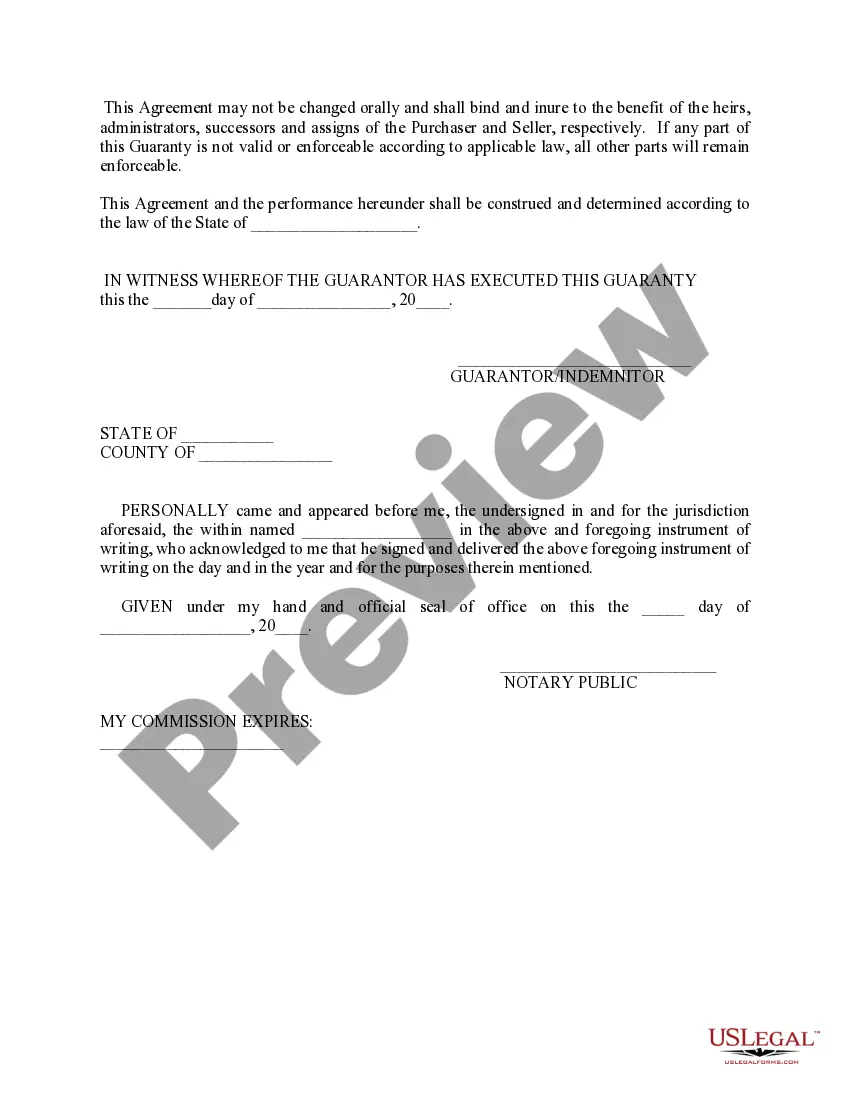
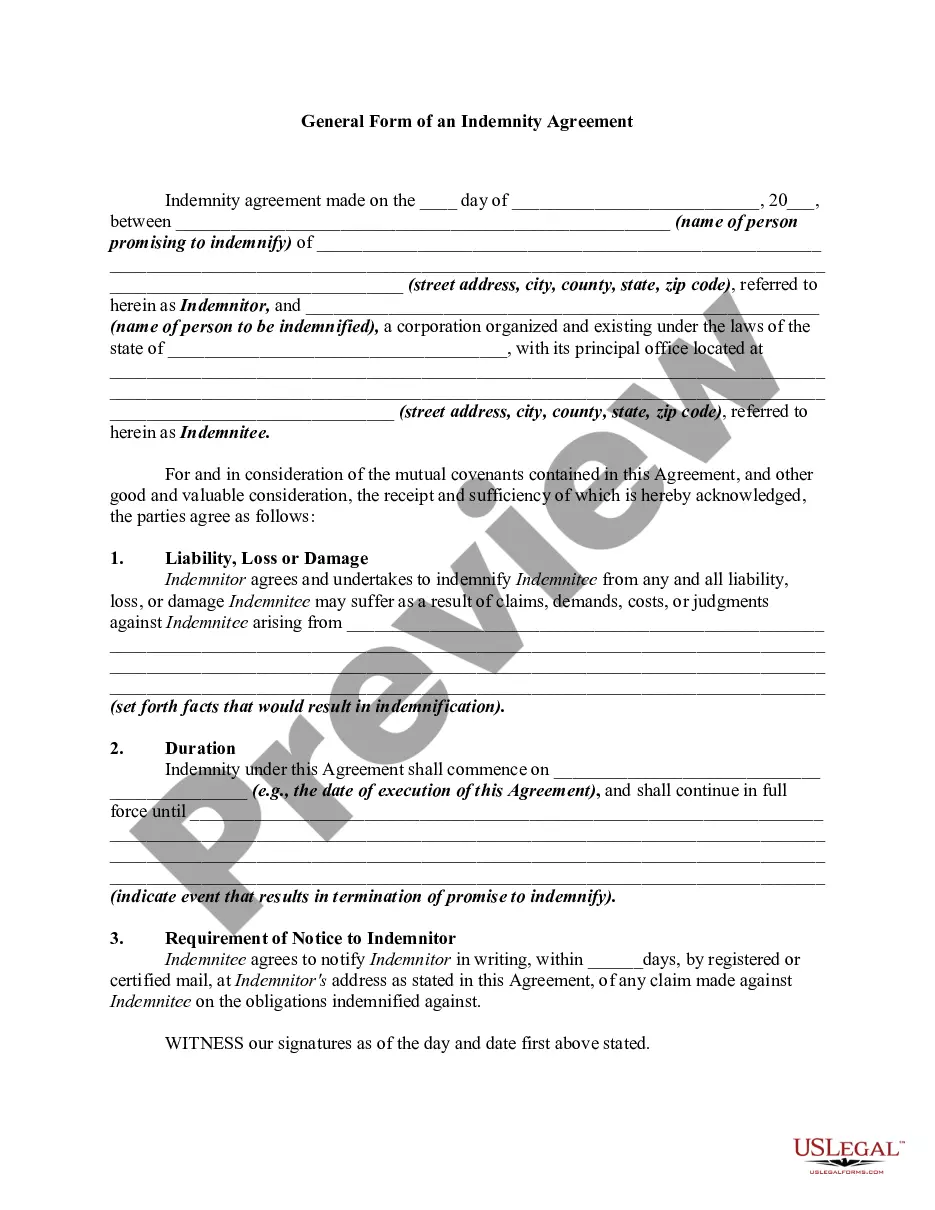
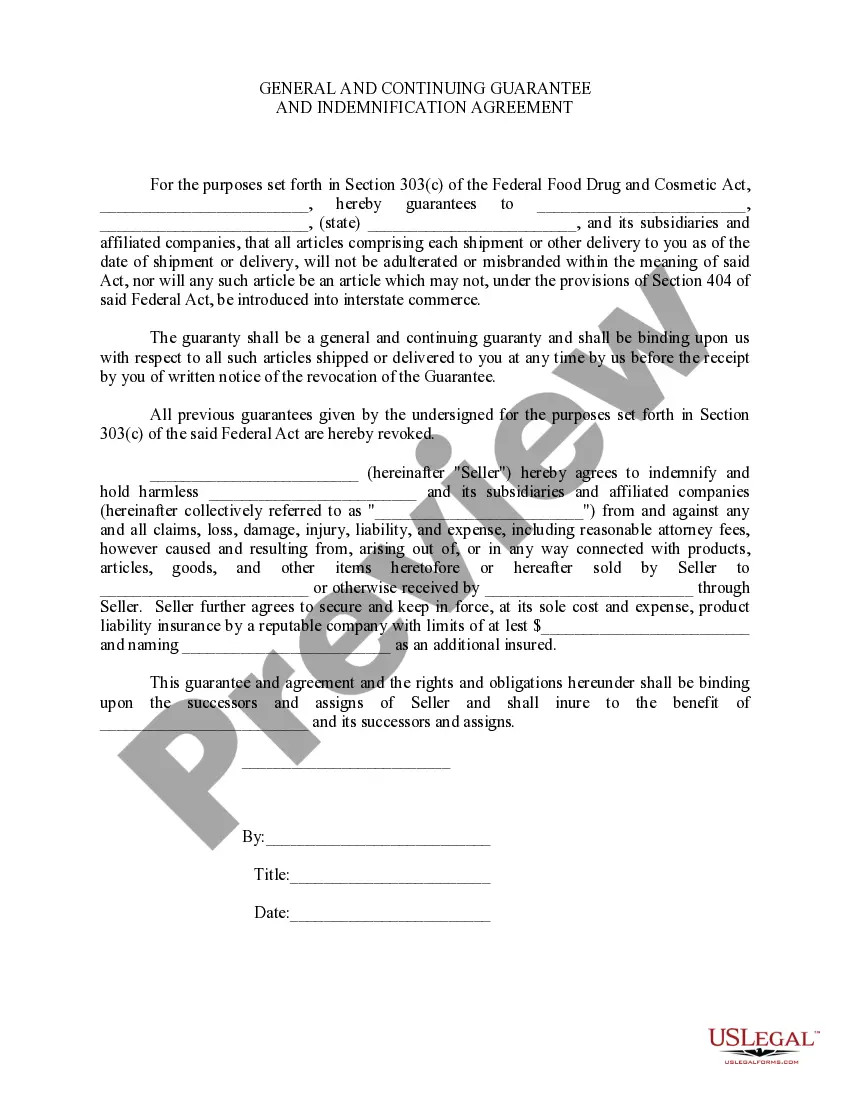
This form states that the guarantor does covenant and agree to defend, indemnify and hold harmless, absolutely and unconditionally,the seller from and against any and all damages, losses, claims, demands, actions, causes of actions, costs, expenses, liabilities and obligations of any kind whatsoever, including, but not limited to, attorney's fees.
Arkansas General Guaranty and Indemnification Agreement
Category:
State:
Multi-State
Control #:
US-00525
Format:
Word;
Rich Text
Instant download
Description
Free preview
Get your form ready online
Our built-in tools help you complete, sign, share, and store your documents in one place.
Built-in online Word editor
Make edits, fill in missing information, and update formatting in US Legal Forms—just like you would in MS Word.
Export easily
Download a copy, print it, send it by email, or mail it via USPS—whatever works best for your next step.
E-sign your document
Sign and collect signatures with our SignNow integration. Send to multiple recipients, set reminders, and more. Go Premium to unlock E-Sign.
Notarize online 24/7
If this form requires notarization, complete it online through a secure video call—no need to meet a notary in person or wait for an appointment.
Store your document securely
We protect your documents and personal data by following strict security and privacy standards.

Make edits, fill in missing information, and update formatting in US Legal Forms—just like you would in MS Word.

Download a copy, print it, send it by email, or mail it via USPS—whatever works best for your next step.

Sign and collect signatures with our SignNow integration. Send to multiple recipients, set reminders, and more. Go Premium to unlock E-Sign.

If this form requires notarization, complete it online through a secure video call—no need to meet a notary in person or wait for an appointment.

We protect your documents and personal data by following strict security and privacy standards.
Looking for another form?
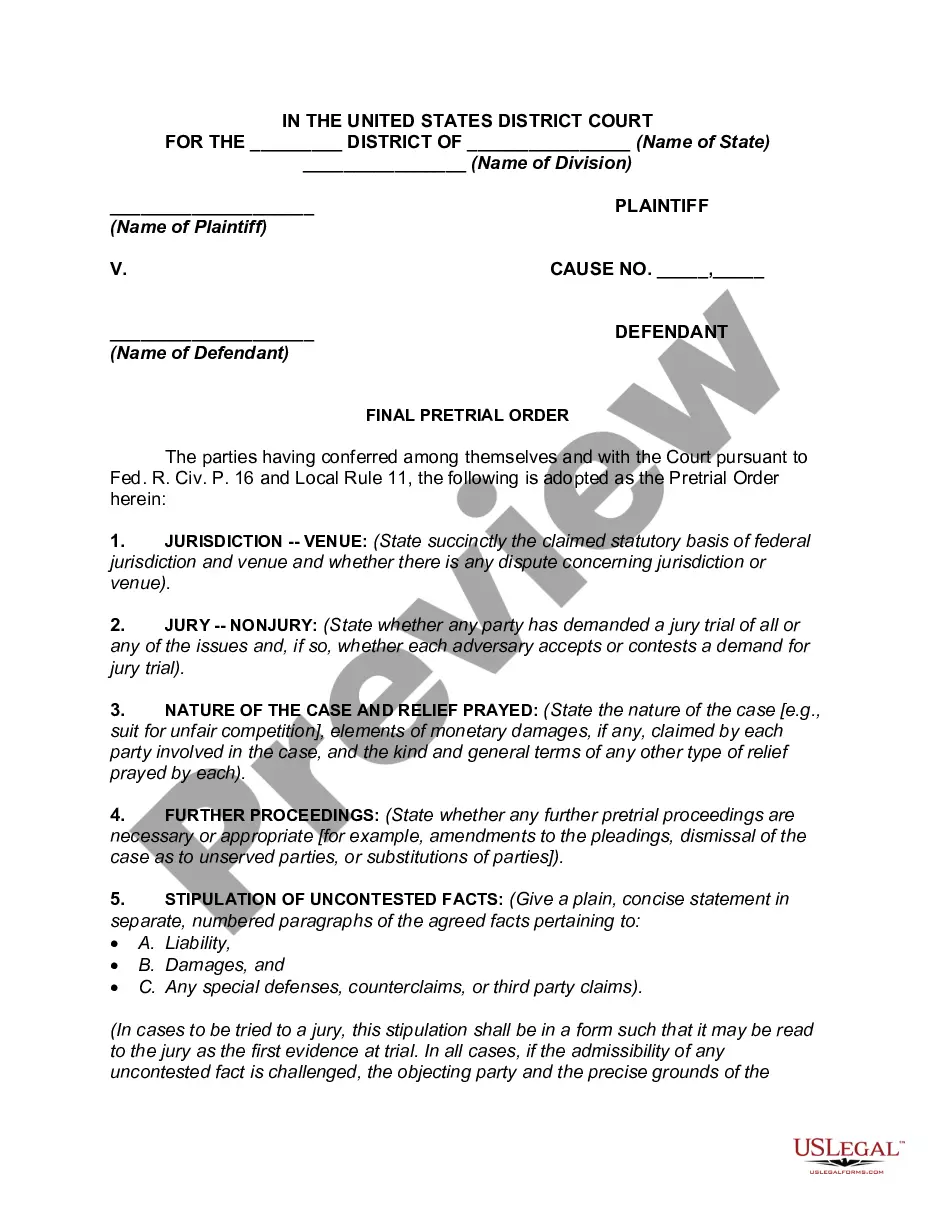
How to fill out General Guaranty And Indemnification Agreement?
Have you ever found yourself in a situation where you require documents for either business or personal purposes on a daily basis.
There are numerous legal document templates available online, but finding ones you can rely on is challenging.
US Legal Forms provides a vast selection of form templates, including the Arkansas General Guaranty and Indemnification Agreement, designed to comply with state and federal regulations.
Upon finding the appropriate form, click Buy now.
Select the payment plan you desire, complete the required information to create your account, and finalize the transaction using your PayPal or credit card.
- If you are already familiar with the US Legal Forms website and possess an account, simply Log In.
- Next, you can download the Arkansas General Guaranty and Indemnification Agreement template.
- If you do not have an account and wish to start using US Legal Forms, follow these instructions.
- Locate the form you need and ensure it corresponds to your specific city/county.
- Utilize the Preview button to examine the form.
- Review the details to confirm that you have selected the correct form.
- If the form does not meet your needs, use the Search field to find the document that suits you and your requirements.
Form popularity
FAQ
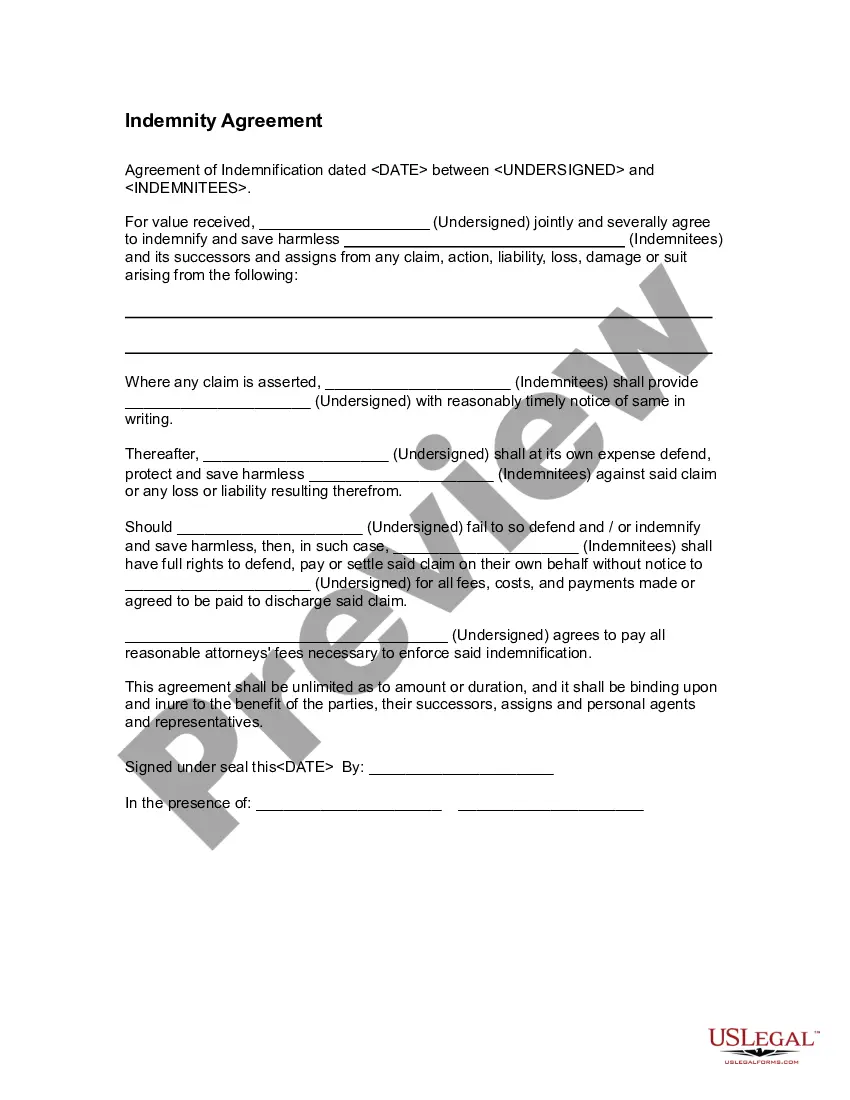
An indemnity agreement is a contract that protect one party of a transaction from the risks or liabilities created by the other party of the transaction. Hold harmless agreement, no-fault agreement, release of liability, or waiver of liability are other terms for an indemnity agreement.200c
The contract of indemnity is the contract where one person compensates for the loss of the other. Contract of guarantee is a contract between three people where the third person intervenes to pay the debt if the debtor is at default in paying back.
The key differences between guarantees and indemnities include: a guarantee is a secondary liability, which means that there will be another person who is primarily liable for the obligation; whereas, an indemnity imposes a primary liability.
The indemnity agreement may describe consideration (usually a sum of money) that will be used to secure the agreement. The agreement will state the specific terms under which the indemnitee will be held harmless.
In the case of an agency, no consideration is needed to be paid. It is not necessary to pay some remuneration or commission, and the principal will be held responsible for the acts of the agent even when no remuneration is paid to the agent. The agent must work according to the instructions of the principal.
When the term indemnity is used in the legal sense, it may also refer to an exemption from liability for damages. Indemnity is a contractual agreement between two parties. In this arrangement, one party agrees to pay for potential losses or damages caused by another party.
Guaranty Agreement a two-party contract in which the first party agrees to perform in the event that a second party fails to perform. Unlike a surety, a guarantor is only required to perform after the obligee has made every reasonable and legal effort to force the principal's performance.
A contract of indemnity has two parties. The promisor or indemnifier: He is the person who promises to bear the loss. The promisee or the indemnified or indemnity-holder: He is the person whose loss is covered or who are compensated.
Contract of Indemnity and its Essential ElementsParties to a Contract:Protection of Loss:Express or Implied:Essentials of a Valid Contract:Right of Promisee:Right to recover damages paid in a suit.Right To Recover Costs Incurred In Defending A Suit.Right To Recover Sums Paid Under Compromise.More items...?24-Dec-2020
The key differences between guarantees and indemnities include: a guarantee is a secondary liability, which means that there will be another person who is primarily liable for the obligation; whereas, an indemnity imposes a primary liability.