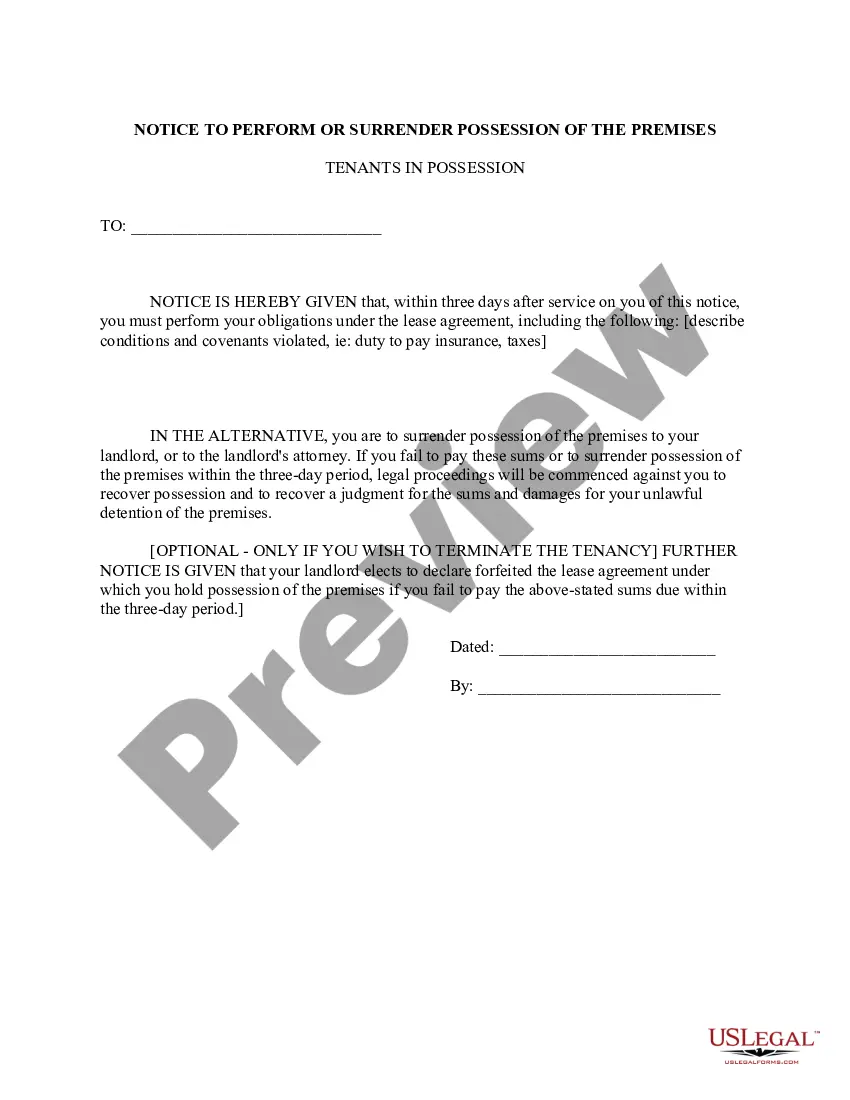
Hawaii Arbitration Agreement for Medical Malpractice
Description
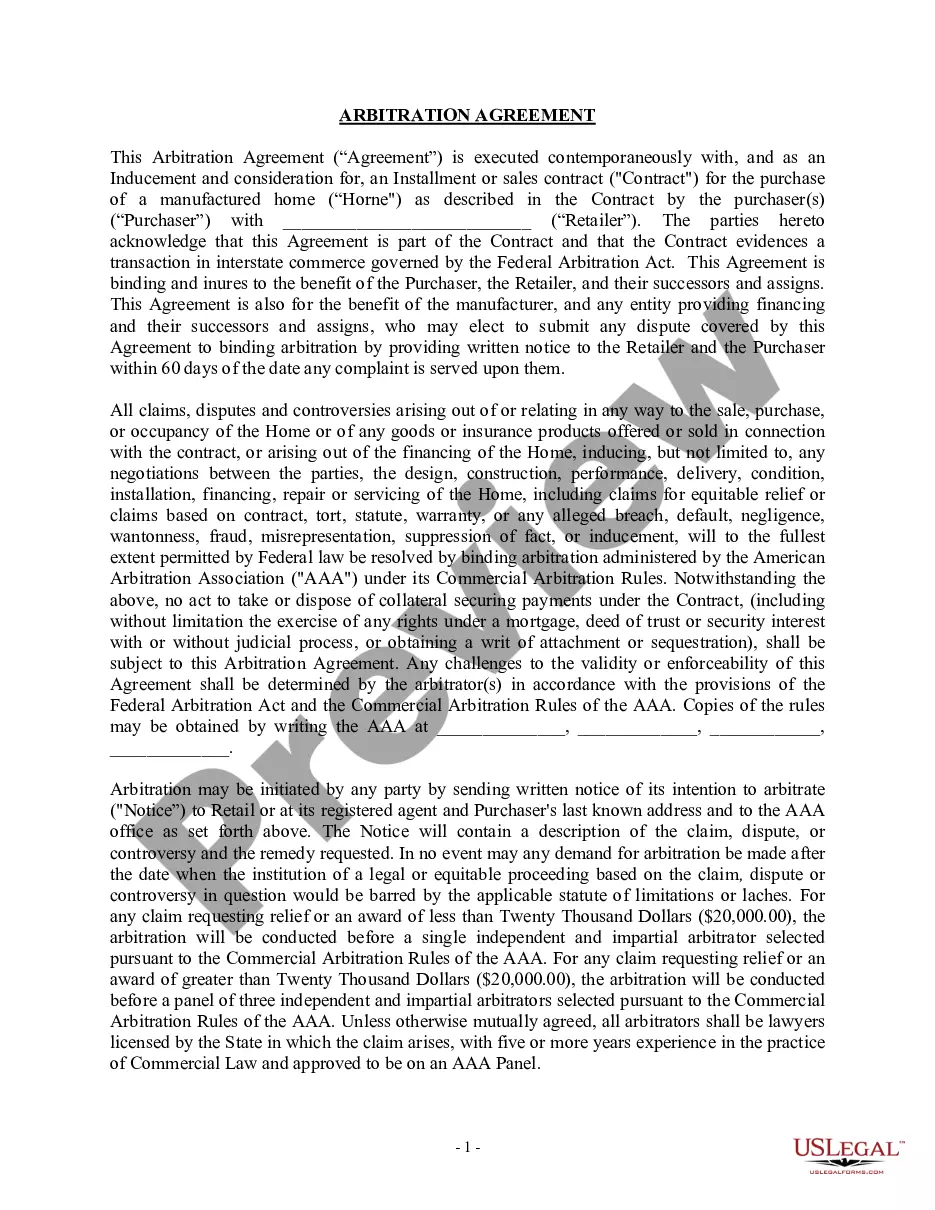
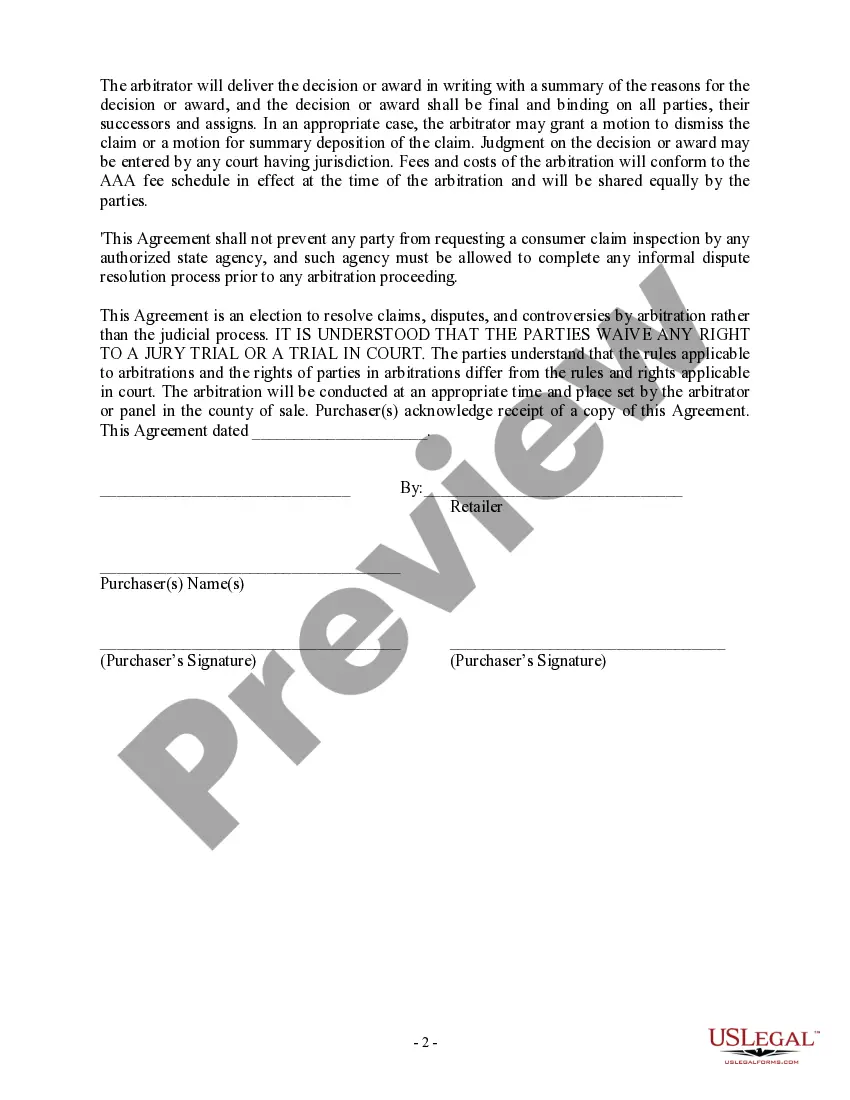


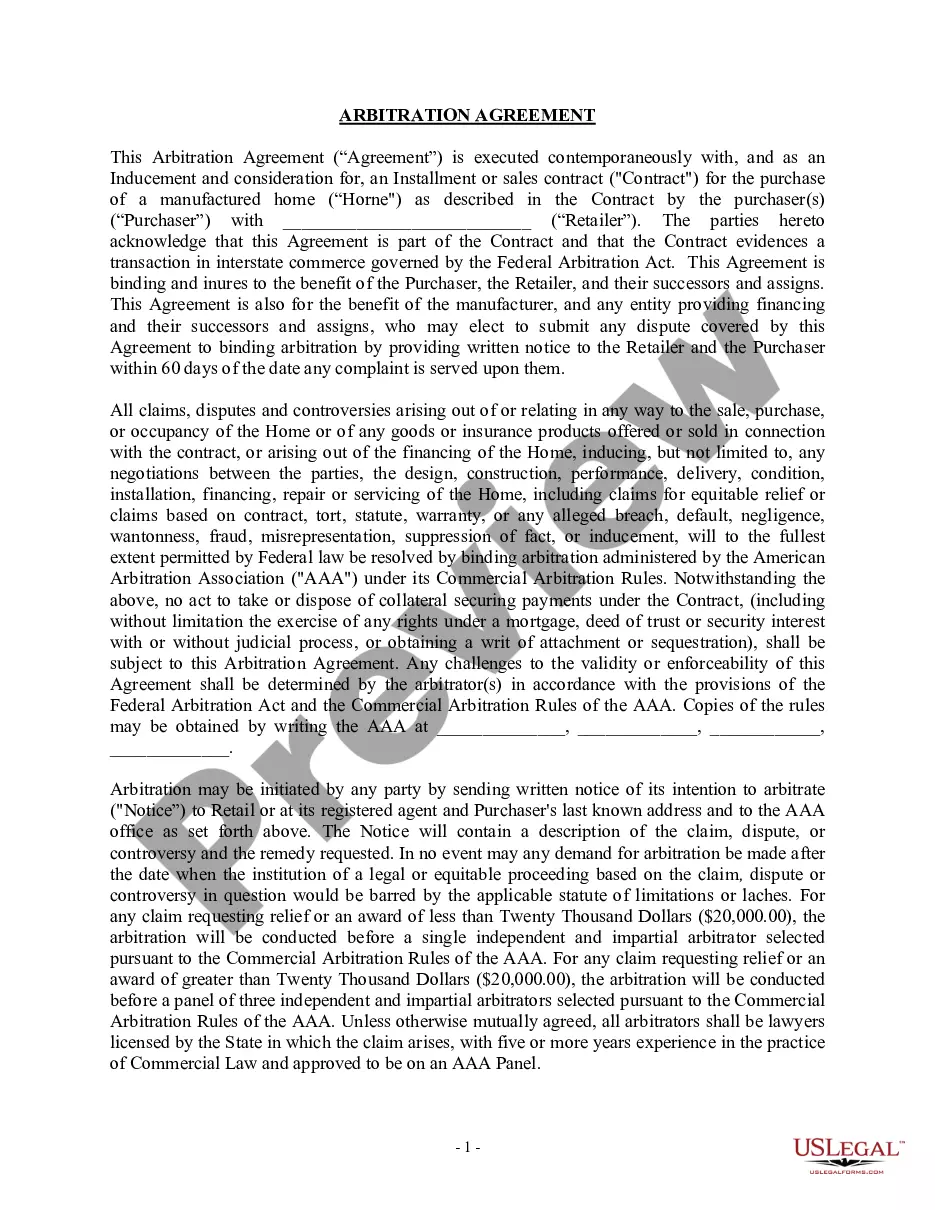


How to fill out Arbitration Agreement For Medical Malpractice?
You can invest time online attempting to discover the valid document format that meets the federal and state requirements you will need.
US Legal Forms provides a vast array of valid templates that are reviewed by experts.
You can download or print the Hawaii Arbitration Agreement for Medical Malpractice from the service.
If available, use the Review button to browse through the document format as well.
- If you possess a US Legal Forms account, you may Log In and click on the Obtain button.
- After that, you can complete, modify, print, or sign the Hawaii Arbitration Agreement for Medical Malpractice.
- Every valid document format you acquire is yours indefinitely.
- To obtain an additional copy of any acquired form, visit the My documents tab and click on the corresponding button.
- If you are using the US Legal Forms website for the first time, follow the simple guidelines below.
- First, ensure that you have chosen the correct document format for the state/city of your preference.
- Check the form outline to confirm you have selected the correct form.
Form popularity
FAQ
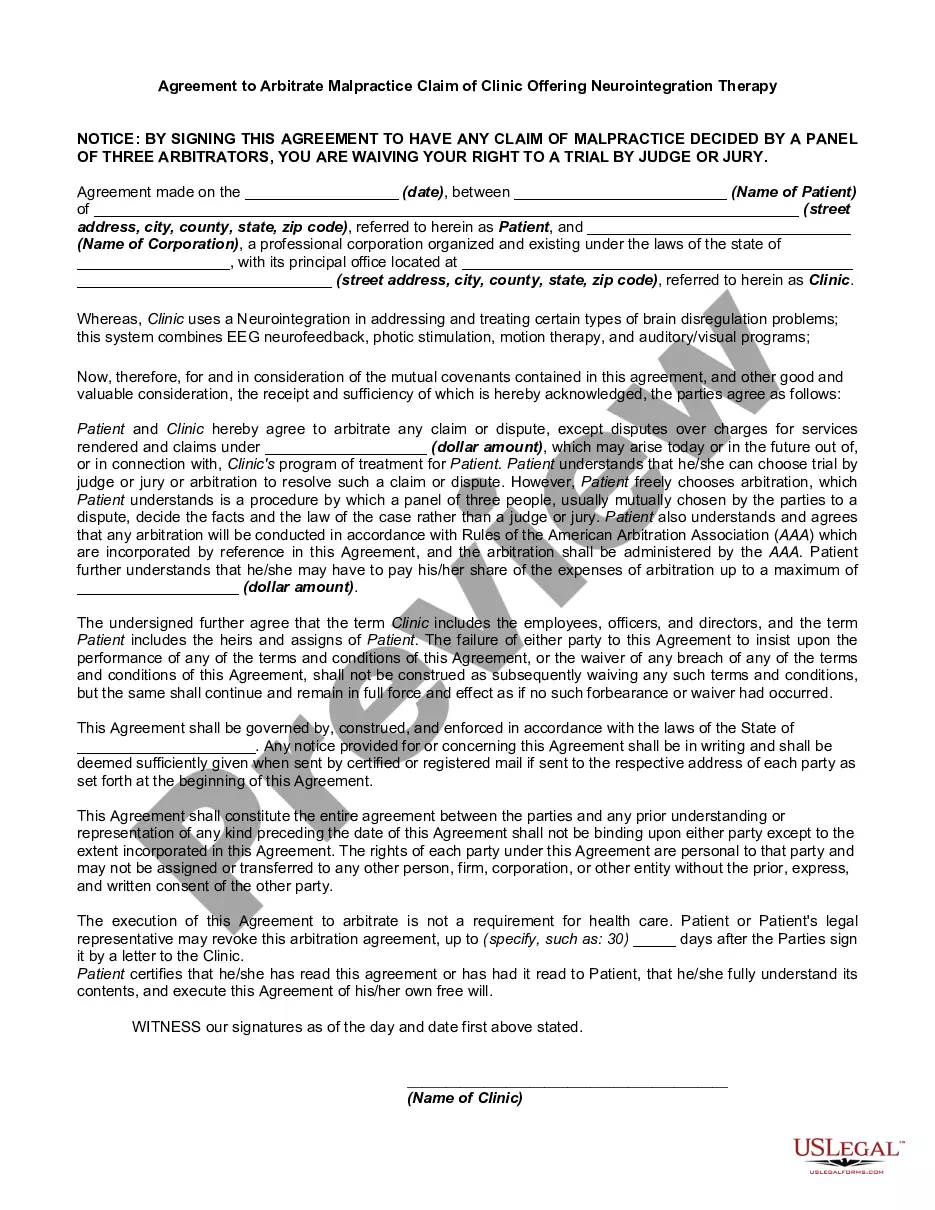
Creating an effective arbitration agreement begins with clear language and mutual understanding between the involved parties. A Hawaii Arbitration Agreement for Medical Malpractice should outline the scope of arbitration, specify the rules to be followed, and detail the process for selecting an arbitrator. Ensuring both parties fully understand the agreement can help prevent future disputes. For tailored assistance, consider using uslegalforms, which provides reliable templates and resources for drafting such agreements.
The outcome of arbitration can vary significantly based on the specific circumstances of each case. In medical malpractice disputes involving a Hawaii Arbitration Agreement for Medical Malpractice, both parties present their evidence, and an arbitrator makes a decision. Generally, the winner in such cases is determined by the strength of the evidence and the arguments presented. It's important to approach arbitration well-prepared to increase your chances of a favorable outcome.
Starting an arbitration claim involves several steps, beginning with reviewing the Hawaii Arbitration Agreement for Medical Malpractice you signed. You'll need to follow the protocols outlined in the agreement, which usually includes notifying the other party of your intention to arbitrate. It’s vital to gather all pertinent documentation and evidence for your claim. If you feel uncertain, consider using a platform like UsLegalForms to guide you through the process.
Deciding whether to settle or go to arbitration often depends on your case specifics and personal preferences. Settling can avoid the uncertainties of arbitration and reduce costs, while arbitration can provide a formal resolution if negotiations fail. The Hawaii Arbitration Agreement for Medical Malpractice allows you to evaluate your options with a clear process. Consulting with a legal specialist can help you determine the most strategic path forward.
Agreeing to arbitration can be beneficial in many situations, especially if you seek a quicker resolution to your dispute. The Hawaii Arbitration Agreement for Medical Malpractice aims to streamline the process, making it less daunting for all parties involved. However, you should consider the potential limitations on your rights in court. Weigh the pros and cons carefully before making a decision.
The odds of winning in arbitration can vary widely based on several factors, including the specifics of your case and the evidence presented. Generally, arbitration can provide a fair resolution; however, it's important to remember that it is not guaranteed. The outcome will depend on the arbitrator's decision, which is often final and binding. Familiarizing yourself with the arbitration process can help you prepare better.
Signing a Hawaii Arbitration Agreement for Medical Malpractice typically means you waive your right to sue in court for the matters covered by the agreement. However, there are circumstances under which you may still pursue legal action, such as if the arbitration process is violated. It is important to comprehend the language of the agreement before signing. Consulting with a legal professional can clarify your rights.
Yes, arbitration can be used in malpractice cases, including those governed by the Hawaii Arbitration Agreement for Medical Malpractice. Many healthcare professionals and organizations prefer arbitration to settle disputes efficiently and privately. However, both parties must agree to this method in order for it to be valid. Understanding the implications of such an agreement is crucial before proceeding.
Choosing between arbitration and court depends on your specific case circumstances. The Hawaii Arbitration Agreement for Medical Malpractice often offers a quicker resolution than court litigation, which can be beneficial for both parties. However, court can provide a more detailed examination of evidence and law, which may lead to a more favorable outcome in some situations. It’s wise to consult an expert to determine the best option for you.
One disadvantage of arbitration under the Hawaii Arbitration Agreement for Medical Malpractice is the limited scope of appeal. If you disagree with the outcome, your options to challenge it are typically restricted. Additionally, arbitration may lack the transparency of courtroom proceedings, which can concern some parties. It is essential to weigh these factors when considering arbitration for your medical malpractice case.