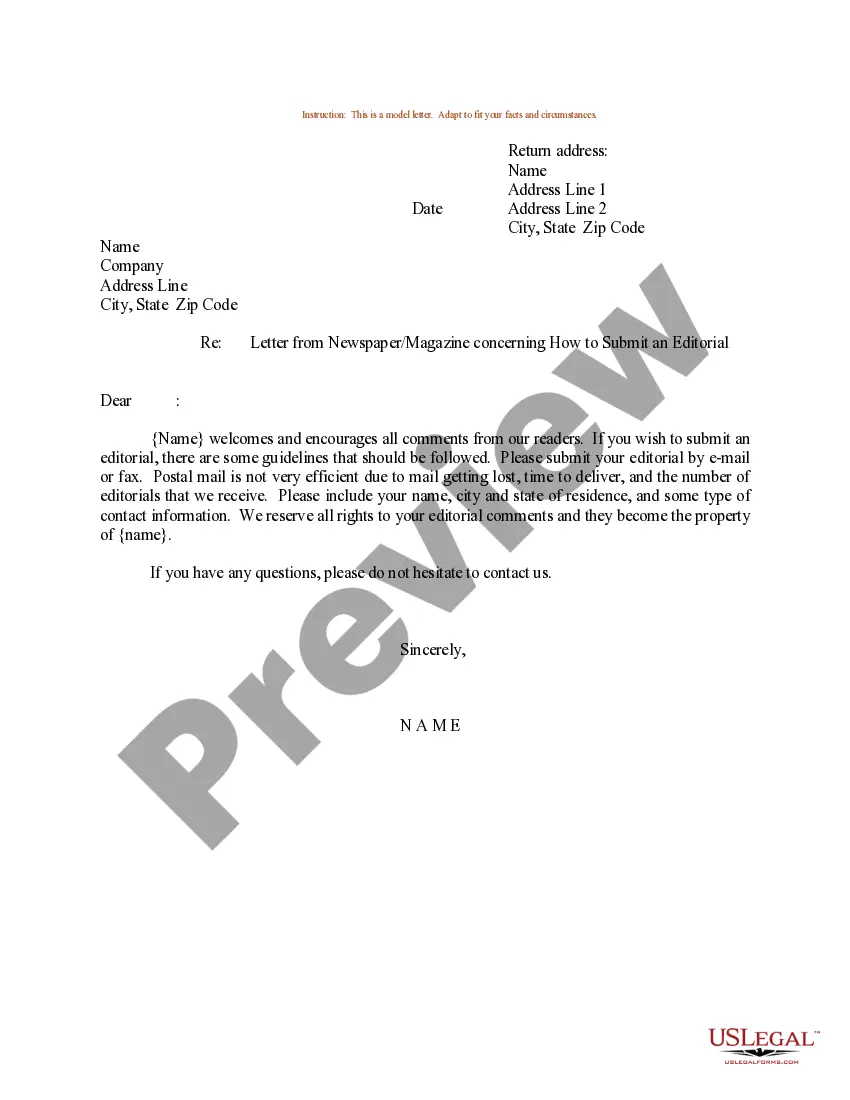
Guam Sample Letter for How to Submit an Editorial
Description
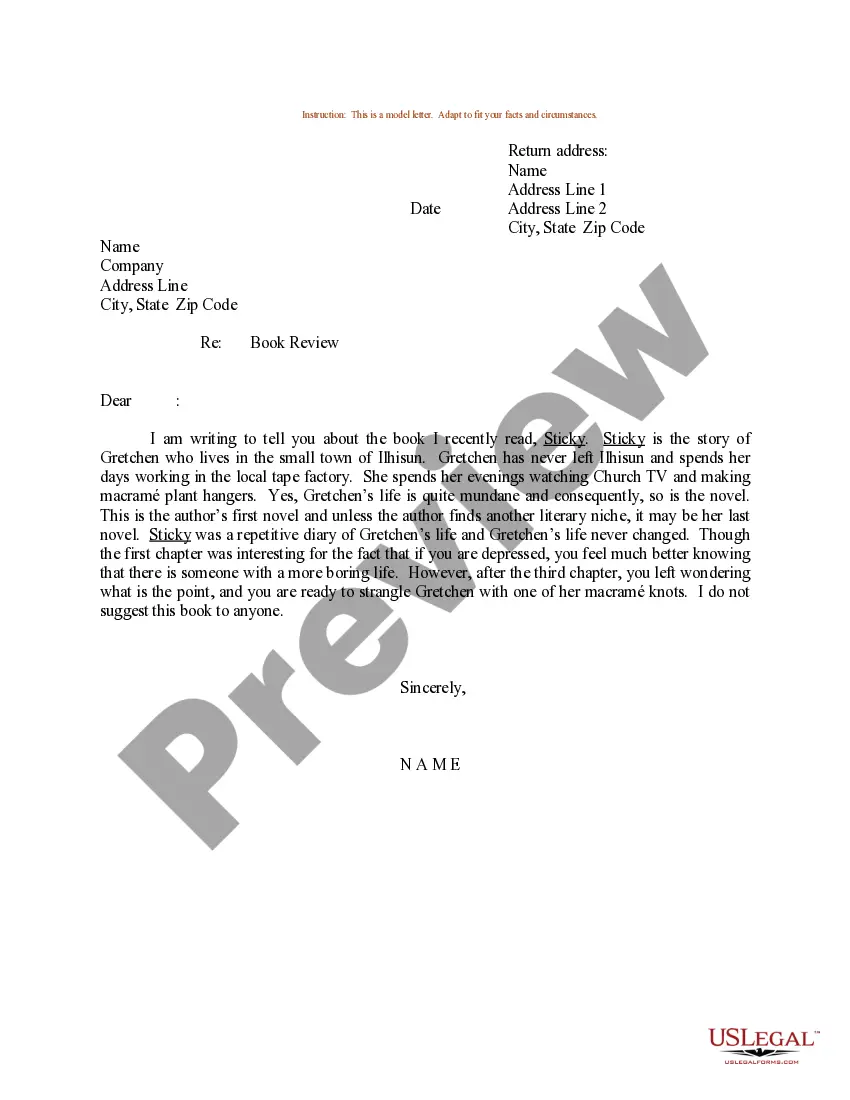
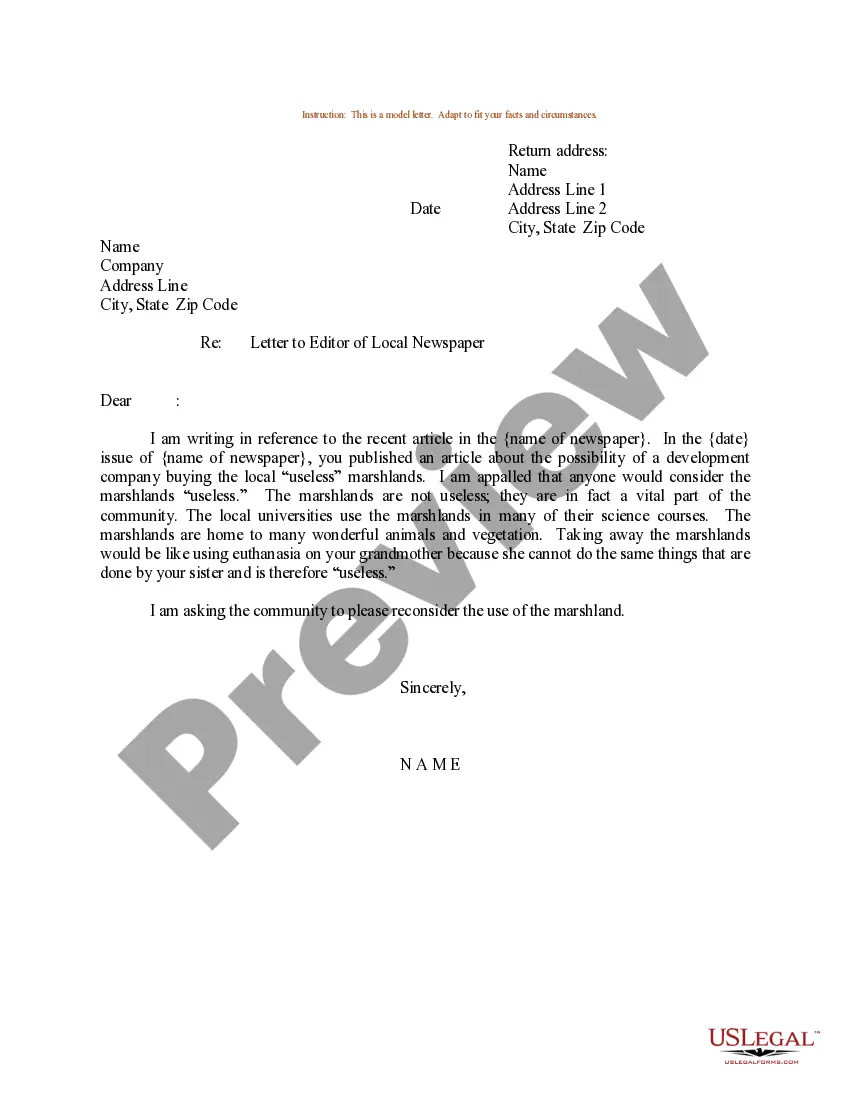
Get your form ready online
Our built-in tools help you complete, sign, share, and store your documents in one place.
Make edits, fill in missing information, and update formatting in US Legal Forms—just like you would in MS Word.
Download a copy, print it, send it by email, or mail it via USPS—whatever works best for your next step.
Sign and collect signatures with our SignNow integration. Send to multiple recipients, set reminders, and more. Go Premium to unlock E-Sign.
If this form requires notarization, complete it online through a secure video call—no need to meet a notary in person or wait for an appointment.
We protect your documents and personal data by following strict security and privacy standards.

Make edits, fill in missing information, and update formatting in US Legal Forms—just like you would in MS Word.

Download a copy, print it, send it by email, or mail it via USPS—whatever works best for your next step.

Sign and collect signatures with our SignNow integration. Send to multiple recipients, set reminders, and more. Go Premium to unlock E-Sign.

If this form requires notarization, complete it online through a secure video call—no need to meet a notary in person or wait for an appointment.

We protect your documents and personal data by following strict security and privacy standards.
Looking for another form?


How to fill out Sample Letter For How To Submit An Editorial?
You can spend hours online trying to locate the legal document template that meets your state and federal criteria.
US Legal Forms offers a vast array of legal templates that have been examined by experts.
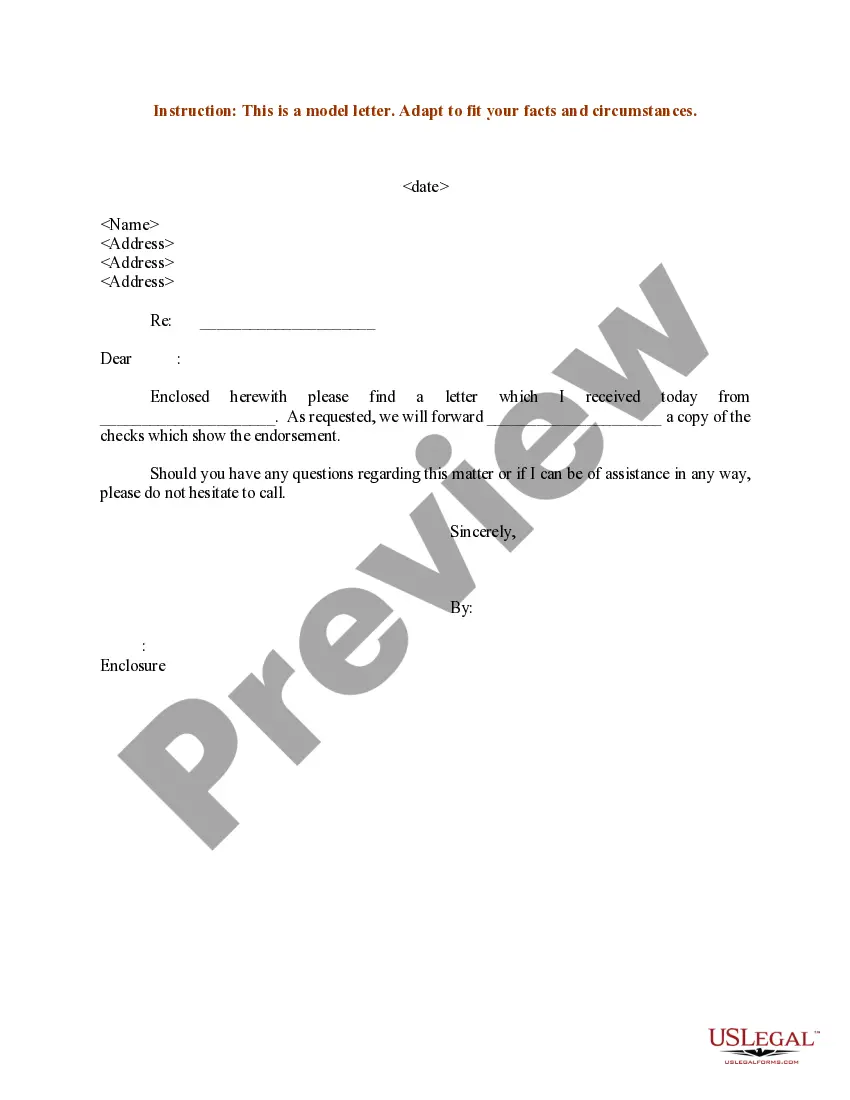
You can download or print the Guam Sample Letter for How to Submit an Editorial from our service.
Check the form information to confirm you have selected the appropriate template. If available, use the Review option to examine the document template as well.
- If you possess a US Legal Forms account, you can Log In and click the Obtain button.
- Then, you can fill out, modify, print, or sign the Guam Sample Letter for How to Submit an Editorial.
- Every legal document template you acquire is yours indefinitely.
- To obtain another copy of any purchased form, go to the My documents section and click the respective option.
- If this is your first time using the US Legal Forms website, follow the simple instructions below.
- First, ensure you have selected the correct document template for your area/city of choice.
Form popularity
FAQ
The abbreviation for a letter to the editor is LTE. This acronym is commonly used in journalistic circles and among readers. Understanding this term can help you navigate editorial sections more effectively. When crafting your submission, the Guam Sample Letter for How to Submit an Editorial can guide you in ensuring that your LTE follows community and publication standards.
A letter to the editor is also commonly referred to as a reader's letter or an editorial letter. This form of communication allows readers to express their opinions on various issues or to comment on articles published in the newspaper. Utilizing the Guam Sample Letter for How to Submit an Editorial can help you craft a well-structured and persuasive message that resonates with the publication's audience.
Expert-verified answerWith reference to the above subject , I request you to publish my article in your newspaper about cleanliness. As my Article includes the importance of cleanliness and the awareness about cleanliness.As in our country the cleanliness is decreased, the people should get to know about the harmness.
Letters to the Editor start with a SALUTATION, usually 'Dear Editor' or 'Dear Sir/Madam'. 2. Letters to the Editor are usually written in a response to a previous letter, or in response to a current issue. In the OPENING STATEMENT, the writer gives the details of what they're referring to.
Sometimes called a manuscript evaluation, an editorial letter addresses big-picture issues with an author's full book like primary narratives, pacing, characterization, and other broad storytelling elements.
How do you write a letter to the editor? A letter to the editor follows the format of a formal letter, and so it should start with the sender's complete address followed by the date, receiving editor's address, subject, salutation, body of the letter, complimentary closing, signature, name and designation if any.
Tips on Writing a Letter to the EditorKeep it short and on one subject. Many newspapers have strict limits on the length of letters and have limited space to publish them.Make it legible.Send letters to weekly community newspapers too.Be sure to include your contact information.Make references to the newspaper.
Letters written to the editor or the author should contain objective, and constructive interpretations or discussions on medical, scientific or general areas of interest. They should have an objective, and give a message with a brief, and clear language.
Letters written to the editor or the author should contain objective, and constructive interpretations or discussions on medical, scientific or general areas of interest. They should have an objective, and give a message with a brief, and clear language.
Letters to the Editor start with a SALUTATION, usually 'Dear Editor' or 'Dear Sir/Madam'. 2. Letters to the Editor are usually written in a response to a previous letter, or in response to a current issue. In the OPENING STATEMENT, the writer gives the details of what they're referring to.