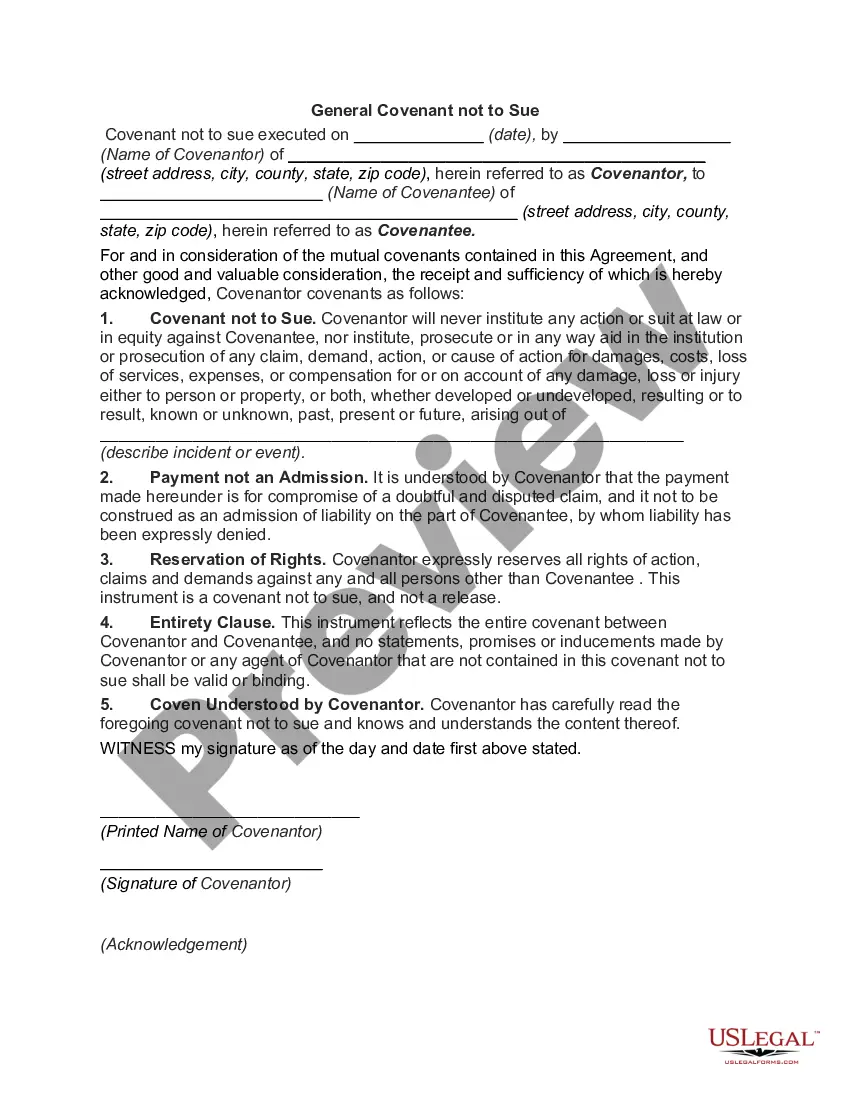
Guam Covenant Not to Sue
Description
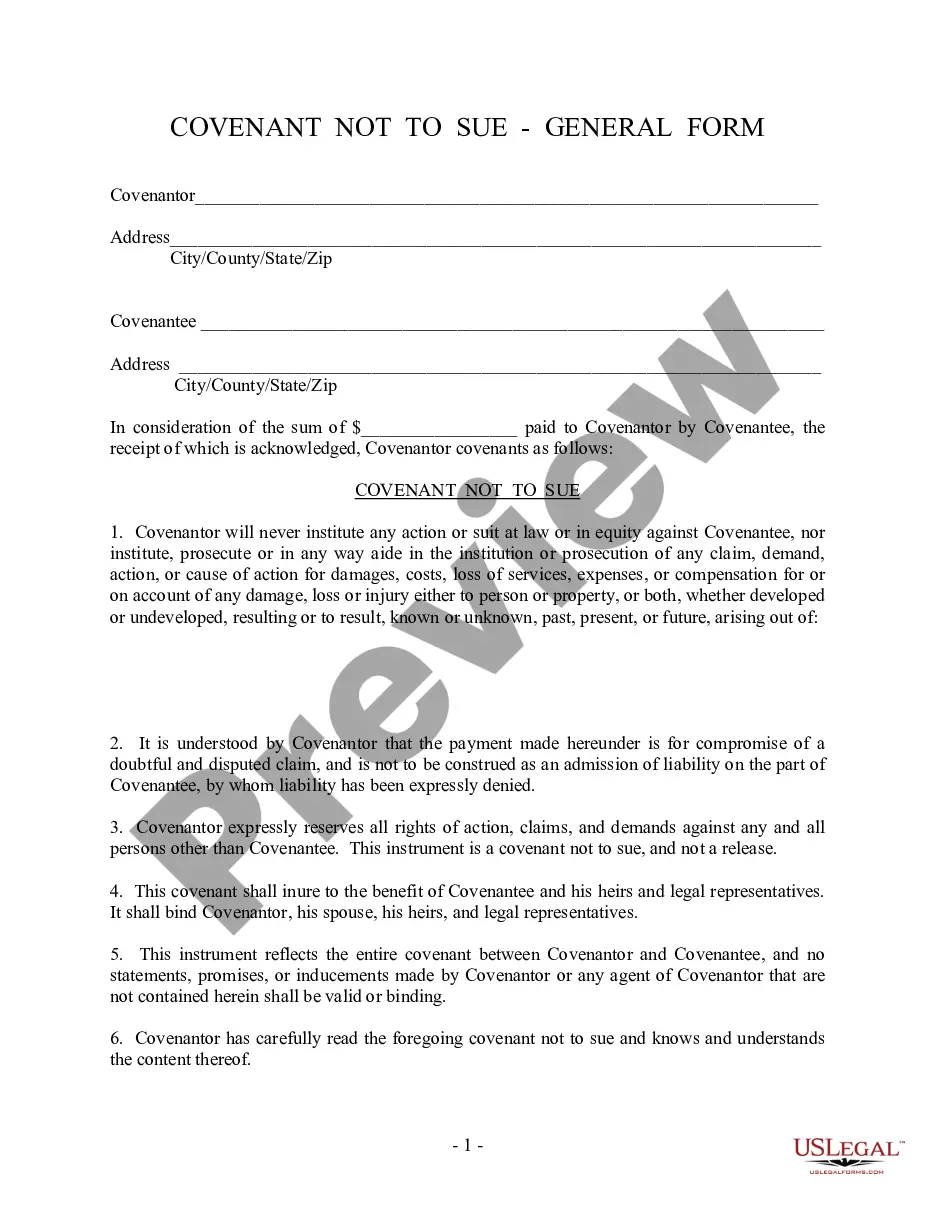
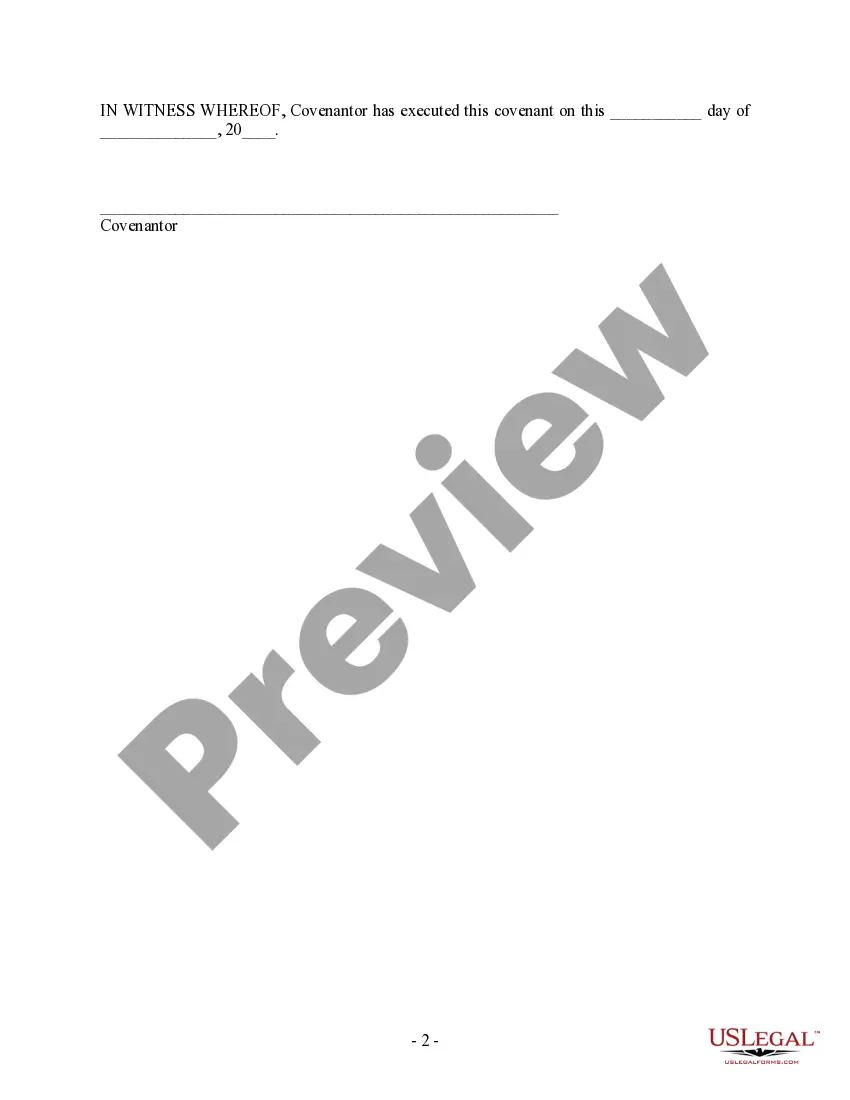
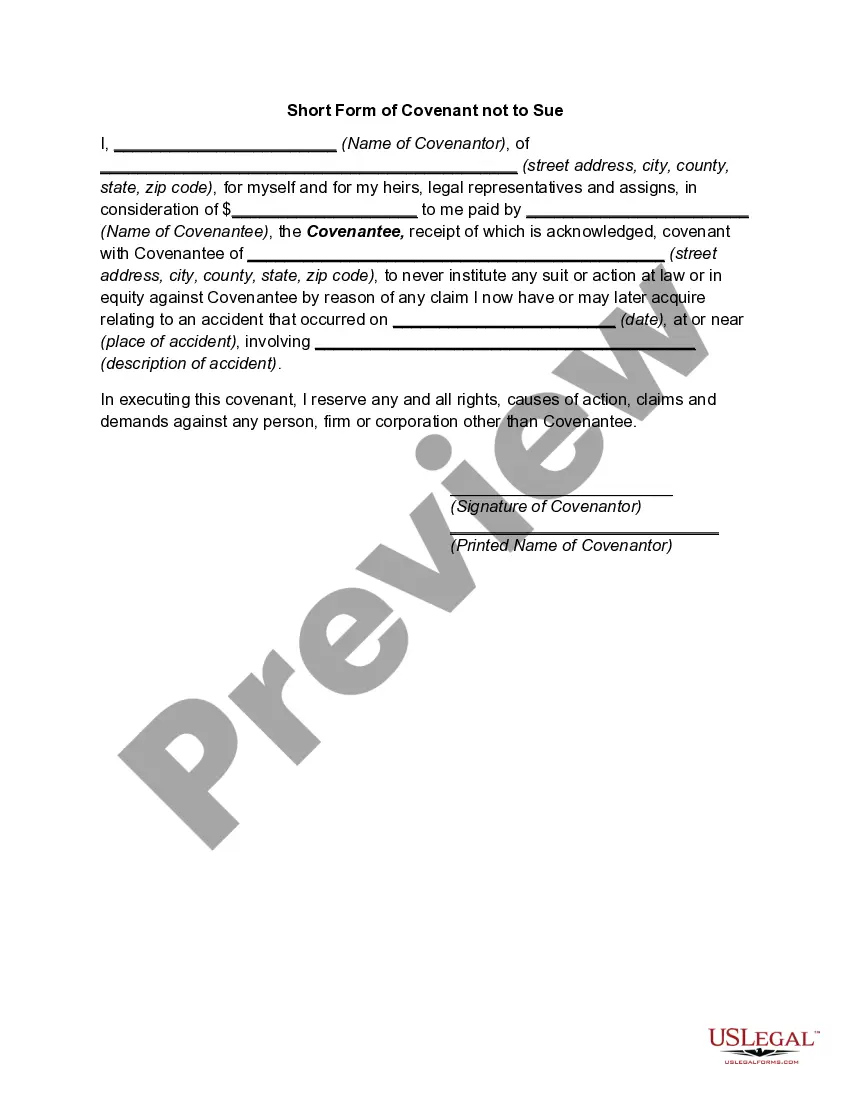



How to fill out Covenant Not To Sue?
Are you in a situation where you require documents for both business or specific purposes almost every working day.
There are numerous legal document templates accessible online, but finding ones you can trust is not simple.
US Legal Forms provides a vast array of form templates, such as the Guam Covenant Not to Sue, that are designed to meet federal and state regulations.
Select the payment plan you want, fill in the required details to create your account, and complete the transaction using your PayPal or credit card.
Choose a convenient file format and download your copy. Access all the document templates you have purchased in the My documents section. You can download an additional copy of the Guam Covenant Not to Sue anytime, if necessary. Just select the desired form to download or print the template. Utilize US Legal Forms, the most extensive collection of legal forms, to save time and prevent errors. The service offers well-crafted legal document templates that you can use for a variety of purposes. Create an account on US Legal Forms and start making your life a bit easier.
- If you are currently familiar with the US Legal Forms website and have an account, simply Log In.
- Then, you can download the Guam Covenant Not to Sue template.
- If you do not have an account and wish to start using US Legal Forms, follow these steps.
- Find the form you need and ensure it is for the correct area/region.
- Use the Review option to evaluate the document.
- Read the description to ensure you have selected the right form.
- If the form is not what you are looking for, use the Search field to find the form that matches your needs.
- Once you find the correct form, click Buy now.
Form popularity
FAQ
A covenant not to sue legally obliges a party that could initiate a lawsuit not to do so. The covenant is made explicitly between two parties, and any third party that wants to make a claim is legally allowed to do so. Covenants not to sue are used to settle specific legal issues outside of the court system.
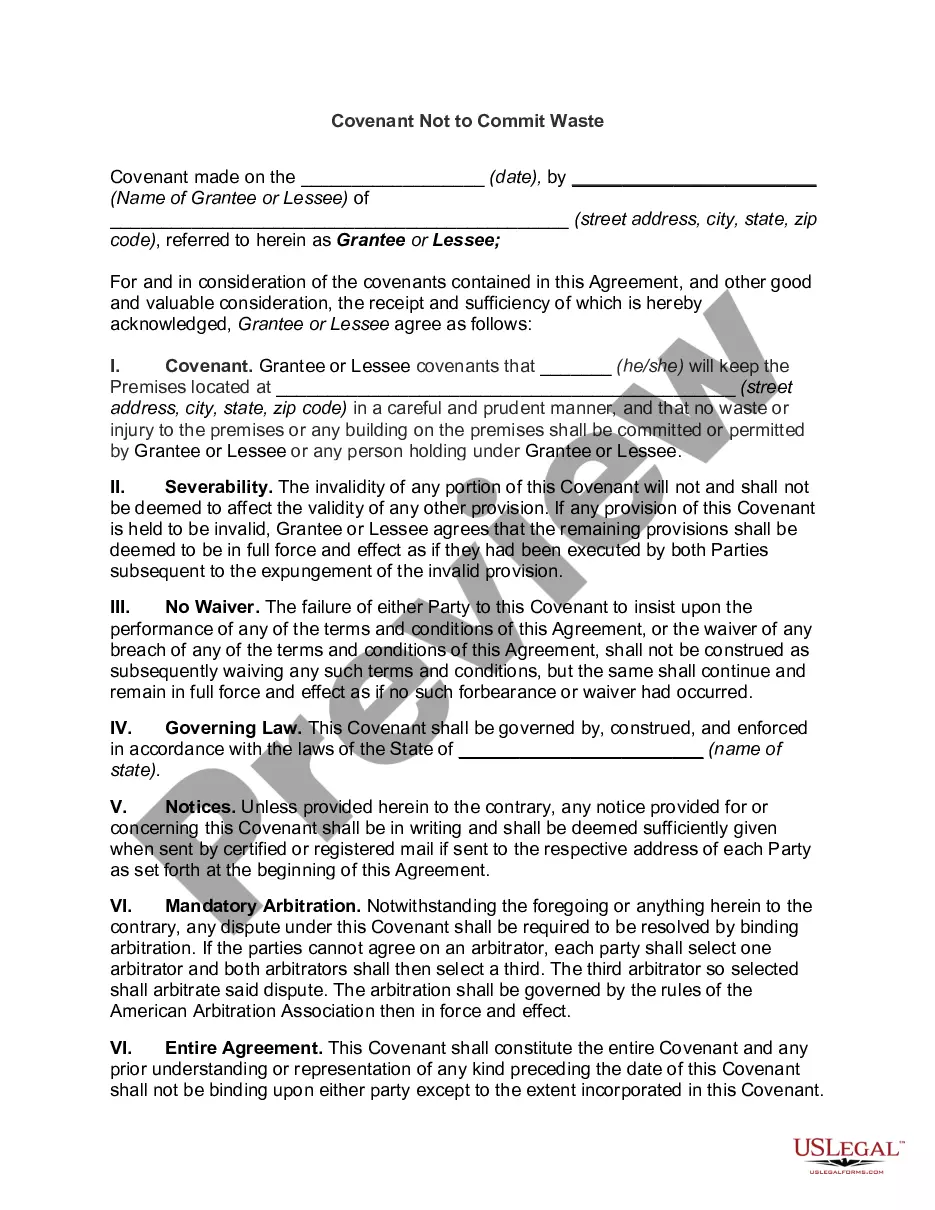
A covenant is a formal agreement or promise, usually included in a contract or deed, to do or not do a particular act. Covenants are particularly relevant in the fields of contract law and property law.
I covenant and agree never, individually or with any person or in any way, to commence, aid in any way, prosecute or cause or permit to be commenced or prosecuted against any Employer Affiliate any action or other proceeding, including, without limitation, an arbitration or other alternative dispute resolution ...
While a covenant not to sue restricts future claims from being made, the party signing the document is still free to file a lawsuit if it breaches the terms of that agreement. If one or more parties don't sign a covenant not to sue, then they are open for any claim and lawsuit.
A covenant not to sue legally obliges a party that could initiate a lawsuit not to do so. The covenant is made explicitly between two parties, and any third party that wants to make a claim is legally allowed to do so.
A covenant not to sue, therefore, preserves the existence of the cause of action but places contractual restrictions on the injured party's right to file suit. An injured party cannot assign a cause of action after it has been released.
Steps to Creating a Covenant Not to Sue Search for an example of an existing covenant to base yours off of. ... Gather information for your covenant, including documents related to your interests and documents about the other party. ... Format your covenant, so it resembles a traditional contract format.
A covenant not to sue legally obliges a party that could initiate a lawsuit not to do so. The covenant is made explicitly between two parties, and any third party that wants to make a claim is legally allowed to do so. Covenants not to sue are used to settle specific legal issues outside of the court system.
A covenant not to sue can be beneficial to both parties in a transaction. For example, a business may enter into a covenant not to sue in order to protect itself from future legal action. The business may also use the covenant to avoid costly litigation if a dispute arises.