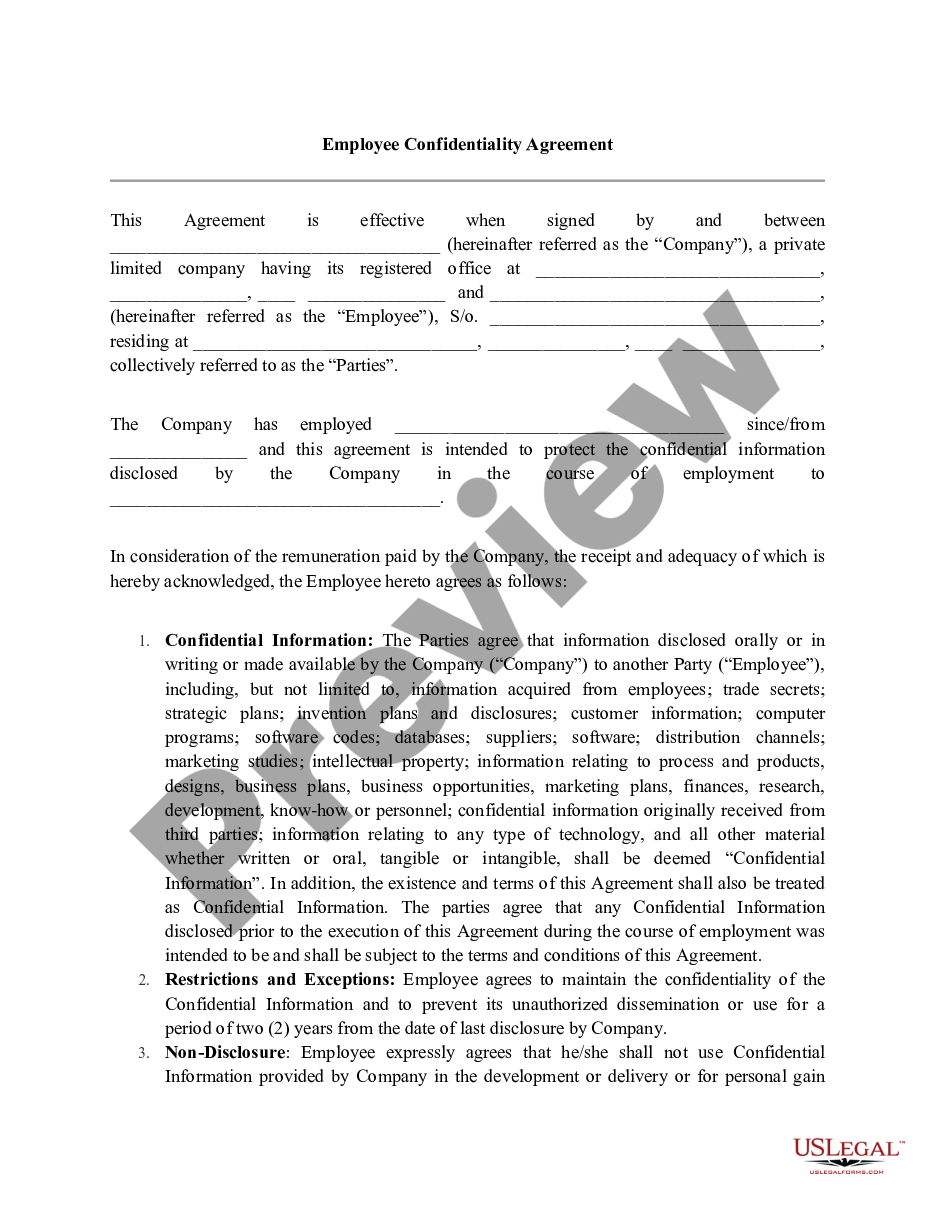
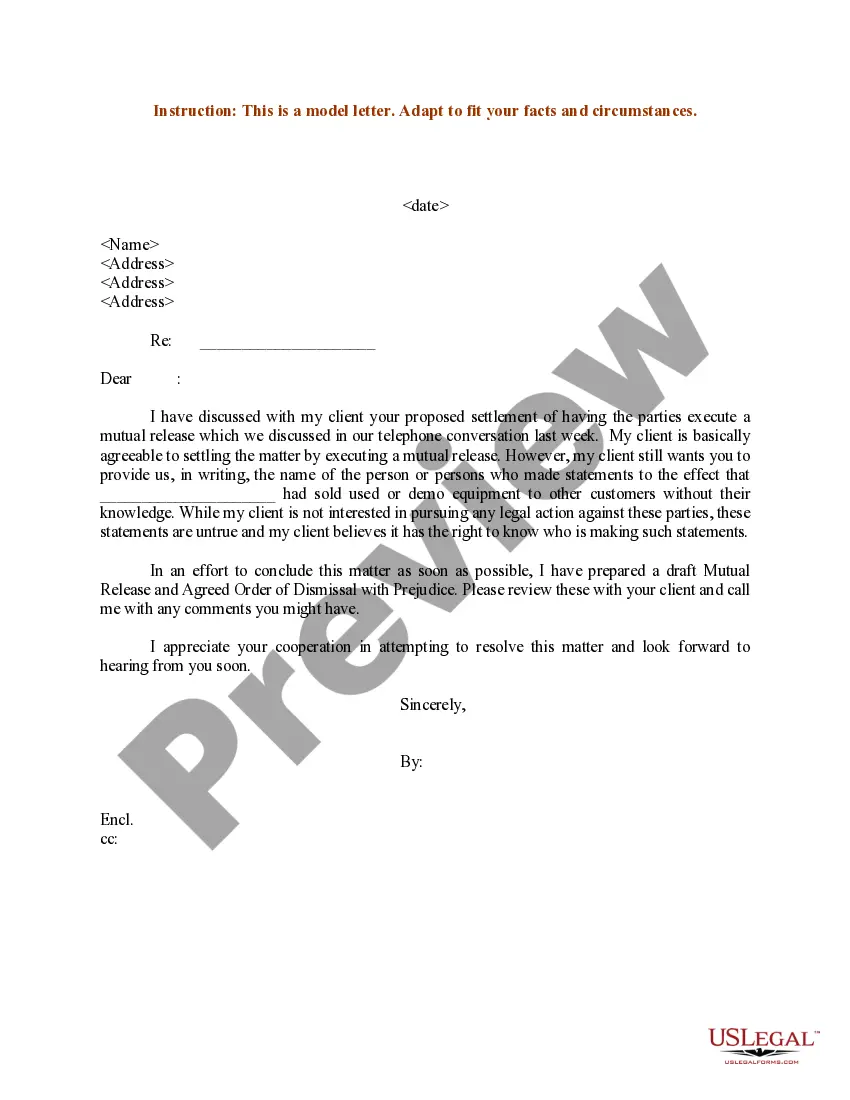
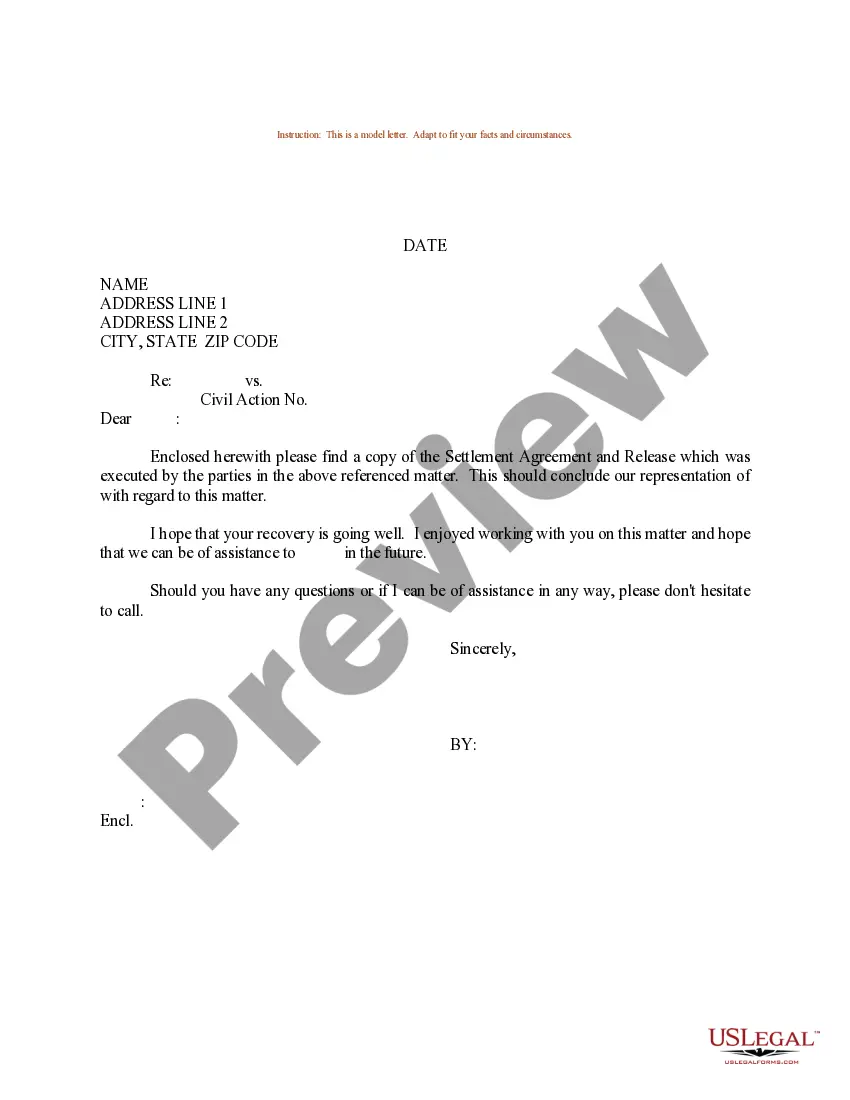
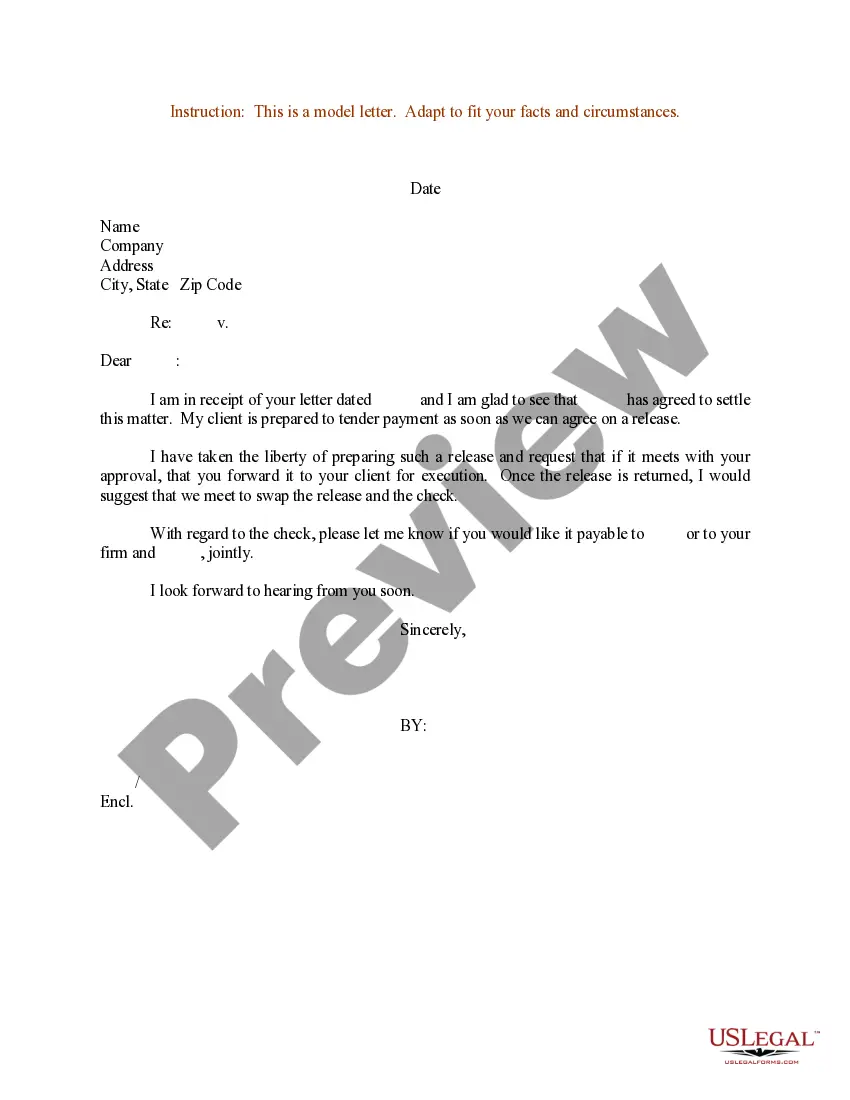
Guam Sample Letter for Proposed Settlement through Mutual Release
Description
Get your form ready online
Our built-in tools help you complete, sign, share, and store your documents in one place.
Make edits, fill in missing information, and update formatting in US Legal Forms—just like you would in MS Word.
Download a copy, print it, send it by email, or mail it via USPS—whatever works best for your next step.
Sign and collect signatures with our SignNow integration. Send to multiple recipients, set reminders, and more. Go Premium to unlock E-Sign.
If this form requires notarization, complete it online through a secure video call—no need to meet a notary in person or wait for an appointment.
We protect your documents and personal data by following strict security and privacy standards.

Make edits, fill in missing information, and update formatting in US Legal Forms—just like you would in MS Word.

Download a copy, print it, send it by email, or mail it via USPS—whatever works best for your next step.

Sign and collect signatures with our SignNow integration. Send to multiple recipients, set reminders, and more. Go Premium to unlock E-Sign.

If this form requires notarization, complete it online through a secure video call—no need to meet a notary in person or wait for an appointment.

We protect your documents and personal data by following strict security and privacy standards.
Looking for another form?

How to fill out Sample Letter For Proposed Settlement Through Mutual Release?
US Legal Forms - one of the most prominent collections of legal documents in the USA - offers a broad array of legal document templates that you can obtain or print. By utilizing the website, you can access thousands of forms for business and personal purposes, organized by categories, states, or keywords.
You can quickly obtain the latest versions of forms such as the Guam Sample Letter for Proposed Settlement through Mutual Release in moments. If you already have an account, Log In and acquire the Guam Sample Letter for Proposed Settlement through Mutual Release from the US Legal Forms library. The Download button will appear on each form you view. You can access all previously downloaded forms within the My documents section of your account.
If you're using US Legal Forms for the first time, here are simple instructions to help you get started: Ensure you have selected the correct form for your region/county. Click the Preview button to examine the form’s details. Review the form description to ensure that you have chosen the appropriate form. If the form does not meet your requirements, utilize the Search field at the top of the screen to find one that does. If you are satisfied with the form, confirm your selection by clicking the Get now button. Then, choose the pricing plan you prefer and provide your credentials to register for an account. Process the transaction. Use your credit card or PayPal account to complete the transaction. Select the format and download the form to your device. Edit. Complete, modify, print, and sign the downloaded Guam Sample Letter for Proposed Settlement through Mutual Release. Each template you added to your account does not expire and is yours indefinitely. Therefore, if you wish to obtain or print another copy, simply go to the My documents section and click on the form you need.
- Access the Guam Sample Letter for Proposed Settlement through Mutual Release with US Legal Forms, the most comprehensive collection of legal document templates.
- Utilize thousands of professional and state-specific templates that meet your business or personal needs and requirements.
Form popularity
FAQ
What is a Settlement Agreement And Mutual Release? A settlement agreement and mutual release is a contract where both parties agree to settle the dispute and release each other from all future claims, even claims that aren't yet known at the time of signing.
We each hereby expressly release the other from all claims and demands, known and unknown, arising out of the Agreement. Each party understands that, as to claims that are known to that party when the release is signed, any statutory provisions that would otherwise apply to limit this general release are hereby waived.
The Parties hereby release each other from all actions, causes of action, liabilities, or claims. The parties hereby agree not to sue each other for any matter related to any matter that arose prior to the date this agreement is signed and agree not to seek damages from each other.
Any party involved in the dispute will have to sign the agreement for mutual release. Mutual release agreements are used in various areas of the law in many types of disputes. Before signing any type of release agreement, both parties must know what their rights are and what they are agreeing to give up by signing.
I am writing about the money which you are claiming on the above account. I can confirm that I am unable to pay the money which I owe in full. Include a paragraph explaining your circumstances and details of your financial situation that you want the creditor to take into account.
I agree to the terms of this Agreement, and I am voluntarily signing this release of all claims. I acknowledge that I have read and understand this Agreement, and I understand that I cannot pursue any of the claims and rights that I have waived in this Agreement at any time in the future.
The Parties hereby release each other from all actions, causes of action, liabilities, or claims. The parties hereby agree not to sue each other for any matter related to any matter that arose prior to the date this agreement is signed and agree not to seek damages from each other.
The settlement and release agreement will effectively end a dispute and establish the terms the parties agree to, including payments. It will be incredibly important to detail the claim that is being settled to release a party from liability, as releases may apply only to certain categories of claims.