Georgia Agreement to Toll Statute of Limitations
Description
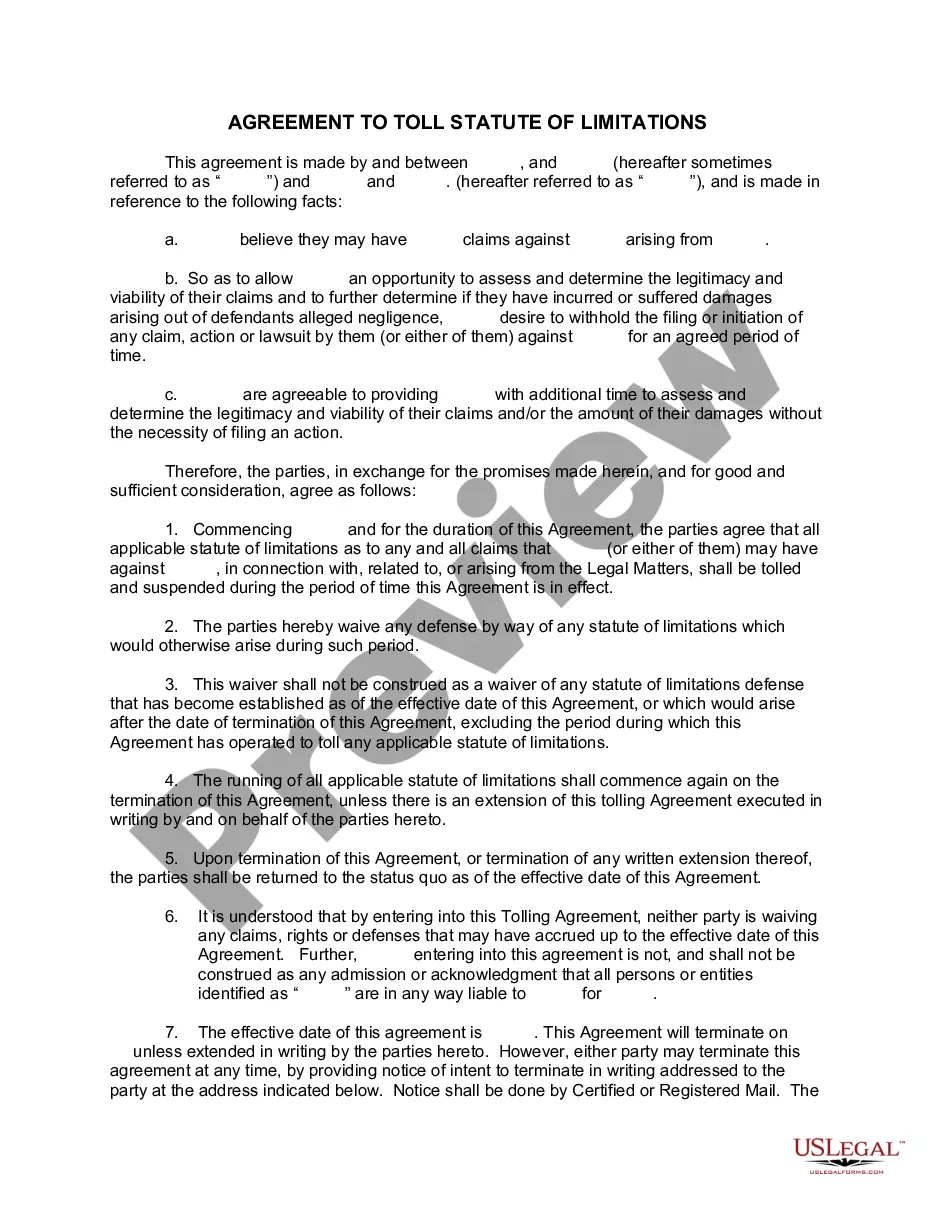
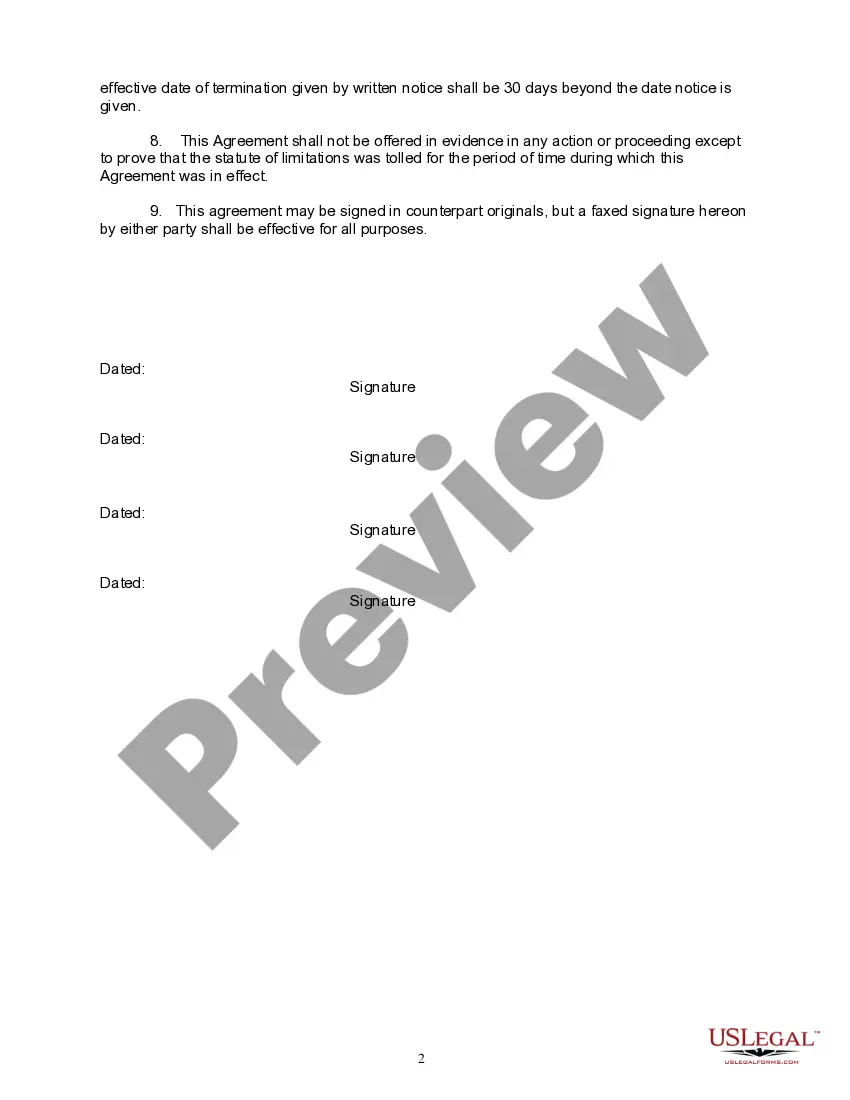
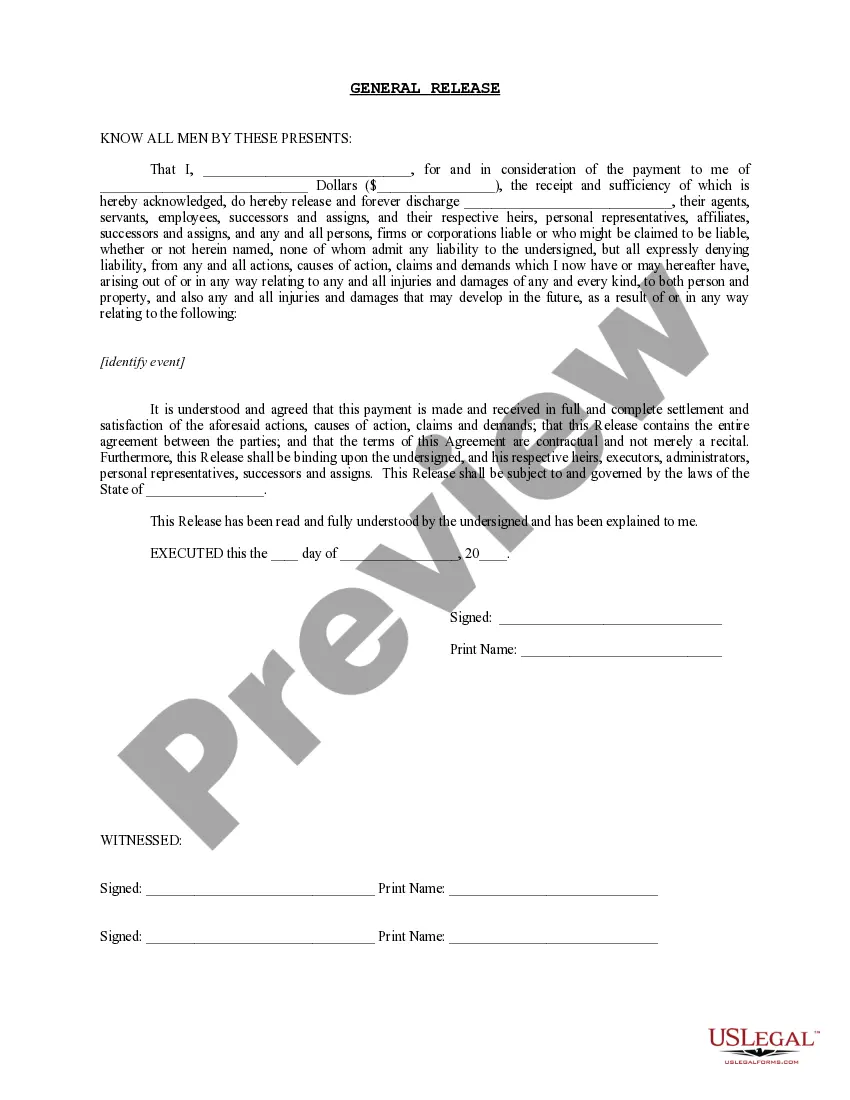
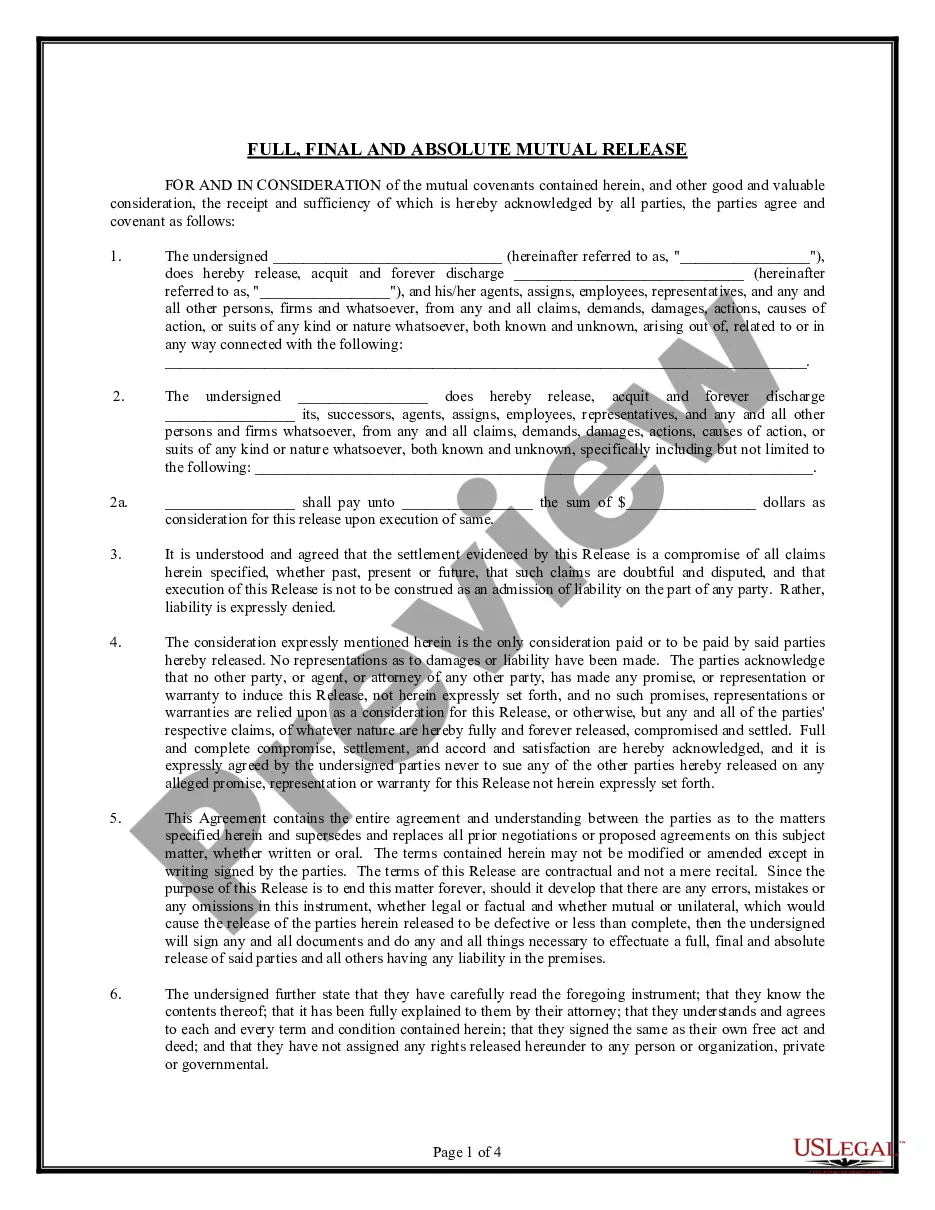
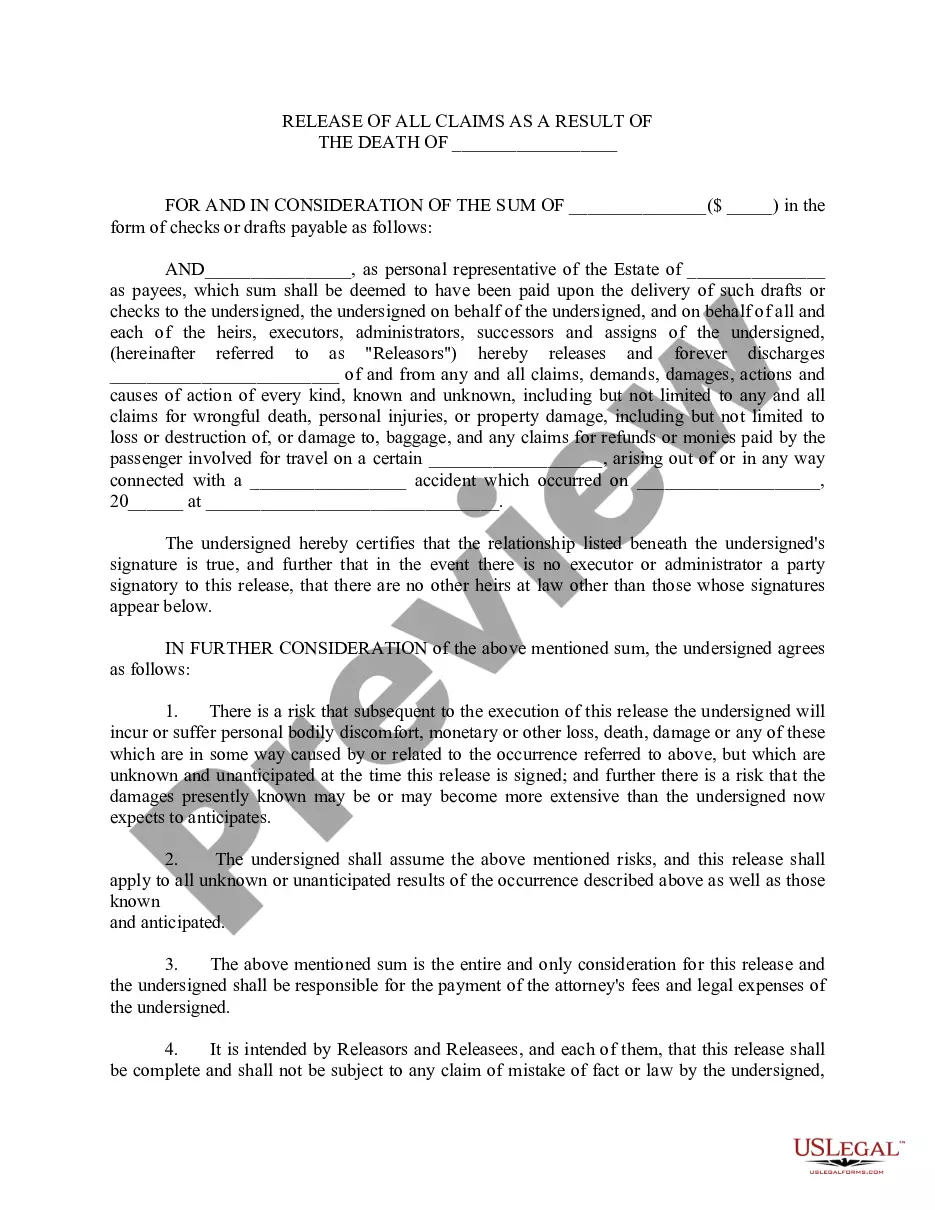
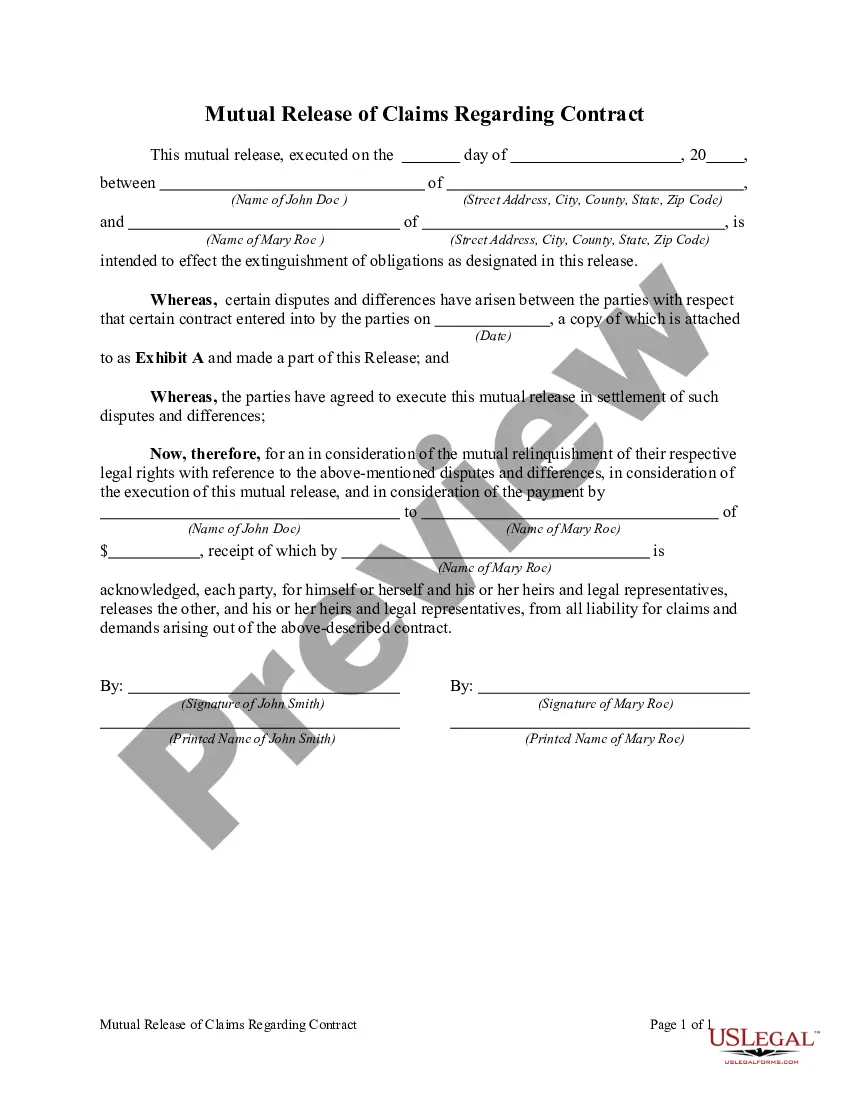


How to fill out Agreement To Toll Statute Of Limitations?
If you want to accumulate, download, or print legal document templates, utilize US Legal Forms, the largest assortment of legal forms, which are available online.
Leverage the site's straightforward and user-friendly search to find the documents you need.
Numerous templates for business and personal purposes are organized by categories and states, or keywords. Employ US Legal Forms to obtain the Georgia Agreement to Toll Statute of Limitations with just a few clicks.
Every legal document template you acquire is yours permanently. You have access to every form you downloaded within your account. Click the My documents section and select a form to print or download again.
Complete and download, and print the Georgia Agreement to Toll Statute of Limitations with US Legal Forms. There are numerous professional and state-specific forms you can use for your business or personal needs.
- If you are already a US Legal Forms customer, Log In to your account and click the Download button to obtain the Georgia Agreement to Toll Statute of Limitations.
- You can also access forms you previously downloaded from the My documents tab in your account.
- If you are using US Legal Forms for the first time, follow the steps below.
- Step 1. Ensure you have selected the form for the correct city/state.
- Step 2. Use the Review option to examine the form’s content. Don’t forget to read the summary.
- Step 3. If you are not satisfied with the form, use the Search field at the top of the screen to find other versions of the legal form template.
- Step 4. After you have found the form you need, select the Purchase now button. Choose the payment plan you prefer and enter your information to register for an account.
- Step 5. Process the payment. You can use your credit card or PayPal account to complete the transaction.
- Step 6. Find the format of the legal form and download it to your device.
- Step 7. Complete, modify and print or sign the Georgia Agreement to Toll Statute of Limitations.
Form popularity
FAQ
Tolling the statute of limitations in Georgia refers to the legal process of pausing or extending the timeframe within which a lawsuit must be filed. This process allows parties to negotiate, investigate, or settle disputes without the pressure of an impending deadline. The Georgia Agreement to Toll Statute of Limitations serves as a formal way to document this pause, ensuring that you maintain your right to pursue legal action later. This can be especially useful when time is of the essence in legal matters.
In Georgia, the statute of limitations for traffic violations typically ranges from two to four years, depending on the nature of the violation. This timeframe allows individuals to contest traffic-related charges or seek appeals. However, knowing the specifics can be challenging, which is why understanding the Georgia Agreement to Toll Statute of Limitations is important. A tolling agreement can help you manage these timelines effectively.
Yes, a tolling agreement does extend the statute of limitations in Georgia. When both parties agree to toll the statute, they essentially pause the countdown on the time limit to file a lawsuit. This agreement can be particularly beneficial when parties are engaged in settlement discussions or need more time to gather evidence. Utilizing the Georgia Agreement to Toll Statute of Limitations can provide you with the necessary time to resolve disputes without losing your legal rights.
In Georgia, the statute of limitations for contracts generally stands at six years. This means that you have six years from the date of the breach to file a lawsuit. Understanding the Georgia Agreement to Toll Statute of Limitations can be crucial if you wish to extend this period. By entering into a tolling agreement, you can effectively pause the statute of limitations to allow for negotiations or other legal actions.
In Georgia, the 4 year statute of limitations applies to various types of legal claims, including breach of contract and certain tort actions. This means that you have four years from the date of the incident or injury to file a lawsuit. Understanding the Georgia Agreement to Toll Statute of Limitations can be crucial, as it may allow parties to extend this timeframe under specific conditions. By utilizing resources like US Legal Forms, you can create legally binding agreements that help manage these timelines effectively.
Tolling is a legal doctrine that allows for the pausing or delaying of the running of the period of time set forth by a statute of limitations, such that a lawsuit may potentially be filed even after the statute of limitations has run.
The delayed discovery rule in California says is the legal maxim that the statute of limitations on bringing a claim does not start running until a claimant discovers the injury or loss that forms the basis of the claim or lawsuit.
Per O.C.G.A. § 9-3-72, if a medical professional leaves a foreign object (e.g., surgical sponge) in your body, you must file a claim within one year of discovery, referred to as the discovery rule.
Promissory notes have a six-year statute of limitations. A promissory note is a written promise to repay a specific amount of money.
Tolling a Statute of Limitations a time period during which a statute of limitations for bringing a specific type of legal action is temporarily stopped from running.